The Gayatri Mantra is one of the most sacred and revered mantras in Sanatan Dharma. Found in the Rig Veda, this timeless Vedic prayer has guided seekers, sages, students, and householders for thousands of years. More than a chant, it is a prayer for wisdom, inner light, and righteous thinking.
Dedicated to the divine radiance of Savitur, the universal source of light and consciousness, the Gayatri Mantra is traditionally recited to purify the mind, sharpen the intellect, and deepen spiritual awareness. Devotees believe that regular recitation helps cultivate clarity, discipline, and a stronger connection with the Divine.
Even in today’s fast-paced world, this sacred mantra remains deeply relevant. Its message is simple yet profound: seek the light of truth and allow that light to guide your thoughts, decisions, and actions.
In this article, you will discover:
What the Gayatri Mantra is and why it is important
Its origin and scriptural significance in the Vedas
The complete mantra in Sanskrit
English transliteration and pronunciation
Verse-by-verse meaning and spiritual essence
The deeper meaning of key phrases within the mantra
Traditional and spiritual benefits of chanting
How to chant it correctly
Its relevance in daily life
Lesser-known facts and traditional insights
Answers to frequently asked questions
Whether you are hearing this sacred Vedic prayer for the first time or have been reciting it for years, understanding its meaning and significance can help you appreciate its wisdom on a much deeper level.
Gayatri Mantra at a Glance
| Aspect | Details |
|---|---|
| Focus Keyword | Gayatri Mantra |
| Dedicated To | Savitur (Divine Source of Light) |
| Associated Deity | Goddess Gayatri |
| Scripture | Rig Veda 3.62.10 |
| Rishi (Seer) | Maharishi Vishwamitra |
| Vedic Meter | Gayatri Chhanda |
| Main Purpose | Prayer for Wisdom and Enlightened Intellect |
| Best Time to Chant | Sunrise, Noon, and Sunset |
| Common Chant Count | 11, 21, 27, or 108 Times |
| Spiritual Focus | Wisdom, Clarity, Divine Guidance |
| Also Known As | Vedamata (Mother of the Vedas) |
| Primary Benefit | Illumination of the Intellect and Spiritual Growth |
Table of Contents
ToggleWhat Is the Gayatri Mantra?
The Gayatri Mantra is one of the most sacred Vedic mantras in Sanatan Dharma. It is a universal prayer that seeks divine guidance, wisdom, and enlightenment. Unlike prayers that ask for material rewards, this sacred Vedic mantra focuses on purifying the intellect and leading the mind toward truth.
The mantra is dedicated to Savitur, the divine source of light and consciousness. In Vedic tradition, Savitur represents the spiritual radiance that illuminates both the universe and the human mind.
The Gayatri Mantra is found in the Rig Veda (Mandala 3, Sukta 62, Mantra 10) and was revealed to Maharishi Vishwamitra. Because of its profound spiritual significance, it is often called Vedamata, meaning “Mother of the Vedas.”
Many devotees recite this sacred prayer daily during worship, meditation, and Sandhyavandanam. It is traditionally regarded as a mantra that helps cultivate wisdom, self-discipline, clarity of thought, and spiritual awareness.
Why Is the Gayatri Mantra So Important?
The importance of the Gayatri Mantra lies in its universal message. Rather than praying for wealth, success, or power, it asks for divine guidance to think and act wisely.
Traditionally, devotees believe that regular chanting helps:
Purify the mind and intellect
Improve concentration and focus
Strengthen spiritual awareness
Encourage righteous thinking
Create inner peace and balance
Deepen devotion to the Divine
Why Is It Called the Mother of the Vedas?
The Gayatri Mantra is often called Vedamata, meaning “Mother of the Vedas.”
This title reflects the belief that the wisdom contained within the Vedas is symbolically present in this timeless Vedic prayer. Many traditional scholars regard it as the essence of Vedic knowledge because it directs the seeker toward truth, wisdom, and higher consciousness.
For this reason, the mantra has remained one of the most widely respected and frequently recited spiritual prayers across different traditions of Sanatan Dharma.
Origin and Scriptural Significance of the Gayatri Mantra
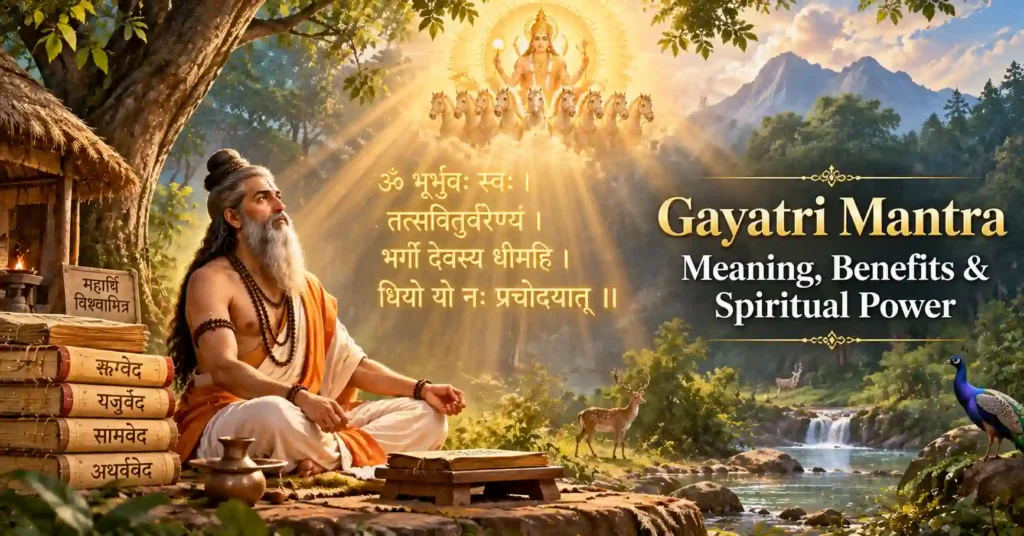
The Gayatri Mantra originates from the Rig Veda, one of the oldest and most sacred scriptures of Sanatan Dharma. It appears in Mandala 3, Sukta 62, Mantra 10, making it one of the most revered Vedic mantras that continues to be recited across generations.
According to Vedic tradition, the mantra was revealed to Maharishi Vishwamitra, a great sage who attained spiritual greatness through intense tapasya and devotion. Because of his association with this sacred mantra, Vishwamitra is traditionally recognized as its seer (Rishi).
Scriptural Source of the Gayatri Mantra
The Gayatri Mantra is found in:
Rig Veda – Mandala 3, Sukta 62, Mantra 10
Yajur Veda – Included in various recensions
Sama Veda – Incorporated into Vedic chanting traditions
Its presence across multiple Vedic traditions highlights the importance of the Gayatri Mantra as a universal prayer for wisdom and enlightenment.
Meaning of the Name “Gayatri”
The word Gayatri has both a spiritual and grammatical significance.
In Sanskrit, it is often explained as:
“Gayantam Trayate Iti Gayatri”
Meaning:
“That which protects the one who chants it is called Gayatri.”
The mantra is composed in the Gayatri Chhanda, a sacred Vedic meter consisting of twenty-four syllables arranged in three lines. This meter is considered highly auspicious and is traditionally associated with spiritual upliftment.
Maharishi Vishwamitra and the Gayatri Mantra
The story of Maharishi Vishwamitra is one of determination, discipline, and spiritual transformation.
Originally a king, Vishwamitra undertook severe austerities and spiritual practices. Through years of tapasya, he attained the status of a Brahmarishi and became one of the most respected sages in Vedic tradition.
The revelation of the Gayatri Mantra to Vishwamitra symbolizes the power of spiritual effort and the pursuit of divine wisdom.
Why Is the Gayatri Mantra Considered So Sacred?
The Gayatri Mantra is revered because it does not seek worldly gains. Instead, it asks the Divine to illuminate the intellect and guide the mind toward truth.
Traditional scholars regard the Gayatri Mantra as:
The essence of Vedic wisdom
A prayer for inner awakening
A path toward higher consciousness
A mantra for intellectual and spiritual growth
A symbol of divine light and knowledge
For this reason, the Gayatri Mantra continues to occupy a central place in daily worship, meditation, Vedic rituals, and spiritual practice throughout Sanatan Dharma.
Who Is Goddess Gayatri?
While the Gayatri Mantra is often known as a sacred Vedic prayer, many devotees also worship Goddess Gayatri, the divine embodiment of wisdom, spiritual knowledge, and sacred sound.
In Hindu tradition, Goddess Gayatri is regarded as the personification of the Gayatri Mantra and is often revered as Vedamata, the Mother of the Vedas. She represents divine knowledge, purity, enlightenment, and the power that guides seekers toward truth.
Goddess Gayatri in Hindu Tradition
Goddess Gayatri is traditionally depicted with five faces and ten arms.
The five faces are believed to symbolize different aspects of divine consciousness, while her various attributes represent wisdom, spiritual power, and protection.
She is often shown seated on a lotus, symbolizing purity and transcendence over worldly limitations.
Relationship Between Gayatri Devi and the Gayatri Mantra
The Gayatri Mantra and Goddess Gayatri are deeply connected.
The mantra is considered the sacred expression of divine wisdom, while Gayatri Devi is viewed as the living embodiment of that wisdom. Through chanting the Gayatri Mantra, devotees seek the blessings of Goddess Gayatri and pray for a purified intellect and spiritual awakening.
Why Is Goddess Gayatri Called Vedamata?
The title Vedamata, meaning “Mother of the Vedas,” reflects the belief that all Vedic wisdom ultimately originates from divine knowledge.
Since the Gayatri Mantra is regarded as the essence of Vedic teachings, Goddess Gayatri is honored as the source and protector of that sacred wisdom.
For this reason, devotees invoke her blessings when seeking knowledge, clarity, spiritual growth, and guidance on the path of dharma.
Spiritual Significance of Goddess Gayatri
Devotees worship Goddess Gayatri as a symbol of:
Divine wisdom
Spiritual enlightenment
Purity of thought
Higher consciousness
Inner transformation
Protection through knowledge
Her worship reminds seekers that true progress comes not only from learning but also from applying wisdom in everyday life through righteous thoughts, words, and actions.
Gayatri Mantra and the Rig Veda
The Gayatri Mantra is one of the most important mantras found in the Rig Veda, the oldest of the four Vedas and one of the foundational scriptures of Sanatan Dharma. Its presence in this ancient text highlights the spiritual significance and timeless relevance of the mantra.
The Gayatri Mantra appears in Rig Veda, Mandala 3, Sukta 62, Mantra 10. It was revealed to Maharishi Vishwamitra, who is traditionally recognized as the seer (Rishi) of the mantra.
Where Is the Gayatri Mantra Found in the Rig Veda?
The mantra is located in:
Rig Veda – Mandala 3, Sukta 62, Mantra 10
This verse is addressed to Savitur, the divine source of light, energy, and consciousness. Through this prayer, devotees seek illumination of the intellect and guidance toward truth.
Why Is the Gayatri Mantra Considered a Vedic Mantra?
A Vedic mantra is a sacred hymn that originates from the Vedas.
Since the Gayatri Mantra comes directly from the Rig Veda, it is regarded as one of the most authoritative and revered Vedic prayers. For thousands of years, it has been preserved through oral recitation and careful transmission from teacher to student.
Its enduring presence in Vedic tradition reflects its importance as a prayer for wisdom rather than worldly gain.
Connection with Vedic Worship
The Gayatri Mantra plays a central role in many traditional Vedic practices.
It is commonly recited during:
Sandhyavandanam
Daily prayers
Meditation
Japa (mantra repetition)
Spiritual study and contemplation
For many devotees, chanting the Gayatri Mantra is a way of connecting with the ancient wisdom of the Vedas and keeping that sacred tradition alive in daily life.
What Makes the Gayatri Mantra Unique in the Rig Veda?
Among the many hymns found in the Rig Veda, the Gayatri Mantra stands out because of its universal message.
Rather than seeking wealth, power, or victory, it asks the Divine to guide human intelligence toward wisdom and righteous thinking. This focus on inner transformation has made the Gayatri Mantra one of the most widely recited and respected Vedic mantras throughout history.
Even today, its message continues to inspire seekers who wish to cultivate clarity, knowledge, and spiritual awareness through the timeless teachings of the Vedas.
Gayatri Mantra Lyrics in Sanskrit
The Gayatri Mantra is traditionally recited with the Mahavyahritis, which invoke the three realms of existence before the main mantra. This is the form most devotees chant during daily prayers, meditation, and Sandhyavandanam.
Gayatri Mantra in Sanskrit
ॐ भूर्भुवः स्वः ।
तत्सवितुर्वरेण्यं ।
भर्गो देवस्य धीमहि ।
धियो यो नः प्रचोदयात् ॥
Gayatri Mantra in Devanagari (Single Verse Format)
ॐ भूर्भुवः स्वः तत्सवितुर्वरेण्यं भर्गो देवस्य धीमहि धियो यो नः प्रचोदयात् ॥
Structure of the Gayatri Mantra
Mahavyahriti – ॐ भूर्भुवः स्वः (Invocation of the three realms)
First Line – तत्सवितुर्वरेण्यं (Praise of the divine source of light)
Second Line – भर्गो देवस्य धीमहि (Meditation upon divine radiance)
Third Line – धियो यो नः प्रचोदयात् (Prayer for guidance and wisdom)
Why Is the Sanskrit Text Important?
The sacred sound vibrations of the Gayatri Mantra have been preserved through the Vedic oral tradition for thousands of years.
Traditionally, devotees are encouraged to learn the mantra in its original Sanskrit form because Sanskrit pronunciation helps preserve the rhythm and sound structure of the Vedic mantra.
At the same time, sincere devotion and understanding are considered equally important. Even beginners who are still learning the pronunciation can chant the Gayatri Mantra respectfully while gradually improving their recitation.
Quick Note for Beginners
If you are new to chanting the Gayatri Mantra, do not worry about achieving perfect pronunciation immediately.
Start with sincere practice, learn the correct pronunciation gradually, and focus on understanding the meaning of the mantra along with its sacred sound.
Meaning of the Gayatri Mantra
Before understanding the deeper symbolism of the Gayatri Mantra, it is helpful to explore the meaning of each line carefully. Although the mantra is short, every word carries profound spiritual wisdom and reflects the Vedic prayer for divine guidance, inner purity, and enlightened thinking.
The verse-by-verse meaning of the Gayatri Mantra reveals not only its literal translation but also its deeper message about consciousness, wisdom, and the journey toward truth. Let us understand each line of this sacred mantra in detail.
Sanskrit Verse
ॐ भूर्भुवः स्वः
तत्सवितुर्वरेण्यं
भर्गो देवस्य धीमहि
धियो यो नः प्रचोदयात् ॥
Transliteration
Om Bhur Bhuvah Swah
Tat Savitur Varenyam
Bhargo Devasya Dheemahi
Dhiyo Yo Nah Prachodayat
Line-by-Line Hindi Meaning
ॐ भूर्भुवः स्वः
यह तीन लोकों का स्मरण है—भूलोक, भुवर्लोक और स्वर्लोक। यह सम्पूर्ण सृष्टि और दिव्य चेतना का आह्वान करता है।
तत्सवितुर्वरेण्यं
हम उस पूजनीय और श्रेष्ठ दिव्य प्रकाश का ध्यान करते हैं जो समस्त जीवन का स्रोत है।
भर्गो देवस्य धीमहि
हम उस दिव्य तेज का ध्यान करते हैं जो अज्ञान, पाप और अंधकार को दूर करता है।
धियो यो नः प्रचोदयात्
वह परम प्रकाश हमारी बुद्धि को प्रेरित करे और हमें सत्य के मार्ग पर चलाए।
Line-by-Line English Meaning
Om Bhur Bhuvah Swah
This invocation remembers the earthly, subtle, and heavenly realms and acknowledges the Divine presence throughout creation.
Tat Savitur Varenyam
We meditate upon the supreme and adorable divine light, the source of all life and existence.
Bhargo Devasya Dheemahi
We contemplate the sacred radiance of the Divine that removes ignorance and spiritual darkness.
Dhiyo Yo Nah Prachodayat
May that divine light inspire, guide, and illuminate our intellect toward truth and wisdom.
Full Verse Meaning
The Gayatri Mantra is a prayer to the Divine Light that sustains the universe. It asks for the purification of the mind, the awakening of wisdom, and guidance toward righteous thinking and spiritual understanding. Rather than seeking material gains, the mantra seeks inner transformation and enlightenment.
Spiritual Essence
The central message of the Gayatri Mantra is that true progress begins with an enlightened mind. When the intellect is guided by divine wisdom, a person naturally moves toward dharma, truth, compassion, and self-realization. The mantra reminds devotees to seek inner light before seeking anything else in life.
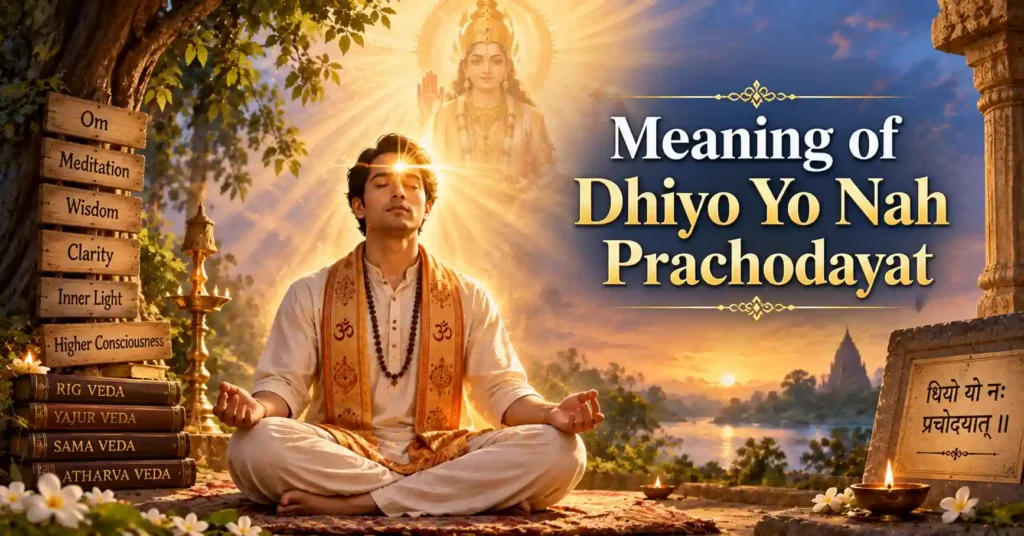
What Does "Dhiyo Yo Nah Prachodayat" Mean?
Among all the words of the Gayatri Mantra, the phrase “Dhiyo Yo Nah Prachodayat” is especially significant. It contains the heart of the prayer and expresses the seeker’s desire for divine guidance and enlightened thinking.
Literal Meaning
Dhiyo – Intellects, minds, understanding
Yo – Who
Nah – Our
Prachodayat – May inspire, guide, or illuminate
Together, the phrase means:
“May that Divine Light inspire and guide our intellect.”
Symbolic Meaning
This prayer does not ask for wealth, power, success, or worldly rewards.
Instead, it asks for something far more valuable: the wisdom to make the right choices in life.
The phrase teaches that when the mind is guided by divine wisdom, a person naturally moves toward truth, dharma, compassion, and self-control.
Spiritual Interpretation
In Sanatan Dharma, the intellect (Buddhi) plays a crucial role in spiritual growth.
A clear and purified intellect helps a person:
Distinguish right from wrong
Overcome ignorance
Control harmful desires
Make dharmic decisions
Progress on the spiritual path
The Gayatri Mantra therefore becomes a prayer for inner transformation rather than external gain.
Practical Relevance in Daily Life
Even today, the message of “Dhiyo Yo Nah Prachodayat” remains deeply relevant.
Whenever we face confusion, difficult decisions, or uncertainty, we need clarity of thought and wisdom.
This phrase reminds us to seek divine guidance before acting and to allow higher values to shape our decisions, relationships, and actions.
Why This Phrase Is the Heart of the Gayatri Mantra
Many scholars and spiritual teachers consider this final line to be the essence of the Gayatri Mantra.
The entire mantra builds toward this prayer:
To recognize divine light
To meditate upon divine radiance
To invite that light into our consciousness
To seek guidance for our intellect
For this reason, “Dhiyo Yo Nah Prachodayat” continues to inspire devotees who seek wisdom, spiritual growth, and a life guided by truth.
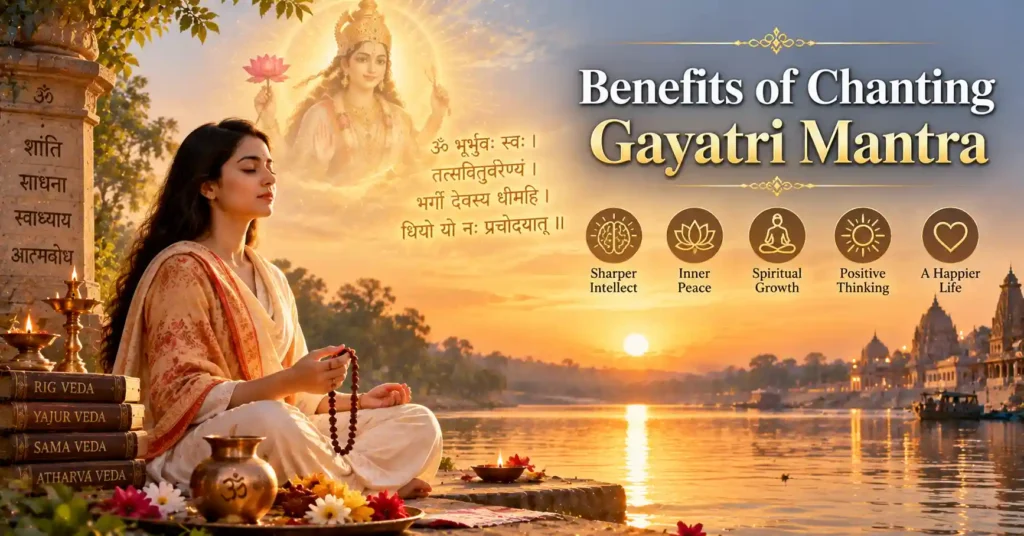
Benefits of Chanting the Gayatri Mantra
For thousands of years, devotees, sages, and spiritual seekers have recited the Gayatri Mantra as a prayer for wisdom, purity, and divine guidance. While individual experiences vary, this sacred Vedic mantra is traditionally associated with spiritual growth, mental clarity, emotional balance, and inner peace.
Spiritual Benefits
The primary purpose of this sacred mantra is spiritual awakening.
Devotees believe that regular recitation helps strengthen the connection between the individual soul and the Divine. It encourages self-reflection and inspires a deeper understanding of dharma and higher truths.
Some traditional spiritual benefits include:
Increased spiritual awareness
Greater devotion and faith
Purification of thoughts
Inner transformation
Progress on the path of self-realization
Mental Benefits
This Vedic prayer is often recited during meditation and worship because of its calming influence on the mind.
Many practitioners find that consistent chanting helps reduce distractions and promotes greater focus and mindfulness.
Traditionally, it is associated with:
Better concentration
Improved clarity of thought
Sharper intellect
Enhanced memory
Greater mindfulness
Emotional Benefits
Modern life often brings stress, worry, and emotional challenges.
The rhythmic recitation of this sacred chant can help cultivate a sense of calm and emotional stability.
Devotees commonly report:
Reduced restlessness
Greater emotional balance
Increased patience
A feeling of inner peace
More confidence during difficult situations
Traditional Benefits
In Sanatan Dharma, this mantra has long been revered as one of the most sacred Vedic prayers.
Traditionally, it is believed to:
Purify the mind and heart
Remove ignorance
Encourage righteous thinking
Support disciplined living
Inspire virtuous actions
These benefits are understood as the result of sincere practice rather than instant outcomes.
Devotional Benefits
Beyond its Vedic significance, the mantra is also a powerful expression of devotion to the Divine Light.
Regular chanting helps cultivate humility, gratitude, and trust in divine guidance.
Many practitioners feel that it helps them:
Strengthen their daily spiritual practice
Develop a closer relationship with the Divine
Deepen their sense of devotion
Remain grounded in faith during difficult situations
Summary of Benefits
Spiritual – Self-awareness, devotion, spiritual growth
Mental – Focus, concentration, clarity
Emotional – Peace, patience, balance
Traditional – Purity, wisdom, righteous thinking
Devotional – Faith, surrender, divine connection
The greatest benefit of the Gayatri Mantra is not merely external success but the gradual transformation of the mind and heart. Through regular chanting and a deeper understanding of its meaning, devotees seek wisdom, inner light, and a life guided by truth.
How to Chant the Gayatri Mantra Correctly
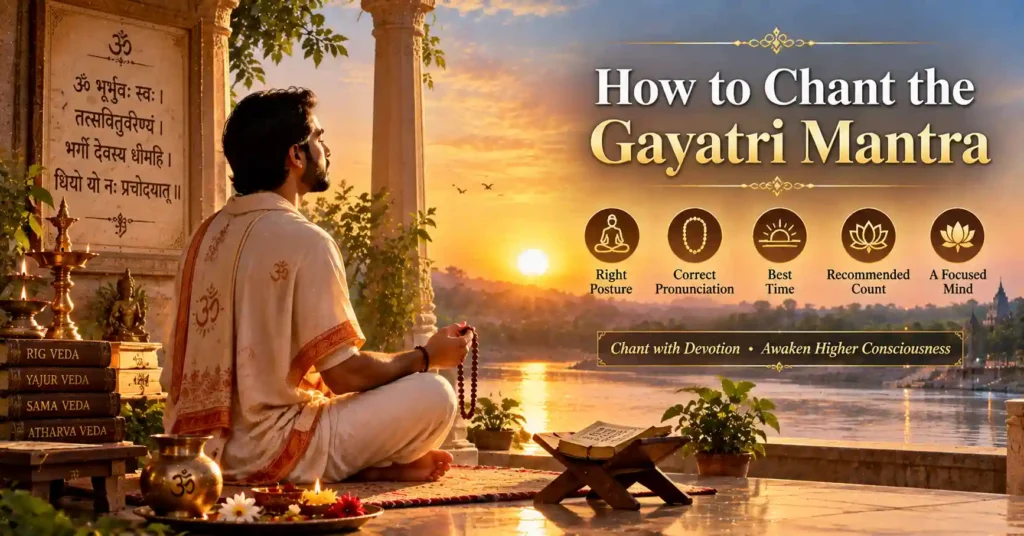
The Gayatri Mantra can be chanted by anyone with sincerity, devotion, and respect. While traditional practices provide guidance, the most important aspect is chanting with a focused mind and understanding its meaning.
Best Time to Chant
Traditionally, this sacred Vedic mantra is recited during the three Sandhya periods of the day.
Sunrise – Associated with new beginnings and clarity
Noon – Symbolizes energy and awareness
Sunset – Encourages reflection and inner peace
Among these, sunrise is often considered the most auspicious time for chanting the Gayatri Mantra.
Preparations Before Chanting
A few simple preparations can help create a peaceful atmosphere for recitation.
Bathe or wash your hands and face if possible
Sit in a clean and quiet place
Wear comfortable clothing
Keep your spine straight
Calm your mind before beginning
These practices are traditional aids and not strict requirements.
Traditional Method of Chanting
Many devotees follow this simple method:
Sit facing east during sunrise or west during sunset.
Take a few deep breaths to settle the mind.
Chant the mantra slowly and clearly.
Reflect on its meaning while reciting.
Maintain a feeling of devotion and gratitude.
Some practitioners use a japa mala to keep count, while others chant without one.
How Many Times Should You Chant It?
There is no fixed number that everyone must follow.
Common traditional counts include:
11 times for beginners
21 times for regular practice
27 times for focused chanting
108 times using a japa mala
Consistency is generally considered more important than the number of repetitions.
Traditional Chanting Guidelines
Traditional teachings encourage:
Respectful pronunciation
A calm and focused mind
Regular practice
Understanding the meaning
Sincere devotion
At the same time, Sanatan Dharma places greater value on genuine faith than rigid perfection.
Can Beginners Chant the Gayatri Mantra?
Yes, beginners can chant the Gayatri Mantra.
Many people first learn the transliteration and gradually improve their pronunciation. Even if every word is not pronounced perfectly, sincere effort and devotion are considered important parts of the practice.
Why Understanding the Meaning Matters
This sacred prayer is more than a collection of powerful sounds.
When devotees understand its meaning, they can connect more deeply with its message of wisdom, truth, and divine guidance.
Combining proper recitation with understanding helps transform the practice from a daily ritual into a meaningful path of spiritual growth.
Common Mistakes to Avoid
When learning this mantra, try to avoid:
Rushing through the words
Chanting without attention
Treating it as a mechanical repetition
Focusing only on the count
Ignoring its deeper meaning
A calm mind, sincere devotion, and regular practice are traditionally regarded as the foundation of meaningful chanting.
Gayatri Mantra in Daily Life
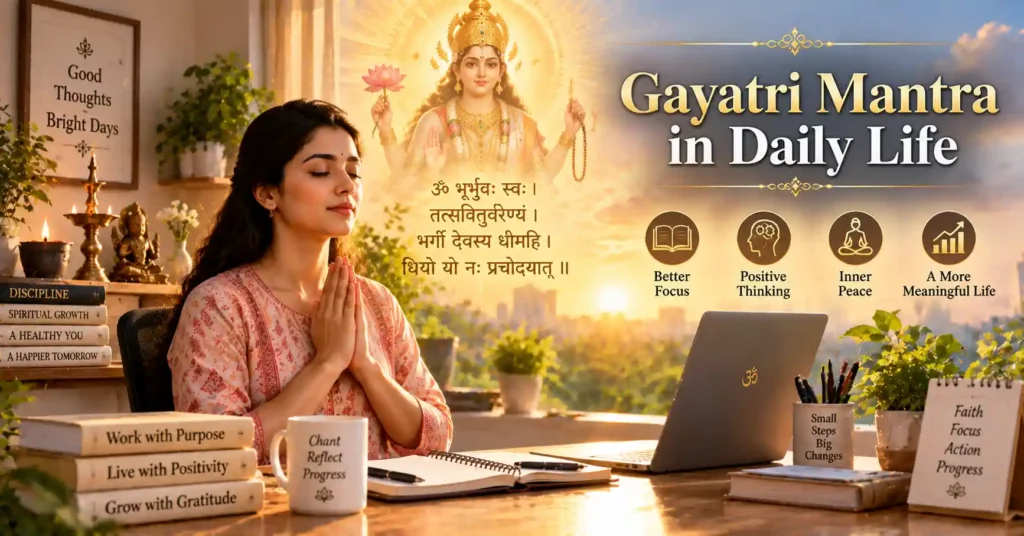
The Gayatri Mantra is not limited to temples, rituals, or meditation sessions. Its teachings can be applied in everyday life to cultivate wisdom, self-discipline, and a positive mindset.
At its core, this sacred Vedic prayer is a request for enlightened thinking. This makes it relevant for students, professionals, householders, and spiritual seekers alike.
Learning to Make Better Decisions
The mantra asks the Divine to guide our intellect toward truth.
In daily life, this reminds us to think carefully before acting, avoid impulsive decisions, and choose the path that aligns with dharma and integrity.
Finding Calm in a Busy World
Modern life is often filled with distractions and stress.
Many devotees recite this sacred chant during the morning or evening to quiet the mind, reduce mental clutter, and reconnect with inner peace.
Supporting Students and Lifelong Learners
This Vedic mantra is traditionally associated with wisdom and knowledge.
Students often recite it before studying because it encourages concentration, discipline, and a focused approach to learning.
Developing Positive Thoughts
The quality of our thoughts influences our words and actions.
Regular reflection on the meaning of the Gayatri Mantra encourages:
Positive thinking
Self-awareness
Patience
Compassion
Gratitude
These qualities help create harmony in personal and professional life.
Strengthening Spiritual Practice
Even a few minutes of chanting each day can become a meaningful spiritual habit.
Many devotees include this sacred prayer in their daily routine as part of:
Morning prayers
Meditation
Japa practice
Sandhyavandanam
Personal worship
Lessons for Modern Life
Seek Divine Wisdom – Make thoughtful decisions
Purify the Intellect – Avoid negative thinking
Follow Truth – Live with honesty and integrity
Practice Self-Discipline – Build good habits
Develop Inner Awareness – Strengthen spiritual growth
Why This Mantra Remains Relevant Today
Although the Gayatri Mantra originated in the Vedic age, its message is timeless.
People today face many of the same challenges as those in the past, including confusion, fear, attachment, and uncertainty. This sacred prayer reminds us to seek clarity, wisdom, and higher understanding before seeking external success.
In this way, the mantra becomes more than a sacred chant. It becomes a guide for living a balanced, purposeful, and spiritually aware life.
Did You Know? Interesting Facts About the Gayatri Mantra
The Gayatri Mantra is one of the most studied, recited, and revered mantras in Sanatan Dharma. Beyond its well-known meaning and benefits, it has many fascinating historical, spiritual, and traditional aspects.
1. It Comes from the Rig Veda
This sacred Vedic mantra appears in Rig Veda 3.62.10, making it one of the oldest surviving prayers in the world.
It has been preserved through an unbroken oral tradition for thousands of years.
2. Maharishi Vishwamitra Is Its Seer
According to Vedic tradition, this mantra was revealed to Maharishi Vishwamitra.
His spiritual journey from king to Brahmarishi is considered one of the most inspiring stories in Sanatan Dharma.
3. It Is Known as Vedamata
The mantra is often associated with Vedamata, meaning “Mother of the Vedas.”
Traditional scholars regard it as the essence of Vedic wisdom because it emphasizes knowledge, truth, and enlightenment.
4. It Is a Prayer for Wisdom, Not Material Wealth
Unlike many prayers that seek specific blessings, the Gayatri Mantra asks for divine guidance and an enlightened intellect.
Its focus is inner transformation rather than worldly gain.
5. It Is Dedicated to Savitur
This sacred prayer is addressed to Savitur, the divine source of light and life.
Savitur represents the spiritual radiance that illuminates both the universe and human consciousness.
6. It Contains Twenty-Four Sacred Syllables
Traditionally, the main body of the mantra is said to contain 24 syllables.
Many spiritual traditions associate these syllables with different aspects of divine wisdom and consciousness.
7. It Is Traditionally Chanted During Sandhyavandanam
The Gayatri Mantra holds a central place in Sandhyavandanam, the daily Vedic prayer performed during sunrise, noon, and sunset.
This practice has been followed for centuries in many Vedic traditions.
8. It Is Respected Across Different Traditions
Although rooted in the Vedas, this sacred chant is revered by followers of various Hindu traditions.
Its universal message of wisdom and enlightenment transcends sectarian boundaries.
9. Understanding the Meaning Is Considered Important
Traditional teachers emphasize that chanting should be accompanied by understanding.
Knowing the meaning of the mantra helps devotees connect more deeply with its spiritual message and teachings.
10. Its Message Remains Timeless
Even in the modern world, the Gayatri Mantra continues to inspire people seeking clarity, wisdom, and inner peace.
Its prayer for enlightened thinking remains as relevant today as it was in the Vedic age.
Conclusion
The Gayatri Mantra is one of the most sacred and influential mantras in Sanatan Dharma. Rooted in the Rig Veda, it serves as a timeless prayer for wisdom, purity, and divine guidance.
Through its profound words, this sacred Vedic prayer encourages devotees to seek inner light rather than external rewards. Its message reminds us that true growth begins with a clear mind, righteous thinking, and a heart guided by truth.
Whether chanted during meditation, daily worship, or moments of reflection, the mantra continues to inspire spiritual seekers across generations. Its teachings remain relevant in modern life, helping individuals cultivate clarity, self-discipline, compassion, and spiritual awareness.
By understanding its meaning, significance, and traditional benefits, devotees can deepen their connection with this ancient Vedic hymn and apply its wisdom in everyday life.
May the divine light of Savitur illuminate our intellect, guide our actions, and lead us toward truth, peace, and spiritual growth.
Suggested Reading
If you enjoyed learning about the Gayatri Mantra, you may also find these sacred mantras, hymns, and devotional texts helpful on your spiritual journey. These articles explore the meaning, benefits, symbolism, and deeper wisdom of Sanatan Dharma.
Rudrashtakam
https://thesanatantales.com/rudrashtakam/
Maha Mrityunjaya Mantra
https://thesanatantales.com/maha-mrityunjaya-mantra/
Lingashtakam
https://thesanatantales.com/lingashtakam/
Shiva Tandava Stotram
https://thesanatantales.com/shiva-tandava-stotram/
Hanuman Chalisa
https://thesanatantales.com/hanuman-chalisa/
Durga Saptashati
https://thesanatantales.com/durga-saptashloki/
Argala Stotram
https://thesanatantales.com/argala-stotram/
Devi Kavach
https://thesanatantales.com/devi-kavach/
Gayatri Mantra Reference
https://en.wikipedia.org/wiki/Gayatri_Mantra
Through the wisdom of the Gayatri Mantra and other sacred texts, devotees can deepen their understanding of devotion, self-discipline, spiritual growth, and the timeless teachings of Sanatan Dharma.
FAQs
1: What is the Gayatri Mantra and why is it important?
The Gayatri Mantra is one of the most sacred Vedic mantras in Sanatan Dharma. Found in the Rig Veda (3.62.10), it is a prayer to the divine light of Savitur, the source of spiritual illumination and wisdom. Rather than seeking material rewards, this sacred prayer asks the Divine to guide and enlighten our intellect.
Its importance lies in its universal message. The mantra encourages clarity, righteous thinking, self-discipline, and spiritual growth. For this reason, it is often associated with Vedamata, the “Mother of the Vedas,” and remains one of the most widely recited and respected prayers in Hindu tradition.
By focusing on wisdom and inner transformation, this timeless Vedic hymn continues to inspire devotees who seek truth, higher understanding, and a deeper connection with the Divine.
2: What is the meaning of the Gayatri Mantra?
The Gayatri Mantra is a prayer for divine wisdom and enlightened understanding. Its central message is: “May the divine light illuminate and guide our intellect.” Rather than focusing on worldly success, this sacred Vedic prayer encourages inner awakening, higher consciousness, and spiritual growth.
Each line carries profound symbolism. The mantra invokes the Divine present throughout creation, meditates upon the supreme light, and humbly asks that light to inspire our thoughts, decisions, and actions.
This emphasis on wisdom, truth, and righteous thinking is what makes this timeless Vedic hymn unique among many sacred prayers. Its message continues to guide devotees who seek clarity, self-improvement, and a deeper connection with the Divine.
3: What are the benefits of chanting the Gayatri Mantra daily?
The benefits of chanting the Gayatri Mantra are traditionally associated with spiritual growth, mental clarity, and emotional balance. Devotees believe that regular recitation helps purify thoughts, improve concentration, strengthen self-discipline, and cultivate a more positive outlook on life.
Many practitioners also report feeling calmer and more focused after making this sacred Vedic mantra part of their daily routine. While experiences differ from person to person, it is widely regarded as a powerful aid for developing wisdom, inner peace, and a deeper connection with the Divine.
Through sincere practice and reflection on its meaning, devotees seek not only personal growth but also greater awareness, devotion, and spiritual understanding.
4: Can anyone chant the Gayatri Mantra?
Today, most spiritual teachers and traditions consider the Gayatri Mantra a universal prayer that can be chanted by anyone with sincerity and respect. Men, women, children, students, householders, and spiritual seekers recite this sacred Vedic mantra as part of their devotional and spiritual practice.
Historically, some traditions restricted formal teaching of the mantra to specific initiatory practices. However, modern Hindu practice has made this timeless prayer widely accessible to sincere seekers.
What matters most is devotion, proper understanding, and a genuine desire for spiritual growth. Rather than social background or status, emphasis is placed on faith, discipline, and the aspiration to cultivate wisdom, inner purity, and a deeper connection with the Divine.
5: What is the best time to chant the Gayatri Mantra?
Traditionally, the best time to chant the Gayatri Mantra is during the three Sandhya periods: sunrise, noon, and sunset. These transitional moments are considered spiritually significant because they symbolize movement from one state of awareness to another and are believed to support greater mindfulness and spiritual focus.
Among these, sunrise is often regarded as the most auspicious. The mind is generally calmer in the early morning, making it easier to focus on this sacred Vedic prayer and reflect on its deeper meaning.
However, many teachers emphasize that sincere and regular recitation is more important than timing alone. Chanting with devotion, concentration, and understanding can be beneficial at any time of the day.
6: How many times should the Gayatri Mantra be chanted?
There is no single mandatory number for chanting the Gayatri Mantra. Beginners often start with 11 or 21 repetitions, while regular practitioners may recite it 27, 54, or 108 times using a japa mala.
Traditional practice commonly recommends one mala, or 108 repetitions, as a complete cycle. However, many teachers emphasize that consistency and concentration are more important than large numbers.
A few mindful repetitions each day can be more beneficial than lengthy recitation performed without attention or devotion. Regular practice, sincere faith, and understanding the meaning of this sacred Vedic mantra are generally considered more important than achieving a specific count.
7: Why is the Gayatri Mantra called the Mother of the Vedas?
The Gayatri Mantra is often called Vedamata, meaning “Mother of the Vedas.” This title reflects the traditional belief that the essence of Vedic wisdom is contained within this sacred mantra. Its prayer for enlightened understanding captures the central goal of many Vedic teachings and spiritual practices.
Rather than focusing on material desires, this timeless Vedic prayer seeks wisdom, truth, and higher awareness. These qualities are considered the foundation of genuine spiritual knowledge and self-realization.
Because of its profound message and universal appeal, generations of scholars, saints, and spiritual seekers have regarded it as a condensed expression of Vedic philosophy, divine wisdom, and spiritual aspiration.
8: Can the Gayatri Mantra be chanted silently?
Yes, the Gayatri Mantra can be chanted aloud, softly, or mentally. Many traditions recognize three forms of practice: vocal recitation, whispering, and silent mental repetition. Each method is considered beneficial when performed with concentration, devotion, and awareness.
Beginners often find it easier to chant aloud while learning the correct pronunciation and rhythm. As familiarity grows, many practitioners naturally move toward quieter recitation or internal repetition during meditation.
Regardless of the method used, understanding the meaning and maintaining a focused mind are considered essential aspects of effective mantra practice. Sincerity, regularity, and devotion are traditionally valued more than the specific style of chanting.
9: Is understanding the meaning of the Gayatri Mantra necessary?
While the sacred sound of the Gayatri Mantra is important, many teachers emphasize that understanding its meaning can deepen the spiritual experience. Knowing that this sacred Vedic prayer is a request for wisdom, clarity, and divine guidance helps devotees connect more consciously with its purpose.
When chanting is combined with reflection on its message, the practice becomes more than simple repetition. It transforms into a daily reminder to seek truth, make thoughtful decisions, and cultivate a purified intellect.
This union of sound, meaning, and devotion is considered especially valuable in spiritual practice. By engaging both the heart and the mind, devotees can develop a deeper appreciation of the mantra’s teachings and apply its wisdom in everyday life.
10: How is the Gayatri Mantra relevant in modern life?
The message of the Gayatri Mantra remains timeless because people continue to seek clarity, wisdom, and inner peace. In a world filled with distractions, uncertainty, and constant information, its prayer for enlightened thinking offers guidance that is as meaningful today as it was in the Vedic age.
Many devotees recite this sacred Vedic prayer before studying, meditation, important decisions, or daily worship. Its emphasis on guiding the intellect encourages mindful living, ethical choices, and spiritual awareness.
This practical relevance is one reason the mantra continues to inspire millions of people around the world. By promoting wisdom, self-reflection, and righteous thinking, it serves as a valuable guide for navigating both spiritual and everyday challenges.
Share Your Devotion
Has the Gayatri Mantra played a special role in your spiritual journey? Many devotees recite this sacred Vedic prayer during daily worship, meditation, study, or moments when they seek clarity, wisdom, and inner peace.
We would love to hear about your experience with the Gayatri Mantra. Do you chant it regularly? Has a particular verse or phrase inspired you? What insights, lessons, or blessings have you discovered through this timeless mantra?
Feel free to share your thoughts, experiences, or reflections in the comments below. Your journey may encourage fellow devotees and spiritual seekers who are exploring the wisdom and significance of this sacred prayer.
Let us learn from one another and continue deepening our understanding of Sanatan Dharma with respect, devotion, gratitude, and an open heart.
References & Sources
The information presented in this article on the Gayatri Mantra is based on traditional Hindu scriptures, Vedic literature, and widely accepted interpretations within Sanatan Dharma. As with many ancient spiritual texts, translations and explanations may vary slightly across traditions, commentaries, and lineages.
Primary Sources
Rig Veda (Mandala 3, Sukta 62, Mantra 10)
Yajur Veda
Sama Veda
Traditional Sandhyavandanam Texts
Gayatri Upasana Traditions
Traditional and Scriptural References
Teachings associated with Maharishi Vishwamitra
Vedic commentarial traditions
Traditional Gayatri Mantra recitation practices
Sanatan Dharma oral and devotional traditions
Secondary Sources
Traditional Sanskrit commentaries
Hindu scripture reference works
Sanskrit learning and preservation institutions
Scholarly studies on Vedic literature
Authentic repositories of Hindu scriptures
Note: The spiritual meanings, interpretations, and devotional insights shared in this article are intended for educational and devotional purposes. Different Hindu traditions and teachers may explain certain aspects of this Mantra in slightly different ways while preserving its core message of divine wisdom, enlightenment, and inner transformation.
Explore More Topics from The Sanatan Tales