Puja in Sanatan Dharma is a sacred act of worship that helps devotees connect with the Divine through devotion, gratitude, and self-discipline. More than lighting a lamp or offering flowers, it is a spiritual practice that brings the mind, heart, and soul closer to God.
Whether performed at home or in a temple, the true essence of Puja in Sanatan Dharma remains the same. It is not defined by elaborate rituals or expensive offerings but by sincere bhav (devotion), faith, and pure intention.
For generations, our elders have passed down Puja Vidhi as a way of life rather than a set of rigid rules. Every mantra, every offering, and every step in the ritual carries a deeper spiritual meaning that nurtures inner peace and mindfulness.
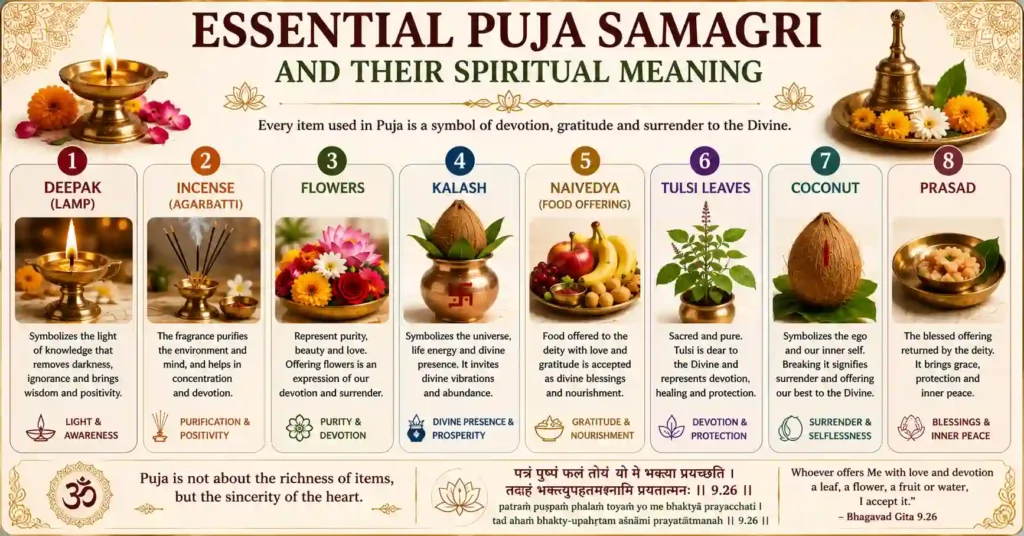
Each item of Puja Samagri, from the diya and flowers to the kalash and prasad, symbolizes values such as purity, gratitude, humility, and surrender. When these offerings are made with understanding and devotion, even a simple daily Puja becomes a meaningful spiritual experience.
Let us explore the meaning, Puja Vidhi, essential Puja Samagri, and the deeper spiritual significance of Puja in Sanatan Dharma, discovering how this timeless tradition transforms an external ritual into an inner journey of self-realization.
Table of Contents
TogglePreparing for Puja: Cleanliness of Body, Mind and Space
Before Puja in Sanatan Dharma begins, both the body and the place of worship are prepared with care. Hands and feet are washed, the altar is cleaned, and the Puja area is arranged with the necessary Puja Samagri. This physical cleanliness creates a peaceful environment for worship.
Traditionally, Puja is performed after taking a bath, especially during the morning (Brahma Muhurta or sunrise) or in the evening (Sandhya). These sacred times naturally help the mind become calm and focused, making it easier to connect with the Divine.
Preparing for Puja is not only about external cleanliness. It is also about letting go of anger, worry, and distractions. A peaceful mind, a pure heart, and sincere bhav are considered just as important as the rituals themselves.
In Puja Vidhi, external purity symbolizes inner purification. When the body, mind, and surroundings are prepared with devotion, worship becomes a meaningful spiritual experience rather than a routine ritual.
Step-by-Step Puja Vidhi in Sanatan Dharma
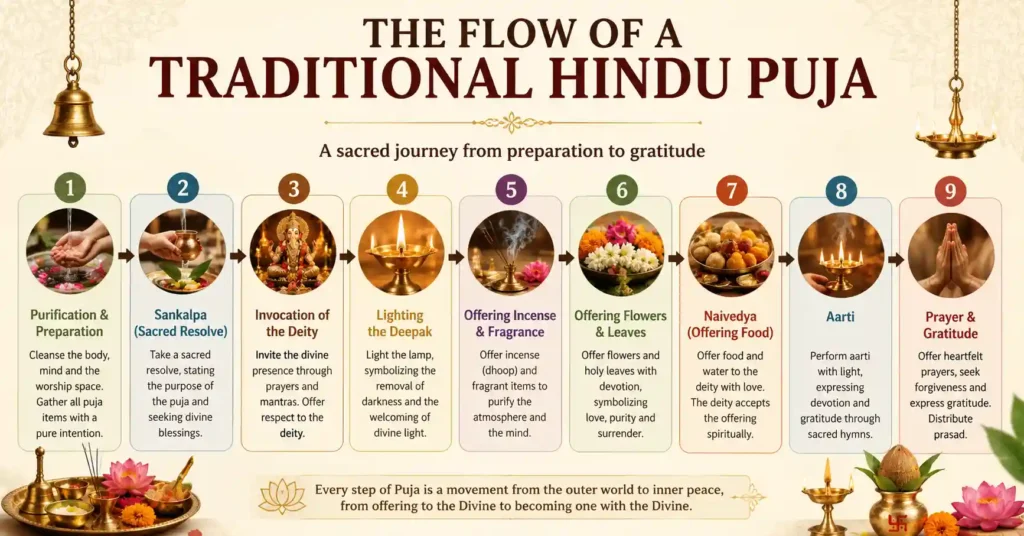
Although Puja may vary according to the deity, region, family tradition, or occasion, the basic sequence of Puja Vidhi remains largely the same across Sanatan Dharma. Each step prepares the devotee to move from the outer world towards inner devotion.
A simple Puja generally follows this order:
| Step | Purpose |
|---|---|
| 1. Clean the body and Puja place | Prepare yourself and create a pure environment. |
| 2. Arrange the Puja Samagri | Keep the required items ready before beginning the worship. |
| 3. Take Sankalpa | Mentally offer your intention and dedicate the Puja to the Divine. |
| 4. Ring the Ghanta or Blow the Shankh | Mark the beginning of the sacred ritual and focus the mind. |
| 5. Light the Deepak | Symbolize the removal of ignorance through the light of wisdom. |
| 6. Offer Agarbatti or Dhoop | Purify the surroundings and create a peaceful atmosphere. |
| 7. Offer Flowers, Water and Naivedya | Express gratitude, devotion, and surrender to the deity. |
| 8. Chant Mantras or Stotras | Invoke divine blessings and deepen spiritual concentration. |
| 9. Perform Aarti | Conclude the worship with light, prayer, and devotion. |
| 10. Receive Prasad | Accept the Divine’s blessings with humility and gratitude. |
While the external steps may differ, the true purpose of every Puja in Sanatan Dharma is the same. Each offering is a reminder to cultivate purity, gratitude, self-discipline, and devotion in daily life.
Ringing the Ghanta and Blowing the Shankh
The Puja Vidhi begins with the ringing of the ghanta (bell) or the blowing of the shankh (conch). These sacred sounds mark the beginning of worship and create an atmosphere of reverence and devotion.
The gentle sound of the ghanta helps the mind become alert and present. Rather than calling God, it reminds the devotee to let go of worldly thoughts and focus completely on the Divine.
The deep resonance of the shankh is traditionally believed to purify the surroundings and fill the space with positive vibrations. In Hindu tradition, the conch is closely associated with Bhagwan Vishnu and is regarded as a symbol of purity, victory, and auspiciousness.
Whether a bell is rung or a conch is blown, the purpose is the same. These sacred sounds prepare the mind, sanctify the environment, and help the devotee enter worship with concentration, peace, and bhav.
Lighting the Deepak: Inviting the Light of Wisdom
Lighting the deepak (sacred lamp) is one of the most important steps in Puja Vidhi. It marks the beginning of worship and symbolizes the removal of darkness from both the surroundings and the heart.
In Sanatan Dharma, the flame of the lamp represents gyan (divine knowledge), while darkness symbolizes ignorance and confusion. Lighting the deepak is a silent prayer that the light of wisdom may guide our thoughts, words, and actions.
Traditionally, a lamp is lit using ghee or pure oil. Ghee is associated with purity and sattvic qualities, while sesame or mustard oil is also commonly used in many rituals according to regional traditions and customs.
The burning wick teaches a beautiful spiritual lesson. It quietly consumes itself to spread light, reminding us to live with selflessness, humility, and service to others without seeking recognition.
For this reason, the sacred lamp is treated with great reverence and is not blown out forcefully. It is usually allowed to extinguish naturally or is respectfully put out according to traditional practice.
Offering Agarbatti and Dhoop: Purifying the Atmosphere
After lighting the deepak, agarbatti (incense sticks) or dhoop (fragrant resin or herbal incense) is offered as an important part of Puja Samagri. Their soothing fragrance creates a peaceful and sacred atmosphere, helping the mind become calm and focused during worship.
The rising smoke carries a beautiful spiritual message. It symbolizes prayers and devotion rising towards the Divine while reminding us to gradually let go of ego, negativity, and worldly attachments.
As the fragrance gently spreads in every direction, it represents the virtues of love, kindness, and compassion that should naturally flow from a devotee’s life. Just as incense fills the surroundings with a pleasant aroma, good thoughts and noble actions enrich the lives of everyone around us.
The fragrance slowly fades away, reminding us of the temporary nature of worldly pleasures and the importance of seeking lasting inner peace through devotion and righteous living.
The Kalash: A Symbol of Divine Presence and Creation
The Kalash is one of the most sacred items of Puja Samagri and holds a special place in many pujas, vrats, yajnas, weddings, Griha Pravesh, and other auspicious rituals. It is revered as a symbol of abundance, purity, and the presence of the Divine.
The water inside the Kalash represents life, purity, and the source of all creation. The mango leaves symbolize growth, prosperity, and the harmony of nature, while the coconut placed on top represents divine consciousness, selflessness, and spiritual awakening.
Together, these elements transform the Kalash into a representation of the universe and the Panchamahabhutas (the five elements of nature). It reminds devotees that all life originates from and ultimately returns to the Divine.
Placing a Kalash during Puja Vidhi is a symbolic invitation for peace, prosperity, positive energy, and divine blessings to enter the home and the hearts of those participating in the worship.
Panchamrit: The Sacred Nectar of Devotion
Panchamrit is a sacred mixture made from five ingredients: milk, curd, ghee, honey, and sugar. It is an important part of Puja Samagri and is widely used during abhishek (ritual bathing of the deity) in temples and home worship.
Each ingredient has a symbolic meaning. Milk represents purity, curd signifies prosperity, ghee symbolizes strength, honey reflects unity and sweetness, while sugar represents happiness and contentment. Together, they express the harmony of physical, mental, and spiritual well-being.
After the abhishek, Panchamrit is offered to devotees as prasad. Receiving it is considered a blessing, reminding us to cultivate purity, compassion, and gratitude in our daily lives.
Panchamrit teaches that true devotion should nourish not only the body but also the mind and soul, helping a devotee grow in faith, humility, and inner peace.
Types of Puja in Sanatan Dharma
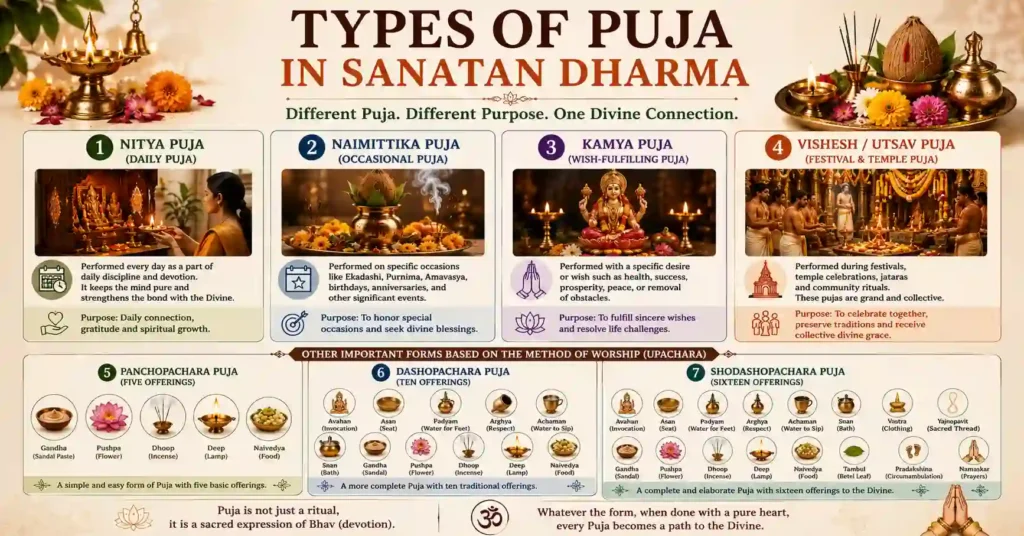
Sanatan Dharma recognizes different forms of Puja, each performed for a specific purpose. While the rituals may vary, the foundation of every Puja remains devotion, faith, and bhav.
| Type of Puja | Purpose |
|---|---|
| Nitya Puja | Daily worship performed as part of one’s regular spiritual practice. |
| Naimittika Puja | Worship performed on special occasions such as eclipses, birthdays, anniversaries, or religious observances. |
| Kamya Puja | Puja performed with a specific prayer or wish, such as good health, success, prosperity, or the well-being of the family. |
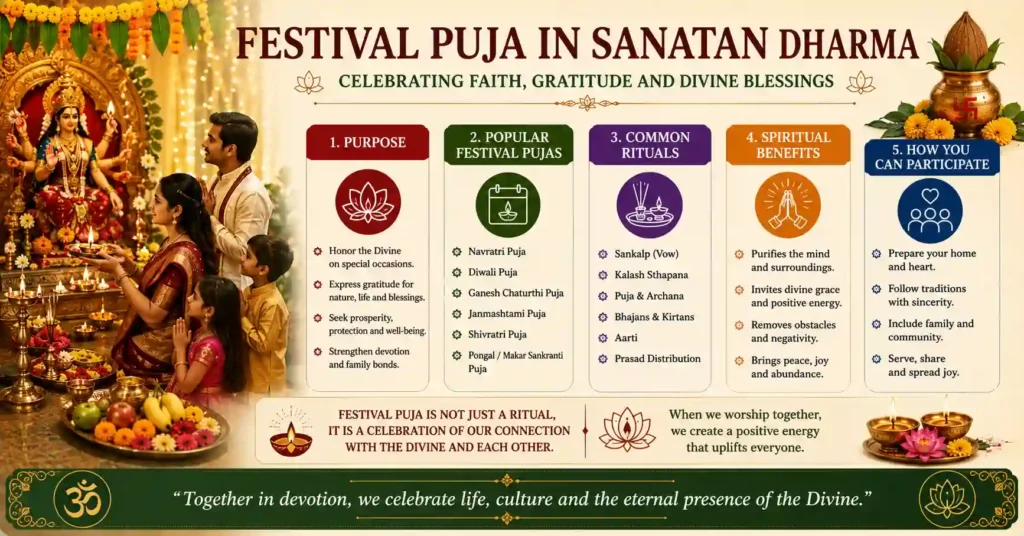
| Festival or Temple Puja | Elaborate worship performed during festivals like Navratri, Diwali, Janmashtami, Ganesh Chaturthi, or in temples according to traditional rituals. |
Apart from these, Hindu worship may also be classified according to the number of offerings made during the ritual. Panchopachara Puja includes five offerings, Dashopachara Puja includes ten, and Shodashopachara Puja consists of sixteen traditional offerings made to the deity.
Although the rituals differ in detail, the purpose of every Puja in Sanatan Dharma remains the same: to express gratitude, seek divine blessings, purify the mind, and strengthen one’s relationship with the Divine.
What Do Hindu Scriptures Say About Puja?
The importance of Puja in Sanatan Dharma is beautifully reflected in Hindu scriptures. They teach that the value of worship lies not in the richness of the offering but in the sincerity of the devotee’s heart.
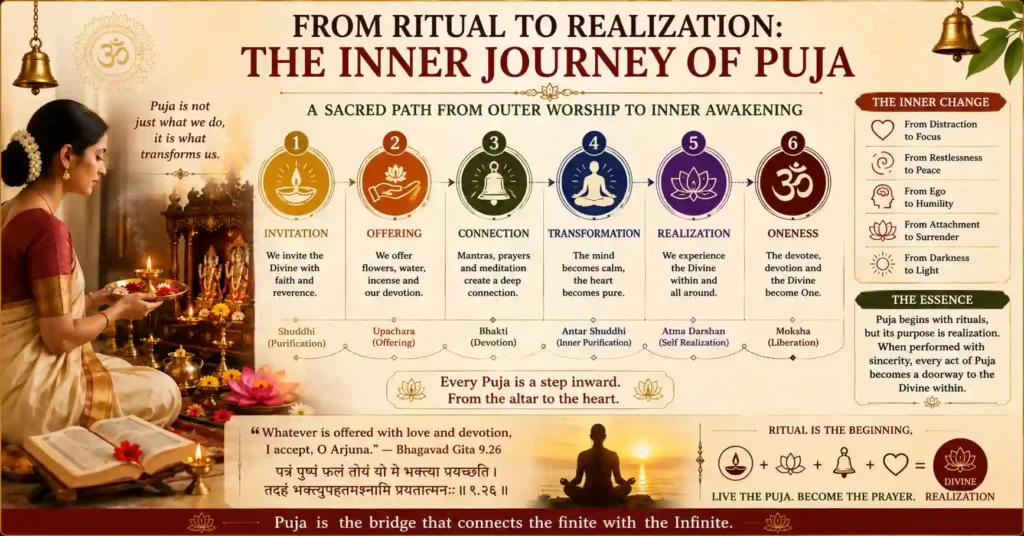
The Bhagavad Gita (9.26) expresses this timeless principle:
“Whoever offers Me with devotion a leaf, a flower, a fruit, or water, I lovingly accept that offering made with a pure heart.”
This teaching reminds us that God is pleased by bhav (devotion) rather than material wealth. Even the simplest Puja becomes spiritually meaningful when performed with faith, humility, and gratitude.
Similarly, the Puranas, Agamas, and various temple traditions describe Puja as a sacred means of expressing reverence, cultivating self-discipline, and strengthening one’s relationship with the Divine. Although rituals may differ across traditions, the underlying purpose remains the same: to worship with sincerity and develop inner purity.
Common Mistakes to Avoid During Puja
Puja in Sanatan Dharma is not about performing every ritual perfectly. What matters most is devotion, sincerity, and respect. Even so, following a few simple practices can help make worship more meaningful.
Here are some common mistakes devotees should avoid:
- Treating Puja as a routine task instead of offering it with full attention and devotion.
- Beginning worship without preparing the mind, while remaining distracted, angry, or restless.
- Using unclean or spoiled Puja Samagri, such as wilted flowers or stale food offerings.
- Rushing through mantras or rituals without understanding their meaning.
- Performing Puja only for material gains, while forgetting gratitude, humility, and spiritual growth.
- Neglecting cleanliness of the body, altar, and worship space before beginning Puja.
Remember, Sanatan Dharma teaches that God looks at the bhav of the devotee more than the perfection of the ritual. A simple Puja offered with a pure heart is always more valuable than an elaborate ceremony performed without faith.
Simple Daily Puja Routine for Beginners
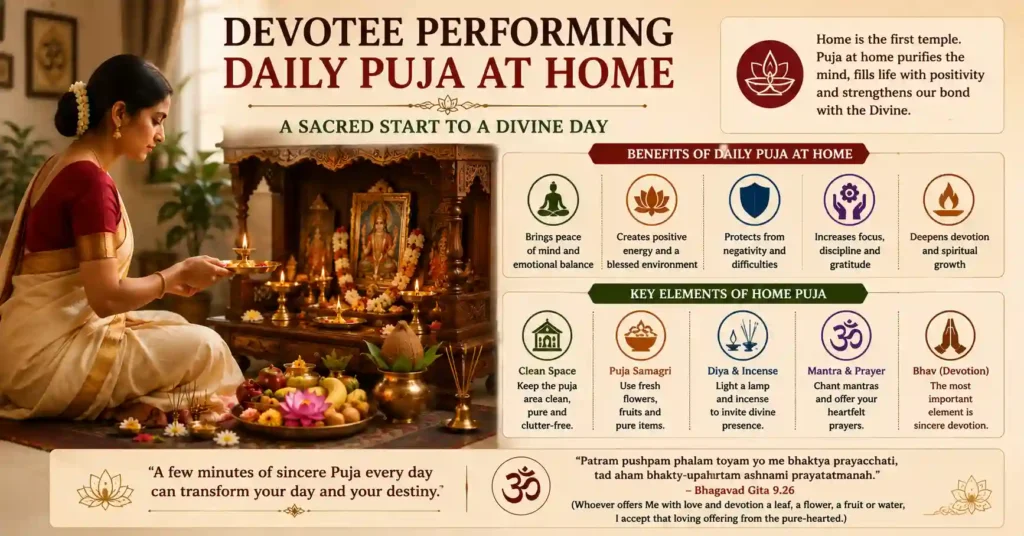
Starting a daily Puja does not have to be complicated. Even spending a few minutes each day with devotion can help develop a meaningful spiritual practice.
A simple daily routine may include:
- Clean yourself and the Puja space.
- Light a deepak and, if possible, an agarbatti or dhoop.
- Offer fresh flowers or clean water to the deity.
- Chant a simple mantra or recite a short prayer.
- Sit quietly for a few moments in gratitude and meditation.
- Perform a brief Aarti if you follow that tradition.
- Accept Prasad and conclude the worship with folded hands.
This entire routine can be completed in 10 to 15 minutes. More important than the duration is the consistency, sincerity, and bhav with which the Puja is performed. A small daily act of devotion often has a greater spiritual impact than occasional elaborate rituals.
Can Women Perform Puja During Menstruation?
The question of whether women can perform Puja in Sanatan Dharma during menstruation has been discussed for generations, and different traditions follow different practices.
In many families and temples, women traditionally refrain from performing certain rituals during their menstrual cycle. These customs are rooted in regional traditions, temple disciplines, and long-standing family practices rather than a single universal rule applicable across all of Sanatan Dharma.
At the same time, many spiritual teachers and contemporary Hindu scholars emphasize that sincere devotion and bhav are more important than physical conditions. They believe that prayer, mantra chanting, meditation, and remembrance of the Divine can continue with faith and reverence.
Ultimately, devotees are encouraged to follow the customs of their family tradition, sampradaya, or the guidance of their guru while maintaining respect for differing beliefs within Sanatan Dharma.
Why Puja Still Matters in Modern Life
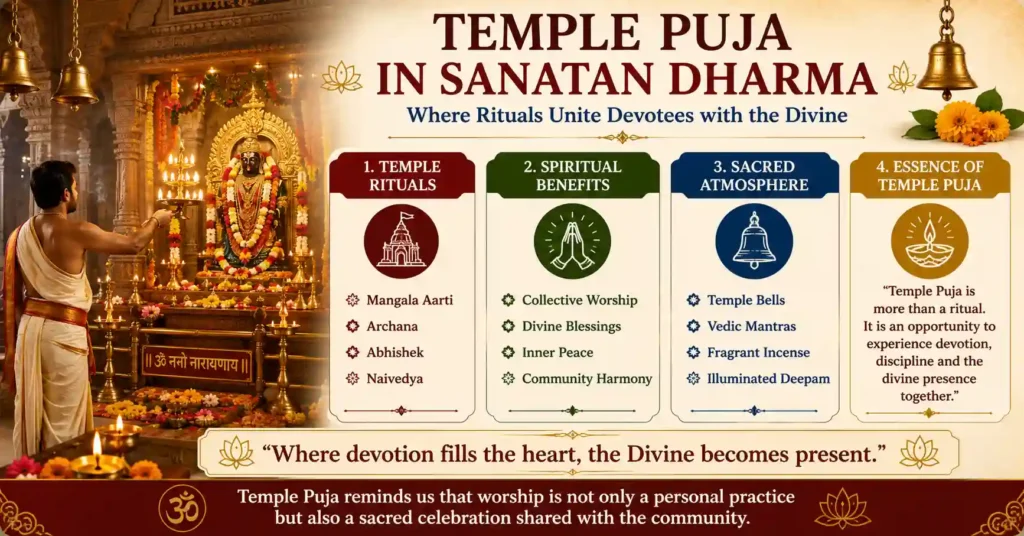
In today’s fast-paced world, many people believe that rituals are outdated or unnecessary. However, Puja in Sanatan Dharma was never meant to be a mechanical tradition. It is a mindful spiritual practice that helps bring balance, discipline, and inner peace into daily life.
Every step of the Puja Vidhi has a deeper purpose. The sound of the ghanta sharpens focus, the flame of the deepak steadies the mind, the fragrance of dhoop or agarbatti calms the emotions, and the discipline of daily worship creates stability and mindfulness.
Even spending a few quiet minutes in sincere prayer allows us to pause, reflect, and reconnect with ourselves and the Divine. In a world filled with constant distractions, Puja offers a sacred space for gratitude, self-awareness, and spiritual growth.
Puja is not about performing every ritual perfectly or using elaborate offerings. What truly matters is bhav, sincerity, and devotion. When worship is offered with a pure heart, even the simplest Puja becomes a meaningful spiritual experience.
Did You Know?
The word “Puja” comes from the Sanskrit root meaning to honor, worship, or show reverence.
While Puja is often associated with offering flowers, lamps, and incense, Hindu scriptures teach that the highest form of worship is sincere devotion (bhav). Even a simple prayer offered with faith is considered spiritually meaningful.
Conclusion
Puja in Sanatan Dharma teaches us to pause, surrender, and reconnect with the Divine. More than the number of rituals we perform, what truly matters is the bhav with which we offer our prayers. A simple act of worship performed with faith and sincerity is more meaningful than an elaborate ritual done without devotion.
When we understand the deeper meaning behind the ghanta, deepak, Kalash, Panchamrit, and other Puja Samagri, Puja is no longer just a routine. It becomes a path of self-awareness, gratitude, and spiritual growth that enriches everyday life.
If you wish to deepen your understanding of Sanatan Dharma, you may also explore our detailed guides on Kalash, Panchamrit, Abhishek Vidhi, and Daily Puja Rules, and continue your spiritual journey with The Sanatan Tales.
Suggested Reading
Many Hindu rituals and spiritual practices are interconnected, with each one helping devotees deepen their understanding of Sanatan Dharma and strengthen their connection with the Divine. If you would like to learn more about the meaning, symbolism, and significance of Hindu worship, explore these related articles from Sanatan Tales.
Tilak in Sanatan Dharma: Meaning, Types and Spiritual Significance
https://thesanatantales.com/tilak-in-sanatan-dharma/
Kalash: Meaning, Symbolism and Spiritual Significance in Hindu Rituals
https://thesanatantales.com/kalash-meaning-significance/
Panchopchar Pujan: Meaning, Vidhi and the Five Sacred Offerings
https://thesanatantales.com/panchopchar-pujan/
How to Do Daily Puja at Home in Sanatan Dharma
https://thesanatantales.com/daily-puja-at-home/
What is Havan and Why It Is Important in Sanatan Dharma
https://thesanatantales.com/what-is-havan/
Why Abhishek is Done to Shivling: Meaning, Story and Spiritual Truth
https://thesanatantales.com/why-abhishek-is-done-to-shivling/
Why Offerings Are Returned as Prasad in Hindu Rituals
https://thesanatantales.com/why-offerings-are-returned-as-prasad/
Puja (Hinduism)
https://en.wikipedia.org/wiki/Puja_(Hinduism)
FAQs
What is Puja in Sanatan Dharma?
Puja in Sanatan Dharma is a sacred act of worship through which devotees express devotion, gratitude, and surrender to the Divine. It includes offerings such as a deepak, flowers, incense, water, and prayers.
However, the true essence of Puja lies not in the ritual itself but in the bhav (devotion) with which it is performed. Whether done at home or in a temple, Puja helps purify the mind, cultivate discipline, and strengthen one’s spiritual connection with God.
Why is Puja important in Hinduism?
Puja is important because it reminds devotees to pause from their daily routine and connect with the Divine. Every step of Puja Vidhi, from lighting the lamp to offering flowers and chanting mantras, carries a symbolic meaning.
These rituals promote inner peace, gratitude, humility, and self-discipline. Regular worship also helps preserve family traditions and spiritual values across generations.
What are the essential Puja Samagri required for daily worship?
The basic Puja Samagri for daily worship generally includes a deepak (lamp), agarbatti or dhoop, flowers, water, kumkum, sandalwood paste, rice (akshata), fruits or sweets for naivedya, a bell (ghanta), and a Kalash or water vessel.
Depending on the deity being worshipped and regional traditions, additional items may also be used. More important than the number of offerings is the devotion with which they are presented.
Can I perform Puja at home without a priest?
Yes. In Sanatan Dharma, anyone can perform Puja at home with sincerity and devotion. A priest is generally required only for elaborate ceremonies such as weddings, Griha Pravesh, or major Vedic rituals.
For daily worship, a clean place, simple offerings, and a sincere heart are sufficient. Even a short prayer offered with faith is considered spiritually meaningful.
What is the best time to perform Puja?
The most preferred time is during the morning after bathing, especially around sunrise, when the mind is naturally calm and focused. Evening worship during Sandhya is also considered highly auspicious.
However, if these timings are not possible, Puja may be performed at any convenient time. A clean body, peaceful mind, and sincere devotion are more important than the exact hour.
Is elaborate Puja necessary to receive God's blessings?
No. Hindu scriptures repeatedly emphasize that God accepts devotion more than material offerings. A simple Puja performed with love, faith, and pure intention is considered more valuable than an elaborate ritual performed without sincerity.
The Bhagavad Gita teaches that even a leaf, a flower, a fruit, or water offered with devotion is lovingly accepted by the Divine.
What is the spiritual meaning of lighting a deepak during Puja?
Lighting the deepak symbolizes the victory of knowledge over ignorance. The flame represents divine wisdom that removes darkness from the mind and heart.
The burning wick also reminds devotees to live with selflessness, quietly spreading light and goodness without expecting recognition. This is why the lamp is treated with great reverence during Puja Vidhi.
What is the difference between daily Puja and festival Puja?
Daily Puja is usually brief and focuses on regular worship, prayers, and gratitude. Festival Puja is performed on special occasions such as Diwali, Navratri, Janmashtami, or Ganesh Chaturthi and often includes additional rituals and celebrations.
Although the rituals may differ, both forms of worship share the same purpose of expressing devotion, seeking divine blessings, and strengthening one’s spiritual connection with God.
Glossary of Important Terms
| Term | Meaning |
|---|---|
| Puja | A sacred act of worship in Sanatan Dharma through which devotees express devotion, gratitude, and surrender to the Divine. |
| Bhav | The feeling of sincere devotion, faith, and love with which worship is performed. |
| Puja Vidhi | The traditional method or sequence of performing a Puja according to Hindu customs and scriptures. |
| Puja Samagri | The collection of sacred items used during Puja, such as a lamp, flowers, incense, Kalash, kumkum, and prasad. |
| Deepak | A sacred lamp lit during Puja that symbolizes divine light, wisdom, and the removal of ignorance. |
| Ghanta | A ritual bell rung at the beginning of worship to focus the mind and create a sacred atmosphere. |
| Shankh | A sacred conch shell blown during rituals. It symbolizes purity, auspiciousness, and divine energy and is closely associated with Bhagwan Vishnu. |
| Kalash | A sacred pot filled with water and decorated with mango leaves and a coconut. It represents purity, prosperity, creation, and the presence of the Divine. |
| Panchamrit | A holy mixture of milk, curd, ghee, honey, and sugar used during Abhishek and later distributed as Prasad. |
| Abhishek | The ritual bathing of a deity with sacred substances such as water, milk, Panchamrit, honey, or ghee as an act of devotion. |
| Agarbatti | Fragrant incense sticks offered during Puja to create a peaceful atmosphere and symbolize the rise of prayers toward the Divine. |
| Dhoop | Sacred herbal or resin incense burned during worship to purify the surroundings and enhance spiritual focus. |
| Naivedya | Food, fruits, or sweets lovingly offered to the deity before being distributed as Prasad. |
| Prasad | Blessed food or offerings received after worship, symbolizing divine grace and blessings. |
| Aarti | A devotional ritual in which a lit lamp is waved before the deity while singing hymns or prayers. |
| Akshata | Unbroken rice grains, often mixed with turmeric, offered during rituals as a symbol of prosperity, completeness, and blessings. |
| Kumkum | A sacred red powder applied during worship and used for Tilak as a symbol of auspiciousness and divine energy. |
| Chandan | Sandalwood paste offered to the deity and applied as Tilak. It symbolizes purity, calmness, and spiritual wisdom. |
| Sankalpa | A solemn prayer or spiritual resolve made at the beginning of Puja, stating the purpose of the worship. |
| Mantra | Sacred Sanskrit words or verses chanted during worship to invoke divine blessings and concentrate the mind. |
| Bhagavad Gita | One of Hinduism’s most revered scriptures, containing the teachings of Bhagwan Krishna on duty, devotion, and spiritual wisdom. |
| Brahma Muhurta | The sacred period approximately 1.5 hours before sunrise, considered the most auspicious time for meditation, prayer, and spiritual practices. |
| Sandhya | The sacred transition periods of dawn and dusk, traditionally regarded as ideal times for prayer and daily worship. |
About the Author
Yateendra Chaturvedi is a spiritual writer, researcher, devotee, and the founder of The Sanatan Tales. With over 35 years of professional experience and a lifelong interest in Sanatan Dharma, he writes about Hindu deities, temples, scriptures, festivals, Mahavidyas, sacred stories, rituals, and living traditions that continue to guide and inspire devotees across India.
Drawing from traditional scriptures, regional beliefs, temple traditions, devotional literature, and historical sources, he aims to present authentic, well-researched, and easy-to-understand content for modern readers. His work focuses on preserving spiritual wisdom, explaining sacred traditions, and helping seekers develop a deeper understanding of India’s rich spiritual heritage.
Through The Sanatan Tales, Yateendra strives to make the timeless teachings of Sanatan Dharma simple, meaningful, and relevant for today’s generation while maintaining respect for traditional sources, regional practices, and diverse spiritual perspectives.
Learn More About Yateendra Chaturvedi →
https://thesanatantales.com/about-the-author/
References & Sources
This article is based on the teachings, beliefs, traditions, and practices followed within Sanatan Dharma. The content has been prepared by referring to Hindu scriptures, Puranas, Itihasas, Smritis, traditional commentaries, temple traditions, and the rich oral heritage preserved through the guru-shishya (guru-disciple) tradition. It also draws upon insights from authentic spiritual literature, religious study materials, and traditional Hindu practices followed across different regions of India.
Note: Beliefs, customs, rituals, and interpretations may vary across different sampradayas (traditions), sects, regions, and spiritual lineages within Sanatan Dharma. The purpose of this article is not to establish any single interpretation as the absolute truth but to present widely accepted religious and spiritual perspectives in a simple, respectful, and easy-to-understand manner for readers.
Read More Interesting Articles on Sanatan Dharma