Vrindavan, also known as Vrindaban or Brindaban, is a historic and deeply sacred town in the Mathura district of Uttar Pradesh. Nestled in the heart of Braj Bhoomi, it is revered as the place where Lord Krishna spent much of His childhood, filling the land with divine play, love, and eternal devotion.
Often described as the spiritual twin of Mathura, the birthplace of Lord Krishna, this sacred town represents His growing years of playful leelas, enchanting flute melodies, and unconditional love. Together, Mathura and Braj form one of the holiest pilgrimage regions in Sanatan Dharma.
A Vrindavan pilgrimage is unlike any other spiritual journey because devotion is woven into everyday life. The town is home to thousands of temples dedicated to Radha and Krishna, where centuries-old traditions of Krishna bhakti continue to inspire devotees from around the world.
In this guide, you will discover the spiritual significance of Vrindavan, its most revered temples, sacred places like Nidhivan and Keshi Ghat, the best time to visit, travel tips, important darshan information, and practical advice to help you experience this timeless land of Lord Krishna with devotion and confidence.
Vrindavan at a Glance
Before planning your pilgrimage, here is a quick overview of the most important information about Vrindavan. These facts will help you understand the town’s spiritual significance, travel essentials, and what to expect during your visit.
| Quick Facts | Details |
|---|---|
| Location | Mathura District, Uttar Pradesh, India |
| Sacred Region | Braj Bhoomi (Braj Mandal) |
| Primary Deities | Shri Radha Rani and Lord Krishna |
| Famous Temples | Banke Bihari Temple, Prem Mandir, ISKCON Krishna Balaram Temple, Radha Raman Temple |
| Sacred River | Yamuna Ji |
| Best Time to Visit | October to March |
| Major Festivals | Braj Ki Holi, Janmashtami, Radhashtami, Jhulan Yatra, Kartik Maas |
| Nearest Railway Station | Mathura Junction (12 km) |
| Nearest Airport | Agra Airport (75 km) and Indira Gandhi International Airport, Delhi (170 km) |
| Recommended Duration | 2–3 Days |
| Famous For | Krishna Leelas, Radha-Krishna devotion, ancient temples, Yamuna Ghats, Parikrama |
| Ideal For | Pilgrims, spiritual seekers, families, devotees, and cultural travellers |
Table of Contents
ToggleWhy Vrindavan Holds a Special Place in Sanatan Dharma
Vrindavan is remembered not for power or conquest, but for divine love. Revered Hindu scriptures such as the Bhagavata Purana, Harivamsa, and Brahma Vaivarta Purana, together with centuries-old Vaishnava traditions, describe this sacred land as the playground of Lord Krishna, where every forest, grove, and pathway is associated with His divine leelas.
These sacred texts, along with the teachings of Vaishnava acharyas and centuries of temple worship, have preserved the spiritual identity of Braj and continue to inspire millions of devotees across the world.
A Vrindavan pilgrimage is an experience of bhakti that feels deeply personal. Here, devotees worship Lord Krishna not with fear or distance, but with the affection of a child, a friend, or a beloved.
This intimate relationship with the Divine has been preserved through the teachings of great saints, temple traditions, devotional music, and generations of Krishna devotees. The sacred town is also inseparable from the eternal love of Radha and Krishna, celebrated through kirtans, festivals, parikrama, and daily worship.
Many saints have said that even walking through these sacred streets leaves a lasting impression on the heart. Whether understood as faith, tradition, or a deeply personal spiritual experience, Vrindavan continues to draw devotees back again and again, reminding them that true devotion begins with love, humility, and surrender.
Did You Know? Interesting Facts About Vrindavan
Before exploring the temples and sacred places, here are some fascinating facts that make Vrindavan one of the most unique pilgrimage destinations in Sanatan Dharma.
Vrindavan is believed to have more than 5,000 temples, ranging from world-famous shrines to small neighbourhood temples where daily worship has continued for centuries.
The traditional greeting in Braj is “Radhe Radhe” rather than “Hello” or “Namaste.” Devotees believe chanting Shri Radha Rani’s name fills the heart with devotion.
According to Vaishnava tradition, Nidhivan remains one of the most sacred places in Braj, where devotees believe Radha and Lord Krishna perform the divine Raslila every night.
Banke Bihari Temple is famous for its unique Jhanki Darshan, where the curtains before the deity are opened and closed repeatedly as an expression of loving devotion.
The sacred Yamuna River is worshipped as a goddess and is regarded as an eternal witness to Lord Krishna’s childhood leelas in Braj.
Prem Mandir, built entirely of white Italian marble, is one of the newest landmarks in Vrindavan and is admired for its illuminated evening displays depicting Krishna’s divine pastimes.
The traditional Vrindavan Parikrama covers about 10 kilometres, while the complete Braj Chaurasi Kos Yatra extends to approximately 252 kilometres, connecting the major places associated with Lord Krishna’s life.
Saints such as Chaitanya Mahaprabhu, the Six Goswamis of Vrindavan, and Swami Haridas played a significant role in preserving and reviving the sacred heritage of Braj, inspiring millions of devotees through their teachings and devotion.
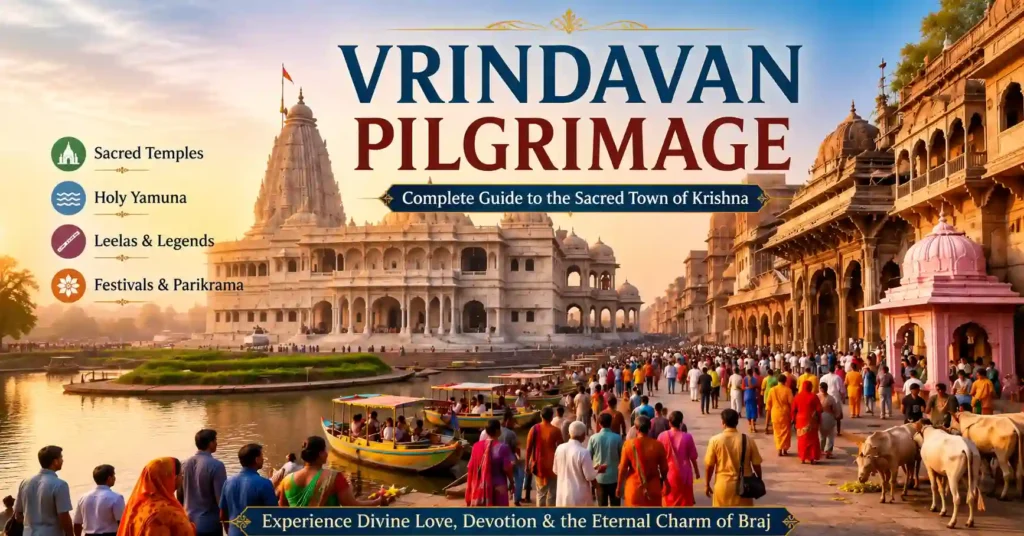
Vrindavan Temples and the Living Tradition of Worship
The temples of Vrindavan reflect the many expressions of Krishna bhakti that have flourished across Braj for centuries.
Each shrine preserves a unique mood of devotion, allowing pilgrims to experience Lord Krishna as a playful child, a beloved friend, or the Supreme Divine worshipped with complete surrender.
Together, these Radha-Krishna temples form the spiritual heart of the sacred town, where daily darshan, kirtans, aartis, and festivals keep centuries-old traditions alive. Visiting them is not just about seeing beautiful temples but about experiencing the living culture of devotion.
Among these sacred shrines, Banke Bihari Temple remains the most cherished destination for many devotees and an essential stop on every Vrindavan pilgrimage.
Banke Bihari Temple and the Unique Darshan Tradition
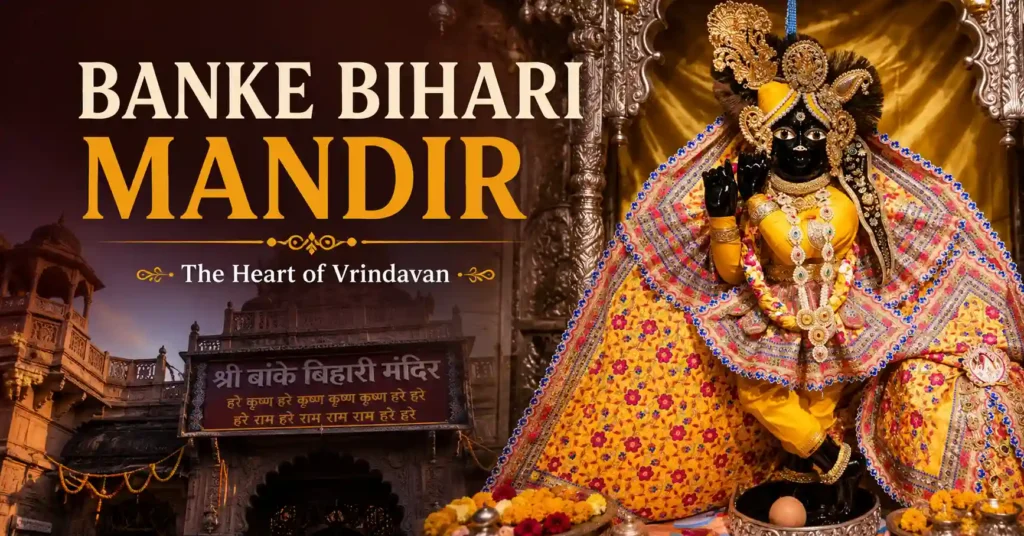
No Vrindavan pilgrimage feels complete without visiting Banke Bihari Temple, one of the most revered shrines dedicated to Lord Krishna. The temple is famous for its unique style of worship, where the deity is lovingly served as a living divine presence rather than a distant idol.
The temple’s darshan follows a distinctive tradition. The curtains before the deity are opened and closed every few moments, symbolising that Lord Krishna’s divine beauty is so captivating that devotees should not gaze upon Him continuously.
This centuries-old practice is linked to the devotional legacy of Swami Haridas, the great saint who is believed to have manifested Banke Bihari Ji through his devotion.
Unlike many temples, there are no loud bells or elaborate rituals here. Soft chanting, heartfelt prayers, and an atmosphere of deep devotion create a peaceful spiritual experience.
Many pilgrims find themselves unexpectedly moved, with tears, smiles, or quiet silence becoming a natural expression of their devotion.
Prem Mandir: Devotion Expressed Through Beauty
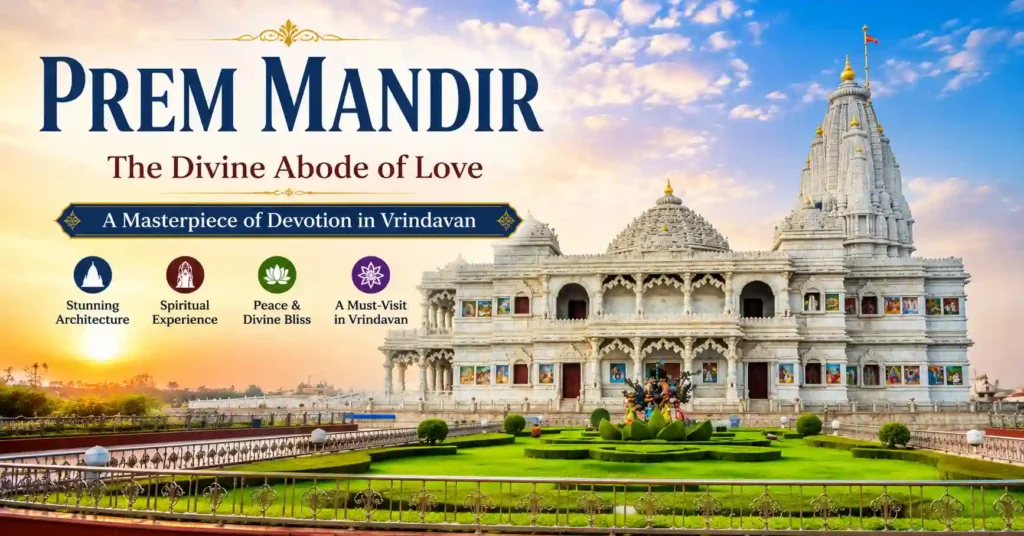
Prem Mandir is one of the newest and most magnificent temples in the sacred town. Built entirely of white Italian marble, it is renowned for its intricate carvings that beautifully depict the divine pastimes of Radha and Lord Krishna, making it one of the most visited Krishna temples in Braj.
As evening falls, the temple transforms into a breathtaking spiritual attraction. Illuminated marble, devotional music, colourful fountains, and beautifully crafted tableaux bring scenes from Krishna’s life to life, creating a memorable experience for devotees and visitors alike.
Its spacious layout and well-maintained परिसर make it especially comfortable for families, senior citizens, and first-time pilgrims.
Despite its architectural grandeur, the temple conveys a simple spiritual message. Divine love, expressed through devotion, compassion, and surrender, is the highest form of worship.
ISKCON Krishna Balaram Temple and Global Krishna Bhakti
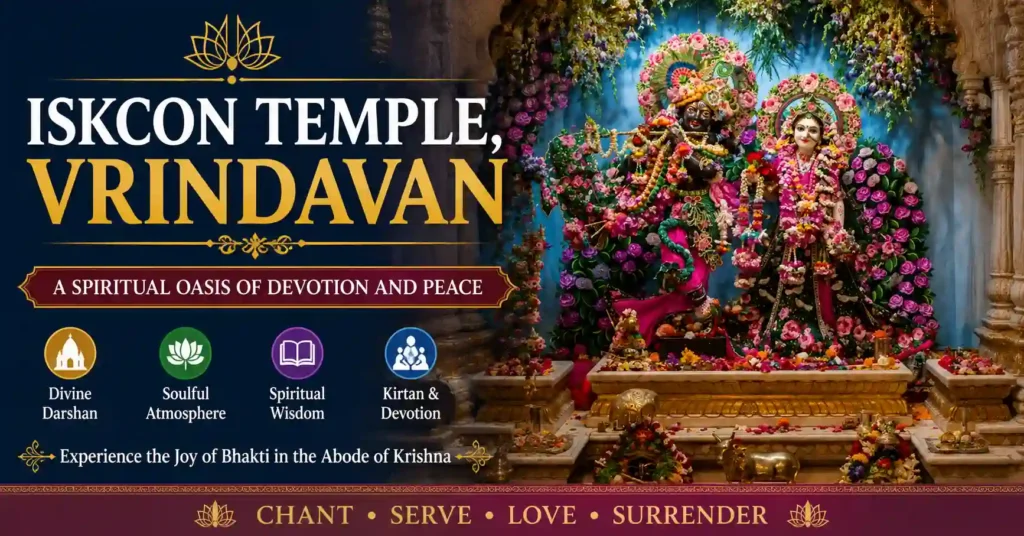
The ISKCON Krishna Balaram Temple is known for its peaceful atmosphere, disciplined worship, and warm hospitality. Dedicated to Lord Krishna and Lord Balaram, it offers devotees a serene space for prayer, meditation, and spiritual learning, making it especially welcoming for first-time pilgrims.
Daily kirtans, beautifully organised aartis, Bhagavad Gita discourses, and wholesome prasadam create a devotional environment that encourages visitors to spend time in reflection rather than simply moving from one temple to another. The temple has played a significant role in sharing Krishna bhakti with people across the world.
Devotees from India and many other countries gather here throughout the year, reflecting the global appeal of Lord Krishna’s teachings. For many pilgrims, a visit to this temple becomes an opportunity to experience devotion beyond language, culture, and national boundaries.
Nidhivan and Seva Kunj: Where Faith Deepens
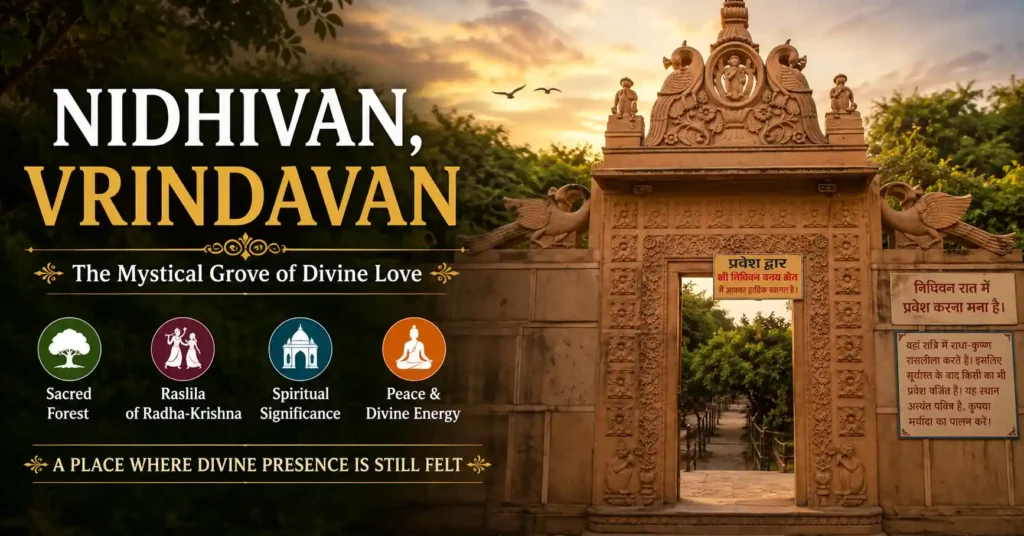
Nidhivan is one of the most mysterious and revered places in Braj. This sacred grove, filled with uniquely shaped tulsi trees, is closely associated with the traditional belief that Radha and Lord Krishna perform the divine Raslila here every night.
While this belief forms an important part of local devotional tradition, it is preserved through temple customs and oral heritage rather than historical verification.
These long-standing traditions continue to shape the way devotees approach the site. The grove is closed after sunset, nearby residents traditionally keep their windows shut, and no one is permitted to remain inside at night.
For many pilgrims, these customs inspire a deep sense of reverence and remind them to respect the sanctity of this sacred place.
Located nearby, Seva Kunj is believed to be the place where Shri Radha lovingly served Lord Krishna after the Raslila. Surrounded by peaceful gardens and ancient temples, it offers a quieter atmosphere for prayer and contemplation.
Many devotees spend time here in silence, reflecting on the ideals of selfless service, divine love, and complete devotion.
Yamuna Ji and Her Eternal Connection with Krishna
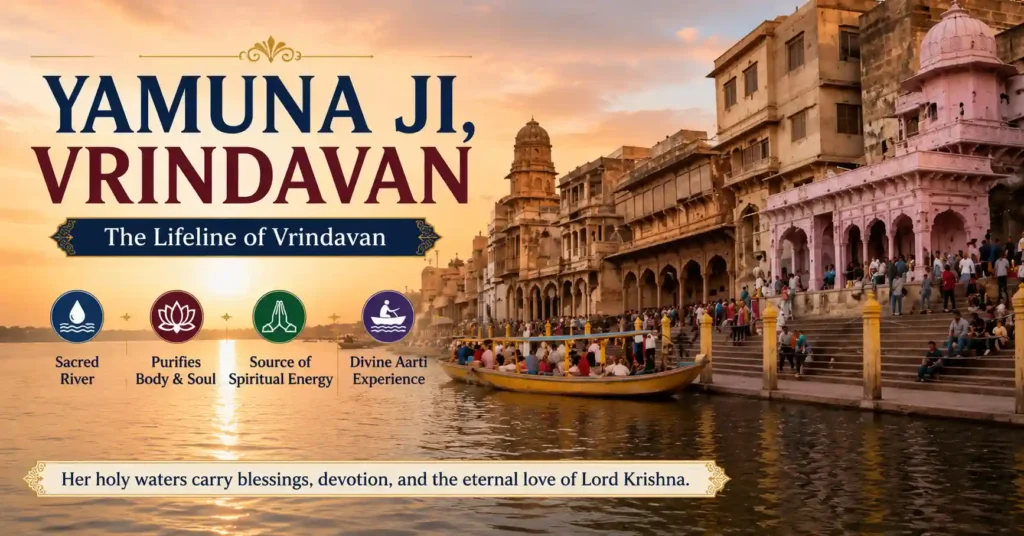
No visit to this sacred land feels complete without seeking the blessings of Yamuna Ji, the holy river closely associated with Lord Krishna’s childhood leelas.
In Vaishnava tradition, she is revered not merely as a river but as a divine goddess whose gentle presence has shaped the spiritual life of Braj for centuries.
Among the many riverfronts, Keshi Ghat is especially revered for its connection with Krishna’s pastimes and its timeless spiritual atmosphere.
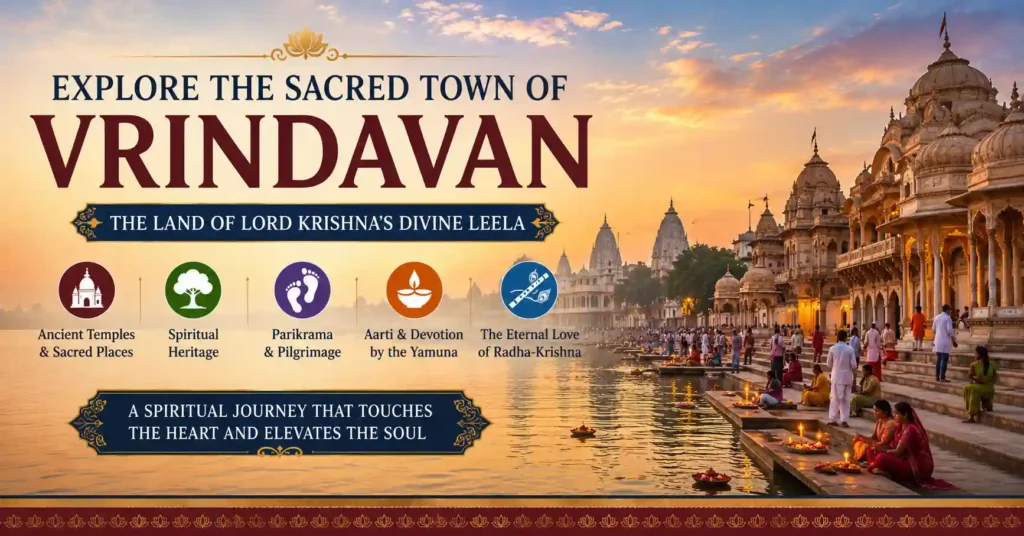
Early morning walks or an evening visit during the Yamuna Aarti offer moments of quiet reflection, as floating lamps, devotional chants, and the flowing river create a deeply peaceful experience.
For devotees, worshipping Yamuna Ji is an integral part of a Vrindavan pilgrimage. Her sacred waters are regarded as a symbol of divine grace and eternal devotion, reminding pilgrims of the inseparable bond between Radha, Krishna, and the sacred land of Braj.
Vrindavan Parikrama and Braj Chaurasi Kos Yatra
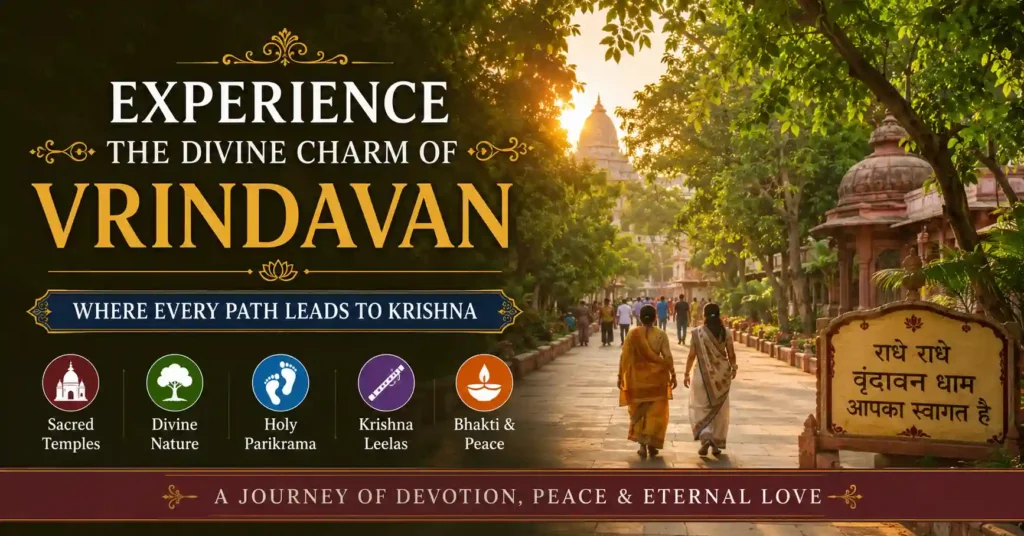
For many devotees, a pilgrimage to Vrindavan is incomplete without performing Parikrama, the sacred act of walking around a holy place while remembering Lord Krishna. It is considered an expression of devotion, humility, and gratitude rather than a physical exercise. Pilgrims chant the names of Radha and Krishna as they walk, believing that every step brings them closer to the Divine.
Vrindavan Parikrama
The traditional Vrindavan Parikrama covers approximately 10 kilometres and can usually be completed in 2 to 3 hours, depending on the pace and time spent at temples. The route passes several revered places, including Keshi Ghat, Madan Mohan Temple, ISKCON Krishna Balaram Temple, and other sacred shrines associated with Lord Krishna’s divine pastimes.
Many devotees begin the parikrama early in the morning or around sunset, when the weather is pleasant and the atmosphere is peaceful. Walking barefoot is a common practice for those who are physically comfortable, although it is not compulsory.
Braj Chaurasi Kos Yatra
The Braj Chaurasi Kos Yatra is one of the most revered pilgrimages in the Krishna tradition. Covering about 84 kos (approximately 252 kilometres), it includes the major sacred places associated with Lord Krishna’s life, such as Mathura, Vrindavan, Govardhan, Barsana, Nandgaon, Gokul, Radha Kund, and many other holy sites across Braj.
Traditionally, devotees complete this yatra over several days under the guidance of spiritual teachers or pilgrimage groups. It is regarded as a journey of devotion, self-discipline, and remembrance of Krishna’s divine leelas rather than simply travelling from one place to another.
Whether you undertake the short Vrindavan Parikrama or the complete Braj Chaurasi Kos Yatra, the true purpose remains the same: to deepen your connection with Radha and Krishna while experiencing the sacred atmosphere that has inspired devotees for centuries.
Stories That Continue to Shape Vrindavan
The history of Vrindavan cannot be separated from the divine childhood and youth of Lord Krishna. Although He was born in Mathura, it is in the forests and groves of Braj that His playful, compassionate, and loving nature is believed to have unfolded through countless Krishna leelas.
Many of the town’s sacred places are connected with these timeless stories. Devotees remember Makhan Chor Leela, where young Krishna lovingly stole butter from the gopis, Kaliya Mardan, in which He subdued the serpent Kaliya in the Yamuna, Venu Gaan, the enchanting flute melodies that drew every heart towards Him, and the divine Raslila, celebrating the eternal love between Radha and Krishna.
Another well-known episode, Chir Haran Leela, is traditionally understood by Vaishnava acharyas as a spiritual lesson in complete surrender to the Divine rather than a simple act of mischief.
These sacred narratives continue to influence daily life in Braj through kirtans, festivals, devotional dramas, and temple traditions. They are not remembered merely as stories but as living expressions of faith that inspire love, humility, and devotion.
Although many of the ancient forests described in the Bhagavata Purana have changed over time and the Yamuna has shifted its course, the sacred town still preserves temple gardens, holy groves, and places of worship that keep the memory of these divine pastimes alive for every pilgrim.
The Spiritual Experience of Visiting Vrindavan
Many devotees describe their journey to Vrindavan as more than a pilgrimage. The gentle chanting of “Radhe Radhe,” the sound of temple bells, devotional kirtans, and the peaceful banks of Yamuna Ji create an atmosphere where faith feels natural and deeply personal.
Unlike many sacred places, there is no expectation that every visitor must perform elaborate rituals. Some find peace while attending aarti, others during parikrama, quiet meditation, or simply sitting in a temple courtyard watching devotees immersed in Krishna bhakti.
Some pilgrims visit for a single day and leave with cherished memories, while others feel an irresistible desire to return again and again. Beyond the temples and sacred sites, it is the spirit of Braj, its simplicity, devotion, and timeless love for Lord Krishna, that leaves the deepest impression on the heart.
For many, this inner transformation becomes the greatest blessing of the journey, reminding them that the true pilgrimage continues long after they have returned home.
The Meaning of "Radhe Radhe" in Vrindavan
One of the first things visitors notice in Vrindavan is the greeting “Radhe Radhe.” Whether in temple courtyards, market streets, ashrams, or along the parikrama route, devotees greet one another by chanting the name of Shri Radha Rani instead of using ordinary greetings.
In the devotional traditions of Braj, Radha Rani is revered as the embodiment of pure love and the eternal companion of Lord Krishna. Chanting “Radhe Radhe” is therefore regarded as an expression of humility, devotion, and remembrance of the Divine. For many devotees, it is not merely a greeting but a form of naam smaran (loving remembrance of God’s holy name).
As pilgrims spend time in the sacred town, they often find themselves naturally repeating this simple greeting. Over time, “Radhe Radhe” becomes more than words. It reflects the spirit of Braj, where devotion is woven into everyday conversations, temple worship, and daily life.
Best Time to Visit Vrindavan
The best time to visit Vrindavan is from October to March, when the weather is pleasant and comfortable for temple visits, parikrama, and exploring the sacred streets of Braj. The cooler months make it easier to spend long hours visiting temples and attending devotional activities.
| Season / Festival | Months | What to Expect | Best For |
|---|---|---|---|
| Winter Recommended | October to March | Pleasant weather, comfortable temple visits, parikrama, sightseeing, and evening aartis. | First-time visitors, families, senior citizens, and photographers |
| Braj Ki Holi | February-March (dates vary) | Famous Lathmar Holi, Phoolon Ki Holi, colourful celebrations, devotional music, and huge crowds. | Devotees wanting to experience Braj’s unique Holi traditions |
| Janmashtami | August-September (dates vary) | Grand celebrations of Lord Krishna’s birth, special darshan, bhajans, midnight aarti, and decorated temples. | Krishna devotees and festival lovers |
| Radhashtami | August-September (dates vary) | Celebrations dedicated to Shri Radha Rani with special prayers, kirtans, and temple processions. | Devotees of Radha-Krishna |
| Kartik Maas | October-November | Deep daan, Yamuna Aarti, devotional singing, parikrama, and a spiritually uplifting atmosphere. | Pilgrims seeking a peaceful and devotional experience |
| Summer | April to June | Very hot weather, fewer crowds, and shorter waiting times at major temples. | Budget travellers and experienced pilgrims comfortable with the heat |
| Monsoon | July to September | Lush greenery, moderate crowds, and festivals like Jhulan Yatra, though occasional rain may affect sightseeing. | Visitors who enjoy a quieter pilgrimage and seasonal beauty |
If you are visiting for the first time, plan your trip between October and March for the most comfortable weather and a pleasant pilgrimage experience.
Those wishing to witness the vibrant devotional culture of Braj should consider visiting during Janmashtami, Radhashtami, Braj Ki Holi, or Kartik Maas, keeping in mind that these festivals attract large crowds and longer waiting times at major temples.
Major Festivals Celebrated in Vrindavan
Festivals in Vrindavan are more than religious celebrations. They are a living expression of Krishna bhakti, where temples, streets, and ghats come alive with devotional music, colourful processions, and the joyful chanting of “Radhe Radhe.” If your visit coincides with one of these occasions, you will experience the spiritual energy of Braj at its finest.
| Festival | When Celebrated | Highlights |
|---|---|---|
| Braj Ki Holi | February-March | Famous for Phoolon Ki Holi, Widow Holi, colourful celebrations, devotional singing, and temple festivities across Braj. |
| Janmashtami | August-September | Celebrates the birth of Lord Krishna with midnight aarti, special darshan, bhajans, devotional processions, and beautifully decorated temples. |
| Radhashtami | August-September | Marks the appearance day of Shri Radha Rani with special pujas, kirtans, flower decorations, and devotional celebrations. |
| Jhulan Yatra | July-August | During the monsoon, beautifully decorated swings are prepared for Radha and Krishna in many temples, accompanied by bhajans and cultural programmes. |
| Kartik Maas | October-November | One of the holiest months for devotees, featuring Deep Daan, Yamuna Aarti, parikrama, devotional singing, and special temple rituals. |
| Govardhan Puja & Annakut | October-November | Celebrates Lord Krishna’s lifting of Govardhan Hill with magnificent food offerings (Annakut) and special worship in temples throughout Braj. |
Each festival offers a unique spiritual experience. Pilgrims visiting during these sacred occasions can witness centuries-old traditions, but they should also be prepared for larger crowds, longer waiting times for darshan, and higher demand for accommodation. Booking hotels and transport well in advance is highly recommended.
How to Reach Vrindavan
Reaching Vrindavan is convenient from most parts of India, thanks to its excellent road, rail, and air connectivity. Whether you are planning a short pilgrimage from Delhi or travelling from another state, the sacred town is easily accessible. Once you arrive, local transport options make it simple to visit the major temples, ghats, and other holy places across Braj.
| City | Approx. Distance | Travel Time |
|---|---|---|
| Delhi | 180 km | 3–4 hours |
| Noida | 165 km | 3 hours |
| Agra | 75 km | 1.5–2 hours |
| Jaipur | 235 km | 4.5–5 hours |
| Lucknow | 400 km | 7–8 hours |
| Chandigarh | 355 km | 6–7 hours |
| Haridwar | 300 km | 5–6 hours |
| Ujjain | 690 km | 11–12 hours |
How to Reach Vrindavan
By Road
Vrindavan is well connected by national highways and expressways. Travellers from Delhi and NCR usually take the Yamuna Expressway, making the journey comfortable in about 3 to 4 hours. Regular government and private buses, taxis, and self-drive vehicles are available from Delhi, Agra, Jaipur, and other major cities.
By Train
The nearest railway station is Mathura Junction (MTJ), located about 12 km from Vrindavan. It is one of North India’s major railway hubs, with direct trains from Delhi, Mumbai, Kolkata, Chennai, Ahmedabad, Varanasi, and many other cities.
From Mathura Junction, pilgrims can easily reach Vrindavan by taxi, auto-rickshaw, e-rickshaw, or local bus in about 20 to 30 minutes, depending on traffic.
By Air
The nearest airports are:
| Airport | Distance from Vrindavan |
|---|---|
| Agra Airport | ~75 km |
| Indira Gandhi International Airport, Delhi | ~170 km |
Delhi Airport offers the widest range of domestic and international flights, making it the preferred choice for most travellers.
Local Transport in Vrindavan
Walking is one of the best ways to experience the narrow lanes, temples, and spiritual atmosphere of the sacred town. Many important temples are located within a short distance of one another.
For longer distances, pilgrims can use:
- E-rickshaws (most popular for local travel)
- Auto-rickshaws
- Cycle rickshaws
- App-based taxis (available from Mathura and nearby areas)
- Private taxis for visiting Govardhan, Barsana, Gokul, Nandgaon, and other places in Braj.
During major festivals such as Janmashtami, Radhashtami, and Braj Ki Holi, some roads may be closed to vehicles. Walking becomes the fastest and most convenient way to reach many temples.
With good connectivity and convenient local transport, planning a pilgrimage to Vrindavan is relatively easy. To make the most of your visit, start your day early, wear comfortable footwear, and keep enough time for darshan, parikrama, and quiet moments along Yamuna Ji.
A well-planned journey allows you to experience not only the famous temples but also the peaceful spiritual atmosphere that makes Braj so special.
Where to Stay in Vrindavan
Vrindavan offers accommodation for every type of pilgrim, from simple dharamshalas to comfortable hotels and guest houses. Many devotees prefer staying close to the major temples so they can attend early morning darshan, evening aartis, and devotional programmes without travelling long distances.
| Accommodation Type | Suitable For | Features |
|---|---|---|
| Dharamshalas | Budget pilgrims and devotees | Simple rooms, affordable rates, basic facilities, and a spiritual atmosphere. |
| Temple Guest Houses | Families and spiritual seekers | Peaceful surroundings, clean accommodation, and easy access to temples. |
| Budget Hotels | Solo travellers and families | Comfortable rooms with essential amenities at reasonable prices. |
| Mid-range Hotels | Families and groups | Air-conditioned rooms, restaurants, parking, and modern facilities. |
| Premium Hotels & Resorts | Visitors seeking added comfort | Spacious rooms, better amenities, and convenient transport services. |
Best Areas to Stay
Near Banke Bihari Temple – Ideal for devotees who want to attend early morning darshan and experience the traditional atmosphere of the old town.
Near Prem Mandir and ISKCON Temple – Suitable for families and senior citizens because of wider roads, better parking, and easier accessibility.
Near Mathura Road – A convenient choice for travellers arriving by car or planning to visit nearby places such as Govardhan, Gokul, and Barsana.
If you are visiting during Janmashtami, Radhashtami, Braj Ki Holi, or Kartik Maas, book your accommodation well in advance, as hotels and dharamshalas fill up quickly during these peak pilgrimage seasons.
One-Day and Two-Day Vrindavan Pilgrimage Itinerary
Whether you have just a few hours or an entire weekend, planning your temple visits in advance helps you experience the spiritual atmosphere of Braj without feeling rushed. The following suggested itineraries cover the major temples and sacred places while allowing time for darshan, prayer, and quiet reflection.
One-Day Vrindavan Itinerary
If you have only one day, begin your journey early in the morning.
| Time | Suggested Activity |
|---|---|
| 6:00 AM – 8:00 AM | Visit Banke Bihari Temple for morning darshan. |
| 8:00 AM – 9:00 AM | Walk through the nearby temple lanes and enjoy a traditional breakfast. |
| 9:00 AM – 10:30 AM | Visit Radha Raman Temple and nearby historic temples. |
| 10:30 AM – 12:00 PM | Spend time at Nidhivan and Seva Kunj. |
| 12:00 PM – 2:30 PM | Lunch and rest. |
| 3:00 PM – 5:00 PM | Visit the ISKCON Krishna Balaram Temple and attend devotional kirtans if possible. |
| 5:30 PM – 7:30 PM | Visit Keshi Ghat for Yamuna Aarti (if scheduled) and enjoy the peaceful riverside atmosphere. |
| 7:30 PM onwards | End the day at Prem Mandir, where the evening illumination and fountain show create a memorable devotional experience. |
Two-Day Vrindavan Itinerary
A two-day visit allows you to explore the sacred town at a slower pace while also discovering nearby places associated with Lord Krishna.
Day 1
Banke Bihari Temple
Radha Raman Temple
Nidhivan
Seva Kunj
ISKCON Krishna Balaram Temple
Prem Mandir (Evening)
Day 2
Keshi Ghat and Yamuna Aarti
Rangji Temple
Govind Dev Ji Temple
Shahji Temple
Local markets for devotional books, Tulsi malas, and prasad
If time permits, you can also plan a short excursion to Mathura, Govardhan, Barsana, or Gokul, all of which are closely connected with the divine pastimes of Lord Krishna and form an important part of the Braj pilgrimage circuit.
These itineraries are only suggested routes. Every devotee experiences Vrindavan differently, so feel free to spend more time at the places where you feel the deepest spiritual connection rather than trying to visit every temple in a single trip.
Temple Timings, Aarti Schedule and Prasad in Vrindavan
Planning your temple visits in advance can make your pilgrimage more peaceful and fulfilling.
Although each temple follows its own daily schedule, knowing the approximate darshan timings, major aartis, and prasad traditions helps you avoid long waits and experience the devotional atmosphere more meaningfully.
Since timings may vary during festivals and different seasons, it is always advisable to check the latest schedule before your visit.
Major Temple Darshan & Opening Hours
| Temple | Morning Darshan | Evening Darshan | Special Note |
|---|---|---|---|
| Banke Bihari Temple | 7:45 AM-12:00 PM (Summer)8:45 AM-1:00 PM (Winter) | 5:30 PM-9:30 PM (Summer)4:30 PM-8:30 PM (Winter) | Famous for its unique Jhanki Darshan, where curtains open and close repeatedly. (Bihariji) |
| Prem Mandir | 5:30 AM-12:00 PM | 4:30 PM-8:30 PM | Best visited after sunset when the temple is beautifully illuminated. (Mathura Vrindavan Tourism) |
| ISKCON Krishna Balaram Temple | 4:30 AM-1:00 PM | 4:00 PM-8:45 PM | Ideal for devotees wishing to attend Mangala Aarti and daily kirtans. (Mathura Vrindavan Tourism) |
| Radha Raman Temple | 5:30 AM-12:30 PM | 4:00 PM-8:30 PM | One of the oldest and most revered temples in Braj. (Mathura Vrindavan Tourism) |
| Rangji Temple | 6:00 AM-11:00 AM | 3:30 PM-8:30 PM | Known for its South Indian style architecture and traditional rituals. (Bankey Bihari Mandir) |
Major Aarti Timings
| Temple | Important Aarti | Approximate Time |
|---|---|---|
| Banke Bihari Temple | No regular daily public Aarti (except special occasions like Janmashtami). The temple follows the unique Jhanki Darshan tradition. | |
| ISKCON Krishna Balaram Temple | Mangala Aarti | 4:30 AM |
| Guru Puja | Around 7:15 AM | |
| Sandhya Aarti | Around 6:30 PM | |
| Prem Mandir | Morning Aarti | Around 5:30 AM |
| Evening Aarti | Around 6:30-7:00 PM (seasonal) | |
| Radha Raman Temple | Mangala Aarti | Around 5:30 AM |
| Sandhya Aarti | Around 6:00 PM |
Timings may vary slightly with the season and temple calendar.
Prasad in Vrindavan
Offering and receiving prasad is an important part of every pilgrimage to Vrindavan. Most temples distribute simple sacred offerings such as peda, makhan mishri, laddoo, dry fruits, tulsi leaves, and charanamrit, depending on the temple tradition and the occasion.
The ISKCON Krishna Balaram Temple is especially known for its wholesome prasadam meals, served daily to devotees and visitors. Many temples also allow devotees to sponsor bhog or seva as an offering to Lord Krishna before the food is distributed as prasad.
When accepting prasad, receive it respectfully with both hands and avoid wasting even a small portion. Purchasing prasad only from authorised temple counters or trusted shops is recommended, especially during busy festival seasons.
Explore Vrindavan on Google Maps
Planning your pilgrimage becomes much easier with an interactive map of Vrindavan. Use the map below to locate the major temples, Yamuna Ghats, parikrama route, and nearby pilgrimage sites. It also helps you estimate travel distances and plan your temple visits more efficiently.
Other Sacred Places to Visit Near Vrindavan
A pilgrimage to Vrindavan often becomes even more meaningful when combined with visits to the nearby holy places of Braj Bhoomi. Each destination is closely connected with the life and divine pastimes of Lord Krishna, allowing devotees to experience different chapters of His sacred journey.
| Sacred Place | Approx. Distance from Vrindavan | Why Visit |
|---|---|---|
| Mathura | 12 km | The birthplace of Lord Krishna, home to Shri Krishna Janmabhoomi Temple, Vishram Ghat, and Dwarkadhish Temple. |
| Govardhan | 25 km | Famous for Govardhan Hill, the sacred Govardhan Parikrama, Radha Kund, Shyam Kund, and Kusum Sarovar. |
| Barsana | 45 km | Revered as the birthplace of Shri Radha Rani and known for the beautiful Radha Rani Temple and the world-famous Lathmar Holi. |
| Nandgaon | 50 km | Believed to be the childhood home of Lord Krishna after His move from Gokul. The hilltop Nand Bhavan Temple is the main attraction. |
| Gokul | 20 km | The village where Krishna spent His earliest childhood, famous for Raman Reti, Chaurasi Khamba, and Gokul Nath Temple. |
| Radha Kund & Shyam Kund | 27 km | Among the holiest pilgrimage sites in Braj, revered for their deep connection with the eternal love of Radha and Krishna. |
| Kusum Sarovar | 28 km | A peaceful sandstone reservoir associated with Radha and Krishna’s divine pastimes and admired for its beautiful architecture. |
Many devotees explore these sacred places over two or three days, combining them with their visit to Vrindavan. Together, they form the heart of the Braj pilgrimage circuit, preserving centuries-old traditions of Krishna bhakti, temple worship, and sacred storytelling.
If your schedule allows, consider extending your pilgrimage beyond the main temples of Vrindavan. Visiting these nearby destinations offers a deeper understanding of Lord Krishna’s life, from His birth in Mathura to His childhood in Gokul, playful leelas in Braj, and the divine love celebrated in Barsana and Radha Kund.
Sacred Souvenirs to Bring Home from Vrindavan
Many pilgrims like to carry home a small reminder of their spiritual journey. Beyond being simple keepsakes, these sacred items help devotees stay connected with the memories, teachings, and devotional atmosphere of Braj long after their pilgrimage has ended.
| Sacred Item | Spiritual Significance |
|---|---|
| Tulsi Mala | Worn during japa and prayer, Tulsi is considered especially sacred in the worship of Lord Krishna. |
| Radha-Krishna Idols | Installed in home temples for daily worship and devotion. |
| Bhagavad Gita | A timeless spiritual guide and one of the most meaningful gifts from a pilgrimage. |
| Devotional Books | Books on Krishna’s life, Braj traditions, and the teachings of great saints help deepen spiritual understanding. |
| Flute (Bansuri) | Symbolises Lord Krishna’s divine music, love, and compassion. |
| Mathura Peda | One of the most famous traditional sweets associated with the Braj region and often offered as prasad. |
| Incense, Tulsi Beads and Pictures | Popular devotional items used for daily worship at home. |
When purchasing devotional items or prasad, choose authorised temple counters or trusted local shops. More than the value of the item itself, what pilgrims treasure most is the remembrance of the peaceful moments, sacred darshan, and the heartfelt chanting of “Radhe Radhe” experienced during their journey.
Important Tips for Pilgrims Visiting Vrindavan
A little preparation can make your pilgrimage smoother and more meaningful. Following local customs and temple etiquette allows you to enjoy a peaceful darshan while showing respect for the sacred traditions of Braj.
Dress modestly while visiting temples and cover your shoulders and knees whenever possible.
Remove footwear before entering temple premises and follow the instructions of temple volunteers.
Keep your mobile phone and valuables secure, as monkeys are known to snatch glasses, bags, and food items.
Carry a reusable water bottle, especially during summer, and wear comfortable footwear for walking between temples.
Respect local traditions, particularly at sacred places such as Nidhivan, where devotees observe long-standing customs with deep faith.
Maintain silence inside temples, avoid littering, and help preserve the cleanliness of this holy town.
During major festivals, start your temple visits early in the morning to avoid heavy crowds and long queues.
Above all, do not rush from one temple to another simply to complete a checklist. Spend a few quiet moments in prayer, listen to the devotional chants, and absorb the peaceful atmosphere of Braj. For many devotees, these simple moments become the most treasured memories of their pilgrimage.
The Timeless Appeal of Vrindavan
Across generations, saints, scholars, and ordinary devotees have been drawn to Vrindavan by a feeling that is difficult to describe in words. Some arrive seeking peace, others come to deepen their devotion, while many simply wish to walk through the sacred land where Lord Krishna spent His childhood and performed His divine leelas.
Unlike many pilgrimage destinations that are known for a single temple or festival, Vrindavan offers a living spiritual tradition. Every temple, sacred grove, ghat, and narrow lane reflects centuries of Krishna bhakti, devotional music, temple worship, and the loving remembrance of Radha and Krishna. It is this continuous tradition that gives the town its unique identity.
Many pilgrims say that the greatest blessing of visiting Vrindavan is not found in any single darshan but in the transformation that quietly takes place within. The simple greeting of “Radhe Radhe,” the sound of kirtans, the peaceful flow of Yamuna Ji, and the warmth of fellow devotees often remain in the heart long after the journey has ended.
Whether you visit once or return many times, the sacred land of Braj gently reminds every seeker that devotion is not measured by the distance travelled, but by the sincerity of the heart.
Conclusion
A Vrindavan pilgrimage is much more than visiting famous temples or completing a travel itinerary. It is a journey into the heart of Krishna bhakti, where every temple, sacred grove, ghat, and narrow lane carries memories of Lord Krishna’s divine leelas and the eternal devotion of Radha Rani.
Many devotees return home with a quiet longing, as though a part of their heart remains in Braj. The gentle greeting of “Radhe Radhe,” the sound of temple bells, the chants of devotees, and the peaceful presence of Yamuna Ji continue to stay with them long after the journey ends.
Whether you visit for a day or spend several days exploring this sacred land, Vrindavan teaches that true devotion grows through love, humility, and surrender. It does not ask for perfection. It simply invites every seeker to experience the timeless grace of Lord Krishna.
If you are planning a pilgrimage across Braj or other sacred destinations in India, you may also enjoy our guides to Mathura, Govardhan, Barsana, Kedarnath, Mahakaleshwar Jyotirlinga, and other revered temples on The Sanatan Tales.
Suggested Reading
If you enjoy exploring India’s sacred destinations, these detailed pilgrimage guides will help you discover the history, spiritual significance, travel information, and temple traditions of some of the most revered places in Sanatan Dharma.
Kedarnath Dham: A Complete Pilgrimage Guide
https://thesanatantales.com/kedarnath-dham-yatra-guide/Mahakaleshwar Jyotirlinga Ujjain: Complete Temple & Darshan Guide
https://thesanatantales.com/mahakaleshwar-jyotirlinga-ujjain/Salasar Balaji Temple: Complete Darshan & Pilgrimage Guide
https://thesanatantales.com/salasar-balaji-temple/Sanwariya Seth Temple Mandfiya: Complete Darshan Guide
https://thesanatantales.com/sanwariya-seth-temple-mandfiya-2/Ambaji Temple Gujarat: Complete Pilgrimage Guide
https://thesanatantales.com/ambaji-temple-gujarat/Pavagadh Temple Gujarat: Complete Guide to Mahakali Shakti Peeth
https://thesanatantales.com/pavagadh-temple-gujarat/Maa Sharda Maihar: Complete Temple & Pilgrimage Guide
https://thesanatantales.com/maa-sharda-maihar/Vrindavan (Wikipedia)
https://en.wikipedia.org/wiki/VrindavanBanke Bihari Temple (Official Website)
https://bihariji.org/ISKCON Vrindavan (Official Website)
https://iskconvrindavan.com/Prem Mandir (Official Website)
https://www.jkp.org.in/premmandirUttar Pradesh Tourism – Vrindavan
https://uptourism.gov.in/en/post/vrindavanMathura District Administration – Vrindavan
https://mathura.nic.in/
FAQs
Why is Vrindavan considered one of the holiest places in Hinduism?
Vrindavan is revered as the sacred land where Lord Krishna spent His childhood and youth, performing many of His divine leelas with Radha Rani, the gopis, and the cowherd boys. Ancient texts such as the Bhagavata Purana describe Braj as the setting for these pastimes, making it one of the most important centres of Krishna bhakti.
Thousands of temples, daily kirtans, Yamuna Ji, and centuries-old devotional traditions continue to make Vrindavan a living pilgrimage destination for devotees from across the world.
How many days are enough to explore Vrindavan?
A 2 to 3-day visit is ideal for most pilgrims. On the first day, you can visit major temples such as Banke Bihari Temple, Prem Mandir, ISKCON Krishna Balaram Temple, and Radha Raman Temple. The second day can be spent exploring sacred places like Nidhivan, Seva Kunj, Keshi Ghat, and enjoying the Yamuna Aarti. If you have additional time, consider visiting nearby pilgrimage destinations such as Mathura, Govardhan, Barsana, Nandgaon, and Gokul, which together form the sacred Braj region.
Which are the most important temples to visit in Vrindavan?
Some of the most visited temples include Banke Bihari Temple, Prem Mandir, ISKCON Krishna Balaram Temple, Radha Raman Temple, Radha Vallabh Temple, Govind Dev Ji Temple, Rangji Temple, and Shahji Temple. Each temple follows its own tradition of worship and offers a unique spiritual experience. Visiting a combination of historic temples and newer devotional centres provides a deeper understanding of Vrindavan’s rich religious heritage.
What is the best time to visit Vrindavan?
The most comfortable time to visit is between October and March, when the weather is pleasant for temple visits and parikrama. Devotees who wish to experience the vibrant spiritual atmosphere often plan their journey during Janmashtami, Radhashtami, Braj Ki Holi, or Kartik Maas. These festivals attract large crowds, so booking accommodation in advance is recommended. Visitors looking for a quieter pilgrimage may prefer weekdays outside the peak festival season.
Why is Nidhivan closed after sunset?
According to long-standing local tradition, Nidhivan is believed to be the place where Radha and Lord Krishna perform the divine Raslila every night. Because of this sacred belief, the grove is closed after sunset, and no one is allowed to remain inside. These practices are based on temple traditions and local faith rather than historical evidence, and devotees are encouraged to respect these customs while visiting the site.
What are the temple timings in Vrindavan?
Most temples open early in the morning, generally between 5:00 AM and 6:00 AM, and close around midday before reopening in the late afternoon until evening. However, each temple follows its own schedule. Banke Bihari Temple is known for its unique Jhanki Darshan, while ISKCON Krishna Balaram Temple conducts several daily aartis, including the famous Mangala Aarti. Timings may change during festivals and different seasons, so it is advisable to check the latest schedule before your visit.
Is Vrindavan suitable for senior citizens and families?
Yes. Vrindavan is a welcoming pilgrimage destination for devotees of all ages. Popular temples such as Prem Mandir and ISKCON Krishna Balaram Temple offer spacious premises and better accessibility for elderly visitors. E-rickshaws and auto-rickshaws are widely available for local travel, while many hotels and dharamshalas provide comfortable accommodation close to the major temples. Visiting during the winter months is generally more convenient for senior citizens.
What prasad is famous in Vrindavan?
Vrindavan is known for traditional offerings such as Mathura peda, makhan mishri, laddoo, charanamrit, and tulsi prasadam. Many temples distribute prasad after darshan, while the ISKCON Krishna Balaram Temple is especially popular for its wholesome prasadam meals served to devotees and visitors. Pilgrims should always receive prasad respectfully and avoid wasting it, as it is considered a sacred blessing.
What should pilgrims keep in mind while visiting Vrindavan?
Pilgrims should dress modestly, remove footwear before entering temples, and maintain silence during darshan and aarti. It is also advisable to keep belongings secure, as monkeys are common around many temples and ghats. Respect local traditions, especially at places such as Nidhivan, avoid littering, and allow enough time to experience the peaceful atmosphere instead of rushing between temples. A calm and respectful approach often makes the pilgrimage more meaningful.
Can Vrindavan and Mathura be visited on the same trip?
Yes. Since Mathura is only about 12 km from Vrindavan, many pilgrims visit both destinations during the same journey. Mathura is revered as the birthplace of Lord Krishna, while Vrindavan is associated with His childhood and youth. Visiting both places together provides a more complete understanding of Krishna’s life and forms an important part of the traditional Braj pilgrimage.
Are there facilities for senior citizens and differently-abled pilgrims?
Many of Vrindavan’s major temples provide facilities such as wheelchair access, ramps, and nearby parking, although these may vary from one temple to another. E-rickshaws and auto-rickshaws are widely available for local travel, making it easier for elderly devotees to move between temples. Visiting during the cooler months from October to March and avoiding peak festival crowds can make the pilgrimage more comfortable.
What is the dress code for visiting temples in Vrindavan?
There is no mandatory dress code in most temples, but modest and respectful clothing is encouraged. Visitors should wear comfortable clothes that cover the shoulders and knees, especially while entering temple sanctums. Footwear must be removed before entering temple premises, and maintaining silence during darshan and aarti is considered part of proper temple etiquette.
Glossary of Important Terms
| Term | Meaning |
|---|---|
| Braj (Braj Bhoomi) | The sacred region associated with the life and divine pastimes (leelas) of Lord Krishna. It includes Vrindavan, Mathura, Govardhan, Barsana, Nandgaon, Gokul, and nearby holy places. |
| Bhakti | Loving devotion and complete surrender to God. Bhakti is considered one of the principal paths to spiritual liberation in Sanatan Dharma. |
| Darshan | The sacred act of seeing and receiving the blessings of a deity in a temple. Devotees believe darshan creates a spiritual connection between the devotee and the Divine. |
| Leela | The divine play or sacred pastimes of Lord Krishna and other deities. These stories convey spiritual teachings through symbolic and devotional events. |
| Raslila | The divine dance of Radha and Lord Krishna with the gopis, symbolising the soul’s eternal love and union with the Divine. |
| Parikrama | The act of walking clockwise around a sacred temple, hill, or holy place as an expression of devotion and reverence. |
| Aarti | A devotional ritual in which lamps are offered before the deity while hymns and prayers are sung. |
| Prasad | Food or other offerings first presented to the deity and then distributed as a sacred blessing to devotees. |
| Kirtan | Devotional singing of the names and glories of God, usually accompanied by traditional musical instruments. |
| Bhajan | A devotional song expressing love, praise, and surrender to the Divine, often sung individually or in groups. |
| Yamuna Ji | The sacred River Yamuna, worshipped as a goddess and closely associated with Lord Krishna’s childhood leelas in Braj. |
| Banke Bihari | A beloved form of Lord Krishna worshipped at the famous Banke Bihari Temple. The name means “the charming one who stands in a graceful three-fold posture.” |
| Nidhivan | A sacred grove in Vrindavan associated with the traditional belief that Radha and Lord Krishna perform the divine Raslila there every night. |
| Seva | Selfless service offered to God, temples, saints, or devotees with love and humility, without expecting anything in return. |
| Tulsi | Holy Basil, considered sacred in Vaishnava tradition and deeply associated with the worship of Lord Krishna and Vishnu. |
| Vaishnavism | A major tradition within Sanatan Dharma centred on the worship of Lord Vishnu and His incarnations, especially Lord Krishna and Lord Rama. |
| Radhe Radhe | A traditional greeting in Braj that invokes the blessings of Shri Radha Rani and expresses devotion to Radha-Krishna. |
| Mangala Aarti | The first aarti of the day, performed before sunrise to awaken and worship the deity. It is considered highly auspicious. |
| Jhanki Darshan | The unique style of darshan at Banke Bihari Temple, where the curtains before the deity are opened and closed repeatedly to preserve the intimate devotional tradition. |
| Braj Chaurasi Kos Yatra | A traditional pilgrimage covering the sacred 84-kos (approximately 252 km) Braj region, visiting places associated with Lord Krishna’s divine pastimes. |
About the Author
Yateendra Chaturvedi is a spiritual writer, researcher, devotee, and the founder of The Sanatan Tales. With over 35 years of professional experience and a lifelong interest in Sanatan Dharma, he writes about Hindu deities, temples, scriptures, festivals, Mahavidyas, sacred stories, rituals, and living traditions that continue to guide and inspire devotees across India.
Drawing from traditional scriptures, regional beliefs, temple traditions, devotional literature, and historical sources, he aims to present authentic, well-researched, and easy-to-understand content for modern readers. His work focuses on preserving spiritual wisdom, explaining sacred traditions, and helping seekers develop a deeper understanding of India’s rich spiritual heritage.
Through The Sanatan Tales, Yateendra strives to make the timeless teachings of Sanatan Dharma simple, meaningful, and relevant for today’s generation while maintaining respect for traditional sources, regional practices, and diverse spiritual perspectives.
Learn More About Yateendra Chaturvedi →
https://thesanatantales.com/about-the-author/
References and Sources
This article is based on the Vaishnava traditions of Sanatan Dharma, scriptural references associated with the life and divine pastimes of Lord Krishna, temple traditions preserved in Braj, historical accounts, and insights gathered from various religious, cultural, and pilgrimage study sources. Practical travel information has also been compiled from official tourism resources and temple websites wherever applicable.
Note: Beliefs, customs, temple practices, and interpretations related to Lord Krishna, Radha Rani, and the sacred land of Braj may vary across different Vaishnava sampradayas, temple traditions, and regional practices. The purpose of this article is not to present any single tradition as the absolute authority, but to provide a balanced, respectful, and easy-to-understand overview based on widely accepted religious, historical, and devotional perspectives.
Explore More Fascinating Topics from Sanatan Dharma