
The Om Namah Shivaya Mantra is one of the most revered and widely chanted mantras in Sanatan Dharma. Dedicated to Lord Shiva, this sacred mantra is known for its simplicity, spiritual depth, and timeless relevance. For centuries, devotees, yogis, and seekers have chanted the Om Namah Shivaya Mantra to express devotion, cultivate inner peace, and strengthen their connection with the Divine.
Often called the Panchakshari Mantra or Five-Syllable Mantra, the Om Namah Shivaya Mantra holds a special place in Shaivism and Hindu spiritual traditions. Its sacred syllables are believed to represent the five elements of creation and remind devotees of Lord Shiva’s presence within all existence.
Whether recited during daily prayer, meditation, Mahashivratri, or personal spiritual practice, this powerful Shiva mantra continues to inspire millions of devotees around the world. Its message of surrender, self-awareness, and spiritual transformation remains as meaningful today as it was in ancient times.
In this article, you will learn the meaning of the Om Namah Shivaya Mantra, its origin and scriptural significance, Sanskrit lyrics, transliteration, spiritual symbolism, traditional benefits, proper chanting method, daily life relevance, and answers to the most frequently asked questions about this sacred mantra.
Om Namah Shivaya Mantra at a Glance
| Topic | Details |
|---|---|
| Mantra Name | Om Namah Shivaya Mantra |
| Sanskrit | ॐ नमः शिवाय |
| Also Known As | Panchakshari Mantra |
| Dedicated To | Lord Shiva |
| Tradition | Shaivism |
| Meaning | I bow to Lord Shiva |
| Core Theme | Surrender, purification, and spiritual awakening |
| Associated Elements | Earth, Water, Fire, Air, and Space |
| Best Time to Chant | Brahma Muhurta, Sunrise, Evening, Mahashivratri |
| Common Practice | Japa, Meditation, Prayer, Rudrabhishek |
| Suitable For | Beginners and advanced devotees |
| Main Benefits | Devotion, inner peace, concentration, spiritual growth, self-awareness |
Table of Contents
ToggleWhat Is Om Namah Shivaya Mantra?
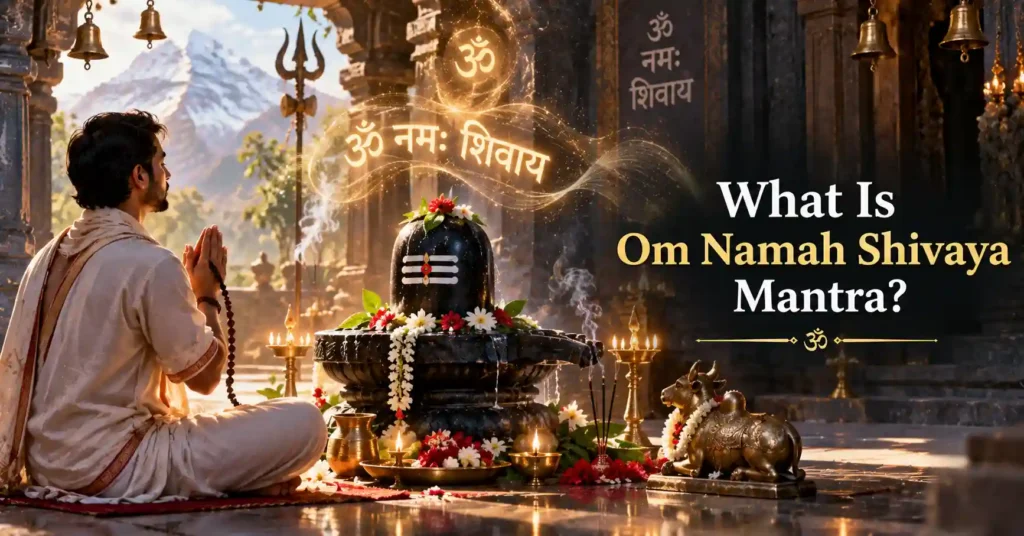
The Om Namah Shivaya Mantra is one of the most sacred and widely recited Shiva mantras in Hinduism. It is a powerful invocation dedicated to Lord Shiva, the Supreme Lord of transformation, destruction of ignorance, and spiritual awakening.
For countless devotees, the Om Namah Shivaya Mantra serves as a simple yet profound expression of devotion. Unlike lengthy prayers or complex rituals, this mantra can be chanted by anyone seeking inner peace, spiritual growth, and a deeper connection with Lord Shiva.
The mantra is often known as the Panchakshari Mantra, meaning the “Five-Syllable Mantra,” because its core form consists of five sacred syllables:
Na – Ma – Shi – Va – Ya
When prefixed with the sacred syllable Om, it becomes the complete Om Namah Shivaya Mantra that is commonly recited today.
In Shaiva traditions, this mantra is regarded as one of the highest expressions of surrender to Lord Shiva. Devotees chant it during daily worship, meditation, pilgrimage, Rudrabhishek, Mahashivratri celebrations, and personal spiritual practice.
At its simplest level, the Om Namah Shivaya Mantra means:
“I bow to Lord Shiva.”
However, its spiritual significance extends far beyond a literal translation. The mantra reminds devotees to surrender their ego, purify their minds, and recognize the divine presence that exists within all beings.
Because of its universal message and ease of chanting, the Om Namah Shivaya Mantra remains one of the most beloved mantras in Sanatan Dharma and continues to guide seekers on the path of devotion, self-discovery, and inner transformation.
Origin and Scriptural Significance of Om Namah Shivaya Mantra
The Om Namah Shivaya Mantra has ancient roots in the Vedic tradition and is regarded as one of the most sacred mantras dedicated to Lord Shiva. It has been revered for centuries by saints, sages, yogis, and devotees as a powerful expression of devotion and spiritual realization.
The core phrase “Namah Shivaya” is found in the Shri Rudram, a revered hymn from the Krishna Yajurveda. Shri Rudram is one of the most important Vedic texts dedicated to Lord Rudra, who is worshipped as Lord Shiva.
Over time, the mantra became central to the Shaiva tradition and gained prominence in various Agamas, Puranas, and spiritual teachings associated with Lord Shiva.
Connection with the Panchakshari Mantra
The mantra is traditionally known as the Panchakshari Mantra, meaning the “Five-Syllable Mantra.”
The five syllables are:
Na
Ma
Shi
Va
Ya
These syllables are considered sacred and are believed to represent the five fundamental elements of creation known as the Panchabhutas.
| Syllable | Element |
|---|---|
| Na | Earth |
| Ma | Water |
| Shi | Fire |
| Va | Air |
| Ya | Space (Ether) |
When the sacred syllable Om is added at the beginning, it becomes the complete Om Namah Shivaya Mantra commonly chanted by devotees today.
Importance in Shaivism
In Shaivism, the Om Namah Shivaya Mantra is regarded as one of the highest mantras for devotion, meditation, and self-realization.
Many Shaiva saints have described it as a mantra that helps devotees move beyond ego and recognize the divine presence within themselves and the universe.
The mantra is frequently recited during:
Daily Shiva worship
Rudrabhishek
Mahashivratri
Meditation practices
Pilgrimages to Shiva temples
Personal mantra japa
Why Is Om Namah Shivaya Considered So Sacred?
Unlike mantras that focus primarily on material desires, the Om Namah Shivaya Mantra emphasizes surrender, purification, and spiritual awakening.
The mantra encourages devotees to bow before the Supreme Reality represented by Lord Shiva and cultivate qualities such as humility, detachment, wisdom, and inner peace.
For this reason, generations of seekers have regarded the Om Namah Shivaya Mantra not merely as a prayer but as a spiritual path that leads toward self-discovery and a deeper understanding of the Divine.
Om Namah Shivaya Mantra Lyrics
The Om Namah Shivaya Mantra is one of the simplest yet most profound mantras dedicated to Lord Shiva. Its sacred syllables have been chanted for centuries by devotees seeking devotion, inner peace, spiritual wisdom, and self-realization.
Sanskrit Text
ॐ नमः शिवाय ॥
Transliteration
Om Namah Shivaya
Hindi Meaning
ॐ नमः शिवाय का अर्थ है:
“मैं भगवान शिव को नमन करता हूँ।”
यह मंत्र भगवान शिव के प्रति समर्पण, श्रद्धा और विनम्रता का प्रतीक है। यह साधक को अहंकार त्यागकर दिव्यता की ओर बढ़ने की प्रेरणा देता है।
English Meaning
Om Namah Shivaya means:
“I bow to Lord Shiva.”
It is a sacred expression of reverence, surrender, and devotion to Lord Shiva. The mantra reminds devotees to let go of ego, cultivate inner purity, and recognize the divine presence within themselves and all creation.
Why Is This Mantra So Powerful?
The power of the Om Namah Shivaya Mantra lies in its simplicity and spiritual depth. Unlike lengthy prayers, it can be remembered and recited throughout the day.
Devotees chant this Shiva mantra during meditation, prayer, temple worship, Rudrabhishek, and Mahashivratri celebrations. Its timeless message of surrender and spiritual awakening continues to inspire seekers across generations.
Although the mantra contains only a few words, its meaning unfolds more deeply as one progresses on the spiritual path. For many devotees, the Om Namah Shivaya Mantra becomes not just a chant but a way of life rooted in devotion, awareness, and inner transformation.
Om Namah Shivaya Mantra Transliteration
The Om Namah Shivaya Mantra is traditionally written in Sanskrit, but many devotees prefer using transliteration to learn the correct pronunciation. Transliteration helps readers chant the mantra accurately even if they cannot read Devanagari script.
Sanskrit
ॐ नमः शिवाय ॥
Transliteration
Om Namah Shivaya
Simple Pronunciation Guide
Om — Oam
Namah — Na-mah
Shivaya — Shi-vaa-ya
When spoken together:
Om Namah Shivaya
Pronunciation Tips
Pronounce “Shi” softly, as in “Shiva.”
The “Va” sound should flow naturally without excessive emphasis.
Chant the mantra slowly and rhythmically.
Focus on clarity and devotion rather than speed.
With practice, pronunciation becomes more natural and effortless.
Why Is Proper Pronunciation Important?
Traditional teachings emphasize that mantras are sacred sound vibrations. Correct pronunciation helps preserve the mantra’s original form and supports concentration during chanting.
However, devotion remains more important than perfection. Beginners should not worry if their pronunciation is not flawless at first.
Many saints and spiritual teachers have emphasized that sincere faith and regular practice are the true foundations of mantra chanting.
Whether recited aloud, whispered, or mentally repeated, the Om Namah Shivaya Mantra can gradually become a constant companion on the path of devotion, meditation, and spiritual growth.
What Does Om Namah Shivaya Mean?
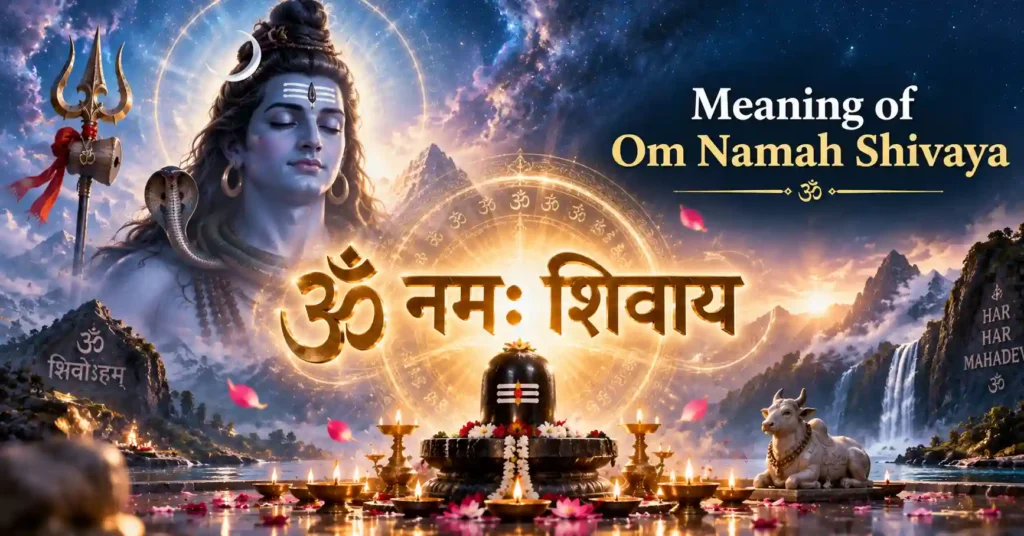
At first glance, the Om Namah Shivaya Mantra appears simple, consisting of only three words. However, each word carries profound spiritual meaning and has been contemplated by saints, yogis, and seekers for centuries.
The mantra is not merely a prayer to Lord Shiva. It is also a reminder of humility, surrender, self-awareness, and the divine presence that exists within all creation.
Word-by-Word Meaning
| Word | Meaning |
|---|---|
| Om | The primordial cosmic sound and the source of creation |
| Namah | I bow, I offer reverence, I surrender |
| Shivaya | To Lord Shiva, the auspicious one |
When combined, the mantra means:
“I bow to Lord Shiva.”
Or more deeply:
“I surrender myself to the divine consciousness represented by Lord Shiva.”
Meaning of Om
Om is considered the most sacred sound in Hinduism. It represents the ultimate reality from which the universe emerges and into which it eventually returns.
Many scriptures describe Om as the sound of creation itself. It symbolizes the unity of existence and the eternal presence of the Divine.
Meaning of Namah
The word Namah means “salutations,” “reverence,” or “I bow.”
Spiritually, it signifies the surrender of ego and the recognition that a higher divine reality exists beyond individual identity and worldly attachments.
Through Namah, the devotee expresses humility and devotion.
Meaning of Shivaya
Shivaya means “to Shiva.”
Lord Shiva is known as the Auspicious One, the Supreme Yogi, and the destroyer of ignorance. He represents transformation, spiritual wisdom, detachment, and liberation.
In many spiritual traditions, Shiva is understood not only as a deity but also as the universal consciousness that exists within all beings.
The Deeper Spiritual Meaning
The Om Namah Shivaya Mantra teaches that true spiritual growth begins when ego gives way to surrender.
By chanting this mantra, devotees remind themselves to cultivate humility, purity, self-discipline, and awareness of the Divine.
Rather than seeking something outside themselves, the mantra encourages seekers to recognize the sacred presence already within.
Why This Meaning Still Matters Today
In a fast-paced world filled with distractions and stress, the Om Namah Shivaya Mantra offers a timeless message.
It reminds us to pause, reflect, and reconnect with deeper values such as peace, compassion, wisdom, and inner strength.
This is one reason why the Om Namah Shivaya Mantra continues to be cherished by millions of devotees around the world, making it one of the most beloved and enduring Shiva mantras in Sanatan Dharma.
Spiritual Meaning of the Five Syllables of Om Namah Shivaya
The Om Namah Shivaya Mantra is traditionally known as the Panchakshari Mantra, meaning the “Five-Syllable Mantra.” The five sacred syllables are:
Na – Ma – Shi – Va – Ya
In Shaiva tradition, these syllables are associated with the Panchabhutas (Five Elements) and symbolize the presence of Lord Shiva throughout creation.
| Syllable | Element | Symbolic Meaning |
|---|---|---|
| Na | Earth | Stability, strength, and groundedness |
| Ma | Water | Purity, adaptability, and balance |
| Shi | Fire | Transformation and purification |
| Va | Air | Vitality, movement, and freedom |
| Ya | Space (Ether) | Consciousness and spiritual expansion |
Na – Earth
The syllable Na represents the earth element and symbolizes stability, patience, and a strong spiritual foundation. It reminds devotees to remain grounded in dharma and righteous living.
Ma – Water
Ma is associated with water, representing purity, flexibility, and emotional balance. It encourages the purification of negative tendencies and the cultivation of inner harmony.
Shi – Fire
The syllable Shi symbolizes fire, the force of transformation. Spiritually, it represents the burning away of ignorance, ego, and attachments that obstruct spiritual growth.
Va – Air
Va corresponds to air and symbolizes vitality, movement, and life force. It reminds devotees to maintain balance, awareness, and harmony in daily life.
Ya – Space (Ether)
The syllable Ya represents space, the subtlest of the five elements. It symbolizes higher consciousness, spiritual expansion, and the limitless presence of the Divine.
What Do the Five Syllables Teach?
Together, these five syllables represent both the universe and the human being. Their association with the five elements reminds devotees that all creation is interconnected and pervaded by the presence of Lord Shiva.
For this reason, the Panchakshari Mantra is revered not only as a prayer of devotion but also as a reminder of inner purification, self-awareness, and spiritual unity.
Why this revision works better
Removes repeated explanations already covered in the history/origin section.
Keeps the Panchabhuta symbolism clear and focused.
Reduces TOC clutter by ending with a single takeaway section instead of another lengthy conclusion.
Improves flow between “History & Origin” and the next section.
Benefits of Chanting Om Namah Shivaya Mantra
For centuries, devotees have chanted the Om Namah Shivaya Mantra as an expression of devotion to Lord Shiva. While individual experiences vary, the mantra is traditionally associated with spiritual growth, inner peace, and a deeper connection with the Divine.
The true value of the mantra lies not merely in repetition but in chanting it with faith, awareness, and sincerity.
Spiritual Benefits
Deepens devotion to Lord Shiva.
Encourages humility and surrender.
Supports self-reflection and spiritual growth.
Strengthens awareness of the Divine.
Inspires detachment from ego and negative tendencies.
Promotes consistency in spiritual practice.
Mental Benefits
Calms the mind during prayer and meditation.
Improves concentration and mindfulness.
Encourages mental clarity and focus.
Provides a simple anchor for meditation.
Reduces unnecessary distractions and mental restlessness.
Emotional Benefits
Fosters inner peace during difficult times.
Encourages patience and emotional balance.
Inspires courage and resilience.
Strengthens trust in divine guidance.
Promotes a positive and devotional outlook.
Traditional Significance
In Shaiva tradition, regular chanting of Om Namah Shivaya is believed to purify the mind, strengthen self-discipline, and help devotees progress on the spiritual path. It is widely recited during daily worship, meditation, Rudrabhishek, and Mahashivratri observances.
Why Do Devotees Continue to Chant Om Namah Shivaya?
The enduring appeal of this mantra lies in its simplicity and universal message. It reminds devotees to move beyond ego, cultivate inner peace, and develop a deeper relationship with Lord Shiva.
For many practitioners, its greatest benefit is not the pursuit of material rewards but the opportunity to grow in faith, awareness, and devotion while walking the path of spiritual transformation.
Changes made:
Reduced repetition of “helps.”
Merged “Traditional Benefits” and “Devotional Benefits” into cleaner sections.
Removed duplicate mentions of devotion and Shiva remembrance.
Improved readability and reduced overall word count while preserving all key points.
Keeps TOC clean with only 5 subheadings instead of 6.

How chanting affects the body and mind
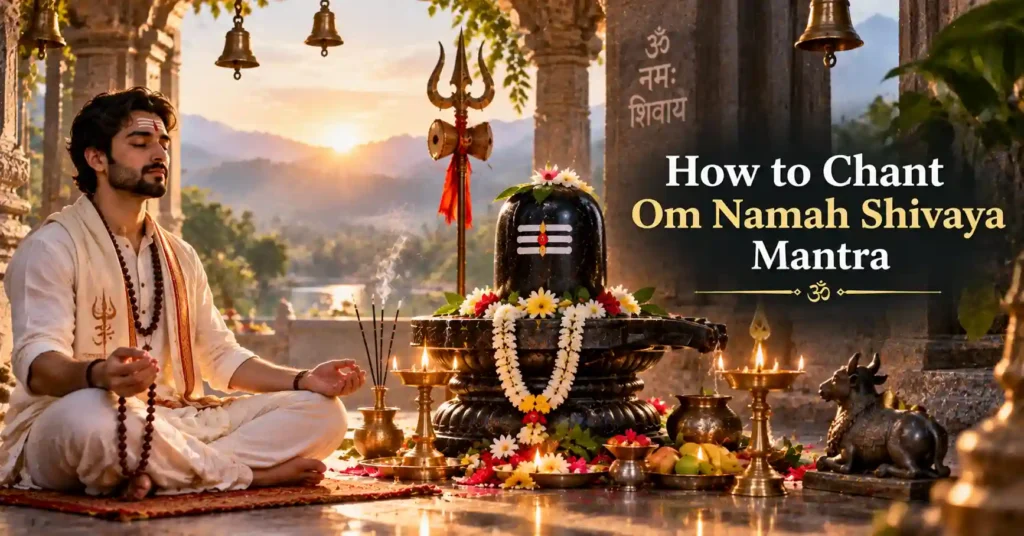
The Om Namah Shivaya Mantra can be chanted by anyone with faith and devotion. While there are traditional practices associated with mantra chanting, sincerity and consistency are considered more important than ritual complexity.
Simple Guidelines for Chanting
Choose a clean and quiet place.
Sit comfortably with a straight posture.
Focus your mind on Lord Shiva.
Chant slowly and clearly.
Maintain regularity in your practice.
Reflect on the meaning of the mantra while chanting.
Best Time to Chant
Many devotees prefer chanting the Om Namah Shivaya Mantra during:
Brahma Muhurta (before sunrise)
Sunrise
Evening prayers
Mondays
Mahashivratri
However, the mantra may be chanted at any time with sincere devotion.
Can Beginners Chant It?
Yes. The Om Namah Shivaya Mantra is one of the most beginner-friendly Shiva mantras and can be incorporated into daily prayer, meditation, or japa practice.
Why Chant with Understanding?
Knowing the meaning of the Om Namah Shivaya Mantra helps transform chanting from simple repetition into a more conscious act of devotion. It encourages humility, self-awareness, and a deeper connection with Lord Shiva.
Om Namah Shivaya Mantra in Daily Life
The teachings of the Om Namah Shivaya Mantra extend far beyond formal worship. Its message of humility, self-awareness, and devotion can guide devotees in their everyday lives.
By remembering Lord Shiva through this sacred mantra, devotees are encouraged to develop qualities that support both spiritual growth and personal well-being.
Practical Lessons from Om Namah Shivaya Mantra
Practice humility instead of ego.
Remain calm during difficult situations.
Develop patience and self-control.
Focus on truth and righteous conduct.
Cultivate compassion toward others.
Stay connected to spiritual values amid daily responsibilities.
Applying the Mantra in Modern Life
Many devotees silently repeat the Om Namah Shivaya Mantra during:
Meditation and yoga.
Morning prayers.
Stressful situations.
Temple visits.
Travel and daily commutes.
Moments of reflection and gratitude.
This simple practice helps keep the mind centered on Lord Shiva and spiritual awareness throughout the day.
A Timeless Message
At its heart, the Om Namah Shivaya Mantra reminds us to surrender ego, live with awareness, and seek inner transformation.
Its teachings remain as relevant today as they were centuries ago, making this sacred Shiva mantra a practical guide for living a balanced, purposeful, and spiritually enriched life.
Did You Know?
- The Om Namah Shivaya Mantra is popularly known as the Panchakshari Mantra, meaning the “Five-Syllable Mantra.”
- The mantra’s core form is Namah Shivaya, while Om is traditionally added as a sacred prefix.
- References to Namah Shivaya are found in the revered Shri Rudram of the Krishna Yajurveda.
- Many Shaiva saints regarded the Om Namah Shivaya Mantra as a direct path to devotion and self-realization.
- The five syllables of the mantra are traditionally associated with the five elements (Panchabhutas): earth, water, fire, air, and space.
- Devotees often chant the Om Namah Shivaya Mantra using a rudraksha mala, which is closely associated with Lord Shiva.
- The mantra is one of the most widely recited Shiva mantras during Mahashivratri celebrations.
- Unlike many specialized mantras, the Om Namah Shivaya Mantra is traditionally considered suitable for devotees of all ages and backgrounds.
- Many yogic and meditation traditions use the mantra to support concentration, mindfulness, and inner awareness.
- The mantra remains one of the most recognized and beloved expressions of devotion to Lord Shiva across the world.
Conclusion
The Om Namah Shivaya Mantra is one of the most sacred and enduring mantras dedicated to Lord Shiva. Its simple words carry profound spiritual wisdom, making it accessible to beginners while continuing to inspire advanced practitioners and devoted seekers.
Throughout history, devotees have chanted the Om Namah Shivaya Mantra as an expression of surrender, devotion, and inner transformation. Its connection to the Panchakshari Mantra, the five elements, and the teachings of Shaivism gives it a unique place in Hindu spiritual traditions.
Whether recited during meditation, daily prayer, Mahashivratri, or moments of personal reflection, the mantra serves as a reminder to cultivate humility, self-awareness, and a deeper connection with the Divine.
More than a chant, the Om Namah Shivaya Mantra represents a spiritual path that encourages devotees to move beyond ego and discover the peace and wisdom that Lord Shiva symbolizes.
With regular practice and sincere devotion, this timeless Shiva mantra can become a source of strength, clarity, and spiritual growth throughout life’s journey.

Suggested reading
The Om Namah Shivaya Mantra is one of the most revered mantras dedicated to Lord Shiva. Exploring related Shiva scriptures, stotras, and devotional hymns can help devotees gain a deeper understanding of the spiritual teachings connected with the Om Namah Shivaya Mantra, Shaiva traditions, meditation, and Shiva worship.
Many of these sacred texts complement the message of the Om Namah Shivaya Mantra by explaining devotion, surrender, spiritual transformation, and the path toward inner awakening. They are especially valuable for devotees who wish to deepen their connection with Lord Shiva and expand their understanding of Sanatan Dharma.
Shiva Mantras: Most Powerful Shiva Mantras, Stotras, and How to Chant Them
https://thesanatantales.com/shiva-mantras/
Rudrashtakam: Lyrics with Meaning in Hindi and English, Benefits and How to Chant
https://thesanatantales.com/rudrashtakam-lyrics-with-meaning-hindi-english/
Shiv Tandav Stotram Meaning, Full Lyrics, Benefits and How to Chant
https://thesanatantales.com/shiv-tandav-stotram-meaning-lyrics-benefits/
Lingashtakam: Lyrics with Meaning in Hindi and English, Benefits and How to Chant
https://thesanatantales.com/lingashtakam-meaning-benefits/
Maha Mrityunjaya Mantra: Meaning, Benefits, Lyrics and How to Chant
https://thesanatantales.com/maha-mrityunjaya-mantra/
Lord Shiva
https://en.wikipedia.org/wiki/Shiva
FAQs
1. What is the meaning of Om Namah Shivaya Mantra?
The Om Namah Shivaya Mantra is commonly translated as “I bow to Lord Shiva.” However, its meaning extends beyond a simple salutation.
The word Om represents the primordial cosmic sound, Namah signifies reverence and surrender, and Shivaya means “to Shiva,” the auspicious one. Together, the mantra expresses devotion to Lord Shiva and the willingness to let go of ego and pride.
In Shaiva traditions, the Om Namah Shivaya Mantra is also viewed as a reminder of the divine consciousness present within all beings. Regular chanting encourages humility, self-awareness, and a deeper spiritual connection with Lord Shiva.
2. Why is Om Namah Shivaya called the Panchakshari Mantra?
The Om Namah Shivaya Mantra is known as the Panchakshari Mantra because its core form, “Namah Shivaya,” consists of five sacred syllables: Na, Ma, Shi, Va, and Ya.
According to traditional teachings, these five syllables are associated with the five elements of creation: earth, water, fire, air, and space. This symbolism reflects the belief that Lord Shiva pervades the entire universe and all aspects of existence.
When devotees chant the mantra, they are not only offering reverence to Shiva but also contemplating the unity of creation. This connection with the Panchabhutas is one reason the mantra holds such an important place in Shaivism.
3. What are the benefits of chanting Om Namah Shivaya Mantra?
Devotees have recited the Om Namah Shivaya Mantra for centuries as part of their spiritual practice. Traditionally, it is associated with inner peace, devotion, mental clarity, and spiritual growth.
Many practitioners find that regular chanting helps them remain calm during difficult situations and develop a stronger sense of focus during meditation. The mantra is also believed to support self-discipline and encourage positive thinking.
From a devotional perspective, the greatest benefit of the Om Namah Shivaya Mantra is its ability to strengthen one’s relationship with Lord Shiva. It serves as a constant reminder of faith, surrender, and spiritual awareness.
4. Can anyone chant Om Namah Shivaya Mantra?
Yes, the Om Namah Shivaya Mantra is traditionally regarded as a universal mantra that can be chanted by people of all ages and backgrounds.
Unlike certain specialized mantras that may be associated with particular rituals or traditions, this Shiva mantra is widely considered suitable for beginners, householders, students, and advanced spiritual practitioners alike.
What matters most is sincerity and respect. Devotees are encouraged to chant with devotion and awareness rather than focusing excessively on perfection. For many people, the Om Namah Shivaya Mantra becomes their first step toward developing a regular spiritual practice centered on Lord Shiva.
5. How many times should I chant Om Namah Shivaya Mantra daily?
There is no single mandatory number for chanting the Om Namah Shivaya Mantra. Devotees choose a count based on their time, routine, and spiritual goals.
Many people begin with 11, 21, or 51 repetitions daily. A traditional practice is to chant the mantra 108 times using a rudraksha mala. Some devotees also repeat it mentally throughout the day as a form of continuous remembrance of Lord Shiva.
Consistency is generally considered more important than quantity. Even a few mindful repetitions each day can help cultivate devotion and keep the mind connected to spiritual values.
6. What is the best time to chant Om Namah Shivaya Mantra?
The Om Namah Shivaya Mantra can be chanted at any time. However, traditional Hindu practices consider certain periods especially auspicious.
Brahma Muhurta, the early hours before sunrise, is often recommended because the mind tends to be calm and free from distractions. Sunrise, evening prayers, Mondays, the month of Shravan, and Mahashivratri are also popular times for chanting this sacred Shiva mantra.
That said, Lord Shiva is believed to accept sincere devotion regardless of the hour. Establishing a regular daily routine is usually more beneficial than waiting for a specific time.
7. Can Om Namah Shivaya Mantra be used for meditation?
Yes, the Om Namah Shivaya Mantra is widely used as a meditation mantra because of its simplicity and rhythmic structure.
Many practitioners repeat the mantra while focusing on their breath, allowing the sound to become an anchor for the mind. This practice can help reduce distractions and support greater concentration during meditation.
Over time, the mantra may encourage a deeper state of awareness and self-reflection. For this reason, it is commonly used by both devotees and meditators seeking inner stillness, spiritual growth, and a stronger connection with Lord Shiva.
8. Is it necessary to understand the meaning of Om Namah Shivaya Mantra before chanting?
Understanding the meaning of the Om Namah Shivaya Mantra is helpful, but it is not a requirement for beginning the practice.
Many devotees start by simply repeating the mantra with faith and gradually learn its significance over time. As understanding deepens, the chanting often becomes more meaningful because the practitioner develops a greater appreciation for the message of surrender and devotion.
The combination of sincere chanting and thoughtful reflection can enrich one’s spiritual journey. Both devotion and understanding play important roles in helping devotees connect more deeply with Lord Shiva through this sacred mantra.
Share Your Devotion
The Om Namah Shivaya Mantra has inspired countless devotees for generations through its message of devotion, surrender, and inner transformation. Every devotee experiences this sacred Shiva mantra in a unique way.
Do you chant the Om Namah Shivaya Mantra daily?
Has this mantra helped you develop greater peace, focus, or devotion to Lord Shiva?
Share your thoughts, experiences, or favorite teachings related to the Om Namah Shivaya Mantra in the comments below. Your insights may encourage and inspire fellow devotees on their spiritual journey.
Har Har Mahadev! 🙏
References & Sources
Primary Sources
- Shri Rudram (Krishna Yajurveda)
- Traditional Shaiva Scriptures
- Shaiva Agamas
- Vedic Mantra Tradition
- Panchakshari Mantra Teachings in Shaivism
Secondary Sources
- Traditional Sanskrit commentaries on Shiva worship
- Scholarly studies on Shaivism and Vedic mantras
- Sanskrit and Hindu scripture repositories
- Devotional literature dedicated to Lord Shiva
- Research resources on mantra meditation and Hindu traditions
Reference Resources
- Om Namah Shivaya – Wikipedia
https://en.wikipedia.org/wiki/Om_Namah_Shivaya - Lord Shiva – Wikipedia
https://en.wikipedia.org/wiki/Shiva - Shaivism – Wikipedia
https://en.wikipedia.org/wiki/Shaivism
Note: The meaning, interpretation, and spiritual significance of the Om Namah Shivaya Mantra may vary slightly across different Shaiva traditions, lineages, and commentaries. This article presents widely accepted traditional explanations intended for devotional and educational purposes.
Explore More Topics from The Sanatan Tales




Have you ever considered writing an ebook or guest
authoring on other blogs? I have a blog based upon on the same ideas you
discuss and would really like to have you share some stories/information.
I know my viewers would enjoy your work. If you are
even remotely interested, feel free to shoot me an e mail.