Durga Mantras are among the most powerful sacred chants in Sanatan Dharma, recited by devotees to seek protection, courage, wisdom, and inner strength. Dedicated to Maa Durga, these mantras are believed to help devotees overcome fear, negativity, and life’s challenges while deepening their connection with the Divine Mother.
For centuries, devotees have worshipped Maa Durga through Durga Mantras, stotras, chalisa, and aarti. These sacred prayers are deeply rooted in scriptures such as the Durga Saptashati (Devi Mahatmya) and remain an important part of daily worship, spiritual practice, and Navratri celebrations.
Whether you are a beginner exploring Durga Mantras for the first time or a devotee looking to strengthen your spiritual practice, these prayers offer different paths to connect with Maa Durga’s divine energy. From simple daily mantras to powerful hymns and devotional songs, each form of worship carries its own spiritual significance.
In this comprehensive guide, you will discover the most important Durga Mantras, Stotras, Chalisa, and Aarti, along with their meaning, purpose, and role in Maa Durga worship. You will also learn when these prayers are recited, how they are connected to Durga Saptashati, and how they can become a meaningful part of your devotional journey.
At a Glance
| Aspect | Details |
|---|---|
| Focus Keyword | Durga Mantras |
| Primary Deity | Maa Durga |
| Purpose | Protection, Courage, Devotion, Inner Strength |
| Most Popular Mantra | Om Dum Durgayai Namah |
| Powerful Mantra | Navarna Mantra |
| Key Scripture | Durga Saptashati (Devi Mahatmya) |
| Important Hymns | Devi Kavach, Argala Stotram, Keelak Stotram, Siddha Kunjika Stotram |
| Best Time to Chant | Brahma Muhurta, Sunrise, Evening Prayer |
| Auspicious Occasions | Navratri, Ashtami, Navami, Fridays |
| Suitable For | Beginners and Advanced Devotees |
| Main Benefit | Strengthens devotion and connection with Maa Durga |
Table of Contents
ToggleWhat Are Durga Mantras?
Durga Mantras are sacred chants dedicated to Maa Durga, the Divine Mother and embodiment of Shakti (cosmic energy). These mantras are recited to invoke her blessings, seek protection, cultivate inner strength, and deepen one’s spiritual connection with the Goddess.
In Sanatan Dharma, a mantra is much more than a collection of words. It is considered a sacred vibration that helps focus the mind, awaken devotion, and align the devotee with divine energy. When chanted with faith and concentration, Durga Mantras become a powerful tool for spiritual growth and self-transformation.
Different Durga Mantras serve different purposes. Some are recited for protection and courage, while others are used to seek wisdom, peace, prosperity, or divine grace. From simple daily chants like Om Dum Durgayai Namah to the powerful Navarna Mantra, each mantra reflects a unique aspect of Maa Durga’s divine power.
The tradition of chanting Durga Mantras is closely connected with scriptures such as the Durga Saptashati (Devi Mahatmya), which describes the victories of the Divine Mother over various demonic forces. These stories symbolize the triumph of truth over falsehood, wisdom over ignorance, and courage over fear.
Today, devotees across the world chant Durga Mantras during daily worship, meditation, Navratri celebrations, and times of personal challenge. Through regular recitation, devotees seek not only external blessings but also inner strength, clarity, and spiritual awakening.
Why Do Devotees Chant Durga Mantras?
Devotees chant Durga Mantras for many spiritual and devotional reasons, including:
To seek the blessings and protection of Maa Durga.
To develop courage and confidence during difficult times.
To overcome fear, negativity, and self-doubt.
To strengthen devotion and spiritual discipline.
To improve concentration during prayer and meditation.
To celebrate Navratri and other festivals dedicated to the Divine Mother.
To deepen their understanding of Shakti and Devi worship.
For countless devotees, Durga Mantras are not merely prayers but a means of building a personal and lasting relationship with the Divine Mother.
Main Durga Mantras and Their Purpose
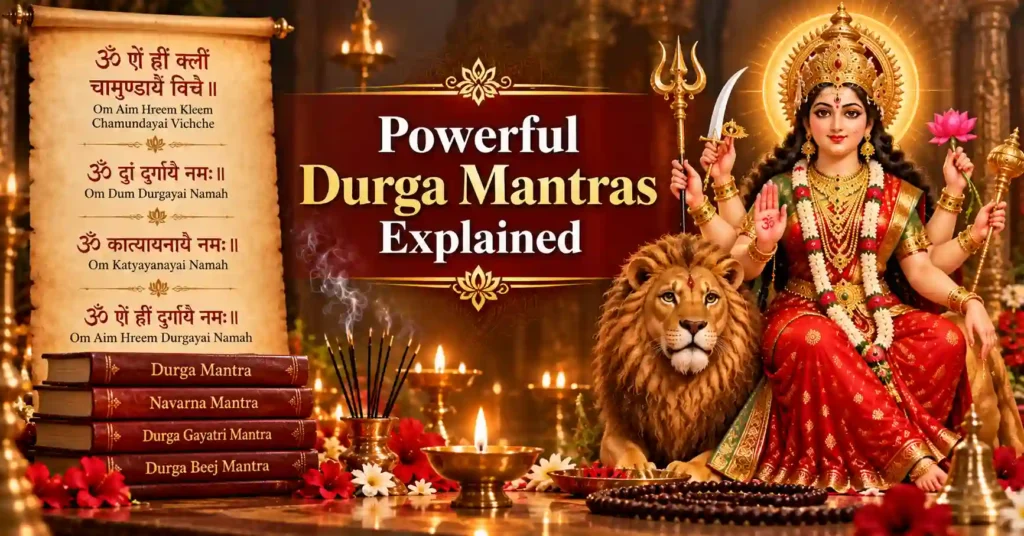
Over the centuries, devotees have preserved many sacred Durga Mantras, each invoking a particular aspect of Maa Durga’s divine power. Some mantras are used for daily worship, while others are traditionally chanted during Navratri, meditation, or special spiritual practices.
The following are among the most widely recited Durga Mantras in Sanatan Dharma.
| Durga Mantra | Purpose |
|---|---|
| Om Dum Durgayai Namah | Protection, courage, and blessings of Maa Durga |
| Navarna Mantra (Om Aim Hreem Kleem Chamundayai Vichche) | Invocation of Divine Mother and spiritual strength |
| Sarva Mangala Mangalye Mantra | Divine grace, auspiciousness, and well-being |
| Durga Gayatri Mantra | Wisdom, spiritual growth, and inner clarity |
| Durga Beej Mantra (Dum) | Focused worship of Maa Durga’s protective energy |
| Durga Ashtakshari Mantra | Devotion, protection, and spiritual progress |
Om Dum Durgayai Namah
Sanskrit
ॐ दुं दुर्गायै नमः ॥
Transliteration
Om Dum Durgayai Namah
Meaning
“I bow to Maa Durga, the Divine Mother who protects her devotees and removes obstacles from their path.”
This is one of the simplest and most popular Durga Mantras. Many devotees chant it daily to seek Maa Durga’s protection, strength, and guidance.
Navarna Mantra
Sanskrit
ॐ ऐं ह्रीं क्लीं चामुण्डायै विच्चे ॥
Transliteration
Om Aim Hreem Kleem Chamundayai Vichche
Meaning
This sacred mantra invokes Maa Chamunda, a powerful form of Maa Durga. It is considered one of the most important mantras in the Shakta tradition and is closely associated with the Durga Saptashati.
Sarva Mangala Mangalye Mantra
Sanskrit
सर्वमङ्गलमाङ्गल्ये शिवे सर्वार्थसाधिके ।
शरण्ये त्र्यम्बके गौरि नारायणि नमोऽस्तु ते ॥
Transliteration
Sarva Mangala Mangalye Shive Sarvartha Sadhike
Sharanye Tryambake Gauri Narayani Namostute
Meaning
“O Divine Mother, the source of all auspiciousness, the fulfiller of all noble purposes, and the refuge of devotees, I bow to You.”
This mantra is frequently recited during Durga Puja, Navratri, and daily worship.
Durga Gayatri Mantra
Sanskrit
ॐ कात्यायनाय विद्महे कन्याकुमारि धीमहि ।
तन्नो दुर्गिः प्रचोदयात् ॥
Transliteration
Om Katyayanaya Vidmahe Kanyakumari Dhimahi
Tanno Durgih Prachodayat
Meaning
“We meditate upon the Divine Mother Durga. May she illuminate our minds and guide us on the path of righteousness.”
The Durga Gayatri Mantra is often chanted for wisdom, spiritual insight, and inner clarity.
Durga Beej Mantra
Sanskrit
दुं ॥
Transliteration
Dum
Meaning
The sacred seed syllable associated with Maa Durga. It symbolizes her protective power, courage, and ability to remove negativity.
Many devotees include this beej mantra in meditation and mantra japa practices.
Durga Ashtakshari Mantra
Sanskrit
ॐ ह्रीं दुं दुर्गायै नमः ॥
Transliteration
Om Hreem Dum Durgayai Namah
Meaning
This powerful mantra combines sacred seed sounds associated with divine energy and protection. It is traditionally recited to seek Maa Durga’s blessings, strength, and spiritual support.
Together, these Durga Mantras provide devotees with different ways to connect with the Divine Mother and experience her grace in daily life.
Benefits of Chanting Durga Mantras
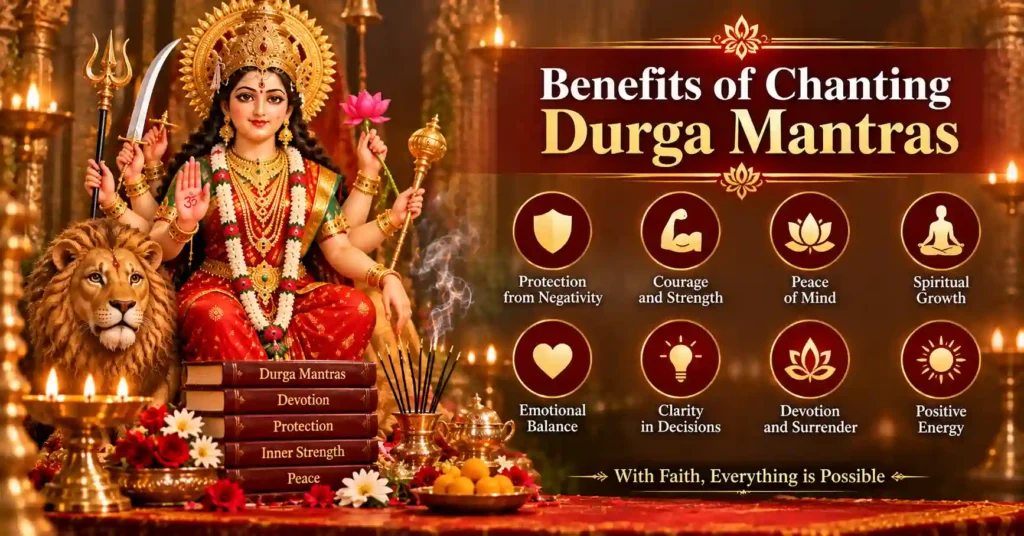
For centuries, devotees have chanted Durga Mantras as a way to connect with Maa Durga and seek her blessings. While spiritual experiences vary from person to person, these sacred chants are traditionally associated with numerous devotional and spiritual benefits.
One of the most important benefits of Durga Mantras is the cultivation of a deeper relationship with the Divine Mother. Regular chanting helps devotees develop faith, devotion, and a sense of spiritual connection with Maa Durga.
Many devotees recite Durga Mantras to seek courage and inner strength during challenging periods of life. Maa Durga is revered as the destroyer of negativity and the embodiment of divine power, inspiring devotees to face difficulties with confidence and determination.
The rhythmic repetition of Durga Mantras can also help improve concentration and mental focus. Chanting with attention encourages mindfulness and allows the mind to become more centered during prayer and meditation.
Traditional Benefits Associated with Durga Mantras
Strengthen devotion and connection with Maa Durga.
Inspire courage, confidence, and inner resilience.
Help reduce fear, anxiety, and negative thinking.
Improve concentration during prayer and meditation.
Encourage discipline through regular spiritual practice.
Deepen participation in Navratri and Devi worship.
Promote a sense of peace, faith, and spiritual well-being.
Support personal reflection and inner growth.
Many devotees also chant Durga Mantras during Navratri, Fridays, Ashtami, and Navami as part of their worship of the Divine Mother. These occasions provide opportunities to focus more deeply on prayer and spiritual practice.
From a symbolic perspective, Durga Mantras remind devotees that true strength comes not only from external circumstances but also from faith, wisdom, self-discipline, and surrender to the Divine.
Ultimately, the greatest benefit of Durga Mantras is their ability to help devotees draw closer to Maa Durga and cultivate a life guided by devotion, courage, and spiritual awareness.
Durga Stotras and Stutis for Deeper Devotion
While Durga Mantras are often short and designed for repetition, Stotras and Stutis are longer devotional hymns that praise Maa Durga’s divine qualities, victories, compassion, and protective power.
These sacred compositions help devotees move beyond simple chanting and develop a deeper emotional and spiritual connection with the Divine Mother. Through their verses, devotees reflect on Maa Durga’s role as the protector of dharma, destroyer of negativity, and source of divine grace.
Many of the most revered Durga Stotras are drawn from scriptures such as the Durga Saptashati (Devi Mahatmya) and have been recited by devotees for centuries during daily worship, Navratri, and special religious observances.
Popular Durga Stotras and Stutis
| Stotra / Stuti | Significance |
|---|---|
| Argala Stotram | Invokes Maa Durga’s blessings, protection, and grace. |
| Keelak Stotram | Explains the spiritual significance and hidden power of the Durga Saptashati. |
| Devi Kavach | A sacred protective hymn that seeks the Divine Mother’s protection from all directions. |
| Siddha Kunjika Stotram | Revered as the sacred key that unlocks the essence of the Durga Saptashati. |
| Ya Devi Sarva Bhuteshu | Celebrates the Divine Mother present in all beings and all aspects of creation. |
| Narayani Stuti | A profound hymn praising Maa Durga as the supreme cosmic power. |
Why Are Durga Stotras Important?
They help devotees understand the deeper qualities of Maa Durga.
They strengthen devotion and emotional connection with the Divine Mother.
They preserve the teachings and stories found in sacred scriptures.
They are widely recited during Navratri and Devi worship.
They encourage reflection on spiritual values such as courage, faith, humility, and surrender.
Unlike shorter Durga Mantras, stotras often tell a spiritual story through praise and symbolism. This makes them especially meaningful for devotees who wish to deepen their understanding of Devi worship.
Many devotees combine Durga Mantras with stotras and stutis in their daily worship. The mantras help focus the mind, while the stotras inspire devotion and contemplation of Maa Durga’s divine nature.
Together, Durga Mantras and sacred stotras create a balanced path of worship that nurtures both spiritual discipline and heartfelt devotion.
Durga Saptashati and Its Most Important Protective Hymns
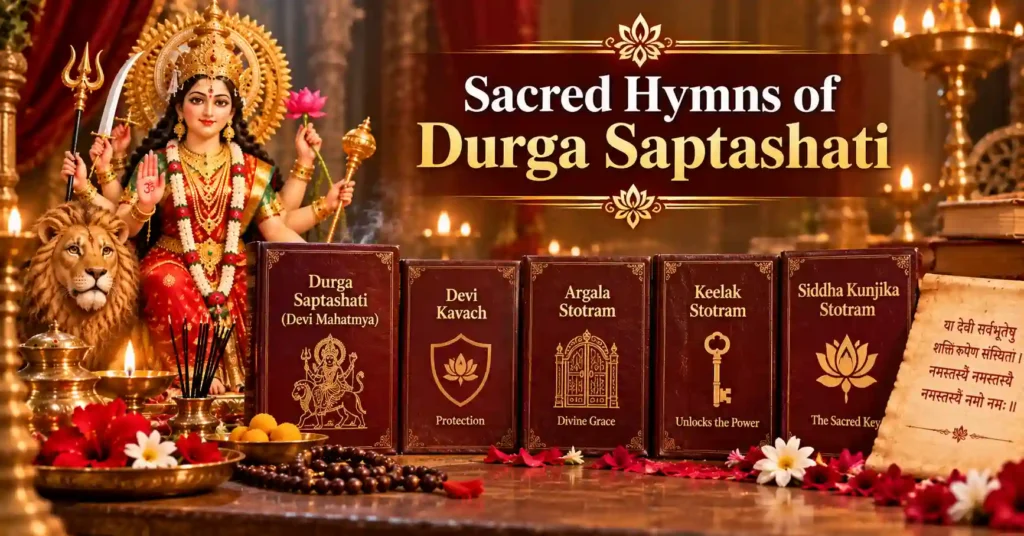
Among all scriptures dedicated to Maa Durga, the Durga Saptashati, also known as the Devi Mahatmya, holds a special place in the Shakta tradition. It is one of the most revered texts in Sanatan Dharma and is widely recited during Navratri and other occasions dedicated to the Divine Mother.
The Durga Saptashati consists of 700 verses that describe the victories of Maa Durga over powerful demonic forces. These stories symbolize the triumph of truth over falsehood, wisdom over ignorance, and divine power over negativity.
Beyond its inspiring narratives, the scripture contains several sacred hymns and prayers that have become important parts of Devi worship. Many devotees recite these hymns even when they are not performing the complete Durga Saptashati.
Important Hymns Associated with the Durga Saptashati
| Sacred Hymn | Purpose |
|---|---|
| Devi Kavach | Seeks divine protection from Maa Durga in all directions of life. |
| Argala Stotram | Invokes blessings, grace, and spiritual progress. |
| Keelak Stotram | Explains the spiritual significance and hidden power of the scripture. |
| Siddha Kunjika Stotram | Revered as the sacred key to the Durga Saptashati. |
| Narayani Stuti | Praises the Divine Mother as the supreme cosmic power. |
| Ya Devi Sarva Bhuteshu | Honors Maa Durga’s presence in all beings and creation. |
Devi Kavach
The Devi Kavach is one of the most widely recited sections of the Durga Saptashati. It is a protective hymn that invokes Maa Durga’s blessings over different parts of the body and all aspects of life.
Many devotees chant the Devi Kavach daily or before beginning the recitation of the Durga Saptashati.
Argala Stotram
The Argala Stotram is a devotional hymn that seeks the grace, blessings, and protection of the Divine Mother.
It repeatedly glorifies Maa Durga and expresses the devotee’s desire for spiritual growth, strength, and divine support.
Keelak Stotram
The Keelak Stotram explains the deeper significance of the Durga Saptashati and is traditionally recited before the main scripture.
It teaches that devotion, sincerity, and understanding are essential for receiving the spiritual benefits associated with the text.
Siddha Kunjika Stotram
The Siddha Kunjika Stotram is traditionally regarded as the sacred key that unlocks the essence of the Durga Saptashati.
Despite its brief length, it contains powerful beej mantras and occupies a special place in Devi worship, particularly during Navratri.
Why Is the Durga Saptashati Important?
It is one of the most important scriptures dedicated to Maa Durga.
It teaches the victory of divine power over negativity and ignorance.
It contains many of the most beloved hymns in Devi worship.
It forms the foundation of many Navratri rituals and practices.
It inspires devotees to cultivate faith, courage, and devotion.
For many devotees, the Durga Saptashati serves as both a scripture and a spiritual guide. Its hymns, stories, and teachings continue to inspire generations of devotees on the path of devotion to Maa Durga.
Shri Durga Chalisa in Household Worship
Among the many devotional prayers dedicated to Maa Durga, the Durga Chalisa remains one of the most widely recited and beloved hymns in Hindu households. Written in simple and devotional language, it makes the teachings and glory of the Divine Mother accessible to devotees of all ages.
The Durga Chalisa consists of forty verses that praise Maa Durga’s strength, compassion, protective nature, and victories over evil forces. Through these verses, devotees remember the Goddess’s divine qualities and seek her blessings for a peaceful and righteous life.
Unlike some longer scriptures, the Durga Chalisa can be recited comfortably as part of daily worship. This simplicity has contributed to its popularity among families, temple devotees, and spiritual seekers.
Why Do Devotees Recite the Durga Chalisa?
To express devotion and gratitude to Maa Durga.
To seek courage, protection, and divine guidance.
To remember the Goddess’s victories over negativity.
To strengthen faith during difficult times.
To cultivate a regular habit of prayer and worship.
When Is the Durga Chalisa Commonly Recited?
Many devotees recite the Durga Chalisa during:
Daily morning or evening prayers.
Navratri celebrations.
Fridays dedicated to Devi worship.
Ashtami and Navami observances.
Special pujas and family devotional gatherings.
Spiritual Significance of the Durga Chalisa
The Durga Chalisa teaches that Maa Durga is both a fierce protector and a compassionate mother. While the verses celebrate her power to destroy evil, they also highlight her kindness toward devotees who approach her with sincerity and faith.
The hymn reminds devotees that true strength comes from devotion, righteousness, courage, and surrender to the Divine Mother. Through regular recitation, many devotees feel inspired to face life’s challenges with greater confidence and spiritual awareness.
For those beginning their journey with Durga Mantras and Devi worship, the Durga Chalisa serves as an excellent introduction to the teachings, symbolism, and devotional traditions associated with Maa Durga.
Maa Durga Aarti as the Completion of Worship
Among all forms of Devi worship, Maa Durga Aarti holds a special place as the devotional conclusion of prayer and puja. After chanting Durga Mantras, reciting stotras, or performing a Durga Puja, devotees traditionally offer aarti to express gratitude, devotion, and surrender to the Divine Mother.
During the aarti, a lit lamp is gently waved before the image or murti of Maa Durga while devotees sing hymns in her praise. This act symbolizes offering one’s mind, heart, and actions to the Goddess.
The most popular aarti dedicated to Maa Durga is often sung during Navratri, Durga Puja, and daily household worship. Its devotional verses celebrate the compassion, strength, and protective nature of the Divine Mother.
Why Is Maa Durga Aarti Important?
It marks the completion of worship and prayer.
It expresses gratitude for Maa Durga’s blessings.
It creates a joyful and devotional atmosphere.
It brings families and devotees together in worship.
It strengthens faith and emotional connection with the Divine Mother.
When Is Maa Durga Aarti Performed?
Devotees commonly perform Maa Durga Aarti:
After daily puja.
Following mantra japa or stotra recitation.
During Navratri celebrations.
At the end of Durga Puja ceremonies.
During special family or temple gatherings.
Spiritual Meaning of Maa Durga Aarti
The flame used during aarti symbolizes divine knowledge that removes the darkness of ignorance. As devotees offer the light to Maa Durga, they are reminded to bring spiritual awareness, purity, and devotion into their own lives.
The ringing of bells, singing of hymns, fragrance of incense, and glow of the lamp create an atmosphere that encourages complete absorption in devotion. For many devotees, this moment becomes one of the most emotionally uplifting parts of worship.
Aarti and the Path of Devotion
While Durga Mantras help focus the mind and stotras deepen understanding, Maa Durga Aarti engages the heart through devotion and gratitude.
Together, Durga Mantras, Stotras, Chalisa, and Aarti create a complete devotional practice that allows devotees to worship Maa Durga through prayer, remembrance, praise, and loving surrender.
Navdurga Mantras During Navratri
Navratri is one of the most important festivals dedicated to Maa Durga. During these nine sacred nights, devotees worship the Navdurga, the nine divine forms of the Goddess, each representing a unique aspect of spiritual growth, strength, wisdom, and devotion.
Each day of Navratri is associated with a specific form of Maa Durga and a corresponding mantra. Devotees chant these mantras to seek blessings and to deepen their connection with the Divine Mother throughout the festival.
The Nine Forms of Navdurga and Their Mantras
| Day | Form of Maa Durga | Significance |
|---|---|---|
| Day 1 | Maa Shailaputri | Strength, stability, and spiritual beginning |
| Day 2 | Maa Brahmacharini | Devotion, discipline, and perseverance |
| Day 3 | Maa Chandraghanta | Courage, protection, and fearlessness |
| Day 4 | Maa Kushmanda | Creation, vitality, and positive energy |
| Day 5 | Maa Skandamata | Motherly blessings and wisdom |
| Day 6 | Maa Katyayani | Courage and victory over negativity |
| Day 7 | Maa Kalaratri | Protection from fear and obstacles |
| Day 8 | Maa Mahagauri | Purity, peace, and spiritual growth |
| Day 9 | Maa Siddhidatri | Divine grace and spiritual fulfillment |
Why Are Navdurga Mantras Chanted?
To honor each form of Maa Durga during Navratri.
To understand the spiritual qualities represented by the Navdurga.
To strengthen devotion throughout the nine days of worship.
To seek blessings for personal and spiritual growth.
To participate more deeply in Navratri traditions.
Spiritual Meaning of the Navdurga Journey
The worship of the Navdurga is often viewed as a symbolic spiritual journey. Each form of the Goddess represents a stage in the devotee’s inner development.
The journey begins with faith and discipline, progresses through courage and self-transformation, and culminates in wisdom, purity, and divine realization. Through this progression, devotees are reminded that spiritual growth occurs step by step through devotion, self-effort, and divine grace.
For many devotees, chanting Durga Mantras associated with the Navdurga makes Navratri more meaningful and helps them focus on the deeper spiritual lessons of the festival.
The Navdurga tradition beautifully demonstrates that Maa Durga is not worshipped in just one form. Rather, she manifests in many forms to guide devotees on different stages of their spiritual path.
108 and 32 Names of Maa Durga
Along with Durga Mantras, many devotees worship Maa Durga by chanting her sacred names. These names describe the Divine Mother’s qualities, powers, virtues, and various manifestations.
The practice of reciting the 108 Names of Maa Durga (Durga Ashtottara Shatanamavali) and the 32 Names of Maa Durga (Durga Dvatrimshannama Mala) has been followed for centuries as a form of devotion, remembrance, and meditation.
Each name reflects a unique aspect of the Goddess and helps devotees contemplate her divine nature more deeply.
What Are the 108 Names of Maa Durga?
The 108 Names of Maa Durga form a sacred collection of names that praise the Divine Mother as the protector, nurturer, destroyer of evil, and source of spiritual wisdom.
These names are commonly recited:
During Navratri celebrations.
In daily Devi worship.
During Durga Puja ceremonies.
While offering flowers to Maa Durga.
As part of mantra japa and meditation.
Many devotees chant the names one by one while offering flowers, kumkum, or prayers to the Goddess.
What Are the 32 Names of Maa Durga?
The 32 Names of Maa Durga, also known as the Durga Dvatrimshannama Mala, are highly revered in the Shakta tradition.
These names glorify Maa Durga as the remover of difficulties and protector of devotees. Because the list is shorter, many devotees find it easier to include in their daily worship routine.
The names emphasize important qualities of the Divine Mother, including:
Protection from difficulties.
Removal of obstacles.
Compassion toward devotees.
Courage and fearlessness.
Divine grace and blessings.
Why Do Devotees Chant the Names of Maa Durga?
Chanting the sacred names of Maa Durga is considered a simple yet powerful form of devotion.
It allows devotees to remember the Goddess throughout the day while reflecting on her qualities and teachings.
Traditional Benefits Associated with Chanting Durga’s Names
Strengthens devotion to Maa Durga.
Encourages gratitude and remembrance of the Divine Mother.
Supports concentration during prayer and meditation.
Deepens understanding of the Goddess’s various forms.
Creates a sense of spiritual connection and reverence.
Complements the practice of chanting Durga Mantras.
For many devotees, chanting the names of Maa Durga becomes a beautiful bridge between prayer and meditation. Each name serves as a reminder of the Divine Mother’s presence, protection, and boundless compassion.
Whether one recites the 108 Names of Maa Durga or the 32 Names of Maa Durga, the practice offers a meaningful way to honor the Goddess and cultivate a deeper devotional relationship with her.
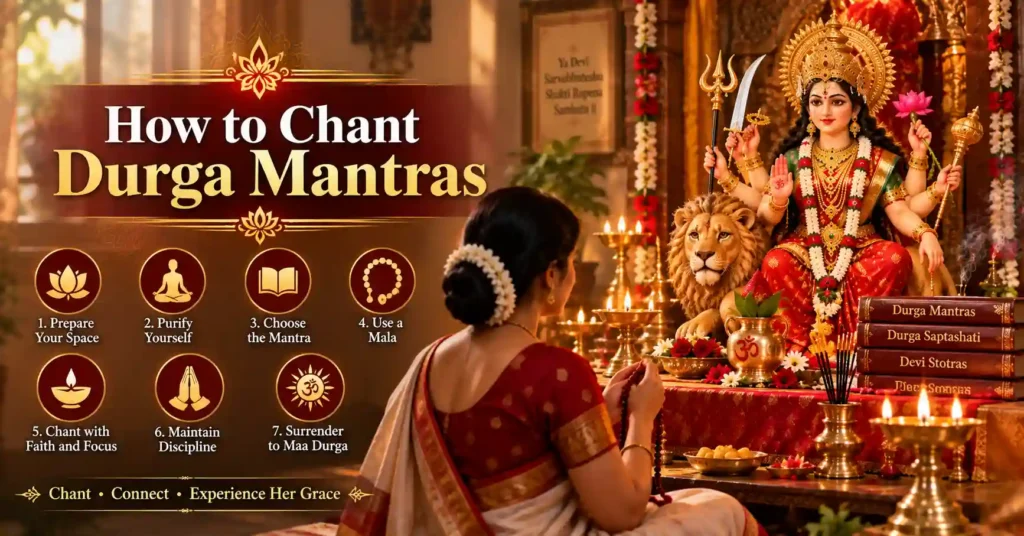
How to Chant Durga Mantras Correctly
While Durga Mantras can be chanted with simple faith and devotion, following a few traditional practices can help create a more focused and meaningful worship experience.
In Sanatan Dharma, the effectiveness of mantra chanting is not measured by the number of repetitions alone. Sincerity, concentration, devotion, and consistency are considered equally important.
Simple Steps for Chanting Durga Mantras
Take a bath or wash your hands and face before beginning worship.
Choose a clean and peaceful place for prayer.
Sit comfortably facing east or north if possible.
Keep an image or murti of Maa Durga before you.
Light a diya or incense if it is part of your regular worship routine.
Chant the mantra slowly and with attention.
Focus on the meaning and presence of Maa Durga while chanting.
Maintain regularity rather than worrying about large numbers of repetitions.
Can You Use a Mala?
Many devotees use a 108-bead japa mala while chanting Durga Mantras. A mala can help maintain focus and keep track of repetitions during mantra japa.
However, using a mala is optional. Devotion and concentration remain more important than any external aid.
Best Attitude for Chanting
The most important aspect of chanting Durga Mantras is the attitude with which they are recited.
Devotees are encouraged to approach Maa Durga with:
Faith and sincerity.
Humility and gratitude.
Patience and consistency.
Respect for the sacred nature of the mantra.
A genuine desire for spiritual growth.
Common Mistakes to Avoid
Chanting mechanically without concentration.
Treating mantra recitation as a mere ritual.
Becoming overly concerned with numbers while neglecting devotion.
Rushing through the verses.
Practicing irregularly and expecting immediate results.
What Matters Most?
Traditional teachings emphasize that Maa Durga responds to devotion more than perfection. While correct pronunciation is beneficial and should be learned over time, sincere prayer offered with a pure heart is considered the foundation of all Devi worship.
Whether a devotee chants a simple daily mantra such as Om Dum Durgayai Namah or recites longer hymns from the Durga Saptashati, the goal remains the same: to develop a deeper connection with the Divine Mother and walk the spiritual path with faith, courage, and devotion.
Best Time to Chant Durga Mantras
One of the most common questions devotees ask is whether there is a specific time for chanting Durga Mantras. While Maa Durga can be worshipped at any time with sincere devotion, certain periods are traditionally considered especially auspicious for mantra recitation.
The ideal time often depends on a devotee’s routine, spiritual practice, and level of commitment. More important than the exact timing is consistency, faith, and concentration during chanting.
Auspicious Times for Chanting Durga Mantras
| Time | Significance |
|---|---|
| Brahma Muhurta | Considered the most spiritually beneficial time for mantra chanting and meditation. |
| Sunrise | A peaceful time to begin the day with devotion and positive energy. |
| Evening Prayer (Sandhya) | Ideal for reflection, gratitude, and connecting with the Divine Mother. |
| Navratri | The most important festival dedicated to Maa Durga and Devi worship. |
| Fridays | Traditionally associated with worship of the Divine Mother. |
| Ashtami and Navami | Highly auspicious days during Navratri and Devi worship. |
Why Is Brahma Muhurta Considered Special?
Brahma Muhurta, which occurs before sunrise, is traditionally regarded as one of the best times for spiritual practices.
During this period, the environment is generally quiet and free from distractions. Many devotees find it easier to focus on Durga Mantras, meditation, and prayer during these early hours.
Chanting Durga Mantras During Navratri
Navratri is considered the most sacred period for worshipping Maa Durga and chanting Durga Mantras.
During these nine nights, devotees often increase their spiritual practices by performing mantra japa, reading the Durga Saptashati, reciting stotras, and participating in aarti and puja.
Many devotees choose this time to begin a new mantra practice or deepen an existing one.
Can Durga Mantras Be Chanted at Any Time?
Yes. While auspicious timings are respected, traditional teachings emphasize that devotion is more important than the clock.
A devotee who chants Durga Mantras regularly with faith and sincerity can benefit from the practice regardless of the time of day.
For householders and working professionals, choosing a convenient and consistent time often leads to a more sustainable spiritual routine.
What Is More Important Than Timing?
Regularity in practice.
Faith in Maa Durga.
Proper focus and concentration.
Understanding the meaning of the mantra.
A sincere desire for spiritual growth.
Ultimately, the best time to chant Durga Mantras is the time when you can pray with a calm mind, an open heart, and genuine devotion to the Divine Mother.
Simple Guidance for Durga Sadhana
Durga Sadhana does not always require complex rituals, elaborate ceremonies, or advanced spiritual practices. For most devotees, a sincere heart, regular prayer, and devotion to Maa Durga form the foundation of meaningful worship.
Many people begin their spiritual journey with simple Durga Mantras, a short daily prayer, or a few moments of meditation before the image of the Divine Mother. Over time, these small acts of devotion can gradually become a deeper and more transformative spiritual practice.
A Simple Daily Durga Sadhana Routine
Devotees can follow a simple routine such as:
Offer pranam to Maa Durga after bathing.
Light a diya or incense if possible.
Chant a simple Durga Mantra such as Om Dum Durgayai Namah.
Recite the Durga Chalisa, a stotra, or a few verses from the Durga Saptashati.
Spend a few moments in silent prayer or meditation.
Conclude with Maa Durga Aarti and gratitude.
Even a short daily practice performed consistently can help strengthen devotion and spiritual discipline.
Essential Principles of Durga Sadhana
Faith is more important than ritual complexity.
Consistency is more valuable than occasional intensity.
Devotion should be accompanied by righteous actions.
Humility and gratitude deepen spiritual growth.
Worship should inspire compassion, patience, and self-control.
For Beginners
Those new to Devi worship do not need to learn every Durga Mantra, stotra, or scripture immediately.
A simple starting point may include:
Om Dum Durgayai Namah
Durga Chalisa
Maa Durga Aarti
Navarna Mantra (after learning proper pronunciation)
Reading about Maa Durga and the Navdurga
As understanding grows, devotees can gradually explore the Durga Saptashati, Devi Kavach, Argala Stotram, Keelak Stotram, and Siddha Kunjika Stotram.
The True Goal of Durga Sadhana
The ultimate purpose of Durga Sadhana is not merely to seek material benefits or relief from difficulties.
Its deeper goal is to cultivate devotion, courage, wisdom, self-discipline, and surrender to the Divine Mother. Through regular worship, devotees learn to face life’s challenges with greater faith and inner strength.
Whether through Durga Mantras, stotras, chalisa, aarti, or silent prayer, every sincere act of devotion becomes a step closer to Maa Durga and her boundless grace.
Conclusion
Durga Mantras have guided devotees for centuries on the path of devotion, courage, and spiritual growth. Whether chanted as simple daily prayers or as part of elaborate worship, these sacred mantras help devotees connect with the Divine Mother and seek her blessings in every aspect of life.
Alongside Durga Mantras, sacred stotras, the Durga Chalisa, Maa Durga Aarti, and the teachings of the Durga Saptashati provide a complete framework for Devi worship. Each prayer serves a unique purpose, helping devotees cultivate faith, discipline, gratitude, and inner strength.
From the protective power of the Devi Kavach to the spiritual depth of the Siddha Kunjika Stotram, the worship of Maa Durga offers countless ways to deepen one’s relationship with the Divine Mother.
Whether you are a beginner taking your first steps in Devi worship or a long-time devotee seeking deeper understanding, Durga Mantras remain a timeless source of inspiration, protection, and spiritual guidance.
May Maa Durga bless you with strength during challenges, wisdom in decision-making, devotion in worship, and peace in your spiritual journey. Through sincere prayer and faith, may her divine grace illuminate your life and lead you toward courage, clarity, and inner transformation.
Did You Know?
- The oldest references to worship of the Divine Mother can be traced to ancient Hindu traditions that later developed into the Shakta tradition.
- The Navarna Mantra (Om Aim Hreem Kleem Chamundayai Vichche) is considered one of the most important mantras in Devi worship.
- The Durga Saptashati contains 700 verses and is also known as the Devi Mahatmya.
- Many devotees chant Durga Mantras daily, not just during Navratri.
- The Devi Kavach, Argala Stotram, and Keelak Stotram are traditionally recited before the Durga Saptashati.
- The nine forms of Maa Durga worshipped during Navratri are collectively known as the Navdurga.
- The sacred beej mantra “Dum” is closely associated with Maa Durga’s protective energy.
- Durga Mantras, stotras, chalisa, and aarti together form a complete system of Devi worship.
Suggested reading
The tradition of chanting Durga Mantras extends far beyond simple mantra recitation. It includes sacred hymns, protective prayers, devotional songs, and powerful scriptures dedicated to the Divine Mother.
Exploring related texts can help devotees gain a deeper understanding of Maa Durga, Navratri, Devi worship, and the spiritual teachings of the Shakta tradition.
Siddha Kunjika Stotram: The Sacred Key That Unlocks the Full Power of Durga Saptashati
https://thesanatantales.com/siddha-kunjika-stotram/
Devi Kavach Lyrics with Meaning and Spiritual Significance
https://thesanatantales.com/devi-kavach-meaning/
Argala Stotram Lyrics with Meaning and Spiritual Significance
https://thesanatantales.com/argala-stotram-lyrics-meaning/
Navarna Mantra Meaning, Benefits, Chanting Rules and How to Chant
https://thesanatantales.com/navarna-mantra/
Durga Beej Mantra: Simple Meaning, Benefits and How to Chant
https://thesanatantales.com/durga-beej-mantra-meaning/
Durga Chalisa Lyrics with English Pronunciation and Meaning
https://thesanatantales.com/durga-chalisa-lyrics-meaning/
What Is Durga Saptashati? Meaning, Story and Why It Is Read in Navratri
https://thesanatantales.com/durga-saptashati-meaning-navratri/
Durga Saptashati
https://en.wikipedia.org/wiki/Devi_Mahatmya
FAQs
1. What are Durga Mantras?
Durga Mantras are sacred chants dedicated to Maa Durga, the Divine Mother and embodiment of Shakti. These mantras are recited by devotees to seek protection, courage, spiritual strength, wisdom, and divine grace.
In Sanatan Dharma, mantras are considered powerful spiritual sounds that help focus the mind and deepen devotion. Different Durga Mantras invoke different aspects of the Goddess, such as protection, compassion, fearlessness, and inner transformation.
From simple daily chants like Om Dum Durgayai Namah to advanced mantras such as the Navarna Mantra, devotees use these sacred prayers to strengthen their connection with Maa Durga and support their spiritual journey.
2. Which is the most powerful Durga Mantra?
There is no single Durga Mantra that is universally considered the most powerful for every devotee. The spiritual value of a mantra often depends on the devotee’s faith, intention, and practice.
However, the Navarna Mantra (Om Aim Hreem Kleem Chamundayai Vichche) is widely regarded as one of the most important mantras in the Shakta tradition. It is closely associated with the Durga Saptashati and worship of Maa Chamunda.
For daily worship, many devotees also chant Om Dum Durgayai Namah, a simple yet powerful mantra that invokes Maa Durga’s protection and blessings. Both mantras are deeply revered and commonly used in Devi worship.
3. What is the Navarna Mantra and why is it important?
The Navarna Mantra is one of the most sacred Durga Mantras in the Shakta tradition. The mantra is:
Om Aim Hreem Kleem Chamundayai Vichche
It contains powerful beej syllables that symbolize knowledge, divine energy, attraction, and transformation. The mantra invokes Maa Chamunda, a fierce and protective form of the Divine Mother.
The Navarna Mantra is especially significant because of its close connection with the Durga Saptashati. Many devotees recite it during Navratri, mantra japa, meditation, and Devi worship.
For centuries, practitioners have regarded this mantra as a profound means of developing devotion, spiritual focus, and a deeper connection with Maa Durga.
4. What are the benefits of chanting Durga Mantras?
Devotees traditionally chant Durga Mantras to strengthen their relationship with Maa Durga and cultivate spiritual discipline. While individual experiences vary, these mantras are associated with several devotional and spiritual benefits.
Regular chanting can help improve concentration during prayer, encourage mindfulness, and foster a sense of inner calm. Many devotees also find inspiration in Maa Durga’s qualities of courage, strength, and fearlessness.
Durga Mantras are often recited to seek protection, overcome negativity, and deepen faith during challenging times. More importantly, they help devotees maintain a consistent spiritual practice and develop a stronger sense of devotion, gratitude, and surrender to the Divine Mother.
5. Can beginners chant Durga Mantras?
Yes, beginners can certainly chant Durga Mantras. In fact, many devotees begin their spiritual journey with simple mantras dedicated to Maa Durga before exploring longer scriptures and hymns.
A mantra such as Om Dum Durgayai Namah is often recommended because it is easy to learn and suitable for daily worship. Beginners may also recite the Durga Chalisa or participate in Maa Durga Aarti as part of their devotional practice.
The most important factors are sincerity, faith, and consistency. Devotees do not need extensive knowledge of Sanskrit or advanced rituals to begin worshipping Maa Durga through mantra chanting and prayer.
6. When is the best time to chant Durga Mantras?
Durga Mantras may be chanted at any time of the day with sincere devotion. However, certain periods are traditionally regarded as especially auspicious for spiritual practice.
Many devotees prefer Brahma Muhurta, the period before sunrise, because the environment is generally calm and conducive to meditation. Sunrise and evening prayer times are also popular choices for mantra recitation.
Navratri is considered one of the most powerful periods for chanting Durga Mantras, as the festival is dedicated entirely to worship of the Divine Mother. Fridays, Ashtami, and Navami are also commonly observed for Devi worship and mantra japa.
7. What is the connection between Durga Mantras and Durga Saptashati?
The Durga Saptashati, also known as the Devi Mahatmya, is one of the most important scriptures dedicated to Maa Durga. It describes the victories of the Divine Mother over various demonic forces and contains numerous hymns, prayers, and teachings.
Many revered Durga Mantras are closely connected with the traditions surrounding the Durga Saptashati. For example, the Navarna Mantra, Devi Kavach, Argala Stotram, Keelak Stotram, and Siddha Kunjika Stotram all play important roles in Devi worship.
Together, these mantras and hymns help devotees understand the deeper spiritual teachings of the Divine Mother and strengthen their devotional practice.
8. Can Durga Mantras be chanted daily?
Yes, Durga Mantras can be chanted daily as part of a regular spiritual routine. Many devotees include mantra recitation in their morning or evening prayers to maintain a steady connection with Maa Durga.
Daily chanting does not require lengthy rituals. Even a few minutes of sincere mantra japa can become a meaningful act of devotion. Some devotees chant a simple mantra such as Om Dum Durgayai Namah, while others include stotras, the Durga Chalisa, or readings from the Durga Saptashati.
Consistency is often considered more important than quantity. Regular practice helps cultivate discipline, faith, mindfulness, and a deeper appreciation for the Divine Mother’s presence in daily life.
9. Which Durga Mantra is commonly chanted for protection?
Among the many Durga Mantras, Om Dum Durgayai Namah is one of the most commonly recited for protection and divine guidance. The sacred syllable Dum is traditionally associated with Maa Durga’s protective energy.
Devotees chant this mantra to seek courage during difficult situations and to strengthen their faith in the Divine Mother’s care and support.
The Devi Kavach is another highly respected protective prayer connected with Devi worship. Many devotees recite both the Devi Kavach and protective Durga Mantras as part of their daily spiritual practice, especially during Navratri and other important occasions dedicated to Maa Durga.
10. Are Durga Mantras only chanted during Navratri?
No. Although Durga Mantras are especially popular during Navratri, they are not limited to the festival alone. Devotees chant these sacred mantras throughout the year as part of their daily worship and spiritual practice.
Navratri provides a special opportunity to focus more deeply on Devi worship through mantra japa, fasting, scripture recitation, and aarti. However, the blessings of Maa Durga are not restricted to any particular season or festival.
Many devotees recite Durga Mantras every day to cultivate devotion, seek spiritual strength, and maintain a constant connection with the Divine Mother. Regular worship helps keep the spirit of Navratri alive throughout the year.
Share Your Devotion
Do you regularly chant Durga Mantras, recite the Durga Chalisa, or participate in Navratri worship?
Share your favorite mantra, prayer, or experience with Maa Durga in the comments below. Your devotional journey may inspire fellow devotees seeking to strengthen their connection with the Divine Mother.
If this guide to Durga Mantras helped you, consider sharing it with family and friends who wish to learn more about Maa Durga, Devi worship, and Sanatan Dharma.
May Maa Durga bless you with courage, wisdom, protection, and unwavering devotion.
References & Sources
Scriptures and Traditional Sources
- Durga Saptashati (Devi Mahatmya), Markandeya Purana
- Devi Kavach
- Argala Stotram
- Keelak Stotram
- Navarna Mantra Traditions
- Durga Dvatrimshannama Mala (32 Names of Durga)
- Durga Ashtottara Shatanamavali (108 Names of Durga)
External References
- Wikipedia – Durga Saptashati
https://en.wikipedia.org/wiki/Devi_Mahatmya - Wikipedia – Navratri
https://en.wikipedia.org/wiki/Navaratri - Sanskrit Documents Library
https://sanskritdocuments.org
Related Internal Resources
- Siddha Kunjika Stotram
- Devi Kavach
- Argala Stotram
- Keelak Stotram
- Navarna Mantra
- Durga Beej Mantra
- Durga Chalisa
- Durga Saptashati
- Navdurga Worship Guide
Explore More Topics from The Sanatan Tales