
What is karma according to Sanatan Dharma is a question that has guided Indian spiritual thought for thousands of years.
This explanation of Karma in Sanatan Dharma shows how action, intention, and consequence shape human life.
According to Sanatan Dharma, karma simply means action. Every thought, word, and deed we perform is karma.
It is not limited to physical actions alone. Even intentions and silent thoughts create karmic impressions.
Karma is not a reward or punishment given by a higher power sitting in judgment. It is a natural law, just like fire burns and water flows.
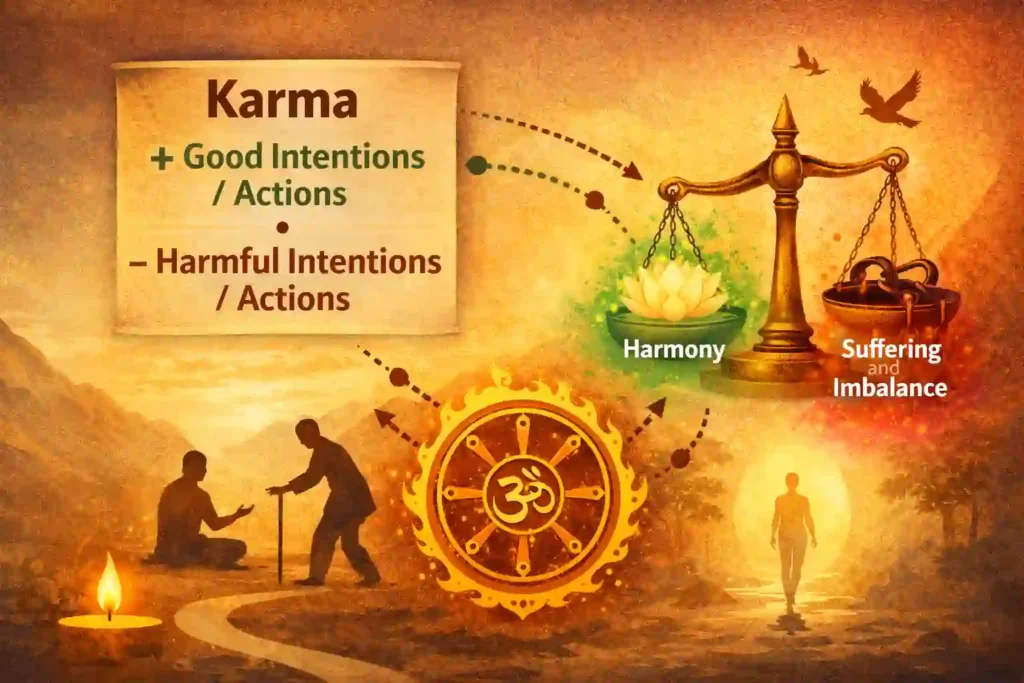
Actions aligned with truth and harmony bring peace. Actions rooted in harm or ignorance bring suffering. Karma works quietly, shaping experiences over time.
Sanatan Dharma teaches that karma does not end with one life. It continues across births, explaining karma and rebirth as part of the soul’s long journey.
This principle is commonly known as the law of karma Hinduism, which teaches that no action is without effect and leads seekers to ask a deeper question: can karma be changed through awareness and right living.
Table of Contents
ToggleIs karma only about actions, or also thoughts and intentions?
Karma includes thoughts, intentions, words, and actions. Even if no physical action takes place, intention still creates karma. A kind intention carries positive influence, while harmful intent creates subtle imbalance.
This is why inner awareness is important. Two people may perform the same action, but the karma created can differ based on intention and awareness.
Does karma decide fate completely?
Karma influences circumstances, but it does not remove free will. Past karma may create situations, but how we respond creates new karma. Fate is not fixed permanently.
Sanatan Dharma places responsibility back in human hands. Each moment gives the freedom to choose differently, wisely, or consciously.
What is the relationship between karma and rebirth?
Karma and rebirth are deeply connected. Unresolved karmas travel with the soul after death and shape future births. This explains why people are born into different situations.
At the same time, every birth offers a fresh chance. New karma can be created, and old karma can be softened through right living.
Can karma be changed or reduced?
Yes. Karma is not permanent. Sanatan Dharma teaches that karma can be transformed through awareness, selfless action, devotion, and self-knowledge.
When actions are performed without ego and attachment, karmic burden reduces. Conscious living slowly loosens karmic bonds.
Is karma always delayed?
No. Some karma gives immediate results. Some take years. Some carry into another life. Sanatan Dharma explains this through different layers of karma working together.
This understanding helps explain why life may seem unfair at times, even when one acts rightly.
How is karma connected to dharma?
Dharma shows the right direction. Karma records the impact of action. When actions follow dharma, karma becomes supportive instead of binding.
Dharma guides choice. Karma reflects consequence.
Why understanding karma matters in daily life
Understanding karma removes fear and helplessness. It encourages patience, ethical living, and compassion. It reminds us that every action matters, even the unseen ones.
Karma teaches responsibility without guilt and hope without denial.
Conclusion
Understanding what is karma according to Sanatan Dharma helps us live with awareness instead of fear.
Karma is not meant to punish, but to teach. Through right action, right intention, and conscious living, the soul slowly moves from karmic bondage toward inner freedom and peace.
Suggested Reading
To deepen this understanding, you may also explore What is Dharma according to Sanatan Dharma, What is nishit Kaal, What sre 16 Sanskar in Sanatan Dharma and What is Moksha.
Together, these ideas explain how action, duty, soul, and liberation are woven into one spiritual path.
For more such article please visit our website: www.thesanatantales.com.