
The fragrance of spring slowly fills the air as Phalguna arrives. Soon, sacred fires will glow in neighborhoods, and the sky will burst into color.
Holi Festival 2026 is not only about celebration. It is about renewal, devotion, and the victory of faith over ego.
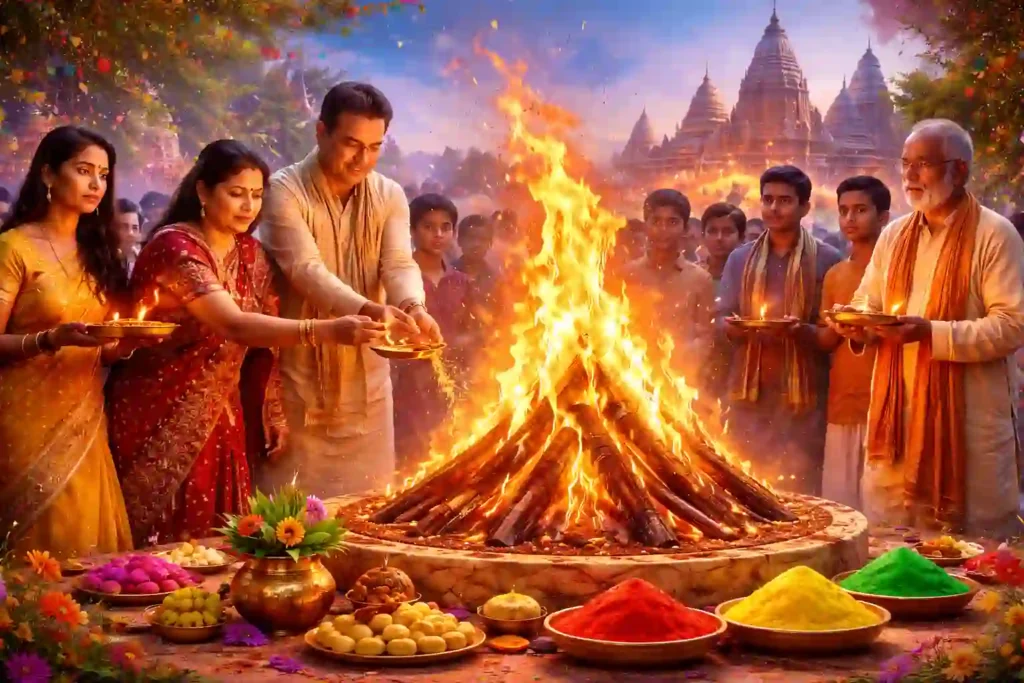
Before the colors come the flames. Before joy comes preparation. Holashtak disciplines the mind.
The correct Holika Dahan muhurat aligns the ritual with cosmic timing. When we understand these sacred details, Holi becomes more than a social festival.
It becomes a spiritual reset.
Table of Contents
ToggleWhen Is Holi Festival 2026? Date and Tithi Details
Holi is celebrated on Phalguna Purnima, the full moon of the Hindu lunar month of Phalguna.
Across most of India, Panchang calculations indicate:
- Holika Dahan: Evening of 2 March 2026
- Rangwali Holi: Morning of 3 March 2026
However, in the sacred Braj region — including Mathura, Vrindavan and Barsana — festival calendars traditionally observe:
- Holika Dahan in Mathura: 3 March 2026 (evening)
- Rangwali Holi in Mathura: 4 March 2026 (morning)
This difference occurs because of local Panchang interpretation, Bhadra timing, and regional devotional traditions.
Event | Date (Most Regions) | Date (Mathura Region) | Purpose |
Holika Dahan | 2 Mar 2026 | 3 Mar 2026 | Sacred bonfire |
Rangwali Holi | 3 Mar 2026 | 4 Mar 2026 | Playing with colors |
Always verify with your local Panchang, as tithi presence at sunset determines the final date.
Holashtak 2026: Eight Days of Spiritual Preparation
Holashtak begins eight days before Holika Dahan. These days are considered spiritually sensitive.
During Holashtak 2026:
- Marriage ceremonies are generally postponed
- Griha pravesh and major auspicious events are avoided
- Devotees increase prayer and mantra chanting
Holashtak is not a period of fear. It is a period of inward reflection before the fire of purification.
As Holi Festival 2026 approaches, these eight days gently prepare the mind.
Holika Dahan Muhurat 2026 and Bhadra Timing
The most important rule for Holika Dahan muhurat 2026 is this:
Holika Dahan must not be performed during Bhadra.
Two conditions must be satisfied:
- Phalguna Purnima tithi must prevail at sunset
- Bhadra must not be active during the ritual
In many locations in 2026, Bhadra overlaps with sunset on 2 March. Because of this, some regions shift Holika Dahan to the following evening.
Mathura Specific Guidance
In Mathura and the Braj region, Holika Dahan is observed on 3 March 2026 evening, in alignment with local temple and traditional calendars.
This is why pilgrims visiting Mathura for Holi Festival 2026 should follow the 3–4 March schedule.
Factor | Rule |
Bhadra period | Avoid performing Holika Dahan |
Purnima tithi | Must prevail at sunset |
Ritual time | After sunset |
Panchang | Verify locally |
Always consult your city’s Panchang before lighting the sacred fire.
Chandra Grahan and Holi 2026
Another important factor in 2026 is the presence of a Chandra Grahan (lunar eclipse) around this period.
When an eclipse falls near Purnima:
- Temples may close temporarily during Grahan
- Sutak rules may apply before the eclipse
- Ritual timing may be adjusted
However, Holika Dahan is not cancelled automatically. It is performed outside eclipse and Bhadra periods as per local Panchang.
This is why regional differences occur in Holi Festival 2026 dates.
Why Is Holi Celebrated? The Story of Devotion
The fire of Holika Dahan is rooted in the story of unwavering devotion.
The asura king Hiranyakashipu demanded worship from all. But his son Prahlada remained devoted to Lord Vishnu.
Hiranyakashipu’s sister Holika, who possessed a boon against fire, attempted to burn Prahlada. Yet the fire consumed Holika instead, while Prahlada remained unharmed.
Holika Dahan symbolizes this truth:
Ego burns. Devotion survives.
Spiritual Meaning of Holika Dahan
The sacred fire represents:
- Burning of ego
- Destruction of jealousy
- Release of resentment
- Inner purification
Holi Festival 2026 invites us to reflect:
What must we burn this year?
Only after purification do the colors arrive.
The next morning, Rangwali Holi celebrates joy, forgiveness and renewal.
Muhurat to Play Holi 2026
Colors should be played after sunrise on Rangwali Holi.
General guidelines:
- Begin after sunrise
- Avoid pre-dawn hours
- Respect elders and traditions
- Use safe and natural colors
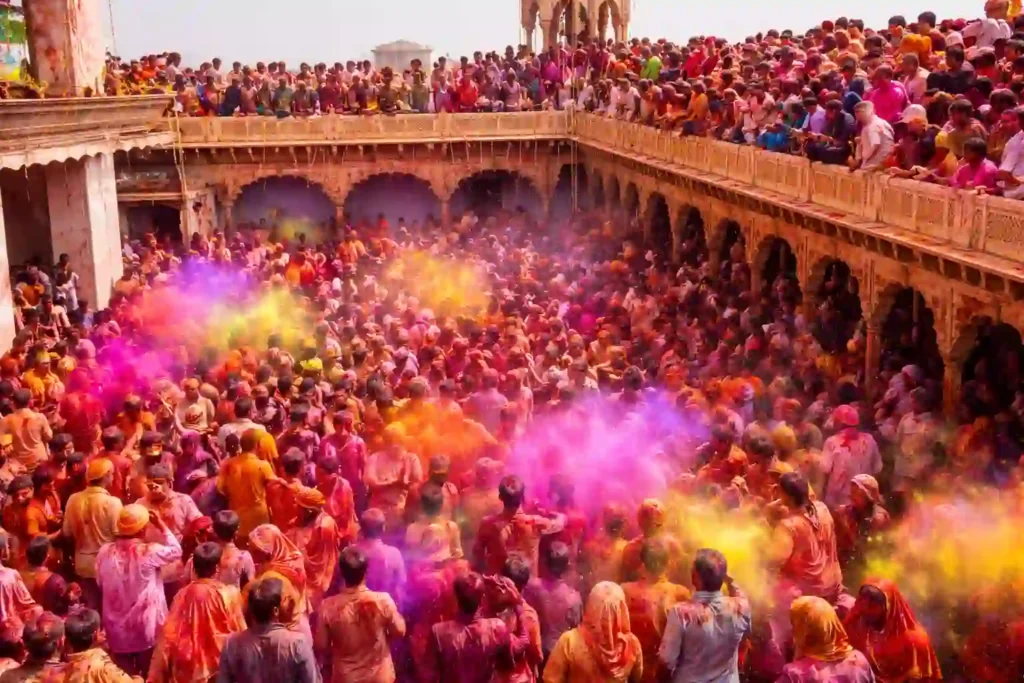
In Mathura and Braj, celebrations begin in the morning and continue through temple processions and devotional singing.
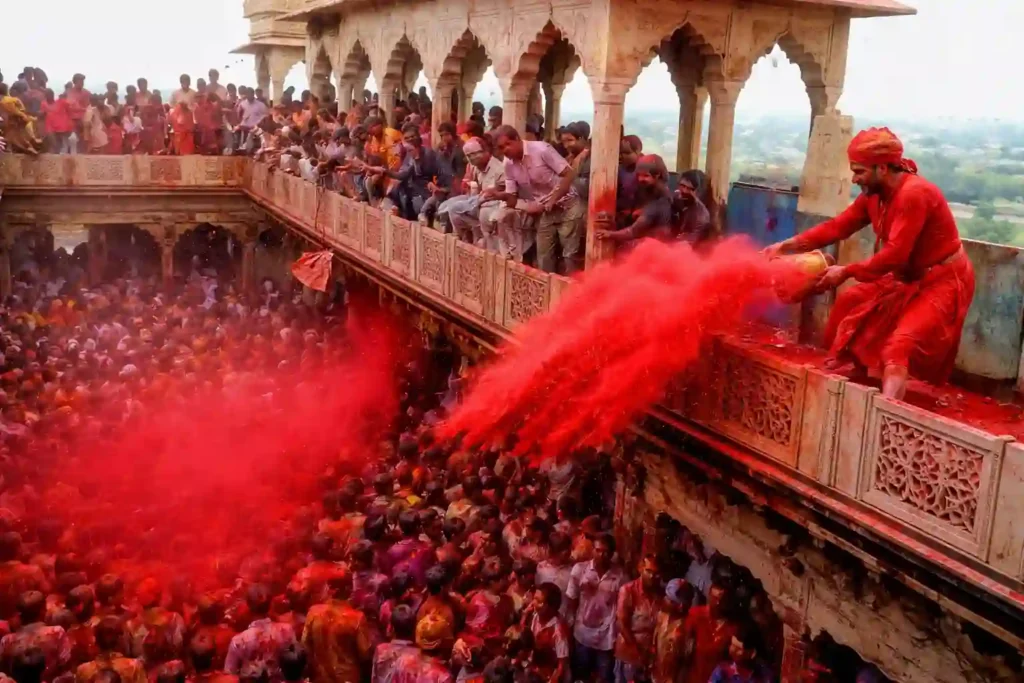
Holi in Mathura, Vrindavan and Barsana
Holi in Braj is not a one-day event. It is a spiritual festival stretching over several days.
- Mathura
- Vrindavan
- Barsana
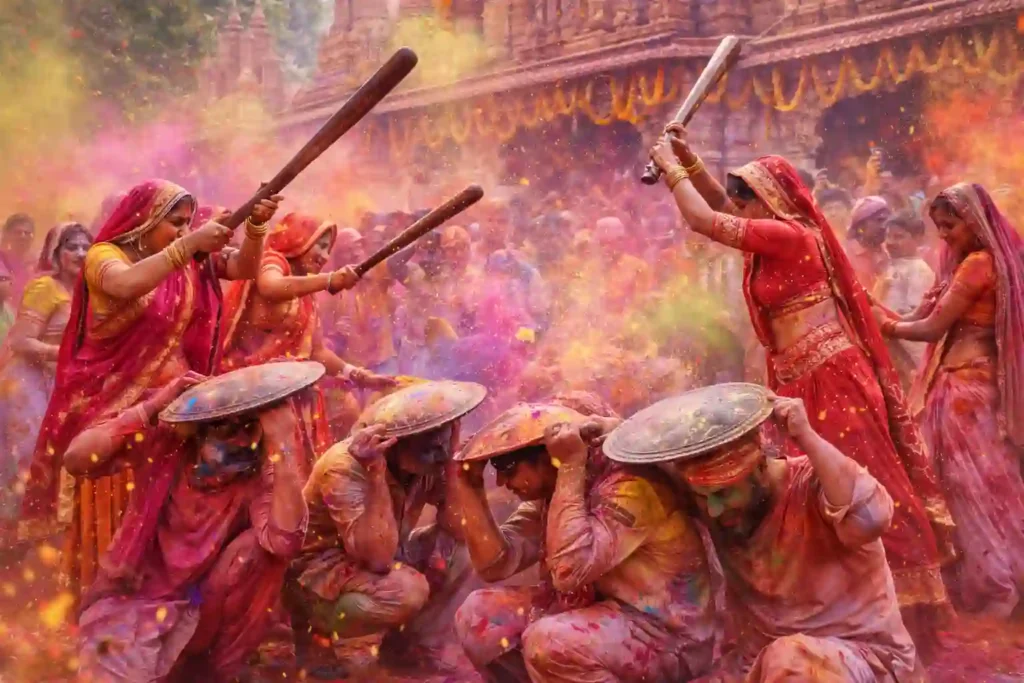
Lathmar Holi in Barsana, temple flower Holi in Vrindavan, and grand celebrations in Mathura make Holi Festival 2026 especially powerful in this region.
For pilgrims, following the Mathura schedule of 3–4 March 2026 is essential.
Holi Significance in Modern Life
Even today, Holi carries deep meaning:
- It repairs broken relationships
- It dissolves grudges
- It promotes social harmony
- It brings emotional release
Festivals in Sanatan Dharma are not only rituals. They are opportunities for transformation.
Holi Festival 2026 reminds us to burn negativity and embrace joy.
Conclusion
Holi Festival 2026 blends discipline and celebration. Holashtak prepares the heart. Holika Dahan purifies the mind. The story of Prahlada teaches devotion. Rangwali Holi spreads joy.
Whether you follow the 2–3 March schedule in most regions or the 3–4 March observance in Mathura, the message remains the same:
Burn ego. Protect faith. Celebrate renewal.
Suggested Reading
To deepen your understanding of sacred timing and spiritual symbolism, you may also explore:
- Our detailed Article on Maa Durga
- What Is Nishit Kaal in Sanatan Dharma
- Bhrahma Muhurata
- The story of Kirshna and Sudama
For more such articles please visit our website:www.thesanatantales.com.
FAQs
What is Holashtak 2026?
Holashtak is the eight-day period before Holika Dahan when major auspicious ceremonies are avoided.
Can Holika Dahan be done during Bhadra?
No. It should not be performed during Bhadra.
Why is Mathura observing Holi on 3–4 March 2026?
Because of local Panchang interpretation and Bhadra timing in the Braj region.
What if Chandra Grahan overlaps Holi 2026?
Rituals are adjusted outside eclipse time as per Panchang guidance.
When should colors be played in Holi Festival 2026?
After sunrise on Rangwali Holi.
Why is Holika burned?
It symbolizes destruction of ego and victory of devotion.
Is Holi mentioned in scriptures?
Yes, the Prahlada narrative appears in Puranic literature.
Does Holi date vary by region?
Yes, due to local Panchang calculations and Bhadra timing.