
In many Hindu homes, daily worship is very simple. A small lamp is lit. A flower is offered. A short prayer is whispered with folded hands.
Yet this simple act follows a sacred structure that has existed for centuries. What many devotees may not realize is that this everyday ritual is known as Panchopchar Pujan.
This form of worship is one of the most widely practiced rituals in Hindu tradition.. It preserves the spirit of traditional Vedic rituals while keeping the practice simple enough for daily life.
It reminds us that devotion does not depend on elaborate ceremonies. What matters most is sincerity of heart.
Across generations, families have continued this form of worship in temples, home shrines, and village traditions.
Understanding the meaning and method of Panchopchar Pujan helps us appreciate the depth hidden within this simple daily practice.
Table of Contents
ToggleWhat is Panchopchar Pujan in Hinduism
The word Pancha means five, and Upachara refers to respectful offerings made to the deity.
So Panchopchar Pujan literally means worship performed with five sacred offerings.
In classical Hindu ritual traditions, worship is organized through structured offerings called upacharas.
The more elaborate ritual is known as Shodashopchar Puja, which includes sixteen offerings.
Panchopchar Pujan represents the essential form of worship using five important offerings.
This form of puja is accepted across many traditions including Smarta, Shaiva, Vaishnava and Shakta practices.
It is not considered a lesser ritual. Instead, it is a condensed and complete form of worship suitable for daily devotion at home.
Many devotees also search for this ritual using different spellings such as Panchopachar Pooja, Panchopchar Puja Vidhi, or 5 Upachara Puja. All of these refer to the same traditional practice.
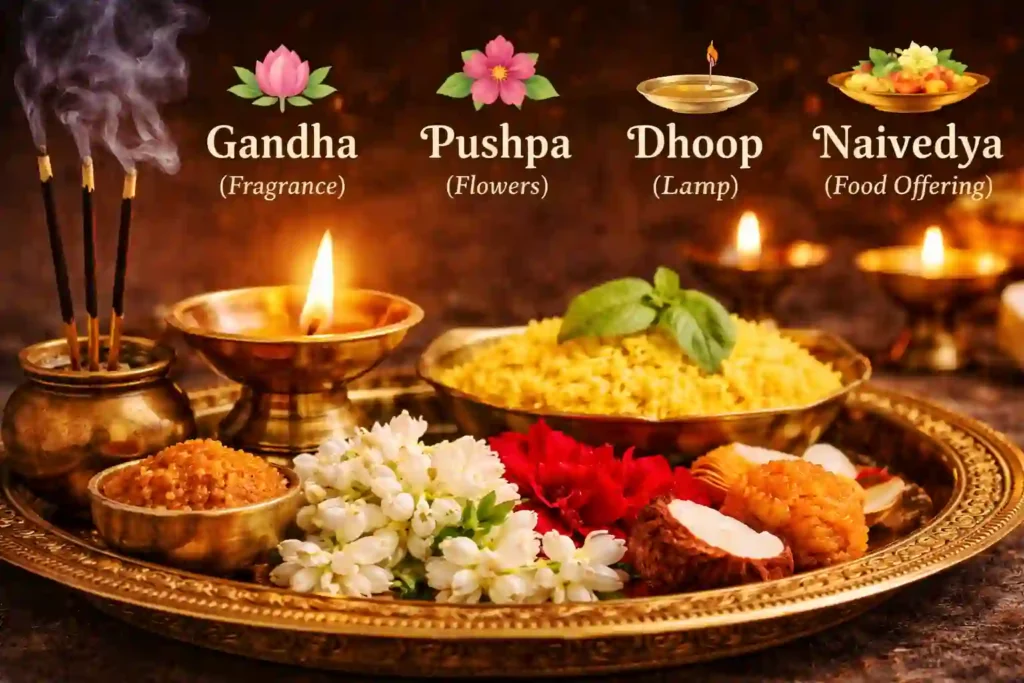
The Five Sacred Offerings in This Puja
The five sacred offerings used in Panchopchar Pujan appear simple outwardly, but each one carries deep symbolic meaning.
Gandha (fragrance or sandal paste)
Sandalwood paste or sacred fragrance is applied to the deity. In traditional understanding, fragrance represents purity and calmness of the mind. It reminds the devotee to approach the Divine with a peaceful heart.
Pushpa (flowers)
Flowers symbolize love, devotion, and surrender. Different traditions offer different sacred leaves and flowers.
In Shaiva worship, Bilva leaves are considered sacred.
In Vaishnava worship, Tulsi leaves are offered.
In Shakta worship, red flowers are commonly used.
Offering flowers represents offering one’s devotion and inner feelings to the Divine.
Dhoop (incense)
Incense purifies the environment and creates a peaceful atmosphere for prayer. The rising smoke is often interpreted as the upward movement of devotion and spiritual aspiration.
Deep (lamp)
Lighting a lamp symbolizes divine knowledge. The flame represents the removal of darkness and ignorance while awakening inner awareness.
For this reason, lighting a lamp is considered one of the most important acts in Hindu worship.
Naivedya (food offering)
Food is offered to the deity before it is consumed by the devotee. This expresses gratitude and acknowledges that nourishment ultimately comes from the Divine.
After offering, the food becomes prasada, which is received with reverence.
Together, these five offerings complete the ritual of Panchopchar Pujan.
Panchopchar Pujan samagri list
The materials required for Panchopchar Pujan are very simple and are usually available in most homes.
The basic samagri includes:
• sandal paste or fragrance
• fresh flowers or sacred leaves
• incense sticks or dhoop
• oil or ghee lamp
• simple food offering such as fruits or sweets
Unlike elaborate temple rituals, Panchopchar Pujan does not require complex arrangements.
The intention behind the offering is considered more important than decoration or ritual perfection.
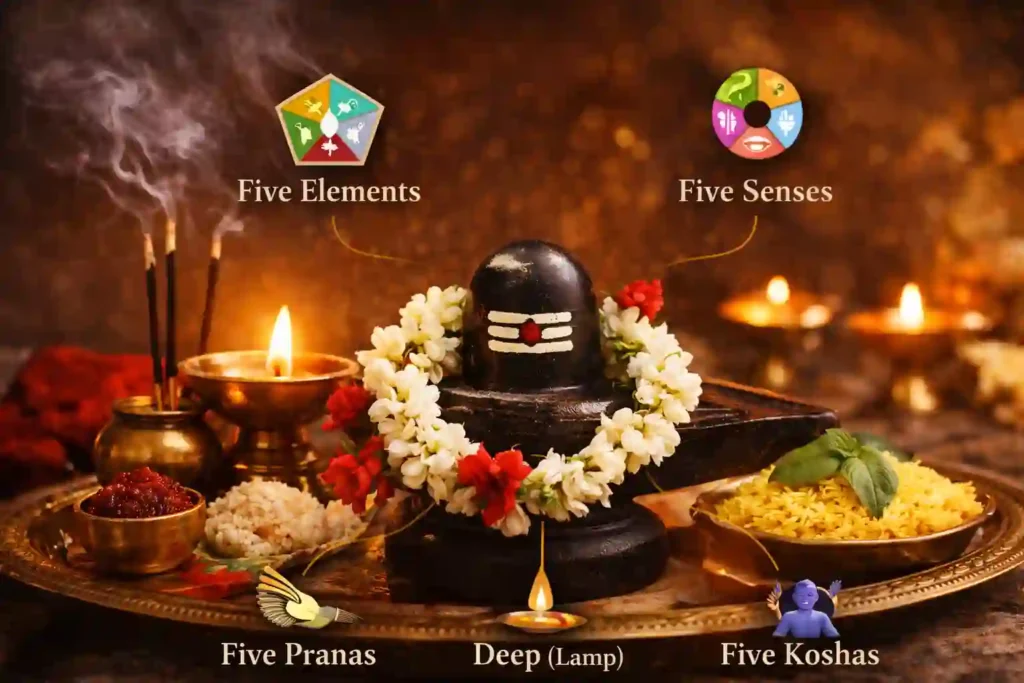
Panchopchar Puja vidhi: how to do Panchopchar Pujan at home
Many devotees look for step-by-step guidance for this simple daily puja. The method is simple and easy to follow.
A commonly practiced sequence is:
• Clean the worship area and sit calmly before the deity
• Take a simple sankalp or intention for the prayer
• Offer gandha (sandal paste or fragrance)
• Offer pushpa (flowers or sacred leaves)
• Light dhoop (incense)
• Light deep (lamp)
• Offer naivedya (food offering)
• Conclude the puja with prayer, mantra chanting, or aarti
This Panchopchar Puja Vidhi is balanced, simple, and spiritually complete.
Mantras can be chanted during the offerings, but even simple nama japa, such as repeating the name of the deity, is considered sufficient.
Scriptural and philosophical foundation of Panchopchar Pujan
Traditional Agama and Puranic texts describe different levels of ritual worship.
Temple rituals often follow the Shodashopchar Puja, which includes sixteen offerings and detailed ceremonial steps.
However, the five offerings used in Panchopchar Pujan represent the essential gestures of honoring the Divine as a sacred guest.
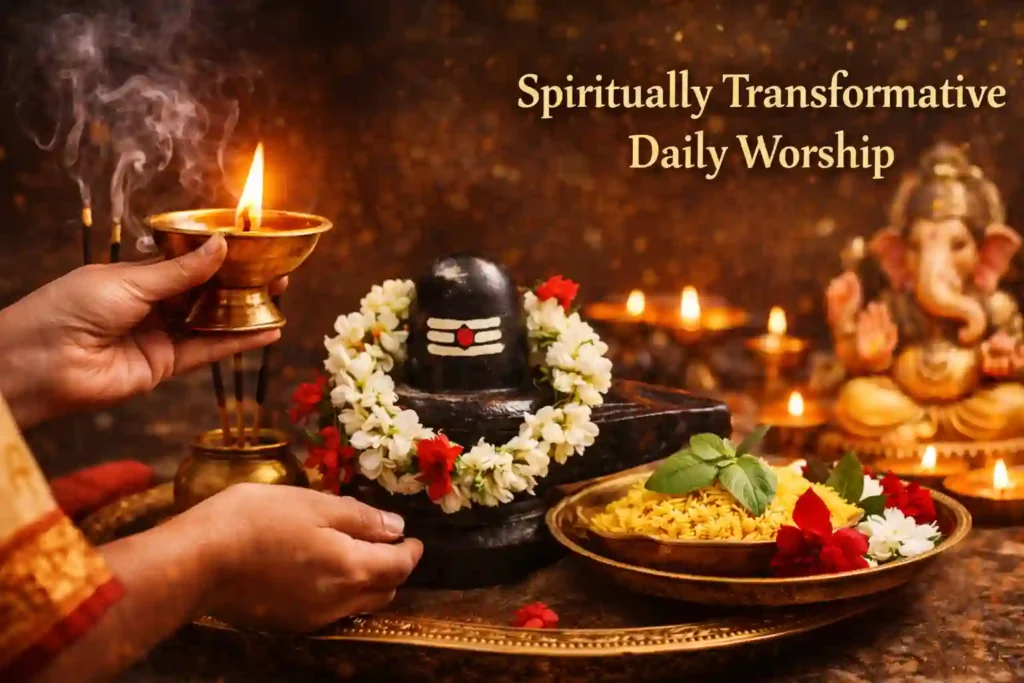
Some philosophical interpretations also relate these five offerings to deeper spiritual symbolism.
They may represent the five elements of nature, the five senses, the five pranas, and the five koshas of the human being.
In this way, Panchopchar Pujan becomes more than a ritual. It becomes a symbolic act of offering one’s entire being to the Divine.
Difference between Panchopchar Pujan and Shodashopchar Puja
The difference between these two forms of worship lies mainly in the level of ritual detail.
Shodashopchar Puja includes sixteen offerings such as invocation, ritual bathing of the deity, clothing, ornaments, fragrance, food offerings, and ceremonial worship.
Panchopchar Pujan condenses the ritual into five essential offerings suitable for daily household devotion.
The spiritual value of both forms remains the same. The difference lies only in the scale and elaborateness of the ritual.
When should Panchopchar Pujan be performed
One of the reasons Panchopchar Pujan is so widely practiced is its simplicity and flexibility.
It can be performed:
- during daily morning worship
• during evening prayer
• on vrat or fasting days
• during festivals like Navratri or Shravan
• while traveling
• whenever time for worship is limited
For beginners, it is one of the easiest ways to establish a regular spiritual routine.
Common doubts about Panchopchar Pujan
Can women perform Panchopchar Pujan
Yes. Daily household worship traditionally includes all members of the family. There is no universal restriction preventing women from performing Panchopchar Pujan.
What if one item is missing
If an offering is not available, it can be offered mentally. Many scriptures accept manasika puja, which means worship performed through intention and devotion.
Are mantras compulsory during the puja
No. While mantras can enhance the ritual, sincerity and devotion are considered more important than perfect recitation.
Panchopchar Pujan is meant to bring peace and connection with the Divine, not anxiety about ritual correctness.
The inner transformation through Panchopchar Pujan
When practiced regularly, Panchopchar Pujan slowly refines the inner awareness of the devotee.
Lighting the lamp encourages clarity and mindfulness.
Offering flowers cultivates humility and gratitude.
Fragrance calms the mind and prepares it for prayer.
Over time, the ritual shifts from outer actions toward inner devotion. What begins as a simple daily practice gradually becomes a quiet reminder of the Divine presence in everyday life.
Conclusion
Panchopchar Pujan is one of the most balanced forms of daily Hindu worship. It combines scriptural roots, symbolic meaning, and practical simplicity.
Through five sacred offerings, the devotee expresses gratitude, humility, and surrender.
Even in a busy modern life, this 5 Upachara Puja allows spiritual practice to remain steady and accessible.
When practiced regularly with devotion, this sacred ritual becomes a daily remembrance of the Divine.
Suggested Reading
If you wish to understand more about daily spiritual practices in Sanatan Dharma, these guides may also be helpful:
Why offerings are returned as Prasad, in Hindu Rituals
https://thesanatantales.com/why-offerings-are-returned-as-prasad/
Kumari Puja in Navratri? Honouring Kanya as Divine Shakti
https://thesanatantales.com/kumari-puja-in-navratri-guide/
What Is Sanatan Dharma? Meaning & Core Principles
https://thesanatantales.com/sanatan-dharma-meaning/
Brahma Muhurta: The Most Auspicious Time for Spiritual Practice
https://thesanatantales.com/brahma-muhurta-meaning-time-significance/
Rudraksha: Meaning, Types and Spiritual Benefits
https://thesanatantales.com/rudraksha/