
Many people ask this question with genuine curiosity. What are the 16 sanskar in Sanatan Dharma, and why are they considered so important? Sanatan Dharma sees human life as sacred from beginning to end.
It believes life should be lived with awareness, values, and inner balance, not just routine actions.
The 16 sanskar in Sanatan Dharma are sacred life rituals that guide a person through different stages of life. They are not rigid rules. They are gentle reminders placed at important turning points so that life moves with clarity and consciousness.
Below are the most asked questions, answered simply.
Table of Contents
ToggleWhat does the word sanskar mean in Sanatan Dharma?
Sanskar means refinement or purification. In Sanatan Dharma, sanskar refers to shaping thoughts, habits, and actions in a positive direction.
They help a person grow inwardly, not just outwardly.
What are the 16 sanskar in Sanatan Dharma?
The 16 sanskar in Sanatan Dharma are sacred rites that mark important transitions in a human life. They begin even before birth and continue till the final rites after death.
Together, they guide physical growth, mental discipline, moral values, and spiritual awareness.
What are the names of the 16 sanskar in Sanatan Dharma? (हिंदू धर्म के 16 संस्कार)
The 16 sanskar in Sanatan Dharma guide a human life from before birth to the final rites. Each sanskar marks an important inner and outer transition.
Garbhadhana (गर्भाधान संस्कार)
Performed before conception, this sanskar reminds parents to bring life into the world with awareness and purity.
Pumsavana (पुंसवन संस्कार)
Done in early pregnancy, it prays for the healthy growth and well-being of the unborn child.
Simantonnayana (सीमंतोन्नयन संस्कार)
This sanskar supports the emotional peace and mental balance of the mother during pregnancy.
Jatakarma (जातकर्म संस्कार)
Performed at birth, it welcomes the newborn with blessings for strength, intelligence, and long life.
Namakarana (नामकरण संस्कार)
The naming ceremony gives the child identity. A name is chosen with meaning and care.
Nishkramana (निष्क्रमण संस्कार)
This marks the child’s first outing, symbolising introduction to nature and the outer world.
Annaprashana (अन्नप्राशन संस्कार)
The first feeding of solid food, teaching gratitude for nourishment and respect for food.
Chudakarana (चूड़ाकरण संस्कार)
The first haircut represents cleansing of past impressions and a fresh beginning.
Karnavedha (कर्णवेध संस्कार)
Ear piercing is traditionally linked with health, alertness, and receptivity to learning.
Vidyarambha (विद्यारंभ संस्कार)
This sanskar marks the beginning of education and respect for knowledge and teachers.
Upanayana (उपनयन संस्कार)
It introduces discipline, self-control, and responsibility, guiding the student toward awareness.
Vedarambha (वेदारंभ संस्कार)
This begins deeper learning of scriptures and higher spiritual knowledge.
Samavartana (समावर्तन संस्कार)
It marks the completion of student life and readiness to enter household responsibilities.
Vivaha (विवाह संस्कार)
Marriage is seen as a sacred partnership to walk together on the path of dharma.
Vanaprastha (वानप्रस्थ संस्कार)
This stage represents gradual detachment from material life and turning inward.
Antyeshti (अंत्येष्टि संस्कार)
The final sanskar honours the body and prays for the soul’s peaceful
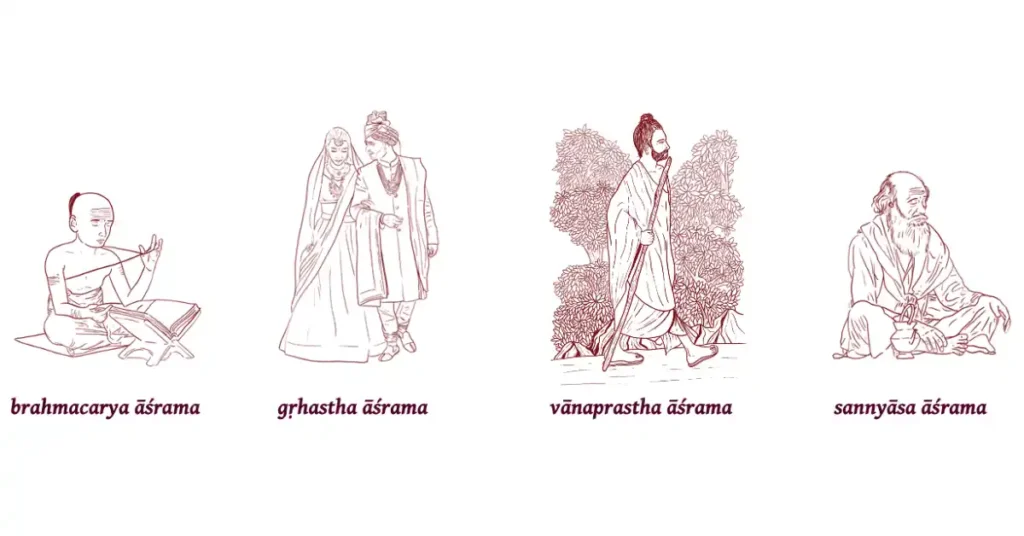
Why are there exactly 16 sanskar?
The number sixteen represents completeness in Sanatan thought. These sixteen sanskar together cover preparation for birth, learning, family life, detachment, and the final transition.
No important stage of life is left without guidance.
Are all 16 sanskar followed today?
In modern times, not all sixteen sanskar are practiced fully. Life has changed, and social structures have evolved.
Yet their inner meaning remains relevant. Even understanding these sanskar helps people live more consciously.
What is the importance of sanskar in Hindu life today?
The importance of sanskar in Hindu life lies in awareness. Sanskar slow us down at key moments and help us reflect before moving ahead.
They guide life gently, without force.
Conclusion
So, what are the 16 sanskar in Sanatan Dharma? They are life markers that guide a person from before birth to the final farewell. They do not control life. They support it with wisdom, balance, and meaning.
If you wish to explore related ideas like dharma, karma, and daily spiritual living, you will find many simple guides on thesanatantales.com. These teachings connect deeply with how sanskar shape a thoughtful and meaningful life.
FAQs
How many sanskar are mentioned in Sanatan Dharma?
Sanatan Dharma mentions sixteen main sanskar that guide a person through different stages of life. These sixteen are considered complete and symbolic of a full human journey, from preparation before birth to the final rites after death.
Do women also have the 16 sanskar in Sanatan Dharma?
Yes, the 16 sanskar in Sanatan Dharma apply to both men and women. While some rituals were practiced differently in different times, the spiritual purpose of sanskar is the same for everyone, which is inner refinement and conscious living.
What is the difference between sanskar and ritual?
A ritual is an outer action, while a sanskar is its inner effect. In Sanatan Dharma, rituals are meaningful only when they create positive impressions in the mind and heart. Sanskar focus more on awareness and values than on ceremony alone.
Are the 16 sanskar mentioned in Hindu scriptures?
Yes, the 16 sanskar are mentioned in ancient Hindu scriptures such as the Grihya Sutras and Smritis. These texts explain how sanskar support a disciplined, balanced, and value-based life rather than blind ritual practice.
Can the 16 sanskar be followed without rituals?
Yes, the essence of the 16 sanskar can be followed without performing full rituals. Sanatan Dharma values intention, awareness, and right living. Even understanding and living by the values behind the sanskar is considered meaningful.