There is something about certain trees in India that feels… different. Maybe you heard it as a child. Someone in your family softly said, “Raat ko uss ped ke paas mat jaana.” No one explained why, yet the feeling stayed with you.
In Sanatan Dharma, many trees are revered not just as part of nature but as symbols of divine presence, wisdom, and protection. Across India, generations have worshipped these sacred trees with devotion, connecting them with gods, goddesses, and ancient traditions.
In this article, you will discover why certain trees are considered sacred in Hinduism, the stories and beliefs associated with them, their spiritual significance, and how devotees continue to worship them even today. You will also learn the difference between scriptural teachings, traditional practices, and regional folklore surrounding these revered trees.
Some beliefs come from Hindu scriptures, while others have been passed down through generations as local traditions and personal experiences. Together, they reveal why sacred trees continue to hold a special place in the hearts of millions of devotees across India.
Quick Facts About Sacred Trees in Hinduism
| Aspect | Details |
|---|---|
| Primary Focus | Sacred Trees in Hinduism |
| Most Revered Trees | Peepal, Banyan, Neem, Tulsi and Bilva |
| Associated Deities | Lord Vishnu, Lord Shiva, Goddess Tulsi, Shitala Mata and other regional forms of the Divine Mother |
| Mentioned in Scriptures | Bhagavad Gita, Puranas and temple traditions |
| Common Worship Practices | Offering water, lighting a diya, parikrama, tying sacred threads and prayer |
| Temple Tradition | Sthala Vriksha (Sacred Temple Tree) |
| Spiritual Symbolism | Wisdom, protection, devotion, healing, longevity and harmony with nature |
| Best Known Festival | Vat Savitri Vrat, Tulsi Vivah and Mahashivaratri (Bilva worship) |
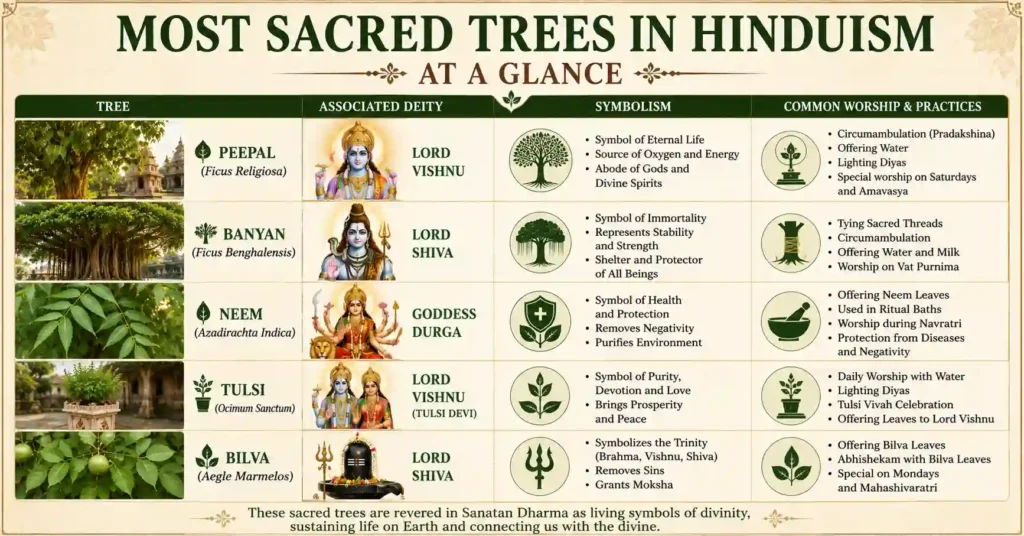
Most Sacred Trees in Hinduism at a Glance
| Sacred Tree | Associated Deity | Represents | Common Worship |
|---|---|---|---|
| Peepal (Ashvattha) | Lord Vishnu | Wisdom, eternal life, divine presence | Offering water, diya, parikrama |
| Banyan (Vat Vriksha) | Lord Shiva, Trimurti (traditional belief) | Longevity, stability, immortality | Vat Savitri Vrat, sacred thread, parikrama |
| Neem | Goddess Shitala Mata, Mariamman (regional traditions) | Protection, healing, purification | Prayers for health, diya, offerings |
| Tulsi (Holy Basil) | Goddess Tulsi, Lord Vishnu | Purity, devotion, prosperity | Daily worship, Tulsi Vivah, water offering |
| Bilva (Bael) | Lord Shiva | Spiritual merit, purity | Bilva leaves offered during Shiva Puja |
Quick Note:
Although each tree has its own religious significance, all of them are revered in Sanatan Dharma as symbols of the Divine, selfless giving, and harmony with nature.
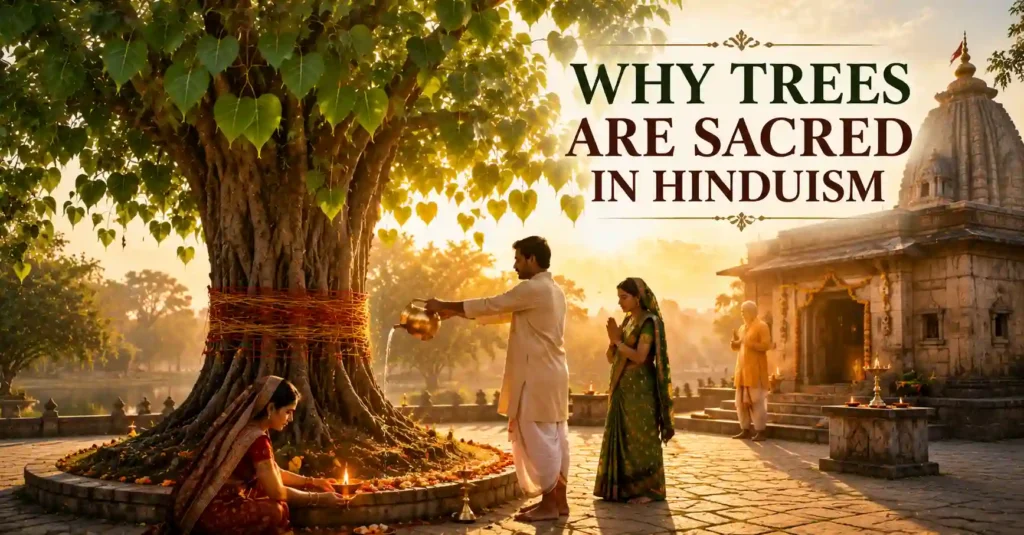
Table of Contents
ToggleWhy Sacred Trees in Hinduism Feel Spiritually Significant
During the day, a sacred tree may appear like any other part of nature. Yet for countless devotees, it represents far more than shade or greenery. It is a symbol of life, faith, and the divine connection between humanity and nature.
As evening approaches, the atmosphere around these ancient trees often feels quieter and more contemplative. The rustling leaves, fading light, and peaceful surroundings can create a deep sense of stillness that many people associate with spiritual presence.
In places like Varanasi, people continue to show great respect to old Peepal trees, especially those growing near temples and ghats. According to local traditions, these trees have been worshipped for generations and are believed to radiate positive spiritual energy.
This is one reason why sacred trees in Hinduism are revered beyond their physical form. They are not worshipped simply as trees, but as living symbols connected with gods, goddesses, and the sacred rhythms of nature.
Science explains some of these experiences through natural factors such as air movement, sounds, lighting conditions, and human perception. At the same time, many devotees describe a sense of peace and quiet reflection while sitting beneath these trees.
Whether viewed through faith, tradition, or personal experience, these moments continue to strengthen the reverence for trees worshipped in Hinduism and keep these ancient beliefs alive across generations.
Peepal Tree: The Most Sacred Tree in Hinduism
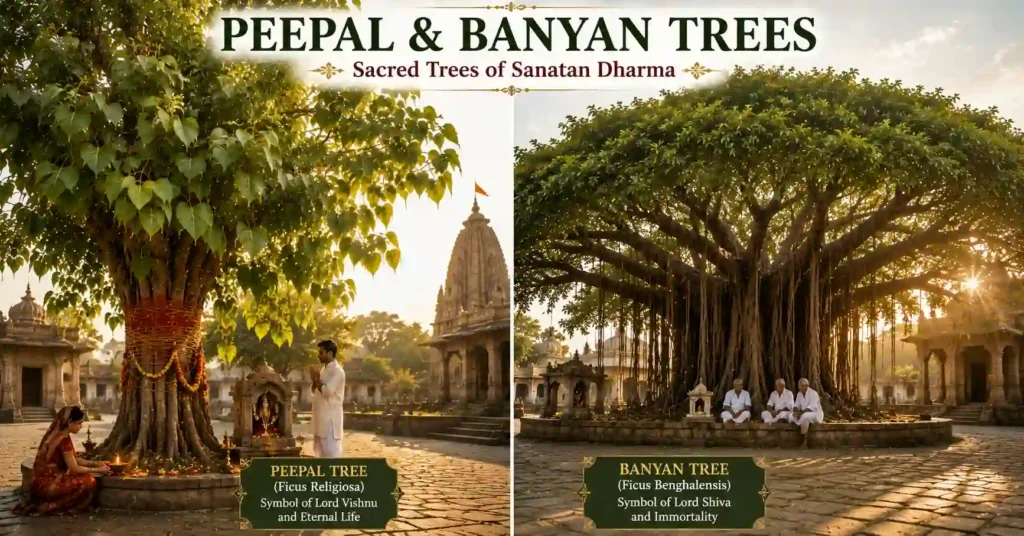
The Peepal tree (Ashvattha) is one of the most revered sacred trees in Hinduism. In the Bhagavad Gita (10.26), Lord Krishna declares, “Among trees, I am the Ashvattha (Peepal).” This verse highlights its special place in Sanatan Dharma.
Many Hindu traditions associate the Peepal tree with Lord Vishnu, while some also believe that Lord Brahma, Vishnu, and Shiva symbolically reside within it. For this reason, devotees worship the tree as a symbol of divine presence, wisdom, and eternal life.
Across India, especially near temples and village shrines, you will often see sacred threads tied around its trunk, diyas placed near its roots, and devotees offering water before performing parikrama. These simple acts express gratitude and seek blessings rather than worshipping the tree itself.
A popular traditional belief is that the Peepal tree remains spiritually vibrant even after sunset. Its heart-shaped leaves often continue to flutter with the slightest breeze, giving rise to the saying that the tree “never sleeps.” While science explains this through the shape of its leaves and natural air movement, many devotees see it as a reminder of the tree’s living spiritual presence.
Several local stories also speak about unusual experiences near old Peepal trees at night. Some people describe a deep sense of silence, peace, or heightened awareness while sitting beneath them. These experiences are part of regional folklore and personal beliefs rather than scriptural teachings.
Whether understood through faith, tradition, or nature, the Peepal tree continues to inspire devotion. Its spiritual symbolism and centuries-old worship make it one of the most respected trees worshipped in Hinduism.
Did You Know?
- The Peepal tree (Ashvattha) is the only tree specifically mentioned by Lord Krishna in the Bhagavad Gita (10.26).
- The Bilva tree is considered especially sacred to Lord Shiva, and its three-lobed leaves are an important offering during Shiva Puja.
- Tulsi is worshipped daily in millions of Hindu homes and is regarded as the earthly form of Goddess Tulsi.
- Many ancient Hindu temples preserve a Sthala Vriksha, a sacred tree closely associated with the temple’s deity and history.
- Respect for sacred trees reflects one of the core teachings of Sanatan Dharma: living in harmony with nature.
Banyan Tree: A Symbol of Longevity and Wisdom in Hinduism
The Banyan tree (Vat Vriksha) is one of the most revered sacred trees in Hinduism. With its विशाल canopy, aerial roots, and remarkable lifespan, it symbolizes longevity, stability, wisdom, and the continuous cycle of life.
In Hindu tradition, the Banyan tree is associated with Lord Shiva and is also regarded as a symbol of the Trimurti. Many devotees believe its deep roots and ever-expanding branches represent the eternal nature of creation and spiritual knowledge.
For centuries, Banyan trees have stood at the heart of villages and temple courtyards. They have served as places where saints meditated, elders gathered, travelers rested, and communities came together for spiritual discussions and daily life.
The tree also holds a special place during Vat Savitri Vrat, when married women tie sacred threads around its trunk and pray for the long life and well-being of their husbands. This ancient tradition continues in many parts of India.
Like the Peepal tree, old Banyan trees are surrounded by many regional stories. Some local traditions suggest that the peaceful silence beneath these ancient trees after sunset creates a feeling unlike any other. Such experiences are part of folklore and personal belief rather than scriptural teaching.
From a practical perspective, the Banyan’s vast shade, cool surroundings, and natural silence can make time seem to slow down, creating a deep sense of calm and reflection.
Whether viewed through faith, culture, or nature, the Banyan remains one of the most respected trees worshipped in Hinduism, reminding devotees of patience, strength, and spiritual wisdom.
Neem Tree: A Sacred Symbol of Protection and Healing in Hinduism
The Neem tree is one of the most respected sacred trees in Hinduism, known for its association with protection, purity, and healing. Unlike the Peepal and Banyan, which are often linked with spiritual wisdom and longevity, Neem is widely revered for its nurturing and protective qualities.
In many parts of India, Neem is associated with Goddess Shitala Mata, Goddess Mariamman, and other regional forms of the Divine Mother. Devotees believe the tree symbolizes health, purification, and the removal of negative energies. These associations are rooted in local traditions and centuries-old devotional practices.
You will often find Neem trees near temples, village shrines, and homes. A diya may be lit beneath the tree, sacred threads tied around its trunk, or prayers offered for good health and family well-being. These simple acts reflect faith and gratitude rather than fear.
Beyond its religious importance, Neem has been valued for generations in Ayurveda for its medicinal properties. Its leaves, bark, flowers, and seeds have traditionally been used to support health and maintain cleanliness, further strengthening its sacred status in Indian culture.
Many devotees describe a feeling of peace while sitting beneath a Neem tree. Whether this calm comes from faith, the soothing natural environment, or personal experience, it has inspired reverence across generations.
Today, the Neem tree continues to be one of the most important trees worshipped in Hinduism, reminding devotees of the close relationship between nature, health, and divine protection.
Tulsi and Bilva: Two Sacred Plants Deeply Revered in Hinduism
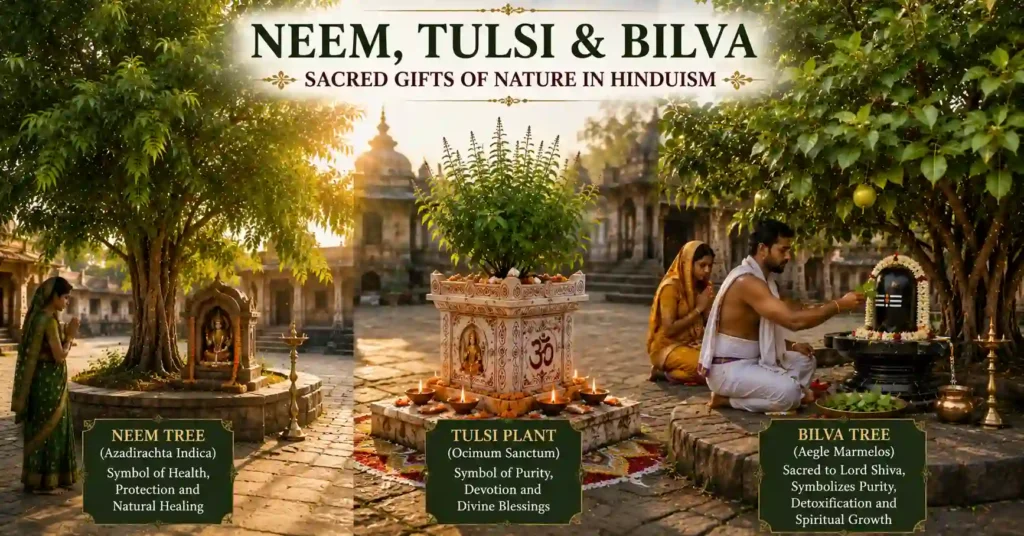
While the Peepal, Banyan, and Neem trees are among the most well-known sacred trees in Hinduism, two other sacred plants also hold immense religious importance: Tulsi and Bilva (Bael). Though smaller in size, both are deeply woven into daily worship and temple traditions across India.
Tulsi: The Sacred Plant of Lord Vishnu
Tulsi (Holy Basil) is regarded as the earthly manifestation of Goddess Tulsi and is especially dear to Lord Vishnu and Lord Krishna. Many Hindu families grow a Tulsi plant in a Tulsi Vrindavan and worship it every morning and evening by offering water, lighting a diya, and reciting prayers.
Tulsi symbolizes purity, devotion, and spiritual discipline. The annual Tulsi Vivah festival marks the ceremonial marriage of Tulsi and Lord Vishnu and is considered the beginning of the Hindu wedding season in many regions.
Bilva: The Sacred Tree of Lord Shiva
The Bilva (Bael) tree holds a special place in Shaiva traditions. Its distinctive three-lobed leaves are considered highly auspicious and are offered during Shiva Puja, especially on Mahashivaratri, Mondays, and throughout the holy month of Shravan.
According to Hindu traditions, offering Bilva leaves with devotion is believed to please Lord Shiva. Beyond its spiritual importance, the Bilva tree has also been valued in Ayurveda for centuries because of its medicinal and nutritional properties.
Together with the Peepal, Banyan, and Neem, Tulsi and Bilva complete the group of the most revered sacred trees and plants in Hinduism, reflecting the deep respect Sanatan Dharma has always shown toward nature and the Divine.
Why Are Trees Considered Sacred in Hinduism?
In Sanatan Dharma, nature is not seen as separate from the Divine. The five elements of nature, including trees, rivers, mountains, and forests, are revered as manifestations of God’s creation and are treated with respect and gratitude.
Trees have always sustained life by providing oxygen, shade, food, medicine, and shelter. Because they give selflessly without expecting anything in return, they came to symbolize compassion, generosity, and the nurturing power of nature.
Hindu scriptures also honour sacred trees. In the Bhagavad Gita (10.26), Lord Krishna says, “Among trees, I am the Ashvattha (Peepal).” Many Puranas and temple traditions also associate specific trees with different deities, which is why they are revered and protected.
Over centuries, local customs and regional traditions added their own stories and beliefs. Some communities believe that divine energies or guardian deities reside near certain sacred trees, while others see them as places ideal for prayer, meditation, and spiritual reflection.
This is why devotees light diyas, offer water, perform parikrama, or tie sacred threads around trees like the Peepal, Banyan, and Neem. These practices are expressions of devotion and gratitude rather than worship of the tree itself.
Today, sacred trees in Hinduism continue to remind us that respecting nature is an important part of spiritual life. Whether inspired by scripture, tradition, or personal faith, these timeless practices strengthen the bond between humanity, nature, and the Divine.
Sthala Vriksha: The Sacred Temple Trees of Hinduism
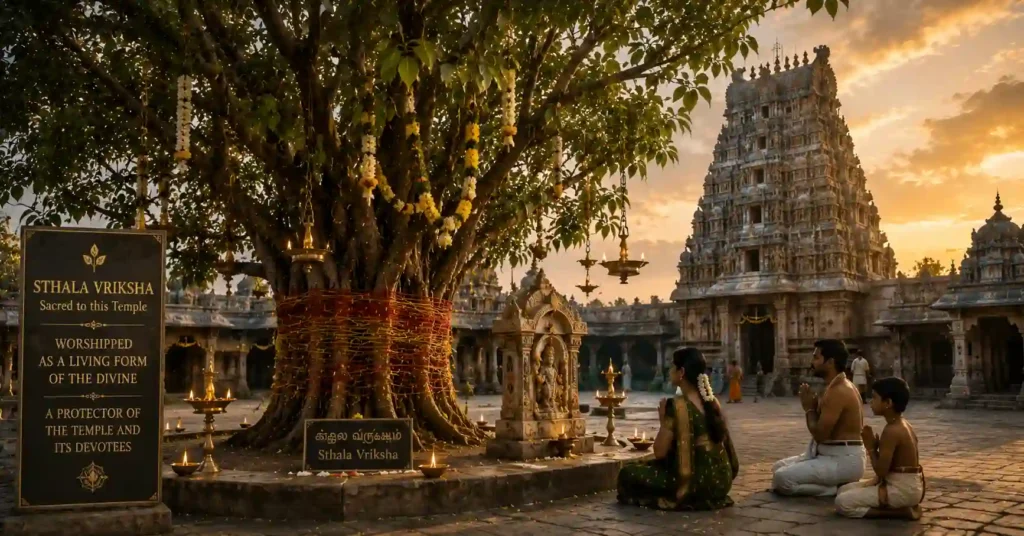
One of the most beautiful traditions in Sanatan Dharma is the concept of the Sthala Vriksha, which means the sacred tree associated with a particular Hindu temple. Just as every temple has a presiding deity, many ancient temples also have a sacred tree that forms an important part of their history and spiritual identity.
These trees are believed to witness centuries of worship and are often connected with the temple’s legends, local traditions, or the deity worshipped there. Devotees offer prayers beneath the tree, perform parikrama, tie sacred threads, and seek blessings for health, prosperity, and spiritual growth.
In South India, the Sthala Vriksha is considered an integral part of temple architecture. Temples dedicated to Lord Shiva, Lord Vishnu, Goddess Durga, and other deities often preserve these sacred trees with great care, passing their traditions from one generation to the next.
The tradition of protecting temple trees also reflects an important teaching of Sanatan Dharma: caring for nature is itself an act of devotion. By preserving these living symbols of faith, temples continue to inspire both spiritual reverence and environmental responsibility.
How Are Sacred Trees Worshipped in Hinduism?
The worship of sacred trees in Hinduism is simple, devotional, and rooted in gratitude. Devotees do not worship the tree as an ordinary object but honour the Divine presence and spiritual symbolism associated with it.
Common practices include:
- Offering water to the roots of the tree.
- Lighting a diya as a symbol of knowledge and devotion.
- Performing parikrama (clockwise circumambulation).
- Tying sacred threads while praying for health, prosperity, or family well-being.
- Sitting quietly beneath the tree for prayer or meditation.
Different sacred trees are worshipped in different ways. For example, Tulsi is worshipped daily in many Hindu homes, Bilva leaves are offered to Lord Shiva during Shiva Puja, while Peepal and Banyan trees are especially revered on festivals such as Vat Savitri Vrat and Somvati Amavasya.
Although customs may vary across regions and traditions, the underlying message remains the same: to express gratitude, seek divine blessings, and live in harmony with nature. These simple acts have helped preserve the reverence for trees worshipped in Hinduism for centuries.
Are These Experiences Real or Just the Mind?
From a modern perspective, many experiences associated with sacred trees in Hinduism can be explained through natural factors such as air movement, sounds, changing light, and the way our minds respond to peaceful surroundings.
At the same time, spiritual experiences are deeply personal. A person may feel calm while sitting beneath a Peepal tree, find comfort under a Neem tree, or experience quiet reflection beneath an ancient Banyan. Such moments cannot always be measured, but they are meaningful to those who experience them.
Sanatan Dharma encourages both faith and thoughtful understanding. Rather than asking whether every experience can be scientifically proved, it invites us to reflect on the values these sacred trees represent, including devotion, gratitude, harmony with nature, and inner peace.
For many devotees, the true significance of these trees lies not in proving that gods physically reside within them, but in the spiritual connection they inspire. Whether through scripture, tradition, or personal faith, trees worshipped in Hinduism continue to remind us of the Divine presence in all of creation.
What These Trees Quietly Teach Us
Sacred trees in Hinduism remind us that spirituality is often found in simplicity. Standing silently for decades or even centuries, they symbolize patience, resilience, and selfless giving.
They offer shade without discrimination, support countless forms of life, and continue to give without expecting anything in return. This selfless nature is one reason they have been revered in Sanatan Dharma for generations.
Sitting quietly beneath a Peepal, Banyan, or Neem tree often encourages reflection. Away from daily distractions, many people experience a sense of calm, gratitude, and inner peace.
Perhaps the greatest lesson these sacred trees teach is that the Divine can be experienced not only in temples but also through nature, silence, and mindful living. They inspire us to respect the environment, value all forms of life, and strengthen our connection with the Creator.
Key Takeaways
- Sacred trees in Hinduism are revered as symbols of divine presence, wisdom, healing, and protection.
- The Peepal, Banyan, Neem, Tulsi, and Bilva are among the most respected sacred trees and plants in Sanatan Dharma.
- Hindu scriptures, temple traditions, and regional beliefs have all contributed to the reverence for these sacred trees.
- Devotees worship them by offering water, lighting diyas, performing parikrama, and offering prayers with devotion.
- Sacred trees remind us that caring for nature is an important part of spiritual life and one of the timeless teachings of Sanatan Dharma.
Conclusion
The sacred trees in Hinduism are much more than part of the natural landscape. They represent a timeless bond between nature, spirituality, and everyday life that has been cherished for thousands of years.
Whether it is the Peepal, Banyan, Neem, Tulsi, or Bilva tree, each holds a unique place in Hindu traditions, temple worship, and the hearts of millions of devotees. Their significance comes from a beautiful blend of scriptural teachings, ancient customs, and regional beliefs passed down through generations.
You may view these traditions through faith, culture, or symbolism. Whatever your perspective, these sacred trees continue to inspire reverence, gratitude, and respect for nature.
The next time you visit a temple or walk past an ancient sacred tree, pause for a moment. Observe its quiet strength, its generous shade, and the devotion it inspires. You may discover that the greatest lesson these trees offer is not simply where the Divine resides, but how deeply nature and spirituality are connected in Sanatan Dharma.
Suggested Reading
If you found this article on Sacred Trees in Hinduism insightful, continue exploring the timeless wisdom of Sanatan Dharma through these carefully selected articles from The Sanatan Tales. Learn more about sacred traditions, divine symbols, rituals, and spiritual practices that continue to inspire millions of devotees across generations.
You can also stay connected with us on Instagram and Facebook at @thesanatanroots, and on YouTube at @SanatanTalesIndia for more articles, videos, and spiritual insights.
Kul Devta: Meaning, Significance and Importance in Family Tradition
https://thesanatantales.com/kul-devta/
Rudraksha: Meaning, Types and Spiritual Benefits
https://thesanatantales.com/rudraksha-meaning-types-benefits/
Why Offerings Are Returned as Prasad in Hindu Rituals
https://thesanatantales.com/why-offerings-are-returned-as-prasad/
What Is Havan and Why Is It Important in Sanatan Dharma?
https://thesanatantales.com/what-is-havan/
What Is Panchopachara Puja? A Simple Guide to Five Sacred Offerings
https://thesanatantales.com/what-is-panchopachara-puja/
Daily Puja at Home: A Simple Step-by-Step Guide for Beginners
https://thesanatantales.com/daily-puja-at-home/
What Is Tilak? Meaning, Types and Spiritual Significance in Hinduism
https://thesanatantales.com/what-is-tilak/
Sacred tree (Wikipedia)
https://en.wikipedia.org/wiki/Sacred_tree
FAQs
Which are the most sacred trees in Hinduism?
The most revered sacred trees in Hinduism include the Peepal (Ashvattha), Banyan (Vat Vriksha), Neem, Tulsi, and Bilva (Bael). Each of these trees is associated with specific deities, spiritual symbolism, and religious traditions.
These trees are worshipped in temples, homes, and sacred places across India. They are valued not only for their religious importance but also for their contribution to health, nature, and the environment.
Why is the Peepal tree considered sacred in Hinduism?
The Peepal tree is regarded as one of the holiest trees in Sanatan Dharma. In the Bhagavad Gita (10.26), Lord Krishna says, “Among trees, I am the Ashvattha (Peepal),” highlighting its spiritual importance.
Many Hindu traditions also associate the Peepal tree with Lord Vishnu and consider it a symbol of eternal life, wisdom, and divine presence. Devotees often offer water, light diyas, and perform parikrama around the tree as acts of devotion.
Why do Hindus worship sacred trees?
Hindus worship sacred trees because they are seen as symbols of life, purity, protection, and the Divine. Hindu scriptures and temple traditions encourage respect for nature as an expression of God’s creation.
Worshipping sacred trees also reminds devotees of values such as gratitude, selfless giving, and harmony with the natural world. In many regions, these practices have been followed for centuries.
Do Hindu scriptures say that gods literally live in trees?
Hindu scriptures revere several trees and associate them with different deities. For example, the Peepal tree is praised in the Bhagavad Gita, while the Bilva tree is closely connected with Lord Shiva and Tulsi with Lord Vishnu.
The belief that gods physically reside in certain trees is primarily found in regional traditions and folk beliefs. Many devotees view these trees as sacred symbols of divine presence rather than the literal dwelling places of gods.
Why are threads tied around sacred trees?
Tying a sacred thread around trees such as the Peepal or Banyan is a traditional act of devotion. It often accompanies prayers for health, prosperity, family well-being, or the fulfillment of a wish.
During festivals like Vat Savitri Vrat, married women perform parikrama around the Banyan tree while tying threads and offering prayers for the long life of their husbands.
Which tree is considered most sacred to Lord Shiva?
The Bilva (Bael) tree is considered especially sacred to Lord Shiva. Its trifoliate leaves symbolize various spiritual concepts and are offered during Shiva Puja, particularly on Mahashivaratri and the holy month of Shravan.
The Banyan tree is also associated with Lord Shiva in many traditions and represents longevity, wisdom, and spiritual strength.
What is a Sthala Vriksha in Hindu temples?
A Sthala Vriksha is the sacred tree associated with a particular Hindu temple. It is regarded as an important part of the temple’s spiritual heritage and is often connected with the temple’s presiding deity or local legend.
Many devotees offer prayers, perform parikrama, and seek blessings beneath the Sthala Vriksha as part of their temple visit.
Why should sacred trees be protected?
Sacred trees preserve both spiritual and ecological heritage. They provide oxygen, shade, shelter for birds and animals, and support biodiversity while also serving as places of worship and meditation.
Protecting these trees reflects the Sanatan Dharma principle of living in harmony with nature. Caring for them is considered an act of respect toward both the environment and the Divine.
Glossary of Important Terms
| Term | Meaning |
|---|---|
| Ashvattha (Peepal Tree) | The sacred Peepal tree (Ficus religiosa), revered in Hinduism as a symbol of wisdom, eternal life, and divine presence. It is mentioned in the Bhagavad Gita and is associated with Lord Vishnu. |
| Vat Vriksha (Banyan Tree) | The Banyan tree (Ficus benghalensis), symbolizing longevity, stability, and immortality. It is especially worshipped during Vat Savitri Vrat. |
| Bilva (Bael Tree) | A sacred tree dedicated to Lord Shiva. Its trifoliate leaves are considered highly auspicious and are offered during Shiva Puja. |
| Tulsi (Holy Basil) | A sacred plant regarded as the earthly form of Goddess Tulsi and closely associated with Lord Vishnu. It is worshipped daily in many Hindu homes. |
| Neem Tree | A sacred tree known for its healing and purifying qualities. In many traditions, it is associated with Goddess Shitala Mata and other forms of the Divine Mother. |
| Parikrama (Pradakshina) | The act of walking clockwise around a sacred tree, temple, deity, or shrine as a mark of devotion and reverence. |
| Diya | A traditional oil lamp lit during worship, symbolizing light, knowledge, purity, and the victory of good over darkness. |
| Sthala Vriksha | The sacred tree associated with a specific Hindu temple. It is regarded as an important part of the temple’s history, traditions, and spiritual identity. |
| Sanatan Dharma | The eternal spiritual tradition commonly known as Hinduism, which emphasizes righteous living, devotion, compassion, and harmony with nature. |
| Trimurti | The Hindu Trinity comprising Lord Brahma (Creator), Lord Vishnu (Preserver), and Lord Shiva (Destroyer and Transformer), representing the cosmic cycle of creation, preservation, and dissolution. |
About the Author
Yateendra Chaturvedi is a spiritual writer, researcher, devotee, and the founder of The Sanatan Tales. With over 35 years of professional experience and a lifelong interest in Sanatan Dharma, he writes about Hindu deities, temples, scriptures, festivals, Mahavidyas, sacred stories, rituals, and living traditions that continue to guide and inspire devotees across India.
Drawing from traditional scriptures, regional beliefs, temple traditions, devotional literature, and historical sources, he aims to present authentic, well-researched, and easy-to-understand content for modern readers. His work focuses on preserving spiritual wisdom, explaining sacred traditions, and helping seekers develop a deeper understanding of India’s rich spiritual heritage.
Through The Sanatan Tales, Yateendra strives to make the timeless teachings of Sanatan Dharma simple, meaningful, and relevant for today’s generation while maintaining respect for traditional sources, regional practices, and diverse spiritual perspectives.
Learn More About Yateendra Chaturvedi →
https://thesanatantales.com/about-the-author/
References & Source
This article is based on Hindu scriptures, traditional beliefs, temple customs, and long-standing practices followed within Sanatan Dharma. It also draws upon cultural traditions, regional folklore, and commonly accepted spiritual interpretations that have been preserved across generations.
Note: Beliefs, customs, and methods of worship may vary across different regions, sampradayas (traditions), temples, and communities within Sanatan Dharma. The purpose of this article is to present widely accepted religious and cultural perspectives in a simple, respectful, and easy-to-understand manner, without claiming any single interpretation as the only authoritative view.
Read More Interesting Articles on Sanatan Dharma