Many people have heard the term Kul Devta, but very few truly understand its meaning and significance. Some families know the name of their ancestral deity, while many are unaware that this sacred tradition even exists in their own lineage.
Deep within every family lies a spiritual connection that quietly binds generations together. This enduring bond is represented by the family deity or Kul Devi (family goddess), who is traditionally regarded as the guardian and protector of the family.
A male family deity is known as Kul Devta, while a female family deity is called Kul Devi. Both hold equal importance in Sanatan Dharma, and this article explores their role in preserving family traditions and spiritual heritage.
In this guide, you will learn the meaning of the family deity, the difference between Kul Devta and Kul Devi, their significance in family traditions, how to identify your family’s ancestral deity, simple ways to worship, and why this timeless tradition continues to inspire millions of Hindu families even today.
This tradition is not merely about rituals or religious customs. It is a living heritage that connects us with our ancestors, preserves family values, and strengthens the spiritual bond that continues across generations.
Quick Facts About Kul Devta
| Aspect | Details |
|---|---|
| Sanskrit Meaning | Kul = Family or Lineage, Devta = Deity |
| Also Known As | Kuladevata, Kula Devata |
| Female Form | Kul Devi |
| Represents | Family lineage, ancestral traditions, and spiritual heritage |
| Worshipped By | Hindu families according to their ancestral customs |
| Common Occasions | Weddings, Griha Pravesh, childbirth, festivals, Mundan Sanskar |
| Main Purpose | To honour ancestors and preserve family traditions |
| Worship Method | Simple prayers, offerings, or visits to the ancestral temple |
| Inherited Through | Usually the paternal family lineage (traditions may vary) |
| Similar Concepts | Ishta Devta, Gram Devta, Gotra |
Table of Contents
ToggleWhat is Kul Devta?
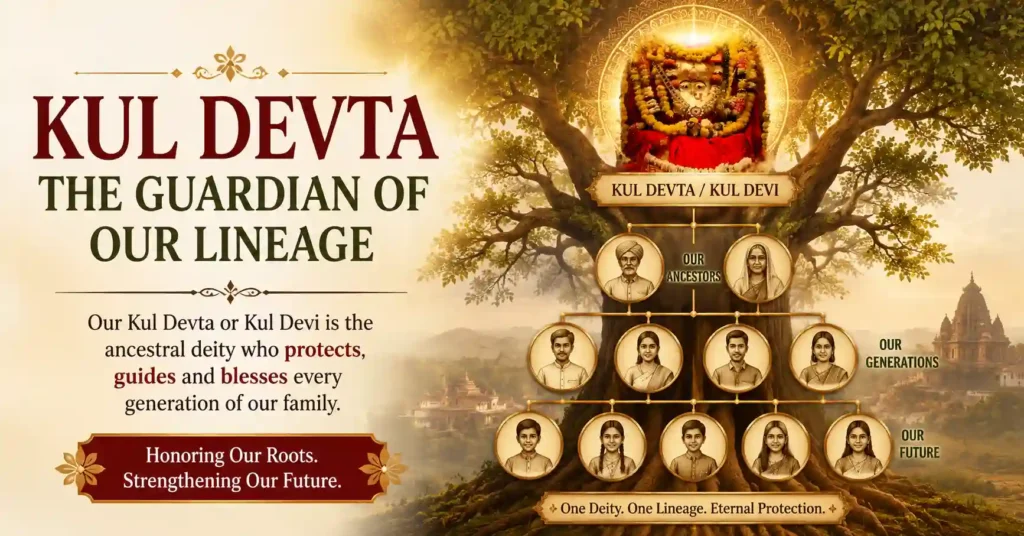
If someone asks, “What is Kul Devta?”, the simplest answer is this: Kul Devta is the ancestral deity of a Hindu family, worshipped and revered across generations as the family’s divine protector. If the family deity is female, she is known as Kul Devi.
The word “Kul” means family, clan, or lineage. Therefore, Kul Devta refers to the male family deity, while Kul Devi refers to the female family deity. Both hold equal importance in Sanatan Dharma and are regarded as the spiritual guardians of the family.
Unlike an Ishta Devta, whom a person chooses to worship based on personal faith, the family deity is inherited by birth. This sacred tradition is passed down through generations and remains an important part of a family’s spiritual heritage.
According to Hindu tradition, many families believe that their Kul Devta or Kul Devi watches over the family, offers guidance during life’s challenges, and blesses future generations. Worship is also seen as a way of honouring one’s ancestors and preserving long-standing family traditions.
Although customs vary across different regions and communities, this tradition continues to hold an important place in Hindu family life. Even today, many families visit their ancestral temple and seek the blessings of their family deity during weddings, festivals, and other important family ceremonies.
What is the Difference Between Kul Devta and Kul Devi?
Many people wonder whether Kul Devta and Kul Devi are different. The answer is simple. The difference lies only in the form of the family deity, not in their importance or blessings.
A Kul Devta is the male ancestral deity of a family, while a Kul Devi is the female ancestral deity. Every Hindu family traditionally worships either the male or female family deity, depending on its lineage and long-standing traditions.
| Kul Devta | Kul Devi |
|---|---|
| Male family deity | Female family deity |
| Worshipped as the ancestral guardian | Worshipped as the ancestral guardian |
| Passed down through family lineage | Passed down through family lineage |
| Equally revered in Sanatan Dharma | Equally revered in Sanatan Dharma |
In many families, the family goddess is lovingly regarded as a motherly protector who nurtures and safeguards the well-being of the household. Likewise, the family deity is seen as a guardian who provides strength, guidance, and protection throughout life’s journey.
These descriptions are symbolic and help explain their traditional roles. In Sanatan Dharma, both forms are equally revered and worthy of devotion. What matters most is not whether the ancestral deity is male or female, but the faith, respect, and gratitude with which each family preserves this sacred tradition.
What is the Connection Between Family Lineage and Kul Devta?
Kul Devta and Kul Devi are not random deities. They are deeply connected to a family’s lineage, traditions, and ancestral heritage.
In Sanatan Dharma, every family has its own history, often linked to a Gotra, ancestral roots, or long-standing customs. Over generations, many families developed a special bond with a particular deity, who came to be worshipped as their family deity and passed down through successive generations.
As this tradition continued, the ancestral deity became an important part of the family’s spiritual identity. Family members sought divine blessings during significant occasions such as births, marriages, festivals, and other sacred ceremonies.
Remembering the family deity is therefore much more than performing a religious ritual. It is a way of honouring one’s ancestors, preserving family heritage, and staying connected to traditions that have guided the family for generations.
For many devotees, worship serves as a reminder of their roots and the values cherished by their ancestors. This timeless tradition continues to strengthen the bond between faith, family, and future generations.
What is the Connection Between Gotra and Kul Devta?
Gotra traces a family’s lineage back to an ancient Rishi (sage). It represents ancestral heritage and has traditionally influenced a family’s identity, customs, and spiritual practices.
Over time, families belonging to the same Gotra often lived in nearby regions and shared similar traditions. As a result, many of them developed devotion towards the same deity, especially if that deity was widely worshipped in the area or believed to protect the local community during difficult times.
This is why a connection between Gotra and Kul Devta or Kul Devi can sometimes be observed. However, it is not a universal rule.
A family’s ancestral deity is shaped not only by its Gotra but also by family history, regional traditions, ancestral experiences, and long-standing faith. Consequently, families belonging to the same Gotra may worship different family deities.
In simple words, Gotra tells us about our ancestral origin, while the family deity reflects the family’s spiritual journey and living tradition passed down through generations.
How Does a Family Get Its Kul Devta or Kul Devi?
Every family has a unique story, and the tradition of Kul Devta or Kul Devi is often an important part of that history. Over generations, families developed a deep bond with a particular deity through faith, devotion, regional customs, or significant life events.
In some families, this connection is linked to a miraculous experience or a deeply cherished belief. In others, the family deity came to be worshipped through long-standing regional traditions or the guidance of ancestors and family elders.
As generations passed, this devotion became a cherished family tradition. The ancestral deity was honoured during important occasions such as births, marriages, festivals, and other family ceremonies, strengthening the family’s spiritual and cultural heritage.
Today, many families may no longer remember the name of their family deity. Yet the tradition continues to live on through family customs, stories, and rituals passed down from one generation to the next.
Whether a family worships a Kul Devta, a Kul Devi, or both, the essence remains the same: preserving the spiritual bond between the family, its ancestors, and its enduring traditions.
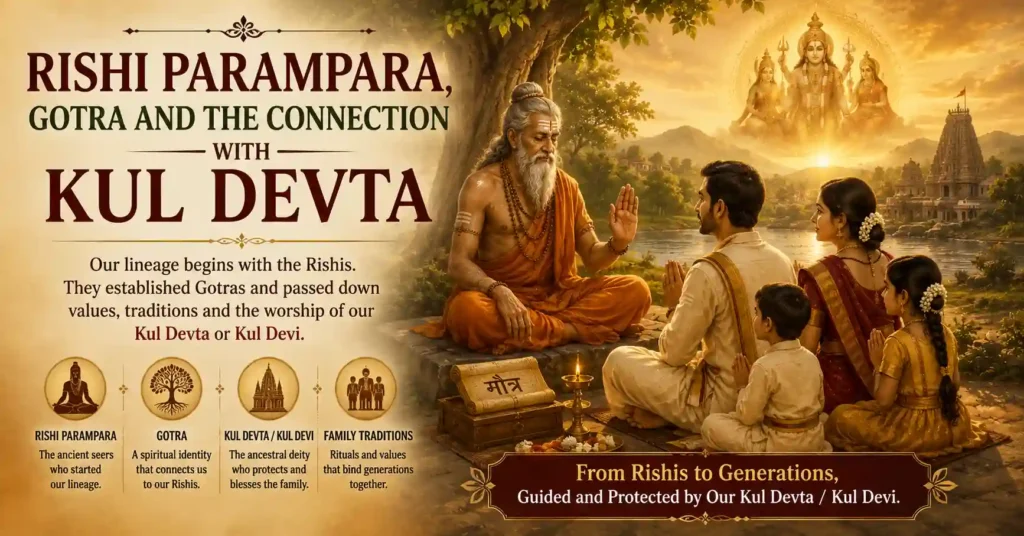
How to Know if Your Family Has a Kul Devta Tradition
Many people are unsure whether their family has an ancestral deity tradition, especially if they have grown up away from their native place or if family customs were not regularly observed.
In many Hindu households, signs of this tradition can often be found in long-standing family practices. Elders may mention a particular deity during weddings or festivals, the first wedding invitation may be offered at a specific temple, or relatives may speak about visiting an ancestral shrine before important family occasions.
Some families also preserve this connection through old photographs, temple receipts, family records, or conversations about their native village and its customs. Even if the deity’s name has been forgotten, these traditions often provide valuable clues.
If none of this information is available, there is no need for concern. Speaking with elderly relatives, consulting the family’s traditional priest, or visiting the ancestral village can often help reconnect with this important part of the family’s spiritual heritage.
How is Kul Devta Passed Down in a Family?
Many people wonder whether Kul Devta or Kul Devi is inherited from the mother’s side or the father’s side. In most Hindu families, the family deity is traditionally passed down through the paternal lineage. This means children usually inherit the ancestral deity worshipped by their father’s family.
Traditionally, when a woman gets married, she becomes part of her husband’s family and begins participating in the worship of her husband’s family deity. This reflects her connection with the spiritual traditions of her new family.
At the same time, this does not mean she must forget or stop respecting the deity worshipped by her birth family. Many women continue to honour their parental family’s ancestral deity with devotion and gratitude while also following the customs of their marital home.
These traditions may vary across regions, communities, and family customs. What remains constant is the spirit of faith, respect, and continuity through which ancestral traditions are preserved across generations.
Ultimately, the tradition of Kul Devta is not about rigid rules but about maintaining a spiritual bond with one’s family lineage and carrying that heritage forward with devotion.
Why is Kul Devta Important in Family Traditions?
For many Hindu families, Kul Devta or Kul Devi is much more than an ancestral deity. The family deity is regarded as a spiritual guardian and holds a special place in the family’s traditions and daily life.
According to traditional Hindu beliefs, the family deity blesses and protects the family, offers strength during difficult times, and inspires its members to make righteous decisions. Many devotees believe that remembering their ancestral deity brings peace, confidence, and a sense of spiritual support.
Although these blessings cannot be seen, countless families continue to worship with deep faith and devotion. This enduring tradition has been preserved across generations and remains an important part of Hindu family culture.
For many devotees, staying connected with their Kul Devta is not merely about performing rituals. It is a way of expressing gratitude, honouring ancestral traditions, and preserving the spiritual values passed down by previous generations.
In this way, the family deity becomes a symbol of faith, continuity, and the family’s enduring spiritual heritage.
When is Kul Devta Worshipped?
In many Hindu families, Kul Devta or Kul Devi is remembered before the beginning of any important event or milestone. Seeking the blessings of the family deity is considered an auspicious way to start a new chapter in life.
It is common for families to offer the first wedding invitation to their family deity before inviting relatives and friends. Similarly, many families visit their ancestral temple or perform a simple prayer after the birth of a child, during Mundan Sanskar, Griha Pravesh, or other important family ceremonies.
Some families also seek divine blessings before starting a new business, purchasing a home or vehicle, or undertaking a significant journey. These customs vary across regions and communities but share the same spirit of devotion and gratitude.
These traditions are followed not out of fear, but out of respect for ancestral customs and the spiritual heritage preserved across generations.
Just as people seek the blessings of their elders before making an important decision, many devotees believe that remembering their Kul Devta or Kul Devi brings spiritual guidance, confidence, and a sense of divine protection.
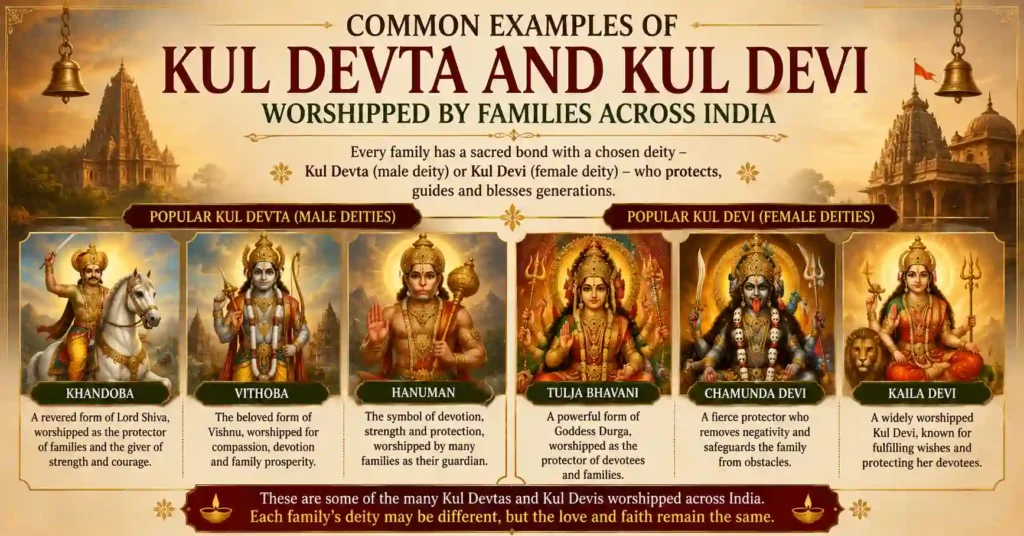
Common Examples of Kul Devta and Kul Devi in India
Across India, different families worship different Kul Devta or Kul Devi based on their ancestry, regional traditions, and long-standing family customs. There is no single family deity for all Hindus, as each lineage has its own unique spiritual heritage.
Some commonly worshipped family deities include:
| Family Deity | Commonly Worshipped In |
|---|---|
| Maa Chamunda Devi | Rajasthan, Himachal Pradesh, Gujarat, and several Rajput clans |
| Maa Kaila Devi | Rajasthan, especially among Yadav and Rajput communities |
| Khandoba | Maharashtra and parts of Karnataka |
| Maa Tulja Bhavani | Maharashtra, especially among Maratha families |
| Lord Venkateswara | Many Telugu families in Andhra Pradesh and Telangana |
| Lord Narasimha | Several South Indian Brahmin and Vaishnava families |
| Renuka Yellamma | Karnataka, Maharashtra, and Telangana |
| Shree Khanderaya (Khandoba) | Dhangar and several Maharashtrian communities |
These are only a few examples. Every family has its own unique connection with its ancestral deity, and the deity worshipped may vary even among people belonging to the same region, community, or Gotra.
The most reliable way to identify your Kul Devta or Kul Devi is by speaking with your family elders, consulting ancestral records, contacting your Kul Purohit, or visiting your family’s ancestral temple.
Regional Traditions of Family Deity Worship in India
Although the underlying idea remains the same, ancestral worship is practised differently across various parts of India. Local history, language, customs, and community traditions have shaped how families preserve this sacred heritage.
| Region | Common Tradition |
|---|---|
| North India | Many families visit their ancestral temple during weddings, festivals, and important life events. |
| Rajasthan & Gujarat | Family goddesses are especially revered, and annual visits to ancestral shrines are common. |
| Maharashtra | Many households worship Khandoba, Tulja Bhavani, or other ancestral guardians according to family tradition. |
| Karnataka & Telangana | Local customs often combine devotion to ancestral deities with regional temple traditions. |
| Tamil Nadu, Andhra Pradesh & Kerala | Many families continue age-old practices of offering prayers at their ancestral temple during significant family occasions. |
Different communities may also follow unique customs regarding offerings, festivals, pilgrimage, or family ceremonies. These variations reflect the rich cultural diversity of Sanatan Dharma while preserving the shared values of gratitude, ancestry, and devotion.
Did You Know?
Many Hindu families still offer the first wedding invitation at their ancestral temple before inviting relatives and friends. In several regions of India, this custom is regarded as a respectful way of seeking blessings for the new beginning.
What Happens if You Forget Your Kul Devta?
Many people wonder whether forgetting their Kul Devta or Kul Devi has any spiritual significance. According to traditional Hindu beliefs, the concern is not about punishment, but about gradually losing touch with one’s ancestral traditions, family heritage, and spiritual roots.
When a family no longer remembers its family deity, an important connection with its lineage and long-standing customs may slowly fade. Over time, family stories, rituals, and the wisdom passed down through generations can also be be forgotten.
Many devotees believe that as these traditions fade, people may feel less connected to their ancestral identity and spiritual heritage. Rather than viewing this as a sign of fear or misfortune, many families see it as an opportunity to reconnect with their ancestral deity through simple prayers, conversations with elders, learning about family traditions, or visiting the ancestral temple.
Ultimately, remembering your Kul Devta is not about avoiding misfortune. It is about honouring your ancestors, preserving your family’s spiritual heritage, and carrying forward a timeless tradition that has united generations of Hindu families.
What Should You Do If You Don't Know Your Kul Devta?
Many people today do not know their Kul Devta or Kul Devi, especially when family traditions have not been been passed down through generations. This is more common than many people realize.
If you do not know your family deity, begin with a simple and sincere prayer. With humility, express your desire to reconnect with your family’s spiritual heritage and seek guidance in discovering your ancestral deity.
You can also speak with elders, consult your Kul Purohit, explore ancestral records, or visit your native village or ancestral temple. In many families, these are the most reliable ways to learn about the family’s traditional deity.
Most importantly, remember that sincerity matters more than perfection. The journey of reconnecting with your Kul Devta begins with faith, patience, and a genuine intention to honour your ancestors and preserve your family’s sacred traditions.
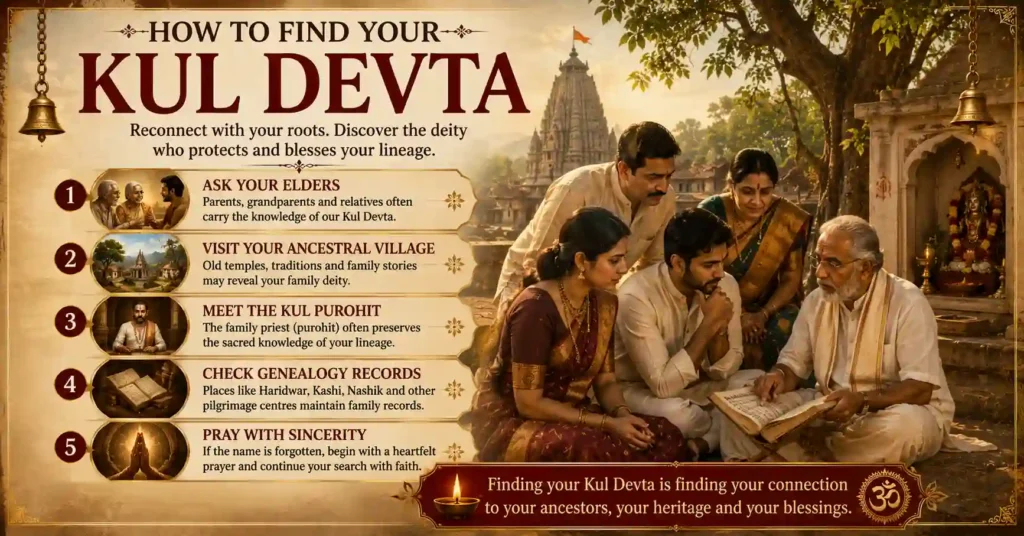
How Can You Find Your Kul Devta?
The most reliable way to discover your Kul Devta or Kul Devi is by speaking with the elders in your family. They may know the name of the family deity, the location of the ancestral temple, or the village where the deity has been worshipped for generations.
You can also visit your ancestral village, where relatives or the local priest may be familiar with your family’s traditions and guide you to the correct deity.
In some families, genealogical records maintained at sacred places such as Haridwar, Kashi (Varanasi), or other traditional pilgrimage centres may also provide valuable information. While your Gotra alone cannot identify your family deity, it may sometimes offer helpful clues when considered alongside family history and regional traditions.
For many families, these traditional methods have helped them rediscover their ancestral deity, preserving their family’s spiritual heritage and passing it on to future generations.
Expert Tip
If you are unable to identify your family’s ancestral traditions immediately, do not feel discouraged. Begin by speaking with the oldest members of your family and recording whatever information they remember. Even small details such as the native village, family surname, or annual temple visits can become valuable clues over time.
How Can You Worship Your Kul Devta?
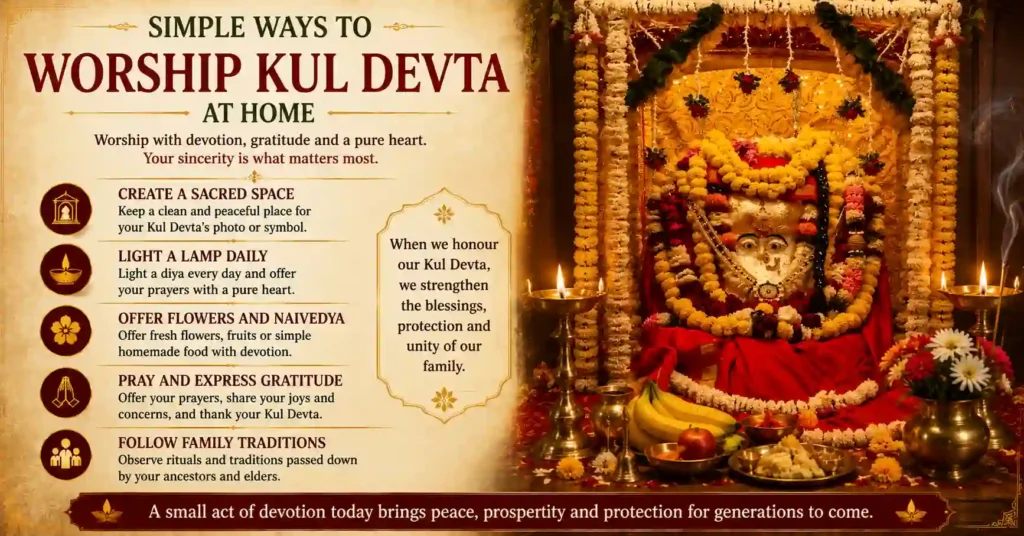
Worshipping your Kul Devta or Kul Devi does not have to be elaborate. In many Hindu families, a simple act of devotion performed with sincerity is considered meaningful.
You may light a diya, offer flowers, fruits, or a small portion of your meal, and pray with gratitude. Even remembering your family deity with respect or chanting the deity’s name can be a heartfelt expression of devotion.
If possible, visiting the ancestral temple or the family’s shrine from time to time is a cherished tradition that helps many devotees feel connected to their spiritual roots and family heritage.
Ultimately, the essence of worship lies not in performing every ritual perfectly but in maintaining faith, gratitude, and a lasting connection with your family’s sacred traditions.
Simple Dos and Don'ts
Following this tradition is more about devotion and respect than performing elaborate rituals. While customs vary from one family to another, these simple guidelines are commonly followed.
Dos
- Pray with sincerity and gratitude.
- Respect the traditions passed down by your family.
- Seek guidance from elders if you are unsure about any custom.
- Visit the ancestral temple whenever possible.
- Preserve family stories and pass them on to future generations.
Don’ts
- Worship out of fear or superstition.
- Feel discouraged if you do not know every ritual or mantra.
- Compare your family’s traditions with those of others.
- Assume every Hindu family follows the same customs.
- Ignore the guidance of knowledgeable elders and family traditions.
Does Kul Devta Protect the Family?
Many Hindu families believe that Kul Devta or Kul Devi serves as the spiritual guardian of the family. In some traditions, this protective presence is described as a “Raksha Chakra” or a circle of divine protection that watches over the family across generations.
For devotees, this belief symbolizes the blessings, guidance, and strength received through faith and continued worship of the family deity. Others may view it as a source of emotional support, cultural identity, and a reminder to stay connected with their ancestral values.
Whether understood as a spiritual belief or as a way of preserving family traditions, the underlying message remains the same: remembering the family deity helps strengthen one’s connection with family roots, ancestors, and the timeless values passed down through generations.
Common Myths About Kul Devta
Many beliefs about family deities are based on regional customs or stories passed down through generations. While these traditions are meaningful, it is helpful to distinguish widely accepted practices from common misconceptions.
| Myth | Reality |
|---|---|
| Forgetting the ancestral deity always brings bad luck. | Traditional Hindu beliefs generally emphasize reconnecting with family traditions rather than fearing punishment or misfortune. |
| Every Hindu family worships the same deity. | Different families, regions, and communities follow their own ancestral traditions and may revere different deities. |
| Worship must always be elaborate. | In many families, a simple prayer offered with sincerity is considered meaningful. |
| Only men can participate in worship. | Devotion is a family tradition, and participation often includes all family members according to local customs. |
| The family’s spiritual tradition can be identified through Gotra alone. | Gotra may provide clues in some cases, but family history, regional customs, and ancestral records are usually more reliable sources. |
Understanding these traditions with respect and balance helps preserve their true purpose. Rather than focusing on fear or rigid rules, many families see them as a way to honour ancestors, strengthen family bonds, and pass on spiritual values to future generations.
What is the Difference Between Kul Devta, Ishta Devta, and Gram Devta?
Hindu tradition recognizes different forms of divine worship, each with a unique purpose. While devotees may worship several deities, Kul Devta, Ishta Devta, and Gram Devta represent three distinct spiritual relationships. Understanding their roles helps explain why the family deity holds a special place in Hindu traditions.
| Type | Meaning | Role |
|---|---|---|
| Kul Devta / Kul Devi | Family deity | Protects and guides the family’s lineage and traditions |
| Ishta Devta | Personal deity | Guides an individual’s spiritual journey and personal life |
| Gram Devta | Village deity | Protects the village or community and its well-being |
Although each deity has a distinct role, they complement one another in Hindu worship. The family deity is closely associated with a family’s ancestral lineage, Ishta Devta represents an individual’s chosen deity, and Gram Devta is revered as the guardian of a village or community. Many Hindu families worship all three according to their traditions, reflecting the diverse and inclusive nature of Sanatan Dharma.
Why is Remembering Kul Devta Still Relevant Today?
Today, many people live far from their ancestral homes, and family traditions may gradually fade over time. As generations move to different cities or countries, the names of family deities, ancestral temples, and age-old customs are sometimes forgotten.
Even so, the desire to stay connected with one’s roots often remains. In a fast-paced world, many people value traditions that strengthen their sense of identity, belonging, and family heritage.
For many Hindu families, remembering their Kul Devta or Kul Devi is one such tradition. It serves as a meaningful way to honour ancestors, preserve cultural values, and maintain a spiritual connection with the family’s lineage.
Reconnecting with the family deity is not only about continuing a religious practice. It is also about rediscovering family history, strengthening one’s sense of belonging, and carrying forward a sacred tradition for future generations.
Can Anyone Follow This Tradition?
Not everyone grows up knowing their family’s ancestral traditions. Some people may have lost contact with their native roots, while others may belong to families where these customs were no longer practised.
In traditional Hindu understanding, an ancestral deity is generally connected with a family’s lineage and is inherited through generations rather than being newly chosen. Because of this, many people first try to learn about their family’s history by speaking with elders, consulting traditional records, or visiting their ancestral village.
If this information is no longer available, many spiritual teachers encourage beginning with sincere prayer, regular worship, and a genuine desire to reconnect with one’s roots. Over time, family history or guidance from knowledgeable elders may help preserve or rediscover forgotten traditions.
Ultimately, the purpose is not simply to identify a particular deity but to strengthen one’s connection with faith, family values, gratitude, and the spiritual heritage passed down through generations.
Key Takeaways
- Every Hindu family may have its own unique ancestral traditions.
- Family worship helps preserve heritage and cultural identity.
- Devotion and sincerity matter more than elaborate rituals.
- Elders, ancestral records, and native villages often help identify forgotten traditions.
- Customs vary across regions, but the underlying values remain the same.
Conclusion
At the end of the day, remembering your Kul Devta or Kul Devi is about much more than performing rituals. It is about staying connected to your roots, honouring your ancestors, and preserving the traditions that have shaped your family’s identity for generations.
For many devotees, the family deity represents a constant source of faith, guidance, and spiritual belonging. This connection reminds us that our lives are part of a larger family legacy passed down through generations.
Whether you already know your family deity or are still searching, taking the first step to reconnect with your family’s traditions is a meaningful journey in itself. Through prayer, gratitude, and respect for your ancestral heritage, you can continue a timeless tradition that keeps your family’s spiritual values alive.
Ultimately, this tradition is about much more than religious customs. It is about preserving your heritage, strengthening your sense of belonging, and carrying forward the faith and values entrusted to you by your ancestors.
Suggested Reading
If you found this guide on Kula Devta and Kul Devi helpful, you may also enjoy these related articles on Hindu worship, temples, rituals, mantras, and other spiritual traditions of Sanatan Dharma.
Puja in Sanatan Dharma: Meaning, Vidhi, Bhav and Spiritual Significance
https://thesanatantales.com/puja-in-sanatan-dharma/
Daily Puja at Home: Simple Step-by-Step Guide for Everyday Worship
https://thesanatantales.com/daily-puja-at-home/
Mantra Japa: Meaning, Benefits and How to Practice Daily
https://thesanatantales.com/mantra-japa-meaning-method-rules/
Panchopachara Puja: Meaning, Five Offerings and Complete Worship Guide
https://thesanatantales.com/panchopchar-puja/
Tilak in Hinduism: Meaning, Types and Spiritual Significance
https://thesanatantales.com/tilak-in-hinduism/
Kalash (Purna Kalasha): Meaning, Symbolism and Importance in Hindu Worship
https://thesanatantales.com/kalash-in-hinduism/
Havan: Meaning, Benefits and Step-by-Step Procedure
https://thesanatantales.com/havan-meaning-procedure-benefits/
Prasad in Hinduism: Why Food Offered to God Becomes Sacred
https://thesanatantales.com/prasad-in-hinduism/
Kuladevata (Wikipedia)
https://en.wikipedia.org/wiki/Kuladevata
FAQs
What is Kul Devta?
A Kul Devta is the family deity worshipped by generations of a particular Hindu family or lineage. The word “Kul” means family or clan, while “Devta” means deity. If the family deity is a goddess, she is known as Kul Devi.
Unlike a personal deity chosen by an individual, the family deity is inherited through ancestral traditions and passed down from one generation to the next. Many Hindu families offer prayers during important occasions such as weddings, childbirth, housewarming ceremonies, and festivals as a way of honouring their ancestors and preserving their spiritual heritage.
What is the difference between Kul Devta and Ishta Devta?
A Kul Devta or Kul Devi is the family deity worshipped by generations of a particular lineage. This tradition is inherited through the family and is closely connected with ancestral customs, heritage, and long-standing family traditions.
An Ishta Devta, on the other hand, is a personal deity chosen by an individual based on devotion or spiritual inclination. Many Hindu families worship both the family deity and their Ishta Devta, as each has a unique role in spiritual life.
How can I find my Kul Devta if my family has forgotten it?
The best place to begin is by speaking with your parents, grandparents, or other elderly relatives. They may remember the name of the family deity, the location of the ancestral temple, or the village where the deity has traditionally been worshipped.
You can also consult your Kul Purohit, visit your ancestral village, or refer to genealogical records maintained at pilgrimage centres such as Haridwar or Kashi. These traditional sources have helped many families rediscover their ancestral deity and preserve their spiritual heritage.
Can I worship my Kul Devta at home?
Yes. You do not need an elaborate ritual to worship your Kul Devta or Kul Devi. In many Hindu traditions, a simple prayer offered with sincerity and devotion is considered meaningful.
Lighting a diya, offering flowers, fruits, or homemade food, and praying with gratitude are common ways to honour the family deity. If you know the deity’s mantra or have the opportunity to visit the ancestral temple, you may also include those practices in your worship.
Is it necessary to know your Gotra to identify your Kul Devta?
Not always. While Gotra reflects a family’s ancestral lineage from an ancient sage, it does not automatically determine the family’s Kul Devta.
Families belonging to the same Gotra may worship different deities based on regional customs, family history, or long-standing traditions. Gotra may provide useful clues, but family traditions and ancestral records are generally the most reliable sources.
Can a family have both a Kul Devta and a Kul Devi?
Yes. Many Hindu families worship both a Kul Devta and a Kul Devi. In some traditions, the male and female family deities are worshipped together, while in others one deity is given greater prominence.
The practice varies across regions, communities, and family lineages. Both are respected as guardians of the family’s spiritual traditions and ancestral heritage.
What should I do if I do not know my Kul Devta?
If you do not know your Kul Devta, begin by expressing a sincere prayer and your desire to reconnect with your family’s traditions. There is no need to worry or feel discouraged.
Speak with elders, contact your Kul Purohit, visit your ancestral village, or research your family’s history. Over time, these efforts may help you identify your family deity and strengthen your connection with your ancestral heritage.
Is visiting the Kul Devta temple compulsory?
No. Visiting the ancestral temple is considered a cherished tradition, but it is not always possible for everyone due to distance, health, or personal circumstances.
If you cannot visit the temple, you can continue worshipping your Kul Devta at home with faith and respect. Whenever circumstances allow, visiting the ancestral shrine can be a meaningful way to reconnect with your family’s spiritual roots.
Why is Kul Devta worship important in Hindu families?
According to Hindu tradition, worshipping the Kul Devta or Kul Devi helps preserve family customs, ancestral values, and spiritual continuity across generations.
Beyond religious practice, it serves as a reminder of one’s family heritage and strengthens the bond between present and past generations. For many devotees, this tradition fosters gratitude, belonging, and respect for their ancestors.
Does forgetting your Kul Devta bring bad luck?
Traditional Hindu beliefs generally do not view forgetting the Kul Devta as something that automatically brings bad luck or punishment.
Instead, many devotees believe it represents a gradual loss of connection with family traditions and ancestral heritage. Reconnecting with the family deity is therefore seen as a way to honour one’s ancestors, preserve cultural values, and strengthen the family’s spiritual identity rather than to avoid misfortune.
Glossary of Important Terms
| Term | Meaning |
|---|---|
| Kul Devta | The ancestral guardian worshipped by generations of a particular Hindu family or lineage. |
| Kul Devi | The ancestral family goddess revered as the protector of the lineage and its traditions. |
| Kul | A Sanskrit word meaning family, clan, or lineage. |
| Ishta Devta | A personally chosen deity worshipped according to one’s faith and spiritual inclination. |
| Gram Devta | The presiding deity traditionally believed to protect a village or local community. |
| Gotra | A lineage system in Hinduism that traces a family’s ancestry to an ancient sage (Rishi). |
| Kul Purohit | The traditional family priest who performs religious ceremonies and often preserves genealogical records. |
| Ancestral Temple | The traditional place of worship associated with a family’s ancestral guardian, usually located in the native village. |
| Vansh (Lineage) | The family line or ancestral descent passed down through generations. |
| Parampara | A tradition or practice preserved and passed from one generation to the next. |
| Prasad | Sanctified food or offerings presented to a deity and later distributed as a blessing. |
| Diya | A traditional oil lamp lit during Hindu worship to symbolize knowledge, purity, and the removal of darkness. |
| Darshan | The sacred act of seeing and receiving the blessings of a deity at a temple or shrine. |
| Puja | A Hindu ritual of worship that includes prayers, offerings, and expressions of devotion. |
| Mantra | A sacred word, phrase, or hymn chanted during worship or meditation to invoke divine blessings and focus the mind. |
About the Author
Yateendra Chaturvedi is a spiritual writer, researcher, devotee, and the founder of The Sanatan Tales. With over 35 years of professional experience and a lifelong interest in Sanatan Dharma, he writes about Hindu deities, temples, scriptures, festivals, Mahavidyas, sacred stories, rituals, and living traditions that continue to guide and inspire devotees across India.
Drawing from traditional scriptures, regional beliefs, temple traditions, devotional literature, and historical sources, he aims to present authentic, well-researched, and easy-to-understand content for modern readers. His work focuses on preserving spiritual wisdom, explaining sacred traditions, and helping seekers develop a deeper understanding of India’s rich spiritual heritage.
Through The Sanatan Tales, Yateendra strives to make the timeless teachings of Sanatan Dharma simple, meaningful, and relevant for today’s generation while maintaining respect for traditional sources, regional practices, and diverse spiritual perspectives.
Learn More About Yateendra Chaturvedi →
https://thesanatantales.com/about-the-author/
References & Sources
This article is based on the teachings, beliefs, and traditions of Sanatan Dharma, along with information drawn from Hindu scriptures, traditional practices, scholarly references, temple traditions, and other reliable spiritual and educational sources.
Note: Beliefs, customs, and methods of worship may vary across different regions, communities, sampradayas (traditions), and families within Hinduism. The purpose of this article is not to present any one interpretation as the only correct view, but to explain widely accepted concepts and practices in a simple, balanced, and easy-to-understand manner.
Read More Interesting Articles on Sanatan Dharma