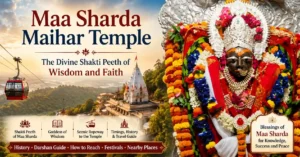
Maa Sharda Maihar Temple is not just a place you visit. It is a sacred journey that gently transforms you from within. Perched atop Trikuta Hill in Madhya Pradesh, this revered Maihar Shakti Peeth has welcomed devotees for centuries, offering blessings of wisdom, faith, and inner strength.
There are some temples where you simply offer prayers and return. Then there are places like Maa Sharda Temple Maihar, where every step of the journey becomes part of the spiritual experience. Whether you climb the 1,063 steps or take the ropeway to the hilltop shrine, the noise of everyday life slowly begins to fade.
Devotees arrive with hopes, worries, questions, and silent prayers. Many leave with a sense of peace that is difficult to explain. It is not just the beauty of the surroundings or the ancient temple that touches the heart, but the deep feeling of divine presence that has drawn pilgrims here for generations.
Perhaps that is the greatest blessing of Maa Sharda Maihar Temple. She does not simply answer prayers. She gives her devotees the wisdom, courage, and strength to face life’s journey with renewed faith.
Maa Sharda Maihar Temple at a Glance
Planning a pilgrimage becomes easier when you know the essential details beforehand. This quick reference provides an overview of Maa Sharda Maihar Temple, one of the most revered Shakti Peethas in Madhya Pradesh.
| Quick Fact | Details |
|---|---|
| Location | Maihar, Satna District, Madhya Pradesh, India |
| Presiding Deity | Goddess Sharda (worshipped as a form of Goddess Saraswati) |
| Temple Type | Shakti Peeth |
| Situated On | Trikuta Hill |
| Hill Height | Approximately 600 feet above the town |
| Steps to Temple | 1,063 steps |
| Ropeway Facility | Available |
| Temple Timings | Generally 5:00 AM to 9:00 PM (subject to change) |
| Best Time to Visit | October to March |
| Major Festivals | Chaitra Navratri, Sharad Navratri, Vasant Panchami |
| Nearest Railway Station | Maihar Railway Station (about 5 km) |
| Nearest Airport | Khajuraho Airport (about 140 km) |
| Famous For | Shakti Peeth, Alha legend, Maihar Gharana, ropeway pilgrimage, Goddess Sharda |
Table of Contents
ToggleThe Spiritual Significance of Maa Sharda Maihar Temple
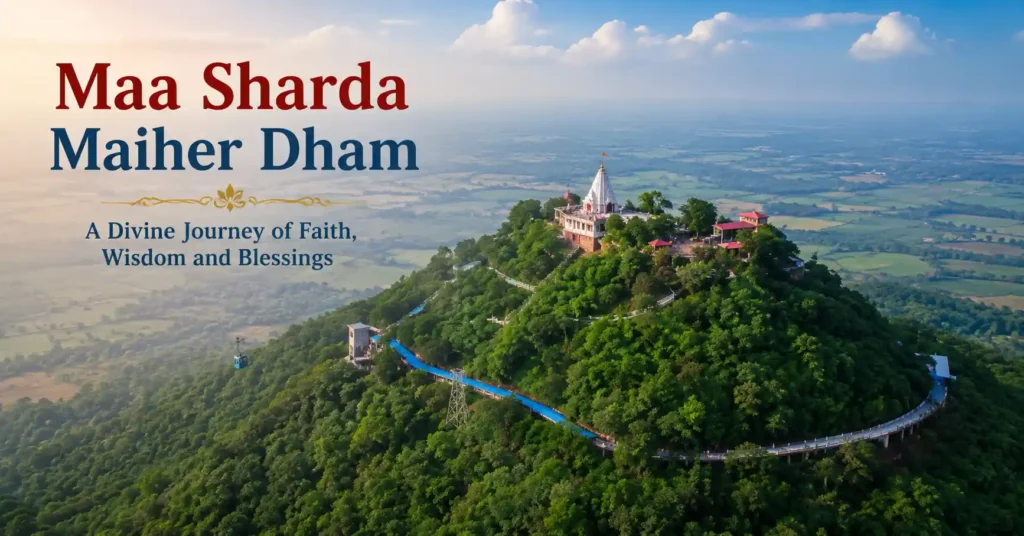
Perched atop Trikuta Hill, about 600 feet above the town of Maihar in Madhya Pradesh, Maa Sharda Maihar Temple is one of the most revered pilgrimage destinations in central India.
Worshipped as Goddess Sharda, a form of Goddess Saraswati, the temple is a sacred place where devotees seek wisdom, knowledge, inner peace, and divine guidance.
As you draw closer to the temple, the noise of everyday life seems to fade away. Whether you climb the 1,063 sacred steps or arrive by ropeway, the journey itself encourages quiet reflection.
For many pilgrims, reaching the hilltop shrine becomes more than a physical climb. It becomes a moment to pause, reconnect with themselves, and deepen their faith.
Unlike worldly knowledge, the wisdom associated with Maa Sharda Temple Maihar is believed to bring clarity, right understanding, and the strength to face life’s challenges with confidence.
Students, artists, musicians, spiritual seekers, and families visit this Maihar Shakti Peeth to seek the blessings of the Divine Mother before beginning new chapters in their lives.
Many devotees spend a few quiet moments in meditation after darshan instead of rushing back. In the peaceful surroundings of the temple, prayer often becomes less about asking for something and more about experiencing gratitude, calmness, and a deeper connection with the Divine.
Why Maa Sharda Maihar Temple Is Revered as a Shakti Peeth
One of the main reasons devotees visit Maa Sharda Maihar Temple is its revered status as a Maihar Shakti Peeth. According to the ancient tradition of Sanatan Dharma, after Goddess Sati immolated herself at King Daksha’s yajna,
Lord Shiva wandered the universe carrying her body in deep sorrow. To restore cosmic balance, Lord Vishnu released his Sudarshan Chakra, which divided Sati’s body. The places where her body parts or sacred ornaments fell became the revered Shakti Peethas, the holiest shrines dedicated to the Divine Mother.
According to the local temple tradition, Maa Sati’s necklace (Har) is believed to have fallen at Maihar. This belief is associated with the origin of the town’s name, where ‘Mai’ means Mother and ‘Har’ refers to the necklace.
Over the centuries, this sacred association has made Maa Sharda Temple Maihar one of the most important centres of Shakti worship in central India.
Like many Shakti Peethas, traditions about the exact body part or ornament of Goddess Sati may vary across different scriptures and regional beliefs.
However, the spiritual importance of Maa Sharda Maihar Temple remains deeply rooted in the devotion of millions of pilgrims who visit this sacred hill every year.
For devotees, a Shakti Peeth is much more than a place connected to an ancient legend. It is a living centre of divine feminine energy where the presence of Adi Shakti is believed to bless seekers with wisdom, courage, protection, and inner strength.
This enduring faith is what continues to draw pilgrims to the sacred shrine of Sharda Devi Temple Maihar generation after generation.
History of Maa Sharda Maihar Temple
The history of Maa Sharda Maihar Temple is a beautiful blend of ancient faith, local tradition, and living devotion. While the temple’s exact date of construction is not known with certainty, historians believe that worship at this sacred hill has continued for many centuries, making it one of the oldest and most revered pilgrimage sites in central India.
According to local tradition, the name Maihar is derived from the words Mai (Mother) and Har (necklace), based on the belief that the necklace of Goddess Sati fell here after Lord Vishnu used the Sudarshan Chakra to restore cosmic balance. This sacred association established the temple as an important Shakti Peeth, attracting devotees from across India.
Over the centuries, the temple became closely associated with the cultural and spiritual life of the Bundelkhand region. The legendary warrior Alha, revered in local folklore, is believed to have worshipped Maa Sharda with unwavering devotion, and his connection with the temple continues to be honoured through long-standing traditions.
In more recent history, Maa Sharda Maihar Temple also gained international recognition through the legendary musician Ustad Allauddin Khan and the famous Maihar Gharana. His devotion to Goddess Sharda strengthened the temple’s identity as not only a centre of pilgrimage but also a place where knowledge, music, and spirituality come together.
Today, Maa Sharda Temple Maihar continues to inspire millions of pilgrims who visit the sacred hill seeking wisdom, faith, and the blessings of the Divine Mother.
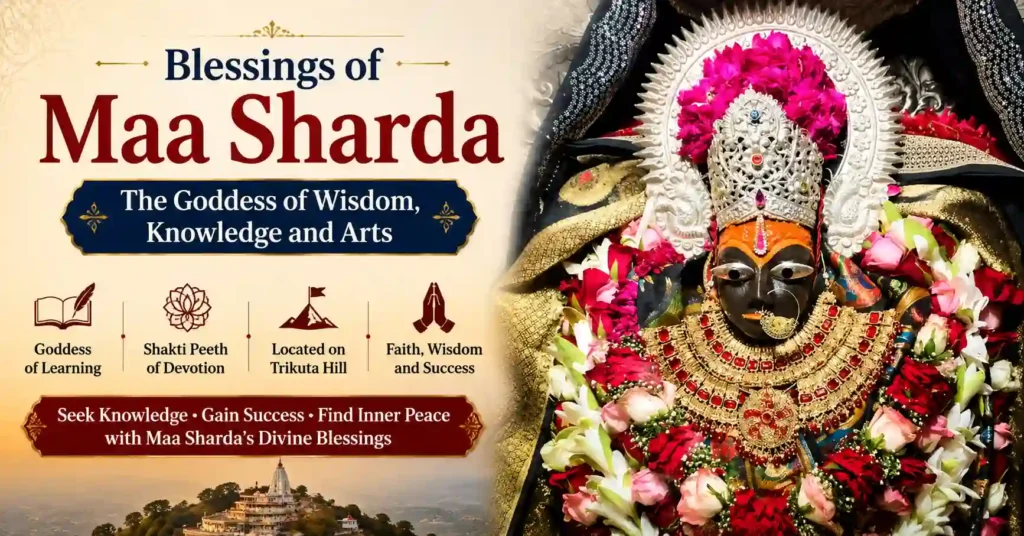
How to Reach Maa Sharda Maihar Temple: Steps or Ropeway?
Reaching Maa Sharda Maihar Temple is more than a journey to a hilltop shrine. For many devotees, it is an act of faith that begins long before they enter the sanctum.
The temple is situated on Trikuta Hill, and pilgrims can reach it either by climbing 1,063 sacred steps or by taking the Maihar ropeway, which offers a faster and more comfortable ascent.
Many devotees choose to climb the steps as a form of devotion, believing that every step brings them closer to the blessings of Sharda Devi. Along the way, pilgrims chant prayers, pause at resting points, and enjoy panoramic views of the surrounding landscape.
For senior citizens, families with children, and those who prefer a convenient option, the ropeway provides a smooth journey to the temple in just a few minutes.
The ride offers beautiful views of the hills and allows devotees to reach the shrine comfortably while experiencing the natural beauty of the region.
Whether you climb the sacred steps or travel by ropeway, both paths lead to the same destination. At Maa Sharda Temple Maihar, what matters most is not how you reach the temple, but the devotion and faith you carry in your heart.
How to Reach Maa Sharda Maihar Temple
Reaching Maa Sharda Maihar Temple is convenient, as the temple is well connected by rail, road, and air. Located in Maihar town of Satna district, Madhya Pradesh, the sacred shrine attracts pilgrims from across India. After reaching the temple base, devotees can either climb the 1,063 sacred steps or take the ropeway to the hilltop temple.
Distance from Major Cities
| City | Approximate Distance | Estimated Travel Time |
|---|---|---|
| Maihar Railway Station | 5 km | 10-15 minutes |
| Satna | 40 km | 45-60 minutes |
| Katni | 65 km | 1.5 hours |
| Rewa | 85 km | 2 hours |
| Jabalpur | 165 km | 3.5-4 hours |
| Prayagraj | 185 km | 4 hours |
| Varanasi | 275 km | 5-6 hours |
| Khajuraho | 140 km | 3 hours |
| Bhopal | 500 km | 8-9 hours |
| Nagpur | 430 km | 8 hours |
Travel Information
| Mode of Transport | Details |
|---|---|
| By Rail | Maihar Railway Station is the nearest railhead, about 5 km from the temple. It lies on the busy Howrah-Delhi railway route and is well connected to cities such as Delhi, Prayagraj, Varanasi, Jabalpur, Bhopal, Nagpur, Kolkata, and Mumbai. Auto-rickshaws and taxis are easily available outside the station. |
| By Road | Maihar is well connected by state highways and national highways. Regular buses and private taxis operate from Satna, Rewa, Jabalpur, Katni, Prayagraj, and other nearby cities. Pilgrims travelling by car will find parking facilities near the temple base. |
| By Air | The nearest airport is Khajuraho Airport (about 140 km away), while Jabalpur Airport (about 165 km) offers better flight connectivity to major Indian cities. Taxis and buses are available from both airports to Maihar. |
Local Transportation
After reaching Maihar, devotees can easily travel to the temple using:
- Auto-rickshaws available at the railway station and bus stand.
- Private taxis for families and groups.
- Local buses connecting different parts of Maihar.
- Ropeway service from the temple base to the hilltop shrine.
- Paid parking facilities for private vehicles near the entrance.
Travel Tip: If you are visiting during Chaitra Navratri, Sharad Navratri, or other major festivals, start your journey early in the morning to avoid heavy crowds and traffic.
Pilgrims planning to climb the 1,063 steps should carry drinking water and wear comfortable footwear up to the temple base before depositing it at the designated footwear counters.
Darshan Timings and Best Time to Visit Maa Sharda Maihar Temple
Planning your visit to Maa Sharda Maihar Temple is easier when you know the darshan timings and the best season to travel.
The temple welcomes thousands of devotees every day, and while the schedule generally remains consistent, timings and arrangements may vary during Navratri and other major festivals.
Visitor Information
| Information | Details |
|---|---|
| Temple Timings | Generally open from 5:00 AM to 9:00 PM (may vary on festivals and special occasions) |
| Morning Darshan | Begins around 5:00 AM |
| Evening Closing | Around 9:00 PM |
| Aarti Timings | Morning and evening aarti are the most spiritually significant times for darshan. Timings may vary seasonally. |
| Entry Fee | Free for general darshan |
| Ropeway Timings | Usually operates during temple hours, subject to weather conditions and maintenance schedules |
| Best Time for Darshan | Early morning on weekdays for a peaceful and less crowded experience |
| Peak Season | Chaitra Navratri and Sharad Navratri attract the largest number of pilgrims |
For a peaceful Maihar Temple darshan, early morning is the ideal time to visit. The cool weather, shorter queues, and serene atmosphere allow devotees to spend more time in prayer and meditation before the temple becomes crowded.
The best season to visit Maa Sharda Temple Maihar is between October and March, when the weather is pleasant for both climbing the 1,063 steps and exploring the surrounding area.
During Chaitra Navratri and Sharad Navratri, the temple is beautifully decorated and special religious programmes are organised. While these festivals offer a vibrant spiritual experience, devotees should be prepared for longer waiting times and larger crowds.
Before planning your pilgrimage, it is advisable to check the latest temple and ropeway timings through the official temple authorities, as schedules may change during festivals or due to administrative requirements.
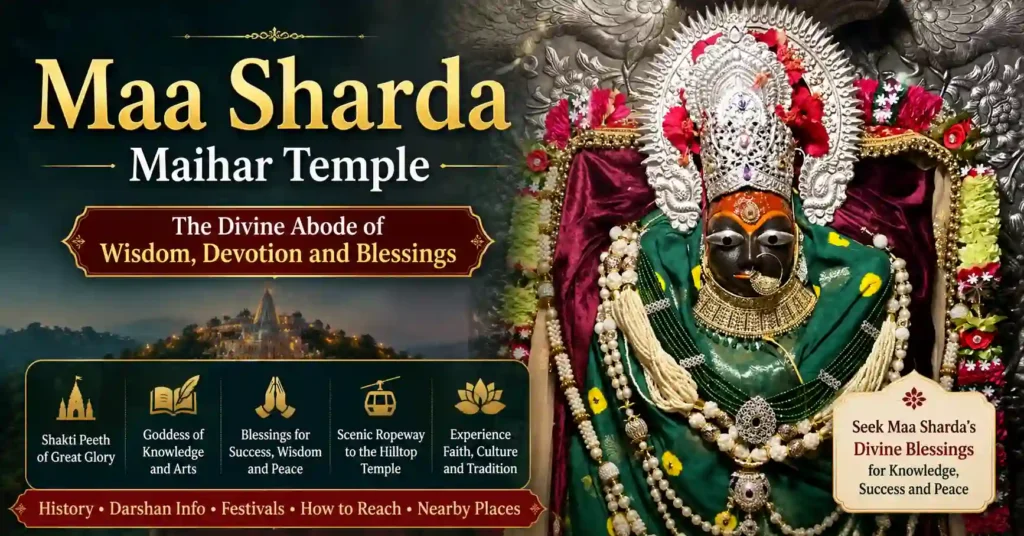
Temple Etiquette and Visitor Guidelines at Maa Sharda Maihar Temple
A visit to Maa Sharda Maihar Temple is both a spiritual and cultural experience. Following the temple’s customs helps preserve its sanctity and ensures a peaceful darshan for everyone.
| Guideline | Details |
|---|---|
| Dress Modestly | Wear clean and modest clothing suitable for a place of worship. Traditional Indian attire is preferred, though respectful clothing is welcome for all visitors. |
| Remove Footwear | Shoes and slippers must be removed before entering the temple premises. |
| Maintain Queue Discipline | Follow the designated darshan queue and cooperate with temple staff, especially during Navratri and other festivals. |
| Maintain Silence | Speak softly and avoid unnecessary noise near the sanctum to preserve the peaceful atmosphere. |
| Photography | Photography and videography may be restricted inside the sanctum. Follow the instructions issued by the temple authorities. |
| Offerings | Offer coconuts, flowers, chunari, paan, supari, or other items only at the designated counters or as guided by the temple staff. |
| Keep the Temple Clean | Help maintain cleanliness by using dustbins and avoiding littering within the temple complex. |
| Senior Citizens | Ropeway and local transport make the temple accessible for elderly devotees and families with children. |
Respecting these simple guidelines allows every devotee to enjoy a peaceful Maihar Temple darshan while preserving the traditions that have been followed at this sacred shrine for generations.
Suggested Darshan Sequence at Maa Sharda Maihar Temple
A visit to Maa Sharda Maihar Temple is more than simply reaching the hilltop shrine. Many devotees follow a traditional sequence of worship that allows them to experience the temple with greater devotion and mindfulness. While the temple does not prescribe a compulsory order, the following sequence is commonly observed by pilgrims.
- Begin your journey by offering a silent prayer at the base of Trikuta Hill, seeking the blessings of Goddess Sharda for a safe and meaningful pilgrimage.
- Climb the 1,063 sacred steps or take the ropeway while chanting the name of the Divine Mother and keeping your mind focused on devotion.
- Upon entering Maa Sharda Maihar Temple, have a peaceful darshan of Goddess Sharda and offer flowers, coconut, chunari, or other traditional offerings according to your faith.
- Spend a few quiet moments in prayer or meditation before the sanctum, expressing gratitude and seeking wisdom, knowledge, and inner strength.
- If time permits, visit the nearby sacred places associated with the temple, including Alha Talab and Alha-Udal Akhara, before concluding your pilgrimage.
Many devotees believe that completing the pilgrimage with a grateful heart is just as important as reaching the temple itself. The journey, the darshan, and the moments of silent reflection together make the pilgrimage to Maa Sharda Temple Maihar a deeply fulfilling spiritual experience.
Pilgrimage Tips for Visiting Maa Sharda Maihar Temple
Whether you are visiting Maa Sharda Maihar Temple for the first time or returning as a devotee, a little planning can make your pilgrimage more comfortable and spiritually fulfilling.
- Visit early in the morning for a peaceful darshan and shorter queues.
- Wear comfortable clothing and footwear, especially if you plan to climb the 1,063 steps to the temple.
- Carry drinking water during summer, but avoid carrying unnecessary luggage while climbing the hill.
- Senior citizens, families with young children, and differently abled devotees may find the ropeway a more convenient option.
- During Chaitra Navratri and Sharad Navratri, expect large crowds and plan your journey and accommodation well in advance.
- Respect the temple’s customs, maintain cleanliness, and help preserve the peaceful atmosphere by avoiding loud conversations inside the temple premises.
A well-planned visit allows pilgrims to focus on what truly matters, seeking the blessings of Goddess Sharda with a calm mind and a heart filled with devotion.
The Legend of Alha and Maa Sharda Maihar Temple
One of the most fascinating traditions associated with Maa Sharda Maihar Temple is the legend of Alha, the legendary warrior of Bundelkhand whose bravery is celebrated in the famous Alha-Khand ballads.
According to local temple tradition, Alha was a devoted worshipper of Maa Sharda. It is believed that he performed intense penance at this sacred hill for many years, seeking the blessings of the Divine Mother.
Pleased with his unwavering devotion, Maa Sharda is believed to have blessed him with extraordinary strength and, according to popular belief, immortality.
Even today, many devotees believe that Alha continues to visit Maa Sharda Temple Maihar every morning to offer the first prayers before the temple opens. Temple priests have long shared that they occasionally find fresh flowers or offerings inside the sanctum before the day’s rituals begin.
While this remains a matter of faith and temple tradition rather than historical evidence, it is one of the most cherished beliefs associated with the shrine.
For generations, this enduring legend has strengthened the spiritual identity of Maihar Shakti Peeth. It reminds devotees that sincere devotion knows no boundaries of time and that the bond between the Divine Mother and her devotees continues through faith, tradition, and living belief.
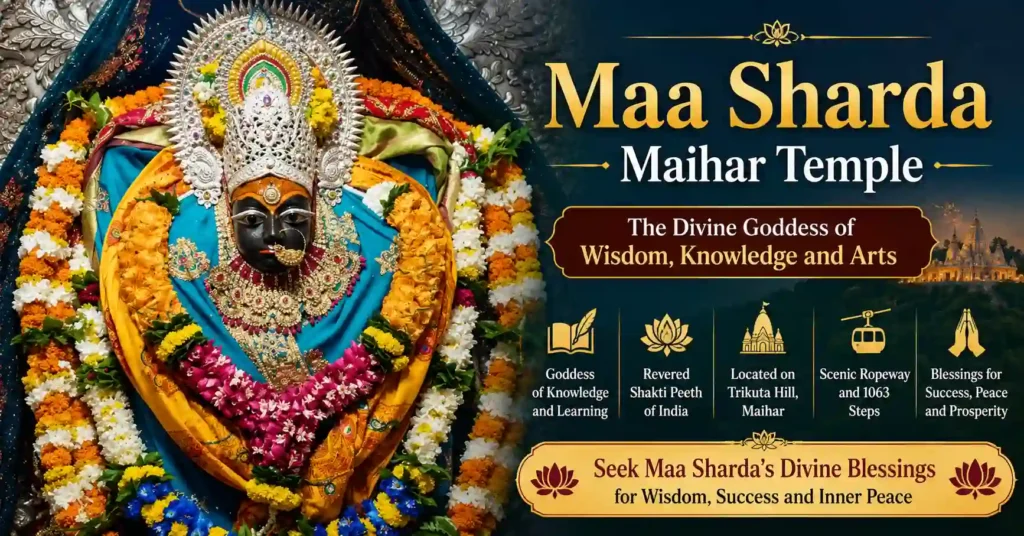
The Sacred Connection Between Maa Sharda Maihar Temple and the Maihar Gharana
Maa Sharda Maihar Temple is not only a revered Shakti Peeth but also an important centre of India’s classical music tradition. The temple shares a deep spiritual connection with the legendary musician Ustad Allauddin Khan, one of the greatest maestros of Hindustani classical music and the founder of the renowned Maihar Gharana.
According to local tradition, Ustad Allauddin Khan was a devoted worshipper of Maa Sharda. It is said that he regularly climbed the 1,063 steps to the hilltop temple to seek the blessings of the Divine Mother before beginning his daily music practice. For him, music was not merely an art form but an expression of devotion and surrender.
Under his guidance, the Maihar Gharana became one of the most respected schools of Hindustani classical music, producing legendary disciples such as Pandit Ravi Shankar, Ustad Ali Akbar Khan, and Pandit Nikhil Banerjee.
This remarkable legacy has made Maihar known not only as a sacred pilgrimage destination but also as a place where spirituality and music have flourished together.
For devotees and music lovers alike, Maa Sharda Temple Maihar beautifully reflects the Sanatan belief that every sincere offering, whether through prayer, knowledge, or music, can become a path to the Divine. Here, music is not simply performed. It is offered with reverence as an act of worship.
Festivals and Special Celebrations at Maa Sharda Maihar Temple
Throughout the year, Maa Sharda Maihar Temple comes alive with vibrant festivals that celebrate the Divine Mother through special rituals, devotional music, and community worship. These occasions attract thousands of pilgrims from across India, making the temple one of the most important centres of Shakti worship in Madhya Pradesh.
Major Festivals
| Festival | Significance |
|---|---|
| Chaitra Navratri | One of the largest annual celebrations. Thousands of devotees undertake the pilgrimage to seek the blessings of Goddess Sharda. |
| Sharad Navratri | Nine days of special pujas, devotional singing, and extended darshan, drawing pilgrims from across the country. |
| Vasant Panchami | A highly auspicious festival dedicated to Goddess Saraswati (Sharda). Students, teachers, artists, and musicians visit the temple to pray for wisdom, learning, and success. |
| Guru Purnima | Many devotees offer prayers in gratitude for knowledge, spiritual guidance, and the blessings of the Divine Mother. |
| Daily Aarti | Morning and evening aarti are attended by devotees throughout the year and are considered the most peaceful times for darshan. |
During Chaitra Navratri and Sharad Navratri, the temple is beautifully decorated with flowers and lights, while continuous chanting of devotional hymns creates a deeply spiritual atmosphere. The number of pilgrims increases significantly during these festivals, and special arrangements are made to manage the large crowds.
For many devotees, visiting Maa Sharda Temple Maihar during these sacred occasions is considered especially auspicious. Whether they come to seek success in education, blessings for their family, or spiritual guidance, these festivals strengthen the timeless bond between Goddess Sharda and her devotees.
Rituals and Devotion at Maa Sharda Maihar Temple
Daily worship at Maa Sharda Maihar Temple reflects centuries of living devotion. Every day, thousands of pilgrims visit this sacred Maihar Shakti Peeth to seek the blessings of Goddess Sharda, offering prayers for wisdom, success, and inner peace.
Devotees traditionally offer coconuts, paan (betel leaves), supari (areca nut), flowers, red chunari, and dhwaja (sacred flag) as symbols of faith and gratitude. While these offerings are part of the temple tradition, Sanatan Dharma teaches that sincere devotion and a pure heart are more important than the material value of any offering.
One of the most revered features of the temple is the Akhand Jyoti (eternal flame), which symbolises unwavering faith, divine knowledge, and the continuous presence of the Divine Mother.
Many devotees spend a few quiet moments near the shrine, praying for guidance before beginning a new phase of life, education, or spiritual practice.
According to long-standing local temple belief, the sanctum is considered the exclusive abode of the Goddess after the temple closes each night. Devotees believe that no one remains inside the temple during these hours, as it is regarded as a sacred time reserved for the Divine Mother.
While this belief is rooted in temple tradition rather than historical evidence, it continues to be an important part of the temple’s living heritage and deepens the faith of countless pilgrims.
Popular Offerings at Maa Sharda Maihar Temple
Devotees visiting Maa Sharda Maihar Temple often bring simple offerings as an expression of gratitude, devotion, and faith. While no offering is compulsory, these traditional items are commonly presented to Goddess Sharda during darshan.
| Offering | Spiritual Significance |
|---|---|
| Coconut | Symbolises surrender of the ego and a prayer for success and well-being. |
| Flowers | Represent purity, devotion, and respect for the Divine Mother. |
| Red Chunari | Offered as a mark of reverence and gratitude to Goddess Sharda. |
| Paan and Supari | Traditional offerings presented during worship according to local temple customs. |
| Dhwaja (Sacred Flag) | Offered by many devotees as a symbol of fulfilled wishes and continued blessings. |
| Prasad | Distributed after worship as a sacred blessing from the Goddess. |
More important than the offering itself is the devotion with which it is made. In the spirit of Sanatan Dharma, sincere faith, humility, and gratitude are considered the greatest offerings one can present to the Divine Mother.
The Spiritual Experience of Darshan at Maa Sharda Maihar Temple
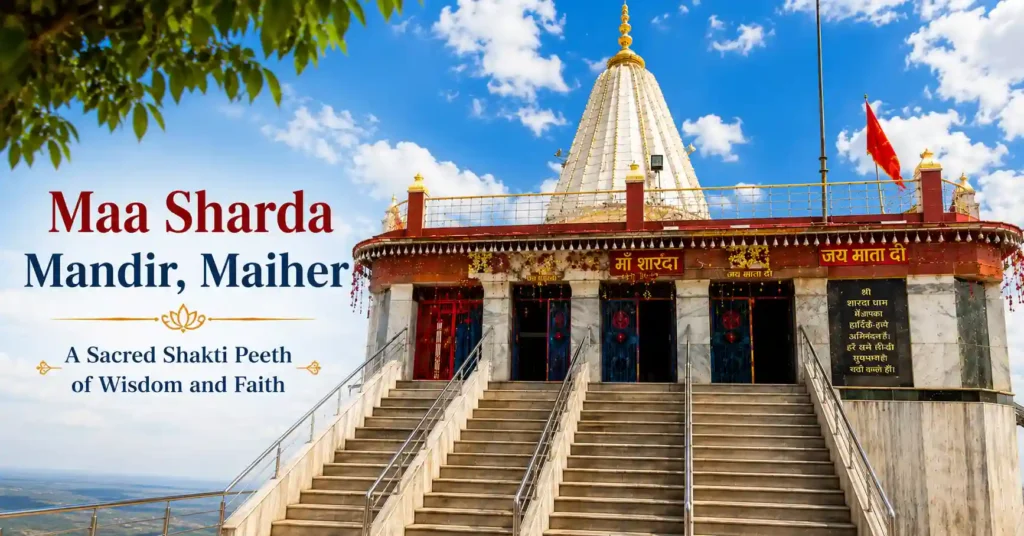
For many devotees, darshan at Maa Sharda Maihar Temple is the most meaningful part of their pilgrimage. After completing the climb or reaching the hilltop by ropeway, standing before Goddess Sharda often brings a deep sense of peace and gratitude.
As devotees enter the sanctum, the distractions of everyday life seem to fade away. The atmosphere of prayer, the sound of temple bells, and the sight of the Divine Mother create a feeling of calm that is difficult to express in words. Many pilgrims spend a few quiet moments in silent prayer, seeking wisdom, strength, and guidance rather than material blessings.
For students, artists, musicians, and spiritual seekers, Maihar Temple darshan is believed to inspire clarity of thought and renewed confidence. Whether they come with a specific prayer or simply to offer their respects, many devotees leave the temple with a feeling of inner peace and a stronger sense of faith.
It is this deeply personal spiritual experience that continues to draw millions of pilgrims to Maa Sharda Temple Maihar, making every darshan a memorable step in their spiritual journey.
Why Devotees Feel a Deep Bond with Maa Sharda Maihar Temple
For countless devotees, Maa Sharda Maihar Temple is more than a place of worship. It is a sacred space where they experience the comforting presence of the Divine Mother.
Many lovingly address Goddess Sharda as their own mother, believing she listens with compassion to every prayer, whether spoken aloud or offered silently from the heart.
People visit the temple during every stage of life. Students seek success in their studies, musicians pray for inspiration, families ask for peace and prosperity, and spiritual seekers look for wisdom and inner guidance.
Many also return to the temple to express gratitude after their wishes have been fulfilled, strengthening their lifelong connection with the Goddess.
This deep bond is built not only on faith but also on personal experiences passed down through generations. For many pilgrims, every visit to Maa Sharda Temple Maihar renews their sense of hope, devotion, and trust in the Divine Mother.
It is this enduring relationship that inspires millions of devotees to return to the sacred shrine again and again.
A Symbolic Reflection on the Panchabhutas at Maa Sharda Maihar Temple
Although Maa Sharda Maihar Temple is not traditionally described through the philosophy of the Panchabhutas (the five elements), many devotees find a beautiful symbolic connection between the sacred surroundings and these timeless principles of Sanatan Dharma.
The Trikuta Hill represents Prithvi (Earth), reminding devotees of stability and steadfast faith. The cool breeze that flows across the hill reflects Vayu (Air), symbolising life, movement, and spiritual freedom.
The sacred lamps burning before Goddess Sharda represent Agni (Fire), the light of knowledge that removes ignorance. The water used in rituals and offered to the Goddess reflects Jala (Water), representing purity, compassion, and the continuous flow of divine grace.
Above all, the peaceful atmosphere surrounding the shrine evokes Akasha (Space), reminding pilgrims of silence, awareness, and the infinite presence of the Divine.
While this is a symbolic spiritual interpretation rather than an official temple tradition, it helps many devotees experience Maa Sharda Temple Maihar as a place where nature and spirituality exist in perfect harmony.
For seekers, the temple becomes not only a destination for darshan, but also a reminder of the balance that Sanatan Dharma teaches between the human mind, nature, and the Divine.
Nearby Places to Visit from Maa Sharda Maihar Temple
If you are planning a longer pilgrimage or family trip, there are several interesting places to visit near Maa Sharda Maihar Temple. These attractions combine spirituality, history, and natural beauty, allowing pilgrims to make the most of their journey.
| Place | Approximate Distance | Why Visit |
|---|---|---|
| Alha Talab | 2 km | A historic pond associated with the legendary warrior Alha and local temple traditions. |
| Alha-Udal Akhara | 2 km | A revered site connected with the legendary brothers Alha and Udal, who are deeply linked to the history and folklore of Maihar. |
| Pannikhoh Waterfall | 15 km | A scenic natural waterfall surrounded by rocky hills, ideal for nature lovers during the monsoon season. |
| Maihar Fort | 4 km | The remains of an ancient hill fort offering panoramic views of the surrounding landscape and the town of Maihar. |
| Oila Temple | 25 km | A peaceful temple dedicated to Lord Shiva, visited by many devotees along with Maa Sharda Temple. |
Travel Tip: If time permits, plan to visit these attractions after completing your Maihar Temple darshan. Early morning darshan followed by local sightseeing allows pilgrims to experience both the spiritual and cultural heritage of Maihar in a single day.
Google Map of Maa Sharda Maihar Temple
Planning your journey to Maa Sharda Maihar Temple is easier with the interactive Google Map below. Use it to get turn-by-turn directions, estimate travel time, and explore nearby parking areas, hotels, restaurants, the ropeway station, and public transport options before your visit.
If you are travelling during Chaitra Navratri, Sharad Navratri, or other major festivals, allow extra travel time as traffic restrictions and large crowds may affect access to the temple.
Scriptural and Historical References
The spiritual importance of Maa Sharda Maihar Temple is preserved through sacred traditions, local beliefs, historical records, and India’s rich cultural heritage. While some aspects of the temple are rooted in long-standing regional traditions, others are supported by scriptural and historical sources.
| Source | Relevance to the Temple |
|---|---|
| Shakti Peetha Traditions | The temple is traditionally revered as a Shakti Peeth, associated with the legend of Goddess Sati and Lord Shiva. Local tradition identifies Maihar as the place where Sati’s necklace (Har) is believed to have fallen. |
| Devi Bhagavata Purana | Reveres the Divine Mother and provides an important scriptural foundation for Shakti worship across India. |
| Puranic Traditions | Various Shakta traditions describe the origin and spiritual significance of the Shakti Peethas, although details may vary between texts. |
| Local Temple Traditions | The legends of Alha’s devotion, the first daily worship, and other temple customs have been preserved through generations of devotees and temple priests. |
| Historical and Cultural Records | The temple is closely associated with Ustad Allauddin Khan and the Maihar Gharana, highlighting its unique contribution to India’s spiritual and musical heritage. |
Together, these traditions and historical associations make Maa Sharda Maihar Temple not only an important pilgrimage destination but also a living centre of faith, culture, music, and devotion that continues to inspire millions of devotees.
Key Takeaways
- Maa Sharda Maihar Temple is one of the most revered Shakti Peethas in India, where local tradition associates the shrine with the sacred necklace (Har) of Goddess Sati.
- The temple stands atop Trikuta Hill in Maihar, Madhya Pradesh, and can be reached by climbing 1,063 steps or using the ropeway.
- Goddess Sharda, worshipped as a form of Goddess Saraswati, is revered as the bestower of wisdom, knowledge, and spiritual guidance.
- The temple is closely associated with the legendary warrior Alha and the renowned Maihar Gharana, founded by Ustad Allauddin Khan, making it unique among India’s pilgrimage destinations.
- Chaitra Navratri, Sharad Navratri, and Vasant Panchami are the most important festivals celebrated at the temple, attracting thousands of devotees every year.
- Beyond its religious significance, Maa Sharda Maihar Temple beautifully brings together faith, history, music, culture, and living traditions, offering pilgrims a deeply enriching spiritual experience.

Conclusion
Maa Sharda Maihar Temple is far more than a hilltop shrine. Revered as a sacred Maihar Shakti Peeth, it has inspired devotees for centuries through its rich spiritual traditions, the legendary story of Alha, its association with the renowned Maihar Gharana, and its peaceful setting atop Trikuta Hill.
Whether you visit to seek the blessings of Goddess Sharda, experience a meaningful Maihar Temple darshan, or simply spend a few quiet moments in prayer, the temple offers an experience that goes beyond rituals. It is a place where faith, wisdom, devotion, and inner peace come together, touching the hearts of pilgrims from across India.
May Maa Sharda bless you with knowledge, courage, success, and spiritual clarity. May your pilgrimage to Maa Sharda Maihar Temple become a memorable journey filled with faith, peace, and the enduring grace of the Divine Mother.
Did You Know?
- Maa Sharda Maihar Temple stands atop Trikuta Hill, and devotees can reach the shrine by climbing 1,063 sacred steps or using the ropeway.
- According to local temple tradition, the name Maihar comes from ‘Mai’ (Mother) and ‘Har’ (necklace), based on the belief that Goddess Sati’s necklace fell here.
- The temple shares a unique connection with the legendary musician Ustad Allauddin Khan, founder of the Maihar Gharana, who regarded Goddess Sharda as his divine guide.
- Vasant Panchami, the festival dedicated to Goddess Saraswati, is one of the most auspicious occasions to visit the temple, as thousands of students, artists, and musicians seek the blessings of Maa Sharda.
Suggested Reading
If the spiritual journey of Maa Sharda Maihar Temple inspired you, there are many more sacred temples across India that reflect the rich heritage of Sanatan Dharma. Explore these pilgrimage guides to learn about their history, spiritual significance, rituals, and travel information, helping you plan your next divine journey with faith and confidence.
Pavagadh Temple Gujarat: Shakti Peetha, History, Darshan Guide
https://thesanatantales.com/pavagadh-temple-gujarat/Maa Saptashrungi: Story, Importance, Darshan and Complete Travel Guide
https://thesanatantales.com/maa-saptashrungi/Salasar Balaji Temple: Story, Miracles, Darshan and Travel Guide
https://thesanatantales.com/salasar-balaji-temple/Ambaji Temple Banaskantha: A Sacred Experience Beyond Form
https://thesanatantales.com/ambaji-temple-banaskantha-guide/Vindhyavasini Devi: Story, Temple & Vindhyachal Darshan Guide
https://thesanatantales.com/vindhyavasini-devi/Mahakaleshwar Temple Ujjain: Complete Pilgrimage Guide
https://thesanatantales.com/mahakaleshwar-temple-ujjain/Mahalaxmi Temple Kolhapur: History, Darshan Guide & Ambabai Shakti Peetha
https://thesanatantales.com/mahalaxmi-temple-kolhapur/Sanwariya Seth Temple: The Living Krishna of Mewar and Divine Business Partner
https://thesanatantales.com/sanwariya-seth-temple/Kedarnath Dham Yatra: Complete Pilgrimage Guide
https://thesanatantales.com/kedarnath-dham-yatra-2026/Maa Sharda Mandir, Maihar (Wikipedia)
https://en.wikipedia.org/wiki/Maa_Sharda_Mandir,_Maihar
FAQs
Who is Maa Sharda of Maihar?
Maa Sharda is the presiding deity of Maa Sharda Maihar Temple and is worshipped as a divine form of Goddess Saraswati, the Hindu goddess of wisdom, knowledge, learning, music, and the arts. Devotees believe that Maa Sharda blesses her devotees with intelligence, clarity of thought, creativity, and spiritual guidance.
Located atop Trikuta Hill in Maihar, Madhya Pradesh, the temple is also revered as a Shakti Peeth according to local tradition. Students, teachers, artists, musicians, and spiritual seekers visit the shrine throughout the year to seek the blessings of the Divine Mother before beginning important milestones in their lives. For millions of devotees, Maa Sharda is not only the Goddess of learning but also a compassionate mother who offers faith, strength, and inner peace.
Why is Maa Sharda Maihar Temple famous?
Maa Sharda Maihar Temple is famous as one of the revered Shakti Peethas of India and as a major centre of devotion to Goddess Sharda, who is worshipped as a form of Goddess Saraswati. Perched atop Trikuta Hill in Madhya Pradesh, the temple attracts millions of devotees seeking wisdom, success, and inner peace. It is also known for the legendary story of Alha, its connection with the renowned Maihar Gharana, and the convenient ropeway that carries pilgrims to the hilltop shrine.
Is Maa Sharda Maihar Temple a Shakti Peeth?
Yes. Maa Sharda Maihar Temple is traditionally revered as a Shakti Peeth. According to local temple tradition, the necklace (Har) of Goddess Sati fell at this sacred site after Lord Vishnu used the Sudarshan Chakra to restore cosmic balance. While different Shakti Peetha traditions vary in some details, the temple has been an important centre of Shakti worship for centuries.
Who is Goddess Sharda worshipped at Maihar?
The presiding deity of Maa Sharda Maihar Temple is Goddess Sharda, who is worshipped as a form of Goddess Saraswati, the Hindu goddess of wisdom, knowledge, music, and learning. Students, teachers, artists, musicians, and spiritual seekers visit the temple to seek her blessings for success, creativity, and spiritual growth.
How many steps are there to Maa Sharda Maihar Temple?
There are approximately 1,063 steps leading from the base of Trikuta Hill to Maa Sharda Maihar Temple. Many devotees choose to climb these steps as an act of faith and devotion. Those who prefer a more comfortable journey can also use the ropeway, which reaches the temple in just a few minutes.
What are the darshan timings of Maa Sharda Maihar Temple?
The temple is generally open from 5:00 AM to 9:00 PM, with morning and evening aarti being the most spiritually significant times for darshan. Timings may vary during Chaitra Navratri, Sharad Navratri, and other special occasions, so it is advisable to check the latest schedule before planning your visit.
Which is the best time to visit Maa Sharda Maihar Temple?
The best time to visit Maa Sharda Maihar Temple is between October and March, when the weather is pleasant for both darshan and climbing the hill. Devotees who wish to experience the temple’s grand celebrations may visit during Chaitra Navratri, Sharad Navratri, or Vasant Panchami, although these festivals attract large crowds.
What is the legend of Alha at Maa Sharda Maihar Temple?
According to local temple tradition, the legendary Bundelkhand warrior Alha was an ardent devotee of Maa Sharda and performed intense penance at the temple. It is widely believed that he received the Goddess’s blessings and continues to offer the first worship every morning before the temple opens. While this belief is part of the temple’s living tradition rather than historical evidence, it remains one of the shrine’s most cherished legends.
What offerings can devotees make at Maa Sharda Maihar Temple?
Devotees commonly offer coconuts, flowers, red chunari, paan, supari, dhwaja (sacred flag), and prasad to Goddess Sharda. According to the teachings of Sanatan Dharma, the sincerity of one’s devotion is considered far more important than the material value of the offering.
Is the ropeway available at Maa Sharda Maihar Temple?
Yes. A ropeway facility operates between the temple base and Maa Sharda Maihar Temple, providing a convenient option for senior citizens, families with children, and pilgrims who are unable to climb the 1,063 steps. The ropeway also offers beautiful views of Trikuta Hill and the surrounding landscape.
What is the connection between Maa Sharda Maihar Temple and the Maihar Gharana?
The temple shares a unique spiritual connection with Ustad Allauddin Khan, the founder of the famous Maihar Gharana of Hindustani classical music. According to local tradition, he regularly visited the temple to seek the blessings of Maa Sharda before beginning his daily music practice, considering music itself to be an offering to the Divine Mother.
Why do students and musicians especially visit Maa Sharda Maihar Temple?
Since Goddess Sharda is worshipped as the goddess of wisdom, learning, and music, students pray for academic success, artists seek creativity, and musicians ask for excellence in their art. The temple’s close association with the legendary Maihar Gharana further strengthens its reputation as a sacred place for those pursuing knowledge and the performing arts.
Glossary of Important Terms
| Term | Meaning |
|---|---|
| Akhand Jyoti | An eternal sacred flame that symbolises the continuous presence, wisdom, and blessings of the Divine Mother. |
| Alha | A legendary warrior of Bundelkhand who, according to local temple tradition, was a devoted worshipper of Maa Sharda and performed intense penance at Maihar. |
| Chaitra Navratri | A nine-day Hindu festival celebrated in the month of Chaitra to worship the Divine Mother. It is one of the biggest festivals at Maa Sharda Maihar Temple. |
| Darshan | The sacred act of seeing and receiving the blessings of a deity in a temple. |
| Devi Bhagavata Purana | A major Hindu scripture that glorifies the Divine Mother and forms an important scriptural foundation for Shakti worship. |
| Dhwaja | A sacred flag offered by devotees as a symbol of devotion, gratitude, and fulfilled wishes. |
| Goddess Sharda | The presiding deity of Maa Sharda Maihar Temple, worshipped as a form of Goddess Saraswati, the goddess of wisdom, learning, and knowledge. |
| Maihar Gharana | A renowned school of Hindustani classical music founded by Ustad Allauddin Khan, closely associated with the spiritual heritage of Maihar. |
| Maihar Shakti Peeth | The sacred shrine where, according to local tradition, Goddess Sati’s necklace (Har) is believed to have fallen, making it one of the revered Shakti Peethas. |
| Panchabhutas | The five fundamental elements in Sanatan Dharma: Earth (Prithvi), Water (Jala), Fire (Agni), Air (Vayu), and Space (Akasha). |
| Penance (Tapasya) | Deep spiritual discipline, meditation, or austerity performed to seek divine blessings and inner transformation. |
| Prasad | Sanctified food or offerings blessed by the deity and distributed among devotees after worship. |
| Ropeway | A cable car service that carries pilgrims from the base of Trikuta Hill to Maa Sharda Maihar Temple. |
| Saraswati | The Hindu goddess of wisdom, learning, music, arts, and knowledge. Maa Sharda is worshipped as one of her divine forms. |
| Shakti Peeth | One of the sacred pilgrimage sites dedicated to Goddess Shakti, traditionally associated with the places where the body parts or ornaments of Goddess Sati are believed to have fallen. |
| Sharad Navratri | The Navratri festival celebrated during the month of Ashwin, attracting thousands of devotees to Maa Sharda Maihar Temple. |
| Sudarshan Chakra | The divine discus of Lord Vishnu, which, according to tradition, was used to divide the body of Goddess Sati, leading to the origin of the Shakti Peethas. |
| Trikuta Hill | The sacred hill on which Maa Sharda Maihar Temple is situated, approximately 600 feet above the town of Maihar. |
| Ustad Allauddin Khan | One of India’s greatest classical musicians and the founder of the Maihar Gharana, remembered for his deep devotion to Maa Sharda. |
| Vasant Panchami | A festival dedicated to Goddess Saraswati, celebrated by students, artists, musicians, and devotees seeking wisdom and success. |
About the Author
Yateendra Chaturvedi is a spiritual writer, researcher, devotee, and the founder of The Sanatan Tales. With over 35 years of professional experience and a lifelong interest in Sanatan Dharma, he writes about Hindu deities, temples, scriptures, festivals, Mahavidyas, sacred stories, rituals, and living traditions that continue to guide and inspire devotees across India.
Drawing from traditional scriptures, regional beliefs, temple traditions, devotional literature, and historical sources, he aims to present authentic, well-researched, and easy-to-understand content for modern readers. His work focuses on preserving spiritual wisdom, explaining sacred traditions, and helping seekers develop a deeper understanding of India’s rich spiritual heritage.
Through The Sanatan Tales, Yateendra strives to make the timeless teachings of Sanatan Dharma simple, meaningful, and relevant for today’s generation while maintaining respect for traditional sources, regional practices, and diverse spiritual perspectives.
Learn More About Yateendra Chaturvedi →
https://thesanatantales.com/about-the-author/
References & Sources
This article is based on beliefs and traditions followed within the Shakta traditions of Sanatan Dharma, traditional knowledge associated with the Dashamahavidya tradition, Shakti worship, Devi sadhana, and insights drawn from various spiritual and religious study sources.
Some concepts discussed in this article are also inspired by teachings and interpretations preserved through the guru-disciple tradition.
Note: Beliefs, interpretations, and spiritual practices may vary across different traditions, sects, and paths within Sanatan Dharma. The purpose of this article is not to present any single viewpoint as the absolute truth, but to explain widely accepted religious and spiritual perspectives in a simple and accessible manner.
Explore More Fascinating Topics from Sanatan Dharma