There are some places you visit because you planned the journey. Then there are sacred places that seem to call you when the time is right.
Many devotees describe Vindhyachal in exactly that way. Long before they reach the steps of the Vindhyavasini Temple, they feel an unexplainable pull, as if the Divine Mother herself has invited them.
Nestled in the sacred Vindhya Hills, Vindhyavasini Devi, a revered form of Goddess Durga, has been worshipped for centuries as the compassionate Mother who protects, guides, and listens to every sincere prayer.
Thousands of devotees arrive here each day carrying different hopes. Some seek strength during difficult times, some come to express gratitude, while others simply wish to experience the peace of being in her divine presence.
A visit to Maa Vindhyavasini is more than a temple darshan. For many, it is a deeply personal spiritual journey that brings comfort, faith, and the quiet feeling of coming home.
In this guide, you’ll discover the story of Vindhyavasini Devi, the history and significance of the Vindhyavasini Temple, darshan timings, the sacred Trikon Parikrama, nearby places to visit, and everything you need to know before planning your pilgrimage to Vindhyachal.
Vindhyavasini Temple at a Glance
| Information | Details |
|---|---|
| Presiding Deity | Vindhyavasini Devi, a revered form of Goddess Durga and Adi Shakti |
| Temple Location | Vindhyachal, Mirzapur district, Uttar Pradesh, India |
| Famous For | One of the most revered Shakti temples in North India and a major pilgrimage destination |
| Sacred River | River Ganga |
| Spiritual Importance | Revered as the abode of Maa Vindhyavasini and regarded by many devotees as a Siddha Peeth |
| Major Festivals | Chaitra Navratri, Sharad Navratri, Durga Ashtami, Vijayadashami |
| Temple Timings | Approximately 5:00 AM to 12:00 Midnight (subject to change on festivals and special occasions) |
| Nearest Railway Station | Vindhyachal Railway Station (about 2 km) |
| Nearest Airport | Lal Bahadur Shastri International Airport, Varanasi (about 75 km) |
| Best Time to Visit | Early mornings for peaceful darshan; Chaitra and Sharad Navratri for grand celebrations |
| Special Pilgrimage | Trikon Parikrama covering Vindhyavasini Devi, Kali Khoh, and Ashtabhuja Devi Temple |
| Ideal Visit Duration | Half day for temple darshan; one full day to complete the Trikon Parikrama and nearby sacred sites |
Table of Contents
Toggle10 Interesting Facts About Vindhyavasini Temple
- The name “Vindhyavasini” means “She Who Resides in the Vindhya Mountains.” The temple derives its name from the ancient Vindhya range, which has been a sacred centre of Shakti worship for centuries.
- Vindhyavasini Temple is one of the most important centres of Shakti worship in North India. Millions of devotees visit the temple every year to seek the blessings of Maa Vindhyavasini, especially during Navratri.
- Many devotees regard the temple as a Siddha Peeth. Although it is not consistently listed among the traditional 51 Shakti Peethas, it is widely believed to be a place where sincere prayers are fulfilled through the grace of the Divine Mother.
- According to devotional traditions, Vindhyavasini Devi is identified with Yogmaya. After escaping from King Kansa’s hands at the time of Lord Krishna’s birth, the Divine Mother is believed to have chosen the Vindhya Mountains as her eternal abode.
- The temple is the starting point of the sacred Trikon Parikrama. This revered pilgrimage connects three powerful forms of the Divine Mother: Vindhyavasini Devi, Kali Khoh, and Ashtabhuja Devi, symbolising prosperity, protection, and wisdom.
- The temple remains active from before sunrise until late at night. Daily worship includes Mangala Aarti, pujas, bhog offerings, evening aarti, and continuous darshan, reflecting an unbroken tradition of devotion.
- The Vindhyavasini Temple stands close to the holy River Ganga. Many pilgrims begin their spiritual journey with a sacred bath in the river before offering prayers to the Divine Mother.
- Vindhyachal is a unique spiritual centre where Vedic and Tantric traditions coexist. This harmonious blend of worship has made the temple an important destination for both pilgrims and spiritual seekers.
- Chaitra Navratri and Sharad Navratri are the temple’s biggest annual celebrations. During these festivals, lakhs of devotees gather for special pujas, aartis, devotional singing, and the sacred Trikon Parikrama.
- For many devotees, the greatest blessing of visiting Vindhyavasini Temple is the feeling they carry home. Beyond rituals and traditions, pilgrims often describe their visit as an experience of inner peace, renewed faith, and the comforting presence of the Divine Mother.
Who Is Vindhyavasini Devi?
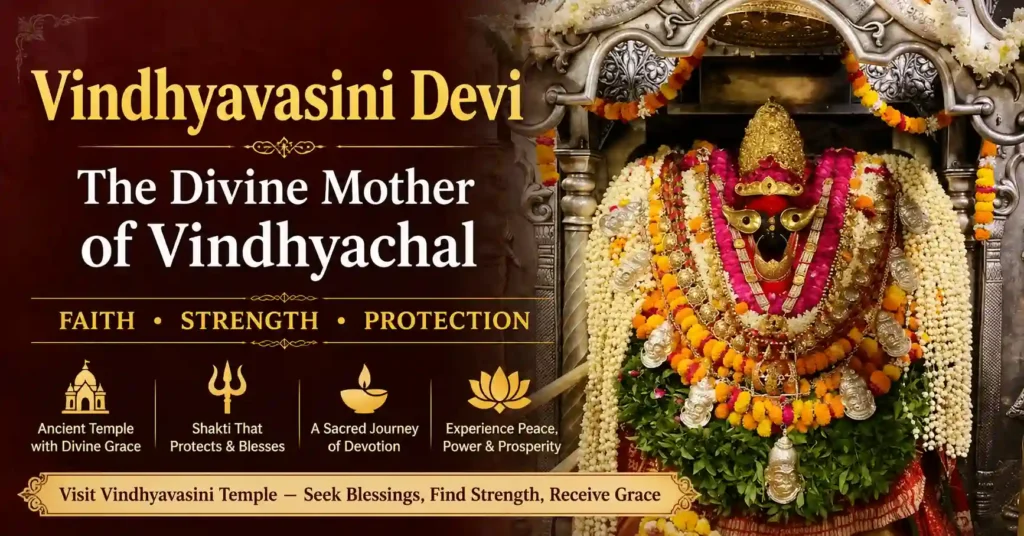
Vindhyavasini Devi is a revered form of Goddess Durga and Adi Shakti, widely worshipped as the presiding deity of the Vindhyavasini Temple in Vindhyachal, Uttar Pradesh.
In different traditions, she is identified with Yogmaya, the divine energy associated with Lord Krishna’s birth, and with Mahishasura Mardini, the fierce form of the Divine Mother who defeated the buffalo demon Mahishasura.
Her name, Vindhyavasini, means “the one who resides in the Vindhya Mountains.” Devotees worship her as a compassionate yet powerful Mother who protects the righteous, removes fear, grants courage, and restores balance whenever dharma is threatened.
References in the Devi Bhagavata Purana, the Markandeya Purana (Durga Saptashati), and long-standing regional traditions connect Vindhyavasini Devi with the divine energy that appeared at the time of Lord Krishna’s birth.
These traditions describe her not only as a cosmic manifestation of Shakti but also as a loving Mother who listens to the sincere prayers of her devotees.
For millions of devotees, Maa Vindhyavasini is far more than a deity worshipped in a temple. She is a living presence whose blessings are believed to offer strength, protection, and inner peace to everyone who seeks her with faith.
The Sacred Story of Vindhyavasini Devi
The story of Vindhyavasini Devi is woven through both sacred scriptures and long-standing devotional traditions, making her one of the most revered forms of the Divine Mother in Sanatan Dharma.
According to the Bhagavata Purana, when Lord Krishna was born in Mathura, Vasudeva carried the newborn across the Yamuna River to Gokul to protect him from the tyrant King Kansa. In exchange, he brought back the baby girl born to Yashoda.
When Kansa tried to kill the infant, she slipped from his hands, rose into the sky, and revealed her divine form as Yogmaya. She warned him that the child destined to end his tyranny had already been born elsewhere.
Many traditions identify this divine manifestation of Yogmaya with Vindhyavasini Devi, who is believed to have later made the sacred Vindhya Mountains her eternal abode. This belief is deeply rooted in the devotional traditions of Vindhyachal.
Another important tradition, described in the Markandeya Purana (Durga Saptashati), celebrates Vindhyavasini Devi as Mahishasura Mardini, the victorious form of Goddess Durga who defeated the buffalo demon Mahishasura.
She is also worshipped as the slayer of the demons Shumbha and Nishumbha, symbolising the triumph of divine power over arrogance, evil, and ignorance.
For devotees, these are not merely ancient legends. They are living expressions of faith that remind them Maa Vindhyavasini continues to protect, guide, and bless those who seek her with sincere devotion.
Is Vindhyavasini Devi a Shakti Peeth?
Vindhyavasini Devi holds a unique and deeply respected place in Shakti worship. One of the most common questions devotees ask is whether Vindhyavasini Temple is one of the 51 Shakti Peethas.
According to the traditional lists found in various Shakti Peetha traditions, Vindhyachal is not consistently included among the recognised 51 Shakti Peethas.
However, different regional traditions and devotional lineages hold varying views, and some devotees regard the temple as a sacred seat of the Divine Mother because of its immense spiritual importance.
Unlike the traditional Shakti Peethas, which are associated with the places where parts of Goddess Sati’s body are believed to have fallen, Vindhyavasini Devi is worshipped as a living manifestation of Adi Shakti who chose the Vindhya Mountains as her eternal abode after fulfilling her divine mission.
This belief has made the Vindhyavasini Temple one of the most important centres of Shakta worship in North India.
For millions of devotees, the spiritual experience of seeking the blessings of Maa Vindhyavasini is far more significant than any formal classification. Whether regarded as a Shakti Peeth or a Siddha Peeth in local tradition, the temple remains a place where faith, devotion, and the presence of the Divine Mother are deeply felt.
Did You Know?
Unlike many sacred sites that are primarily known for their historical significance, Vindhyavasini Temple is revered by countless devotees as a place where the Divine Mother’s presence is believed to be living and ever-awake.
This is one of the reasons why pilgrims continue to return to Vindhyachal generation after generation.
History of Vindhyavasini Temple
The Vindhyavasini Temple is one of the oldest and most revered centres of Shakti worship in North India.
Although the exact date of its original construction is not known, the temple has been a place of devotion for many centuries and is deeply connected with the sacred traditions of the Vindhya Mountains.
References to Vindhyavasini Devi are found in the Devi Bhagavata Purana, the Markandeya Purana (Durga Saptashati), and other devotional traditions, where the Goddess is associated with Yogmaya and the Divine Mother who chose the Vindhya region as her eternal abode.
Over time, this belief transformed Vindhyachal into one of the most important pilgrimage centres dedicated to Adi Shakti.
| Period | Development |
|---|---|
| Ancient Tradition | The Vindhya region emerged as an important centre of Shakti worship, where the Divine Mother has been revered for centuries. |
| Puranic Tradition | Vindhyavasini Devi became associated with Yogmaya and the sacred Vindhya Mountains, strengthening the region’s spiritual significance. |
| Medieval Period | The temple received patronage from local rulers and devotees, helping Vindhyachal develop into a prominent pilgrimage centre. |
| Modern Era | Pilgrim facilities have expanded while preserving the temple’s spiritual heritage, including improvements such as the Vindhya Corridor. |
Historical records suggest that the temple received the patronage of local rulers and devotees over different periods, leading to several renovations and improvements while preserving its spiritual identity.
As the number of pilgrims grew, Vindhyavasini Temple became not only a place of worship but also a major centre of faith, culture, and religious gatherings in the region.
Today, the temple continues to welcome millions of devotees each year, especially during Chaitra Navratri and Sharad Navratri. While the structure has evolved over time to accommodate the growing number of pilgrims, the temple’s spiritual significance remains unchanged.
For devotees, it is not merely an ancient shrine but a living place where the blessings of Maa Vindhyavasini are believed to be experienced with unwavering faith.
Why Vindhyachal Is Sacred in Sanatan Dharma
The sacredness of Vindhyachal extends far beyond the Vindhyavasini Temple. For centuries, the Vindhya Mountains have been regarded as a powerful centre of Shakti worship, meditation, and spiritual practice.
Ancient scriptures, regional traditions, and the faith of millions of devotees have together established this region as one of the most revered pilgrimage destinations in North India.
According to Puranic traditions, Vindhyavasini Devi chose the Vindhya region as her eternal abode after manifesting as Yogmaya.
This belief transformed Vindhyachal into a place where devotees experience the living presence of the Divine Mother rather than simply visit an ancient temple.
The region is also home to several sacred sites, including Kali Khoh, Ashtabhuja Devi Temple, Sita Kund, and the holy River Ganga, all of which are closely connected with the Trikon Parikrama and other local pilgrimage traditions.
Together, these places create a sacred landscape where devotion, history, and culture have flourished side by side for generations.
For many pilgrims, visiting Vindhyachal is not just about seeking the blessings of Maa Vindhyavasini. It is an opportunity to experience a place where faith has been continuously nurtured for centuries, making every step of the pilgrimage feel spiritually meaningful.
Vindhyavasini Temple: The Sacred Heart of Vindhyachal
Vindhyavasini Temple is located in the sacred town of Vindhyachal, near Mirzapur in Uttar Pradesh, close to the holy River Ganga. Dedicated to Vindhyavasini Devi, a revered form of Goddess Durga, it is one of the most important centres of Shakti worship in North India and attracts millions of devotees every year.
From the moment you enter the temple परिसर, you can feel its unique spiritual energy. The sound of bells, the chanting of hymns, and the continuous stream of devotees create an atmosphere filled with faith and devotion. Yet, amidst this constant movement, many visitors experience a remarkable sense of inner peace.
According to local tradition, Maa Vindhyavasini is a Jagrat Devi, a deity believed to be ever-awake and always receptive to the prayers of her devotees. This enduring belief is one of the reasons why pilgrims return to the Vindhyavasini Temple year after year with unwavering faith.
Another popular local tradition says that Lord Rama, accompanied by Sita and Lakshmana, visited the Vindhyachal region during their exile and offered prayers to the Divine Mother.
While this belief forms an important part of the region’s devotional heritage, it is preserved primarily through local tradition rather than explicit scriptural accounts.
Architecture and Sacred Features of Vindhyavasini Temple
The Vindhyavasini Temple reflects the simplicity and timeless devotion that have defined this sacred pilgrimage for centuries.
While the temple has undergone renovations over the years to accommodate the growing number of pilgrims, it continues to preserve its traditional spiritual character.
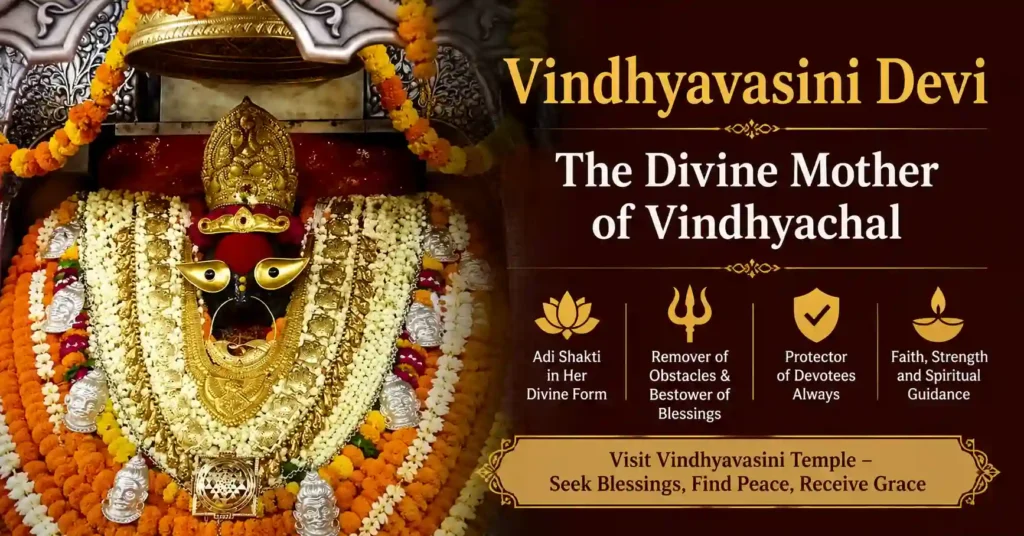
At the heart of the temple lies the Garbhagriha (sanctum sanctorum), where Maa Vindhyavasini is worshipped in her revered form as the presiding deity of Vindhyachal.
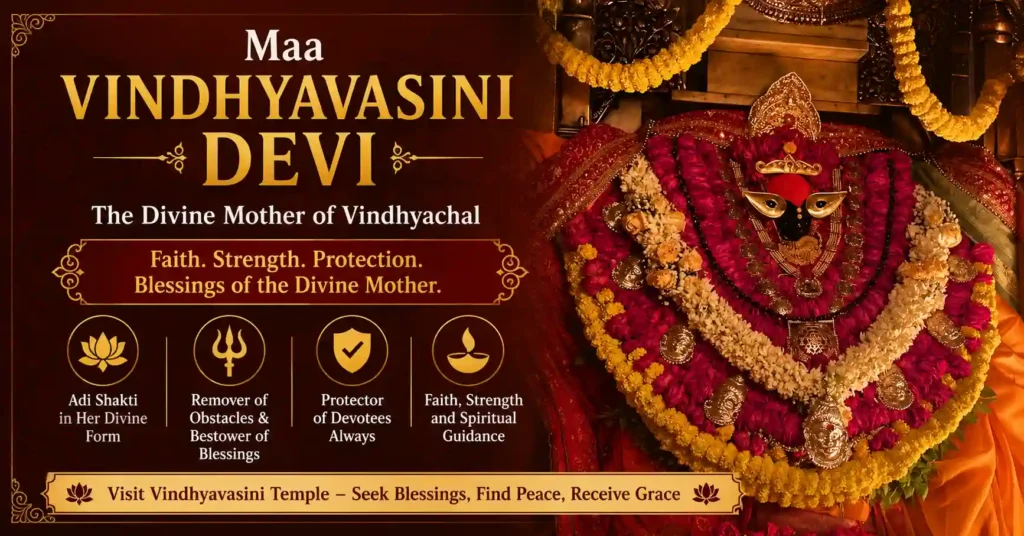
The sanctum is the most sacred part of the temple, where devotees offer flowers, coconuts, chunari, and prayers while seeking the blessings of the Divine Mother.
The temple complex is filled with the sounds of ringing bells, Vedic chants, and devotional hymns throughout the day. The fragrance of incense, the continuous flow of pilgrims, and the atmosphere of prayer create a deeply spiritual experience that many devotees remember long after their visit.
Situated close to the sacred River Ganga and surrounded by the ancient Vindhya Hills, the temple occupies a landscape that has long been associated with the worship of Shakti.
Nearby shrines, ghats, and pilgrimage routes further enrich the spiritual significance of the area, making Vindhyavasini Temple much more than a single place of worship.
Although the temple’s physical structure has been modernised to improve facilities for devotees, its greatest attraction remains the living faith that has drawn pilgrims here for generations. For many visitors, the true beauty of the temple lies not only in its architecture but in the powerful sense of peace and devotion experienced within its sacred walls.
Daily Rituals and Aarti at Vindhyavasini Temple
The day at the Vindhyavasini Temple begins before sunrise with sacred rituals dedicated to Maa Vindhyavasini.
From the first Mangala Aarti in the early morning to the final prayers at night, the temple follows a daily schedule of worship that has been preserved through generations of devotion.
Throughout the day, priests perform puja, offer bhog (sacred food offering), chant Vedic hymns, and conduct aartis, while thousands of devotees gather to seek the blessings of the Divine Mother.
The sound of bells, conch shells, and devotional chants creates an atmosphere filled with faith and spiritual energy.
Although the sequence of rituals remains largely the same every day, the timings may vary during Chaitra Navratri, Sharad Navratri, and other important festivals, when special ceremonies and extended darshan arrangements are organised to accommodate the large number of pilgrims.
Daily Worship Schedule
| Ritual | Significance |
|---|---|
| Mangala Aarti | Early morning worship welcoming the Divine Mother and beginning the day’s rituals. |
| Daily Puja | Regular worship with Vedic mantras, flowers, incense, and offerings. |
| Bhog Offering | Food is ceremonially offered to Maa Vindhyavasini before being distributed as prasad. |
| Evening Aarti | A devotional ceremony with lamps, bells, and chanting that draws large numbers of devotees. |
| Night Rituals | The day’s worship concludes with final prayers before the temple closes. |
What to Offer at Vindhyavasini Temple
Offering prayers at the Vindhyavasini Temple is a deeply personal act of devotion. While there is no compulsory offering, many devotees bring traditional items as a symbol of their faith and gratitude to Maa Vindhyavasini.
Common Offerings
| Offering | Symbolic Significance |
|---|---|
| Red Chunari (Sacred Cloth) | Devotion, protection, and respect for the Divine Mother |
| Flowers | Purity, love, and reverence |
| Coconut | Surrender of ego and fulfilment of prayers |
| Sindoor (Vermilion) | Auspiciousness and divine energy |
| Fruits & Sweets | Gratitude and thanksgiving |
| Prasad | Offered to the Goddess and later shared as a sacred blessing |
Many of these items are available at the small shops surrounding the Vindhyavasini Temple, making it convenient for pilgrims to purchase offerings before entering the temple.
More important than any material offering is the spirit in which it is made. In Shakta tradition, sincere devotion, humility, and faith are considered the greatest offerings to the Divine Mother.
Whether you offer flowers, a simple prayer, or silent gratitude, devotees believe that Vindhyavasini Devi accepts every heartfelt prayer with compassion.
Vindhyavasini Temple Timings and Darshan Schedule
| Darshan / Ritual | Approximate Timings |
|---|---|
| Morning Darshan | 5:00 AM to 12:00 PM |
| Temple Ritual Break | 12:00 PM to 1:30 PM |
| Afternoon & Evening Darshan | 1:30 PM to 8:00 PM |
| Night Darshan | 8:00 PM to 9:30 PM |
| Late Night Darshan | 10:00 PM to 12:00 Midnight |
Many devotees prefer the peaceful atmosphere of the early morning, while others choose the evening or night darshan when the temple is beautifully illuminated and devotional chants fill the air. Regardless of the time, seeking the blessings of Vindhyavasini Devi is considered an equally sacred experience.
Note: The above Vindhyavasini Temple timings are approximate and may change during Navratri, special festivals, temple rituals, or administrative arrangements. It is advisable to verify the latest darshan schedule before planning your visit.
Vindhya Corridor: Enhancing the Pilgrimage Experience
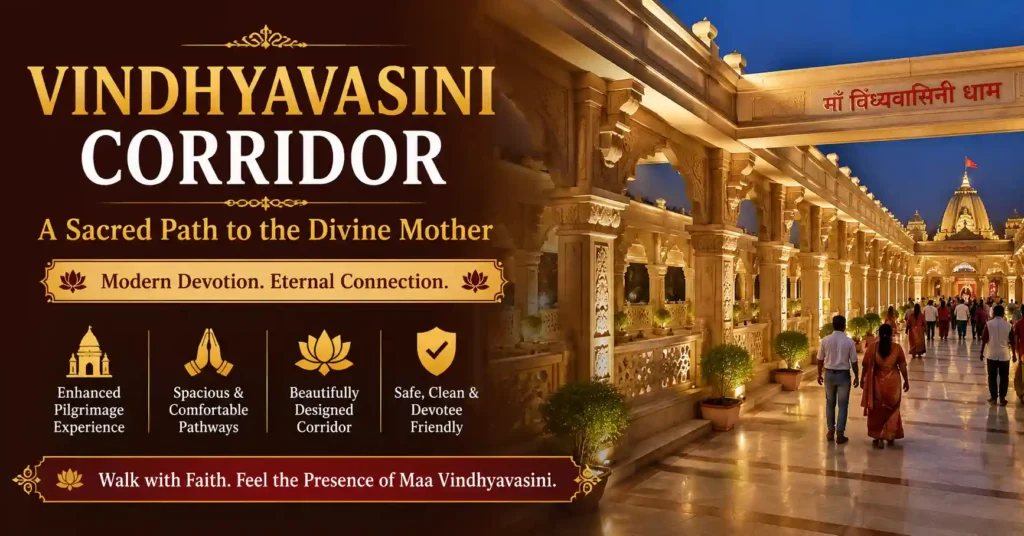
The Vindhya Corridor is an important development designed to improve the pilgrimage experience at the Vindhyavasini Temple while preserving its spiritual atmosphere.
The project focuses on making darshan more convenient for the millions of devotees who visit Vindhyachal, especially during major festivals such as Chaitra Navratri and Sharad Navratri.
With wider pathways, improved access routes, better crowd management, and enhanced public facilities, the corridor helps pilgrims move more comfortably and safely through the temple area.
These improvements are particularly valuable during peak seasons, when large numbers of devotees gather to seek the blessings of Maa Vindhyavasini.
Despite these modern facilities, the sacred character of the temple remains unchanged. The chants, rituals, and devotional atmosphere continue to preserve the spiritual essence that has drawn pilgrims to Vindhyavasini Devi for generations.
The Vindhya Corridor reflects a thoughtful balance between preserving a centuries-old place of worship and providing the amenities needed for a comfortable and well-organised pilgrimage.
How to Reach Vindhyavasini Temple
The Vindhyavasini Temple is located in the holy town of Vindhyachal, about 8 km from Mirzapur in Uttar Pradesh. The temple is well connected by road, rail, and air, making it convenient for pilgrims from across India.
Distance from Major Cities
| City | Approx. Distance | Travel Time | Best Mode of Travel |
|---|---|---|---|
| Mirzapur | 8 km | 15–20 min | Auto, Taxi |
| Varanasi | 70 km | 1.5–2 hrs | Car, Taxi, Train |
| Prayagraj | 90 km | 2–2.5 hrs | Car, Bus, Train |
| Ayodhya | 235 km | 5–6 hrs | Car, Train |
| Lucknow | 285 km | 5.5–6.5 hrs | Car, Train |
| Patna | 265 km | 6–7 hrs | Train, Car |
| Kanpur | 290 km | 6–7 hrs | Train, Car |
| Delhi | 820 km | 12–14 hrs | Flight + Road / Train |
Reaching Vindhyavasini Temple
| Mode of Travel | Details |
|---|---|
| By Air | The nearest airport is Lal Bahadur Shastri International Airport, Varanasi (VNS), about 75 km from the temple. Taxis and buses are easily available from the airport. |
| By Train | Vindhyachal Railway Station is the nearest station, located about 2 km from the temple. Mirzapur Junction, around 8 km away, offers better connectivity with major cities across India. |
| By Road | Vindhyachal is well connected by national and state highways. Regular buses, taxis, and private vehicles operate from Varanasi, Prayagraj, Mirzapur, and other nearby cities. |
| Local Transport | Auto-rickshaws, cycle-rickshaws, e-rickshaws, and taxis are readily available from the railway stations and nearby bus stands to reach the temple. |
Accessibility Information
The Vindhyavasini Temple is accessible to devotees of all ages, and several facilities have been developed to make the pilgrimage more convenient. The Vindhya Corridor has improved pathways and crowd movement, making it easier for families, senior citizens, and differently abled visitors to reach the temple.
| Facility | Information |
|---|---|
| Senior Citizens | Early morning visits are recommended for a more comfortable darshan with relatively smaller crowds. |
| Wheelchair Access | Wheelchair-friendly pathways are available in parts of the temple approach, though assistance may be needed in crowded areas. |
| Families with Children | The temple is suitable for family visits, but children should be closely supervised during festivals and peak hours. |
| Parking | Paid parking is available near the temple for private vehicles. |
| Rest Areas | Seating and resting points are available at various locations around the temple complex. |
| Medical Assistance | Basic medical facilities and pharmacies are available nearby for emergencies. |
Travel Tips for Pilgrims
- Visit early in the morning for a quieter darshan and shorter queues.
- During Chaitra Navratri and Sharad Navratri, allow extra travel time because of heavy pilgrim crowds.
- Wear comfortable footwear, as some walking is required around the temple complex.
- Keep drinking water, especially during the summer months.
- If you plan to perform the Trikon Parikrama, reserve additional time to visit Kali Khoh and Ashtabhuja Devi Temple.
Where to Stay and Eat Near Vindhyavasini Temple
Whether you are visiting Vindhyavasini Temple for a few hours or planning a longer pilgrimage, Vindhyachal offers accommodation and dining options to suit different budgets. From traditional dharamshalas to comfortable hotels, devotees can easily find a convenient place to stay close to the temple.
Accommodation Options
| Type | Details | Best For |
|---|---|---|
| Dharamshalas | Affordable accommodation managed by religious trusts with a simple, spiritual atmosphere. | Pilgrims and families |
| Budget Hotels | Clean rooms with basic facilities located in Vindhyachal and Mirzapur. | Budget travellers |
| Mid-range Hotels | Air-conditioned rooms, restaurants, parking, and modern amenities. | Families and small groups |
| Hotels in Varanasi | Wide range of hotels for travellers combining a visit to Kashi and Vindhyachal. | Tourists and multi-city pilgrims |
Food and Dining
| Food Option | What to Expect |
|---|---|
| Temple Area Eateries | Fresh vegetarian meals, snacks, tea, sweets, and bottled water. |
| Local Restaurants | North Indian and traditional vegetarian cuisine at reasonable prices. |
| Prasad Shops | Pedas, laddus, coconut, flowers, and other offerings for Maa Vindhyavasini. |
| Varanasi Restaurants | A wider variety of vegetarian and regional cuisine for travellers staying in the city. |
Pilgrim Facilities Near the Temple
| Facility | Availability |
|---|---|
| Paid Parking | Available near the temple area. |
| Drinking Water | Available at various public points. |
| Public Toilets | Available around the temple complex. |
| Cloakroom / Footwear Stand | Available for devotees before entering the temple. |
| Wheelchairs | Limited availability during busy periods. |
| ATMs & Banks | Available in Vindhyachal and nearby Mirzapur. |
| Medical Assistance | Basic medical facilities and pharmacies are available nearby. |
Helpful Tips for Pilgrims
- Book your accommodation well in advance if you are visiting during Chaitra Navratri or Sharad Navratri, as hotels and dharamshalas fill up quickly.
- Most restaurants near the temple serve pure vegetarian food, in keeping with the sacred atmosphere of the pilgrimage town.
- Carry some cash for small purchases, offerings, and local transport, although digital payments are accepted at many shops.
- Stay close to the temple if you plan to attend the early morning darshan or perform the Trikon Parikrama.
Travel Tips for a Comfortable Darshan
- isit early in the morning for a peaceful darshan and shorter queues, especially on weekends and public holidays.
- Book your hotel or dharamshala in advance if you are visiting during Chaitra Navratri or Sharad Navratri, as accommodation fills up quickly.
- Wear comfortable clothing and footwear, as you may need to walk through the temple complex and nearby pilgrimage sites.
- Carry water, a cap, or an umbrella during the summer months, as temperatures in Vindhyachal can be quite high.
- Keep some cash for offerings, local transport, parking, and purchases from small shops, although many establishments now accept digital payments.
- Deposit footwear and large bags at the designated counters before entering the Vindhyavasini Temple.
- Maintain the temple’s sanctity by following the instructions of the temple authorities and respecting local customs during darshan.
- Stay near the temple if you plan to attend the early morning Mangala Aarti, perform the Trikon Parikrama, or visit nearby shrines such as Kali Khoh and Ashtabhuja Devi Temple.
- Beware of unauthorized touts or guides and use only official facilities and designated queues for a safe and smooth pilgrimage.
Things to Buy Near Vindhyavasini Temple
The area around the Vindhyavasini Temple is lined with small shops selling traditional puja items, religious souvenirs, and local sweets. Many pilgrims purchase these items either as offerings to Maa Vindhyavasini or as sacred mementos to take home after completing their pilgrimage.
| Item | Why Pilgrims Buy It |
|---|---|
| Chunari (Sacred Cloth) | Offered to Maa Vindhyavasini as a symbol of devotion and blessings. |
| Coconut & Flowers | Traditional offerings used during temple worship. |
| Sindoor & Kumkum | Sacred items commonly offered to the Divine Mother. |
| Prasad & Local Sweets | Pedas, laddus, and other prasad to share with family and friends. |
| Rudraksha & Tulsi Malas | Purchased for personal prayer and spiritual practice. |
| Religious Books & Photos | Images of Maa Vindhyavasini, devotional books, and small calendars for home worship. |
Many shops also sell handcrafted souvenirs, prayer beads, incense sticks, brass diyas, and other devotional items. Purchasing from local vendors not only supports the community but also allows pilgrims to take home a meaningful reminder of their visit to Vindhyachal.
Trikon Parikrama: The Sacred Pilgrimage of Three Divine Mothers
The Trikon Parikrama is one of the most sacred pilgrimage traditions associated with Vindhyavasini Devi and is considered an essential part of the Vindhyachal Yatra. Instead of visiting only one temple, devotees complete a spiritual circuit by offering prayers at three revered shrines dedicated to different manifestations of the Divine Mother.
The Three Sacred Temple
| Temple | Form of the Goddess | Spiritual Significance |
|---|---|---|
| Vindhyavasini Temple | Maa Vindhyavasini | Blessings, prosperity, protection, and fulfilment of sincere prayers |
| Kali Khoh Temple | Maa Kali | Courage, protection from negative forces, and inner strength |
| Ashtabhuja Devi Temple | Maa Ashtabhuja | Wisdom, spiritual growth, and divine guidance |
Together, these three temples symbolise the complete power of Adi Shakti, representing prosperity, protection, and wisdom. Completing the Trikon Parikrama is believed to bring spiritual balance, remove obstacles, and deepen a devotee’s connection with the Divine Mother.
Traditional Order of Darshan
Although local customs may vary, many pilgrims traditionally visit the temples in the following order:
- Vindhyavasini Temple
- Kali Khoh Temple
- Ashtabhuja Devi Temple
This sequence is widely followed as part of the sacred Vindhyachal pilgrimage, though devotees may also follow the guidance of local priests or family traditions.
Helpful Information
| Details | Information |
|---|---|
| Approximate Distance | Around 8–10 km (entire circuit) |
| Time Required | 3–5 hours, depending on crowds and mode of travel |
| Best Time | Early morning or late afternoon |
| Available Transport | Walking, auto-rickshaw, e-rickshaw, taxi, or private vehicle |
| Ideal During | Chaitra Navratri, Sharad Navratri, or any time of the year |
Unique Spiritual Traditions of Vindhyachal
Vindhyachal is much more than the home of the Vindhyavasini Temple. For centuries, it has been a sacred centre where different streams of Sanatan Dharma have flourished together, creating a rich spiritual heritage that continues to inspire devotees.
One of the unique features of this pilgrimage is the harmonious coexistence of Vedic and Tantric traditions. Daily temple worship follows established Vedic rituals, while certain forms of Shakta and Tantric
worship are also practised in accordance with traditional customs. This blend of spiritual paths has made Vindhyavasini Devi one of the most revered forms of Adi Shakti in North India.
The region is also closely associated with the vibrant Kajari folk tradition. During the monsoon season, particularly in the Hindu month of Shravana (and the famous Kajari celebrations that follow), devotional songs known as Kajari are sung in praise of Maa Vindhyavasini.
These soulful melodies reflect the deep cultural and spiritual bond between the Divine Mother and the people of the Vindhya region.
Another cherished tradition is the Trikon Parikrama, where pilgrims visit Vindhyavasini Devi, Kali Khoh, and Ashtabhuja Devi Temple as part of a sacred circuit. Together, these living traditions make Vindhyachal not only a place of worship but also a vibrant centre of faith, music, culture, and devotion.
For many devotees, the spiritual experience of Vindhyachal extends beyond rituals. It is found in the chanting of mantras, the ringing of temple bells, the melodies of Kajari songs, and the shared devotion of countless pilgrims who gather to seek the blessings of the Divine Mother.
Festivals Celebrated at Vindhyavasini Temple
The Vindhyavasini Temple comes alive during festivals, but the most significant celebrations take place during Chaitra Navratri and Sharad Navratri. These nine-day festivals are considered the most auspicious times to seek the blessings of Maa Vindhyavasini, and lakhs of devotees from across India visit Vindhyachal to offer prayers.
During Navratri, the temple is beautifully decorated with flowers and lights, while special pujas, aartis, devotional chanting, and cultural programmes create an atmosphere of deep faith and celebration. Long queues of pilgrims gather from the early hours of the morning, and the entire town reflects the vibrant spirit of devotion.
Apart from Navratri, devotees also visit the temple on important occasions such as Durga Ashtami, Vijayadashami (Dussehra), Guru Purnima, and other auspicious days dedicated to the Divine Mother. Throughout the year, regular temple rituals and daily worship continue to attract pilgrims seeking the blessings of Vindhyavasini Devi.
Best Time to Visit
| Time of Visit | What to Expect | Ideal For |
|---|---|---|
| Chaitra Navratri (March–April) | Grand celebrations, special pujas, heavy crowds | Devotees seeking a festive spiritual experience |
| Sharad Navratri (September–October) | One of the largest annual gatherings with elaborate decorations and rituals | Pilgrims wishing to experience the temple at its most vibrant |
| Normal Weekdays | Peaceful atmosphere with shorter queues | Quiet darshan and meditation |
| Weekends & Public Holidays | Moderate to heavy crowds | Family visits and short pilgrimages |
Sacred Places to Visit Near Vindhyavasini Temple
A pilgrimage to Vindhyavasini Temple is often combined with visits to several other sacred sites in Vindhyachal. These places are closely connected with local traditions and offer devotees a deeper understanding of the region’s rich spiritual heritage.
| Sacred Place | Significance |
|---|---|
| Kali Khoh Temple | Dedicated to Maa Kali, this ancient cave shrine is one of the three temples visited during the sacred Trikon Parikrama. |
| Ashtabhuja Devi Temple | Located on the Vindhya Hills, this temple honours Maa Ashtabhuja, another revered form of the Divine Mother and an important stop on the pilgrimage circuit. |
| Sita Kund | A sacred water tank associated with local traditions connected to Goddess Sita and visited by many pilgrims. |
| Gerua Talab | A peaceful water body regarded as part of the spiritual landscape of Vindhyachal and often included in local pilgrim routes. |
| Ganga Ghats | Many devotees take a holy dip in the River Ganga before visiting Vindhyavasini Devi, considering it an act of spiritual purification. |
Together, these sacred sites enrich the Vindhyachal pilgrimage, allowing devotees to experience the region’s deep connection with Shakti worship and its centuries-old traditions.
Essential Tips for Pilgrims Visiting Vindhyavasini Temple
- Visit early in the morning for a peaceful darshan and shorter waiting time.
- Wear modest, comfortable clothing suitable for visiting a sacred place.
- Carry drinking water, especially during the summer months, as some walking is involved.
- Keep only essential valuables with you and remain alert in crowded areas, particularly during Navratri.
- Deposit footwear and large bags at the designated counters before entering the temple.
- Follow the instructions of temple authorities and maintain the sanctity of the temple premises.
- If you plan to perform the Trikon Parikrama, allow at least half a day to comfortably visit all three temples.
- During peak festivals, patience and cooperation with fellow devotees make the pilgrimage more meaningful for everyone.
Why Devotees Worship Vindhyavasini Devi
People often come to Maa Vindhyavasini with the faith of a child approaching a loving mother. Every devotee carries a different prayer, but all seek the same divine grace.
Some pray for strength during difficult times. Others seek good health, family harmony, prosperity, success, or protection from obstacles. Many also visit the Vindhyavasini Temple simply to express gratitude for blessings already received.
In Shakta tradition, Vindhyavasini Devi is worshipped as a compassionate form of Adi Shakti who protects her devotees, removes fear, grants courage, and guides them on the path of righteousness. Countless pilgrims believe that sincere prayers offered with devotion never go unheard.
For many devotees, the greatest blessing is not the fulfilment of a specific wish but the deep sense of peace, hope, and inner strength they experience after darshan. It is this personal connection with the Divine Mother that inspires millions of pilgrims to return to Vindhyachal again and again.
Best Time to Visit Vindhyavasini Temple
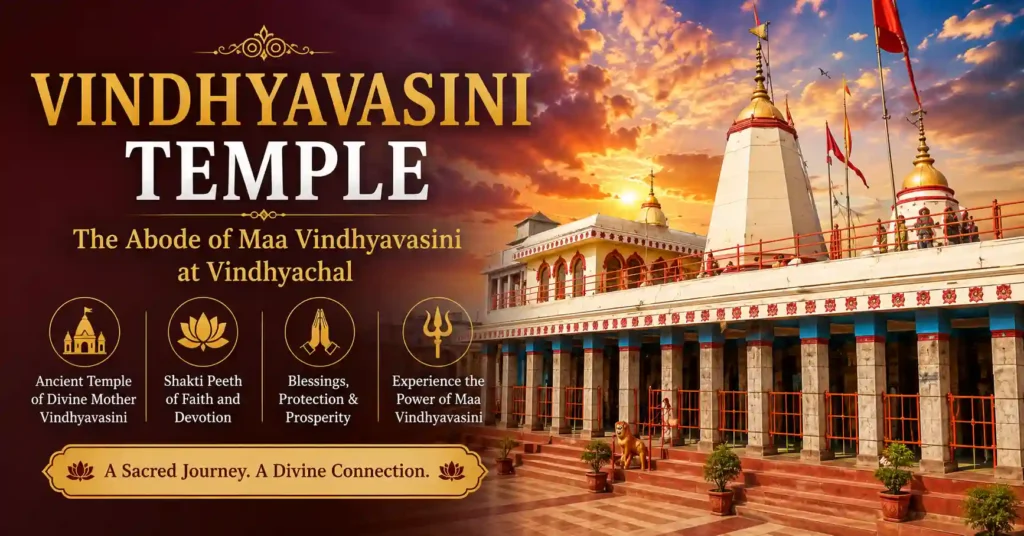
The Vindhyavasini Temple welcomes devotees throughout the year, and each season offers a unique spiritual experience. The best time to visit depends on whether you wish to experience the grandeur of festivals or enjoy a peaceful darshan.
| Time of Year | What to Expect | Best For |
|---|---|---|
| Chaitra Navratri (March–April) | Grand celebrations, special pujas, devotional processions, and large gatherings of pilgrims | Experiencing the temple during one of its most important festivals |
| Sharad Navratri (September–October) | Beautiful decorations, cultural programmes, and a vibrant spiritual atmosphere | Festival celebrations and traditional worship |
| Winter (October–February) | Pleasant weather and comfortable sightseeing | Families, senior citizens, and temple visits with moderate crowds |
| Summer (March–June) | Warm weather with fewer visitors outside festival periods | Early morning darshan and shorter queues |
| Monsoon (July–September) | Lush surroundings and occasional rainfall | Devotees who enjoy a quieter pilgrimage and scenic landscapes |
Crowd Levels Throughout the Year
| Time | Crowd Level | Recommended For |
|---|---|---|
| Chaitra Navratri | Very High | Devotees seeking grand festival celebrations |
| Sharad Navratri | Very High | Experiencing the temple at its most vibrant |
| Weekdays (Non-Festival) | Low | Peaceful darshan and meditation |
| Weekends & Public Holidays | Moderate to High | Short family pilgrimages |
| Major Hindu Festivals | High | Special pujas and festive atmosphere |
Recommendation: For a peaceful and less crowded darshan, visit on a weekday morning. If you wish to experience the temple’s vibrant spiritual energy, plan your pilgrimage during Chaitra Navratri or Sharad Navratri.
Seasonal Weather Guide
| Season | Weather | Average Temperature | Travel Advice |
|---|---|---|---|
| Summer (March–June) | Hot and dry | 30°C–45°C | Visit early in the morning, stay hydrated, and carry a cap or umbrella. |
| Monsoon (July–September) | Pleasant with occasional rain | 25°C–35°C | Carry an umbrella or raincoat and wear footwear with a good grip. |
| Winter (October–February) | Cool and comfortable | 10°C–28°C | Ideal season for temple visits and sightseeing. Carry a light jacket during mornings and evenings. |
Travel Tip: For the most comfortable weather and a pleasant darshan experience, many pilgrims prefer visiting between October and February, while Chaitra and Sharad Navratri remain the most spiritually vibrant times to visit.
If you prefer a calm and unhurried experience, plan your visit on a weekday and arrive early in the morning, when the temple is relatively less crowded. If your wish is to witness the vibrant devotional energy of Vindhyachal, visiting during Chaitra Navratri or Sharad Navratri offers an unforgettable spiritual experience.
Whether you visit during the festive season or on an ordinary day, the blessings of Maa Vindhyavasini are believed to be available to every devotee who comes with faith and devotion.
Key Takeaways
- Vindhyavasini Temple is one of the most revered Shakti temples in North India and is dedicated to Maa Vindhyavasini, a powerful form of Adi Shakti.
- According to tradition, Vindhyavasini Devi is identified with Yogmaya, the divine infant who appeared during the birth of Lord Krishna.
- Many devotees revere the temple as a Siddha Peeth, believing that sincere prayers offered with faith receive the blessings of the Divine Mother.
- The sacred Trikon Parikrama, connecting Vindhyavasini Devi, Kali Khoh, and Ashtabhuja Devi Temple, is an important part of the pilgrimage.
- Chaitra Navratri and Sharad Navratri are the most significant festivals, attracting lakhs of devotees from across India.
- Early morning on non-festival weekdays is the best time for a peaceful darshan, while Navratri offers a vibrant and unforgettable spiritual experience.
- The temple is easily accessible from Mirzapur, Varanasi, and Prayagraj, with convenient road, rail, and air connectivity.
- Beyond its rituals and traditions, Vindhyavasini Temple is cherished for the deep sense of peace, faith, and spiritual strength that devotees carry home after their visit.
The Blessings You Carry Back from Vindhyavasini Temple
A visit to the Vindhyavasini Temple is more than a pilgrimage. For many devotees, it becomes a deeply personal spiritual experience that remains in their hearts long after they return home.
People arrive with different prayers. Some seek strength during difficult times, some pray for the well-being of their families, while others simply come to offer gratitude.
Yet, regardless of the reason for their visit, many leave with the same feeling, a quiet sense of peace, renewed faith, and the comforting belief that the Divine Mother has heard their prayers.
For centuries, Vindhyavasini Devi has been worshipped as a compassionate form of Adi Shakti, guiding and protecting devotees with her boundless grace.
Whether you come during the vibrant celebrations of Navratri or on a peaceful morning seeking a quiet darshan, the spiritual presence of Maa Vindhyavasini leaves a lasting impression.
Perhaps that is why countless pilgrims return to Vindhyachal again and again. Not merely to visit a sacred temple, but to reconnect with the love, strength, and blessings of the Divine Mother.
May Vindhyavasini Devi bless your life with courage, peace, prosperity, and unwavering faith.
Suggested Reading
If you would like to explore more about Maa Vindhyavasini, Shakti worship, and the timeless wisdom of Sanatan Dharma, these related articles offer deeper insights into the Divine Mother, sacred festivals, and revered pilgrimage traditions.
Maa Durga: Story, Symbolism and Spiritual Significance
https://thesanatantales.com/maa-durga/Navadurga: The Nine Forms of Goddess Durga
https://thesanatantales.com/navadurga-nine-forms-of-maa-durga/Maa Kali: The Fierce Form of Divine Protection and Transformation
https://thesanatantales.com/maa-kali-story-significance/Maa Lakshmi: The Goddess of Prosperity, Grace and Abundance
https://thesanatantales.com/maa-lakshmi-significance-story/Durga Saptashati: Meaning, Importance and Spiritual Significance
https://thesanatantales.com/durga-saptashati-meaning-navratri/Shakti Peethas of India: Sacred Abodes of the Divine Mother
https://thesanatantales.com/shakti-peethas-maa-sati-story/Maa Vindhyavasini (Official Website)
https://vindhyachalmata.com/
FAQs
Who is Vindhyavasini Devi?
Vindhyavasini Devi is a revered form of Goddess Durga and is worshipped as Adi Shakti, the supreme Divine Mother in Sanatan Dharma. According to devotional traditions, she is identified with Yogmaya, the divine power who appeared at the time of Lord Krishna’s birth. Devotees believe Vindhyavasini Devi protects her devotees, removes obstacles, and blesses them with strength, prosperity, and spiritual guidance.
Where is the Vindhyavasini Temple located?
The Vindhyavasini Temple is located in Vindhyachal, near Mirzapur in Uttar Pradesh, on the banks of the sacred River Ganga. It is about 8 km from Mirzapur, 70 km from Varanasi, and around 90 km from Prayagraj, making it one of the most accessible pilgrimage destinations in North India.
Is Vindhyavasini Devi a Shakti Peeth?
The spiritual status of Vindhyavasini Devi depends on the tradition being followed. While the temple is not consistently included in the classical lists of the 51 Shakti Peethas, many devotees and regional traditions revere Vindhyavasini Temple as a Siddha Peeth, where the Divine Mother is believed to fulfil sincere prayers. For devotees, the temple’s spiritual significance lies in the living presence of Maa Vindhyavasini rather than in its classification.
Why is Vindhyavasini Devi famous?
Vindhyavasini Devi is famous for her association with Yogmaya, the sacred Trikon Parikrama, and centuries of uninterrupted Shakti worship. The temple attracts millions of devotees each year, especially during Chaitra Navratri and Sharad Navratri, when pilgrims visit to seek the blessings of the Divine Mother and participate in special pujas, aartis, and religious celebrations.
What is the Trikon Parikrama of Vindhyachal?
The Trikon Parikrama is one of the most important pilgrimage traditions associated with Vindhyavasini Devi. It includes visits to three sacred temples: Vindhyavasini Temple, Kali Khoh Temple, and Ashtabhuja Devi Temple. Together, these shrines represent prosperity, protection, and wisdom. Completing the Trikon Parikrama is believed to bring spiritual balance and the blessings of the Divine Mother.
What is the best time to visit Vindhyavasini Temple?
The Vindhyavasini Temple can be visited throughout the year. For a peaceful darshan, weekday mornings are ideal because the crowds are usually smaller. If you wish to experience the temple’s vibrant spiritual atmosphere, visit during Chaitra Navratri or Sharad Navratri, when the temple is beautifully decorated and special religious ceremonies are held.
What should I offer to Vindhyavasini Devi?
Devotees commonly offer red chunari, flowers, coconut, sindoor, fruits, sweets, and prasad to Vindhyavasini Devi. These offerings symbolise devotion, gratitude, and respect for the Divine Mother. However, according to Shakta tradition, the most meaningful offering is sincere faith and a pure heart.
How long does it take to visit Vindhyavasini Temple?
A peaceful darshan at Vindhyavasini Temple usually takes 1 to 2 hours on normal days, depending on the crowd. If you also plan to complete the Trikon Parikrama and visit nearby sacred places such as Kali Khoh, Ashtabhuja Devi Temple, and Sita Kund, it is best to set aside a full day for the pilgrimage.
Are accommodation and food facilities available near Vindhyavasini Temple?
Yes. Vindhyachal offers a variety of accommodation options, including dharamshalas, budget hotels, and comfortable family hotels. Pilgrims can also find numerous vegetarian restaurants, tea stalls, and prasad shops near the Vindhyavasini Temple, making it convenient for both short visits and overnight stays.
Why do millions of devotees visit Vindhyavasini Temple every year?
For many devotees, a visit to Vindhyavasini Temple is much more than a pilgrimage. They come with prayers for health, prosperity, protection, and spiritual strength, believing that Vindhyavasini Devi listens to sincere devotion. Beyond the temple’s history and traditions, pilgrims often describe their visit as a deeply personal experience that leaves them with lasting peace, renewed faith, and a stronger connection with the Divine Mother.
Glossary of Important Terms
| Term | Meaning |
|---|---|
| Adi Shakti | The Supreme Divine Mother and the source of all creation, worshipped in many forms across Sanatan Dharma. |
| Ashtabhuja Devi | An eight-armed form of the Divine Mother worshipped near Vindhyavasini Temple and an important stop in the Trikon Parikrama. |
| Bhog | Food or other offerings ceremonially presented to the deity before being distributed as prasad. |
| Darshan | The sacred act of seeing and receiving the blessings of a deity at a temple. |
| Jagrat Devi | A deity believed to be ever-awake and responsive to the sincere prayers of devotees. |
| Kali Khoh | A sacred cave temple dedicated to Maa Kali, forming one of the three temples of the Trikon Parikrama. |
| Mangala Aarti | The first aarti of the day, performed before sunrise to awaken and worship the deity. |
| Prasad | Sanctified food or offerings blessed by the deity and shared with devotees. |
| Shakti | The divine feminine energy that creates, sustains, and transforms the universe. |
| Shakta Tradition | A major tradition within Sanatan Dharma that worships the Divine Mother as the Supreme Reality. |
| Siddha Peeth | A sacred place where devotees believe prayers are fulfilled and spiritual blessings are readily received. |
| Trikon Parikrama | A sacred pilgrimage connecting Vindhyavasini Devi, Kali Khoh, and Ashtabhuja Devi Temple, symbolising prosperity, protection, and wisdom. |
| Vindhyachal | A sacred pilgrimage town in Uttar Pradesh, home to the famous Vindhyavasini Temple. |
| Yogmaya | The divine power associated with Lord Krishna’s birth, identified in devotional traditions with Maa Vindhyavasini. |
About the Author
Yateendra Chaturvedi is a spiritual writer, researcher, devotee, and the founder of The Sanatan Tales. With over 35 years of professional experience and a lifelong interest in Sanatan Dharma, he writes about Hindu deities, temples, scriptures, festivals, Mahavidyas, sacred stories, rituals, and living traditions that continue to guide and inspire devotees across India.
Drawing from traditional scriptures, regional beliefs, temple traditions, devotional literature, and historical sources, he aims to present authentic, well-researched, and easy-to-understand content for modern readers. His work focuses on preserving spiritual wisdom, explaining sacred traditions, and helping seekers develop a deeper understanding of India’s rich spiritual heritage.
Through The Sanatan Tales, Yateendra strives to make the timeless teachings of Sanatan Dharma simple, meaningful, and relevant for today’s generation while maintaining respect for traditional sources, regional practices, and diverse spiritual perspectives.
Learn More About Yateendra Chaturvedi →
https://thesanatantales.com/about-the-author/
References & Sources
This article is based on beliefs and traditions followed within the Shakta traditions of Sanatan Dharma, traditional knowledge associated with the Dashamahavidya tradition, Shakti worship, Devi sadhana, and insights drawn from various spiritual and religious study sources.
Some concepts discussed in this article are also inspired by teachings and interpretations preserved through the guru-disciple tradition.
Note: Beliefs, interpretations, and spiritual practices may vary across different traditions, sects, and paths within Sanatan Dharma. The purpose of this article is not to present any single viewpoint as the absolute truth, but to explain widely accepted religious and spiritual perspectives in a simple and accessible manner.
Explore More Fascinating Topics from Sanatan Dharma