
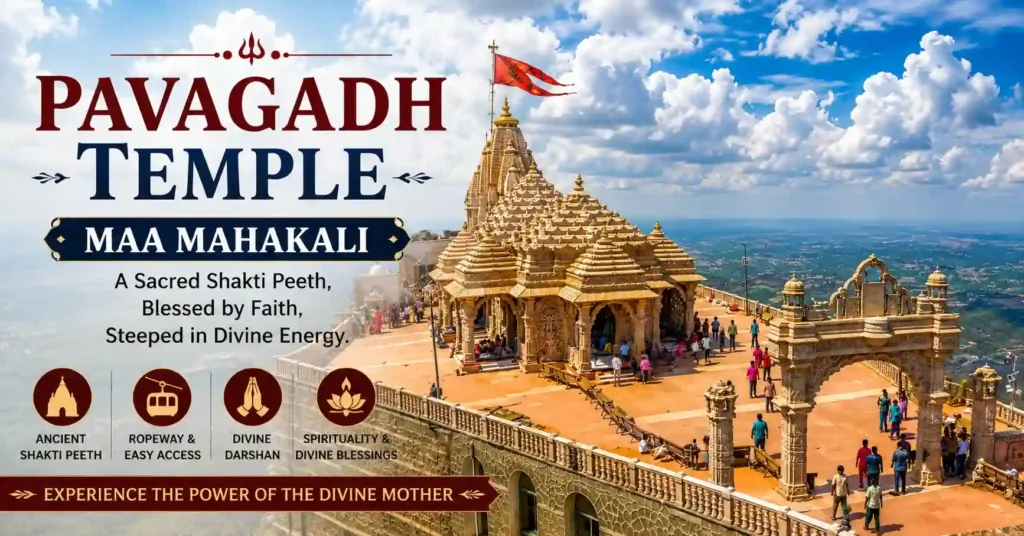
Pavagadh Temple Gujarat is one of the most revered Shakti Peeths dedicated to Maa Mahakali and an important pilgrimage destination in western India.
Perched atop the sacred Pavagadh Hill in Gujarat, the temple is revered not only for its spiritual significance but also for its connection with the Champaner-Pavagadh UNESCO World Heritage Site.
For centuries, devotees have undertaken this pilgrimage to seek the blessings of the Divine Mother.
Whether they climb the ancient stone steps or travel by the Pavagadh Temple Ropeway, the journey itself becomes an experience of faith, devotion, and inner reflection.
In this complete guide, you’ll discover the history of Pavagadh Temple, its significance as a Shakti Peeth, the story of Maa Mahakali, darshan details, ropeway and travel information, nearby attractions, and practical tips to help you plan a meaningful pilgrimage.
Pavagadh Temple at a Glance
| Feature | Details |
|---|---|
| Temple Name | Pavagadh Mahakali Temple |
| Location | Pavagadh Hill, Panchmahal District, Gujarat, India |
| Presiding Deity | Maa Mahakali |
| Temple Type | Shakti Peeth |
| Religious Tradition | Shakta Tradition |
| Believed Shakti Peeth | Goddess Sati’s right toe (according to most traditions) |
| Elevation | Approximately 800 metres (2,625 feet) above sea level |
| UNESCO Status | Located within the Champaner-Pavagadh Archaeological Park, a UNESCO World Heritage Site |
| Famous For | Maa Mahakali, Shakti Peeth, ropeway, ancient volcanic hill, historic Champaner region |
| Best Time to Visit | October to March and during Chaitra & Sharad Navratri |
| Nearest City | Vadodara (approximately 50 km) |
| Access | Traditional stone steps or Pavagadh Ropeway |
Did You Know?
Pavagadh Temple is one of the few Shakti Peeths situated on an ancient volcanic hill and is located within the Champaner-Pavagadh Archaeological Park, a UNESCO World Heritage Site.
The temple is dedicated to Maa Mahakali and has been a revered place of worship for centuries. In 2022, its historic shikhara once again flew the sacred temple flag after nearly 500 years, marking a significant milestone in the shrine’s long history.
Table of Contents
ToggleWhere Is Pavagadh Temple and What Makes It Unique?
Pavagadh Temple Gujarat is located atop Pavagadh Hill in the Panchmahal district of Gujarat, about 50 km from Vadodara and 150 km from Ahmedabad.
Dedicated to Maa Mahakali, this sacred shrine is one of western India’s most important pilgrimage destinations and attracts devotees throughout the year.
The temple stands at an elevation of approximately 800 metres (2,625 feet) above sea level. The surrounding hill forms part of the Champaner-Pavagadh Archaeological Park, a UNESCO World Heritage Site renowned for its blend of Hindu, Jain, and Islamic monuments, reflecting centuries of cultural and architectural heritage.
What makes Pavagadh Temple truly unique is the way spirituality, history, and nature come together in one place. The temple is revered as a sacred Shakti Peeth, while the ancient volcanic hill, historic ruins, and breathtaking views create a pilgrimage experience unlike any other in Gujarat.
Whether devotees climb the traditional stone steps or travel by the Pavagadh Temple Ropeway, the journey to Maa Mahakali is seen as an important part of the pilgrimage. For many visitors, the peaceful surroundings and the sacred atmosphere make the experience as memorable as the darshan itself.
Why Is Pavagadh Temple Considered a Shakti Peeth?
Pavagadh Temple is revered as one of the sacred Shakti Peeths dedicated to Maa Mahakali and holds a special place in the Shakta tradition of Sanatan Dharma.
According to the Shakti Peeth tradition, these sacred sites were established where different parts of Goddess Sati’s body fell after Lord Vishnu used his Sudarshana Chakra to bring an end to Lord Shiva’s grief.
Traditionally, Pavagadh Shakti Peeth is believed to be the place where Goddess Sati’s right toe fell, although some regional traditions mention that a part of her foot fell here instead.
While the exact tradition varies, devotees agree that the temple is a powerful centre of Devi worship and a place where the Divine Mother’s presence is deeply felt.
For centuries, pilgrims have visited Maa Mahakali Temple to seek courage, protection, and spiritual strength.
Today, the shrine continues to attract devotees from across India who come to experience the sacred atmosphere, offer prayers, and receive the blessings of the Divine Mother.
Why Is Maa Mahakali Worshipped at Pavagadh Temple?
Although Pavagadh Temple is revered as a Shakti Peeth, its presiding deity is Maa Mahakali, one of the fiercest and most compassionate forms of Goddess Durga. She is worshipped as the Divine Mother who destroys evil, protects her devotees, and restores dharma whenever it is threatened.
In the Shakta tradition, Maa Mahakali represents the limitless power of Shakti, the divine feminine energy that creates, protects, and transforms the universe. Her fierce appearance symbolises the destruction of fear, ignorance, ego, and negative forces, while her compassionate nature reminds devotees that she is also a loving mother who guides her children with wisdom and grace.
At Maa Mahakali Temple, devotees pray for courage, protection, good health, prosperity, and inner strength. Many believe that sincere prayers offered with faith help them overcome life’s challenges and deepen their spiritual connection with the Divine Mother.
For centuries, the temple has remained a sacred centre of Devi worship, attracting pilgrims from across India who come to seek the blessings of Maa Mahakali and experience the unique spiritual atmosphere of Pavagadh Hill.

History of Pavagadh Temple
The origins of Pavagadh Temple are deeply rooted in ancient tradition, although the exact date of its construction remains uncertain. For centuries, the shrine has been one of Gujarat’s most important centres of Maa Mahakali worship and has attracted pilgrims from across western India.
Historical records suggest that Pavagadh Hill was an important religious and strategic centre long before the medieval period. Over time, the region came under the rule of the Chauhan and Solanki dynasties, who supported the growth of temples and pilgrimage traditions in the area.
During the late 15th century, Sultan Mahmud Begada conquered Champaner and established it as his capital. Although the region underwent political and architectural changes, the worship of Maa Mahakali at the hilltop shrine continued, preserving the temple’s spiritual legacy through changing times.
Today, Pavagadh Temple stands within the Champaner-Pavagadh Archaeological Park, a UNESCO World Heritage Site, where ancient temples, forts, stepwells, and monuments reflect the region’s remarkable cultural heritage. The temple remains a living place of worship, linking centuries of history with the enduring faith of millions of devotees.
The Historical Legacy of Pavagadh Temple and Champaner
Pavagadh Temple stands within the historic Champaner-Pavagadh Archaeological Park, a UNESCO World Heritage Site recognised for its remarkable blend of religious, cultural, and architectural heritage. The region preserves the legacy of ancient Hindu temples, forts, stepwells, mosques, and other monuments that reflect centuries of history.
Over different periods, Pavagadh Hill came under the influence of the Chauhan and Solanki dynasties, followed later by the Gujarat Sultanate. These successive rulers shaped the region’s cultural landscape, making Champaner an important centre of administration, trade, and pilgrimage.
A well-known local tradition is associated with King Patai Raval, whose story reminds devotees that pride and arrogance eventually give way before divine power. While this narrative belongs to the region’s living folklore rather than verified historical records, it continues to form an important part of the temple’s cultural identity.
Today, the unique combination of sacred pilgrimage, medieval history, and UNESCO-recognised heritage makes Pavagadh Temple far more than a place of worship. It is a destination where devotion, history, and culture come together to create a truly enriching experience.
2022 Restoration of Pavagadh Temple
In 2022, Pavagadh Temple witnessed a landmark moment in its long history when a major restoration project was completed. One of the most significant achievements was the reconstruction of the temple’s shikhara (spire) and the installation of the sacred temple flag, restoring an important part of the shrine’s traditional appearance.
According to historical records, the temple’s flag had not flown atop the shikhara for nearly 500 years. Its reinstatement was therefore seen as both a cultural and religious milestone, symbolising the preservation of the temple’s ancient heritage while honouring centuries of uninterrupted devotion to Maa Mahakali.
The restoration also focused on improving facilities for pilgrims while respecting the temple’s historic character. These efforts have helped preserve Pavagadh Shakti Peeth as an important place of worship for future generations.
For many devotees, the restored temple represents more than architectural conservation. It serves as a symbol of renewed faith, cultural pride, and the enduring spiritual legacy of the Divine Mother.
The Geological Wonder of Pavagadh Hill
Pavagadh Hill is one of the oldest volcanic formations in western India and is believed to have been formed millions of years ago through ancient volcanic activity.
Its distinctive rock formations and rugged landscape make it an important site not only for pilgrims but also for geologists and nature enthusiasts.
The hill forms part of the Champaner-Pavagadh Archaeological Park, a UNESCO World Heritage Site where natural beauty and cultural heritage exist side by side. This rare combination of sacred history and geological significance makes the region unlike any other pilgrimage destination in Gujarat.
For devotees, the age and grandeur of the hill add to its spiritual appeal. Many believe that places of such antiquity possess a unique sense of peace and sacred energy, making the journey to Pavagadh Temple even more meaningful.
Whether viewed through the lens of faith or geology, Pavagadh Hill remains a remarkable landmark where nature, history, and devotion come together.
Rishi Vishwamitra and the Sacred Traditions of Pavagadh Hill
According to long-standing local traditions, Sage Vishwamitra is believed to have performed tapasya (deep meditation and penance) on Pavagadh Hill.
Although this association is part of devotional tradition rather than confirmed historical evidence, it has been passed down through generations and remains an important part of the temple’s spiritual heritage.
Many devotees believe that the sage’s penance filled the hill with a powerful spiritual energy, making it a place where prayer, meditation, and devotion feel especially meaningful.
This belief has strengthened Pavagadh Temple’s reputation as a sacred destination for seekers of inner peace and the blessings of Maa Mahakali.
Another local tradition describes the hill as a fragment of a sacred mountain brought to earth through divine intervention. While these stories are rooted in faith rather than historical records, they continue to enrich the identity of the shrine and reflect the living traditions that surround this ancient Shakti Peeth.
For pilgrims, these sacred narratives are more than legends. They deepen the spiritual atmosphere of the journey and strengthen the connection between Pavagadh Hill, the Divine Mother, and centuries of devotional practice.
The Divine Form and Symbolism of Maa Mahakali at Pavagadh Temple
The form of Maa Mahakali at Pavagadh Temple is unlike that of many other Hindu temples. Instead of a complete idol, devotees worship the Goddess through her sacred Mukhwato, a revered red face that symbolises her living and eternal presence.
The Mukhwato, adorned with sindoor, ornaments, and sacred decorations, is enshrined within the Garbhagriha (sanctum sanctorum). For devotees, this unique form represents the boundless power of the Divine Mother, whose presence is believed to transcend physical form and manifest as pure Shakti.
The absence of a traditional full idol does not diminish the temple’s spiritual significance. Instead, it reflects the ancient tradition of worshipping the Goddess as a self-revealed divine presence rather than as a sculpted image. This distinctive form has made Maa Mahakali Temple one of the most revered centres of Devi worship in western India.
During darshan, many pilgrims describe the sacred face of Maa Mahakali as both fierce and compassionate. It reminds devotees that the Divine Mother not only destroys negativity but also offers protection, courage, and spiritual guidance to those who approach her with faith and devotion.
Temple Architecture of Pavagadh Temple
Unlike many grand temple complexes built in a single architectural style, Pavagadh Temple reflects centuries of continuous worship and gradual development.
Perched atop Pavagadh Hill, the shrine combines simplicity with deep spiritual significance, allowing the focus to remain on the presence of Maa Mahakali rather than elaborate ornamentation.
The temple’s Garbhagriha (sanctum sanctorum) houses the sacred Mukhwato, the revered red face of the Goddess that devotees worship with great devotion.
The sanctum is comparatively small, creating an intimate atmosphere where pilgrims can offer prayers and seek the blessings of the Divine Mother.
Following the temple’s major restoration in 2022, the shikhara (spire) was reconstructed and the sacred temple flag was reinstated after nearly five centuries.
This restoration preserved the temple’s traditional appearance while improving facilities for the growing number of pilgrims.
Surrounded by the rugged landscape of Pavagadh Hill and the historic monuments of the Champaner-Pavagadh Archaeological Park, the temple beautifully blends spirituality, history, and natural beauty. Its setting makes it one of the most distinctive pilgrimage destinations in Gujarat.
Bhairav and the Shakta Traditions of Pavagadh Temple
In the Shakta tradition, every Shakti Peeth is traditionally associated with a form of Bhairav, who is regarded as a manifestation of Lord Shiva and the sacred guardian of the shrine.
This spiritual relationship symbolises the inseparable union of Shiva and Shakti, the two complementary aspects of divine consciousness.
Like other revered Shakti Peeths, Pavagadh Temple is also connected with this ancient tradition. While the primary focus of worship remains Maa Mahakali, the presence of Bhairav reflects the temple’s deeper spiritual heritage and its place within the broader traditions of Devi worship.
The shrine has also been associated with certain Shakta and Tantric traditions for centuries. These practices are part of specific spiritual disciplines followed by initiated practitioners and should not be confused with the daily worship performed by most devotees.
Today, the temple is primarily known for its regular darshan, puja, and devotional practices open to all pilgrims.
For many visitors, the spiritual atmosphere of Maa Mahakali Temple inspires courage, self-reflection, and inner transformation. Devotees often describe their pilgrimage as an experience that strengthens faith while deepening their connection with the Divine Mother.
Puja Rituals and Devotional Practices at Pavagadh Temple
Worship at Pavagadh Temple is rooted in simplicity and sincere devotion. While the temple follows its daily puja and aarti traditions, devotees are encouraged to offer their prayers with faith rather than focusing on elaborate rituals.
Common offerings made to Maa Mahakali include:
- Coconut
- Red chunri
- Flowers and garlands
- Incense sticks
- Prasad and sweets
Many pilgrims choose to climb the sacred hill barefoot as a personal vow or an act of gratitude to the Divine Mother. Throughout the journey, devotees often chant the name of Maa Mahakali, transforming the climb into a spiritual practice as much as a physical one.
There are no compulsory rituals for receiving darshan at Maa Mahakali Temple. Whether you bring traditional offerings or simply fold your hands in prayer, the spirit of bhakti (devotion) is considered more important than ritual perfection. For many devotees, sincere faith and a humble heart are the greatest offerings they can make.
Temple Etiquette and Dress Code for Visitors
Visiting Pavagadh Temple is a sacred pilgrimage, and following basic temple etiquette helps maintain the peaceful atmosphere while showing respect for Maa Mahakali and fellow devotees.
Visitors are encouraged to:
- Wear clean, modest, and comfortable clothing suitable for a place of worship.
- Remove footwear before entering the temple premises.
- Maintain silence or speak softly inside the temple.
- Follow the instructions of temple staff and security personnel.
- Wait patiently in the darshan queue and respect fellow pilgrims.
- Dispose of waste responsibly and help keep the temple surroundings clean.
Visitors should avoid:
- Carrying alcohol, tobacco, or non-vegetarian food into the temple premises.
- Pushing or rushing during darshan.
- Playing loud music or causing disturbances.
- Littering around the temple or on Pavagadh Hill.
- Photographing areas where photography is prohibited.
By observing these simple guidelines, devotees contribute to preserving the sanctity of Maa Mahakali Temple while ensuring a safe and pleasant experience for everyone.

Photography and Mobile Phone Guidelines at Pavagadh Temple
Most visitors enjoy capturing the scenic beauty of Pavagadh Hill and the surrounding heritage landscape. Photography is generally permitted in open areas around the temple complex, allowing pilgrims to preserve memories of their visit.
However, photography and videography are usually not permitted inside the Garbhagriha (sanctum sanctorum) or in other restricted areas. Visitors should always follow the instructions of temple authorities and security personnel regarding the use of mobile phones and cameras.
By respecting these guidelines, devotees help maintain the sacred atmosphere of Maa Mahakali Temple and ensure a peaceful experience for everyone.
Major Festivals Celebrated at Pavagadh Temple
Throughout the year, Pavagadh Temple welcomes devotees from across India, but the atmosphere becomes especially vibrant during major Hindu festivals dedicated to the Divine Mother.
During these occasions, the temple is beautifully decorated, special rituals are performed, and thousands of pilgrims gather to seek the blessings of Maa Mahakali.
| Festival | Significance |
|---|---|
| Chaitra Navratri | One of the most important festivals at the temple. Thousands of devotees undertake the pilgrimage to offer prayers and participate in special pujas and aartis. |
| Sharad Navratri | Celebrated with great devotion during the Ashwin month. The temple remains crowded with pilgrims, devotional singing, and traditional celebrations. |
| Kali Chaudas | Observed a day before Diwali, this festival is dedicated to Maa Mahakali. Many devotees visit the temple to seek protection from negative influences and pray for courage and well-being. |
| Diwali | The temple is illuminated with lamps, and special prayers are offered to the Divine Mother for prosperity and blessings. |
During Navratri, waiting times for darshan can be significantly longer due to the large number of visitors. Pilgrims are advised to arrive early in the morning, carry sufficient drinking water, and book accommodation in advance if planning an overnight stay.
The festive atmosphere, devotional music, and collective prayers make these occasions one of the most memorable times to experience the spiritual energy of Maa Mahakali Temple.
Pavagadh Temple Steps, Ropeway, and the Pilgrimage Experience
Reaching Pavagadh Temple is an important part of the pilgrimage. Devotees can either undertake the traditional climb to the shrine or use the Pavagadh Temple Ropeway, depending on their comfort, fitness, and travel preferences.
| Option | Details | Best For |
|---|---|---|
| Traditional Steps | Around 1,800 to 2,000 stone steps from the foothill to the temple. The climb takes approximately 1.5 to 2.5 hours, depending on your pace. | Pilgrims who wish to undertake the traditional journey on foot. |
| Ropeway | Covers most of the ascent in 6 to 8 minutes, followed by approximately 200 to 250 steps to reach the temple. | Senior citizens, families with children, and devotees seeking a quicker and more comfortable journey. |
Both the traditional steps and the Pavagadh Ropeway offer meaningful ways to reach the temple. The best option depends on your physical comfort, available time, and personal preference.
Choose the traditional steps if you wish to experience the pilgrimage on foot or are fulfilling a personal vow.
- Choose the ropeway if you are travelling with children, senior citizens, or prefer a quicker and less strenuous journey.
- Regardless of the route you take, the final stretch to Maa Mahakali Temple offers beautiful views and a memorable spiritual experience.
Many devotees choose to climb the sacred hill as an act of devotion, chanting the name of Maa Mahakali with every step. For them, the ascent is not merely a physical challenge but a symbolic journey of faith, patience, and surrender.
Those who choose the Pavagadh Temple Ropeway can still enjoy the breathtaking views of the surrounding hills while conserving energy for darshan. Regardless of the route you take, the final approach to the temple offers a memorable spiritual experience that many pilgrims cherish long after returning home.
Travel Tip: Wear comfortable footwear if climbing the steps, carry drinking water, and begin your journey early in the morning, especially during Navratri and weekends when the temple receives a large number of devotees.
A pilgrimage to Pavagadh Temple can be combined with visits to several nearby sacred and historical sites. These places enrich the spiritual journey while showcasing the cultural heritage of the Champaner-Pavagadh Archaeological Park, a UNESCO World Heritage Site.
| Place | Why Visit? |
|---|---|
| Dudhiya Talav | A serene lake at the foothill of Pavagadh, regarded as a peaceful stop for pilgrims before or after their temple visit. |
| Jain Temples | Ancient Jain shrines located on the hill, admired for their spiritual significance and intricate architecture. |
| Lakulisa Temple | An important 10th-century temple dedicated to Lord Shiva in his Lakulisa form, reflecting the region’s rich Shaiva heritage. |
| Champaner Fort and Ancient Ruins | Historic gateways, forts, mosques, stepwells, and palace remains that highlight the area’s medieval history and UNESCO-recognised heritage. |
Together, these sacred sites make Pavagadh Hill much more than a single temple destination. Whether you are interested in pilgrimage, history, architecture, or nature, the region offers a rewarding experience that can easily fill an entire day.
Many devotees choose to explore these attractions before or after darshan at Maa Mahakali Temple, making their visit a meaningful blend of devotion, history, and cultural discovery.
How to Reach Pavagadh Temple
Pavagadh Temple is located atop Pavagadh Hill in the Panchmahal district of Gujarat, approximately 50 km from Vadodara and 150 km from Ahmedabad. The temple is well connected by road, rail, and air, making it one of Gujarat’s most accessible pilgrimage destinations.
| City | Approximate Distance | Estimated Travel Time |
|---|---|---|
| Vadodara | 50 km | 1 to 1.5 hours |
| Godhra | 46 km | 1 hour |
| Ahmedabad | 150 km | 3 to 3.5 hours |
| Surat | 210 km | 4 to 4.5 hours |
| Rajkot | 300 km | 6 hours |
| Udaipur | 290 km | 5.5 to 6 hours |
By Air
The nearest airport is Vadodara Airport, about 50 km from Pavagadh. Taxis and private cabs are readily available from the airport to the temple.
By Train
The nearest major railway stations are:
- Champaner Road Railway Station – approximately 13 km
- Vadodara Junction – approximately 50 km
From either station, buses, taxis, and auto-rickshaws are available to reach the foothill.
By Road
Pavagadh is well connected by state highways and national highways. Regular GSRTC buses, private buses, taxis, and self-drive vehicles operate from Vadodara, Ahmedabad, Godhra, Surat, and nearby towns.
Visitors travelling by private vehicle will find parking facilities near the base of Pavagadh Hill.
Reaching the Temple
After reaching the foothill, pilgrims have two options:
- Traditional Climb: Approximately 1,800–2,000 stone steps leading to the temple.
- Pavagadh Ropeway: A convenient cable car ride covering most of the ascent, followed by around 200–250 steps to reach the shrine.
The ropeway is recommended for senior citizens, families with children, and devotees who wish to avoid the steep climb.
Accessibility for Senior Citizens and Differently Abled Visitors
The Pavagadh Ropeway makes the temple more accessible for senior citizens, families with young children, and visitors with limited mobility. After the ropeway ride, only a short flight of steps remains to reach the shrine. Wheelchair assistance may not be available throughout the entire route, so visitors requiring special assistance should plan accordingly and travel with a companion whenever possible.
Travel Tips for Pilgrims
- Start your journey early in the morning, especially on weekends and during Navratri, to avoid heavy crowds.
- Wear comfortable walking shoes if you plan to climb the steps. If you wish to fulfil a vow by walking barefoot, proceed carefully as the stone steps can become hot in summer and slippery during the monsoon.
- Carry drinking water, a cap, sunscreen, and any essential medicines, particularly during warmer months.
- Travel light and keep valuables secure, as the temple receives a large number of pilgrims during festivals.
- Respect the temple’s customs, follow the instructions of temple authorities, and help keep the sacred surroundings clean.
- If you are travelling during Chaitra Navratri or Sharad Navratri, consider booking accommodation in advance and allow extra time for darshan due to increased pilgrim traffic.
Official Website and Useful Resources
Before planning your visit, it is advisable to check the official website for the latest updates. Temple timings, ropeway operations, festivals, and visitor facilities may change during special occasions or maintenance work.
You can use the following official resources for the most up-to-date information:
- Temple darshan timings
- Daily aarti schedule
- Ropeway timings and updates
- Temple events and festivals
- Pilgrim facilities
- Contact information and announcements
Official Temple Website
Official Ropeway Information
https://www.pavagadhtemple.in/udan-khatola
Quick Pilgrim Checklist
Before beginning your pilgrimage to Pavagadh Temple, keep these essentials in mind:
- Check the latest darshan and aarti timings before your visit.
- Carry sufficient drinking water, especially if you plan to climb the steps.
- Wear modest clothing and comfortable footwear.
- Keep some cash for prasad, parking, or small purchases.
- Start early in the morning, particularly during Navratri and weekends.
- Follow temple guidelines and help maintain the cleanliness of the temple premises.
- Respect the sanctity of the temple by avoiding photography in restricted areas.
- If travelling with senior citizens or young children, consider using the Pavagadh Ropeway for a more comfortable journey.
Suggested One-Day Pilgrimage Plan
| Time | Activity |
|---|---|
| 6:00–7:00 AM | Arrive at Pavagadh and begin your journey to the temple. |
| 7:00–8:30 AM | Attend morning darshan or aarti and offer prayers to Maa Mahakali. |
| 8:30–10:00 AM | Explore the temple complex and enjoy the panoramic views from Pavagadh Hill. |
| 10:00–12:00 PM | Visit Dudhiya Talav, Jain temples, and nearby heritage sites. |
| 12:30 PM | Enjoy a simple vegetarian lunch near the foothill or in Halol. |
| 2:00–4:00 PM | Explore the Champaner-Pavagadh Archaeological Park before returning. |

Many devotees visit Pavagadh Temple as a day trip from Vadodara or Ahmedabad, while others prefer to stay overnight to attend early morning darshan or explore the surrounding heritage sites. A variety of accommodation and dining options are available near the temple to suit different budgets.
| Type | Details |
|---|---|
| Temple Dharamshalas | Simple and affordable accommodation for pilgrims near the foothill. |
| Budget Hotels | Comfortable rooms with basic amenities in Champaner and nearby towns. |
| Mid-range Hotels | Hotels in Vadodara and Halol offering modern facilities for families and groups. |
| Resorts | Several resorts near Pavagadh provide a peaceful stay combined with easy access to the temple. |
Facilities Available at the Temple
Basic facilities are available around Pavagadh Temple to make the pilgrimage comfortable for visitors.
These include:
- Drinking water points
- Public toilets
- Parking facilities
- Footwear stands
- Small shops selling flowers, coconuts, and prasad
- Ropeway ticket counters
- Seating areas at selected locations
Availability may vary during festivals and peak pilgrimage seasons.
Food Facilities
Visitors will find numerous vegetarian restaurants, local eateries, and snack stalls around the foothill and ropeway station.
Popular food options include:
- Traditional Gujarati thali
- Simple vegetarian meals
- Tea and refreshments
- Fresh fruits and snacks
- Packaged drinking water
Many pilgrims also enjoy local Gujarati cuisine after completing their darshan.
Nearby Places to Eat
Visitors will find several vegetarian restaurants, local eateries, and snack stalls near the foothill of Pavagadh Temple and around the ropeway station. Most serve simple, freshly prepared meals suitable for pilgrims.
Popular options include:
- Traditional Gujarati thali
- Khichdi and kadhi
- Tea, coffee, and light refreshments
- Fresh fruits and packaged drinking water
For a wider choice of restaurants and family dining, travellers can visit Halol (around 15 km away) or Vadodara, where numerous vegetarian restaurants and hotels are available.
Pilgrim Tips
- Book accommodation in advance during Chaitra Navratri, Sharad Navratri, and long weekends.
- Carry sufficient cash, as smaller shops may have limited digital payment facilities.
- Start your pilgrimage early if planning a same-day return trip.
- Choose accommodation in Vadodara if you prefer a wider range of hotels and easier transport connections.
With good accommodation, convenient food options, and improved pilgrim facilities, visiting Maa Mahakali Temple has become comfortable for families, senior citizens, and devotees travelling from across India.
Pavagadh Temple can be visited throughout the year, but the experience varies with the season and the festivals. Choosing the right time depends on whether you prefer pleasant weather, vibrant celebrations, or a quieter pilgrimage.
| Season | What to Expect | Recommendation |
|---|---|---|
| October to March | Pleasant weather, clear skies, and comfortable temperatures for climbing the steps and exploring Champaner. | ** Best time to visit |
| Chaitra Navratri (March–April) | One of the temple’s biggest festivals with special pujas, aartis, and thousands of devotees. | Ideal for a spiritual experience, but expect large crowds. |
| Sharad Navratri (September–October) | The temple comes alive with devotional celebrations, cultural programmes, and festive decorations. | Best for experiencing the temple’s vibrant atmosphere. |
| Monsoon (July to September) | The surrounding hills become lush green and scenic, but steps and pathways may be slippery. | Beautiful for nature lovers; walk carefully. |
| Summer (April to June) | Hot afternoons can make climbing the steps challenging. | Visit early in the morning or use the ropeway. |
Safety Tips During the Monsoon
The monsoon transforms Pavagadh Hill into a lush green landscape, but it also makes the stone steps and pathways slippery. Visitors should wear footwear with a good grip, avoid rushing on wet surfaces, carry rain protection, and allow extra travel time. Ropeway services may occasionally be affected by adverse weather, so it is advisable to check the latest updates before travelling.
If you prefer a peaceful darshan, visit on a weekday between October and March, arriving early in the morning before the crowds increase. The pleasant weather also makes it easier to explore the Champaner-Pavagadh Archaeological Park and other nearby attractions.
For devotees seeking a deeply spiritual atmosphere, Chaitra Navratri and Sharad Navratri are the most significant times to visit Maa Mahakali Temple. During these festivals, the temple is beautifully decorated, special rituals are performed, and thousands of pilgrims gather to seek the blessings of the Divine Mother.
Regardless of when you visit, starting your pilgrimage early, carrying drinking water, and wearing comfortable clothing will help make your journey to Pavagadh Hill more enjoyable and spiritually fulfilling.
Pavagadh Temple welcomes everyone, regardless of age or background. While it is one of the most revered Shakti Peeths, the temple also attracts history lovers, nature enthusiasts, and travellers looking for a meaningful experience.
| Visitor | Why Visit? |
|---|---|
| Devotees of Maa Mahakali | To seek the blessings of the Divine Mother for courage, protection, and spiritual strength. |
| Shakti Peeth Pilgrims | To visit one of India’s sacred Shakti Peeths and deepen their understanding of Shakta traditions. |
| Families | For a peaceful pilgrimage and an opportunity to experience Gujarat’s spiritual heritage together. |
| Senior Citizens | The ropeway provides convenient access, making the temple easier to visit without climbing the entire hill. |
| History Enthusiasts | To explore the nearby Champaner-Pavagadh Archaeological Park, a UNESCO World Heritage Site. |
| Nature Lovers | To enjoy panoramic views of Pavagadh Hill and its scenic surroundings. |
| Photographers | To capture the temple, ancient monuments, and the beautiful landscape from the hilltop. |
Whether you come seeking darshan, exploring history, or simply enjoying the beauty of Pavagadh Hill, the pilgrimage offers something meaningful for every visitor. Many devotees leave with a deeper appreciation of Maa Mahakali, while others remember the temple for its unique blend of spirituality, heritage, and nature.
Devotees can visit Pavagadh Temple throughout the year to seek the blessings of Maa Mahakali. While the temple remains open daily, it is advisable to arrive early in the morning for a peaceful darshan, especially during weekends and festival seasons.
| Darshan Details | Timing* |
|---|---|
| Temple Opening | 6:00 AM |
| Darshan Begins | 6:00 AM |
| Temple Closing | 7:30 PM |
*Note: Darshan timings may change on special occasions, during Navratri, or due to temple administration requirements.
Early morning hours generally offer a calmer atmosphere and shorter queues, allowing devotees to spend more time in prayer. During Chaitra Navratri and Sharad Navratri, thousands of pilgrims visit Maa Mahakali Temple, so waiting times can be significantly longer.
If you are planning your pilgrimage during these festivals, arriving before sunrise is recommended for a smoother darshan experience.
Attending the aarti at Pavagadh Temple is one of the most spiritually uplifting experiences for devotees. The chanting of Vedic hymns, the sound of bells, and the devotional atmosphere create a deeply peaceful environment for worshipping Maa Mahakali.
| Aarti | Time* |
|---|---|
| Morning Aarti | 6:00 AM |
| Evening Aarti | 7:00 PM |
*Note: Aarti timings may change during Navratri, other major festivals, or special religious occasions. It is advisable to confirm the latest schedule on the official temple website before your visit.
Many devotees prefer attending the Morning Aarti because the temple is relatively less crowded, offering a peaceful atmosphere for prayer and meditation. The Evening Aarti is equally special, as the shrine is illuminated with lamps and devotional chants, creating a memorable spiritual experience.
For a comfortable visit, try to reach the temple 30 to 45 minutes before the aarti to avoid queues and find a suitable place for darshan. During Chaitra Navratri and Sharad Navratri, it is advisable to arrive even earlier due to the large number of pilgrims.

For many devotees, a visit to Pavagadh Temple is more than a pilgrimage to a sacred shrine. It is an opportunity to pause, pray, and reconnect with the Divine Mother in an atmosphere filled with centuries of devotion.
Maa Mahakali is worshipped as a powerful protector who removes fear, gives strength, and inspires courage during life’s challenges. Many pilgrims share that the journey to the temple, whether by climbing the sacred steps or taking the ropeway, encourages quiet reflection and deepens their sense of faith.
Every devotee’s experience is unique. Some visit to seek blessings, while others come to express gratitude or simply spend time in prayer. Whatever the reason, approaching Maa Mahakali Temple with humility, patience, and an open heart often makes the pilgrimage more meaningful.
Responsible Pilgrimage
Every pilgrimage is also an opportunity to care for the sacred places we visit. Avoid littering, respect local customs, use designated waste bins, and help preserve the natural beauty of Pavagadh Hill for future generations. A respectful pilgrim not only seeks blessings but also contributes to protecting this sacred heritage.
For countless pilgrims, the true blessing of darshan lies not only in reaching the shrine but also in returning with renewed hope, inner peace, and a stronger connection to the Divine Mother.
Pavagadh Temple is not only one of India’s most revered Shakti Peeths but also a place where spirituality, history, and nature come together. Here are some fascinating facts that make this sacred shrine truly unique.
- Pavagadh Temple is one of the revered Shakti Peeths in India, where, according to tradition, the right toe of Goddess Sati is believed to have fallen.
- The temple is dedicated to Maa Mahakali, one of the most powerful forms of the Divine Mother, worshipped for courage, protection, and the victory of good over evil.
- Pavagadh Hill is an ancient volcanic formation, making it one of the oldest geological landscapes in western India and adding a unique natural dimension to the pilgrimage.
- The temple is located within the Champaner-Pavagadh Archaeological Park, a UNESCO World Heritage Site known for its remarkable blend of Hindu, Jain, and Islamic heritage.
- Pilgrims can reach the shrine by climbing around 1,800 to 2,000 stone steps or by using the Pavagadh Ropeway, making the temple accessible to visitors of all ages.
- Unlike many temples, Maa Mahakali is worshipped in the form of a sacred Mukhwato (divine face) rather than a traditional full idol, making the temple’s worship tradition distinctive.
- The temple’s sacred flag was hoisted again in 2022 after nearly 500 years, following the restoration of the historic shikhara, marking a significant moment in the temple’s modern history.
- Pavagadh has been an important centre of pilgrimage for centuries, with local traditions linking the sacred hill to Sage Vishwamitra and the ancient Shakta tradition.
- Navratri is the grandest festival celebrated here, attracting lakhs of devotees who gather to seek the blessings of Maa Mahakali through special pujas, aartis, and devotional celebrations.
- For many devotees, the journey itself is considered part of the worship. Whether climbing the sacred steps or travelling by ropeway, pilgrims often describe the experience as one of faith, reflection, and spiritual renewal.
- Pavagadh Temple is one of India’s most revered Shakti Peeths, where Goddess Sati’s right toe is traditionally believed to have fallen.
- Dedicated to Maa Mahakali, the temple is a major centre of Shakta worship and attracts devotees seeking courage, protection, and spiritual strength.
- Located atop Pavagadh Hill within the Champaner-Pavagadh Archaeological Park, the temple is part of a UNESCO World Heritage Site that blends spirituality, history, and natural beauty.
- Pilgrims can reach the shrine by climbing 1,800–2,000 stone steps or by taking the Pavagadh Ropeway, making the temple accessible to visitors of all ages.
- The 2022 restoration of the temple’s shikhara and the reinstallation of the sacred flag marked an important milestone in preserving the temple’s ancient heritage.
- The best time to visit is October to March, while Chaitra Navratri and Sharad Navratri offer the most vibrant spiritual atmosphere despite larger crowds.
- A pilgrimage to Pavagadh Temple is more than a visit to a sacred shrine. For many devotees, it is a journey of faith, reflection, and a deeper connection with Maa Mahakali.
Pavagadh Temple Gujarat is far more than a sacred shrine. As one of India’s revered Shakti Peeths, it beautifully brings together devotion, history, nature, and centuries of living tradition.
From the ancient Pavagadh Hill and the blessings of Maa Mahakali to the temple’s rich heritage and spiritual atmosphere, every part of the pilgrimage offers a meaningful experience.
Whether you climb the traditional stone steps or take the ropeway, the journey invites moments of reflection, gratitude, and faith. Along the way, pilgrims discover not only a historic temple but also a deeper appreciation of the enduring power of the Divine Mother.
For many devotees, the true blessing of visiting Maa Mahakali Temple is not simply the darshan, but the sense of courage, peace, and renewed devotion they carry home. That lasting spiritual connection is what makes a pilgrimage to Pavagadh Temple truly unforgettable.
If your visit to Pavagadh Temple has inspired you to learn more about Shakti Peeths, Maa Mahakali, and the sacred pilgrimage traditions of Sanatan Dharma, explore these carefully curated articles from The Sanatan Tales.
They offer deeper insights into the Divine Mother, revered temples, and the spiritual significance of India’s sacred pilgrimage sites.
Shakti Peeths in India: Complete Guide to the Sacred Seats of Goddess Sati
https://thesanatantales.com/shakti-peethas-maa-sati-story/
Maa Kali: Meaning, Forms, Story and Spiritual Significance
https://thesanatantales.com/maa-kali-origin-story-meaning-power/
Das Mahavidya: The Ten Wisdom Goddesses Explained
https://thesanatantales.com/das-mahavidya/
Maa Saptashrungi: Shakti Peeth, Story, Darshan and Travel Guide
https://thesanatantales.com/maa-saptashrungi/
Ambaji Temple Banaskantha: A Sacred Experience Beyond Form
https://thesanatantales.com/ambaji-temple-banaskantha/
Vindhyavasini Devi: Story, Temple & Vindhyachal Darshan Guide
https://thesanatantales.com/vindhyavasini-devi/
Mahalaxmi Temple, Kolhapur: Complete Pilgrim Guide to Ambabai Shakti Peetha
https://thesanatantales.com/mahalaxmi-temple-kolhapur/
Mahakaleshwar Jyotirlinga Ujjain: Mahakaal Mandir Darshan, Bhasma Aarti & Mahakaal Lok Guide
https://thesanatantales.com/mahakaleshwar-jyotirlinga-ujjain/
Kedarnath Dham Yatra 2026: Complete Pilgrimage Guide
https://thesanatantales.com/kedarnath-dham-yatra-2026/
Saptapuri: The Seven Holy Cities in Sanatan Dharma
https://thesanatantales.com/saptapuri/
Who is Maa Mahakali of Pavagadh Temple?
Maa Mahakali is the presiding deity of Pavagadh Temple, one of the revered Shakti Peeths in India. She is worshipped as the Divine Mother who protects her devotees, removes fear, and restores dharma. According to tradition, the temple marks the place where the right toe of Goddess Sati fell, making it a sacred centre of Shakti worship.
Why is Pavagadh Temple considered a Shakti Peeth?
According to the Shakti Peeth tradition, the temple stands at the place where the right toe of Goddess Sati is believed to have fallen after Lord Vishnu used the Sudarshana Chakra to end Lord Shiva’s grief. This belief has made Pavagadh one of the most important pilgrimage sites dedicated to the Divine Mother.
How many steps are there to reach Pavagadh Temple?
The traditional route to Pavagadh Temple has approximately 1,800 to 2,000 stone steps from the foothill. Pilgrims who prefer an easier journey can use the Pavagadh Ropeway, after which only about 200 to 250 steps remain to reach the shrine.
Is the Pavagadh Ropeway available throughout the year?
Yes, the Pavagadh Ropeway generally operates throughout the year and is one of the most convenient ways to reach the temple. However, operating hours may vary due to weather conditions, maintenance, or major festivals. It is advisable to check the latest updates before your visit.
What are the darshan timings of Pavagadh Temple?
Pavagadh Temple is generally open for darshan from 6:00 AM to 7:30 PM every day. Timings may change during Navratri, special festivals, or temple events. Early morning is usually the best time for a peaceful darshan with shorter queues.
What is the best time to visit Pavagadh Temple?
The best time to visit Pavagadh Temple is from October to March, when the weather is pleasant for climbing the hill and exploring nearby attractions. Chaitra Navratri and Sharad Navratri are the most spiritually significant periods, though they also attract large crowds of devotees.
Can senior citizens visit Pavagadh Temple easily?
Yes. Senior citizens and visitors with limited mobility can use the Pavagadh Ropeway, which covers most of the climb to the temple. After the ropeway ride, only a short flight of steps remains before reaching the shrine, making the pilgrimage much more convenient.
What are the main offerings at Pavagadh Temple?
Devotees commonly offer coconut, red chunri, flowers, incense sticks, and prasad to Maa Mahakali. Many pilgrims also undertake the climb barefoot as a personal vow or offer prayers with folded hands, as sincere devotion is considered more important than elaborate rituals.
Is photography allowed inside Pavagadh Temple?
Photography is generally permitted in the open areas around the temple complex, but it is usually not allowed inside the Garbhagriha (sanctum sanctorum) or in restricted areas. Visitors should always follow the guidelines issued by the temple authorities during their visit.
What other places can I visit near Pavagadh Temple?
Along with Pavagadh Temple, visitors can explore Dudhiya Talav, the ancient Jain Temples, the Lakulisa Temple, and the Champaner-Pavagadh Archaeological Park, a UNESCO World Heritage Site known for its forts, stepwells, and historic monuments. Many pilgrims combine these attractions into a full-day spiritual and heritage tour.
| Term | Meaning |
|---|---|
| Pavagadh Temple | A sacred temple dedicated to Maa Mahakali, located atop Pavagadh Hill in Gujarat and revered as one of the important Shakti Peeths. |
| Maa Mahakali | A powerful form of Goddess Durga worshipped as the Divine Mother who destroys evil, protects devotees, and restores dharma. |
| Shakti Peeth | A sacred shrine associated with Goddess Sati, believed to mark places where parts of her body fell, making them powerful centres of Devi worship. |
| Shakti | The divine feminine energy that creates, sustains, and transforms the universe in Sanatan Dharma. |
| Mukhwato | The sacred face of Maa Mahakali worshipped at Pavagadh Temple instead of a traditional full idol. |
| Garbhagriha | The innermost sanctum of a Hindu temple where the main deity is enshrined and worshipped. |
| Darshan | The sacred act of seeing and receiving the blessings of a deity in a temple. |
| Aarti | A devotional ritual in which lamps are offered to the deity while prayers and hymns are sung. |
| Puja | A ritual of worship involving prayers, offerings, and devotion to the deity. |
| Prasad | Blessed food or offerings distributed to devotees after being offered to the deity. |
| Chunri | A sacred red cloth offered to the Goddess as a symbol of devotion, respect, and gratitude. |
| Bhakti | Loving devotion and complete surrender to God, considered the foundation of spiritual practice in Hinduism. |
| Shakta Tradition | A major tradition within Hinduism that worships the Divine Mother (Shakti) as the Supreme Reality. |
| Bhairav | A fierce manifestation of Lord Shiva regarded as the guardian of many Shakti Peeths and sacred temples. |
| Champaner-Pavagadh Archaeological Park | A UNESCO World Heritage Site that includes ancient temples, forts, stepwells, and monuments surrounding Pavagadh Hill. |
| Pavagadh Ropeway | A cable car service that carries pilgrims close to the temple, reducing the number of steps required to reach the shrine. |
| Pavagadh Hill | An ancient volcanic hill in Gujarat on which the temple stands, known for its spiritual, historical, and geological significance. |
| Shikhara | The towering spire above the sanctum of a Hindu temple, symbolising the connection between the earthly and the divine. |
| Navratri | A nine-night Hindu festival dedicated to the worship of the Divine Mother, celebrated with special prayers and rituals at Pavagadh Temple. |
| Champaner | The historic town at the base of Pavagadh Hill, renowned for its archaeological monuments and medieval heritage. |
Yateendra Chaturvedi is a spiritual writer, researcher, devotee, and the founder of The Sanatan Tales. With over 35 years of professional experience and a lifelong interest in Sanatan Dharma, he writes about Hindu deities, temples, scriptures, festivals, Mahavidyas, sacred stories, rituals, and living traditions that continue to guide and inspire devotees across India.
Drawing from traditional scriptures, regional beliefs, temple traditions, devotional literature, and historical sources, he aims to present authentic, well-researched, and easy-to-understand content for modern readers. His work focuses on preserving spiritual wisdom, explaining sacred traditions, and helping seekers develop a deeper understanding of India’s rich spiritual heritage.
Through The Sanatan Tales, Yateendra strives to make the timeless teachings of Sanatan Dharma simple, meaningful, and relevant for today’s generation while maintaining respect for traditional sources, regional practices, and diverse spiritual perspectives.
Learn More About Yateendra Chaturvedi →
https://thesanatantales.com/about-the-author/
This article is based on beliefs and traditions followed within the Shakta traditions of Sanatan Dharma, traditional knowledge associated with the Dashamahavidya tradition, Shakti worship, Devi sadhana, and insights drawn from various spiritual and religious study sources. Some concepts discussed in this article are also inspired by teachings and interpretations preserved through the guru-disciple tradition.
Note: Beliefs, interpretations, and spiritual practices may vary across different traditions, sects, and paths within Sanatan Dharma. The purpose of this article is not to present any single viewpoint as the absolute truth, but to explain widely accepted religious and spiritual perspectives in a simple and accessible manner.