
There was a time when silence naturally existed in daily life. Early mornings felt slower, evenings carried a sense of calm, and the mind had space to rest without constant stimulation.
Today, life feels very different. The moment people wake up, screens begin demanding attention. Notifications, reels, videos, messages, and endless scrolling fill almost every quiet moment of the day.
This is why Digital Detox has become more important than ever. Modern technology keeps people constantly connected, yet many feel mentally exhausted, emotionally drained, and unable to experience real inner peace.
The effects of digital overload often appear quietly. Difficulty concentrating, restless sleep, constant distraction, emotional fatigue, and reduced presence in relationships have become common parts of modern life. Even during prayer, meditation, or simple family conversations, the mind often struggles to stay focused.
In Sanatan Dharma, silence was never viewed as emptiness. It was considered a sacred space where the mind could settle, awareness could deepen, and the heart could reconnect with the Divine. Long before the age of smartphones and social media, sages understood the importance of creating periods of quiet reflection and inner stillness.
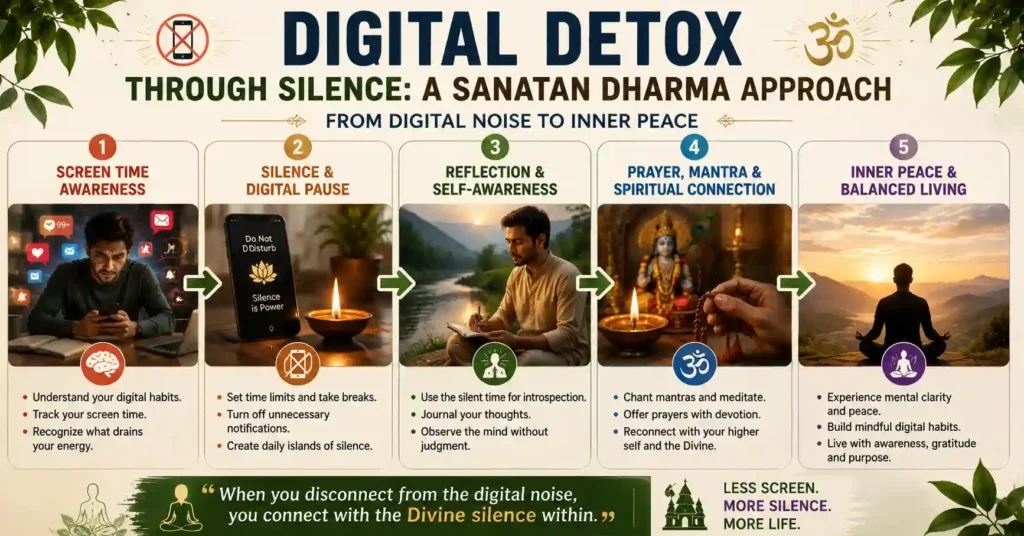
A meaningful Digital Detox is not simply about using technology less. It is about restoring balance between the outer world of information and the inner world of peace. Sometimes the mind does not need more content, more entertainment, or more distractions. It simply needs silence.
In this article, we will explore how constant digital distractions affect mental and spiritual well-being, why silence holds a special place in Sanatan Dharma, and how a simple Digital Detox can help cultivate a quieter mind, deeper devotion, and lasting inner peace.
Digital Detox At a Glance
| Topic | Details |
|---|---|
| Article Title | Digital Detox: How to Find Inner Peace in a Digital World |
| Main Theme | Reducing digital distractions and rediscovering inner peace through silence, mindfulness, and spiritual awareness |
| Key Challenge | Constant notifications, endless scrolling, information overload, and digital distractions can create mental fatigue and emotional restlessness |
| Sanatan Perspective | Silence is considered a sacred tool for self-awareness, prayer, meditation, and inner balance |
| Important Concepts | Silence, Maun, Antar Maun, Bhakti, Dhyana, Brahma Muhurta, Mindful Living |
| Benefits | Better focus, reduced mental clutter, emotional balance, deeper self-awareness, and greater inner peace |
| Simple Daily Practices | Screen-free mornings, silent prayer, mindful walks, digital breaks, screen-free meals, and quiet reflection |
| Role of Nature | Forests, rivers, mountains, and natural surroundings help calm the mind and reduce overstimulation |
| Role of Temples | Sacred spaces encourage stillness, devotion, and temporary freedom from daily distractions |
| Family Application | Shared screen-free time, evening prayers, and simple family rituals can create a calmer home environment |
| Spiritual Message | Inner peace is not found through constant stimulation but through balance, awareness, and moments of silence |
| Who Will Benefit | Students, professionals, parents, devotees, spiritual seekers, and anyone feeling mentally overwhelmed by modern digital life |
| Key Takeaway | A digital detox is not about rejecting technology. It is about creating space for silence, reflection, and a more peaceful relationship with life. |
Table of Contents
ToggleHow Modern Life Became Trapped in Constant Digital Distractions
Today, many people rarely spend even a few minutes without stimulation. If there is no phone in hand, there is music playing. If there is no conversation, there are reels, podcasts, videos, or endless thoughts competing for attention.
Over time, the mind becomes accustomed to constant activity. Quiet moments that once felt natural now feel uncomfortable, leading many people to reach for a screen the moment boredom appears.
This pattern has gradually become normal. Many people check notifications immediately after waking up, before spending even a few moments in silence or reflection. Meals are often accompanied by scrolling, and evenings end with screens instead of rest.
The result is a steady stream of information with very little time to process emotions, experiences, or thoughts. The mind remains busy, but rarely feels refreshed.
One of the hidden reasons people seek a Digital Detox today is that constant stimulation creates mental clutter. Endless updates, short-form videos, and digital distractions can lead to anxiety, comparison, overthinking, irritability, and emotional fatigue.
Even entertainment can become exhausting when the brain never gets a chance to slow down. Many people spend hours online and still finish the day feeling mentally drained rather than relaxed.
Research and everyday experience both suggest that continuous exposure to notifications and information keeps the nervous system in a state of alertness. This makes it harder to experience deep rest, focus, and emotional balance.
A meaningful Digital Detox is not about rejecting technology. It is about recognizing when technology begins to control attention instead of serving a useful purpose.
Modern life has created unprecedented connection with the outside world, yet many people are discovering that true peace also requires moments of silence, stillness, and inner calm.

Why the Mind Was Never Meant for Constant Stimulation
The human mind was not designed to absorb endless stimulation every minute of the day. Constant information gradually drains emotional energy. Thoughts become louder, small worries feel bigger, attention weakens, and inner clarity begins to fade.
This is one reason many people struggle to focus during prayer, meditation, work, or even simple conversations. The mind becomes impatient because it rarely gets an opportunity to slow down.
Ancient spiritual traditions in India understood a simple truth. Just as the body needs rest to recover, the mind also needs periods of silence and reflection.
This is why silence and spirituality have always been closely connected in Sanatan Dharma. Rishis did not seek silence to escape life. They embraced it because it helped the mind regain balance, awareness, and inner calm.
Today, many people search for peace through entertainment, travel, or constant activity. Yet lasting peace often begins when the noise reduces and the mind is given space to rest.

Why Silence Often Feels Uncomfortable at First
Many people say they want peace, yet the moment silence appears, they instinctively reach for their phones or look for something to occupy their attention.
Silence can feel uncomfortable because it removes distractions. When external noise fades, hidden emotions often begin to surface. Stress, loneliness, confusion, insecurity, and emotional exhaustion become harder to ignore.
Constant digital stimulation can sometimes act as an escape from these feelings. It keeps the mind occupied and prevents deeper self-reflection.
The issue is not technology itself. The real challenge is that the mind rarely receives complete rest in today’s fast-paced world.
This is why some people feel restless when sitting quietly for even a few minutes. The discomfort does not mean silence is harmful. Often, it simply means the mind has been running continuously for too long.
A Digital Detox can help create space for this inner reset. With time, silence becomes less uncomfortable and more restorative, allowing emotional balance and inner peace to return naturally.
The Spiritual Importance of Silence in Sanatan Dharma
In Sanatan Dharma, silence was considered sacred because it created inner space for awareness, prayer, wisdom, and emotional clarity.
The practice of maun was never meant to be punishment or isolation. It was understood as conscious quietness. Many sages observed maun vrat because they knew that excessive speaking and constant mental activity could drain inner energy.
There is also the deeper concept of antar maun, or inner silence. A person may speak very little externally yet still carry mental chaos within. True spiritual silence is not merely the absence of words but the gradual calming of inner noise.
This is why forests, mountains, caves, riversides, and temples became important spiritual spaces in India. Such environments naturally encouraged stillness, reflection, and deeper awareness.
Even today, the atmosphere of a temple often feels different. The sound of bells, sacred chants, incense, and moments of quiet devotion can help settle a restless mind.
In many ways, Lord Shiva represents the stillness of pure consciousness, while Lord Krishna teaches how to remain balanced amidst the activity and challenges of life.
The wisdom behind a meaningful Digital Detox is not entirely new. Sanatan Dharma has long emphasized practices such as maun, dhyana (meditation), jap (mantra repetition), and contemplative living to reduce inner noise and cultivate lasting peace.
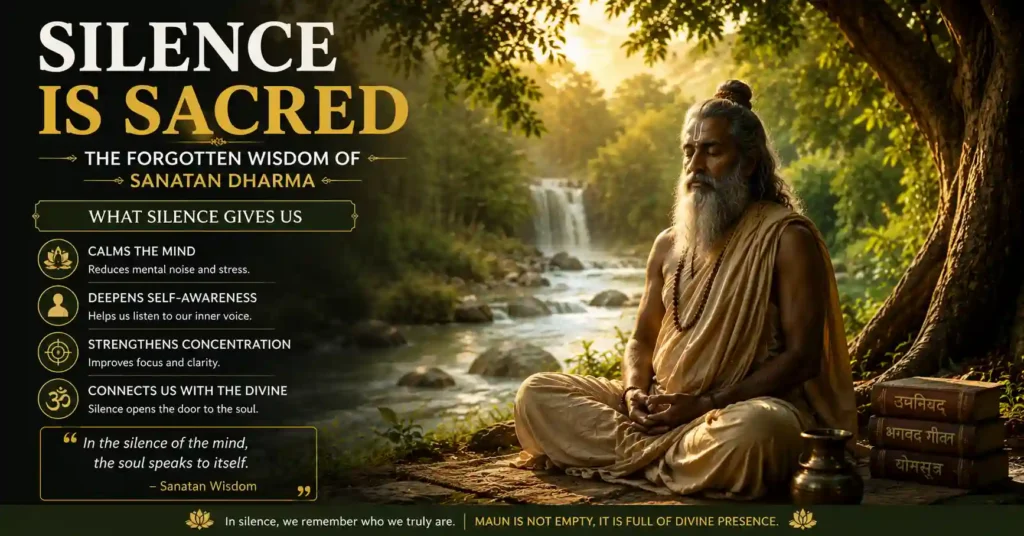
Did You Know?
Ancient sages in India often practiced Maun (conscious silence) not to escape the world, but to sharpen awareness and conserve mental energy.
Long before smartphones and social media existed, Sanatan Dharma recognized that periods of silence help calm the mind, deepen spiritual focus, and restore inner balance.
Silence Is Not Emptiness, It Is Space for Inner Peace
Many people misunderstand silence. They assume it means emptiness, boredom, or emotional distance. In reality, sacred silence offers a very different experience.
Silence creates space where the mind can rest and the soul can breathe. When external noise reduces, thoughts begin to settle, emotions become clearer, and the heart grows more receptive.
Sometimes healing does not come through more information, advice, or constant activity. It begins when the mind finally gets an opportunity to slow down and recover.
This is one reason peaceful places often feel calming without any obvious explanation. They allow us to step away from mental clutter and reconnect with ourselves.
Silence also encourages surrender. In quiet moments, many people feel closer to God, closer to nature, and more aware of their own inner state.
A true Digital Detox is not about rejecting technology. It is about creating enough space for inner stillness, reflection, and lasting peace to emerge naturally.
Silence Is Not Emotional Suppression
It is important to understand that spiritual silence does not mean suppressing emotions or becoming emotionally distant.
Real silence is aware, present, and alive. Sanatan wisdom never teaches people to ignore pain or disconnect from life. Instead, silence helps emotions settle naturally without constant reaction.
A person can cry in silence, heal in silence, pray in silence, and understand themselves more honestly in silence. The goal is not to hide emotions but to observe them with greater awareness.
Suppression creates heaviness, while sacred silence creates clarity. This distinction is important because many people today mistake emotional numbness for inner peace.
Why Temples Often Feel Peaceful and Calming
Many people enter temples and instantly feel calmer without fully understanding why.
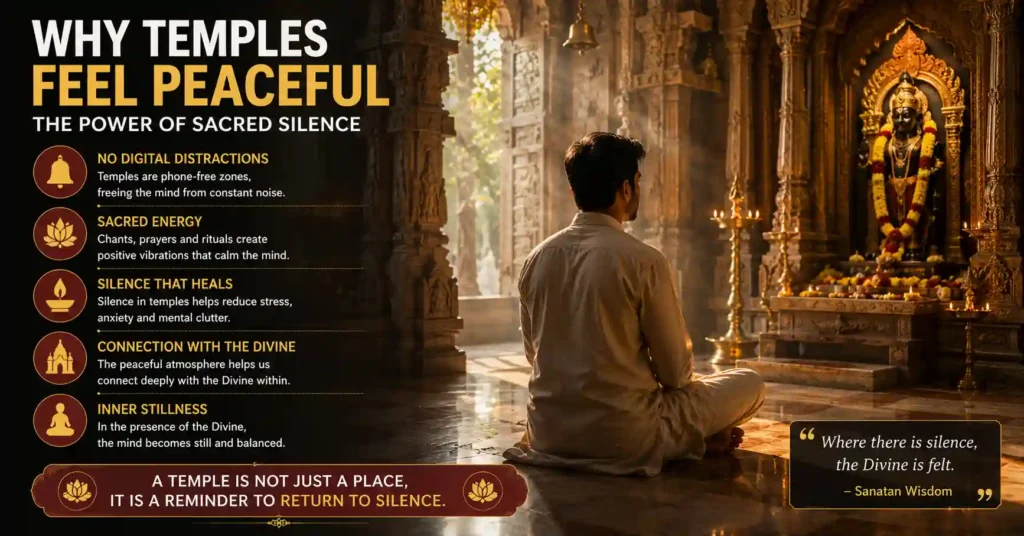
One reason is devotion, but another is the atmosphere itself. Temples naturally reduce mental overload. People speak softly, move more mindfully, and step away from many of the distractions of daily life.
The sound of bells, sacred mantras, incense, and temple rituals can gently interrupt racing thoughts and create a sense of stillness.
Even sitting quietly before a deity without asking for anything can feel deeply healing. For a few moments, the mind stops chasing information and simply becomes present.
This is why many devotees unknowingly experience the benefits of a Digital Detox during temple visits. Sacred spaces offer an opportunity to disconnect from constant stimulation and reconnect with inner peace.
Why Nature Still Feels Healing and Peaceful
Many people feel a sense of peace while sitting near rivers, mountains, forests, rainfall, sunrise, or open skies. One reason is that nature still moves at a slower rhythm than modern digital life.
Nature does not constantly demand attention. There are no notifications, alerts, or endless streams of information competing for the mind’s focus.
The sound of flowing water, birds, wind, and early morning quietness can naturally calm the nervous system. As external stimulation reduces, the mind often begins to slow down as well.
This is one reason ancient sages chose to live near forests, rivers, and mountains. Such environments naturally supported silence, reflection, and spiritual practice.
In Sanatan Dharma, prakriti (nature) was never separate from spirituality. Nature itself was regarded as sacred because it helped people reconnect with balance, awareness, and inner harmony.
In many ways, spending time in nature can become a simple form of Digital Detox, offering a gentle reminder of the peace that emerges when the mind is no longer surrounded by constant distractions.

The Peace of Early Morning Silence
There is something deeply peaceful about the silence before sunrise. The world feels slower, the air feels calmer, and the mind naturally feels lighter.
In Sanatan Dharma, this sacred period is associated with Brahma Muhurta, the time before sunrise that is considered especially favorable for prayer, meditation, self-reflection, and spiritual practice.
Many sages believed that the quietness of early morning helps the mind become calmer and more receptive because daily distractions have not yet begun.
Before notifications, conversations, and responsibilities start demanding attention, there is a brief window when silence still exists naturally.
For many people, beginning the day with a few moments of stillness can be a simple yet powerful form of Digital Detox. Even a short period of quiet reflection at sunrise can bring emotional balance, mental clarity, and a greater sense of inner peace.
How Digital Distractions Affect Prayer and Spiritual Practice
One hidden effect of modern digital life is that it weakens attention and patience. Many people notice that during mantra chanting, meditation, or prayer, the mind keeps jumping from one thought to another.
The habit of constant scrolling trains the brain to seek continuous stimulation. As a result, sitting quietly for even a few minutes can feel difficult.
This affects spiritual practice more deeply than many realize. Prayer becomes rushed, aarti becomes mechanical, and mantras are repeated without full attention or emotional presence.
This does not mean people have become less spiritual. More often, it means the mind has become overstimulated by constant information, notifications, and digital distractions.
A meaningful Digital Detox is not about abandoning technology. It is about understanding how digital overload can affect concentration, emotional balance, inner peace, and spiritual connection.
Sometimes devotion grows stronger not by adding more rituals, but by creating a few moments of silence before and during them.
How Digital Habits Are Affecting Family Life
One painful reality of modern life is that even homes have become emotionally noisy. Families may sit together physically, yet everyone remains absorbed in separate screens.
Television runs continuously, phones stay close at hand, and meals are often interrupted by notifications. Children grow up surrounded by constant stimulation and fewer moments of natural quietness.
Over time, this can reduce meaningful conversations, shared experiences, and the peaceful atmosphere that helps families feel connected.
Children especially need periods of calm because young minds absorb stimulation deeply. When there is little silence or screen-free time, emotional restlessness can gradually increase.
Even small family rituals can make a difference. Lighting a diya together in the evening, sitting quietly during prayer, sharing a screen-free meal, or listening to soft bhajans can slowly bring warmth and balance back into family life.
A simple Digital Detox practiced as a family is often more effective than individual efforts alone. Creating small moments of silence together can strengthen relationships and encourage a calmer home environment.

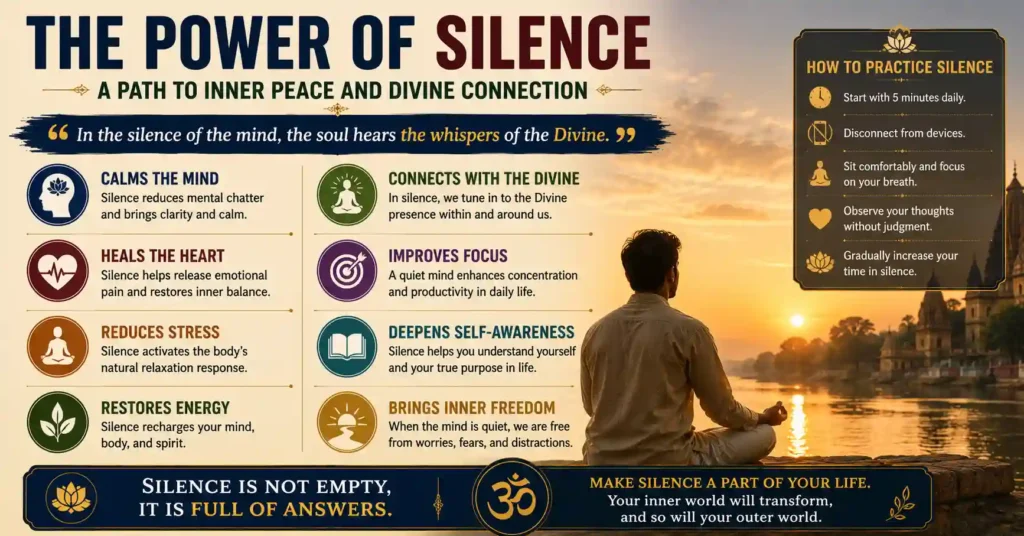
Simple Ways to Bring More Silence into Daily Life
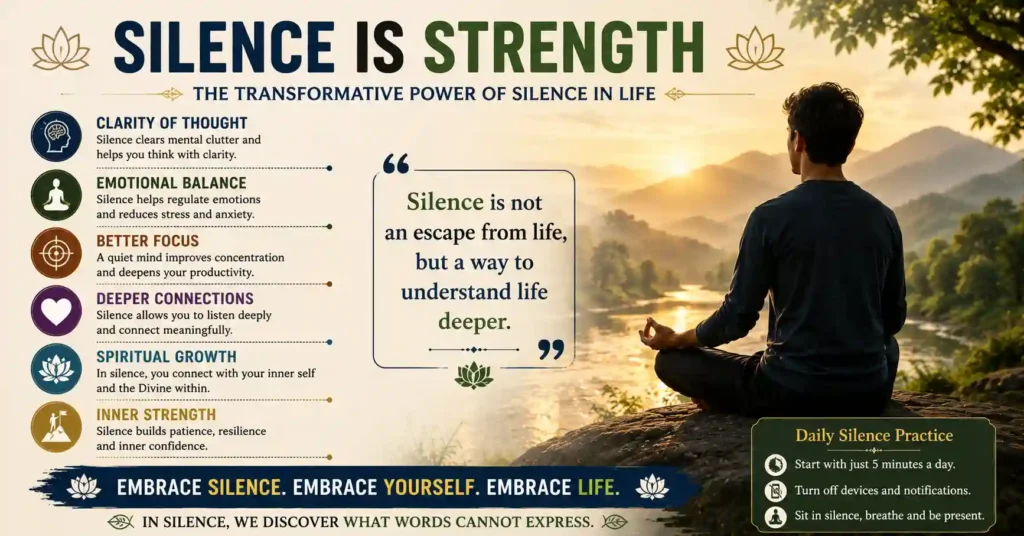
Reconnecting with silence does not require leaving family life or escaping responsibilities. Small changes can gradually bring more mental peace and balance into everyday living.
Sitting quietly for a few minutes after waking up, before checking the phone, can change the emotional tone of the entire morning. This simple habit allows the mind to begin the day with awareness instead of immediate stimulation.
Many people notice that after hours of scrolling, the mind feels more exhausted rather than relaxed. Taking regular breaks from screens is often a practical first step toward a meaningful Digital Detox.
Walking without headphones can also be surprisingly calming. It becomes easier to notice nature, breathing, and the present moment.
Lighting an evening diya and sitting silently for a few minutes without asking God for anything can create a deeper sense of peace and devotion.
Keeping phones away during prayer helps improve focus. Chanting slowly instead of rushing through mantras allows the mind to settle naturally and become more present.
Even sharing one screen-free meal each day can create emotional grounding and strengthen family connections.
The journey toward inner peace often begins with these small habits. Over time, they help reduce mental clutter and create more space for silence, reflection, and spiritual growth.
Silence and Loneliness Are Not the Same
Many people confuse silence with loneliness, but the two are very different experiences.
Loneliness often feels emotionally empty and disconnected. Sacred silence, on the other hand, feels restful, grounding, and nourishing.
In loneliness, a person may feel isolated or abandoned. In silence, a person gradually reconnects with themselves, their thoughts, and their inner awareness.
This is why sitting near a temple, listening to birds at sunrise, spending time in nature, or silently chanting a mantra can feel deeply comforting rather than lonely.
A Digital Detox often becomes easier when people stop fearing quiet moments. Instead of seeing silence as emptiness, they begin to experience it as a source of peace, clarity, and emotional balance.
Why More People Are Seeking Peace in a Noisy World
Modern life has created a strange situation. People consume more information than ever before, yet many feel mentally exhausted and emotionally drained. The mind rarely gets an opportunity to rest deeply.
This is one reason mountains, forests, riversides, temples, and quiet places feel so healing today. These environments reduce overstimulation and allow the nervous system to slow down naturally.
Sometimes people say they want to “escape life,” but what they truly seek is relief from constant mental noise, pressure, and distraction.
The human mind naturally seeks balance. When stimulation becomes excessive, emotional fatigue, restlessness, and inner unease often follow.
This is why a Digital Detox and the search for inner peace have become increasingly relevant in modern spiritual life. Many people are rediscovering the value of silence, stillness, and mindful living as a way to restore balance.
When Silence Becomes a Form of Devotion
In bhakti, silence itself can become a form of prayer.
Many people approach God through words, worries, requests, and desires. Yet devotion can sometimes deepen when a person simply sits quietly before the Divine without asking for anything.
A devotee sitting silently before Mahadev, Krishna, Maa Durga, or Hanuman Ji may experience a sense of inner calm that is difficult to express through words.
This silence does not feel empty. Instead, it feels full of presence, trust, and connection.
Sometimes the heart becomes peaceful not because every problem disappears, but because the mind stops struggling for a while.
In Sanatan Dharma, prayer was never only about speaking. Sometimes listening, reflecting, and sitting quietly in the presence of the Divine can also become a powerful expression of devotion.
Finding Inner Peace in a Digital World
Modern life has made noise feel normal. The mind remains busy from morning to night, and over time many people forget what inner quietness feels like.
Yet deep within, there is still a natural longing for stillness, emotional rest, and peace.
The purpose of a Digital Detox is not to escape the world or reject technology. It is to create a healthier balance between constant stimulation and the silence that allows the mind to recover.
Sometimes healing does not begin with more information, more advice, or more distractions. Sometimes it begins by slowing down, becoming present, and allowing the mind to rest.
The good news is that inner peace has never truly disappeared. It simply becomes harder to notice when life is filled with continuous noise and activity.
Whether through prayer, meditation, nature, temple visits, mindful living, or a few moments of daily silence, every small step toward stillness helps reconnect us with ourselves.
Perhaps peace was never lost.
Perhaps it has always been waiting quietly within us.
We simply need to make space to hear it again.
Key Takeaways
- A Digital Detox is not about rejecting technology but about creating a healthier balance between digital life and inner peace.
- Constant digital distractions can contribute to mental clutter, emotional fatigue, reduced focus, and spiritual restlessness.
- Silence has long been valued in Sanatan Dharma as a path to self-awareness, emotional clarity, and spiritual growth.
- Practices such as Maun, Dhyana, and Jap help reduce inner noise and cultivate a calmer mind.
- Temples, nature, and early morning quietness naturally support stillness and mental balance.
- Digital overload can affect prayer, concentration, family relationships, and overall well-being.
- Small habits such as screen-free mornings, mindful walks, silent prayer, and screen-free meals can make a meaningful difference.
- Silence is not loneliness or emotional suppression. It is a space for reflection, healing, and reconnecting with oneself.
- Inner peace often begins when the mind is given time to rest from constant stimulation.
- Lasting calm is not found through more information, but through awareness, balance, and moments of intentional silence.
Suggested Reading
If the reflections on Digital Noise and Silence touched something within you, these articles may help you explore inner peace, spiritual balance, devotion, and deeper dimensions of Sanatan living.
Triyuginarayan Temple: Where the Sacred Fire of Shiva and Parvati Still Burns
https://thesanatantales.com/triyuginarayan-temple/
Maa Kamakhya Temple: The Mystery of Shakti, Yoni Peeth and Umananda Bhairav
https://thesanatantales.com/kamakhya-temple/
Maa Kali: Origins, Forms, Mysteries and the Truth Behind Her Fierce Nature
https://thesanatantales.com/maa-kali/
Kaal Bhairav: Story, Worship, Spiritual Importance, Mantras and Tantric Mysteries
https://thesanatantales.com/kaal-bhairav/
Sanatan Affirmations: The Ancient Inner Power of Sacred Intentions
https://thesanatantales.com/sanatan-affirmations/
Ambubachi Mela 2026: Dates, Spiritual Significance, Darshan and Complete Travel Guide
https://thesanatantales.com/ambubachi-mela-2026/
Digital Detox (Wikipedia)
https://en.wikipedia.org/wiki/Digital_detox
FAQs
What is a Digital Detox?
A Digital Detox is a conscious effort to reduce unnecessary screen time and limit constant exposure to digital distractions such as social media, notifications, videos, and endless scrolling.
The goal is not to stop using technology completely. Instead, it is about creating a healthier balance between technology and daily life.
A meaningful Digital Detox helps reduce mental clutter, improve focus, support emotional well-being, and create more space for silence, reflection, and inner peace.
Why does silence feel uncomfortable for many people?
Silence often feels uncomfortable because it removes distractions that keep the mind occupied.
When external noise reduces, hidden emotions, worries, stress, and unresolved thoughts may become more noticeable. Many people are not accustomed to spending time alone with their thoughts because modern life encourages constant stimulation.
With regular practice, silence usually becomes less uncomfortable and more peaceful. Over time, it can help improve emotional clarity, self-awareness, and inner calm.
How does digital overload affect mental and emotional well-being?
Digital overload can make the mind feel constantly busy and overstimulated.
Frequent notifications, endless information, and continuous scrolling can reduce attention span, increase mental fatigue, and make it harder to relax. Many people also experience increased stress, restlessness, and difficulty concentrating.
Creating screen-free periods during the day can help the mind recover and restore a sense of balance.
What does Sanatan Dharma teach about silence?
In Sanatan Dharma, silence is often viewed as a valuable spiritual practice that supports self-awareness, prayer, meditation, and inner growth.
Practices such as maun, maun vrat, jap, and dhyana encourage individuals to reduce unnecessary mental and external noise. The purpose is not isolation but developing greater awareness and inner balance.
Silence is considered beneficial because it allows the mind to become calmer and more receptive to spiritual reflection.
Can householders practice silence in daily life?
Yes. Silence is not limited to sages living in forests or monasteries. Householders can also include small moments of quietness in their daily routine.
Simple practices such as spending a few minutes in silence after waking up, keeping phones away during prayer, eating one screen-free meal, or taking a quiet walk can make a meaningful difference.
Even a few minutes of silence each day can help create a calmer and more balanced lifestyle.
How can I start a simple Digital Detox without giving up technology?
A practical Digital Detox can begin with small and sustainable habits.
Start by avoiding the phone for the first few minutes after waking up. Reduce unnecessary notifications, take regular breaks from social media, and create screen-free periods during meals or prayer.
The objective is not to reject technology but to use it mindfully. Small changes practiced consistently often have a greater impact than extreme restrictions.
Glossary of Important Terms
| Term | Meaning |
|---|---|
| Digital Detox | A conscious effort to reduce unnecessary screen time and digital distractions to improve mental clarity, emotional balance, and overall well-being. |
| Digital Overload | A state in which the mind becomes overwhelmed by excessive information, notifications, media consumption, and constant online engagement. |
| Digital Distractions | Interruptions caused by smartphones, social media, messages, videos, emails, and other forms of technology that reduce focus and attention. |
| Inner Peace | A state of mental calmness, emotional balance, and contentment that remains stable despite external circumstances. |
| Silence | More than the absence of sound, silence is a state that allows the mind to slow down, emotions to settle, and awareness to deepen. |
| Maun | The spiritual practice of maintaining conscious silence to reduce unnecessary speech and cultivate greater awareness. |
| Maun Vrat | A voluntary vow of silence observed for spiritual discipline, self-reflection, and inner growth. |
| Antar Maun | Inner silence. A state where mental chatter gradually reduces, creating deeper calm and self-awareness. |
| Dhyana | Meditation. A spiritual practice that helps develop concentration, mindfulness, and inner stillness. |
| Jap (Japa) | The repeated chanting or mental repetition of a sacred mantra as a form of devotion and spiritual focus. |
| Brahma Muhurta | The sacred period approximately 1.5 hours before sunrise, traditionally considered the best time for meditation, prayer, and spiritual practices. |
| Bhakti | The path of devotion in Sanatan Dharma, expressed through prayer, worship, chanting, and loving remembrance of the Divine. |
| Mindful Living | Living with awareness and intention rather than operating on habit, distraction, or constant stimulation. |
| Mental Clutter | The accumulation of excessive thoughts, worries, information, and distractions that reduce mental clarity and focus. |
| Prakriti | Nature or the natural world. In Sanatan Dharma, prakriti is regarded as sacred and closely connected with spiritual well-being. |
| Spiritual Reflection | The practice of examining one’s thoughts, actions, values, and relationship with the Divine to gain deeper understanding and wisdom. |
About the Author
Yateendra Chaturvedi is a spiritual writer, researcher, devotee, and the founder of The Sanatan Tales. With over 35 years of professional experience and a lifelong interest in Sanatan Dharma, he writes about Hindu deities, temples, scriptures, festivals, Mahavidyas, sacred stories, rituals, and living traditions that continue to guide and inspire devotees across India.
Drawing from traditional scriptures, regional beliefs, temple traditions, devotional literature, and historical sources, he aims to present authentic, well-researched, and easy-to-understand content for modern readers. His work focuses on preserving spiritual wisdom, explaining sacred traditions, and helping seekers develop a deeper understanding of India’s rich spiritual heritage.
Through The Sanatan Tales, Yateendra strives to make the timeless teachings of Sanatan Dharma simple, meaningful, and relevant for today’s generation while maintaining respect for traditional sources, regional practices, and diverse spiritual perspectives.
Learn More About Yateendra Chaturvedi →
https://thesanatantales.com/about-the-author/
References & Sources
This article is based on principles and practices associated with Sanatan Dharma, along with traditional spiritual teachings that emphasize inner peace, self-awareness, mindful living, devotion, meditation, and the value of silence. It also draws upon insights preserved through Hindu philosophical traditions, yogic practices, devotional culture, and the lived experiences of spiritual seekers across generations.
The discussion on digital distractions, mental overstimulation, and the importance of creating space for silence is presented through a spiritual and practical lens, connecting timeless wisdom with the challenges of modern life.
Note: Spiritual practices, interpretations, and personal experiences may vary across different traditions, sampradayas, regions, and individual paths within Sanatan Dharma. The purpose of this article is not to promote any single viewpoint as the absolute truth, but to share commonly accepted spiritual perspectives in a simple, practical, and reader-friendly manner. Sanatan Dharma embraces diverse paths of devotion, knowledge, meditation, self-discipline, and inner transformation, allowing each individual to progress according to their own nature and understanding.
Explore More Fascinating Topics from Sanatan Dharma