
Gupta Navratri is a sacred period meant for quiet inner growth rather than outward celebration. There are phases in spiritual life when transformation happens silently, without noise or display, and Gupta Navratri beautifully reflects this inward journey.
Unlike the widely celebrated Chaitra and Sharad Navratris, which are marked by public festivities, music, and community worship, Gupta Navratri is observed with restraint, silence, personal devotion, and spiritual discipline. It is one of the most revered observances within Shakta traditions and is celebrated twice each year.
In Sanatan Dharma, not every spiritual journey is meant to be visible. Some paths are walked quietly, honestly, and with deep inner discipline. Gupta Navratri offers this rare sacred space, where the outer form remains simple but the inner transformation can be profound.
Although it is traditionally associated with deeper forms of Shakti worship, Gupta Navratri is not limited to advanced spiritual practitioners. Its simple rituals and devotional practices make it equally meaningful for household devotees seeking inner clarity, self-discipline, and a deeper connection with the Divine Mother.
In this guide, you’ll learn its meaning, the 2026 dates, rituals, spiritual significance, connection with the Das Mahavidyas, and how this sacred observance can be practised with sincerity and understanding.
Table of Contents
ToggleWhat is Gupta Navratri?
Gupta Navratri is a sacred nine-day festival in Sanatan Dharma dedicated to the worship of the Divine Mother in her various forms. The word Gupta means “hidden” or “secret,” reflecting the quiet, personal, and inward nature of this observance.
Unlike the widely celebrated Chaitra and Sharad Navratris, this sacred observance is generally marked by quiet devotion rather than public festivities, making it a time for sincere prayer, self-discipline, and spiritual reflection.
Observed twice each year, it holds special importance within Shakta traditions, where devotees worship different manifestations of Maa Durga and Shakti.
While some spiritual traditions associate this period with the worship of the Das Mahavidyas, household devotees often observe it through simple prayers, mantra chanting, meditation, and a sattvik lifestyle.
Although this sacred festival is known for its quiet and inward focus, its message is universal. It reminds us that spiritual growth does not always require public expression.
Sometimes, the deepest transformation takes place in silence, where faith, devotion, and self-awareness quietly blossom within the heart.
Why Are There Two Gupta Navratris in a Year?
Many people are surprised to learn that this sacred observance is celebrated twice each year. According to the traditional Hindu calendar, the two observances take place during the months of Magha and Ashadha. Both are dedicated to the worship of the Divine Mother and share the same spirit of quiet devotion, spiritual discipline, and inner transformation.
Unlike Chaitra and Sharad Navratri, which are celebrated publicly across India, these two observances are generally marked by a more private and contemplative approach. Devotees spend these nine sacred days in prayer, mantra japa, meditation, self-discipline, and deepening their connection with Shakti.
Neither Magha Gupta Navratri nor Ashadha Gupta Navratri is considered more important than the other. Both hold equal spiritual significance, and devotees may observe either one or both according to their family traditions, sampradaya, or personal spiritual practice.
Why Is It Called "Gupta" Navratri?
The word Gupta comes from Sanskrit and means “hidden,” “secret,” or “private.” This sacred observance receives its name because it is traditionally marked by quiet devotion rather than public celebration.
Unlike Chaitra and Sharad Navratri, which are celebrated with large gatherings, processions, Garba, and temple festivities, it encourages personal worship, inner discipline, and silent spiritual practice.
The term “secret” does not mean that this observance is hidden from society or reserved only for a select few. Instead, it reflects its inward nature, where the focus shifts from external celebration to inner transformation.
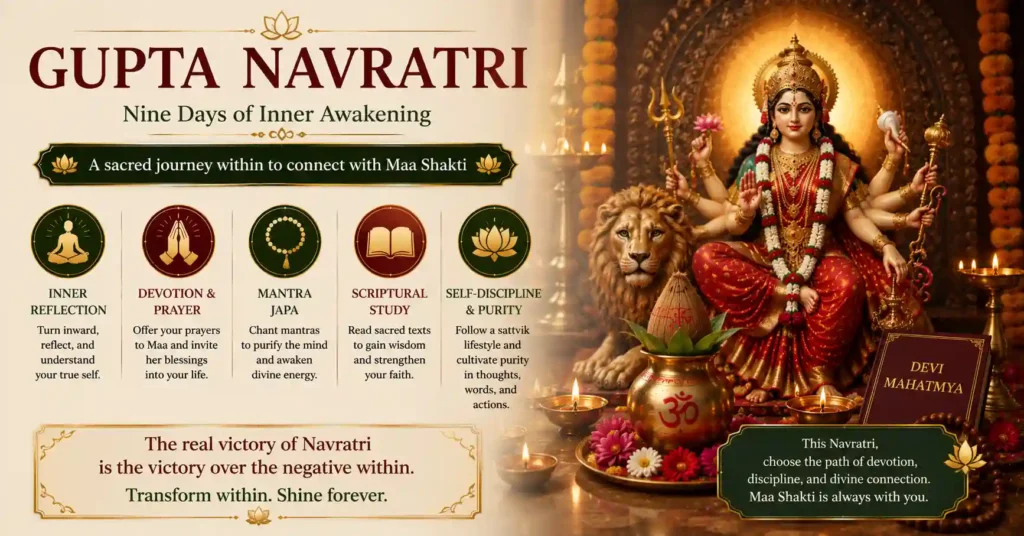
During these nine sacred days, devotees are encouraged to strengthen their faith through prayer, meditation, mantra japa, self-discipline, and sincere devotion to the Divine Mother.
Within several Shakta traditions, this sacred period is regarded as especially favourable for deeper spiritual practices. At the same time, household devotees observe it through simple daily worship, a sattvik lifestyle, and quiet reflection.
In this way, the name Gupta Navratri beautifully reminds us that the deepest spiritual growth often takes place silently, away from recognition and outward display.
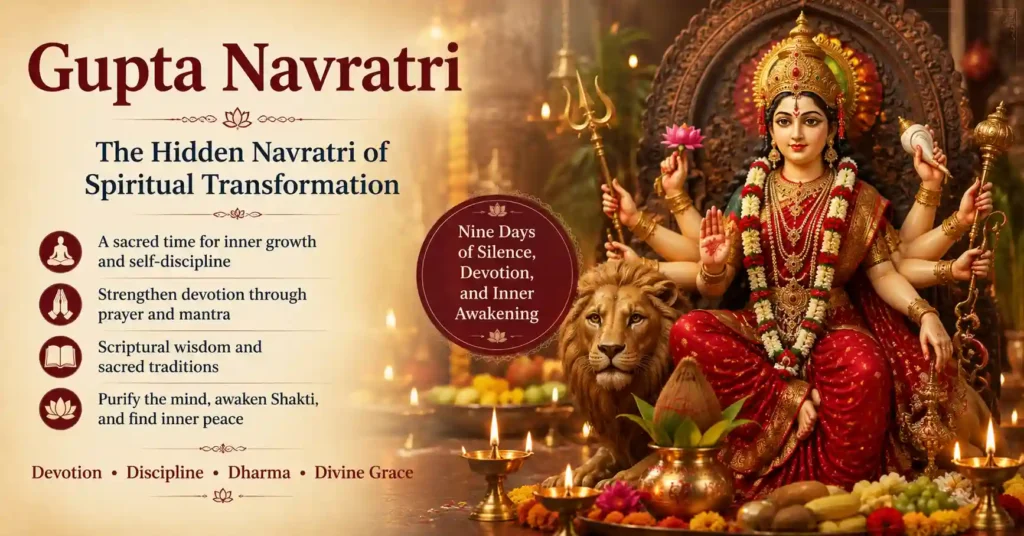
Gupta Navratri 2026 Dates
In 2026, this sacred observance will be celebrated twice according to the traditional Hindu calendar. The first observance is Magha Gupta Navratri, while the second is Ashadha Gupta Navratri. Both are considered highly auspicious for worshipping the Divine Mother, practising self-discipline, and deepening one’s spiritual journey.
| Gupta Navratri | Dates (2026) | Hindu Month |
|---|---|---|
| Magha Gupta Navratri | 19 January – 27 January 2026 | Magha |
| Ashadha Gupta Navratri | 16 July – 24 July 2026* | Ashadha |
*Please verify the Ashadha Gupta Navratri dates with your preferred Panchang before publishing.
Although both observances share the same spiritual purpose, devotees may choose to observe either one or both depending on their family traditions, sampradaya, and personal spiritual practices.
During these nine sacred days, many devotees focus on prayer, mantra japa, meditation, simple sattvik living, and sincere devotion to the Divine Mother while continuing their daily responsibilities.
Note: These dates are based on the Hindu lunar calendar and therefore change every year. Devotees should refer to a reliable Panchang for the exact dates, tithis, and muhurat of future observances.
Why Is Gupta Navratri Considered Special?
This sacred observance is considered special because it encourages inner transformation rather than outward celebration. While other Navratris are often marked by public festivities, music, and community worship, it invites devotees to turn inward through prayer, meditation, mantra japa, and sincere devotion. This quiet approach creates space for self-reflection, emotional balance, and spiritual clarity.
Within many Shakta traditions, this sacred period is regarded as particularly favourable for strengthening one’s relationship with the Divine Mother. Some devotees undertake special sadhana, while household devotees observe these nine days through simple worship, chanting, reading sacred texts, and following a sattvik lifestyle. The emphasis is always on sincerity rather than elaborate rituals.
Many devotees believe that spiritual practices performed during these nine sacred days become more meaningful because the mind is calmer and less influenced by worldly distractions. Instead of seeking recognition or external display, devotees focus on cultivating faith, humility, discipline, and inner awareness.
The blessings of this sacred observance are often subtle rather than immediate. Over time, they help strengthen patience, self-control, devotion, and a deeper connection with Shakti, reminding devotees that the most profound spiritual growth often takes place quietly within the heart.
Connection of Gupta Navratri with Shakti and Mahavidya
This sacred observance has a deep connection with Shakti worship, the reverence of the Divine Mother as the supreme source of creation, protection, and transformation.
Within several Shakta traditions, these nine sacred days are regarded as especially favourable for deepening one’s devotion to Maa Durga and seeking inner spiritual growth through prayer, mantra japa, meditation, and self-discipline.
This sacred period is also associated in certain traditions with the worship of the Das Mahavidyas, the ten wisdom forms of the Divine Mother. Each Mahavidya represents a unique aspect of divine consciousness and spiritual transformation, guiding devotees towards wisdom, courage, compassion, fearlessness, and liberation from ignorance.
Their worship is preserved through specific spiritual lineages and is not considered a compulsory practice for all devotees.
For most household devotees, the connection between this observance and the Mahavidyas is understood symbolically rather than through advanced rituals. It serves as a reminder to cultivate inner strength, truthfulness, patience, self-awareness, and unwavering faith in the Divine Mother. Simple acts of devotion, sincere prayer, chanting, and a pure heart are considered just as meaningful as elaborate forms of worship.
Ultimately, these nine sacred days encourage every devotee to look within, recognise hidden fears and attachments, and offer them to Maa Shakti with humility and devotion. Whether observed through simple daily worship or deeper spiritual practices, the purpose remains the same: inner transformation and a closer relationship with the Divine.
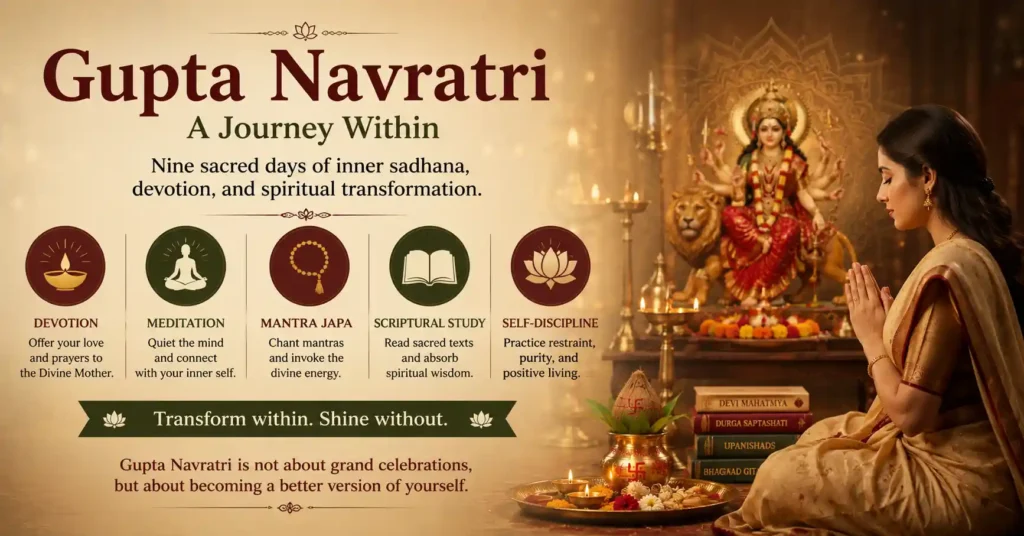
Gupta Navratri in Hindu Scriptures and Tradition
Although this sacred observance is not described as a single public festival in one specific Hindu scripture, its spiritual foundation is deeply rooted in the Shakta traditions of Sanatan Dharma.
Sacred texts such as the Devi Mahatmya (Durga Saptashati) and the Devi Bhagavata Purana glorify the Divine Mother as the supreme source of wisdom, protection, and spiritual transformation. These teachings inspire the devotion and reverence associated with Gupta Navratri.
Within several Shakta traditions, these nine sacred days are regarded as an especially auspicious time for worshipping the Divine Mother through prayer, mantra japa, meditation, and self-discipline.
Certain spiritual lineages also associate this period with the contemplation and worship of the Das Mahavidyas, although such practices are traditionally undertaken according to one’s guru, family tradition, or sampradaya.
For most devotees, the true essence of this observance lies not in following complex rituals but in cultivating sincere devotion, inner purity, and faith. Across generations, the guru-disciple tradition has preserved these practices, reminding devotees that the Divine Mother responds to a heart filled with humility, devotion, and steadfast spiritual discipline.
Common Rituals During Gupta Navratri
The rituals observed during Gupta Navratri may vary according to family traditions and spiritual lineages, but the purpose remains the same: to deepen devotion and cultivate inner purity. Unlike elaborate public celebrations, the emphasis is on sincere worship and disciplined living.
Many devotees observe Gupta Navratri through simple daily practices such as:
Offering prayers to Maa Durga or the Divine Mother every morning and evening.
Lighting a diya and offering flowers, fruits, or simple bhog.
Chanting Durga mantras or the names of the Divine Mother.
Reading sacred texts such as the Durga Saptashati, Devi Mahatmya, or other devotional scriptures according to one’s tradition.
Following a sattvik diet or observing a vrat according to personal ability.
Spending time in meditation, self-reflection, and silent prayer.
Practising charity, kindness, and self-discipline in daily life.
These rituals are not performed merely as religious customs. They are intended to purify the mind, strengthen devotion, and help devotees experience the quiet spiritual essence of Gupta Navratri.
Hindu festivals are spiritual markers connected to nature, time, and human life. They guide awareness, balance, and inner growth through celebration and reflection.
How Household Devotees Observe Gupta Navratri
One of the beautiful aspects of this sacred observance is that it does not burden devotees with rigid rules or elaborate rituals. Sincere devotion and a pure intention are considered far more important than outward display.
This makes it accessible to household devotees who wish to strengthen their spiritual practice while continuing their daily responsibilities.
Many families observe these nine sacred days by preparing simple sattvik meals, lighting a diya before the Divine Mother, chanting Durga mantras or the names of Maa Durga, spending a few quiet moments in prayer or meditation, and consciously avoiding negativity in thought, speech, and actions. Even small acts of devotion performed with faith are regarded as spiritually meaningful.
Fasting during this sacred period is optional and may be observed according to one’s health, family traditions, and personal capacity. More important than fasting itself is cultivating self-discipline, emotional balance, compassion, and mindfulness throughout these nine sacred days.
What Is Avoided During Gupta Navratri?
These nine sacred days encourage reduction rather than restriction. The purpose is not to create fear or burden devotees with rigid rules, but to minimise distractions that can disturb inner peace and spiritual discipline. They invite devotees to live with greater awareness, simplicity, and self-control.
Many devotees try to avoid unnecessary arguments, harsh speech, anger, ego-driven reactions, excessive indulgence, and negative thoughts. Some also choose to reduce excessive use of television, social media, or other distractions, using the time instead for prayer, meditation, reading sacred texts, or quiet self-reflection.
Those observing a Gupta Navratri vrat often follow a sattvik diet according to their family traditions and avoid foods or habits that may disturb physical and mental balance. However, the emphasis is always on sincerity rather than perfection.
Ultimately, this sacred observance teaches that the greatest discipline is not merely controlling external actions but cultivating a calm mind, compassionate speech, and a heart filled with devotion to the Divine Mother.
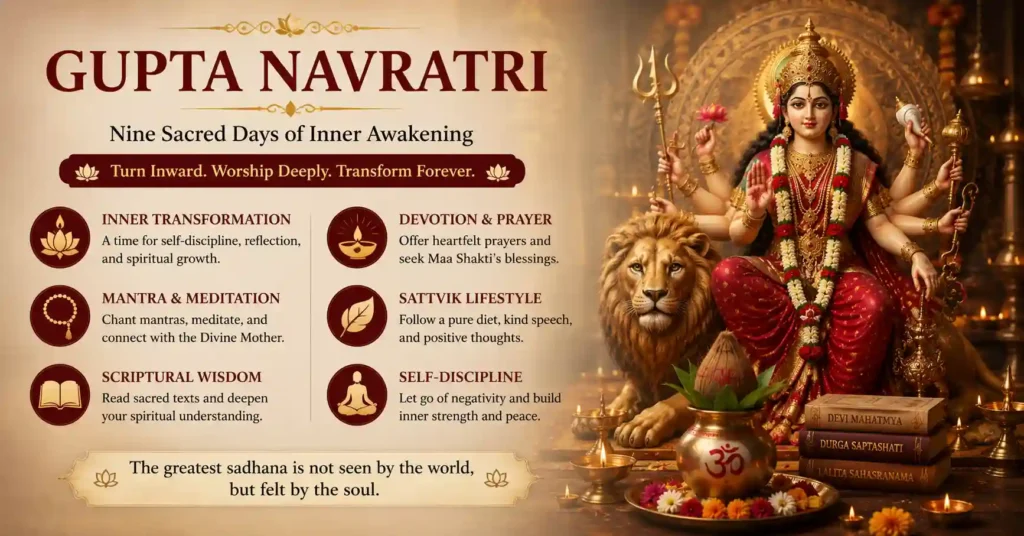
Is Gupta Navratri Only for Tantra?
A common misconception is that this sacred observance is meant only for Tantric practitioners or advanced spiritual seekers. While it is true that certain Shakta and Tantric traditions regard this period as especially favourable for deeper forms of sadhana, it is not limited to them.
Many household devotees observe these nine sacred days through simple acts of devotion such as praying to the Divine Mother, chanting mantras, reading sacred texts, following a sattvik lifestyle, and practising self-discipline. These sincere practices are fully in harmony with the spiritual essence of this observance.
In Sanatan Dharma, devotion is measured not by the complexity of rituals but by the sincerity of one’s heart. Whether observed through simple daily worship or more advanced spiritual practices under proper guidance, this sacred period offers every devotee an opportunity to deepen their connection with Shakti and cultivate inner transformation.
Difference Between Gupta Navratri and Sharad Navratri
Although both Gupta Navratri and Sharad Navratri are dedicated to the worship of the Divine Mother, they differ in the way they are traditionally observed. One emphasises quiet spiritual discipline, while the other is celebrated with public devotion and festive enthusiasm. Both are equally sacred and lead devotees towards the same goal of spiritual growth.
| Aspect | Gupta Navratri | Sharad Navratri |
|---|---|---|
| Time of observance | Magha and Ashadha | Ashwin |
| Nature of worship | Quiet, personal, and inward | Public, festive, and community-based |
| Primary focus | Meditation, mantra japa, self-discipline, and inner transformation | Worship, celebrations, Garba, Durga Puja, and community devotion |
| Participation | Mostly individual or family worship | Widely celebrated across temples and communities |
| Spiritual emphasis | Inner reflection and personal sadhana | Celebration of the Divine Mother’s victory and public devotion |
Neither observance is greater than the other. The former nurtures silent inner transformation, while the latter expresses devotion through joyful celebration. Together, they beautifully illustrate that Sanatan Dharma offers many paths to connect with the Divine Mother, each suited to different spiritual needs and traditions.
Spiritual meaning of observing Gupta Navratri
The spiritual meaning of this sacred observance lies in quiet inner transformation. Just as the roots of a tree grow unseen before it blossoms, spiritual strength develops silently before it is reflected in one’s thoughts, words, and actions. These nine sacred days remind devotees that lasting change begins within.
This sacred period encourages devotees to face hidden fears, overcome negative tendencies, strengthen self-discipline, deepen faith, and cultivate inner peace through sincere devotion to the Divine Mother. Rather than seeking outward recognition, it teaches that humility, patience, compassion, and self-awareness are among the greatest signs of spiritual progress.
In Sanatan Dharma, true worship is not measured by the grandeur of rituals but by the purity of one’s heart and the sincerity of one’s devotion. Whether observed through simple daily prayers or deeper spiritual practices, it inspires devotees to walk the path of dharma with faith, gratitude, and unwavering trust in Maa Shakti.
The blessings of this sacred festival are often subtle rather than immediate. Over time, they shape character, strengthen inner resilience, and nurture a lifelong relationship with the Divine, reminding us that the deepest spiritual journeys are often the quietest.
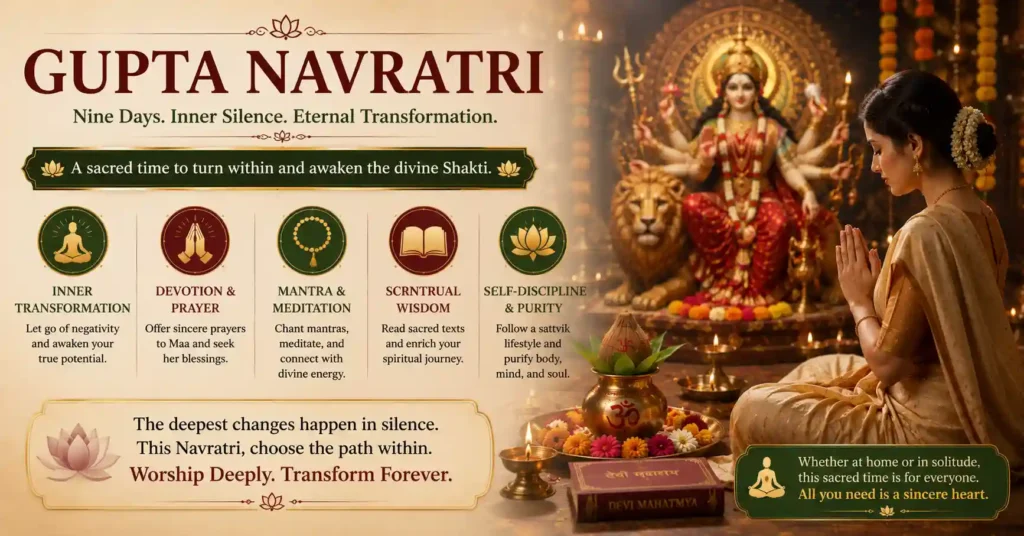
Conclusion
This sacred observance is a reminder that the deepest spiritual transformation often takes place in silence. Unlike festivals that are celebrated with public gatherings and grand celebrations, these nine holy days invite devotees to turn inward through prayer, self-discipline, devotion, and sincere worship of the Divine Mother.
Whether observed during Magha Gupta Navratri or Ashadha Gupta Navratri, this sacred period offers an opportunity to strengthen faith, cultivate inner peace, and deepen one’s relationship with Maa Shakti.
Through simple daily practices performed with humility and devotion, it teaches that lasting spiritual growth comes not from outward display but from purity of heart and steady practice.
If you would like to explore the deeper wisdom of Shakti worship, you may also enjoy our articles on Maa Durga, the Das Mahavidya, Maa Kali, Maa Tara, and other forms of the Divine Mother. Together, these articles reveal the rich spiritual traditions that make this observance one of the most meaningful expressions of devotion in Sanatan Dharma.
Suggested Reading
If you enjoyed learning about Gupta Navratri, you may also like these related articles that explore the Divine Mother, Shakti worship, Navratri traditions, and the deeper spiritual wisdom of Sanatan Dharma.
Chaitra Navratri 2026: Dates, Meaning, Rituals and Spiritual Significance
https://thesanatantales.com/chaitra-navratri-2026/
Das Mahavidya: The Ten Wisdom Forms of the Divine Mother
https://thesanatantales.com/das-mahavidya/
Maa Durga: Meaning, Symbolism, Forms and Spiritual Significance
https://thesanatantales.com/maa-durga/
Maa Kali: Meaning, Symbolism, Story and Spiritual Significance
https://thesanatantales.com/maa-kali/
Maa Tara: Meaning, Symbolism and Spiritual Significance
https://thesanatantales.com/maa-tara/
Navadurga: The Nine Sacred Forms of Goddess Durga
https://thesanatantales.com/navadurga/
Hindu Festivals Explained: Meaning, Types and Spiritual Importance
https://thesanatantales.com/hindu-festivals-explained/
Mahashivratri 2026: Meaning, Date, Rituals, Vrat Rules & Puja Vidhi
https://thesanatantales.com/mahashivratri-2026/
Why Are There So Many Gods in Hinduism? Understanding the Many Forms of One Divine Reality
https://thesanatantales.com/why-are-there-so-many-gods-in-hinduism/
What Is Sanatan Dharma? Meaning, History and Core Principles
https://thesanatantales.com/what-is-sanatan-dharma/
Navaratri (Wikipedia)
https://en.wikipedia.org/wiki/Navaratri
FAQs
What is Gupta Navratri?
Gupta Navratri is a sacred nine-day observance dedicated to the worship of the Divine Mother through quiet devotion, prayer, meditation, and self-discipline. Unlike the widely celebrated Chaitra and Sharad Navratris, Gupta Navratri is traditionally observed in a more personal and inward manner. It is especially valued within Shakta traditions, where devotees seek spiritual growth, inner peace, and a deeper connection with Maa Shakti.
When is Gupta Navratri celebrated in 2026?
In 2026, Gupta Navratri will be observed twice according to the Hindu lunar calendar. Magha Gupta Navratri falls from 19 January to 27 January 2026, while Ashadha Gupta Navratri will be observed from 16 July to 24 July 2026. Since the dates are based on the lunar calendar, they change every year. Devotees should refer to a reliable Panchang for the exact dates, tithis, and muhurat.
Why are there two Gupta Navratris every year?
Gupta Navratri is observed twice each year because the Hindu calendar includes two sacred periods dedicated to the inward worship of the Divine Mother. The first falls in the month of Magha, and the second in Ashadha. Both observances are considered equally auspicious and offer devotees an opportunity to strengthen their faith, practise self-discipline, and deepen their spiritual journey.
Why is it called Gupta Navratri?
The Sanskrit word “Gupta” means hidden, secret, or private. Gupta Navratri receives this name because it is traditionally observed through quiet devotion rather than public celebration. The emphasis is on inner transformation, prayer, meditation, and personal spiritual discipline instead of large community festivals.
Which goddesses are worshipped during Gupta Navratri?
During Gupta Navratri, devotees primarily worship Maa Durga and her various divine forms. In several Shakta traditions, the period is also associated with the worship of the Das Mahavidyas, the ten wisdom forms of the Divine Mother. Household devotees often offer simple prayers to Maa Durga or their chosen form of Devi according to family traditions and personal faith.
Can household devotees observe Gupta Navratri?
Yes. Gupta Navratri is not limited to monks, ascetics, or advanced spiritual practitioners. Household devotees can observe these nine sacred days through simple acts of devotion such as daily prayers, lighting a diya, chanting the Divine Mother’s names, reading sacred texts, following a sattvik lifestyle, and practising kindness, self-discipline, and gratitude in everyday life.
Is fasting compulsory during Gupta Navratri?
No. Fasting is a personal spiritual practice and is not compulsory for every devotee. Many people observe a vrat according to their health, age, family traditions, and personal capacity. In Sanatan Dharma, sincere devotion, purity of intention, and disciplined living are considered more important than strict fasting alone.
Is Gupta Navratri only meant for Tantra?
No. Although certain Shakta and Tantric traditions regard Gupta Navratri as an auspicious time for deeper spiritual practices, it is not reserved exclusively for Tantric worship. Many devotees observe Gupta Navratri through simple prayer, mantra chanting, meditation, and devotion to the Divine Mother. The essence of the festival is inner transformation and sincere faith.
What are the spiritual benefits of observing Gupta Navratri?
Gupta Navratri encourages self-reflection, discipline, and devotion. Many devotees observe these nine days to cultivate inner peace, strengthen faith, overcome negative tendencies, and deepen their relationship with the Divine Mother. The festival reminds us that lasting spiritual growth often develops quietly through consistent practice and sincere devotion.
What is the difference between Gupta Navratri and Sharad Navratri?
Both festivals are dedicated to the Divine Mother, but they are observed differently. Sharad Navratri is celebrated publicly with temple worship, Garba, Durga Puja, and community festivities. Gupta Navratri, on the other hand, emphasises quiet devotion, meditation, mantra japa, and personal spiritual discipline. While their outward expressions differ, both lead devotees towards the same goal of spiritual growth and devotion to Maa Shakti.
Glossary of Important Terms
| Term | Meaning |
|---|---|
| Gupta Navratri | A sacred nine-day observance dedicated to the worship of the Divine Mother through quiet devotion, prayer, and spiritual discipline. It is celebrated twice each year in the Hindu lunar calendar. |
| Gupta | A Sanskrit word meaning hidden, secret, or private, referring to the inward and personal nature of this Navratri. |
| Navratri | Literally meaning “nine nights,” Navratri is a sacred Hindu festival dedicated to the worship of the Divine Mother in her various forms. |
| Shakti | The divine feminine energy regarded as the creative, protective, and transformative power of the universe in Sanatan Dharma. |
| Divine Mother (Devi) | The Supreme Goddess worshipped in different forms such as Maa Durga, Maa Kali, Maa Lakshmi, and Maa Saraswati. |
| Maa Durga | One of the principal forms of the Divine Mother, symbolising courage, protection, righteousness, and the victory of good over evil. |
| Das Mahavidyas | The ten wisdom forms of the Divine Mother, each representing a unique aspect of divine knowledge, spiritual transformation, and consciousness. |
| Shakta Tradition | A major tradition within Sanatan Dharma that worships the Divine Mother (Shakti) as the Supreme Reality. |
| Magha Gupta Navratri | The Gupta Navratri observed during the Hindu month of Magha, usually falling in January or February. |
| Ashadha Gupta Navratri | The Gupta Navratri observed during the Hindu month of Ashadha, usually falling in June or July. |
| Sadhana | A disciplined spiritual practice that may include prayer, meditation, mantra chanting, self-reflection, and devotion. |
| Mantra Japa | The repeated chanting or silent recitation of a sacred mantra to cultivate concentration, devotion, and spiritual awareness. |
| Vrat | A religious vow or fast observed with devotion, discipline, and spiritual intention during sacred occasions. |
| Sattvik Lifestyle | A way of living that promotes purity, balance, and harmony through wholesome food, positive thoughts, self-control, and righteous conduct. |
| Panchang | The traditional Hindu calendar used to determine festivals, tithis, muhurat, and other auspicious timings. |
| Tithi | A lunar day in the Hindu calendar used to calculate festivals, vrats, and religious observances. |
| Muhurat | An auspicious period of time considered favourable for performing religious rituals, ceremonies, or important activities. |
| Sampradaya | A recognised spiritual lineage or traditional school of teaching passed down through generations. |
| Guru-Shishya Tradition | The ancient teacher-disciple tradition through which spiritual knowledge, practices, and wisdom are transmitted. |
| Devi Mahatmya (Durga Saptashati) | A revered Hindu scripture that glorifies the Divine Mother and narrates her victories over negative forces, forming an important text in Shakta worship. |
| Sanatan Dharma | The eternal spiritual tradition commonly known as Hinduism, founded on timeless principles of dharma, devotion, self-realisation, and righteous living. |
About the Author
Yateendra Chaturvedi is a spiritual writer, researcher, devotee, and the founder of The Sanatan Tales. With over 35 years of professional experience and a lifelong interest in Sanatan Dharma, he writes about Hindu deities, temples, scriptures, festivals, Mahavidyas, sacred stories, rituals, and living traditions that continue to guide and inspire devotees across India.
Drawing from traditional scriptures, regional beliefs, temple traditions, devotional literature, and historical sources, he aims to present authentic, well-researched, and easy-to-understand content for modern readers. His work focuses on preserving spiritual wisdom, explaining sacred traditions, and helping seekers develop a deeper understanding of India’s rich spiritual heritage.
Through The Sanatan Tales, Yateendra strives to make the timeless teachings of Sanatan Dharma simple, meaningful, and relevant for today’s generation while maintaining respect for traditional sources, regional practices, and diverse spiritual perspectives.
Learn More About Yateendra Chaturvedi →
https://thesanatantales.com/about-the-author/
References & Sources
This article is based on beliefs and traditions followed within the Shakta traditions of Sanatan Dharma, traditional knowledge associated with the Dashamahavidya tradition, Shakti worship, Devi sadhana, and insights drawn from various spiritual and religious study sources.
Some concepts discussed in this article are also inspired by teachings and interpretations preserved through the guru-disciple tradition.
Note: Beliefs, interpretations, and spiritual practices may vary across different traditions, sects, and paths within Sanatan Dharma. The purpose of this article is not to present any single viewpoint as the absolute truth, but to explain widely accepted religious and spiritual perspectives in a simple and accessible manner.
Further Reading




Wow, fantastic blog layout! How long have you been blogging for? you make blogging look easy. The overall look of your web site is magnificent, let alone the content!
Thank you for yo kind words.