
Daily Puja at Home in Sanatan Dharma is not about performing long rituals or following complicated rules. It is a simple act of remembering the Divine with faith, gratitude, and sincerity every day. Even a few peaceful minutes spent in prayer can bring calmness, clarity, and spiritual strength.
For generations, our elders learned daily Hindu puja not from books but by observing their parents and grandparents. Lighting a diya, folding their hands, chanting a simple mantra, and offering heartfelt prayers became a natural part of everyday life.
In today’s fast-paced world, daily worship at home offers a meaningful pause from stress and distractions. Whether you are a beginner or have been worshipping for years, this guide will show you how to do daily puja with a simple step-by-step approach that can easily become a lifelong spiritual habit.
Quick Facts: Daily Puja at Home
| Quick Fact | Details |
|---|---|
| Sanskrit Name | Nitya Puja (नित्य पूजा) |
| Meaning | Daily worship of the Divine performed with devotion and sincerity |
| Purpose | To cultivate devotion, gratitude, discipline, and spiritual awareness |
| Best Time | Brahma Muhurta, after sunrise, or during sunset |
| Ideal Duration | 5–30 minutes, depending on one’s routine |
| Basic Steps | Light a diya, offer water or flowers, chant a mantra, pray, and express gratitude |
| Can Beginners Perform It? | Yes. Daily puja can be simple and does not require elaborate rituals. |
| Common Offerings | Diya, incense, flowers, water, fruits, or naivedya |
| Main Focus | Bhakti (devotion), Bhav (sincerity), and regularity |
| Suitable For | Students, working professionals, homemakers, senior citizens, and beginners |
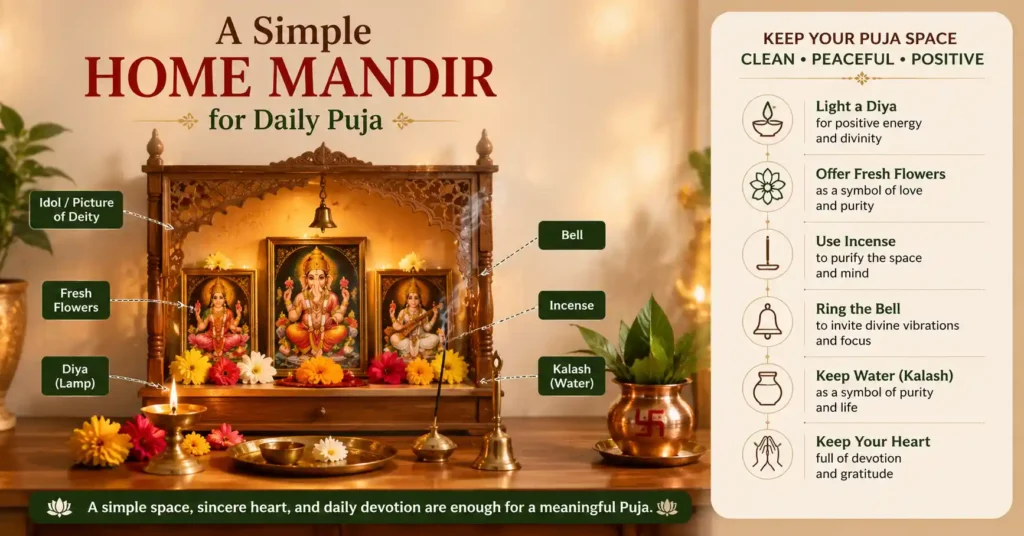
Table of Contents
ToggleWhat Does Daily Puja at Home Mean?
Daily Puja at Home means remembering and worshipping the Divine every day with sincerity and devotion. It does not require elaborate rituals or expensive arrangements. What matters most is a pure heart and a few moments dedicated to prayer.
In Sanatan Dharma, daily worship at home is a way to strengthen our connection with God through simple acts like lighting a diya, offering water or flowers, chanting a mantra, or sitting quietly in meditation.
Over time, this daily practice becomes more than a ritual. It becomes a sanskar that nurtures discipline, gratitude, inner peace, and spiritual awareness in everyday life.
Whether your daily puja vidhi lasts five minutes or thirty, regular worship helps make devotion a natural part of your daily routine rather than an occasional practice.
Why Is Daily Puja at Home Important?
Modern life is filled with responsibilities, distractions, and constant activity. In the midst of this busy routine, Daily Puja at Home offers a few peaceful moments to reconnect with the Divine and with yourself.
Unlike festivals that are celebrated on special occasions, daily Hindu puja keeps devotion alive every day. Even a simple prayer, a lit diya, or a few minutes of mantra chanting can bring a sense of calm and spiritual balance.
Regular daily worship at home also helps cultivate positive qualities such as gratitude, discipline, patience, and inner peace. Over time, these small daily acts become a source of strength during both joyful and challenging moments.
Sanatan Dharma encourages this practice out of love and devotion, not as an obligation. What matters most is sincerity, not the length or complexity of the ritual.
Daily Puja Vidhi: Step-by-Step Guide for Beginners
Many people search for Daily Puja Vidhi believing it involves lengthy rituals and complex procedures. In reality, Daily Puja at Home can be simple, peaceful, and easy to follow. The most important requirement is devotion, not perfection.
You do not need an elaborate altar or many ritual items. A clean place, a lit diya, and a few minutes of sincere prayer are enough to make your daily worship meaningful.
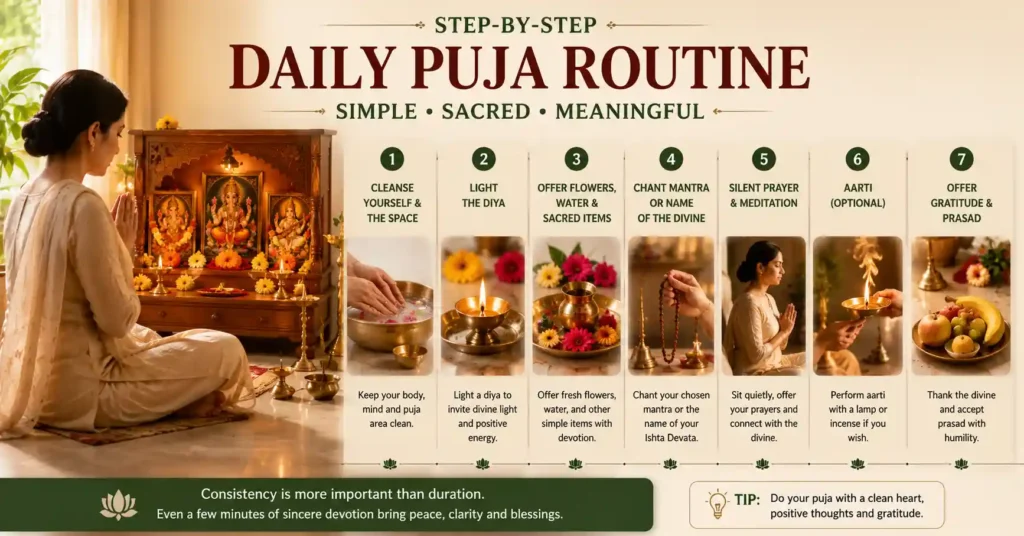
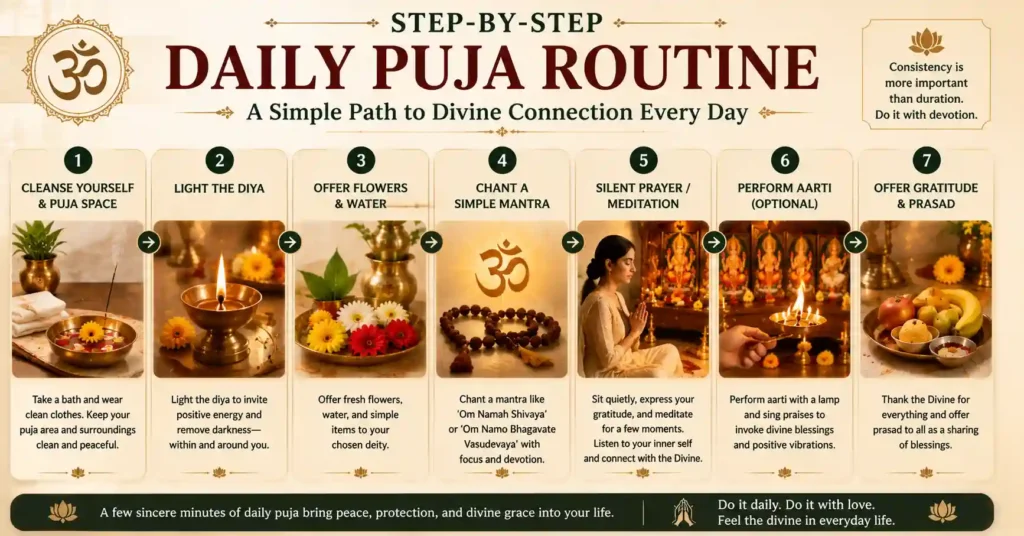
A simple Daily Puja Vidhi may look like this:
| Step | What to Do |
|---|---|
| 1 | Wash your hands, face, or take a bath if possible. |
| 2 | Clean the puja space and light a diya or incense. |
| 3 | Offer water, flowers, or simple naivedya according to your tradition. |
| 4 | Chant your chosen mantra or perform naam smaran for a few minutes. |
| 5 | Sit quietly, pray with devotion, and seek divine blessings. |
| 6 | End the puja by expressing gratitude and offering pranam. |
Remember, every family may follow a slightly different tradition. Some include aarti, while others spend more time in silent meditation or mantra chanting. There is no single compulsory method for daily Hindu puja.
If you have only five to ten minutes, perform the steps with full concentration and faith. In Sanatan Dharma, sincere devotion is always considered more valuable than lengthy rituals performed without bhav.
Can You Perform Daily Puja Without an Idol or Home Temple?
Many beginners wonder whether Daily Puja at Home is possible without a home temple or an idol. The answer is yes. In Sanatan Dharma, devotion and sincerity are considered more important than elaborate arrangements.
If you do not have a murti (idol), you may worship before a picture of your Ishta Devata, a sacred symbol such as Om (ॐ), or even offer silent prayers while meditating on the Divine. Many devotees also read a few verses from a sacred scripture or chant a simple mantra as part of their daily worship.
As your spiritual practice grows, you may choose to create a dedicated puja space in your home. Until then, a clean and peaceful place along with a sincere heart is enough to begin your daily worship with faith and devotion.
What Is the Best Time for Daily Puja at Home?
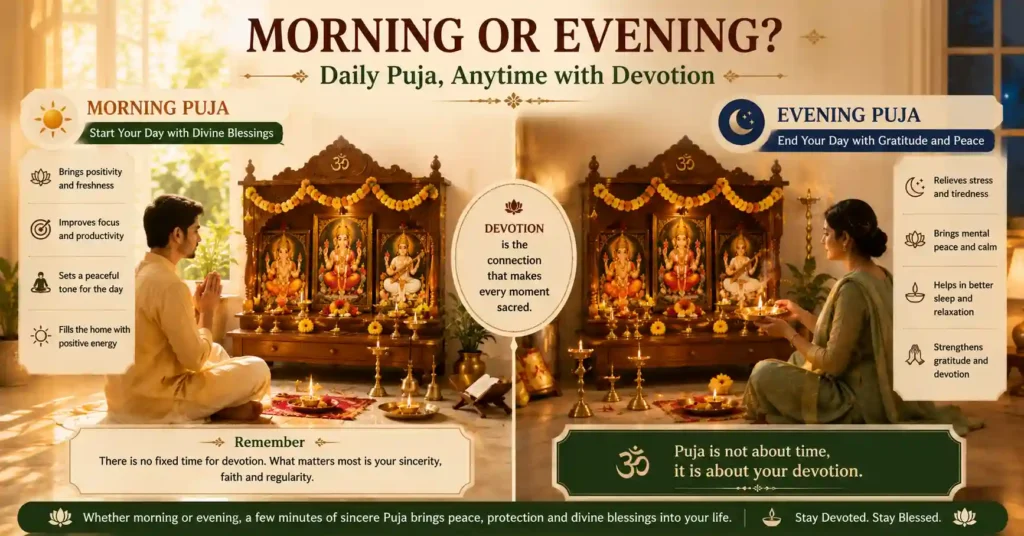
Morning is traditionally considered the best time for Daily Puja at Home because the mind is fresh, the surroundings are peaceful, and the day begins with a positive and devotional mindset. Many families perform their daily puja vidhi during the Brahma Muhurta or after sunrise.
However, morning is not the only auspicious time for worship. Evening daily worship at home is equally respected in Sanatan Dharma, especially during sunset when many devotees light a diya and perform a simple aarti.
Choose a time that you can follow consistently. A regular daily routine strengthens devotion far more than performing puja occasionally at the “perfect” time.
Ultimately, God values sincerity and faith more than the hour of worship. Whether you pray in the morning or evening, performing daily Hindu puja with bhav and consistency is what truly matters.

Which Mantras Can You Chant During Daily Puja?
Mantra japa is an important part of daily Hindu puja, but it does not require long sessions or a fixed number of repetitions. Even a few minutes of sincere chanting with concentration can make your daily worship at home more peaceful and meaningful.
You may chant a mantra based on your family tradition, your Ishta Devata, or your Guru’s guidance. If you are a beginner, choose one simple mantra and chant it regularly with devotion.
Some commonly chanted mantras during Daily Puja Vidhi include:
| Mantra | Commonly Chanted For |
|---|---|
| Om (ॐ) | Inner peace and meditation |
| Gayatri Mantra | Wisdom, purity, and spiritual growth |
| Om Namah Shivaya | Devotion to Lord Shiva |
| Om Namo Bhagavate Vasudevaya | Devotion to Lord Vishnu and Krishna |
| Shri Ram Jai Ram Jai Jai Ram | Remembrance of Lord Rama |
| Om Gam Ganapataye Namah | Prayers to Lord Ganesha before beginning any work |
The power of mantra japa lies in regularity and devotion rather than speed or quantity. Over time, the repeated remembrance of the Divine helps calm the mind, improve concentration, and deepen your spiritual connection.
Why Is Good Conduct (Aachaar) Important in Daily Puja?
In Sanatan Dharma, Aachaar means righteous daily conduct. It is reflected not only in rituals but also in our thoughts, words, and actions throughout the day.
Daily Puja at Home becomes truly meaningful when its values are reflected in everyday life. Speaking politely, showing compassion, practising honesty, and respecting others are all expressions of devotion beyond the puja room.
At the same time, good conduct is strengthened through regular worship. As prayer cultivates humility, patience, and gratitude, these qualities naturally become part of our daily behaviour.
The true purpose of daily worship at home is not only to offer flowers or light a diya, but also to carry the spirit of devotion into every action. This harmony between puja and Aachaar is one of the timeless teachings of Sanatan Dharma.
How Does Daily Puja Help in Modern Life?
Modern life is filled with busy schedules, digital distractions, and constant responsibilities. Amid this fast-paced routine, Daily Puja at Home offers a few quiet moments to pause, reflect, and reconnect with the Divine.
You do not need a long ceremony to experience its benefits. Even after a busy day, lighting a diya, chanting your favourite mantra, or spending a few minutes in silent prayer can become a meaningful part of your daily worship at home.
This simple daily practice helps cultivate calmness, gratitude, and mindfulness. Over time, it encourages us to respond to life’s challenges with greater patience and awareness instead of reacting in haste.
Whether you are a student, a working professional, or a homemaker, setting aside a few minutes each day for daily Hindu puja can become a peaceful spiritual habit that fits naturally into your routine.
Can You Do Daily Puja While Travelling or Living Away from Home?
Many people wonder whether they can continue Daily Puja at Home while travelling, staying in a hotel, or living away from their family. The answer is yes. Sanatan Dharma values sincere devotion more than elaborate arrangements.
If you do not have access to a home mandir, simply sit in a clean and peaceful place, remember your Ishta Devata, chant a mantra, or offer a silent prayer. Even lighting a small diya, if possible and safe, or mentally offering your prayers is considered a meaningful act of devotion.
The purpose of daily worship at home is to maintain a regular connection with the Divine. Whether you are at home, travelling for work, or studying in another city, a few minutes of heartfelt prayer can help you continue your spiritual practice with consistency.
Benefits of Daily Puja at Home
The benefits of Daily Puja at Home are often gradual, but they become deeply meaningful over time. A few minutes of sincere worship each day can positively influence both your spiritual journey and your daily life.
Regular daily worship at home can help:
- Bring a sense of inner calm and peace.
- Develop discipline through a consistent spiritual routine.
- Strengthen patience, gratitude, and faith.
- Improve focus during prayer and daily activities.
- Create a positive and devotional atmosphere at home.
- Deepen your connection with your Ishta Devata.
Daily Hindu puja is not performed to seek instant miracles. Instead, it gently transforms our thoughts, habits, and outlook, helping us live with greater awareness, devotion, and contentment.
Did You Know?
Daily worship has been a cherished tradition in Hindu households for thousands of years. While the rituals may vary across regions, families, and sampradayas, the essence remains the same, remembering the Divine every day with devotion, gratitude, and sincerity.
In Sanatan Dharma, even a simple prayer offered with a pure heart is considered spiritually meaningful.
Common Mistakes to Avoid During Daily Puja at Home
Even a simple Daily Puja at Home becomes more meaningful when performed with awareness and sincerity. Beginners often worry about following every ritual perfectly, but avoiding a few common mistakes is far more important than trying to perform an elaborate ceremony.
Some common mistakes to avoid include:
- Performing puja in a hurry without focusing on the prayer.
- Neglecting the cleanliness of the puja space and worship items.
- Treating the ritual as a daily obligation instead of an act of devotion.
- Frequently changing your mantra or worship routine without a reason.
- Comparing your practice with others instead of following your family tradition or Guru’s guidance.
Remember, Sanatan Dharma places greater importance on bhav (devotion) than on perfection. A few minutes of sincere daily worship at home with faith and gratitude are more valuable than lengthy rituals performed without concentration.
Key Takeaways
If you are short on time, these key points summarize everything you need to know about Daily Puja at Home. They highlight the essential practices, benefits, and principles that can help you build a simple yet meaningful daily worship routine.
- Daily Puja at Home can be completed in as little as 5–10 minutes, making it easy to include in your daily routine.
- You do not need elaborate rituals or expensive puja items. Devotion, sincerity, and a pure heart are the most important offerings.
- Morning and evening are both suitable times for worship. Choose a time that you can follow consistently.
- A simple diya, mantra, flowers, and heartfelt prayer are enough to begin your daily puja.
- Every family may follow a different Daily Puja Vidhi, and these traditions should be respected.
- Missing a day occasionally is not a failure. Simply resume your worship with faith and consistency.
- Even while travelling or living away from home, you can continue your daily worship through prayer, mantra chanting, or silent remembrance of the Divine.
- Regular Daily Puja at Home gradually cultivates discipline, gratitude, inner peace, patience, and a deeper connection with God.
- In Sanatan Dharma, bhav (devotion) is valued more than ritual perfection. Sincere worship performed regularly is considered more meaningful than elaborate rituals performed without faith.
- The true purpose of daily puja is not only to worship God but also to bring spiritual values into everyday life through righteous thoughts, words, and actions.

Conclusion
Daily Puja at Home is not about performing elaborate rituals or spending hours in worship. It is about setting aside a few moments each day to remember the Divine with faith, gratitude, and a sincere heart.
Whether you light a diya, chant a simple mantra, or sit quietly in prayer, these small acts gradually become a source of inner peace, discipline, and spiritual strength. In Sanatan Dharma, it is the regularity of devotion, not the complexity of rituals, that nurtures a lifelong connection with God.
Start with just a few minutes each day and allow your daily worship to grow naturally. Over time, Daily Puja at Home will become more than a routine—it will become a sacred part of your life, bringing peace, purpose, and devotion into every day.
Suggested Reading
If you enjoyed learning about Daily Puja at Home, you may also like these related articles on Sanatan Dharma rituals, worship, and spiritual practices:
Puja in Sanatan Dharma: Meaning, Vidhi, Bhav and Spiritual Significance
https://thesanatantales.com/puja-in-sanatan-dharma/
Havan in Sanatan Dharma: Meaning, Benefits and Complete Vidhi
https://thesanatantales.com/what-is-havan/
How to Perform Abhishek to Shivling: Complete Vidhi and Significance
https://thesanatantales.com/abhishek-to-shivling/
Prasad in Hinduism: Why Food Offered to God Becomes Sacred
https://thesanatantales.com/prasad-in-hinduism/
Tilak in Hinduism: Meaning, Types and Spiritual Significance
https://thesanatantales.com/tilak-in-hinduism/
Janeu (Yajnopavita): Meaning, Rules and Spiritual Importance
https://thesanatantales.com/janeu-yajnopavita-meaning-rules-significance/
Rudraksha: Meaning, Benefits and How to Wear It
https://thesanatantales.com/rudraksha-meaning-types-benefits/
Kul Devta and Kul Devi: Meaning, Importance and Worship
https://thesanatantales.com/kul-devta-and-kul-devi-meaning/
Kumari Puja: Meaning, Vidhi and Spiritual Significance
https://thesanatantales.com/kumari-puja-in-navratri-guide/
Puja (Hinduism)
https://en.wikipedia.org/wiki/Puja_(Hinduism)
FAQs
How long should daily puja at home take?
There is no fixed duration for Daily Puja at Home. Beginners can start with just 5 to 10 minutes by lighting a diya, offering flowers, chanting a simple mantra, and praying with devotion.
If you have more time, you may include mantra japa, reading a few verses from the Bhagavad Gita, Ramayana, or other sacred texts. What matters most is sincerity and consistency rather than the length of the worship.
Can I do daily puja at home without knowing Sanskrit mantras?
Yes. You can perform daily worship at home even if you do not know Sanskrit. Offer your prayers in your own language with faith and respect.
Simple chants like Om, Om Namah Shivaya, Om Namo Bhagavate Vasudevaya, or repeating your Ishta Devata’s name are enough for a meaningful daily practice. Devotion is considered more important than perfect pronunciation.
What are the essential items required for daily puja?
A simple daily Hindu puja does not require elaborate arrangements. Most families begin with a clean home altar, an image or idol of the deity, a diya, incense, flowers, water, and a small offering such as fruits or sweets.
These items symbolize purity, light, fragrance, devotion, and gratitude. If some items are unavailable, sincere prayer alone is sufficient.
Can women perform daily puja during menstruation?
Practices regarding menstruation vary across families, temples, and spiritual traditions within Sanatan Dharma. Some traditions observe temporary restrictions, while others permit personal prayer and remembrance of God.
It is best to follow your family’s customs or seek guidance from your Guru or the tradition you follow, while always maintaining respect for different beliefs.
Which direction should I face while doing daily puja?
Traditionally, facing East is considered most auspicious because it symbolizes spiritual awakening and the rising sun. Facing North is also regarded as favorable in many Hindu traditions.
If your home’s layout does not allow either direction, perform your puja in a clean and peaceful place. Devotion and concentration are more important than direction alone.
Can I perform daily puja if I miss a day?
Yes. Missing a day occasionally should not discourage you from continuing your spiritual practice. Resume your Daily Puja at Home the next day with a positive attitude and sincere devotion.
Sanatan Dharma emphasizes regular practice over perfection. Building a lifelong habit of worship is more valuable than worrying about occasional interruptions.
What is the best time to do daily puja at home?
The early morning during Brahma Muhurta or shortly after sunrise is traditionally considered the best time for Daily Puja at Home because the mind is calm and the surroundings are peaceful.
However, if mornings are not possible, evening worship after lighting the diya is equally meaningful. Choosing a fixed time each day helps develop discipline and makes daily worship a natural part of your routine.
Is daily puja necessary if I already chant God's name?
Both practices complement each other. Chanting God’s name is a powerful spiritual practice, while Daily Puja at Home adds symbolic acts of devotion such as offering light, flowers, water, and prayers.
Together, they help cultivate discipline, gratitude, and a deeper connection with the Divine. Even a brief daily puja combined with mantra chanting can become a meaningful spiritual routine.
Glossary of Important Terms
| Term | Meaning |
|---|---|
| Puja | A sacred act of worship in Sanatan Dharma involving prayers, offerings, and devotion to the Divine. |
| Daily Puja at Home | A regular practice of offering prayers and worship at a home altar as part of one’s daily spiritual routine. |
| Diya | A small oil or ghee lamp lit during worship to symbolize divine light, knowledge, and the removal of ignorance. |
| Aarti | A devotional ritual in which a lit lamp is waved before a deity while singing hymns or prayers. |
| Mantra | A sacred word, sound, or verse chanted during worship to focus the mind and invoke divine blessings. |
| Mantra Japa | The repeated chanting of a mantra, either aloud or silently, often using a mala for counting. |
| Ishta Devata | The personal deity whom a devotee worships with special love and devotion. |
| Prasad | Food or other offerings first presented to the deity during puja and then shared as a sacred blessing. |
| Bhakti | Loving devotion and complete surrender to God, considered one of the primary paths to spiritual growth. |
| Bhav | The inner feeling of reverence, love, and sincerity with which worship is performed. |
| Brahma Muhurta | The auspicious period approximately 1.5 hours before sunrise, traditionally regarded as the best time for meditation, prayer, and spiritual practices. |
| Mandir (Home Altar) | A dedicated sacred space in the home where idols, pictures of deities, and puja items are kept for daily worship. |
| Aachaar | Righteous conduct and disciplined behavior that reflect moral values and spiritual living. |
| Tilak | A sacred mark applied to the forehead after worship, symbolizing devotion and spiritual awareness. |
| Abhishek | The ritual bathing of a deity or Shivling with sacred substances such as water, milk, honey, or Panchamrit during worship. |
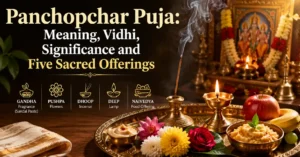
| Panchopchar Puja | A simple form of worship involving five traditional offerings, such as fragrance, flowers, incense, lamp, and food. |
| Sankalpa | A solemn prayer or spiritual resolve made before beginning a puja, expressing the purpose of the worship. |
| Namaskar (Pranam) | A respectful gesture of bowing before the deity as an expression of humility, gratitude, and devotion. |
| Shloka | A sacred verse from Hindu scriptures that is recited during worship or prayer. |
| Sanatan Dharma | The eternal spiritual tradition of Hinduism that emphasizes righteous living, devotion, self-realization, and harmony with the Divine. |
About the Author
Yateendra Chaturvedi is a spiritual writer, researcher, devotee, and the founder of The Sanatan Tales. With over 35 years of professional experience and a lifelong interest in Sanatan Dharma, he writes about Hindu deities, temples, scriptures, festivals, Mahavidyas, sacred stories, rituals, and living traditions that continue to guide and inspire devotees across India.
Drawing from traditional scriptures, regional beliefs, temple traditions, devotional literature, and historical sources, he aims to present authentic, well-researched, and easy-to-understand content for modern readers. His work focuses on preserving spiritual wisdom, explaining sacred traditions, and helping seekers develop a deeper understanding of India’s rich spiritual heritage.
Through The Sanatan Tales, Yateendra strives to make the timeless teachings of Sanatan Dharma simple, meaningful, and relevant for today’s generation while maintaining respect for traditional sources, regional practices, and diverse spiritual perspectives.
Learn More About Yateendra Chaturvedi →
https://thesanatantales.com/about-the-author/
References & Sources
This article is based on the teachings, beliefs, and traditions of Sanatan Dharma, along with insights from Hindu scriptures, Puranas, Itihasas, Smritis, traditional commentaries, and widely accepted religious practices. It also draws upon knowledge preserved through temple traditions, oral traditions, and the guru-disciple (Guru-Shishya) lineage, wherever applicable.
Note: Beliefs, customs, rituals, and interpretations may vary across different sampradayas (traditions), regions, temples, and spiritual lineages within Sanatan Dharma. The purpose of this article is not to establish any single interpretation as the absolute truth, but to present widely accepted spiritual and cultural perspectives in a simple, respectful, and accessible manner for readers.
Read More Interesting Articles on Sanatan Dharma



Durga ka Saral bidhi