Shiva mantras have been chanted by devotees for centuries as a way to connect with Lord Shiva, cultivate inner peace, and deepen spiritual awareness. Whether recited during daily prayer, meditation, Mahashivratri, or the holy month of Shravan, Shiva mantras remain an important part of Shaiva worship and Sanatan Dharma.
From the simple Om Namah Shivaya to the powerful Maha Mrityunjaya Mantra, different Shiva mantras are traditionally associated with devotion, mental clarity, protection, healing, and spiritual growth. These sacred sounds are found in Vedic scriptures, Shaiva traditions, stotras, and ancient devotional practices followed by millions of devotees.
In this guide, you will learn:
- What Shiva mantras are
- Their origin and scriptural significance
- The most powerful Shiva mantras and stotras
- Their meaning and traditional benefits
- How to chant Shiva mantras correctly
- How to apply Shiva mantra teachings in daily life
- Interesting facts about Shiva worship
- Answers to common questions about Shiva mantras
Whether you are a beginner or a long-time devotee, this article will help you understand the spiritual importance of Shiva mantras and how they can become a meaningful part of your devotional practice.
Table of Contents
ToggleWhat Are Shiva Mantras?
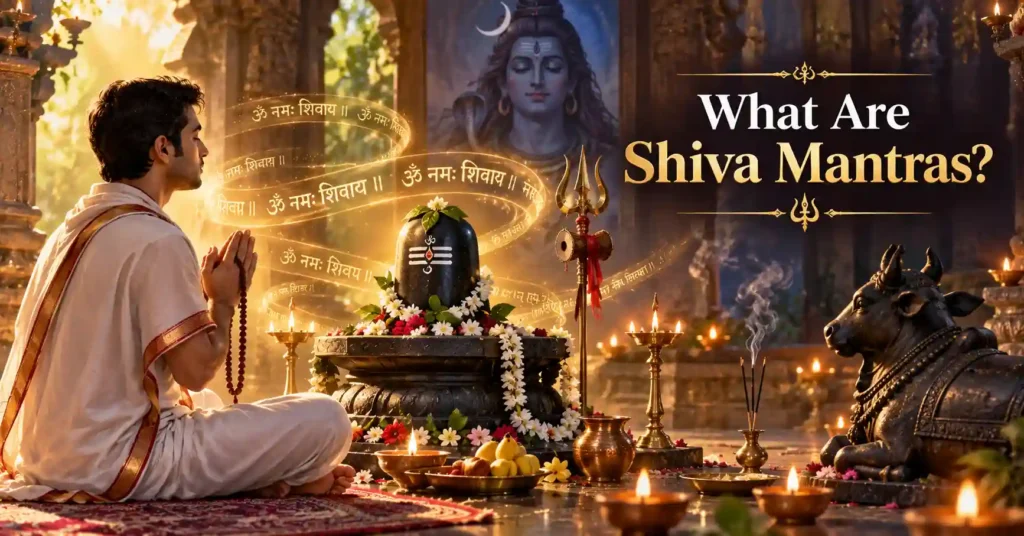
Shiva mantras are sacred sounds, prayers, and devotional chants dedicated to Lord Shiva, one of the principal deities of Sanatan Dharma. Devotees recite these mantras to express devotion, seek spiritual growth, and cultivate inner peace.
The word mantra comes from Sanskrit and is traditionally understood as a sacred formula that helps focus the mind and elevate consciousness. When combined with devotion to Lord Shiva, these chants become an important part of Shaiva spiritual practice.
Why Are Shiva Mantras Important?
For centuries, sages, saints, and devotees have used Shiva mantras during prayer, meditation, and worship.
They are traditionally chanted to:
Deepen devotion to Lord Shiva.
Develop mental focus and discipline.
Support meditation and self-reflection.
Cultivate inner peace and spiritual awareness.
Strengthen one’s connection with the Divine.
Different Types of Shiva Mantras
The term Shiva mantras includes many forms of sacred worship, such as:
Simple mantras like Om Namah Shivaya.
Vedic mantras like the Maha Mrityunjaya Mantra.
Devotional hymns and stotras.
Ashtakams dedicated to Lord Shiva.
Protective prayers and sacred chants from Shaiva traditions.
Each has its own purpose, significance, and place in Hindu worship.
Shiva Mantras in Shaiva Tradition
In Shaivism, chanting is considered one of the simplest ways to remember and honor Lord Shiva.
Whether performed in temples, during Mahashivratri, in the month of Shravan, or as part of daily prayer, Shiva mantras continue to guide devotees toward devotion, self-discipline, and spiritual growth.
More than words, these sacred chants are viewed as tools for connecting the mind and heart with the timeless teachings of Mahadev.
Origin and Scriptural Significance of Shiva Mantras
The tradition of chanting Shiva mantras has deep roots in Hindu scriptures and Shaiva traditions. Many of these sacred chants originate from the Vedas, especially the Krishna Yajurveda, which contains the revered Shri Rudram, one of the most important hymns dedicated to Lord Rudra, a Vedic form of Shiva.
Over time, Shiva mantras became an integral part of the Shaiva Agamas, Puranas, temple worship, and personal spiritual practices. These sacred sounds were preserved and transmitted by sages, saints, and spiritual teachers across generations.
Some of the most widely recited Shiva mantras, such as Om Namah Shivaya and the Maha Mrityunjaya Mantra, continue to be chanted during daily worship, meditation, Mahashivratri, and the holy month of Shravan.
Their enduring presence in Hindu tradition reflects the timeless importance of devotion to Lord Shiva and the transformative power that devotees associate with sacred mantra chanting.
Why Do Devotees Chant Shiva Mantras?
Devotees chant Shiva mantras as an expression of devotion, surrender, and remembrance of Lord Shiva. These sacred chants help create a deeper connection with Mahadev while bringing spiritual focus to daily life.
Many people recite Shiva mantras during prayer, meditation, Mahashivratri, and the month of Shravan. The practice is traditionally associated with cultivating inner peace, self-discipline, and spiritual awareness.
Different Shiva mantras serve different devotional purposes. Some are chanted for meditation and self-reflection, while others are recited as hymns of praise, protection, gratitude, or worship.
Regardless of the mantra chosen, the ultimate purpose remains the same: to keep the mind centered on Lord Shiva and strengthen one’s spiritual journey through faith and devotion.
Most Powerful Shiva Mantras and Stotras
Over the centuries, numerous Shiva mantras and sacred hymns have become an important part of Shaiva worship. These chants are recited in temples, homes, meditation practices, and festivals such as Mahashivratri and Shravan.
Some Shiva mantras are short and simple for daily chanting, while others are profound Vedic prayers and devotional stotras that carry deep spiritual significance. Each serves a unique purpose, helping devotees cultivate devotion, inner strength, wisdom, peace, and spiritual growth.
The following are among the most widely recited and revered Shiva mantras and stotras in Hindu tradition.
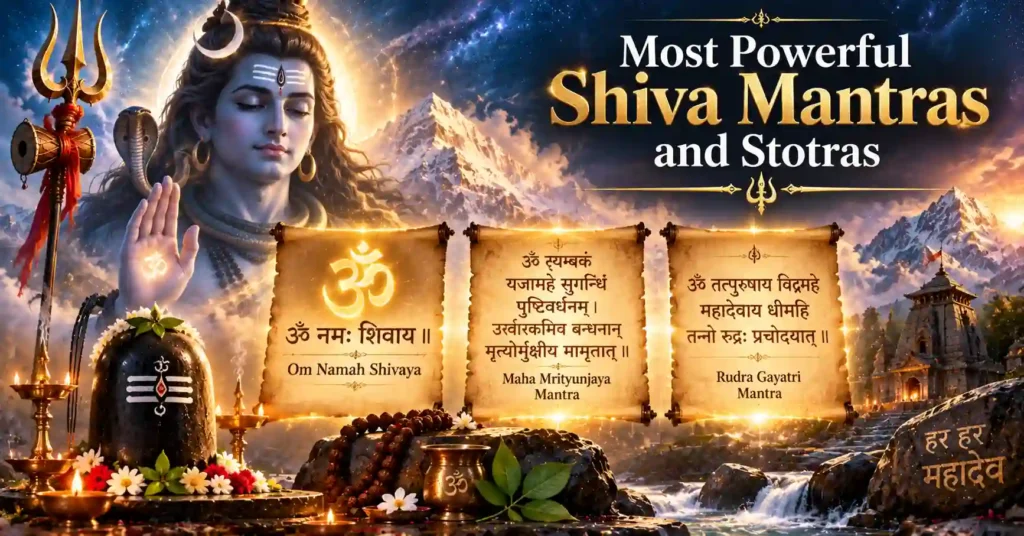
Om Namah Shivaya (Panchakshari Mantra)
Sanskrit:
ॐ नमः शिवाय
Transliteration:
Om Namah Shivaya
The Om Namah Shivaya mantra is the most well-known of all Shiva mantras. Known as the Panchakshari Mantra, it expresses devotion and surrender to Lord Shiva and is widely used in prayer, meditation, and japa practice.
Maha Mrityunjaya Mantra
Sanskrit:
ॐ त्र्यम्बकं यजामहे सुगन्धिं पुष्टिवर्धनम् ।
उर्वारुकमिव बन्धनान् मृत्योर्मुक्षीय मामृतात् ॥
Transliteration:
Om Tryambakam Yajamahe
Sugandhim Pushtivardhanam
Urvarukamiva Bandhanan
Mrityor Mukshiya Maamritat
The Maha Mrityunjaya Mantra is one of the most revered Vedic Shiva mantras. It is traditionally associated with healing, protection, courage, and overcoming fear.
Rudra Gayatri Mantra
Sanskrit:
ॐ तत्पुरुषाय विद्महे महादेवाय धीमहि ।
तन्नो रुद्रः प्रचोदयात् ॥
Transliteration:
Om Tatpurushaya Vidmahe
Mahadevaya Dheemahi
Tanno Rudrah Prachodayat
The Rudra Gayatri Mantra is a prayer seeking wisdom, clarity, and divine guidance from Lord Rudra. It is often chanted to strengthen concentration and spiritual awareness.
Shiva Dhyana Mantra for Forgiveness
Sanskrit:
करचरण कृतं वा कायजं कर्मजं वा ।
श्रवणनयनजं वा मानसं वापराधम् ॥
Transliteration:
Karacharana Kritam Va
Kayajam Karmajam Va
Shravana Nayanajam Va
Manasam Vaparadham
This devotional prayer seeks forgiveness for mistakes committed through thoughts, words, and actions. Many devotees recite it during daily prayers as an act of humility and self-reflection.
Rudra Mantra for Inner Strength
Sanskrit:
ॐ नमो भगवते रुद्राय
Transliteration:
Om Namo Bhagavate Rudraya
This powerful salutation to Lord Rudra invokes courage, determination, and inner steadiness. It is commonly chanted during times of challenge and uncertainty.
Bilvashtakam
Sanskrit (Opening Verse):
त्रिदलं त्रिगुणाकारं त्रिनेत्रं च त्रियायुधम् ।
त्रिजन्मपापसंहारं एकबिल्वं शिवार्पणम् ॥
Transliteration:
Tridalam Trigunakaram
Trinetram Cha Triyayudham
Trijanma Papa Samharam
Eka Bilvam Shivarpanam
Bilvashtakam is a sacred hymn recited while offering Bilva leaves to Lord Shiva. It highlights the spiritual importance of Bilva worship in Shaiva tradition.
Nirvana Shatakam
Sanskrit (Opening Verse):
मनो बुद्ध्यहंकार चित्तानि नाहम् ।
न च श्रोत्रजिह्वे न च घ्राणनेत्रे ॥
Transliteration:
Mano Buddhyahankara Chittani Naham
Na Cha Shrotra Jihve Na Cha Ghrana Netre
Composed by Adi Shankaracharya, Nirvana Shatakam is a profound philosophical hymn that teaches the nature of the true Self beyond body and mind.
Shiva Raksha Stotram
Sanskrit (Opening Verse):
शिरो मे गिरिजानाथो भालं मे गिरिजापतिः ।
Transliteration:
Shiro Me Girijanatho
Bhalam Me Girijapatih
Shiva Raksha Stotram is a protective hymn that places different parts of the body under Lord Shiva’s divine protection. Devotees often recite it for courage and spiritual reassurance.
Daridraya Dahana Stotram
Sanskrit (Opening Verse):
दारिद्र्य दुःखदहनाय नमः शिवाय ।
Transliteration:
Daridrya Dukha Dahanaya Namah Shivaya
Traditionally attributed to Sage Vashistha, this stotram praises Lord Shiva as the remover of suffering, obstacles, and limitations.
Lingashtakam
Sanskrit (Opening Verse):
ब्रह्ममुरारि सुरार्चित लिंगम् ।
निर्मलभासित शोभित लिंगम् ॥
Transliteration:
Brahma Murari Surarchita Lingam
Nirmala Bhasita Shobhita Lingam
Lingashtakam is one of the most popular Shiva stotras dedicated to the worship of the Shivling. It glorifies the divine nature and symbolism of the Shiva Lingam.
Kalabhairava Ashtakam
Sanskrit (Opening Verse):
देवराज सेव्यमान पावनांघ्रि पंकजम् ।
Transliteration:
Devaraja Sevyamana
Pavananghri Pankajam
Dedicated to Kalabhairava, a fierce and protective form of Lord Shiva, this hymn emphasizes fearlessness, discipline, and respect for dharma.
Sri Rudram (Namakam and Chamakam)
Sanskrit (Namakam):
नमस्ते रुद्रमन्यव उतोत इषवे नमः ।
Transliteration:
Namaste Rudra Manyava
Utota Ishave Namah
Sri Rudram is among the most important Vedic hymns dedicated to Lord Rudra. Found in the Krishna Yajurveda, it remains central to Shiva worship and Vedic chanting traditions.
Beeja Sounds Used in Shiva Sadhana
Sacred Beeja Sounds:
हौं (Haum)
जूं (Joom)
सः (Sah)
These sacred seed syllables are used in certain advanced forms of Shiva meditation and mantra sadhana. Traditionally, such practices are undertaken with proper guidance and understanding.
Which Shiva Mantra Should You Chant?
With so many sacred Shiva mantras available, beginners often wonder which one is most suitable for their spiritual needs. The answer depends on your intention, devotional practice, and personal connection with Lord Shiva.
- For beginners and daily chanting: Om Namah Shivaya
- For healing, courage, and resilience: Maha Mrityunjaya Mantra
- For wisdom and spiritual insight: Rudra Gayatri Mantra
- For Shivling worship: Lingashtakam
- For offering Bilva leaves during worship: Bilvashtakam
- For protection and divine blessings: Shiva Raksha Stotram
- For self-inquiry and spiritual realization: Nirvana Shatakam
- For devotion to Kalabhairava: Kalabhairava Ashtakam
If you are unsure where to begin, many spiritual teachers recommend starting with Om Namah Shivaya because of its simplicity and universal appeal. As your understanding of Shiva mantras grows, you may naturally explore other mantras and stotras that resonate with your devotional and spiritual journey.
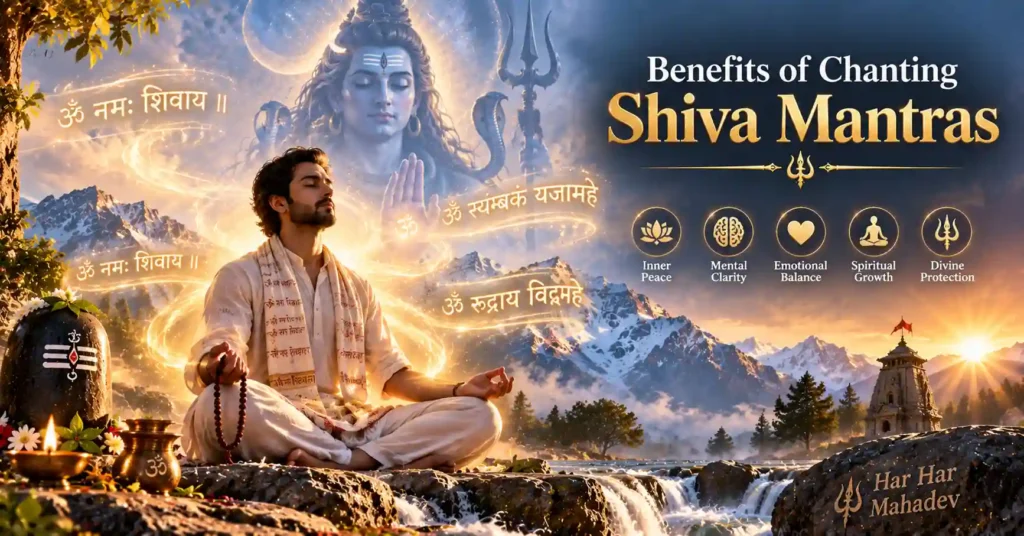
Benefits of Chanting Shiva Mantras
The regular chanting of Shiva mantras is an important part of Shaiva spiritual practice. While experiences vary from person to person, these sacred chants are traditionally associated with spiritual growth, inner peace, and devotion to Lord Shiva.
Spiritual Benefits
Many devotees chant Shiva mantras to deepen their connection with Mahadev and strengthen their spiritual journey.
Regular mantra japa helps cultivate devotion, surrender, and awareness of the divine presence in everyday life.
Mental Benefits
The rhythmic repetition of Shiva mantras can help calm the mind and improve concentration.
Many practitioners use mantra chanting during meditation to reduce distractions and develop greater mental clarity.
Emotional Benefits
Chanting sacred names and hymns of Lord Shiva may help create a sense of comfort, stability, and inner strength.
Devotees often turn to Shiva mantras during challenging times as a source of faith and encouragement.
Traditional Benefits
In Hindu tradition, different Shiva mantras are associated with specific spiritual intentions such as protection, healing, wisdom, courage, and purification.
Festivals like Mahashivratri and the holy month of Shravan are especially popular times for mantra chanting and Shiva worship.
Devotional Benefits
Above all, Shiva mantras help keep the mind focused on Lord Shiva.
Whether chanting Om Namah Shivaya, the Maha Mrityunjaya Mantra, or a Shiva stotra, the practice encourages gratitude, humility, and a deeper sense of devotion toward Mahadev.
How to Chant Shiva Mantras Correctly
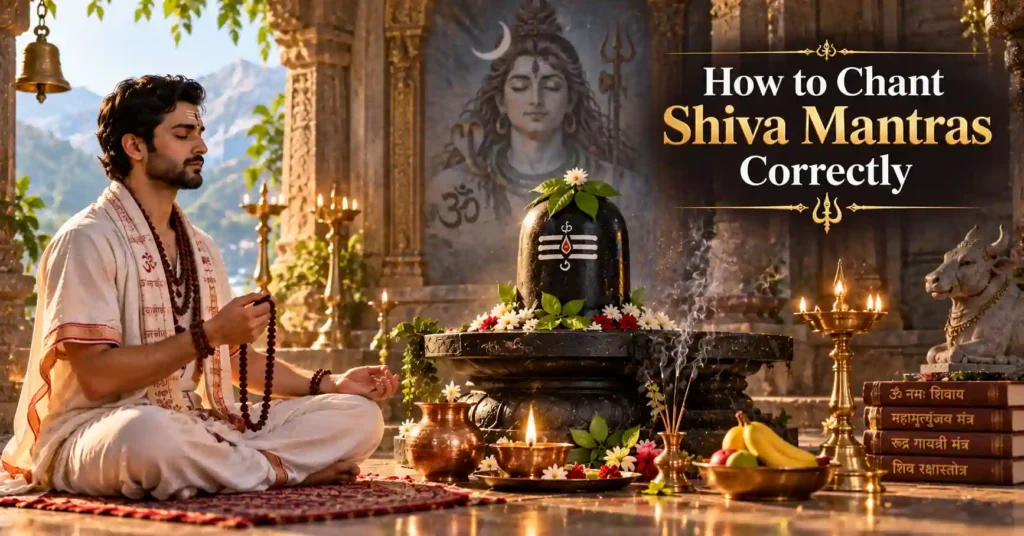
While Shiva mantras can be chanted with simple devotion, following certain traditional practices may help create a more focused and meaningful spiritual experience.
Best Time to Chant
Many devotees prefer chanting Shiva mantras during Brahma Muhurta, the period before sunrise.
Mondays, Mahashivratri, and the holy month of Shravan are also considered especially auspicious for Shiva worship.
Preparation
Choose a clean and quiet place for chanting.
You may sit facing east or north and keep an image of Lord Shiva, a Shivling, or a lit diya nearby if desired.
Traditional Chanting Method
Begin by calming the mind and focusing on Lord Shiva.
Chant the mantra slowly and clearly, paying attention to its sound and meaning rather than rushing through repetitions.
Using a Rudraksha Mala
Many devotees use a Rudraksha mala to count mantra repetitions.
A traditional round consists of 108 repetitions, though beginners can start with a smaller number and gradually increase their practice.
Can Beginners Chant Shiva Mantras?
Yes. Many Shiva mantras, especially Om Namah Shivaya, are suitable for beginners.
The most important requirement is sincerity, devotion, and regular practice.
Importance of Understanding the Meaning
While chanting itself is beneficial, understanding the meaning of Shiva mantras can deepen the devotional experience.
When the mind reflects on the teachings behind the mantra, chanting becomes both a spiritual and transformative practice.
Shiva Mantras During Mahashivratri and Shravan
Shiva mantras hold special significance during Mahashivratri and the sacred month of Shravan, two of the most important periods dedicated to Lord Shiva.
During Mahashivratri, devotees often observe fasting, perform night-long worship, and chant Shiva mantras such as Om Namah Shivaya, the Maha Mrityunjaya Mantra, and Sri Rudram. These practices are believed to deepen devotion and spiritual awareness.
Similarly, the month of Shravan is considered highly auspicious for Shiva worship. Many devotees visit temples, offer water and Bilva leaves to the Shivling, and increase their daily mantra chanting during this period.
While Shiva mantras can be recited throughout the year, Mahashivratri and Shravan provide special opportunities for devotees to strengthen their connection with Mahadev through prayer, meditation, and devotion.
Shiva Mantras in Daily Life
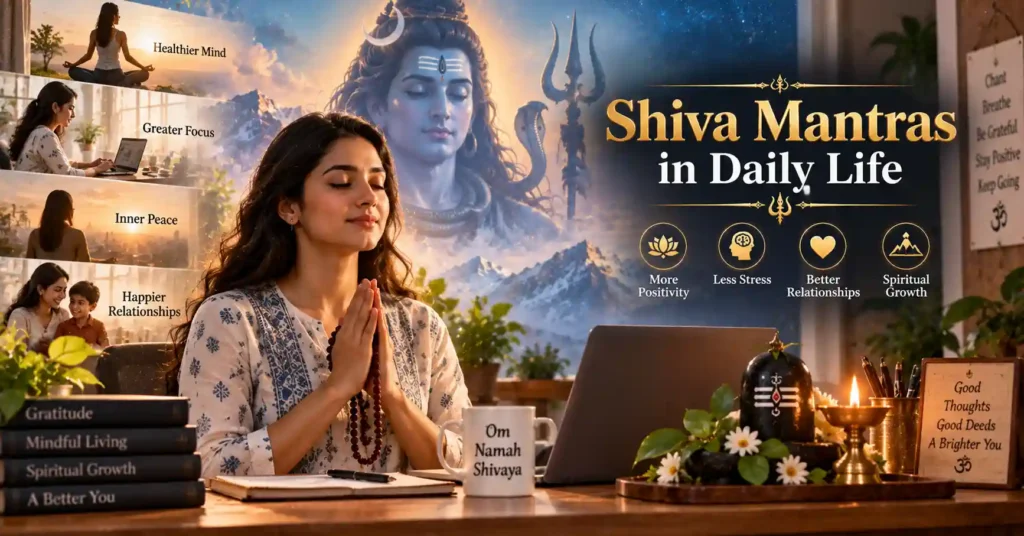
The teachings behind Shiva mantras are not limited to temples or special occasions. Many devotees incorporate these sacred chants into their daily routines to stay spiritually connected and mindful.
A few minutes of chanting in the morning can help create a sense of calm and focus before beginning the day. Even simple Shiva mantras like Om Namah Shivaya can become a reminder to approach life with patience, humility, and inner strength.
During stressful situations, devotees often turn to Shiva mantras as a way to quiet the mind and reconnect with faith. The practice encourages self-reflection and helps cultivate emotional balance.
The values associated with Lord Shiva, such as simplicity, discipline, compassion, detachment, and devotion, can also be applied in everyday decisions and relationships.
Whether chanted during meditation, prayer, travel, or quiet moments of reflection, Shiva mantras offer a practical way to bring spiritual awareness into daily life.
Did You Know?
- The mantra Om Namah Shivaya is known as the Panchakshari Mantra because it contains five sacred syllables: Na, Ma, Shi, Va, and Ya.
- Among all Shiva mantras, Om Namah Shivaya is one of the most widely chanted mantras in the world.
- The Maha Mrityunjaya Mantra originates from the Rigveda and is one of the oldest surviving Vedic mantras dedicated to Lord Shiva.
- Sri Rudram, found in the Krishna Yajurveda, is considered one of the most important Vedic hymns in Shiva worship.
- Many devotees chant Shiva mantras during the holy month of Shravan, which is especially sacred to Lord Shiva.
- Mahashivratri is one of the most important festivals for chanting Shiva mantras, performing Rudrabhishek, and observing night-long worship.
- A Rudraksha mala is traditionally used for mantra japa and is closely associated with Lord Shiva.
- The Bilva (Bel) leaf is regarded as one of the most sacred offerings in Shiva worship and is frequently mentioned in Shiva stotras.
- Mount Kailash, believed to be the abode of Lord Shiva, remains one of the most revered pilgrimage destinations in Hindu tradition.
- Many saints and spiritual masters, including Adi Shankaracharya, composed hymns and stotras that continue to inspire devotees of Lord Shiva today.
Conclusion
Shiva mantras have been an integral part of Hindu spiritual practice for centuries, helping devotees connect with Lord Shiva through prayer, meditation, and devotion. From the simple yet profound Om Namah Shivaya to the powerful Maha Mrityunjaya Mantra and sacred Shiva stotras, each chant carries its own spiritual significance.
Regular chanting of Shiva mantras is traditionally associated with inner peace, mental clarity, self-discipline, and a deeper sense of devotion. Whether practiced during Mahashivratri, the month of Shravan, or as part of a daily routine, these sacred chants continue to inspire seekers on the path of spiritual growth.
Ultimately, the greatest value of Shiva mantras lies not only in their words but in the devotion, faith, and awareness they cultivate. By chanting with sincerity and understanding, devotees can strengthen their connection with Mahadev and bring the timeless wisdom of Lord Shiva into everyday life.
Suggested reading
Shiva mantras are an important part of Shaiva worship and include sacred chants, stotras, and hymns dedicated to Lord Shiva. Exploring related scriptures and devotional texts can help devotees gain a deeper understanding of the spiritual teachings, symbolism, and practices associated with Shiva mantras.
Many of these prayers complement the wisdom found in various Shiva mantras by teaching devotion, surrender, meditation, self-discipline, and spiritual growth. They are especially valuable for devotees who wish to deepen their connection with Mahadev and expand their understanding of Sanatan Dharma.
Shiva Mantras: Most Powerful Shiva Mantras, Stotras, and How to Chant Them
https://thesanatantales.com/shiva-mantras/
Rudrashtakam: Lyrics with Meaning in Hindi and English, Benefits and How to Chant
https://thesanatantales.com/rudrashtakam-lyrics-with-meaning-hindi-english/
Shiv Tandav Stotram Meaning, Full Lyrics, Benefits and How to Chant
https://thesanatantales.com/shiv-tandav-stotram-meaning-lyrics-benefits/
Lingashtakam: Lyrics with Meaning in Hindi and English, Benefits and How to Chant
https://thesanatantales.com/lingashtakam-meaning-benefits/
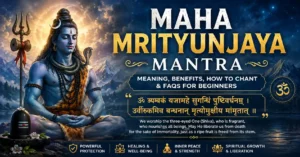
Maha Mrityunjaya Mantra: Meaning, Benefits, Lyrics and How to Chant
https://thesanatantales.com/maha-mrityunjaya-mantra/
Lord Shiva
https://en.wikipedia.org/wiki/Shiva
FAQs
1. What are Shiva mantras and why are they important?
Shiva mantras are sacred chants dedicated to Lord Shiva, one of the principal deities in Sanatan Dharma. These mantras are recited during prayer, meditation, worship, and spiritual practices to express devotion and remember Mahadev.
Different Shiva mantras serve different purposes. Some focus on devotion, while others are associated with meditation, healing, wisdom, or spiritual growth. Popular examples include Om Namah Shivaya, the Maha Mrityunjaya Mantra, and the Rudra Gayatri Mantra.
Their importance lies in helping devotees develop faith, discipline, and inner awareness. For many practitioners, chanting Shiva mantras becomes a meaningful way to stay connected to Lord Shiva and his teachings in daily life.
2. Which is the most powerful among all Shiva mantras?
There is no single answer because different Shiva mantras are revered for different reasons. However, Om Namah Shivaya is often considered the most widely chanted and universally accessible Shiva mantra.
The Maha Mrityunjaya Mantra is another highly respected Vedic mantra traditionally associated with healing, protection, courage, and overcoming fear. Similarly, the Rudra Gayatri Mantra is often recited for wisdom and spiritual insight.
The effectiveness of any mantra depends not only on the words themselves but also on the devotee’s sincerity, concentration, and regular practice. Consistent chanting with devotion is generally considered more important than choosing the “most powerful” mantra.
3. Can beginners chant Shiva mantras?
Yes, many Shiva mantras are suitable for beginners and can be incorporated into daily spiritual practice without difficulty. The most commonly recommended mantra for newcomers is Om Namah Shivaya because of its simplicity and profound spiritual significance.
Beginners can start by chanting a few repetitions daily and gradually increase the number as they become comfortable with the practice. There is no need to memorize many mantras at once.
What matters most is devotion, consistency, and respect for the mantra. Over time, understanding the meaning and symbolism behind Shiva mantras can make the chanting experience even more meaningful and spiritually enriching.
4. What are the benefits of chanting Shiva mantras regularly?
The regular chanting of Shiva mantras is traditionally associated with spiritual, mental, and emotional benefits. Many devotees believe that mantra chanting helps create a deeper connection with Lord Shiva while encouraging devotion and self-discipline.
Practitioners often report improved concentration, greater mental calmness, and a stronger sense of inner balance during daily life. Chanting can also support meditation by helping the mind remain focused and centered.
From a devotional perspective, the greatest benefit of Shiva mantras is the opportunity to remember Mahadev regularly. This continuous remembrance can inspire faith, humility, gratitude, and spiritual growth over time.
5. What is the best time to chant Shiva mantras?
Shiva mantras can be chanted at any time of the day. However, traditional Hindu practices consider Brahma Muhurta, the period before sunrise, especially favorable for prayer, meditation, and mantra chanting.
Many devotees also chant during sunrise, sunset, Mondays, Mahashivratri, and the sacred month of Shravan. These occasions are closely associated with Lord Shiva and are considered spiritually significant.
At the same time, consistency is often regarded as more important than timing. A regular daily practice, even for a few minutes, can be more beneficial than waiting for special occasions to chant Shiva mantras.
6. Do Shiva mantras require initiation from a guru?
Most commonly recited Shiva mantras, such as Om Namah Shivaya, can be chanted by devotees without formal initiation. These mantras have traditionally been shared widely and are considered suitable for general devotional practice.
However, some advanced mantras, beeja mantras, and specialized forms of mantra sadhana may traditionally be practiced under the guidance of a qualified guru. Such guidance helps ensure proper pronunciation, understanding, and spiritual discipline.
For most devotees, beginning with well-known Shiva mantras and chanting them with sincerity is considered a meaningful and appropriate way to start their spiritual journey.
7. Can Shiva mantras be chanted mentally?
Yes, Shiva mantras can be chanted both aloud and mentally. Mental chanting, often called manasika japa, is a respected practice in many spiritual traditions.
Some devotees prefer vocal chanting because it helps maintain concentration, while others find silent repetition more suitable during meditation or while performing daily activities. Both approaches are traditionally accepted.
Mental chanting can be especially useful when traveling, working, or sitting quietly in reflection. Regardless of the method used, maintaining awareness of the mantra and devotion toward Lord Shiva is generally considered more important than the mode of recitation.
8. Can Shiva mantras be included in daily life?
Absolutely. One of the reasons Shiva mantras remain popular is their simplicity and practicality. Many devotees begin their day with a few minutes of mantra chanting before starting work, study, or household responsibilities.
Others repeat mantras during meditation, while walking, or during quiet moments throughout the day. Even a short daily practice can help create a sense of calm, focus, and spiritual connection.
Beyond chanting itself, the values associated with Lord Shiva, such as simplicity, discipline, compassion, and self-awareness, can also be applied in everyday life. In this way, Shiva mantras become more than prayers; they become a guide for daily living.
Share Your Devotion
Lord Shiva has inspired devotees for thousands of years through sacred chants, hymns, and spiritual teachings. Whether you chant Om Namah Shivaya, the Maha Mrityunjaya Mantra, or another of the many Shiva mantras, each devotional journey is unique.
Do you have a favorite Shiva mantra or stotra?
Has chanting Shiva mantras helped you find peace, focus, strength, or a deeper connection with Mahadev?
Share your experiences, insights, or favorite Shiva prayers in the comments below. Your devotional journey may inspire fellow devotees and help others discover the timeless wisdom of Lord Shiva.
Har Har Mahadev! 🙏
References & Sources
Primary Sources
- Rigveda
- Krishna Yajurveda
- Shri Rudram (Namakam and Chamakam)
- Shiva Purana
- Linga Purana
- Vayu Purana
- Shaiva Agamas
Traditional Texts and Hymns
- Om Namah Shivaya (Panchakshari Mantra)
- Maha Mrityunjaya Mantra
- Rudra Gayatri Mantra
- Bilvashtakam
- Lingashtakam
- Shiva Raksha Stotram
- Daridraya Dahana Stotram
- Kalabhairava Ashtakam
- Nirvana Shatakam
Secondary Sources
- Traditional Sanskrit commentaries
- Shaiva philosophical literature
- Sanskrit scripture repositories
- Hindu devotional and theological studies
- Scholarly resources on mantra meditation and Shaivism
Note: The interpretation, pronunciation, and spiritual significance of Shiva mantras may vary slightly across different Shaiva traditions, lineages, and commentaries. The explanations in this article are intended for devotional and educational purposes and are based on widely accepted traditional understandings.
Explore More Topics from The Sanatan Tales