
The Kaal Bhairav Ashtakam is one of the most powerful and revered hymns dedicated to Lord Kaal Bhairav, the fierce and protective form of Lord Shiva. Composed by Adi Shankaracharya, the Kaal Bhairav Ashtakam beautifully describes the glory, compassion, power, and spiritual significance of Lord Bhairav.
For centuries, devotees have recited the Kaal Bhairav Ashtakam to seek courage, protection, discipline, spiritual strength, and freedom from fear. Beyond its devotional value, this sacred stotra also contains profound teachings about time, karma, self-mastery, and surrender to the Divine.
Lord Kaal Bhairav is traditionally regarded as the guardian of Kashi (Varanasi), the protector of Dharma, and the controller of time itself. His worship holds a special place in Shaivism and Bhairava traditions across India.
In this article, you will discover:
- What Kaal Bhairav Ashtakam is and why it is important
- Who Lord Kaal Bhairav is in Hindu tradition
- The origin and scriptural significance of the hymn
- Complete Kaal Bhairav Ashtakam lyrics in Sanskrit
- English transliteration for easy chanting
- Verse-by-verse meaning in Hindi and English
- The deeper meaning of its most important verse
- Spiritual, mental, and devotional benefits
- How to chant Kaal Bhairav Ashtakam correctly
- Lessons from Kaal Bhairav Ashtakam in daily life
- Interesting facts and lesser-known insights
- Answers to common questions about Kaal Bhairav worship
Whether you are reading this sacred hymn for the first time or already chant it regularly, understanding its meaning and symbolism can help deepen your devotion and spiritual awareness.
Kaal Bhairav Ashtakam at a Glance
| Aspect | Details |
|---|---|
| Sanskrit Name | कालभैरवाष्टकम् (Kalabhairavashtakam) |
| Deity | Lord Kaal Bhairav, a fierce form of Lord Shiva |
| Composer | Adi Shankaracharya |
| Tradition | Shaivism |
| Language | Sanskrit |
| Type of Text | Ashtakam (Eight-Verse Devotional Hymn) |
| Number of Verses | 8 Main Verses + Phalashruti |
| Associated Place | Kashi (Varanasi) |
| Main Theme | Glory, protection, wisdom, and divine power of Lord Kaal Bhairav |
| Famous Refrain | Kashikapuradhinatha Kalabhairavam Bhaje |
| Dedicated To | Kaal Bhairav, the Guardian of Kashi and Lord of Time |
| Best Time to Chant | Sunrise, evening, or during Kaal Ashtami |
| Popular Occasions | Kaal Bhairav Ashtami, Maha Shivaratri, daily Shiva worship |
| Traditional Benefits | Courage, discipline, devotion, spiritual strength, and freedom from fear |
| Suitable For | Beginners, Shiva devotees, householders, and spiritual seekers |
| Core Teaching | Respect time, follow dharma, overcome fear, and surrender to the Divine |
| Spiritual Goal | Self-mastery, divine grace, wisdom, and liberation |
This sacred hymn is traditionally attributed to Adi Shankaracharya and praises Lord Kaal Bhairav as the guardian of Kashi, the protector of dharma, and the lord who governs time itself. Each of its eight verses ends with the famous refrain, “Kashikapuradhinatha Kalabhairavam Bhaje,” expressing devotion to the ruler of the holy city of Kashi.
Table of Contents
ToggleWhat Is Kaal Bhairav Ashtakam?
The Kaal Bhairav Ashtakam is a revered Sanskrit hymn dedicated to Lord Kaal Bhairav, the fierce and protective form of Lord Shiva. Composed in eight verses, this sacred stotra praises Bhairava as the guardian of Kashi, the protector of dharma, and the lord who governs time itself.
Traditionally attributed to Adi Shankaracharya, the hymn beautifully describes the divine qualities, power, compassion, and spiritual significance of Lord Kaal Bhairav. Each verse ends with the famous refrain, “Kashikapuradhinatha Kalabhairavam Bhaje,” expressing devotion to the Lord of Kashi.
This devotional composition is widely recited by Shiva devotees, spiritual seekers, and followers of Bhairava traditions. Many chant it to cultivate courage, discipline, devotion, and spiritual strength while seeking protection from fear and negativity.
Why Is Kaal Bhairav Ashtakam Important?
The importance of the Kaal Bhairav Ashtakam lies not only in its devotional value but also in its deeper spiritual teachings.
The hymn reminds devotees that time is precious, actions have consequences, and spiritual awareness is essential for a meaningful life. Through praise of Lord Bhairav, it encourages self-discipline, responsibility, fearlessness, and surrender to the Divine.
Traditionally, devotees recite this sacred hymn to:
Deepen devotion to Lord Shiva and Kaal Bhairav
Seek protection from fear and negative influences
Develop discipline and self-control
Reflect on the nature of time and karma
Strengthen spiritual awareness
Cultivate courage during difficult situations
Key Facts About the Hymn
Composer – Traditionally attributed to Adi Shankaracharya
Deity – Lord Kaal Bhairav
Type – Ashtakam (Eight-Verse Hymn)
Tradition – Shaivism
Main Theme – Devotion, protection, time, dharma, and liberation
Associated Place – Kashi (Varanasi)
Famous Refrain – Kashikapuradhinatha Kalabhairavam Bhaje
More than a hymn of praise, the Kaal Bhairav Ashtakam serves as a reminder that true spiritual progress comes through wisdom, discipline, righteous living, and devotion to the Divine. Its message continues to inspire devotees across generations.
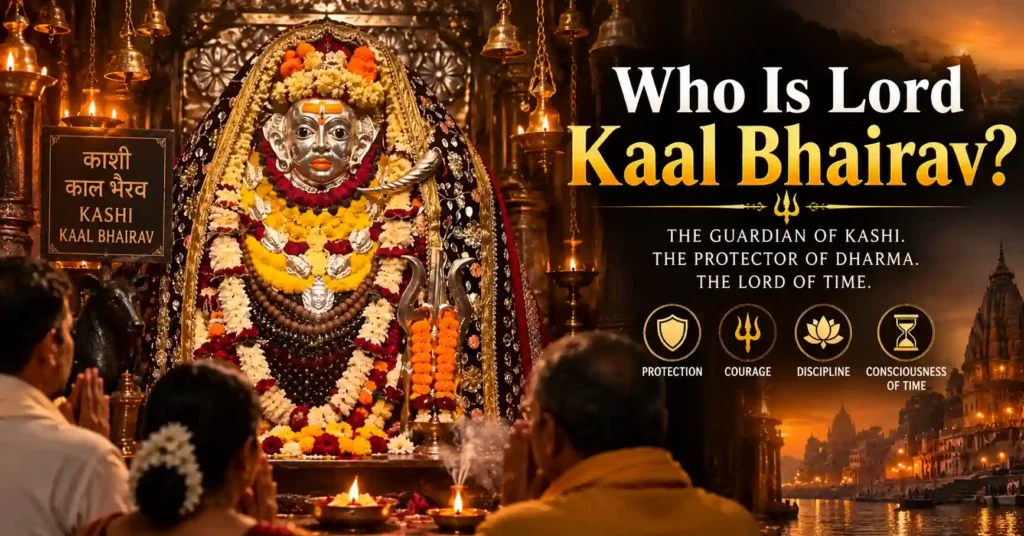
Who Is Lord Kaal Bhairav?
Lord Kaal Bhairav is a fierce and powerful manifestation of Lord Shiva. In Sanatan Dharma, He is revered as the guardian of dharma, the protector of devotees, and the divine ruler of time (Kala). The name “Kaal Bhairav” combines two profound concepts: Kala (time) and Bhairava (the one who removes fear and ignorance).
Although His appearance is fierce, devotees worship Him as a compassionate protector who helps remove fear, negative influences, arrogance, and spiritual obstacles. Many traditions regard Him as a deity who guides seekers toward discipline, responsibility, and spiritual awakening.
Why Is Kaal Bhairav Called the Lord of Time?
In Hindu philosophy, time governs all aspects of worldly existence, including birth, growth, change, and death.
Lord Kaal Bhairav symbolizes mastery over time itself. He reminds devotees that life is temporary and that every moment should be used wisely for dharma, self-improvement, and spiritual progress.
For this reason, many devotees pray to Him for:
Discipline and self-control
Courage during difficult times
Protection from fear
Guidance on the spiritual path
Freedom from negative habits
Kaal Bhairav as the Guardian of Kashi
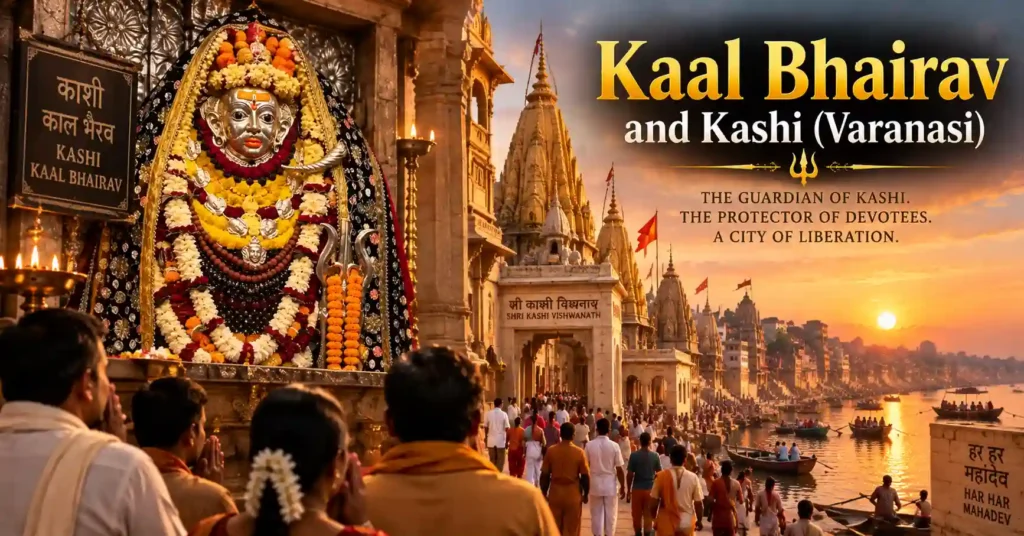
One of the most famous aspects of Lord Kaal Bhairav is His connection with Kashi (Varanasi).
Traditionally, He is regarded as the Kotwal of Kashi, meaning the divine guardian and protector of the sacred city. Devotees visiting Kashi often seek His blessings as part of their pilgrimage. Ancient traditions hold that His protection extends to all sincere seekers who worship with devotion.
Iconography of Lord Kaal Bhairav
Lord Kaal Bhairav is commonly depicted with several symbolic features:
Trident (Trishul) – Power over creation, preservation, and destruction
Damaru – Cosmic rhythm and divine sound
Dog (Shvana) – Loyalty, vigilance, and protection
Skull Garland – Impermanence of worldly life
Fierce Form – Destruction of ego, ignorance, and fear
Digambara Form – Freedom from worldly attachments
These symbols remind devotees that spiritual growth requires courage, discipline, and surrender to divine wisdom.
Why Do Devotees Worship Lord Kaal Bhairav?
Devotees worship Lord Kaal Bhairav not because of fear, but because of faith in His protective and transformative nature.
He is traditionally believed to help devotees overcome inner weaknesses, remain steadfast on the path of dharma, and face life’s challenges with courage and wisdom. His worship encourages responsibility, truthfulness, self-discipline, and devotion to Lord Shiva.
Understanding the nature of Lord Kaal Bhairav helps devotees appreciate the deeper meaning of the Kaal Bhairav Ashtakam, which praises Him as the guardian of Kashi, the lord of time, and the compassionate protector of all sincere seekers.
Origin and Scriptural Significance of Kaal Bhairav Ashtakam
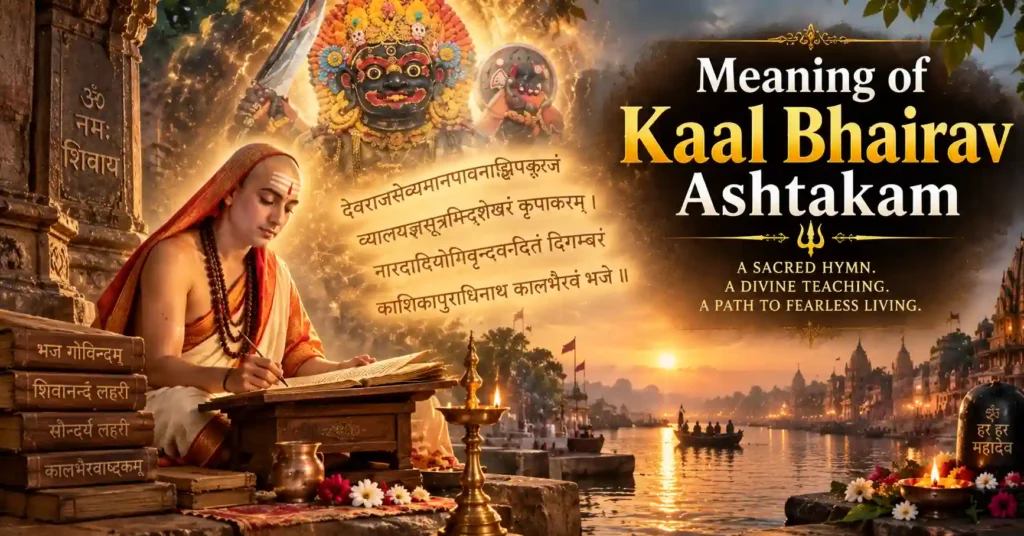
The Kaal Bhairav Ashtakam is traditionally attributed to Jagadguru Adi Shankaracharya, one of the greatest philosophers and spiritual teachers of Sanatan Dharma. This sacred hymn was composed in praise of Lord Kaal Bhairav, the fierce manifestation of Lord Shiva who is revered as the guardian of Kashi and the lord of time.
The hymn consists of eight verses, which is why it is called an Ashtakam. Each verse glorifies a different aspect of Lord Bhairav’s divine nature and concludes with the famous refrain:
“Kashikapuradhinatha Kalabhairavam Bhaje”
meaning, “I worship Lord Kaal Bhairav, the ruler of the sacred city of Kashi.”
Connection with Adi Shankaracharya
Adi Shankaracharya is believed to have composed this devotional hymn during his spiritual travels. Through this composition, he presented Lord Kaal Bhairav not merely as a fierce deity but also as a compassionate protector, spiritual guide, and liberator of devotees.
The stotra remains one of the most popular Bhairava hymns and is regularly recited by devotees across different Shaiva traditions.
Connection with Kashi (Varanasi)
The Kaal Bhairav Ashtakam is deeply connected with the sacred city of Kashi (Varanasi).
According to tradition, Lord Kaal Bhairav serves as the Kotwal (guardian) of Kashi. Devotees believe that His blessings protect the holy city and guide sincere seekers on their spiritual journey.
This connection explains why every verse repeatedly praises Him as the Lord of Kashi.
Place in Shaivism
In Shaiva traditions, Lord Bhairav represents divine power that destroys ignorance, ego, fear, and attachment.
This sacred hymn highlights several important qualities of Bhairava:
Protector of Dharma
Lord of Time (Kala)
Guardian of Kashi
Destroyer of fear
Bestower of wisdom
Guide toward liberation
These themes make the stotra much more than a devotional prayer. It is also a spiritual teaching on discipline, responsibility, courage, and self-transformation.
Why This Hymn Remains Important Today
Although composed centuries ago, the message of this Bhairava hymn remains relevant in modern life.
Its verses remind devotees to respect time, perform righteous actions, overcome fear, and remain devoted to the Divine. The hymn teaches that spiritual growth comes through self-discipline, wisdom, and surrender to Lord Shiva’s grace.
For this reason, the Kaal Bhairav Ashtakam continues to be recited by devotees seeking courage, protection, inner strength, and spiritual progress.
Kaal Bhairav Ashtakam Lyrics (Sanskrit)
Below is the complete Kaal Bhairav Ashtakam in Sanskrit, traditionally attributed to Adi Shankaracharya and dedicated to Lord Kaal Bhairav, the guardian of Kashi and the fierce manifestation of Lord Shiva.
Verse 1
देवराज सेव्यमान पावनाङ्घ्रि पङ्कजं
व्यालयज्ञसूत्रमिन्दुशेखरं कृपाकरम् ।
नारदादियोगिवृन्दवन्दितं दिगम्बरं
काशिकापुराधिनाथ कालभैरवं भजे ॥1॥
Verse 2
भानुकोटिभास्वरं भवाब्धितारकं परं
नीलकण्ठमीप्सितार्थदायकं त्रिलोचनम् ।
कालकालमम्बुजाक्षमक्षशूलमक्षरं
काशिकापुराधिनाथ कालभैरवं भजे ॥2॥
Verse 3
शूलटङ्कपाशदण्डपाणिमादिकारणं
श्यामकायमादिदेवमक्षरं निरामयम् ।
भीमविक्रमं प्रभुं विचित्रताण्डवप्रियं
काशिकापुराधिनाथ कालभैरवं भजे ॥3॥
Verse 4
भुक्तिमुक्तिदायकं प्रशस्तचारुविग्रहं
भक्तवत्सलं स्थितं समस्तलोकविग्रहम् ।
विनिक्वणन्मनोज्ञहेमकिङ्किणीलसत्कटिं
काशिकापुराधिनाथ कालभैरवं भजे ॥4॥
Verse 5
धर्मसेतुपालकं त्वधर्ममार्गनाशकं
कर्मपाशमोचकं सुशर्मदायकं विभुम् ।
स्वर्णवर्णशेषपाशशोभिताङ्गमण्डलं
काशिकापुराधिनाथ कालभैरवं भजे ॥5॥
Verse 6
रत्नपादुकाप्रभाभिरामपादयुग्मकं
नित्यद्वितीयमिष्टदैवतं निरञ्जनम् ।
मृत्युदर्पनाशनं करालदंष्ट्रमोक्षणं
काशिकापुराधिनाथ कालभैरवं भजे ॥6॥
Verse 7
अट्टहासभिन्नपद्मजाण्डकोशसन्ततिं
दृष्टिपातनष्टपापजालमुग्रशासनम् ।
अष्टसिद्धिदायकं कपालमालिकन्धरं
काशिकापुराधिनाथ कालभैरवं भजे ॥7॥
Verse 8
भूतसङ्घनायकं विशालकीर्तिदायकं
काशिवासलोकपुण्यपापशोधकं विभुम् ।
नीतिमार्गकोविदं पुरातनं जगत्पतिं
काशिकापुराधिनाथ कालभैरवं भजे ॥8॥
Phalashruti (Verse 9)
कालभैरवाष्टकं पठन्ति ये मनोहरं
ज्ञानमुक्तिसाधनं विचित्रपुण्यवर्धनम् ।
शोकमोहदैन्यलोभकोपतापनाशनं
ते प्रयान्ति कालभैरवाङ्घ्रिसन्निधिं ध्रुवम् ॥9॥
Kaal Bhairav Ashtakam Meaning (Verse-by-Verse)
The Kaal Bhairav Ashtakam glorifies Lord Kaal Bhairav as the guardian of Kashi, the lord of time, and the compassionate protector of devotees. Each verse highlights a different aspect of His divine power, wisdom, and grace.
Verse 1
देवराज सेव्यमान पावनाङ्घ्रि पङ्कजं
व्यालयज्ञसूत्रमिन्दुशेखरं कृपाकरम् ।
नारदादियोगिवृन्दवन्दितं दिगम्बरं
काशिकापुराधिनाथ कालभैरवं भजे ॥1॥
Transliteration
Devaraja Sevyamana Pavanaanghri Pankajam
Vyala Yajnasutram Indu Shekharam Kripakaram
Naradadi Yogi Vrinda Vanditam Digambaram
Kashikapuradhinatha Kalabhairavam Bhaje
Line-by-Line Hindi Meaning
देवराज सेव्यमान पावनाङ्घ्रि पङ्कजम्
जिनके पवित्र चरणकमलों की पूजा देवराज इन्द्र भी करते हैं।
व्याल यज्ञसूत्रम् इन्दुशेखरं कृपाकरम्
जो सर्प को यज्ञोपवीत के रूप में धारण करते हैं, मस्तक पर चंद्रमा धारण करते हैं और कृपा करने वाले हैं।
नारदादि योगिवृन्द वन्दितं दिगम्बरम्
जिनकी नारद और अनेक योगी श्रद्धा से वंदना करते हैं तथा जो दिगम्बर स्वरूप हैं।
काशिकापुराधिनाथ कालभैरवं भजे
मैं काशी के अधिपति भगवान काल भैरव की उपासना करता हूँ।
Line-by-Line English Meaning
Devaraja Sevyamana Pavanaanghri Pankajam
His sacred lotus feet are worshipped even by Indra, the king of the gods.
Vyala Yajnasutram Indu Shekharam Kripakaram
He wears a serpent as a sacred thread, bears the moon on His head, and is full of compassion.
Naradadi Yogi Vrinda Vanditam Digambaram
He is revered by Narada and great yogis and appears in the sky-clad form.
Kashikapuradhinatha Kalabhairavam Bhaje
I worship Lord Kaal Bhairav, the ruler of the sacred city of Kashi.
Full Verse Meaning
This verse praises Lord Kaal Bhairav as a supreme deity worshipped by gods, sages, and yogis alike. His divine appearance symbolizes both spiritual power and compassion. As the guardian of Kashi, He protects devotees and guides them on the path of righteousness and liberation.
Spiritual Essence
The verse teaches humility before the Divine. Even celestial beings bow before Lord Bhairav, reminding devotees that spiritual growth begins with surrender, devotion, and respect for divine wisdom.
Verse 2
भानुकोटिभास्वरं भवाब्धितारकं परं
नीलकण्ठमीप्सितार्थदायकं त्रिलोचनम् ।
कालकालमम्बुजाक्षमक्षशूलमक्षरं
काशिकापुराधिनाथ कालभैरवं भजे ॥2॥
Transliteration
Bhanu Koti Bhasvaram Bhavabdhi Tarakam Param
Neelakantham Ipsitartha Dayakam Trilochanam
Kala Kalam Ambujaksham Aksha Shoolam Aksharam
Kashikapuradhinatha Kalabhairavam Bhaje
Line-by-Line Hindi Meaning
भानुकोटिभास्वरं भवाब्धितारकं परम्
जो करोड़ों सूर्य के समान तेजस्वी हैं और संसार रूपी सागर से पार लगाने वाले हैं।
नीलकण्ठम् ईप्सितार्थदायकं त्रिलोचनम्
जो नीलकण्ठ हैं, इच्छित फल देने वाले हैं और तीन नेत्रों से युक्त हैं।
कालकालम् अम्बुजाक्षम् अक्षशूलम् अक्षरम्
जो काल के भी काल हैं, कमल समान नेत्रों वाले हैं, त्रिशूल धारण करते हैं और अविनाशी हैं।
काशिकापुराधिनाथ कालभैरवं भजे
मैं काशी के अधिपति भगवान काल भैरव की उपासना करता हूँ।
Line-by-Line English Meaning
Bhanu Koti Bhasvaram Bhavabdhi Tarakam Param
He shines with the brilliance of millions of suns and helps devotees cross the ocean of worldly existence.
Neelakantham Ipsitartha Dayakam Trilochanam
He is the blue-throated Lord, the giver of desired blessings, and the three-eyed one.
Kala Kalam Ambujaksham Aksha Shoolam Aksharam
He is the destroyer of time itself, lotus-eyed, armed with the trident, and eternal.
Kashikapuradhinatha Kalabhairavam Bhaje
I worship Lord Kaal Bhairav, the ruler of the sacred city of Kashi.
Full Verse Meaning
This verse glorifies Lord Bhairav as the eternal and radiant form of Shiva who transcends time and death. He grants protection, wisdom, and spiritual guidance while helping devotees overcome the cycle of worldly suffering.
Spiritual Essence
The verse reminds devotees that all worldly things are temporary, but the Divine is eternal. By seeking refuge in Lord Bhairav, one develops faith, courage, and a deeper understanding of life’s true purpose.
Verse 3
शूलटङ्कपाशदण्डपाणिमादिकारणं
श्यामकायमादिदेवमक्षरं निरामयम् ।
भीमविक्रमं प्रभुं विचित्रताण्डवप्रियं
काशिकापुराधिनाथ कालभैरवं भजे ॥3॥
Transliteration
Shoola Tanka Pasha Danda Panim Adi Karanam
Shyama Kayam Adi Devam Aksharam Niramayam
Bhima Vikramam Prabhum Vichitra Tandava Priyam
Kashikapuradhinatha Kalabhairavam Bhaje
Line-by-Line Hindi Meaning
शूलटङ्कपाशदण्डपाणिमादिकारणम्
जो त्रिशूल, खड्ग, पाश और दण्ड धारण करते हैं तथा सम्पूर्ण सृष्टि के मूल कारण हैं।
श्यामकायम् आदिदेवम् अक्षरं निरामयम्
जो श्यामवर्ण हैं, आदि देव हैं, अविनाशी हैं और सभी दोषों से रहित हैं।
भीमविक्रमं प्रभुं विचित्रताण्डवप्रियम्
जो महान पराक्रमी प्रभु हैं और दिव्य ताण्डव नृत्य को प्रिय मानते हैं।
काशिकापुराधिनाथ कालभैरवं भजे
मैं काशी के अधिपति भगवान काल भैरव की उपासना करता हूँ।
Line-by-Line English Meaning
Shoola Tanka Pasha Danda Panim Adi Karanam
He holds the trident, sword, noose, and staff in His hands and is the primordial cause of creation.
Shyama Kayam Adi Devam Aksharam Niramayam
He has a dark complexion, is the primordial deity, eternal, and free from all imperfections.
Bhima Vikramam Prabhum Vichitra Tandava Priyam
He is immensely powerful and delights in the cosmic dance of Tandava.
Kashikapuradhinatha Kalabhairavam Bhaje
I worship Lord Kaal Bhairav, the ruler of the sacred city of Kashi.
Full Verse Meaning
This verse describes Lord Bhairav as the powerful and eternal protector who holds divine weapons to uphold dharma and remove negativity. His cosmic dance symbolizes the continuous cycle of creation, preservation, and transformation within the universe.
Spiritual Essence
The verse teaches that divine strength is used to protect righteousness and remove ignorance. Devotees are encouraged to face challenges courageously while remaining devoted to truth, discipline, and spiritual growth.
Verse 4
भुक्तिमुक्तिदायकं प्रशस्तचारुविग्रहं
भक्तवत्सलं स्थितं समस्तलोकविग्रहम् ।
विनिक्वणन्मनोज्ञहेमकिङ्किणीलसत्कटिं
काशिकापुराधिनाथ कालभैरवं भजे ॥4॥
Transliteration
Bhukti Mukti Dayakam Prashasta Charu Vigraham
Bhakta Vatsalam Sthitam Samasta Loka Vigraham
Vinikvanan Manojna Hema Kinkini Lasat Katim
Kashikapuradhinatha Kalabhairavam Bhaje
Line-by-Line Hindi Meaning
भुक्तिमुक्तिदायकं प्रशस्तचारुविग्रहम्
जो भोग और मोक्ष दोनों प्रदान करने वाले हैं तथा अत्यंत सुंदर दिव्य स्वरूप वाले हैं।
भक्तवत्सलं स्थितं समस्तलोकविग्रहम्
जो भक्तों से प्रेम करते हैं और सम्पूर्ण ब्रह्मांड में व्याप्त हैं।
विनिक्वणन्मनोज्ञहेमकिङ्किणीलसत्कटिम्
जिनकी कमर स्वर्णिम घंटियों से सुशोभित है, जिनकी मधुर ध्वनि मन को आकर्षित करती है।
काशिकापुराधिनाथ कालभैरवं भजे
मैं काशी के अधिपति भगवान काल भैरव की उपासना करता हूँ।
Line-by-Line English Meaning
Bhukti Mukti Dayakam Prashasta Charu Vigraham
He grants both worldly prosperity and spiritual liberation and possesses a beautiful divine form.
Bhakta Vatsalam Sthitam Samasta Loka Vigraham
He is deeply affectionate toward His devotees and pervades all worlds.
Vinikvanan Manojna Hema Kinkini Lasat Katim
His waist is adorned with golden bells whose pleasant sound enchants the mind.
Kashikapuradhinatha Kalabhairavam Bhaje
I worship Lord Kaal Bhairav, the ruler of the sacred city of Kashi.
Full Verse Meaning
This verse praises Lord Kaal Bhairav as a compassionate deity who grants both material well-being and spiritual freedom. While His fierce form is well known, this verse highlights His loving nature toward devotees and His all-pervading divine presence.
Spiritual Essence
The verse teaches that the Divine cares for both worldly and spiritual needs. Through devotion, a seeker gradually learns to balance material responsibilities with the pursuit of liberation and higher wisdom.
Verse 5
धर्मसेतुपालकं त्वधर्ममार्गनाशकं
कर्मपाशमोचकं सुशर्मदायकं विभुम् ।
स्वर्णवर्णशेषपाशशोभिताङ्गमण्डलं
काशिकापुराधिनाथ कालभैरवं भजे ॥5॥
Transliteration
Dharma Setu Palakam Tvadharma Marga Nashakam
Karma Pasha Mochakam Susharma Dayakam Vibhum
Swarna Varna Shesha Pasha Shobhitaanga Mandalam
Kashikapuradhinatha Kalabhairavam Bhaje
Line-by-Line Hindi Meaning
धर्मसेतुपालकं त्वधर्ममार्गनाशकम्
जो धर्म की रक्षा करते हैं और अधर्म के मार्ग का नाश करते हैं।
कर्मपाशमोचकं सुशर्मदायकं विभुम्
जो कर्मों के बंधन से मुक्त करते हैं और सच्चा कल्याण प्रदान करते हैं।
स्वर्णवर्णशेषपाशशोभिताङ्गमण्डलम्
जिनका दिव्य शरीर स्वर्णिम आभा और नागाभूषणों से सुशोभित है।
काशिकापुराधिनाथ कालभैरवं भजे
मैं काशी के अधिपति भगवान काल भैरव की उपासना करता हूँ।
Line-by-Line English Meaning
Dharma Setu Palakam Tvadharma Marga Nashakam
He protects the bridge of righteousness and destroys the path of unrighteousness.
Karma Pasha Mochakam Susharma Dayakam Vibhum
He frees devotees from the bonds of karma and grants true well-being.
Swarna Varna Shesha Pasha Shobhitaanga Mandalam
His divine form shines with a golden radiance and is adorned with sacred serpent ornaments.
Kashikapuradhinatha Kalabhairavam Bhaje
I worship Lord Kaal Bhairav, the ruler of the sacred city of Kashi.
Full Verse Meaning
This verse portrays Lord Bhairav as the protector of dharma and the liberator from karmic bondage. He guides devotees away from harmful actions and toward a life rooted in truth, discipline, and spiritual responsibility.
Spiritual Essence
The verse reminds us that every action has consequences. By following dharma and seeking divine guidance, devotees can gradually free themselves from negative tendencies and move toward inner peace and spiritual progress.
Verse 6
रत्नपादुकाप्रभाभिरामपादयुग्मकं
नित्यद्वितीयमिष्टदैवतं निरञ्जनम् ।
मृत्युदर्पनाशनं करालदंष्ट्रमोक्षणं
काशिकापुराधिनाथ कालभैरवं भजे ॥6॥
Transliteration
Ratna Paduka Prabhabhirama Pada Yugmakam
Nitya Advitiyam Ishta Daivatam Niranjanam
Mrityu Darpa Nashanam Karala Damshtra Mokshanam
Kashikapuradhinatha Kalabhairavam Bhaje
Line-by-Line Hindi Meaning
रत्नपादुकाप्रभाभिरामपादयुग्मकम्
जिनके चरण रत्नजड़ित पादुकाओं की दिव्य आभा से शोभायमान हैं।
नित्यद्वितीयमिष्टदैवतं निरञ्जनम्
जो सदा अद्वितीय, निष्कलंक और भक्तों के प्रिय आराध्य देव हैं।
मृत्युदर्पनाशनं करालदंष्ट्रमोक्षणम्
जो मृत्यु के अभिमान का नाश करते हैं और अपने उग्र रूप से भी मुक्ति प्रदान करते हैं।
काशिकापुराधिनाथ कालभैरवं भजे
मैं काशी के अधिपति भगवान काल भैरव की उपासना करता हूँ।
Line-by-Line English Meaning
Ratna Paduka Prabhabhirama Pada Yugmakam
His feet shine beautifully with the radiance of jewel-studded sandals.
Nitya Advitiyam Ishta Daivatam Niranjanam
He is eternal, incomparable, pure, and the beloved deity of devotees.
Mrityu Darpa Nashanam Karala Damshtra Mokshanam
He destroys the pride of death and grants liberation through His powerful divine presence.
Kashikapuradhinatha Kalabhairavam Bhaje
I worship Lord Kaal Bhairav, the ruler of the sacred city of Kashi.
Full Verse Meaning
This verse glorifies Lord Bhairav as the eternal and flawless Divine who stands beyond death itself. His grace removes fear of mortality and helps devotees understand the eternal nature of the soul.
Spiritual Essence
The verse teaches that death is not the end but part of the cycle of existence. By developing devotion and spiritual awareness, devotees learn to overcome fear and place their trust in the eternal Divine Reality.
Verse 7
अट्टहासभिन्नपद्मजाण्डकोशसन्ततिं
दृष्टिपातनष्टपापजालमुग्रशासनम् ।
अष्टसिद्धिदायकं कपालमालिकन्धरं
काशिकापुराधिनाथ कालभैरवं भजे ॥7॥
Transliteration
Attahasa Bhinna Padmaja Anda Kosha Santatim
Drishti Pata Nashta Papa Jalam Ugra Shasanam
Ashta Siddhi Dayakam Kapala Malika Dharam
Kashikapuradhinatha Kalabhairavam Bhaje
Line-by-Line Hindi Meaning
अट्टहासभिन्नपद्मजाण्डकोशसन्ततिम्
जिनके प्रचंड हास्य से ब्रह्मा द्वारा निर्मित ब्रह्मांडीय आवरण भी कंपित हो जाते हैं।
दृष्टिपातनष्टपापजालमुग्रशासनम्
जिनकी एक दृष्टि मात्र से पापों का जाल नष्ट हो जाता है और जो कठोर धर्मपालक हैं।
अष्टसिद्धिदायकं कपालमालिकन्धरम्
जो अष्ट सिद्धियाँ प्रदान करते हैं और कपालों की माला धारण करते हैं।
काशिकापुराधिनाथ कालभैरवं भजे
मैं काशी के अधिपति भगवान काल भैरव की उपासना करता हूँ।
Line-by-Line English Meaning
Attahasa Bhinna Padmaja Anda Kosha Santatim
His mighty cosmic laughter shakes the very fabric of creation.
Drishti Pata Nashta Papa Jalam Ugra Shasanam
A single glance from Him destroys accumulated sins, and He firmly upholds divine law.
Ashta Siddhi Dayakam Kapala Malika Dharam
He bestows the eight spiritual powers and wears a garland of skulls.
Kashikapuradhinatha Kalabhairavam Bhaje
I worship Lord Kaal Bhairav, the ruler of the sacred city of Kashi.
Full Verse Meaning
This verse describes Lord Bhairav’s immense cosmic power. His presence transcends the universe itself, and His divine gaze removes ignorance and negativity. As the giver of spiritual attainments, He guides sincere seekers toward higher realization.
Spiritual Essence
The verse teaches that divine grace is more powerful than accumulated negativity. By living righteously and remaining devoted to the Divine, seekers can overcome limitations and progress on the spiritual path.
Verse 8
भूतसङ्घनायकं विशालकीर्तिदायकं
काशिवासलोकपुण्यपापशोधकं विभुम् ।
नीतिमार्गकोविदं पुरातनं जगत्पतिं
काशिकापुराधिनाथ कालभैरवं भजे ॥8॥
Transliteration
Bhuta Sangha Nayakam Vishala Kirti Dayakam
Kashi Vasa Loka Punya Papa Shodhakam Vibhum
Niti Marga Kovidam Puratanam Jagat Patim
Kashikapuradhinatha Kalabhairavam Bhaje
Line-by-Line Hindi Meaning
भूतसङ्घनायकं विशालकीर्तिदायकम्
जो समस्त गणों और दिव्य शक्तियों के नायक हैं तथा महान यश प्रदान करते हैं।
काशिवासलोकपुण्यपापशोधकं विभुम्
जो काशीवासियों और भक्तों के पुण्य-पाप का शोधन करने वाले सर्वव्यापक प्रभु हैं।
नीतिमार्गकोविदं पुरातनं जगत्पतिम्
जो धर्म और नीति के मार्ग के ज्ञाता, सनातन और सम्पूर्ण जगत के स्वामी हैं।
काशिकापुराधिनाथ कालभैरवं भजे
मैं काशी के अधिपति भगवान काल भैरव की उपासना करता हूँ।
Line-by-Line English Meaning
Bhuta Sangha Nayakam Vishala Kirti Dayakam
He is the leader of divine hosts and the bestower of great renown.
Kashi Vasa Loka Punya Papa Shodhakam Vibhum
He purifies the merits and shortcomings of devotees and the residents of Kashi.
Niti Marga Kovidam Puratanam Jagat Patim
He is the master of righteous conduct, the eternal one, and the lord of the universe.
Kashikapuradhinatha Kalabhairavam Bhaje
I worship Lord Kaal Bhairav, the ruler of the sacred city of Kashi.
Full Verse Meaning
This verse honors Lord Bhairav as the eternal guardian of righteousness and the protector of devotees. He guides people toward ethical living, spiritual wisdom, and a life aligned with dharma.
Spiritual Essence
The verse reminds devotees that true success comes from following righteous principles. Lord Bhairav’s guidance encourages honesty, discipline, responsibility, and spiritual integrity.
Verse 9 (Phalashruti)
कालभैरवाष्टकं पठन्ति ये मनोहरं
ज्ञानमुक्तिसाधनं विचित्रपुण्यवर्धनम् ।
शोकमोहदैन्यलोभकोपतापनाशनं
ते प्रयान्ति कालभैरवाङ्घ्रिसन्निधिं ध्रुवम् ॥9॥
Transliteration
Kalabhairavashtakam Pathanti Ye Manoharam
Jnana Mukti Sadhanam Vichitra Punya Vardhanam
Shoka Moha Dainya Lobha Kopa Tapa Nashanam
Te Prayanti Kalabhairava Anghri Sannidhim Dhruvam
Line-by-Line Hindi Meaning
कालभैरवाष्टकं पठन्ति ये मनोहरम्
जो लोग इस सुंदर काल भैरव अष्टकम का श्रद्धापूर्वक पाठ करते हैं।
ज्ञानमुक्तिसाधनं विचित्रपुण्यवर्धनम्
यह ज्ञान और मुक्ति का साधन है तथा पुण्य की वृद्धि करता है।
शोकमोहदैन्यलोभकोपतापनाशनम्
यह शोक, मोह, दीनता, लोभ, क्रोध और मानसिक कष्टों का नाश करता है।
ते प्रयान्ति कालभैरवाङ्घ्रिसन्निधिं ध्रुवम्
वे निश्चित रूप से भगवान काल भैरव के चरणों की शरण प्राप्त करते हैं।
Line-by-Line English Meaning
Kalabhairavashtakam Pathanti Ye Manoharam
Those who recite this beautiful Kaal Bhairav Ashtakam with devotion,
Jnana Mukti Sadhanam Vichitra Punya Vardhanam
gain a means to attain wisdom, liberation, and spiritual merit.
Shoka Moha Dainya Lobha Kopa Tapa Nashanam
It helps remove sorrow, delusion, helplessness, greed, anger, and mental suffering.
Te Prayanti Kalabhairava Anghri Sannidhim Dhruvam
They ultimately attain the divine presence and grace of Lord Kaal Bhairav.
Full Verse Meaning
The concluding verse explains the traditional benefits of reciting the Kaal Bhairav Ashtakam. It states that sincere recitation helps cultivate wisdom, devotion, and spiritual progress while reducing negative emotions and attachments that hinder inner growth.
Spiritual Essence
The phalashruti teaches that the true fruit of devotion is inner transformation. Through regular remembrance of Lord Kaal Bhairav, devotees gradually develop wisdom, self-mastery, faith, and a deeper connection with the Divine.
What Does “Kashikapuradhinatha Kalabhairavam Bhaje” Mean?
The phrase “Kashikapuradhinatha Kalabhairavam Bhaje” is the recurring refrain in every verse of the Kaal Bhairav Ashtakam. It is one of the most recognizable and frequently searched lines from the hymn.
This powerful line expresses complete devotion to Lord Kaal Bhairav and reminds devotees of His role as the divine guardian of Kashi, the sacred city of Lord Shiva.
Sanskrit Phrase
काशिकापुराधिनाथ कालभैरवं भजे
Word-by-Word Meaning
काशिका (Kashika) – Kashi or Varanasi
पुर (Pura) – City
अधिनाथ (Adhinatha) – Supreme Lord or Protector
कालभैरवम् (Kalabhairavam) – Lord Kaal Bhairav
भजे (Bhaje) – I worship, adore, or meditate upon
Literal Meaning
“I worship Lord Kaal Bhairav, the supreme protector and ruler of the sacred city of Kashi.”
Symbolic Meaning
On a deeper level, Kashi is not only a physical city.
In spiritual traditions, Kashi symbolizes the state of inner illumination where ignorance is removed and divine wisdom arises.
Lord Kaal Bhairav represents the divine force that protects seekers on their spiritual journey and helps them overcome fear, ego, attachment, and ignorance.
Spiritual Interpretation
The repeated refrain teaches devotees to:
Surrender to divine guidance
Respect the power of time
Follow the path of dharma
Develop courage and self-discipline
Seek spiritual wisdom over worldly distractions
By repeating this line throughout the hymn, devotees constantly remember Lord Bhairav’s presence and protection.
Practical Relevance in Daily Life
For modern devotees, this verse serves as a reminder that:
Time should be used wisely
Actions have consequences
Discipline leads to growth
Fear can be overcome through faith
Divine guidance is available to sincere seekers
The phrase is not merely praise of a deity. It is an affirmation of devotion, discipline, and trust in the Divine.
Key Takeaway
The line “Kashikapuradhinatha Kalabhairavam Bhaje” expresses complete surrender to Lord Kaal Bhairav. It reminds devotees that the guardian of Kashi is also the guardian of those who walk the path of truth, devotion, and spiritual awakening.
Kaal Bhairav Ashtakam and Kashi (Varanasi)
The Kaal Bhairav Ashtakam is deeply connected with Kashi (Varanasi), one of the holiest cities in Sanatan Dharma. In fact, every verse of the hymn ends with the line “Kashikapuradhinatha Kalabhairavam Bhaje,” which means, “I worship Lord Kaal Bhairav, the Lord and protector of Kashi.”
This repeated reference highlights the special relationship between Lord Kaal Bhairav and the sacred city. According to tradition, Kaal Bhairav is regarded as the divine guardian of Kashi and is often called the Kotwal of Kashi, meaning the protector and spiritual custodian of the city.
Why Is Lord Kaal Bhairav Associated with Kashi?
In Shaiva traditions, Kashi is considered the city of Lord Shiva.
Lord Kaal Bhairav is believed to safeguard the spiritual sanctity of the city and protect those who come there seeking liberation and divine grace.
Traditional beliefs describe Him as:
Guardian of Kashi
Protector of pilgrims and devotees
Enforcer of dharma
Destroyer of negativity and ignorance
Divine guide on the path of liberation
For this reason, many devotees visit the Kaal Bhairav Temple in Varanasi as part of their pilgrimage.
The Spiritual Meaning of Kashi
While Kashi is a physical city, many spiritual teachers also interpret it symbolically.
Kashi represents the inner state of illumination where ignorance is removed and spiritual wisdom arises. In this deeper sense, Lord Kaal Bhairav is not only the guardian of a sacred place but also the protector of the seeker’s spiritual journey.
The repeated mention of Kashi throughout the Kaal Bhairav Ashtakam reminds devotees to move toward inner awakening, self-discipline, and divine knowledge.
Why Does Every Verse Mention Kashi?
The recurring phrase serves as a constant reminder of Lord Bhairav’s presence and protection.
By ending every verse with devotion to the Lord of Kashi, the Kaal Bhairav Ashtakam emphasizes:
Surrender to divine guidance
Respect for dharma
Awareness of time and responsibility
The pursuit of spiritual wisdom
The sacred connection between Shiva, Bhairav, and Kashi
Key Takeaway
The connection between the Kaal Bhairav Ashtakam and Kashi is central to understanding the hymn. Through its repeated praise of the Lord of Kashi, the stotram reminds devotees that true spiritual progress comes through discipline, devotion, wisdom, and the guidance of Lord Kaal Bhairav.
Benefits of Chanting Kaal Bhairav Ashtakam
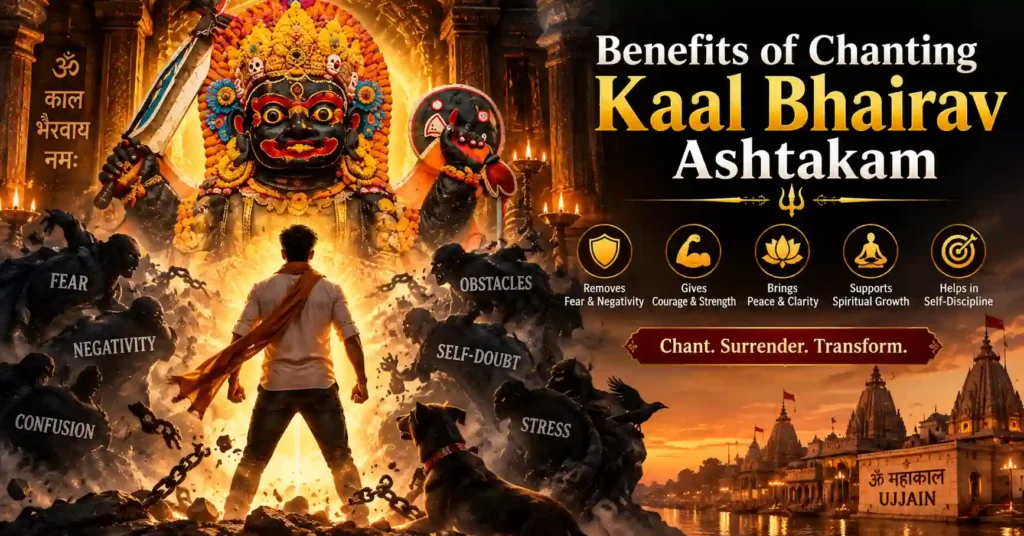
For centuries, devotees have recited the Kaal Bhairav Ashtakam to express devotion to Lord Kaal Bhairav and seek His divine protection. While individual experiences may vary, the hymn is traditionally associated with courage, spiritual discipline, inner strength, and devotion.
The true value of the Kaal Bhairav Ashtakam lies not merely in recitation but in understanding its teachings about time, dharma, responsibility, and surrender to the Divine.
Spiritual Benefits of Kaal Bhairav Ashtakam
The hymn repeatedly reminds devotees of the eternal nature of the Divine and the temporary nature of worldly existence.
Traditional spiritual benefits include:
Deepening devotion to Lord Shiva and Kaal Bhairav
Strengthening spiritual awareness
Encouraging self-reflection
Inspiring detachment from ego and ignorance
Supporting progress on the spiritual path
Mental Benefits of Chanting Kaal Bhairav Ashtakam
The verses encourage discipline, focus, and mindfulness.
Many devotees find that regular recitation helps cultivate a more balanced and attentive mind.
Traditionally, the hymn is associated with:
Improved concentration
Greater mental clarity
Better self-control
Increased mindfulness
A calmer approach to challenges
Emotional Benefits of Kaal Bhairav Ashtakam
The teachings of Lord Bhairav emphasize courage and fearlessness.
Reflecting on these teachings can help devotees face life’s uncertainties with greater confidence and resilience.
Devotees often associate the hymn with:
Reduced fear and anxiety
Greater emotional stability
Increased patience
Improved confidence
Inner peace during difficult situations
Traditional Benefits of Kaal Bhairav Ashtakam
In Shaiva traditions, Lord Kaal Bhairav is revered as the protector of dharma and the guardian of devotees.
Traditionally, chanting the Kaal Bhairav Ashtakam is believed to:
Encourage righteous living
Help overcome negative tendencies
Promote discipline and responsibility
Inspire ethical decision-making
Strengthen faith in divine protection
These benefits are understood as the result of sincere devotion and regular practice.
Devotional Benefits of Kaal Bhairav Ashtakam
The hymn is ultimately an expression of devotion.
Regular recitation helps devotees remember the presence of Lord Bhairav throughout daily life and strengthens their connection with the Divine.
Many practitioners feel that it helps them:
Deepen their daily worship
Cultivate humility
Develop trust in divine guidance
Strengthen their relationship with Lord Shiva
Remain spiritually grounded
Summary of Kaal Bhairav Ashtakam Benefits
Spiritual – Devotion, self-awareness, spiritual growth
Mental – Focus, discipline, clarity of thought
Emotional – Courage, confidence, inner balance
Traditional – Dharma, responsibility, righteous conduct
Devotional – Faith, surrender, divine connection
Key Takeaway
The greatest benefit of the Kaal Bhairav Ashtakam is inner transformation. Through regular chanting and reflection on its meaning, devotees seek wisdom, discipline, fearlessness, and a deeper connection with Lord Kaal Bhairav.
How to Chant Kaal Bhairav Ashtakam Correctly
The Kaal Bhairav Ashtakam can be chanted by anyone with devotion, sincerity, and respect. While traditional practices provide guidance, the most important aspect is chanting with faith and understanding.
Regular recitation helps devotees connect more deeply with Lord Kaal Bhairav and reflect on the hymn’s teachings about time, discipline, and dharma.
Best Time to Chant Kaal Bhairav Ashtakam
Although the hymn can be recited at any time, certain periods are traditionally considered especially auspicious.
| Time | Traditional Significance |
|---|---|
| Early Morning (Brahma Muhurta) | Promotes focus and spiritual awareness |
| Sunrise | Associated with purity and new beginnings |
| Evening | Encourages reflection and inner calm |
| Kaal Ashtami | Special day dedicated to Lord Kaal Bhairav |
| Maha Shivaratri | Auspicious for Shiva and Bhairava worship |
Many devotees prefer chanting the Kaal Bhairav Ashtakam during the early morning hours when the mind is calm and distractions are minimal.
Preparations Before Chanting
Simple preparations can help create a devotional atmosphere.
Bathe or wash your hands and face
Choose a clean and quiet place
Sit comfortably with your spine straight
Keep an image or murti of Lord Bhairav if available
Light a diya or incense if desired
Calm the mind before beginning
These practices are helpful but not mandatory.
Traditional Method of Chanting
Many devotees follow this simple process:
Offer prayers to Lord Ganesha and Lord Shiva.
Sit facing east or north if possible.
Recite the Kaal Bhairav Ashtakam slowly and clearly.
Focus on the meaning of the verses while chanting.
End with gratitude and a silent prayer.
Some devotees also chant “Om Kaalabhairavaya Namah” before or after reciting the hymn.
How Many Times Should You Chant Kaal Bhairav Ashtakam?
There is no fixed rule that applies to everyone.
Common devotional practices include:
Once daily for regular worship
Three times for focused devotion
Eleven times during special observances
During Kaal Ashtami or Bhairava worship
Consistency is generally considered more important than the number of repetitions.
Chanting Guidelines
Traditional teachings encourage:
Clear pronunciation
A focused mind
Regular practice
Respect for the hymn
Understanding the meaning
Sincere devotion
The emphasis is on devotion and awareness rather than perfection.
Can Beginners Chant Kaal Bhairav Ashtakam?
Yes, beginners can chant the Kaal Bhairav Ashtakam.
Many devotees start by reading the transliteration and gradually become familiar with the Sanskrit verses. Understanding the meaning verse by verse can make the experience more meaningful and rewarding.
Why Understanding the Meaning Matters
The hymn is much more than a collection of devotional verses.
Its teachings encourage:
Courage in difficult situations
Respect for time
Self-discipline
Ethical living
Spiritual growth
When chanting is combined with understanding, the Kaal Bhairav Ashtakam becomes both a prayer and a guide for daily life.
Common Mistakes to Avoid
When learning the Kaal Bhairav Ashtakam, try to avoid:
Rushing through the verses
Chanting mechanically
Ignoring the meaning
Treating it as a ritual alone
Focusing only on repetition counts
A calm mind, sincere devotion, and regular practice are traditionally regarded as the foundation of meaningful chanting.

Kaal Bhairav Ashtakam in Daily Life
The Kaal Bhairav Ashtakam is not limited to temple worship or special religious occasions. Its teachings can be applied in everyday life to develop discipline, courage, responsibility, and spiritual awareness.
At its core, the hymn reminds us that time is precious and that every action has consequences. These timeless lessons remain relevant for students, professionals, householders, and spiritual seekers alike.
Learning the Value of Time
Lord Kaal Bhairav is revered as the lord of time.
The hymn encourages devotees to use their time wisely, avoid procrastination, and focus on actions that contribute to personal growth and spiritual progress.
In daily life, this can mean:
Prioritizing important responsibilities
Avoiding unnecessary distractions
Managing time with discipline
Living with greater purpose
Developing Courage During Difficult Times
Several verses of the Kaal Bhairav Ashtakam describe Lord Bhairav as fearless and powerful.
Reflecting on these qualities can inspire devotees to face challenges with confidence rather than fear.
The hymn reminds us that:
Difficulties are temporary
Fear should not control decisions
Faith can strengthen inner resilience
Courage grows through right action
Following the Path of Dharma
One of the central messages of the hymn is the protection of dharma.
In modern life, this means choosing honesty, integrity, and responsibility even when it is difficult.
Devotees can apply this teaching by:
Speaking truthfully
Acting ethically
Respecting commitments
Treating others fairly
Making responsible choices
Overcoming Negative Habits
The Kaal Bhairav Ashtakam repeatedly praises the Lord as the destroyer of ignorance and negativity.
This message encourages self-improvement and personal accountability.
Many devotees use the hymn as a reminder to overcome:
Anger
Greed
Laziness
Negative thinking
Harmful habits
Building a Consistent Spiritual Practice
Even a few minutes of daily recitation can become a meaningful spiritual discipline.
Many devotees include the Kaal Bhairav Ashtakam as part of:
Morning prayers
Evening worship
Shiva devotion
Meditation sessions
Kaal Ashtami observances
Regular practice helps create a stronger connection with Lord Bhairav and His teachings.
Lessons from Kaal Bhairav Ashtakam for Modern Life
Respect Time – Use time wisely and purposefully
Follow Dharma – Make ethical decisions
Be Fearless – Face challenges with courage
Practice Discipline – Build positive habits
Seek Wisdom – Learn from every experience
Stay Devoted – Maintain spiritual awareness
Why the Hymn Remains Relevant Today
Although the Kaal Bhairav Ashtakam was composed centuries ago, its message continues to resonate today.
People still struggle with fear, distractions, stress, uncertainty, and difficult decisions. The hymn encourages devotees to develop discipline, wisdom, courage, and faith while navigating these challenges.
In this way, the Kaal Bhairav Ashtakam becomes more than a devotional hymn. It becomes a practical guide for living a balanced, purposeful, and spiritually conscious life.
Did You Know? Interesting Facts About Kaal Bhairav Ashtakam
The Kaal Bhairav Ashtakam is one of the most popular hymns dedicated to Lord Bhairav. Beyond its devotional significance, it contains many fascinating historical, spiritual, and traditional insights.
1. Kaal Bhairav Ashtakam Is Traditionally Attributed to Adi Shankaracharya
The hymn is widely believed to have been composed by Adi Shankaracharya, one of the greatest philosophers and spiritual teachers in Hindu history.
His composition helped make the worship of Lord Kaal Bhairav accessible to devotees across different traditions.
2. Every Verse Ends with the Same Powerful Refrain
Each verse concludes with:
“Kashikapuradhinatha Kalabhairavam Bhaje”
This repeated line emphasizes devotion to Lord Kaal Bhairav as the divine guardian and ruler of Kashi.
3. Lord Kaal Bhairav Is Known as the Kotwal of Kashi
In traditional belief, Lord Kaal Bhairav serves as the Kotwal (guardian) of Varanasi.
Many pilgrims visit His temple before or during their Kashi pilgrimage to seek His blessings.
4. The Hymn Consists of Eight Main Verses
The word Ashtakam means a composition containing eight verses.
The Kaal Bhairav Ashtakam follows this classical Sanskrit structure and is followed by a concluding Phalashruti describing the benefits of recitation.
5. The Hymn Focuses on Time and Dharma
Unlike many devotional hymns that emphasize material blessings, the Kaal Bhairav Ashtakam repeatedly highlights:
The importance of time
Righteous living
Self-discipline
Spiritual responsibility
These themes make it relevant even today.
6. Lord Bhairav Is a Form of Lord Shiva
Kaal Bhairav is not a separate deity from Shiva.
He is revered as a fierce and protective manifestation of Lord Shiva who destroys ignorance, ego, and fear.
7. The Hymn Is Popular During Kaal Ashtami
Many devotees recite the Kaal Bhairav Ashtakam on Kaal Ashtami, a sacred observance dedicated to Lord Bhairav.
Special prayers and worship are often performed on this day.
8. The Dog Is Considered Sacred to Lord Bhairav
In traditional iconography, Lord Bhairav is associated with a dog.
The dog symbolizes loyalty, alertness, protection, and faithfulness.
9. The Hymn Is Recited Across Different Shaiva Traditions
Although closely associated with Bhairava worship, the Kaal Bhairav Ashtakam is respected by devotees from various Shaiva traditions throughout India.
Its message transcends regional and sectarian boundaries.
10. The Core Message Is Still Relevant Today
The hymn teaches lessons that remain valuable in modern life:
Respect time
Act responsibly
Follow dharma
Face fears with courage
Remain devoted to the Divine
These universal teachings continue to inspire devotees centuries after the hymn was composed.
Quick Facts About Kaal Bhairav Ashtakam
Composer – Traditionally Adi Shankaracharya
Deity – Lord Kaal Bhairav
Structure – Eight verses plus Phalashruti
Main Theme – Time, dharma, protection, devotion
Sacred City – Kashi (Varanasi)
Special Occasion – Kaal Ashtami
Tradition – Shaivism
Core Teaching – Discipline, courage, and spiritual awareness

Conclusion
The Kaal Bhairav Ashtakam is a powerful devotional hymn that glorifies Lord Kaal Bhairav, the guardian of Kashi and the divine embodiment of time, discipline, and protection. Through its eight verses, the hymn highlights His compassion, strength, wisdom, and role as the protector of dharma.
More than a prayer, the Kaal Bhairav Ashtakam offers valuable spiritual lessons. It reminds devotees to respect time, act responsibly, overcome fear, and remain steadfast on the path of righteousness. Its teachings encourage both inner transformation and deeper devotion to Lord Shiva.
Whether recited during daily worship, meditation, Kaal Ashtami, or special spiritual observances, the Kaal Bhairav Ashtakam continues to inspire devotees across generations. Its timeless message remains relevant in modern life, helping seekers cultivate courage, discipline, self-awareness, and faith.
By understanding the meaning, symbolism, and spiritual significance of the Kaal Bhairav Ashtakam, devotees can move beyond simple recitation and connect more deeply with its transformative wisdom.
May Lord Kaal Bhairav bless you with fearlessness, clarity of purpose, righteous conduct, and unwavering devotion on your spiritual journey.
Related Topics
If you would like to explore Lord Bhairav more deeply, the following articles provide insights into his various forms, symbolism, spiritual significance, and connection with Bhagwan Shiv. Together, they offer a broader understanding of Bhairav’s role as a protector, guide, and embodiment of truth within Sanatan Dharma.
Batuk Bhairav: Meaning, Mantra, Puja, Temples, Benefits and Significance
https://thesanatantales.com/batuk-bhairav-removes-fear-obstacles/
Swarnakarshan Bhairav: Meaning, Mantra, Benefits, Wealth & Spiritual Significance
https://thesanatantales.com/swarnakarshan-bhairav/
Shiva and Bhairav: Meaning, Connection & Spiritual Path
https://thesanatantales.com/shiva-and-bhairav-guide/
Ashta Bhairav: The Eight Guardians of Direction, Karma, and Spiritual Protection
https://thesanatantales.com/ashta-bhairav/
Bhairav Tattva: Meaning, Symbolism, and the Principle of Truth in Sanatan Dharma
https://thesanatantales.com/bhairav-tattva/
Bhairava (Wikipedia)
https://en.wikipedia.org/wiki/Bhairava
FAQs
What is Kaal Bhairav Ashtakam?
The Kaal Bhairav Ashtakam is a sacred Sanskrit hymn dedicated to Lord Kaal Bhairav, a powerful form of Lord Shiva. Traditionally attributed to Adi Shankaracharya, it consists of eight verses that praise Kaal Bhairav as the guardian of Kashi, the protector of dharma, and the lord of time.
The hymn describes His divine qualities, spiritual power, compassion toward devotees, and role in guiding seekers toward wisdom and liberation.
For this reason, the Kaal Bhairav Ashtakam remains one of the most widely recited Bhairav stotras in the Shaiva tradition and continues to inspire devotees seeking courage, discipline, and spiritual growth.
Who is Lord Kaal Bhairav?
Lord Kaal Bhairav is a fierce and protective manifestation of Lord Shiva. The word Kaal means time, while Bhairav refers to the awe-inspiring form that destroys fear, ignorance, and negativity.
In Hindu tradition, He is regarded as the ruler of time, the protector of devotees, and the divine guardian of Kashi (Varanasi). Many traditions also refer to Him as the Kotwal or guardian deity of the sacred city.
Although His appearance may seem fierce, devotees worship Him as a compassionate protector who guides sincere seekers toward righteousness, discipline, and spiritual awakening.
Why is Kaal Bhairav Ashtakam important?
The importance of the Kaal Bhairav Ashtakam lies in its spiritual teachings rather than material promises. The hymn repeatedly emphasizes devotion, courage, righteous conduct, self-discipline, and respect for time.
Each verse reminds devotees that worldly life is temporary and that spiritual wisdom should remain the ultimate goal.
The Kaal Bhairav Ashtakam also highlights Lord Bhairav’s role as the protector of dharma and the destroyer of ignorance. For many devotees, it serves as both a prayer and a guide for living a more conscious and disciplined life.
Who composed the Kaal Bhairav Ashtakam?
The Kaal Bhairav Ashtakam is traditionally attributed to Adi Shankaracharya, one of the most influential philosophers and spiritual teachers in Hindu history.
According to tradition, he composed the hymn in praise of Lord Kaal Bhairav during his visit to Kashi. The composition beautifully combines devotion, philosophy, and symbolism within eight powerful verses.
Because of its poetic style and profound spiritual depth, the hymn has remained popular for centuries and continues to be recited by devotees throughout India and beyond.
What are the benefits of chanting Kaal Bhairav Ashtakam?
The benefits of chanting Kaal Bhairav Ashtakam are traditionally associated with spiritual growth, mental discipline, courage, and devotion.
Devotees believe that regular recitation helps strengthen faith, reduce fear, improve focus, and encourage righteous living. The hymn also inspires greater awareness of time and personal responsibility.
While individual experiences vary, many practitioners view the Kaal Bhairav Ashtakam as a valuable spiritual practice that promotes inner strength, self-reflection, and a deeper connection with Lord Shiva.
Can beginners chant Kaal Bhairav Ashtakam?
Yes, beginners can chant the Kaal Bhairav Ashtakam.
Many devotees begin by reading the transliteration and gradually learning the Sanskrit verses. Understanding the meaning verse by verse often makes the practice more engaging and spiritually meaningful.
Perfect pronunciation is helpful, but sincere effort and devotion are generally considered more important than perfection. Over time, familiarity with the hymn naturally improves pronunciation and confidence.
For beginners, regular practice and understanding the message of the Kaal Bhairav Ashtakam can be more valuable than focusing only on technical accuracy.
When is the best time to chant Kaal Bhairav Ashtakam?
The best time to chant Kaal Bhairav Ashtakam is traditionally during Brahma Muhurta, sunrise, or other quiet periods of the day when the mind is calm and focused.
Many devotees also recite the hymn on Kaal Ashtami, Bhairav Ashtami, and Maha Shivaratri as part of their devotional practice.
However, spiritual teachers often emphasize that sincerity is more important than timing. A devotee who chants with faith and concentration can benefit from the hymn at any suitable time.
Regularity and devotion remain the most important aspects of meaningful recitation.
Why does every verse end with “Kashikapuradhinatha Kalabhairavam Bhaje”?
Every verse of the Kaal Bhairav Ashtakam concludes with the phrase “Kashikapuradhinatha Kalabhairavam Bhaje,” which means, “I worship Lord Kaal Bhairav, the ruler of Kashi.”
This repeated refrain reinforces the devotee’s focus on Lord Bhairav throughout the hymn and serves as an expression of surrender and devotion.
The repetition also highlights Kaal Bhairav’s special connection with Kashi, one of the holiest cities in Sanatan Dharma, and reminds devotees of His role as its divine guardian.
Is Kaal Bhairav Ashtakam only for Shiva devotees?
No, the Kaal Bhairav Ashtakam is not limited to Shiva devotees alone.
Although Lord Kaal Bhairav is a form of Lord Shiva, the hymn’s teachings about courage, discipline, devotion, righteousness, and spiritual awareness can inspire anyone interested in Sanatan Dharma.
People from different Hindu traditions recite the Kaal Bhairav Ashtakam because its message goes beyond sectarian boundaries and focuses on universal spiritual values.
Its emphasis on overcoming fear and living according to dharma makes it meaningful for a wide range of devotees and spiritual seekers.
Why is Kaal Bhairav called the Lord of Time?
Lord Kaal Bhairav is called the Lord of Time because the word Kaal refers to time itself. In Hindu philosophy, time governs creation, change, growth, decay, and transformation.
As the Lord of Time, Kaal Bhairav symbolizes the divine power that exists beyond birth, death, and worldly limitations. Devotees see Him as a reminder that time is precious and should be used wisely.
The Kaal Bhairav Ashtakam repeatedly reflects this theme, encouraging seekers to live responsibly, follow dharma, and focus on spiritual growth while making the best use of the time given to them.
Is Understanding the Meaning of Kaal Bhairav Ashtakam Important?
Yes, understanding the meaning of the Kaal Bhairav Ashtakam can make the practice much more meaningful. While the Sanskrit verses themselves are considered sacred, knowing what they convey helps devotees connect more deeply with the hymn’s spiritual message.
The verses do more than praise Lord Kaal Bhairav. They teach important lessons about courage, discipline, devotion, righteous living, and the wise use of time. When devotees reflect on these teachings while chanting, the Kaal Bhairav Ashtakam becomes more than a devotional recitation.
By combining chanting with understanding, seekers can apply the hymn’s wisdom in daily life and develop a stronger connection with Lord Kaal Bhairav and the path of dharma.
Share Your Experience with Kaal Bhairav Ashtakam
Has the Kaal Bhairav Ashtakam played a special role in your spiritual journey? Many devotees recite this sacred hymn during daily prayers, meditation, Kaal Ashtami, or times when they seek courage, protection, and inner strength.
We would love to hear about your experience with the Kaal Bhairav Ashtakam. Do you chant it regularly? Has a particular verse inspired you? What insights, lessons, or benefits have you discovered through this powerful hymn dedicated to Lord Kaal Bhairav?
Feel free to share your thoughts, experiences, or reflections in the comments below. Your journey may encourage and inspire other devotees who are exploring the teachings of Lord Bhairav.
Let us learn from one another and continue discovering the timeless wisdom of Sanatan Dharma with devotion, humility, and an open heart.
Reference & Sources
This article is based on Shaiva and Bhairava traditions followed within Sanatan Dharma, traditional beliefs associated with Lord Bhairava, religious narratives, folk traditions, and insights gathered from various spiritual and religious study sources. Some concepts discussed in this article are also inspired by interpretations found in guru-disciple lineages, temple traditions, devotional literature, and traditional commentaries on the Kaal Bhairav Ashtakam.
Note: Beliefs, stories, symbolism, and methods of worship related to Lord Bhairava may differ across regions, sects, temples, and spiritual traditions. Interpretations of the Kaal Bhairav Ashtakam can also vary depending on the lineage, teacher, or devotional tradition being followed.
The purpose of this article is not to present any single viewpoint as the absolute truth, but to explain commonly accepted religious, spiritual, and devotional perspectives in a simple, respectful, and accessible manner for readers seeking to understand the meaning and significance of the Kaal Bhairav Ashtakam.
Explore More Topics from The Sanatan Tales