
Ekadashi is one of the most important fasting days in Sanatan Dharma. Dedicated to the worship of Lord Vishnu, it is observed twice every lunar month, on the eleventh day of both the waxing and waning phases of the Moon. Many devotees observe an Ekadashi vrat with prayers, fasting, and remembrance of Bhagwan Vishnu.
If you are wondering Ekadashi kab hai, knowing the correct date is only the first step. You may also need the Ekadashi tithi timings, the appropriate day to observe the fast, and the correct time to break it on Dwadashi, known as Parana.
In this guide, you will find the upcoming Ekadashi dates for the next six months, from October 2026 to April 2027, along with vrat details, tithi timings, Parana information, fasting guidelines, and the spiritual significance of these sacred days. We will also explain why Ekadashi dates can sometimes differ between calendars.
Ekadashi at a Glance
| Aspect | Details |
|---|---|
| Meaning | The eleventh tithi of a lunar fortnight |
| Frequency | Twice in most lunar months |
| Types | Shukla Paksha Ekadashi and Krishna Paksha Ekadashi |
| Main Deity | Bhagwan Vishnu |
| Purpose | Devotion, self-discipline, prayer, and spiritual reflection |
| Fasting Practices | Many devotees avoid grains and beans; other fasting methods depend on family tradition and personal capacity |
| Parana | The fast is generally broken on Dwadashi during the prescribed Parana period |
| Date and Timing | May vary by location and tradition; consult a reliable local Panchang |
Table of Contents
ToggleUpcoming Ekadashi: Date, Vrat and Parana Timings
The next Ekadashi is Papankusha Ekadashi on Thursday, 22 October 2026. It falls during the Shukla Paksha, the waxing phase of the Moon, in the Hindu month of Ashwin. Devotees observe this sacred day by worshipping Lord Vishnu, offering prayers, and following their chosen fasting tradition.
Papankusha Ekadashi 2026: Important Timings
Ekadashi vrat date: Thursday, 22 October 2026
Ekadashi Tithi begins: 2:12 PM on Wednesday, 21 October
Ekadashi Tithi ends: 2:48 PM on Thursday, 22 October
Parana date: Friday, 23 October 2026
Parana time: Approximately 6:31 AM to 8:47 AM
These timings are based on the Ujjain Panchang. Parana is the ritual of breaking the fast, usually on Dwadashi, the day after Ekadashi. Timings can vary slightly by location and calendar tradition, so check your local Panchang before observing the vrat.
If you are searching for Ekadashi kab hai, remember that the fasting date is determined by the traditional Panchang rules, not simply by the time the Ekadashi Tithi begins. Many devotees begin their fast on the date prescribed by their family tradition or sampradaya.
Papankusha Ekadashi is associated with devotion to Lord Vishnu and the spiritual importance of seeking forgiveness, practising self-discipline, and turning one’s mind towards Bhagwan. Devotees may observe a complete fast or follow a simpler vrat according to their health and capacity.
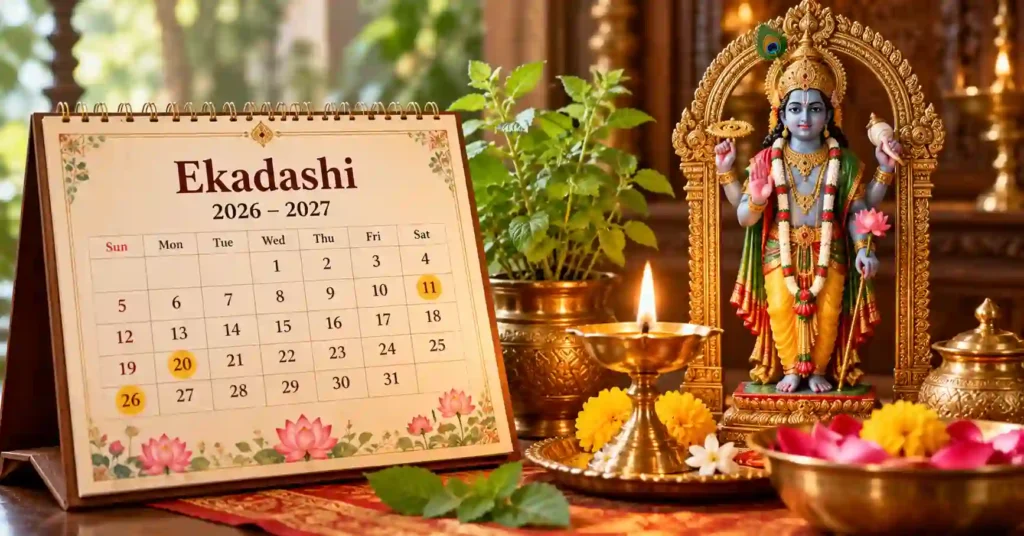
Ekadashi Calendar for the Next Six Months (2026–2027)
If you are planning your fasts in advance, this Ekadashi calendar will help you keep track of the upcoming vrat dates. It covers the period from October 2026 to April 2027, including both Shukla Paksha and Krishna Paksha Ekadashi.
The dates below follow the commonly observed Hindu calendar. The exact fasting day and Parana timings may vary by location and tradition, particularly for Smarta and Vaishnava devotees. Always check your local Panchang before observing a vrat.
Use this calendar as a planning guide, and refer to the monthly sections below for the names and details of individual Ekadashis.
Ekadashi Dates in October and November 2026
October and November 2026 include four important Ekadashi observances. These dates help devotees plan their Vishnu puja, fasting, and Parana in advance.
| Ekadashi | Vrat Date | Parana Date |
|---|---|---|
| Papankusha Ekadashi | Thursday, 22 October 2026 | Friday, 23 October |
| Rama Ekadashi | Thursday, 5 November 2026 | Friday, 6 November |
| Devutthana Ekadashi | Friday, 20 November 2026* | Saturday, 21 November* |
Papankusha Ekadashi falls in the Shukla Paksha of Ashwin, while Rama Ekadashi is observed during the Krishna Paksha of Kartik. Devutthana Ekadashi, also known as Dev Uthani or Prabodhini Ekadashi, marks the traditional awakening of Lord Vishnu from his cosmic sleep.
Important: Devutthana Ekadashi has different observance dates for some traditions. Its Parana timing also differs from ordinary Ekadashis, so devotees should check their local Panchang and follow their sampradaya’s guidance.
For anyone searching Ekadashi kab hai, the dates above provide a quick reference. Check the Parana timing separately before breaking your fast, as it depends on the local Panchang and the rules followed for the observance.
Ekadashi Dates in December 2026
December 2026 has two important Ekadashi observances: Utpanna Ekadashi and Mokshada Ekadashi. Devotees observe these sacred days with prayers to Lord Vishnu, fasting according to their tradition, and spiritual reflection.
| Ekadashi | Vrat Date | Parana Date |
|---|---|---|
| Utpanna Ekadashi | Friday, 4 December 2026 | Saturday, 5 December |
| Mokshada Ekadashi | Sunday, 20 December 2026 | Monday, 21 December |
Utpanna Ekadashi is associated with the appearance of Ekadashi Devi and is considered an auspicious day to begin or renew one’s Ekadashi vrat practice. Mokshada Ekadashi is associated with spiritual liberation and is also observed as Gita Jayanti in many Hindu calendars.
If you are planning your fasts in advance, note that Parana should be performed during the appropriate Dwadashi window, according to the local Panchang and the tradition you follow. Timings vary by location, so verify the exact time before breaking your fast.
Ekadashi Dates in January 2027
January 2027 has two important fasting observances dedicated to Lord Vishnu. Knowing the dates in advance helps devotees prepare for puja, fasting, and the proper time to break the vrat.
| Ekadashi | Vrat Date | Parana Date |
|---|---|---|
| Saphala Ekadashi | Sunday, 3 January 2027 | Monday, 4 January |
| Pausha Putrada Ekadashi | Monday, 18 January 2027* | Tuesday, 19 January* |
Saphala Ekadashi falls during the Krishna Paksha of Pausha. The word Saphala means fruitful or successful, and this observance reminds devotees of the value of devotion, self-discipline, and sincere prayer.
Pausha Putrada Ekadashi falls during the Shukla Paksha. It is traditionally associated with prayers for the well-being of children and family happiness. Devotees observe the day by worshipping Lord Vishnu and seeking his blessings.
Note: Some Vaishnava traditions observe Pausha Putrada Ekadashi on 19 January instead of 18 January. Parana timings depend on the observance followed and the local Panchang, so confirm the correct date and time for your location before fasting.
Ekadashi Dates in February 2027
February 2027 has two important fasting days dedicated to Lord Vishnu. Devotees can use the dates below to plan their prayers, vrat preparations, and Parana.
| Ekadashi | Vrat Date | Parana Date |
|---|---|---|
| Shattila Ekadashi | Tuesday, 2 February 2027 | Wednesday, 3 February |
| Jaya Ekadashi | Wednesday, 17 February 2027 | Thursday, 18 February |
Shattila Ekadashi is observed during the Krishna Paksha of Magha. Its name is associated with sesame seeds, known as til, which hold a special place in the traditional observances of this day. Devotees may use sesame seeds in worship, charity, bathing rituals, and food preparations according to their family customs.
Jaya Ekadashi falls during the Shukla Paksha of Magha. It is associated with devotion to Bhagwan Vishnu and the spiritual value of prayer, self-discipline, and seeking freedom from negative tendencies.
Parana is generally performed on the morning after the fast, during the prescribed Dwadashi period. The exact time depends on the city and the Panchang tradition followed, so confirm the local timing before breaking your vrat.
Ekadashi Dates in March 2027
March 2027 has two important Vishnu vrat observances. These dates help devotees prepare for fasting, prayers, and Parana in advance.
| Vrat | Date | Parana Date |
|---|---|---|
| Vijaya Ekadashi | Thursday, 4 March 2027 | Friday, 5 March |
| Amalaki Ekadashi | Thursday, 18 March 2027 | Friday, 19 March |
Vijaya Ekadashi is observed during the Krishna Paksha of Phalguna. The word Vijaya means victory. According to a traditional account, Lord Rama observed this fast before proceeding towards Lanka. Devotees pray for strength, success in righteous efforts, and the ability to overcome difficulties.
Amalaki Ekadashi falls during the Shukla Paksha. It is associated with the Amla tree, which holds a special place in Hindu tradition and is considered sacred to Lord Vishnu. Devotees may offer prayers near an Amla tree and seek Bhagwan Vishnu’s blessings.
Parana is generally observed on the morning after the fast, within the prescribed Dwadashi period. For New Delhi, published Panchang timings give approximately 6:43 AM to 9:03 AM on 5 March for Vijaya Ekadashi, and 7:14 AM to 8:52 AM on 19 March for Amalaki Ekadashi. Timings differ by location and tradition, so check your local Panchang before breaking the fast.
Ekadashi Dates in April 2027
April 2027 has two important fasting observances dedicated to Lord Vishnu. Knowing these dates in advance helps devotees prepare for their vrat, puja, and Parana.
| Vrat | Date | Parana Date |
|---|---|---|
| Papamochani Ekadashi | Friday, 2 April 2027 | Saturday, 3 April |
| Kamada Ekadashi | Saturday, 17 April 2027 | Sunday, 18 April |
Papamochani Ekadashi falls during the Krishna Paksha of Chaitra. The name is associated with release from sins, and devotees observe this day through prayer, fasting, and reflection on their actions.
Kamada Ekadashi falls during the Shukla Paksha of Chaitra. The word Kamada means one that fulfils desires. Devotees worship Lord Vishnu and pray for spiritual progress, peace, and the strength to follow a righteous path.
Parana timings require special attention in April. For example, in New Delhi, the published Parana window for Papamochani Ekadashi is approximately 1:40 PM to 4:10 PM on 3 April, while Kamada Ekadashi Parana is approximately 5:53 AM to 7:43 AM on 18 April. These timings differ by location and Panchang tradition, so verify the correct local timing before breaking your fast.
Why Do Ekadashi Dates Sometimes Differ?
Have you ever noticed that two Hindu calendars show different dates for the same Ekadashi vrat? This can happen because Hindu fasting dates are determined by the lunar calendar and traditional Panchang rules, rather than by the ordinary calendar date alone.
A tithi is a lunar day, and it does not necessarily begin or end at midnight. The Ekadashi tithi may begin during the daytime and continue into the following day. The fasting date is determined by how the tithi aligns with local sunrise and the rules followed by a particular tradition.
Another reason is the difference between Smarta and Vaishnava observances. These traditions can apply different rules when deciding which day is suitable for fasting. As a result, some observances may fall on consecutive dates in different calendars. Neither date should automatically be considered wrong; devotees should follow the calendar appropriate to their tradition.
Location also matters. Sunrise times differ from city to city, which can affect the prescribed vrat date and Parana window. For this reason, use a Panchang prepared for your location and confirm the correct observance with your family tradition or temple before fasting.
Smarta Ekadashi and Vaishnava Ekadashi: What Is the Difference?
Smarta and Vaishnava Ekadashi refer to two traditional approaches to observing the same sacred fasting day. Both honour Lord Vishnu and encourage devotion, self-discipline, prayer, and control over the senses. The main difference lies in the rules used to determine the appropriate fasting date.
Smarta Ekadashi is generally followed by householders who observe the Smarta tradition. The fasting date is determined according to specific Panchang rules, including the relationship between the Ekadashi tithi and sunrise. The precise rule can depend on the circumstances of that tithi.
Vaishnava Ekadashi is followed by devotees in Vaishnava traditions, including many followers of Lord Vishnu and Krishna. These traditions apply their own rules for determining the fasting day, with particular attention to tithi boundaries and certain periods that may affect the observance. Therefore, the Vaishnava date can sometimes fall one day after the Smarta date.
When two calendars show different dates, do not assume that one is incorrect. Follow the guidance of your sampradaya, family tradition, or trusted temple. If you do not follow a specific tradition, consult a reliable local Panchang that clearly identifies the observance and gives the correct Parana time.
What Is Ekadashi and Why Is It Observed?
Ekadashi is the eleventh tithi of each lunar fortnight in the Hindu calendar. It occurs twice every lunar month: once during Shukla Paksha, when the Moon is waxing, and once during Krishna Paksha, when the Moon is waning. This means devotees generally observe two Ekadashi fasts each month.
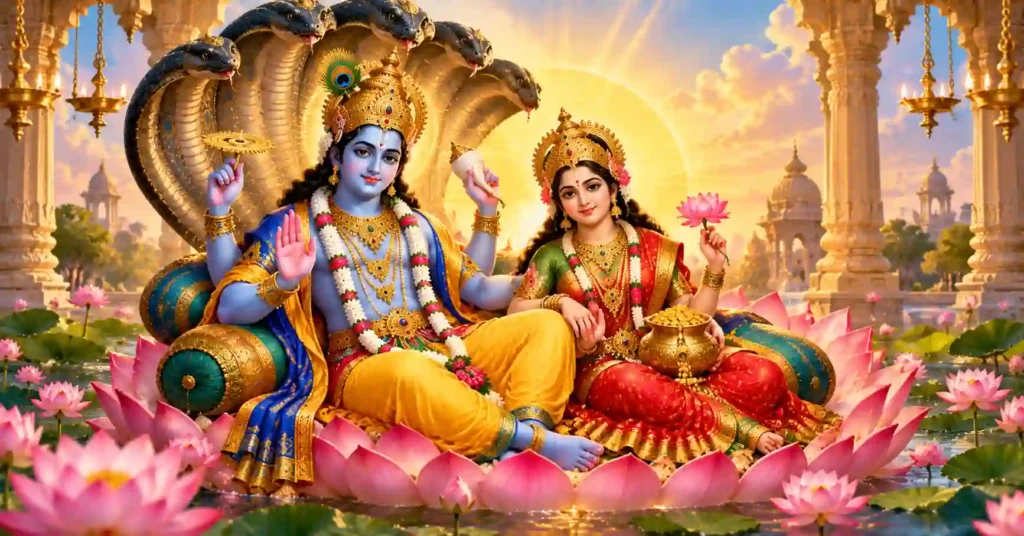
In Sanatan Dharma, this day is especially associated with Bhagwan Vishnu, the preserver and protector of the universe. Devotees observe the vrat to express their devotion, seek divine blessings, and cultivate self-control. Many also spend the day chanting Vishnu’s names, reading sacred texts, visiting temples, or performing quiet prayer at home.
Fasting is an important part of the observance, but Ekadashi is not only about avoiding food. It also encourages devotees to control their thoughts, speech, and actions. Avoiding anger, speaking truthfully, helping others, and spending time in remembrance of God are meaningful ways to observe the day.
The spiritual purpose of this vrat is to turn the mind away from excessive material distractions and towards devotion and inner discipline. Whether someone observes a complete fast or follows a simpler food-based restriction, sincerity and personal capacity remain important considerations.
Ekadashi Fasting Rules for Beginners
If you are observing this vrat for the first time, begin with a simple and sincere approach. The purpose is to strengthen devotion to Bhagwan Vishnu and practise self-discipline, not to put unnecessary pressure on your body. Choose a fasting method that suits your health, age, and daily responsibilities.
Here are some common practices followed by devotees:
Begin with prayer: Take a bath, wear clean clothes, and offer prayers to Lord Vishnu.
Choose your fasting method: Depending on your tradition and capacity, you may observe a waterless fast, a water-only fast, a fruit-and-milk fast, or a simpler vrat diet.
Avoid grains and beans: Many devotees avoid rice, wheat, lentils, and ordinary pulses on the fasting day. Specific practices differ by family and tradition.
Spend time in devotion: Chant Vishnu mantras, read the Bhagavad Gita, recite Vishnu Sahasranama, or listen to devotional stories.
Practise kindness and restraint: Avoid unnecessary arguments, harsh speech, and harmful actions. Charity and helping someone in need can also be part of the observance.
The fast is traditionally broken on Dwadashi, the following lunar day, during the prescribed Parana period. Check your local Panchang for the correct time rather than assuming that any time in the morning is suitable.
A practical note for beginners: Fasting should not put your health at risk. Older adults and people with diabetes, other medical conditions, or medicines that require food should consult a healthcare professional before undertaking a strict fast. Children and pregnant or breastfeeding women should not attempt restrictive fasting without appropriate medical advice.
What Can You Eat and Avoid During Ekadashi?
The food rules for this vrat vary by family custom, region, and sampradaya. Many devotees avoid grains and beans while choosing simple foods that help them maintain their fast without feeling unnecessarily weak or hungry.
Foods Commonly Eaten During the Vrat
Depending on your tradition, commonly permitted foods include:
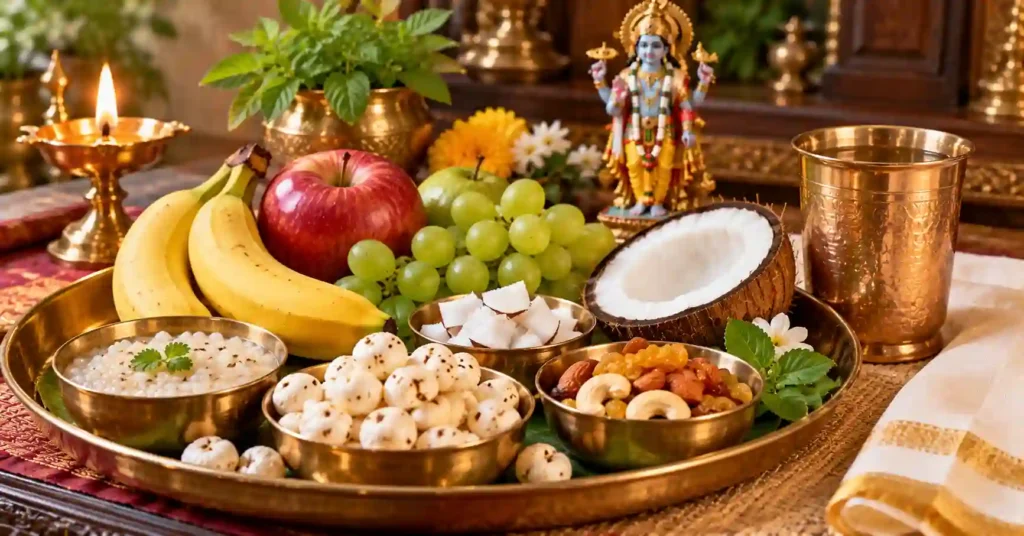
Fruits: Bananas, apples, papaya, and other fresh fruits.
Milk products: Milk, curd, and other permitted dairy foods.
Nuts and seeds: Almonds, cashews, peanuts, and coconut.
Makhana: Often roasted or prepared with permitted ingredients.
Vrat-friendly flours: Singhara flour, kuttu flour, or rajgira flour, where accepted by your tradition.
Potatoes and other permitted vegetables: Prepared without prohibited ingredients.
Rock salt, also called sendha namak, is commonly used instead of ordinary table salt by devotees who follow these food customs.
Foods Commonly Avoided
Many devotees avoid rice, wheat, other grains, lentils, beans, and ordinary pulses. Some also avoid onion and garlic during the observance. Packaged foods should be checked carefully because they may contain ingredients that do not fit your fasting rules.
There is no single food list followed identically by every Hindu community. If your family or sampradaya follows specific rules, use those as your guide. The intention is to keep the day simple and devotional rather than become anxious over minor differences.
If you have a medical condition or need regular meals with medication, prioritise your health. You can choose a less restrictive observance with appropriate medical guidance.
What Is Parana? When Should You Break the Fast?
Parana is the ritual of breaking the Ekadashi fast. It is generally performed on Dwadashi, the twelfth lunar day that follows the fasting day. For devotees, completing the vrat includes observing the prescribed time for Parana, not simply waiting until they feel hungry.
The correct Parana window depends on the local Panchang, the end of the relevant tithi, and the rules followed by the devotee’s tradition. In many cases, the fast is broken after sunrise on Dwadashi, within the prescribed period. Some observances require additional care if the Dwadashi tithi is short or other timing rules apply.
To find the correct time, check a reliable Panchang for your city and look specifically for the Parana time for that day’s observance. Do not assume that the same time applies across India, because sunrise and tithi timings vary by location.
When the time arrives, devotees may begin with water and a simple permitted meal, according to their tradition. The main purpose is to complete the vrat with devotion and discipline. If you are unsure about a special observance or a conflicting calendar date, follow guidance from your family tradition or trusted temple.
What Is Hari Vasara and Why Does It Matter?
Hari Vasara is a specific period during the Dwadashi tithi, the lunar day that follows the Ekadashi fast. In Vaishnava traditions, it is important when determining the appropriate time for Parana, or breaking the fast.
According to traditional Panchang calculations, Hari Vasara refers to the first quarter of the Dwadashi tithi. Devotees following rules that account for this period generally wait until Hari Vasara has ended before breaking their fast, while also observing the prescribed Parana window.
This is one reason why the correct Parana time cannot always be determined simply by looking at sunrise. The Dwadashi tithi, the end of Hari Vasara, and the local sunrise may all affect the timing.
If your Panchang provides a specific Parana window, follow that guidance for your location and tradition. When different calendars give different instructions, consult a trusted temple or knowledgeable authority in your sampradaya rather than guessing the time.
What Happens If You Cannot Complete the Fast?
Sometimes, a devotee may begin a fast but find it difficult to continue because of weakness, illness, work responsibilities, or another genuine reason. In such situations, there is no need to feel frightened or assume that the entire spiritual purpose of the vrat has been lost.
The practice of fasting should support devotion and self-discipline, not put your health at risk. If you feel dizzy, unusually weak, or unwell, take care of your body and seek medical help when necessary. People who have medical conditions or take medicines that require food should plan their observance with appropriate medical guidance.
If you cannot observe a complete fast, you may follow a simpler form of worship according to your capacity and family tradition. You can offer prayers to Lord Vishnu, chant His name, read a sacred text, practise kindness, and maintain control over your thoughts and actions.
The deeper purpose of the vrat is sincere devotion, not competition over who can endure the most hardship. If you have to stop fasting, continue your prayers with a peaceful mind and resume your usual observance when you are able to do so safely.
Conclusion
Knowing the correct Ekadashi dates helps devotees prepare for their vrat, worship Lord Vishnu, and observe Parana at the appropriate time. Whether you are observing Papankusha, Mokshada, Saphala, or another sacred fasting day, checking a reliable local Panchang can help you follow the correct date and timings.
If you have been wondering Ekadashi kab hai, use the calendar in this guide to plan your upcoming fasts from October 2026 to April 2027. Remember that dates and Parana timings may differ according to location and tradition, so verify them before observing the vrat.
Above all, the value of this sacred practice lies in sincere devotion, self-discipline, kindness, and remembrance of Bhagwan Vishnu. Observe the fast according to your health and capacity, and let the day inspire you to bring greater peace and spiritual awareness into your daily life.
Suggested Reading
If you want to learn more about Ekadashi and other Hindu fasting traditions, you may also enjoy these guides to Hindu festivals, vrat observances, and sacred rituals. They explain the significance of different celebrations and offer insights into the spiritual values of Sanatan Dharma.
These articles complement this Ekadashi calendar by exploring festival dates, puja rituals, traditional stories, and the deeper meaning behind important Hindu observances.
Karwa Chauth 2026: Date, Vrat Rules and Puja Vidhi
https://thesanatantales.com/karwa-chauth/Sharad Navratri 2026: Dates, Ghatasthapana Muhurat, Rituals and Significance
https://thesanatantales.com/sharad-navratri/Ghatasthapana: Meaning, Puja Vidhi and Significance
https://thesanatantales.com/ghatasthapana/Maha Navami: Significance, Rituals, Kanya Pujan and Spiritual Meaning
https://thesanatantales.com/maha-navami/Dussehra: Significance, Traditions and Why We Celebrate
https://thesanatantales.com/dussehra/What Is Shraddha in Hinduism? Meaning, Rituals and Significance
https://thesanatantales.com/shraddha-in-hinduism/Explore More: Ekadashi Discussion on Quora
Read the on Quora: Ekadashi: Read and Join the Discussion
FAQs
1. What is Ekadashi, and why is it observed?
Ekadashi is the eleventh tithi of each lunar fortnight in the Hindu calendar. It occurs twice every lunar month, once during Shukla Paksha, the waxing phase of the Moon, and once during Krishna Paksha, the waning phase.
This sacred day is primarily dedicated to Bhagwan Vishnu. Devotees observe a vrat to strengthen their devotion, practise self-discipline, and seek divine blessings. Many spend the day chanting Vishnu’s names, reading sacred scriptures, offering prayers, and avoiding grains and beans according to their tradition.
The deeper purpose is not merely fasting but cultivating purity of thought, kindness, and remembrance of God.
2. How many Ekadashis are observed in a year?
There are generally 24 regular Ekadashi observances in a lunar year, with two occurring in most lunar months. One falls during Shukla Paksha and the other during Krishna Paksha. In certain years, an additional lunar month, known as Adhik Maas, occurs, and this can bring the total to 26 observances.
Each has its own name, traditional significance, and associated stories. Examples include Nirjala, Devutthana, Mokshada, and Papankusha. The names and observances help devotees follow the Hindu lunar calendar throughout the year.
For accurate dates, check a Panchang for your location and follow the tradition you observe.
3. Can we drink water during the vrat?
Yes, many devotees drink water while observing the fast. A waterless fast, known as nirjala vrat, is a stricter form of fasting and is not compulsory for everyone. Other devotees observe the day by consuming water, fruits, milk, or permitted fasting foods.
The method depends on family customs, sampradaya, personal capacity, and health. Beginners may choose a simpler form rather than attempting a strict fast without preparation.
Fasting should never put your health at risk. People with diabetes, other medical conditions, or medicines that require food should seek medical advice before fasting. Devotion does not require ignoring the body’s needs.
4. What foods are allowed during the fast?
Food practices vary among Hindu families and traditions. Many devotees avoid rice, wheat, other grains, lentils, and beans. They may eat fruits, milk, curd, nuts, makhana, potatoes, and preparations made with fasting flours such as kuttu or singhara, where these are permitted.
Sendha namak, or rock salt, is commonly used instead of ordinary table salt. Some devotees also avoid onion and garlic during the observance. Packaged foods should be checked for ingredients that may not fit your fasting rules.
If you follow a particular sampradaya or family tradition, use its guidance. Keep meals simple and choose foods that support your health and energy.
5. What is Parana, and when should the fast be broken?
Parana is the ritual of ending the fast after the observance. It is generally performed on Dwadashi, the twelfth lunar day following the fasting day, during the prescribed time window.
The correct timing depends on the local Panchang, sunrise, the Dwadashi tithi, and the tradition being followed. Some observances also require attention to Hari Vasara, a period associated with the early part of Dwadashi. Therefore, the fast should not automatically be broken at any convenient morning hour.
Check the Parana timing for your city before the vrat. When calendars differ, follow the guidance of your family tradition or a trusted temple.
6. Why do Ekadashi dates differ between calendars?
Different calendars may show different fasting dates because the Hindu lunar day, called a tithi, does not begin and end at midnight. Its timing changes from day to day, and the relationship between the tithi and local sunrise helps determine the appropriate fasting date.
Smarta and Vaishnava traditions can also follow different rules for deciding the observance. This sometimes results in different fasting dates for the same named occasion. Local sunrise times and other Panchang calculations can affect the timings as well.
If you find conflicting dates, do not assume that one calendar is automatically incorrect. Use a reliable Panchang for your location and follow your family tradition or sampradaya.
7. Can women observe the Ekadashi vrat during menstruation?
Women follow different family customs and religious traditions regarding fasting and puja during menstruation. Some continue their usual fast and offer mental prayers, while others follow restrictions on certain rituals or temple visits according to their family practices.
There is no single practice followed by every Hindu community. Women should feel free to follow the guidance of their family tradition or trusted spiritual teacher without feeling ashamed or pressured.
If fasting causes weakness or discomfort, health should come first. Devotion can also be expressed through prayer, remembrance of Bhagwan Vishnu, and kind actions. A person’s spiritual sincerity should not be judged solely by whether they perform every ritual in exactly the same way.
8. Can beginners observe Ekadashi without fasting completely?
Yes. Beginners can observe the day through a simple vrat suited to their health, capacity, and family tradition. Some devotees avoid grains and beans but eat fruits, milk, or other permitted foods. Others choose to eat regular, simple meals while focusing on prayer and self-discipline.
You can begin by offering prayers to Lord Vishnu, chanting His name, reading a passage from the Bhagavad Gita, or performing a small puja at home. Avoiding harsh speech, practising kindness, and giving charity can also make the day spiritually meaningful.
A strict fast is not necessary for everyone. Older adults and people with medical conditions should choose a safe approach with appropriate medical advice.
9. What happens if Ekadashi falls on different dates in different calendars?
Different calendars may show different dates because of local sunrise times, tithi calculations, and the observance rules followed by Smarta and Vaishnava traditions. In some cases, the difference is only one day.
First, check whether the calendar gives dates for your city and identifies the tradition it follows. Then compare the fasting date and Parana timings rather than relying on the date alone.
If you follow a particular sampradaya, use its recommended Panchang or ask a trusted temple. If you do not follow a specific tradition, choose a reliable local calendar and apply its guidance consistently. This helps prevent confusion when planning your fast.
About the Author
Yateendra Chaturvedi is a spiritual writer, researcher, devotee, and the founder of The Sanatan Tales. With over 35 years of professional experience and a lifelong interest in Sanatan Dharma, he writes about Hindu deities, temples, scriptures, festivals, Mahavidyas, sacred stories, rituals, and living traditions that continue to guide and inspire devotees across India.
Drawing from traditional scriptures, regional beliefs, temple traditions, devotional literature, and historical sources, he aims to present authentic, well-researched, and easy-to-understand content for modern readers. His work focuses on preserving spiritual wisdom, explaining sacred traditions, and helping seekers develop a deeper understanding of India’s rich spiritual heritage.
Through The Sanatan Tales, Yateendra strives to make the timeless teachings of Sanatan Dharma simple, meaningful, and relevant for today’s generation while maintaining respect for traditional sources, regional practices, and diverse spiritual perspectives.
Learn More About Yateendra Chaturvedi →
https://thesanatantales.com/about-the-author/
References & Sources
This article is based on traditional teachings, devotional practices, and spiritual beliefs associated with Ekadashi in Sanatan Dharma. It draws on the significance of Bhagwan Vishnu worship, the observance of Ekadashi vrat, traditional fasting practices, and the importance of Parana on Dwadashi.
The explanations reflect commonly followed Hindu traditions and spiritual understanding passed down through scriptures, religious teachings, family customs, and devotional lineages.
Note: Ekadashi observance, fasting rules, tithi timings, and Parana practices may vary according to location, local Panchang, sampradaya, and family tradition. Smarta and Vaishnava traditions may also observe Ekadashi on different dates. Readers should consult a reliable local Panchang for accurate vrat dates and Parana timings.
This article aims to explain the spiritual significance and common practices of Ekadashi in a simple, practical, and reader-friendly manner. Devotees may follow the observance according to their tradition, health, and personal capacity.
Explore More Topics from The Sanatan Tales