
As Navratri begins, one of the first and most important rituals performed by devotees is Ghatasthapana. Also known as Kalash Sthapana, this sacred ceremony marks the formal start of the nine days dedicated to the worship of Goddess Durga. It is believed that through Ghatasthapana, devotees invite the divine presence of Maa Shakti into their homes and hearts.
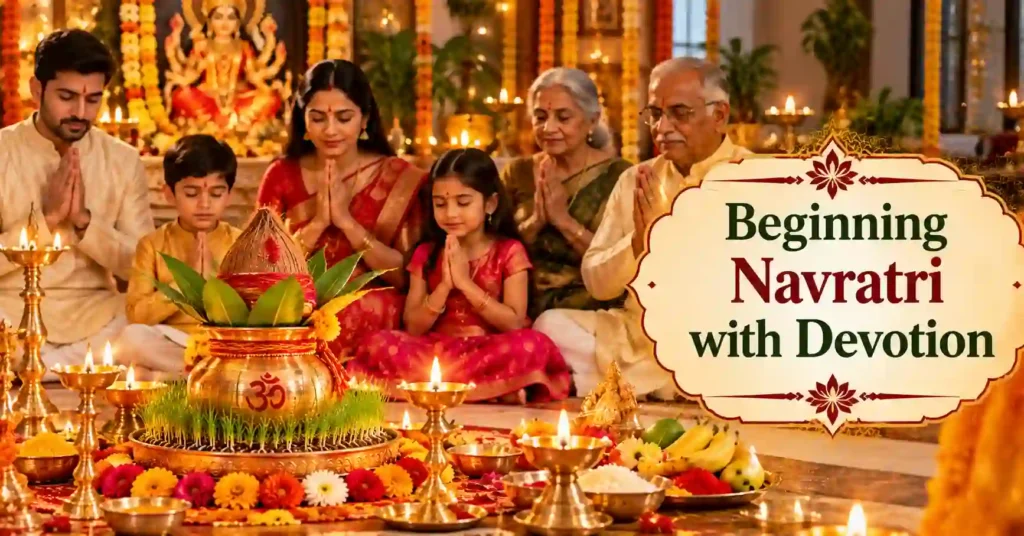
The word “Ghatasthapana” comes from two Sanskrit words: Ghata meaning a sacred pot or kalash, and Sthapana meaning establishment. During this ritual, a water-filled kalash is installed on a bed of soil where barley seeds are sown. The kalash becomes the spiritual center of Navratri worship and remains in place throughout the festival.
For generations, Hindu families have performed Ghatasthapana on the first day of Navratri to seek blessings for prosperity, protection, spiritual growth, and harmony. Every item used in the ritual, from the kalash and coconut to the barley seeds and mango leaves, carries deep symbolic meaning connected with life, abundance, and divine energy.
In this article, you will learn the meaning of Ghatasthapana, its spiritual significance, the complete Ghatasthapana Vidhi, required puja samagri, symbolism of the ritual, common mistakes to avoid, and answers to frequently asked questions.
Whether you are performing Navratri Ghatasthapana for the first time or wish to understand its deeper meaning, this guide will help you perform the ritual with confidence and devotion.
Ghatasthapana at a Glance
| Aspect | Details |
|---|---|
| Sanskrit Name | Ghatasthapana (घटस्थापना) |
| Also Known As | Kalash Sthapana |
| Festival | Sharad Navratri and Chaitra Navratri |
| Primary Focus Keyword | Ghatasthapana |
| Purpose | To invoke the divine presence of Goddess Durga at the start of Navratri |
| Performed On | First day of Navratri (Pratipada Tithi) |
| Main Ritual | Installation of a sacred kalash and sowing of barley seeds |
| Key Symbols | Kalash, coconut, mango leaves, barley seeds, soil and water |
| Spiritual Meaning | Creation, prosperity, divine energy and spiritual growth |
| Worship Duration | Nine days of Navratri |
| Main Deity Invoked | Goddess Durga (Maa Shakti) |
| Common Place of Worship | Homes, temples and community pandals |
| Significance of Barley | Symbolizes growth, abundance and blessings |
| Related Rituals | Navdurga Puja, Akhand Jyot, Kanya Puja and Vijayadashami |
| Ideal For | Anyone wishing to begin Navratri worship according to tradition |
Table of Contents
ToggleWhat Is Ghatasthapana?
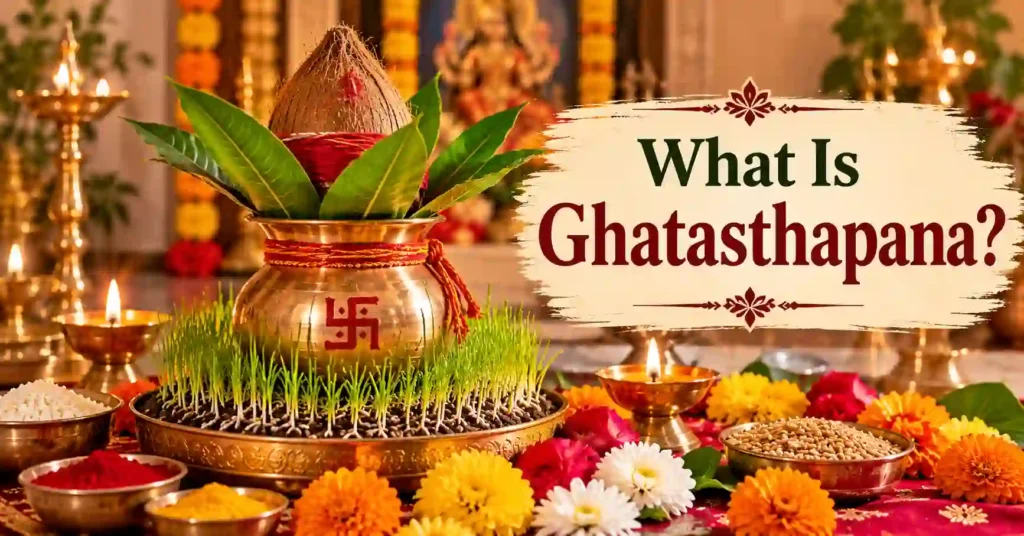
Ghatasthapana is the sacred ritual of establishing a kalash at the beginning of Navratri. Performed on the first day of the festival, it marks the formal start of nine days of devotion dedicated to Goddess Durga. In many Hindu traditions, this ceremony is regarded as one of the most important Navratri observances.
The sacred kalash is filled with water and topped with mango leaves and a coconut. It is placed on a bed of soil where barley seeds are sown. Over the next nine days, the seeds gradually sprout, symbolizing growth, prosperity, and the blessings of the Divine Mother.
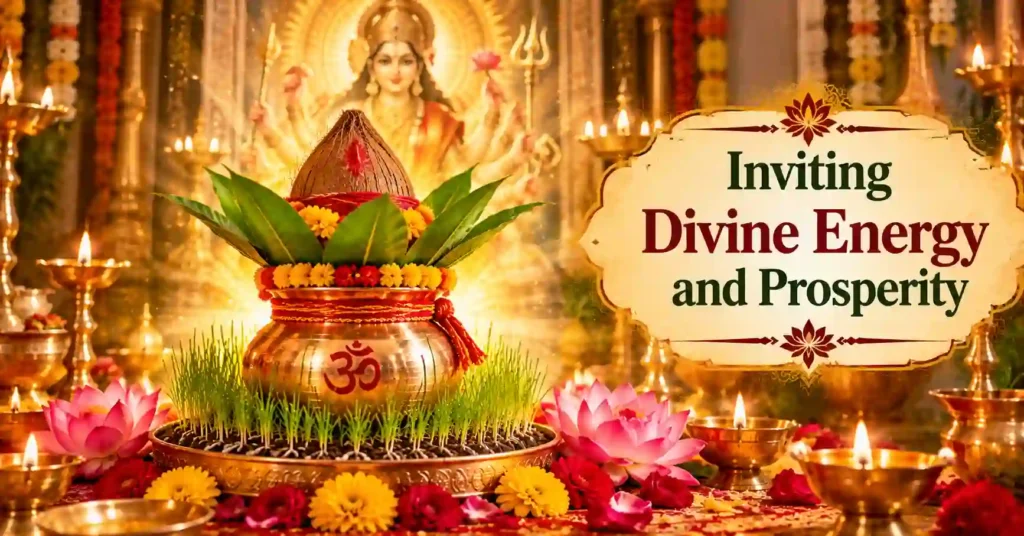
Spiritually, the kalash is viewed as a seat of divine energy. Hindu traditions describe it as a symbol of creation, abundance, and the life-giving force of the universe. Through Kalash Sthapana, devotees invite the presence of Maa Durga into their homes and create a sacred space for worship during Navratri.
Although the ceremony may appear simple, every element carries deeper meaning. The water represents life, the coconut symbolizes purity and selfless devotion, while the growing barley reflects renewal and spiritual progress. Together, these sacred symbols express faith, gratitude, and surrender to the Divine Mother.
Why Is Ghatasthapana Performed During Navratri?
Ghatasthapana is performed to mark the sacred beginning of Navratri and to invite the divine presence of Goddess Durga into the home. According to Hindu tradition, Navratri is a time when devotees worship the Divine Mother in her various forms and seek her blessings for strength, wisdom, protection, and prosperity.
This sacred ceremony creates a spiritual center for the nine days of worship. The kalash is regarded as a symbol of the universe and the abode of divine energy. By establishing it with devotion, devotees prepare a holy space where prayers, mantras, and offerings can be made throughout the festival.
Another important purpose of this ritual is to symbolize new beginnings. Just as the barley seeds gradually sprout and grow, devotees pray for progress in their spiritual, personal, and family lives. The growing shoots remind worshippers that patience, faith, and sincere effort often lead to positive results.
From a deeper spiritual perspective, the kalash installation ceremony represents awakening the divine energy that already exists within every individual. Navratri is not only a celebration of the Goddess but also a period of self-reflection, discipline, and inner transformation.
For this reason, Kalash Sthapana is regarded as one of the most auspicious observances of Navratri. It sets the spiritual tone for the festival and helps devotees connect more deeply with the blessings and grace of Maa Durga.
What Is the Spiritual Meaning of Ghatasthapana?
Beyond its rituals and traditions, Ghatasthapana carries a profound spiritual message. It is not merely the placement of a sacred kalash for worship but a symbolic invitation to divine consciousness. This ceremony reminds devotees that the same divine energy worshipped as Maa Durga also resides within every living being.
The kalash is often viewed as a representation of both the human body and the universe. The water inside symbolizes life and purity, while the coconut placed on top represents the mind and ego. By worshipping this sacred vessel, devotees symbolically surrender pride and open themselves to divine guidance and wisdom.
The barley seeds sown during the observance hold special significance. As they sprout and grow over the nine days of Navratri, they symbolize spiritual progress, renewal, and abundance. Just as a seed requires care, patience, and nourishment to flourish, spiritual growth also requires faith, discipline, and devotion.
The ritual also reflects the creative power of Shakti, the divine feminine energy that sustains the universe. Through Kalash Sthapana, devotees honor this sacred force and seek blessings for strength, courage, prosperity, and inner transformation.
Ultimately, the deeper meaning of this tradition extends beyond external worship. It encourages devotees to purify their thoughts, cultivate positive qualities, and begin Navratri with a sincere desire to grow closer to the Divine. In this way, the ceremony becomes both a celebration of Goddess Durga and a journey of self-discovery.
When Is Ghatasthapana Performed?
Ghatasthapana is performed on the first day of Navratri, during Pratipada Tithi of the Shukla Paksha. This sacred ritual marks the beginning of the nine-day festival dedicated to Goddess Durga and is considered one of the most auspicious observances of Navratri.
According to Hindu tradition, the timing of this ceremony is extremely important. The kalash installation should ideally be performed during a favorable muhurat after sunrise. Panchang experts carefully calculate the most auspicious window each year to ensure the ritual begins under positive celestial influences.
One important guideline is to avoid performing the ceremony during Rahu Kaal, which is traditionally considered inauspicious for starting sacred activities. In some years, special timing recommendations may also apply when Pratipada Tithi overlaps with specific astrological combinations.
For most devotees, the easiest approach is to follow the officially announced Ghatasthapana Muhurat for their city or region. Temples, priests, and Panchang calendars generally publish the recommended timings before Navratri begins.
While the exact muhurat may vary from year to year, the purpose remains the same: to begin the festival with devotion, purity, and reverence for Maa Durga. Performing the ritual during the prescribed time is believed to enhance its spiritual significance and create a positive atmosphere for the nine days of worship.
Ghatasthapana Samagri List: Items Required for the Ritual
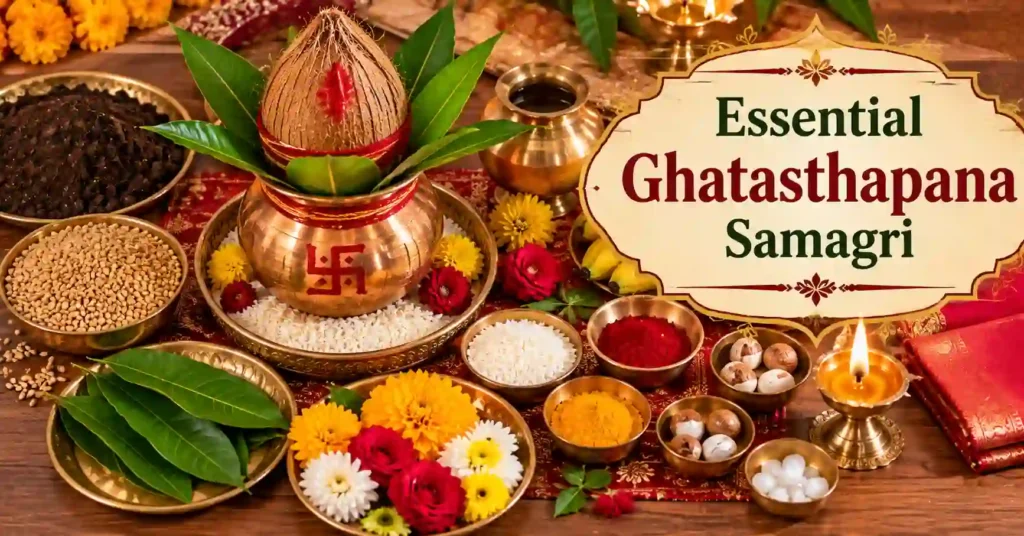
Before performing Ghatasthapana, it is important to gather all the necessary puja items. Each item used in the ritual has a symbolic meaning and plays a role in invoking the blessings of Goddess Durga. Having everything prepared in advance helps ensure that the ceremony is performed smoothly and with devotion.
The most important item is the kalash, usually made of copper, brass, silver, or clay. The kalash is filled with clean water and often contains betel nuts, coins, or a few grains. Mango leaves are placed at its opening, and a coconut wrapped in a red cloth is placed on top.
Essential Ghatasthapana Samagri
- Kalash (copper, brass, silver, or clay pot)
- Clean water
- Coconut
- Mango leaves
- Red cloth or chunari
- Barley seeds (Jau)
- Clean soil or earthen pot
- Rice (Akshat)
- Kumkum and turmeric
- Flowers and garlands
- Betel nuts (Supari)
- Coins
- Incense sticks (Agarbatti)
- Ghee or oil diya
- Camphor for aarti
- Durga idol or image (optional)
One of the most distinctive aspects of Ghatasthapana Puja is the sowing of barley seeds in a container filled with soil. These seeds are watered lightly throughout Navratri and are observed as they grow. Their growth is traditionally considered a symbol of prosperity, success, and divine blessings.
While regional customs may add a few extra items, the essentials remain largely the same across India. Preparing the Ghatasthapana Samagri beforehand allows devotees to focus on prayer, devotion, and the spiritual significance of the ritual rather than searching for items at the last moment.
How to Perform Ghatasthapana at Home: Step-by-Step Ghatasthapana Vidhi
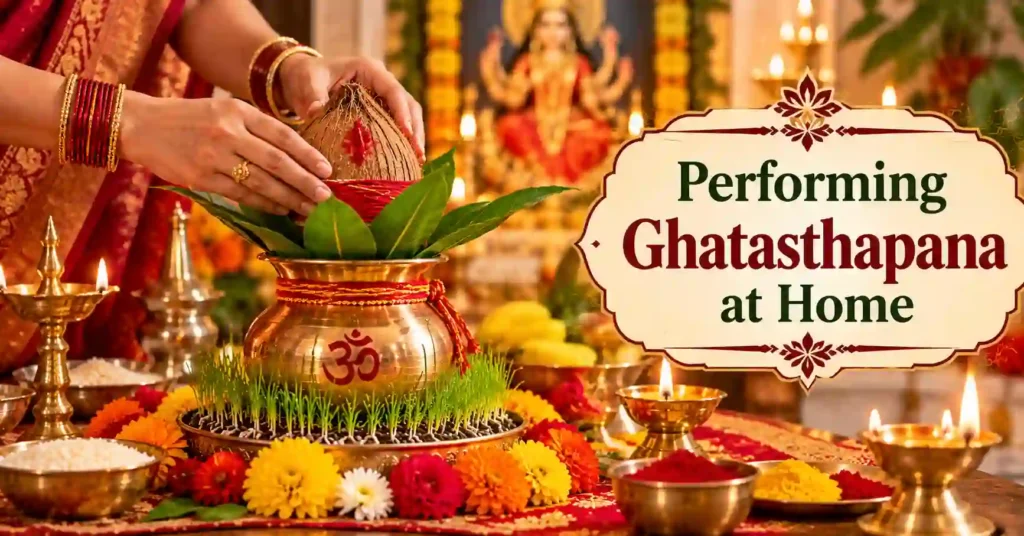
Performing Ghatasthapana at home is a simple yet deeply meaningful ritual. The procedure may vary slightly across regions and family traditions, but the core steps remain largely the same. The goal is to establish the kalash with devotion and invoke the blessings of Goddess Durga for the nine sacred days of Navratri.
1. Clean the Worship Area
Begin by thoroughly cleaning the place where the puja will be performed. Choose a quiet and sacred space in your home temple or prayer room. Many devotees decorate the area with rangoli, flowers, and a clean red or yellow cloth to create a spiritually uplifting atmosphere.
2. Prepare the Soil and Sow Barley Seeds
Fill a shallow earthen pot or container with clean soil. Sprinkle barley seeds (jau) evenly over the soil and lightly cover them. These seeds will gradually sprout during Navratri and symbolize growth, prosperity, and divine blessings.
3. Establish the Kalash
Fill the kalash with clean water. Some devotees also add a coin, betel nut, rice grains, or a few sacred leaves. Draw a swastika or Om symbol on the kalash using kumkum. Place the kalash in the center of the prepared soil bed.
4. Place Mango Leaves and Coconut
Arrange five or more mango leaves around the opening of the kalash. Place a coconut wrapped in a red cloth or chunari on top. This completes the Kalash Sthapana, which is the central part of the ritual.
5. Invoke Goddess Durga
Light a diya and incense sticks. Offer flowers, rice, kumkum, and prayers to Goddess Durga. Recite Durga mantras, Durga Saptashati verses, or simple prayers according to your tradition. This step formally invites the Divine Mother into the sacred space created through Ghatasthapana.
6. Worship Throughout Navratri
The kalash remains installed for all nine days of Navratri. Devotees perform daily prayers, offer flowers and bhog, and maintain the sanctity of the worship area. The barley seeds are lightly watered when needed and observed as they grow.
7. Conclude on Vijayadashami
On the tenth day, Vijayadashami or Dussehra, the Ghatasthapana Puja is respectfully concluded. Depending on local customs, the barley shoots may be distributed among family members, offered to a sacred place, or immersed in flowing water.
By following this Ghatasthapana Vidhi with sincerity and devotion, devotees begin Navratri in a spiritually meaningful way and seek the blessings of Maa Durga for peace, strength, and prosperity.
Ghatasthapana Mantra and Invocation Prayers
During Ghatasthapana, devotees invoke the divine presence of Goddess Durga and seek her blessings for the nine sacred days of Navratri. While different traditions may use different prayers, a simple Kalash Sthapana mantra is commonly recited while establishing the kalash.
Kalash Invocation Mantra
कलशस्य मुखे विष्णुः कण्ठे रुद्रः समाश्रितः।
मूले तस्य स्थितो ब्रह्मा मध्ये मातृगणाः स्मृताः॥
कुक्षौ तु सागराः सर्वे सप्तद्वीपा वसुन्धरा।
ऋग्वेदोऽथ यजुर्वेदः सामवेदोऽथर्वणः॥
English Transliteration
Kalashasya Mukhe Vishnuh Kanthe Rudrah Samashritah।
Moole Tasya Sthito Brahma Madhye Matriganah Smritah॥
Kukshau Tu Sagarah Sarve Saptadveepa Vasundhara।
Rigvedo’tha Yajurvedah Samavedo’tharvanah॥
Meaning of the Mantra
This sacred mantra describes the kalash as a symbol of the entire universe.
- Lord Vishnu resides at the mouth of the kalash.
- Lord Rudra (Shiva) resides in its neck.
- Lord Brahma resides at its base.
- The Divine Mothers dwell within it.
- The oceans, continents, and sacred Vedas are symbolically present inside the kalash.
By chanting this mantra during Ghatasthapana, devotees recognize the kalash as a sacred vessel that represents creation, divine energy, and cosmic consciousness.
Simple Invocation Prayer to Maa Durga
After establishing the kalash, devotees may offer a heartfelt prayer to Goddess Durga:
ॐ दुं दुर्गायै नमः।
English Transliteration
Om Dum Durgayai Namah
Meaning
This powerful Durga mantra is a salutation to Goddess Durga. It is chanted to seek her protection, strength, wisdom, and blessings during Navratri.
A Simple Way to Pray
If you are performing Ghatasthapana at home and are unfamiliar with Sanskrit prayers, a sincere prayer from the heart is equally meaningful. You may simply pray:
“O Maa Durga, please bless my home and family with peace, strength, wisdom, good health, and spiritual growth. Guide me on the path of righteousness and devotion during these sacred days of Navratri.”
Ultimately, the essence of Ghatasthapana Puja lies not only in the recitation of mantras but also in devotion, faith, and a sincere connection with the Divine Mother.
What Do the Kalash, Coconut, and Barley Seeds Symbolize in Ghatasthapana?
Every item used in Ghatasthapana carries a deeper spiritual meaning. These sacred elements are not merely ritual objects but symbols of creation, divine energy, prosperity, and spiritual growth. Understanding their symbolism helps devotees appreciate the deeper purpose of Navratri worship.
Symbolism of the Kalash
- Represents the universe, creation, and the source of life.
- Symbolizes abundance, prosperity, and divine blessings.
- The water inside signifies purity and the life-giving force that sustains all beings.
- Many traditions regard it as a temporary seat of divine energy during Navratri.
Symbolism of the Coconut
- Represents purity, selflessness, and surrender to God.
- The hard shell symbolizes the human ego that must be overcome.
- The pure water within reflects the soul’s true nature.
- Reminds devotees to cultivate humility, devotion, and inner purity.
Symbolism of Mango Leaves
- Symbolize fertility, growth, and prosperity.
- Represent freshness, vitality, and positive energy.
- Signify the presence of divine blessings.
- Reflect the continuity of life and spiritual renewal.
Symbolism of Barley Seeds (Jau)
- Represent growth, abundance, and new beginnings.
- Symbolize spiritual progress during the nine days of worship.
- Remind devotees that faith and patience lead to positive results.
- Healthy sprouts are traditionally considered an auspicious sign.
What Do These Symbols Teach Us?
Together, these sacred elements remind devotees of:
- Faith and devotion to the Divine Mother.
- Purity in thoughts and actions.
- Spiritual growth and self-improvement.
- Gratitude for life’s blessings.
- The presence of divine energy in all creation.
Through these symbols, the ritual becomes more than a religious observance. It serves as a powerful reminder of the values and spiritual lessons that Navratri seeks to cultivate in every devotee.
Common Mistakes to Avoid During Ghatasthapana
While Ghatasthapana is a sacred and straightforward ritual, a few common mistakes can affect its traditional observance. Being aware of these points can help devotees perform the ceremony with greater care, devotion, and attention to detail.
Timing-Related Mistakes
- Performing the ceremony outside the recommended muhurat.
- Ignoring Panchang recommendations and auspicious timings.
- Conducting the ritual during Rahu Kaal when local traditions advise against it.
- Waiting until late in the day after the prescribed time has passed.
Preparation Mistakes
- Using an unclean kalash or worship area.
- Forgetting to gather essential puja samagri before starting.
- Using damaged or spoiled flowers, leaves, or coconut.
- Placing the sacred vessel on an unstable or unsuitable surface.
Mistakes During the Ritual
- Skipping important steps due to haste.
- Not sowing the barley seeds properly.
- Performing the ceremony without focus or devotion.
- Frequently moving the kalash after it has been established.
Barley Seed Care Mistakes
- Overwatering the barley seeds.
- Not watering them when required.
- Keeping the container in a place with poor light or ventilation.
- Disturbing the soil repeatedly during the nine days of worship.
Spiritual Mistakes to Avoid
- Treating the observance as a mere formality.
- Focusing only on external rituals while neglecting prayer and devotion.
- Allowing the worship area to become cluttered or untidy.
- Neglecting daily prayers after establishing the kalash.
A Simple Reminder
The purpose of this sacred Navratri ritual is not perfection but sincere devotion. Minor mistakes made unknowingly are generally overlooked in the spirit of genuine worship. What matters most is performing the ceremony with faith, respect, gratitude, and a heartfelt connection to Maa Durga throughout Navratri.
Benefits of Performing Ghatasthapana During Navratri
For millions of devotees, Ghatasthapana is more than the ceremonial beginning of Navratri. It is a sacred act of devotion that helps create a spiritually uplifting atmosphere and strengthens one’s connection with Goddess Durga. While the exact benefits are understood differently across traditions, several blessings are commonly associated with this observance.
Spiritual Benefits
- Invites the divine presence and blessings of Maa Durga into the home.
- Encourages devotion, discipline, and regular prayer during Navratri.
- Helps devotees begin the festival with a sacred intention and positive mindset.
- Symbolizes inner purification and spiritual awakening.
- Strengthens faith and connection with the Divine Mother.
Personal and Family Benefits
- Creates a peaceful and spiritually uplifting environment at home.
- Brings family members together for daily worship and prayers.
- Encourages gratitude, self-reflection, and positive thinking.
- Inspires values such as patience, humility, and devotion.
- Helps preserve sacred traditions for future generations.
Symbolic Benefits
- Sprouting barley seeds symbolize growth, abundance, and new beginnings.
- The sacred kalash represents prosperity, harmony, and the fullness of life.
- The ritual reminds devotees to nurture spiritual growth just as they nurture the growing seeds.
- Marks the beginning of a period dedicated to self-improvement and divine worship.
Traditional Beliefs
Many Hindu families believe that performing this sacred ceremony with sincerity and devotion helps attract positive energy and divine grace. It is traditionally associated with:
- Prosperity and abundance
- Protection from negative influences
- Success in righteous efforts
- Family harmony and well-being
- Spiritual growth and inner strength
Ultimately, the greatest benefit of this Navratri tradition is the opportunity to deepen one’s devotion and begin the festival with faith, gratitude, and a renewed sense of purpose.
Ghatasthapana 2026 Date and Muhurat
Many devotees preparing for Sharad Navratri look for the correct date and auspicious muhurat to begin the festival rituals. According to Panchang calculations, Ghatasthapana 2026 will be observed on Sunday, 11 October 2026, marking the beginning of Sharad Navratri.
Key Panchang Details
- Festival: Sharad Navratri 2026
- Date: 11 October 2026 (Sunday)
- Tithi: Ashwin Shukla Pratipada
- Main Ritual: Kalash Sthapana
- Deity Worshipped: Goddess Durga
Muhurat 2026
According to Panchang calculations, the recommended time for performing the ritual is:
- Morning Muhurat: 06:19 AM to 10:12 AM
- Duration: 3 Hours 52 Minutes
If the morning window cannot be observed, Abhijit Muhurat is often considered an alternative auspicious period:
- Abhijit Muhurat: 11:44 AM to 12:31 PM
Important Note
Muhurat timings may vary slightly depending on your city and location. Always consult your local Panchang or priest for the most accurate information. Performing the ceremony during the prescribed time is traditionally believed to enhance its spiritual significance and create an auspicious beginning to the nine days of worship.
Conclusion
Ghatasthapana is one of the most sacred rituals that marks the beginning of Navratri and the worship of Goddess Durga. Through the establishment of the kalash, sowing of barley seeds, and daily prayers, devotees create a spiritual space that reflects faith, purity, and devotion.
The deeper meaning of this tradition goes beyond the ritual itself. The kalash symbolizes divine energy, the coconut represents purity and surrender, and the growing barley seeds remind us of spiritual growth, abundance, and new beginnings. Together, these sacred symbols encourage devotees to cultivate positive qualities and strengthen their connection with the Divine Mother.
Whether you are performing this ceremony for the first time or continuing a cherished family tradition, understanding its significance can make the experience more meaningful. By following the prescribed rituals with sincerity and devotion, worshippers can begin Navratri with confidence, gratitude, and a renewed spiritual focus.
As the nine sacred days unfold, this timeless observance serves as a beautiful reminder that spiritual growth, like the sprouting barley seeds, requires patience, faith, and nurturing. May Maa Durga bless you and your family with strength, wisdom, prosperity, and inner peace throughout Navratri and beyond.
Suggested Reading
If you would like to deepen your understanding of Ghatasthapana, Kalash Sthapana, and the sacred traditions of Navratri, these carefully curated guides from The Sanatan Tales will help you continue your journey of devotion and learning.
Sharad Navratri 2026: Dates, Ghatasthapana Muhurat, Rituals and Significance
https://thesanatantales.com/sharad-navratri/
Maa Durga: Meaning, Story, Forms, Navadurga, Temples and Worship
https://thesanatantales.com/maa-durga-meaning-story-navadurga-worship/
Navadurga: Meaning, Nine Forms of Maa Durga, Navratri Significance and Spiritual Journey
https://thesanatantales.com/navadurga-nine-forms-of-maa-durga/
Kanya Pujan in Navratri: Meaning, Ritual and Spiritual Significance
https://thesanatantales.com/kanya-pujan/
Kalash in Hinduism: Meaning, Symbolism, Kalash Sthapana and Spiritual Significance
https://thesanatantales.com/kalash-in-hinduism/
Durga Saptashati: Meaning, Story, 13 Chapters and Navratri Significance
https://thesanatantales.com/durga-saptashati-meaning-navratri/
Durga Chalisa: Lyrics, English Pronunciation, Hindi Meaning, Benefits & Significance
https://thesanatantales.com/durga-chalisa-lyrics-meaning/
Durga Beej Mantra: Meaning, Benefits, Chanting Rules and How to Chant
https://thesanatantales.com/durga-beej-mantra-meaning/
Navarna Mantra: Meaning, Benefits, Chanting Rules and How to Chant
https://thesanatantales.com/navarna-mantra/
Devi Kavach: Meaning, English Pronunciation, Benefits and Protection Prayer
https://thesanatantales.com/devi-kavach-meaning/
Argala Stotra: Lyrics, Meaning, Benefits, and How to Chant
https://thesanatantales.com/argala-stotra/
Aarti of Maa Ambe: Lyrics, Meaning, Benefits and How to Perform
https://thesanatantales.com/aarti-of-maa-ambe/
Durga Mantras: Complete Guide to Powerful Mantras, Stotras, Chalisa and Aarti
https://thesanatantales.com/durga-mantras-stotras-chalisa-aarti/
Drik Panchang. Ghatasthapana Puja Vidhi
https://www.drikpanchang.com/navratri/info/ghatasthapana-puja-vidhi.htm
FAQs
1. What is Ghatasthapana in Navratri?
Ghatasthapana is the sacred ritual performed on the first day of Navratri to invoke the divine presence of Goddess Durga. The ceremony involves establishing a kalash, sowing barley seeds, and creating a spiritual center for the nine days of worship. It marks the formal beginning of Navratri and symbolizes devotion, prosperity, and the awakening of divine energy within the home.
2. Why is Ghatasthapana also called Kalash Sthapana?
The term Kalash Sthapana refers to the installation of the sacred kalash, which is the central element of Ghatasthapana. The kalash represents the universe, divine energy, and abundance. Since establishing the kalash is the most important step of the ritual, many people use the names Ghatasthapana and Kalash Sthapana interchangeably.
3. Can Ghatasthapana be performed at home without a priest?
Yes, Ghatasthapana can be performed at home without a priest. Many Hindu families traditionally perform the ritual themselves using the proper samagri, devotion, and basic puja procedures. While guidance from a priest may be helpful, sincere faith, cleanliness, and respect for the ritual are considered more important than elaborate ceremonies.
4. Can women perform Ghatasthapana?
Yes, women can perform Ghatasthapana and other Navratri rituals. Across India, women have traditionally played a central role in Navratri worship, including Kalash Sthapana, daily prayers, and devotional observances. The ritual is open to any devotee who performs it with faith, purity, and devotion to Goddess Durga.
5. What is placed inside the kalash during Ghatasthapana?
The kalash is usually filled with clean water or Ganga Jal and may contain items such as betel nut, rice, coins, durva grass, or other sacred offerings. Mango or Ashoka leaves are placed at the opening, and a coconut wrapped in a red cloth is placed on top. Together, these items symbolize purity, prosperity, and divine presence.
6. Why are barley seeds sown during Ghatasthapana?
Barley seeds are sown as a symbol of growth, abundance, and new beginnings. During Navratri, the seeds gradually sprout, representing spiritual progress and divine blessings. Many traditions view healthy barley growth as an auspicious sign of prosperity, success, and positive energy in the year ahead.
7. What is the best time to perform Ghatasthapana?
Traditional Panchang guidelines recommend performing Ghatasthapana during the first one-third of the day while Pratipada Tithi is prevailing. If that period is unavailable, Abhijit Muhurat is often considered an acceptable alternative. The ritual is generally avoided at night and on Amavasya.
8. How long does the Ghatasthapana kalash remain in place?
The kalash remains established throughout the nine days of Navratri. Daily worship, offerings, and prayers are performed before it during the festival. On Vijayadashami or Dussehra, the ritual is respectfully concluded according to family or regional traditions, and the barley sprouts are ceremonially distributed or immersed.
9. What should be done with the kalash water after Navratri?
After Navratri concludes, the sacred water from the kalash is traditionally sprinkled around the home as a blessing. The remaining water may be offered to plants, trees, or respectfully immersed according to local customs. It is generally treated as sanctified water and not discarded casually.
10. What happens if I make a mistake during Ghatasthapana?
Minor mistakes made unknowingly are not considered a reason for fear or worry. Hindu traditions place great importance on devotion and sincerity. If an error occurs, devotees can simply offer a heartfelt prayer and continue their worship with faith. The spirit of Ghatasthapana Puja lies in devotion to Maa Durga rather than ritual perfection.
Glossary of Important Terms
| Term | Meaning |
|---|---|
| Ghatasthapana | The sacred ritual of establishing a kalash at the beginning of Navratri. |
| Kalash Sthapana | Another name for Ghatasthapana, referring to the installation of the sacred kalash. |
| Kalash | A sacred pot used in Hindu rituals that symbolizes divine presence, abundance, and creation. |
| Navratri | A nine-night Hindu festival dedicated to the worship of Goddess Durga and her various forms. |
| Pratipada | The first lunar day (tithi) of a Hindu fortnight, on which Ghatasthapana is usually performed. |
| Muhurat | An auspicious time chosen for performing a religious ritual or ceremony. |
| Shukla Paksha | The waxing phase of the Moon, beginning after Amavasya and ending on Purnima. |
| Jau (Barley Seeds) | Seeds sown during Ghatasthapana that symbolize prosperity, growth, and divine blessings. |
| Maa Durga | The Divine Mother and principal deity worshipped during Navratri. |
| Panchang | The traditional Hindu calendar used to determine tithis, nakshatras, yogas, and auspicious timings. |
About the Author
Yateendra Chaturvedi is a spiritual writer, researcher, devotee, and the founder of The Sanatan Tales. With over 35 years of professional experience and a lifelong interest in Sanatan Dharma, he writes about Hindu deities, temples, scriptures, festivals, Mahavidyas, sacred stories, rituals, and living traditions that continue to guide and inspire devotees across India.
Drawing from traditional scriptures, regional beliefs, temple traditions, devotional literature, and historical sources, he aims to present authentic, well-researched, and easy-to-understand content for modern readers. His work focuses on preserving spiritual wisdom, explaining sacred traditions, and helping seekers develop a deeper understanding of India’s rich spiritual heritage.
Through The Sanatan Tales, Yateendra strives to make the timeless teachings of Sanatan Dharma simple, meaningful, and relevant for today’s generation while maintaining respect for traditional sources, regional practices, and diverse spiritual perspectives.
Learn More About Yateendra Chaturvedi →
https://thesanatantales.com/about-the-author/
References & Sources
This article is based on teachings, beliefs, and practices associated with Navratri, Ghatasthapana, Kalash Sthapana, and the worship of Goddess Durga within Sanatan Dharma. It draws upon traditional Hindu customs, Panchang guidelines, temple practices, devotional traditions, and spiritual knowledge that have been preserved and followed across generations in different parts of India.
The article also incorporates insights from widely accepted religious resources, traditional ritual manuals, and educational references related to Navratri observances, Ghatasthapana Vidhi, and Durga worship.
Note: Rituals, customs, mantras, and methods of performing Ghatasthapana may vary across regions, family traditions, sampradayas, and local practices within Sanatan Dharma. The purpose of this article is not to prescribe a single mandatory method but to explain commonly followed traditions and spiritual perspectives in a simple, respectful, and accessible manner. Devotees are encouraged to follow the customs and guidance of their family, community, or spiritual tradition where applicable.