Table of Contents
ToggleWhat the Navarna Mantra is and its spiritual significance
The Navarna Mantra is one of the most sacred and widely revered mantras dedicated to Maa Durga in the Shakta tradition of Sanatan Dharma. Also known as the Navakshari Mantra, this powerful mantra invokes the blessings of Chamunda Devi, a fierce and protective form of the Divine Mother.
For centuries, devotees have chanted the Navarna Mantra during Navratri, Chandi Path, Durga Saptashati recitations, and daily worship. The mantra is deeply associated with Divine Shakti, spiritual transformation, protection, devotion, and inner strength.
The Navarna Mantra is more than a collection of sacred syllables. Each beej sound carries profound spiritual symbolism and is believed to represent knowledge, divine energy, attraction toward the Divine, and the protective power of the Goddess.
In this article, you will learn:
- The meaning of the Navarna Mantra
- Its origin and scriptural significance
- Sanskrit text and pronunciation
- Word-by-word explanation
- Meaning of Om Aim Hreem Kleem Chamundayai Vichche
- Benefits of chanting the Navarna Mantra
- Proper chanting rules and method
- How to apply its teachings in daily life
- Frequently asked questions and common doubts
Whether you are a beginner exploring Devi worship or a devotee seeking a deeper understanding of this sacred mantra, this guide will help you understand the spiritual significance and devotional value of the Navarna Mantra.
Navarna Mantra At a Glance
| Aspect | Details |
|---|---|
| Focus Keyword | Navarna Mantra |
| Also Known As | Navakshari Mantra |
| Sanskrit Text | ॐ ऐं ह्रीं क्लीं चामुण्डायै विच्चे ॥ |
| Dedicated To | Maa Durga in her Chamunda Devi form |
| Tradition | Shakta Tradition |
| Primary Scripture Association | Durga Saptashati (Devi Mahatmya) |
| Source Text | Markandeya Purana |
| Type | Beej Mantra / Shakti Mantra |
| Number of Sacred Syllables | Nine (Navakshari) |
| Main Purpose | Devotion, spiritual growth, inner strength, connection with Divine Shakti |
| Most Popular During | Sharadiya Navratri, Chaitra Navratri, Chandi Path |
| Important Associated Texts | Durga Saptashati, Devi Kavach, Argala Stotram, Keelakam Stotram, Siddha Kunjika Stotram |
| Key Deity Form | Chamunda Devi |
| Key Themes | Divine Mother, Shakti, protection, wisdom, courage, spiritual transformation |
| Best For | Devotees of Maa Durga, Shakti worshippers, Navratri practitioners, spiritual seekers |
| What Readers Will Learn | Meaning, origin, word-by-word explanation, benefits, chanting rules, Durga Saptashati connection, daily life relevance, FAQs |
Quick Summary
The Navarna Mantra (ॐ ऐं ह्रीं क्लीं चामुण्डायै विच्चे ॥) is one of the most important mantras in the worship of Maa Durga and Divine Shakti. It is closely connected with the Durga Saptashati, Devi Mahatmya, and Chandi Path traditions.
The mantra combines powerful beej syllables associated with knowledge, divine energy, devotion, and protection. Devotees chant the Navarna Mantra to deepen their connection with the Divine Mother and cultivate courage, faith, discipline, and spiritual awareness.
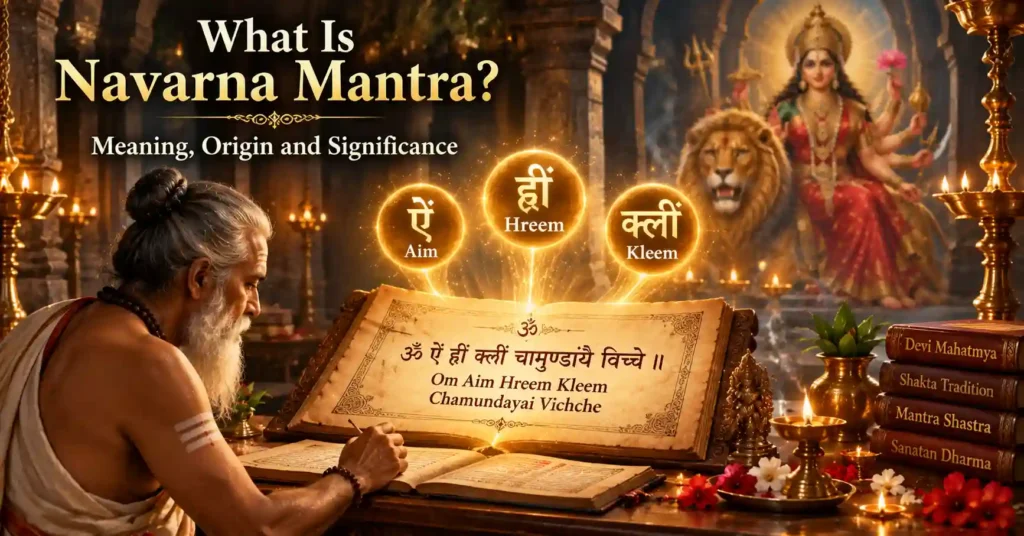
What Is Navarna Mantra?
The Navarna Mantra is one of the most revered mantras dedicated to Maa Durga in the Shakta tradition of Sanatan Dharma. It invokes Chamunda Devi, a powerful form of the Divine Mother associated with protection, strength, and spiritual transformation.
The mantra is:
ॐ ऐं ह्रीं क्लीं चामुण्डायै विच्चे ॥
Om Aim Hreem Kleem Chamundayai Vichche
For centuries, devotees have chanted the Navarna Mantra during Durga worship, Chandi Path, Navratri celebrations, and personal spiritual practice.
Why Is It Called Navarna Mantra?
The word Navarna is derived from Sanskrit, where Nava means nine and Akshara refers to sacred syllables or letters.
Because the mantra consists of nine sacred syllabic components, it is known as the Navarna Mantra. It is also called the Navakshari Mantra, meaning the mantra of nine sacred syllables.
Why Is the Navarna Mantra Important?
The Navarna Mantra combines powerful beej sounds that are traditionally associated with wisdom, divine energy, devotion, and spiritual awakening.
Devotees believe that chanting this mantra helps strengthen their connection with Maa Durga and encourages qualities such as faith, courage, focus, and inner discipline.
Connection with Maa Durga and Chamunda Devi
The central deity of the Navarna Mantra is Chamunda Devi, a fierce and protective form of Maa Durga.
In the Devi Mahatmya (Durga Saptashati), Chamunda is celebrated for defeating the demons Chanda and Munda. Because of this association, the mantra is often linked with the victory of divine power over negative forces.
Place of Navarna Mantra in Hindu Tradition
The Navarna Mantra holds a special place in Shakta worship and is widely recited during:
Navratri
Durga Puja
Chandi Path
Durga Saptashati recitation
Daily Devi worship
Its continued popularity reflects its importance in the worship of Maa Durga and Divine Shakti.
Origin and Scriptural Significance of Navarna Mantra
The Navarna Mantra is one of the most revered mantras dedicated to Maa Durga in the Shakta tradition of Sanatan Dharma. It invokes Chamunda Devi, a powerful form of the Divine Mother associated with protection, strength, and spiritual transformation.
The mantra is:
ॐ ऐं ह्रीं क्लीं चामुण्डायै विच्चे ॥
Om Aim Hreem Kleem Chamundayai Vichche
For centuries, devotees have chanted the Navarna Mantra during Durga worship, Chandi Path, Navratri celebrations, and personal spiritual practice.
Why Is It Called Navarna Mantra?
The word Navarna is derived from Sanskrit, where Nava means nine and Akshara refers to sacred syllables or letters.
Because the mantra consists of nine sacred syllabic components, it is known as the Navarna Mantra. It is also called the Navakshari Mantra, meaning the mantra of nine sacred syllables.
Why Is the Navarna Mantra Important?
The Navarna Mantra combines powerful beej sounds that are traditionally associated with wisdom, divine energy, devotion, and spiritual awakening.
Devotees believe that chanting this mantra helps strengthen their connection with Maa Durga and encourages qualities such as faith, courage, focus, and inner discipline.
Connection with Maa Durga and Chamunda Devi
The central deity of the Navarna Mantra is Chamunda Devi, a fierce and protective form of Maa Durga.
In the Devi Mahatmya (Durga Saptashati), Chamunda is celebrated for defeating the demons Chanda and Munda. Because of this association, the mantra is often linked with the victory of divine power over negative forces.
Place of Navarna Mantra in Hindu Tradition
The Navarna Mantra holds a special place in Shakta worship and is widely recited during:
Navratri
Durga Puja
Chandi Path
Durga Saptashati recitation
Daily Devi worship
Its continued popularity reflects its importance in the worship of Maa Durga and Divine Shakti.
Navarna Mantra Sanskrit Text
The Navarna Mantra has deep roots in the Shakta tradition and is one of the most important mantras dedicated to Maa Durga. Revered for centuries, it is widely used in Devi worship, spiritual practice, and the recitation of sacred Shakta texts.
Unlike devotional hymns that praise the Goddess through verses, the Navarna Mantra is a beej mantra composed of powerful seed syllables that are believed to embody the energy of Divine Shakti.
Connection with Durga Saptashati
The Navarna Mantra is closely associated with the Durga Saptashati (Devi Mahatmya), a sacred text found in the Markandeya Purana.
The scripture narrates the victories of Maa Durga over various demonic forces and highlights the power of the Divine Mother. Because of this connection, the mantra is frequently recited during Durga Saptashati and Chandi Path worship.
Association with Chamunda Devi
The deity invoked in the Navarna Mantra is Chamunda Devi, a fierce form of Maa Durga.
According to the Devi Mahatmya, the Goddess earned the name Chamunda after defeating the demons Chanda and Munda. This form symbolizes the destruction of ignorance, negativity, and obstacles on the spiritual path.
Why Is It Called a Beej Mantra?
The Navarna Mantra is classified as a Beej Mantra, meaning a mantra composed of sacred seed syllables.
The sounds Aim, Hreem, and Kleem are traditionally associated with knowledge, divine power, and spiritual transformation. Together, they represent the grace and energy of Divine Shakti.
Importance During Navratri and Shakta Worship
The Navarna Mantra is especially popular during Sharadiya Navratri and Chaitra Navratri, when devotees worship Maa Durga through prayer, mantra chanting, and scripture recitation.
Its close connection with Devi worship has made it one of the most respected and widely recited mantras in the Shakta tradition, where the Divine Mother is revered as the supreme source of wisdom, strength, and spiritual awakening.
Navarna Mantra English Pronunciation (Transliteration)
For readers unfamiliar with Sanskrit, the Navarna Mantra can be chanted using its English transliteration. This helps beginners learn the pronunciation while gradually becoming comfortable with the original Sanskrit form.
Transliteration
Om Aim Hreem Kleem Chamundayai Vichche
Word-by-Word Transliteration
| Sanskrit | Transliteration |
|---|---|
| ॐ | Om |
| ऐं | Aim |
| ह्रीं | Hreem |
| क्लीं | Kleem |
| चामुण्डायै | Chamundayai |
| विच्चे | Vichche |
Simple Pronunciation Guide
Om → Ohm
Aim → Ayeem
Hreem → Hreem
Kleem → Kleem
Chamundayai → Cha-moon-da-yai
Vichche → Vich-chay
Chanting Tips for Beginners
When chanting the Navarna Mantra, focus on devotion and clarity rather than speed.
Chant slowly and steadily.
Pronounce each syllable carefully.
Maintain concentration on Maa Durga.
Practice regularly to improve naturally.
Many devotees find it helpful to listen to traditional recitations while learning the mantra.
Is Perfect Pronunciation Necessary?
Traditional teachings value correct pronunciation, but beginners should not be discouraged if they are still learning.
Devotees generally believe that sincere faith, devotion, and regular practice are more important than immediate perfection. As familiarity with the Navarna Mantra grows, pronunciation usually becomes more natural and confident.
Navarna Mantra Meaning (Word-by-Word)
The Navarna Mantra is composed of sacred beej syllables and divine names that carry deep spiritual symbolism. Understanding each word helps devotees appreciate the profound meaning hidden within this short but powerful mantra.
Navarna Mantra
ॐ ऐं ह्रीं क्लीं चामुण्डायै विच्चे ॥
Om Aim Hreem Kleem Chamundayai Vichche
Om (ॐ)
Om is regarded as the primordial sound of the universe and one of the most sacred syllables in Hindu spirituality.
It represents the ultimate reality, universal consciousness, and the source from which all creation emerges.
In the Navarna Mantra, Om serves as an invocation of the Divine and prepares the mind for spiritual contemplation and devotion.
Line-by-Line Hindi Meaning
ॐ = परम दिव्य ध्वनि
सृष्टि का मूल स्वरूप
ब्रह्म का प्रतीक
Line-by-Line English Meaning
The primordial cosmic sound
Source of creation
Symbol of the Supreme Reality
Spiritual Significance
Om reminds devotees that the Divine Mother is not separate from the universal consciousness that pervades all existence.
Aim (ऐं)
Aim is traditionally known as the beej mantra of wisdom, knowledge, and learning.
It is often associated with Goddess Saraswati and the awakening of higher understanding.
Within the Navarna Mantra, Aim symbolizes spiritual knowledge and the illumination needed to walk the path of Dharma.
Line-by-Line Hindi Meaning
ज्ञान की शक्ति
विद्या और बुद्धि का स्वरूप
आध्यात्मिक जागरण
Line-by-Line English Meaning
Power of knowledge
Divine wisdom
Spiritual awakening
Spiritual Significance
Aim encourages devotees to seek clarity, wisdom, and understanding in both spiritual and worldly life.
Hreem (ह्रीं)
Hreem is one of the most important beej mantras in Shakta traditions and is often called the Maha Maya Beej.
It represents Divine Shakti, inner transformation, and the creative power of the Goddess.
This sacred syllable is associated with the presence of the Divine Mother within the heart of every being.
Line-by-Line Hindi Meaning
देवी शक्ति का बीज
दिव्य ऊर्जा
आंतरिक परिवर्तन
Line-by-Line English Meaning
Seed of Divine Shakti
Spiritual energy
Inner transformation
Spiritual Significance
Hreem reminds devotees of the Divine Mother’s power to transform ignorance into wisdom and weakness into strength.
Kleem (क्लीं)
Kleem is traditionally associated with attraction, devotion, harmony, and loving connection with the Divine.
It is often linked to the power that draws the soul closer to God.
In the Navarna Mantra, Kleem symbolizes the devotee’s longing to unite with Divine Shakti through devotion and faith.
Line-by-Line Hindi Meaning
आकर्षण की शक्ति
भक्ति और प्रेम
दिव्य कृपा की ओर खिंचाव
Line-by-Line English Meaning
Power of attraction
Devotion and love
Drawing closer to divine grace
Spiritual Significance
Kleem inspires devotion and helps cultivate a loving relationship with the Divine Mother.
Chamundayai (चामुण्डायै)
Chamundayai refers to Chamunda Devi, a powerful form of Maa Durga celebrated in the Devi Mahatmya.
The name originates from the Goddess’s victory over the demons Chanda and Munda.
Chamunda symbolizes the destruction of negativity, ego, ignorance, and forces that obstruct spiritual progress.
Line-by-Line Hindi Meaning
चामुंडा देवी को नमस्कार
दुष्ट शक्तियों का विनाश
दिव्य संरक्षण
Line-by-Line English Meaning
Salutations to Chamunda Devi
Destroyer of negative forces
Divine protection
Spiritual Significance
This part of the Navarna Mantra directly invokes the protective and transformative power of Maa Durga.
Vichche (विच्चे)
Vichche is traditionally interpreted as the power that cuts, separates, or removes obstacles and negative influences.
It symbolizes breaking the bonds of ignorance, fear, attachment, and spiritual limitations.
Although interpretations may vary among traditions, it is generally understood as a force of spiritual protection and liberation.
Line-by-Line Hindi Meaning
बाधाओं का नाश
अज्ञान का छेदन
नकारात्मकता का विनाश
Line-by-Line English Meaning
Removal of obstacles
Cutting through ignorance
Destruction of negativity
Spiritual Significance
Vichche represents the Divine Mother’s ability to help devotees overcome inner and outer obstacles on the spiritual path.
Complete Meaning of Navarna Mantra
Taken together, the Navarna Mantra is an invocation of Divine Shakti in the form of Chamunda Devi.
It combines sacred energies associated with wisdom, spiritual transformation, devotion, divine protection, and liberation from negativity.
A simple understanding of the mantra is:
“I bow to the Divine Mother Chamunda, the embodiment of wisdom, power, and grace. May Her divine energy remove ignorance, negativity, and obstacles while guiding me toward spiritual growth and devotion.”
Rather than being merely a prayer for protection, the Navarna Mantra is a profound spiritual invocation that encourages devotees to awaken the divine qualities already present within themselves.
What Does "Om Aim Hreem Kleem Chamundayai Vichche" Mean?
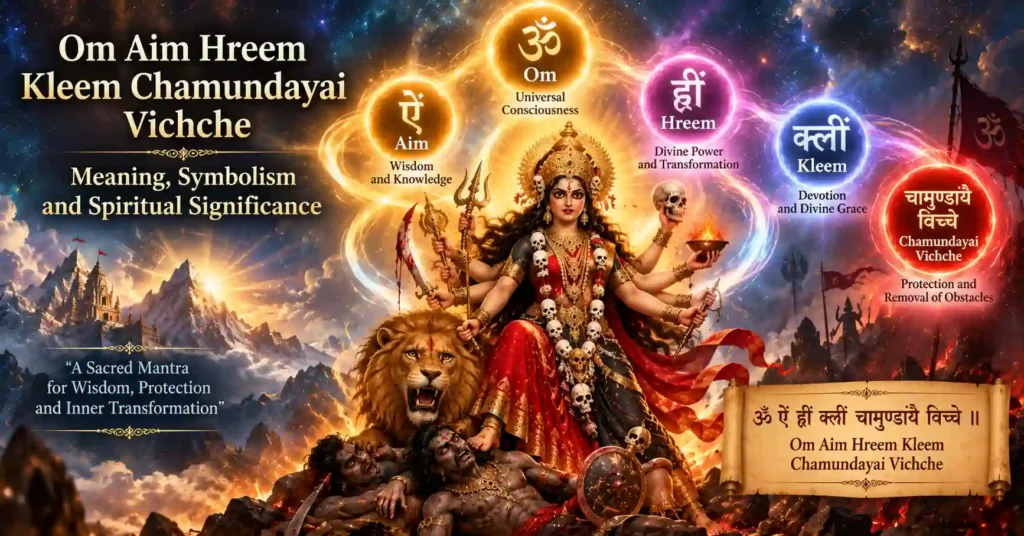
The phrase “Om Aim Hreem Kleem Chamundayai Vichche” is the complete form of the Navarna Mantra. It combines sacred beej syllables with the invocation of Chamunda Devi, making it one of the most revered mantras in Shakta worship.
While each word has its own significance, the mantra is traditionally understood as an invocation of Divine Shakti for wisdom, spiritual strength, protection, and inner transformation.
Literal Meaning
A simple word-by-word understanding of the Navarna Mantra is:
Om – The Supreme Reality and universal consciousness
Aim – Divine knowledge and wisdom
Hreem – Sacred energy and spiritual transformation
Kleem – Devotion and divine grace
Chamundayai – To Goddess Chamunda
Vichche – Removal of obstacles and negativity
Together, the mantra invokes the blessings and protective power of Chamunda Devi.
Symbolic and Spiritual Meaning
The Navarna Mantra symbolizes the journey from ignorance to wisdom and from fear to inner strength. It reminds devotees that the Divine Mother is the source of knowledge, courage, compassion, and spiritual awakening.
In the Shakta tradition, the battles of the Goddess described in the Devi Mahatmya are often viewed as symbolic of the inner struggles every seeker faces. The mantra encourages devotees to overcome negativity, ego, doubt, and fear through faith and devotion.
Relevance in Daily Life
The message of the Navarna Mantra remains meaningful even today. It inspires devotees to cultivate wisdom, discipline, courage, and trust in the Divine Mother’s guidance during life’s challenges.
A simple way to understand the mantra is:
“O Divine Mother Chamunda, embodiment of wisdom, power, and grace, guide me, protect me, remove negativity and obstacles, and help me grow in devotion and spiritual awareness.”
For many devotees, the Navarna Mantra is not only a sacred prayer but also a reminder of the strength, protection, and compassion of Maa Durga.
Why Is Chamunda Devi Invoked in the Navarna Mantra?
One of the most distinctive aspects of the Navarna Mantra is its direct invocation of Chamunda Devi, a fierce and powerful manifestation of Maa Durga. Understanding who Chamunda Devi is helps devotees appreciate the deeper meaning and spiritual significance of this sacred mantra.
Who Is Chamunda Devi?
Chamunda Devi is a revered form of the Divine Mother celebrated in the Devi Mahatmya (Durga Saptashati).
She is worshipped as a protector of devotees and a destroyer of negative forces that hinder spiritual growth and righteousness.
Although her appearance is often fierce, devotees regard Chamunda as a compassionate mother who removes obstacles and guides sincere seekers toward the Divine.
The Story of Chanda and Munda
The name Chamunda originates from two demons named Chanda and Munda, who appear in the Devi Mahatmya.
During a great battle between the Divine Mother and the forces of adharma, these demons attacked the Goddess and her divine army.
In response, a fierce form of the Goddess emerged and defeated both Chanda and Munda. After this victory, the Goddess became known as Chamunda, meaning “the slayer of Chanda and Munda.”
Symbolic Meaning of Chanda and Munda
Like many stories in Hindu scriptures, this episode also carries symbolic meaning.
Many spiritual teachers interpret Chanda and Munda as representations of negative tendencies that arise within the human mind, such as:
Ego
Anger
Pride
Ignorance
Harmful desires
The Goddess’s victory symbolizes the triumph of wisdom, self-control, and divine awareness over these inner obstacles.
Why Is Chamunda Invoked in the Navarna Mantra?
The Navarna Mantra invokes Chamunda Devi because she represents the transformative power of Divine Shakti.
By chanting the mantra, devotees seek the Goddess’s blessings to:
Develop inner strength
Overcome fear and negativity
Cultivate devotion
Strengthen spiritual discipline
Progress on the path of Dharma
For this reason, Chamunda is not merely invoked as a warrior goddess but as a guide who helps devotees overcome both external and internal challenges.
Chamunda Devi as the Protective Mother
Although Chamunda is often depicted in a fierce form, her role is ultimately protective and compassionate.
Just as a mother protects her children from danger, Chamunda Devi is believed to protect devotees from influences that obstruct spiritual and moral growth.
This protective aspect explains why her name occupies such an important place within the Navarna Mantra.
Spiritual Significance
The invocation of Chamunda Devi reminds devotees that true spiritual growth requires the courage to confront and overcome one’s own weaknesses.
The story of Chanda and Munda teaches that the greatest battles are often fought within the mind and heart.
By invoking Chamunda through the Navarna Mantra, devotees pray for the wisdom, strength, and divine grace needed to overcome these obstacles and move closer to the Divine Mother.
Simple method to chant the Navarna MantraBenefits of Chanting Navarna Mantra
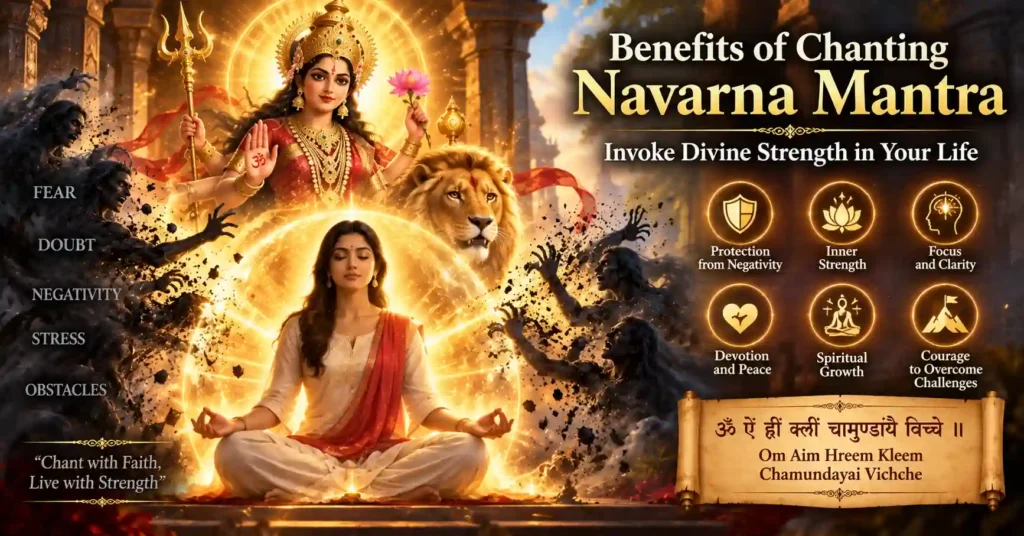
The Navarna Mantra is revered in the Shakta tradition as a powerful mantra dedicated to Maa Durga and Chamunda Devi. Devotees have chanted this sacred mantra for centuries as part of their spiritual practice and worship of Divine Shakti.
While experiences vary from person to person, the Navarna Mantra is traditionally associated with several spiritual and devotional benefits.
Spiritual Benefits
Regular chanting of the Navarna Mantra helps devotees deepen their connection with Maa Durga and Divine Shakti.
The mantra encourages devotion, self-discipline, and greater awareness of the Divine Mother’s presence in daily life.
Many practitioners also use the mantra during meditation and spiritual practices to cultivate inner focus and spiritual growth.
Mental Benefits
The rhythmic repetition of the Navarna Mantra can help calm a restless mind and improve concentration.
Many devotees find that regular chanting creates a sense of mental clarity and helps them maintain focus during prayer and meditation.
It can also encourage a more disciplined and mindful daily routine.
Emotional Benefits
The Navarna Mantra is often chanted during challenging periods of life when devotees seek strength and comfort through devotion.
Many practitioners believe that remembering Maa Durga through this mantra helps cultivate courage, confidence, and emotional resilience.
The practice also promotes a sense of faith and inner stability.
Traditional Benefits
In traditional Hindu practice, the Navarna Mantra is closely associated with Durga worship, Chandi Path, and Navratri observances.
Devotees believe that sincere chanting attracts the blessings of the Divine Mother and helps remove obstacles on the spiritual path.
For this reason, the mantra remains an important part of many Devi-related rituals and practices.
Devotional Benefits
One of the greatest benefits of the Navarna Mantra is the development of devotion toward Maa Durga.
Regular chanting encourages devotees to remember the Divine Mother throughout the day and strengthen their relationship with her.
Over time, this practice can inspire greater faith, gratitude, humility, and surrender to divine guidance.
Why Do Devotees Continue Chanting the Navarna Mantra?
Millions of devotees continue to chant the Navarna Mantra because it combines devotion, remembrance, and spiritual discipline in a simple yet profound practice.
Whether chanted during Navratri, daily worship, meditation, or Durga Saptashati recitation, the mantra remains a cherished way of honoring Maa Durga and seeking her blessings.
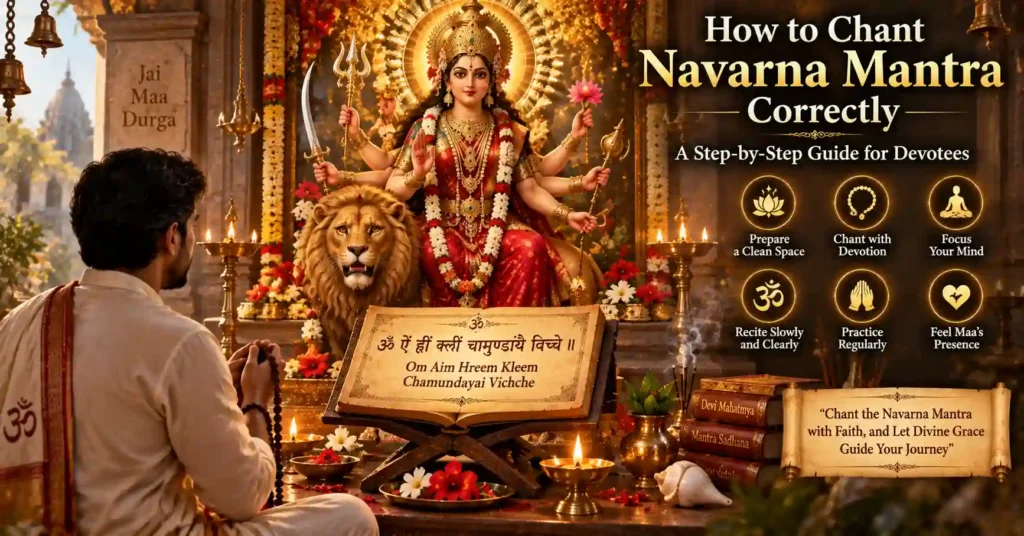
How to Chant Navarna Mantra Correctly
The Navarna Mantra can be chanted by devotees as part of their daily worship, meditation, or Navratri sadhana. While elaborate rituals exist in some traditions, beginners can start with simple and sincere devotion.
Best Time to Chant Navarna Mantra
Many devotees prefer chanting the Navarna Mantra during:
Brahma Muhurta (before sunrise)
Early morning prayers
Evening worship
Navratri celebrations
During Durga Saptashati or Chandi Path recitation
However, the mantra may be chanted at any time with devotion and concentration.
Preparations Before Chanting
Before chanting the Navarna Mantra, it is traditionally recommended to:
Bathe or wash hands and face
Wear clean clothes
Sit in a calm and clean place
Light a diya or incense if possible
Keep an image or murti of Maa Durga nearby
These practices help create a devotional atmosphere and improve focus.
Traditional Chanting Method
Begin by remembering Maa Durga and offering a simple prayer.
Then chant:
ॐ ऐं ह्रीं क्लीं चामुण्डायै विच्चे ॥
The mantra may be repeated:
11 times
21 times
51 times
108 times
Many devotees use a Rudraksha or crystal mala to maintain count.
Important Chanting Rules
While traditions vary, some commonly followed guidelines include:
Chant with devotion and respect.
Pronounce the mantra as clearly as possible.
Maintain concentration during chanting.
Avoid rushing through the recitation.
Practice regularly for consistency.
Sincerity and devotion are considered more important than speed or mechanical repetition.
Can Beginners Chant the Navarna Mantra?
Yes, beginners can chant the Navarna Mantra.
Many devotees start by learning the correct pronunciation and gradually make the mantra a part of their daily spiritual routine.
There is no need to wait for advanced spiritual knowledge before beginning sincere devotional chanting.
Is Understanding the Meaning Important?
While the mantra can be chanted with faith alone, understanding its meaning often deepens the experience.
Knowing the significance of the sacred syllables and the role of Chamunda Devi helps devotees connect more deeply with the spiritual message of the Navarna Mantra.
During Which Festivals Is the Navarna Mantra Commonly Chanted?
The Navarna Mantra is especially popular during:
Sharadiya Navratri
Chaitra Navratri
Durga Puja
Chandi Homa
Durga Saptashati recitation
These occasions are considered particularly auspicious for honoring Maa Durga and seeking her blessings through mantra chanting.
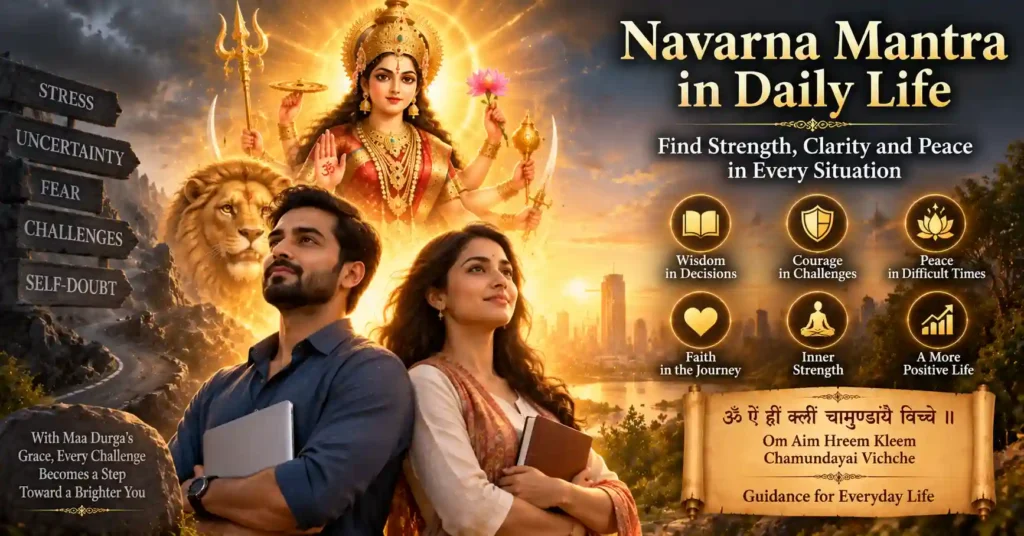
Navarna Mantra in Daily Life
The Navarna Mantra is not limited to temple worship, Navratri celebrations, or special rituals. Many devotees incorporate this sacred mantra into their daily lives as a simple practice of devotion and remembrance of Maa Durga.
Regular chanting encourages mindfulness and helps keep spiritual values at the center of everyday activities.
Finding Inner Strength During Challenges
Life often brings uncertainty, pressure, and difficult situations.
Many devotees chant the Navarna Mantra to remember the courage, resilience, and determination symbolized by Maa Durga when facing personal and professional challenges.
Building a Daily Spiritual Routine
Even a few minutes of chanting can help create consistency in spiritual practice.
Some devotees recite the Navarna Mantra in the morning before starting their day, while others include it in their evening prayers or meditation routine.
Practicing Focus and Discipline
Mantra chanting requires attention and regularity.
Over time, the practice can help develop concentration, patience, and self-discipline, qualities that are valuable in both spiritual and worldly life.
Strengthening Devotion
The Navarna Mantra serves as a simple way to stay connected with Maa Durga throughout the day.
Regular remembrance of the Divine Mother can inspire gratitude, faith, humility, and trust in divine guidance.
Applying the Message of the Mantra
The deeper message of the Navarna Mantra is the victory of wisdom over ignorance and courage over fear.
By reflecting on these values, devotees can strive to make better decisions, remain calm during difficulties, and walk the path of Dharma in daily life.
A Practical Spiritual Companion
Whether chanted during prayer, meditation, travel, or quiet moments of reflection, the Navarna Mantra remains a meaningful spiritual companion for devotees seeking a closer connection with Maa Durga and Divine Shakti.
Did You Know? Interesting Facts About Navarna Mantra
- The Navarna Mantra is also known as the Navakshari Mantra, meaning the mantra of nine sacred syllables.
- It is one of the most important mantras in the Shakta tradition, which worships the Divine Mother as the Supreme Reality.
- The Navarna Mantra is closely associated with the Durga Saptashati (Devi Mahatmya) and is widely used during Chandi Path recitations.
- The mantra invokes Chamunda Devi, a powerful form of Maa Durga known for defeating the demons Chanda and Munda.
- Many devotees chant the Navarna Mantra during Sharadiya Navratri and Chaitra Navratri to honor the Divine Mother.
- The sacred syllables Aim, Hreem, and Kleem are considered powerful beej mantras representing knowledge, divine energy, and devotion.
- Traditional practitioners often chant the Navarna Mantra using a mala of 108 beads during meditation and worship.
- The mantra is frequently recited before, during, and after Durga Saptashati readings in many Shakta traditions.
- Despite being very short, the Navarna Mantra is regarded as one of the most revered mantras dedicated to Divine Shakti.
- The popularity of the Navarna Mantra extends beyond India, and it is chanted by devotees around the world as part of Maa Durga worship.
Conclusion
The Navarna Mantra is one of the most sacred and widely revered mantras dedicated to Maa Durga and Chamunda Devi. Though brief in length, it carries deep spiritual significance and occupies an important place in the Shakta tradition.
Through its sacred beej syllables, the Navarna Mantra invokes wisdom, divine energy, devotion, and the protective grace of the Divine Mother. This is why it remains closely associated with Durga Saptashati, Chandi Path, and Navratri worship.
Devotees chant the Navarna Mantra to strengthen their connection with Maa Durga, cultivate inner discipline, and deepen their spiritual practice. Its teachings remind us of the victory of wisdom over ignorance, courage over fear, and faith over doubt.
Whether recited during Navratri, daily prayers, meditation, or special Devi worship, the Navarna Mantra continues to inspire devotion and reverence among millions of devotees.
By understanding its meaning, significance, benefits, and proper chanting method, devotees can appreciate the timeless spiritual message contained within this sacred mantra.
Suggested Reading
The Navarna Mantra is closely connected with Maa Durga, Durga Saptashati, and the wider Shakta tradition of Sanatan Dharma. Exploring related mantras, stotras, and devotional texts can help readers gain a deeper understanding of Devi worship, Navratri practices, and the spiritual significance of Divine Shakti.
Durga Saptashati Meaning, Story and Why It Is Read in Navratri
https://thesanatantales.com/durga-saptashati-meaning-navratri/
Devi Kavach Meaning: Durga Saptashati Protection Prayer
https://thesanatantales.com/devi-kavach-meaning/
Argala Stotram Lyrics with Meaning and Spiritual Significance
https://thesanatantales.com/argala-stotram-lyrics-meaning/
Siddha Kunjika Stotram: The Sacred Key That Unlocks the Full Power of Durga Saptashati
https://thesanatantales.com/siddha-kunjika-stotram/
Durga Beej Mantra: Meaning, Benefits and How to Chant
https://thesanatantales.com/durga-beej-mantra-meaning/
Durga Chalisa: Lyrics, Meaning, Benefits and Spiritual Significance
https://thesanatantales.com/durga-chalisa-lyrics-meaning/
Aarti of Maa Ambe: Lyrics, Meaning, Benefits and How to Perform
https://thesanatantales.com/aarti-of-maa-ambe/
Maa Durga: Meaning, Symbolism, Forms and Spiritual Significance
https://thesanatantales.com/maa-durga/
Devi Mahatmya (Durga Saptashati)
https://en.wikipedia.org/wiki/Devi_Mahatmya
FAQs
1. What is the Navarna Mantra and why is it important?
The Navarna Mantra is a sacred Shakti mantra dedicated to Chamunda Devi, a powerful form of Maa Durga. The mantra is “Om Aim Hreem Kleem Chamundayai Vichche” and is widely used in Devi worship, Navratri celebrations, and Durga Saptashati recitation. It is also known as the Navakshari Mantra because it is composed of nine sacred syllables.
The importance of the Navarna Mantra lies in its association with Divine Shakti and the Devi Mahatmya tradition. Devotees chant it to deepen devotion, strengthen spiritual discipline, and remember the protective grace of the Divine Mother. It remains one of the most revered mantras in the Shakta tradition.
2. What does the Navarna Mantra mean?
The Navarna Mantra combines sacred beej syllables and the invocation of Chamunda Devi. Each part of the mantra carries symbolic significance connected with wisdom, divine energy, devotion, and spiritual transformation. Traditional interpretations associate Aim with knowledge, Hreem with divine power, Kleem with transformative energy, and Chamundayai with the Goddess Chamunda.
Taken as a whole, the Navarna Mantra is a prayer to the Divine Mother seeking guidance, protection, wisdom, and the removal of negativity. Devotees view it as a reminder that divine grace can help overcome ignorance, fear, and obstacles on the spiritual path.
3. Why is it called the Navarna Mantra?
The word Navarna comes from Sanskrit, where “Nava” means nine and “Arna” or “Akshara” refers to sacred syllables. Because the mantra contains nine sacred syllabic components, it is known as the Navarna Mantra or Navakshari Mantra.
The number nine holds special significance in Devi worship and is closely associated with the nine forms of Maa Durga worshipped during Navratri. For this reason, the mantra occupies a central place in Shakta traditions and is often recited during Durga-related rituals and spiritual practices.
4. Can beginners chant the Navarna Mantra?
Yes, beginners can chant the Navarna Mantra with devotion and sincerity. Many devotees start by learning the correct pronunciation and gradually include the mantra in their daily prayers, meditation, or Navratri worship. Regular practice often makes chanting easier and more meaningful over time.
While advanced forms of mantra sadhana may traditionally involve guidance from a guru, simple devotional chanting is widely practiced by householders. The most important qualities are faith, consistency, concentration, and respect for the sacred nature of the mantra.
5. How many times should the Navarna Mantra be chanted?
There is no single mandatory number for chanting the Navarna Mantra. Many devotees begin with 11, 21, or 108 repetitions depending on their available time and spiritual routine. A mala containing 108 beads is commonly used to maintain count during chanting.
The ideal number often varies according to personal practice, tradition, and spiritual goals. More important than the count itself is maintaining regularity and devotion. Consistent chanting with focus is generally considered more beneficial than occasional large numbers performed without concentration.
6. What is the connection between the Navarna Mantra and Durga Saptashati?
The Navarna Mantra is closely connected with the Durga Saptashati, also known as the Devi Mahatmya. It is regarded as one of the principal mantras of the Durga Saptashati tradition and is frequently recited before, during, and after Chandi Path.
Many devotees consider the mantra to represent the essence of the Divine Mother’s power described throughout the seven hundred verses of the scripture. Because of this close relationship, the Navarna Mantra is especially popular during Navratri and Durga worship.
7. When is the best time to chant the Navarna Mantra?
Many traditions recommend chanting the Navarna Mantra during Brahma Muhurta, the early morning period before sunrise. Morning worship is often considered ideal because the mind is generally calm and less distracted.
However, devotees may chant the mantra at other times as well, including evening prayers, meditation sessions, Navratri observances, and daily puja. The key requirement is sincere devotion and focused attention rather than a specific time of day. Consistency in practice is often emphasized more than strict timing.
8. What are the benefits of chanting the Navarna Mantra?
The Navarna Mantra is traditionally associated with spiritual growth, devotion, mental focus, and inner strength. Devotees believe that regular chanting helps deepen their connection with Maa Durga and cultivates qualities such as courage, discipline, faith, and self-awareness.
Many practitioners also find that the rhythmic repetition of the mantra supports meditation and creates a sense of calm and concentration. While experiences differ from person to person, the mantra continues to be valued as a powerful devotional practice within the Shakta tradition.
9. Is the Navarna Mantra the same as the Navakshari Mantra?
Yes, the Navarna Mantra and Navakshari Mantra refer to the same sacred mantra. Both names are widely used in Hindu spiritual traditions, particularly in Devi worship and Shakta practices.
The term “Navakshari” literally means “nine-syllabled,” while “Navarna” also refers to the mantra’s nine sacred syllables. Regardless of the name used, both terms describe the mantra “Om Aim Hreem Kleem Chamundayai Vichche,” which is dedicated to Chamunda Devi and closely associated with Durga Saptashati.
10. Do I need to understand the meaning before chanting the Navarna Mantra?
Understanding the meaning of the Navarna Mantra is not a requirement for beginning devotional chanting. Many devotees start reciting the mantra with faith and gradually learn its symbolism and deeper significance over time.
However, studying the meaning can enrich the experience. When devotees understand the spiritual ideas represented by the sacred syllables and Chamunda Devi, they often develop a deeper connection with the mantra and its teachings. This understanding can make chanting more mindful and spiritually meaningful.
Share Your Devotion
Do you chant the Navarna Mantra as part of your daily prayers, meditation, or Navratri worship?
Have you experienced a deeper sense of devotion, focus, or inner strength through the Navarna Mantra? We would love to hear about your spiritual journey and connection with Maa Durga.
Feel free to share:
When you started chanting the Navarna Mantra
Your favorite aspect of the mantra
How you include it in your daily spiritual practice
Your experiences during Navratri or Durga worship
Any insights or inspiration you have received through chanting
Your experiences may help and inspire fellow devotees on their own spiritual path.
Jai Maa Durga! 🙏🌺
References & Sources
This article is based on teachings, traditions, and devotional practices associated with the Navarna Mantra, Maa Durga worship, and the Shakta tradition of Sanatan Dharma. The content draws from traditional Hindu scriptures, including the Durga Saptashati (Devi Mahatmya), as well as established spiritual teachings and mantra traditions preserved through generations.
Primary Sources
- Durga Saptashati (Devi Mahatmya)
- Markandeya Purana
- Traditional Shakta Scriptures
- Navarna (Navakshari) Mantra Tradition
Secondary Sources
- Traditional Sanskrit Commentaries
- Hindu Spiritual Literature
- Sanskrit Reference Resources
- Teachings on Maa Durga and Shakti Worship
Note: Beliefs, interpretations, pronunciations, and practices associated with the Navarna Mantra may vary across traditions, sampradayas, regions, and lineages within Sanatan Dharma. This article presents commonly accepted devotional and spiritual perspectives in a simple and reader-friendly manner. Sanatan Dharma embraces multiple paths of worship, devotion, meditation, and spiritual growth.
Explore More Topics from The Sanatan Tales