Kanya Pujan in Navratri is one of the most cherished traditions of Sanatan Dharma, where young girls are worshipped as living embodiments of Divine Shakti. Popularly known as Kanjak Puja, Kanjak Pujan, or Kumari Puja in different parts of India, this sacred ritual is usually performed on Maha Ashtami or Maha Navami during Navratri.
The ritual may appear simple, but its spiritual meaning is profound. By honouring a young girl with respect, love, and gratitude, devotees learn to see Maa Durga not only in temples and sacred idols but in every living being. It is a beautiful reminder that the Divine Mother resides wherever purity, compassion, and innocence are honoured.
In this guide, you will learn the meaning of Kanya Pujan, why it is performed during Navratri, the significance of worshipping Kanya and Batuk, the complete home ritual, traditional food offerings, important guidelines, and the spiritual importance of this timeless Sanatan tradition.
Quick Facts About Kanya Pujan
| Aspect | Details |
|---|---|
| Also Known As | Kanjak Puja, Kanjak Pujan, Kumari Puja |
| Dedicated To | Maa Durga (Divine Shakti) |
| Performed During | Navratri, especially Maha Ashtami and Maha Navami |
| Who Is Worshipped? | Young girls (usually 2–10 years old) and, in many traditions, one Batuk (young boy) |
| Traditional Prasad | Halwa, Puri, Kala Chana, Fruits and Sweets |
| Main Purpose | To honour the Divine Mother through the purity and innocence of the girl child |
| Can It Be Done at Home? | Yes, with sincere devotion and simple preparations |
| Key Spiritual Message | Respect, protect, and honour the Divine Feminine in everyday life |
Table of Contents
ToggleWhat Is Kanya Pujan? Meaning and Spiritual Significance
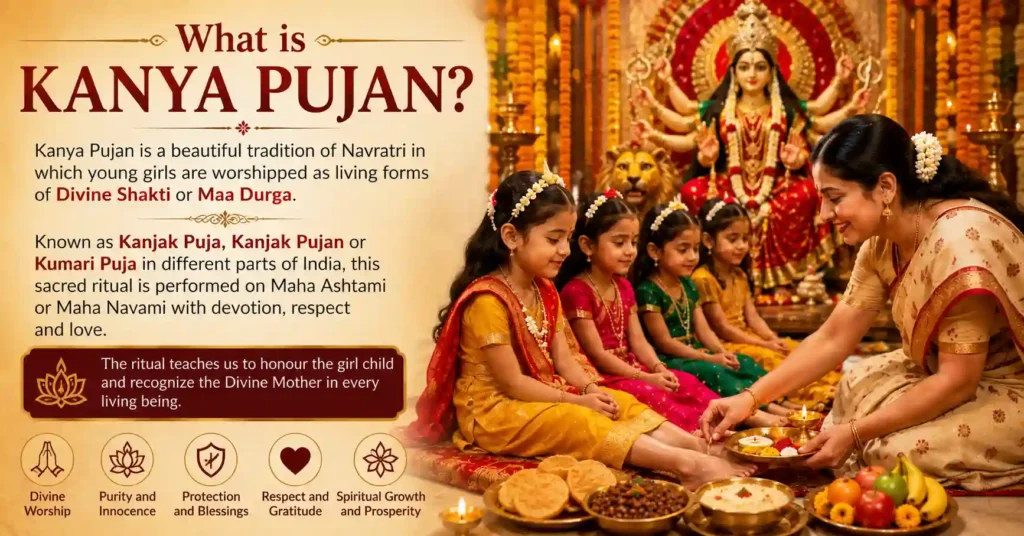
Kanya Pujan, also known as Kanjak Puja, Kanjak Pujan, or Kumari Puja, is a sacred Sanatan ritual performed during Navratri and Durga Puja. In this tradition, pre-pubescent girls, usually between two and ten years of age, are worshipped as living manifestations of Maa Durga or Divine Shakti.
According to Sanatan Dharma, these young girls symbolize purity, innocence, and the boundless creative energy of the Divine Mother. Their worship reminds devotees that Shakti is not limited to temples or sacred idols but is present in every girl child.
The belief behind this tradition is both simple and profound. Before the mind becomes influenced by ego, fear, or worldly desires, a child’s heart reflects natural innocence and compassion. By offering respect and gratitude to Kanya, devotees honour these divine qualities and seek the blessings of Maa Durga.
Why Are Young Girls Worshipped as Divine Shakti?
In Sanatan Dharma, Shakti is not merely a cosmic force but the divine energy that sustains all creation. She is believed to be present wherever life flourishes with purity, compassion, and truth. Young children naturally reflect these qualities through their innocence, simplicity, and unconditional love.
A girl child, free from pride, prejudice, and worldly attachments, is therefore regarded as a living symbol of the Divine Mother. Worshipping her is a reminder that the Goddess is not confined to temples or sacred idols but lives in every form of creation.
By offering respect to Kanya, devotees express gratitude for the nurturing, protective, and creative power of the feminine. The tradition also inspires society to honour, protect, educate, and respect every girl and woman, recognising them as manifestations of Divine Shakti in everyday life.
Scriptural Insight
The tradition of worshipping young girls as embodiments of the Divine Mother is reflected in several Hindu scriptures and long-standing temple traditions. While the rituals and customs may vary across regions and sampradayas, the central belief remains the same: Divine Shakti resides in all creation and is especially revered in the purity and innocence of the girl child.
This timeless teaching reminds devotees that true devotion extends beyond ritual worship and should be reflected through love, respect, compassion, and dignity towards every woman and girl in everyday life.
Why Is Kanya Pujan Performed During Navratri?
Navratri is a sacred festival dedicated to the worship of Maa Durga in her nine divine forms, collectively known as Navadurga. Over these nine days, devotees seek the blessings of the Divine Mother for strength, wisdom, prosperity, and spiritual growth.
Kanya Pujan is an integral part of this celebration because young girls are regarded as living manifestations of Divine Shakti. Worshipping them symbolizes reverence for the Goddess in her purest and most compassionate form.
The ritual is most commonly performed on Maha Ashtami or Maha Navami, the final and most spiritually significant days of Navratri. However, in some families and spiritual traditions, Kanya worship is performed every day of Navratri as an expression of continuous devotion.
By welcoming Kanya into their homes with love and respect, devotees bring the worship of the Goddess beyond the altar and into everyday life, reinforcing the Sanatan belief that the Divine resides in every living being.
Why Are Nine Kanya and One Batuk Worshipped?
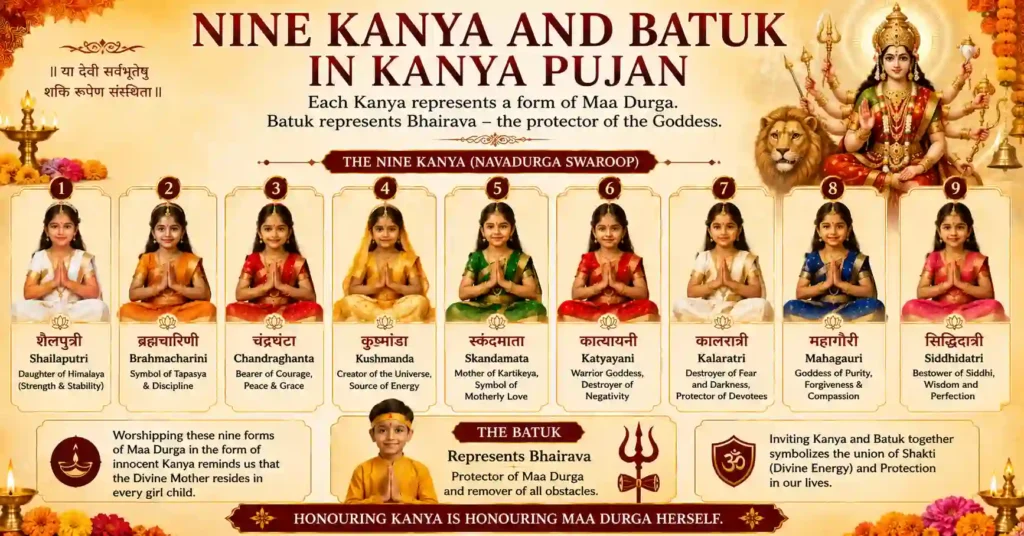
Traditionally, nine young girls are invited during Kanya Pujan, with each girl representing one of the Navadurga, the nine divine forms of Maa Durga. Along with them, one young boy, known as Batuk or Langur, is also invited. He is regarded as a symbol of Bhairava, the divine guardian and protector of the Goddess.
This tradition reflects the harmonious union of Shakti (Divine Feminine Energy) and her protector. Together, the worship of Kanya and Batuk signifies devotion, protection, balance, and the completeness of the sacred ritual.
In many households, however, inviting all ten children may not always be possible. Sanatan Dharma places greater importance on devotion than on numbers. Worshipping even one Kanya with genuine faith, respect, and a pure heart is considered spiritually fulfilling and equally pleasing to Maa Durga.
The number of children invited may also vary according to regional customs and family traditions. While the ritual may differ in practice, its essence remains the same: honouring the Divine Mother through the innocence and purity of children.
Traditional Forms of Kanya According to Age
In some traditions of Sanatan Dharma, each age of a young girl is associated with a particular form of the Divine Mother. While these associations may vary across regions and sampradayas, they symbolically represent different aspects of Divine Shakti.
| Age | Form of the Goddess |
|---|---|
| 2 Years | Kumari |
| 3 Years | Trimurti |
| 4 Years | Kalyani |
| 5 Years | Rohini |
| 6 Years | Kalika |
| 7 Years | Chandika |
| 8 Years | Shambhavi |
| 9 Years | Durga |
| 10 Years | Subhadra |
These traditional associations are meant to honour the Divine Feminine in its various forms. However, the essence of Kanya Pujan remains devotion, respect, and reverence toward every girl child, regardless of age.
| Participant | Represents | Spiritual Significance |
|---|---|---|
| Nine Kanya | Navadurga | Divine feminine power, purity, wisdom and blessings |
| Batuk (Langur) | Bhairava | Protection, courage and guardian of the Goddess |
Who Can Perform Kanya Pujan at Home?
Kanya Pujan can be performed by anyone with faith and devotion. Families, elderly devotees, single worshippers, and even those observing Navratri for the first time can perform this sacred ritual. No elaborate arrangements or special qualifications are required.
Many parents choose to worship their own daughters, and this is considered equally sacred in Sanatan Dharma. If inviting children from outside is not possible, offering prayers with sincerity to one’s own child is a beautiful expression of devotion to Maa Durga.
A priest is not essential for performing the ritual at home. What truly matters is a pure heart, respect for the Kanya, and the intention to honour the Divine Mother with humility and gratitude.
Whether you worship one Kanya or several, the spiritual merit lies in your devotion rather than the scale of the ceremony. Sincere faith and reverence are always considered the heart of this timeless tradition.
Beginner’s Tip
If you are performing Kanya Pujan for the first time, keep the ritual simple and focus on devotion rather than perfection.
Welcome the children with respect, offer fresh satvik food, pray sincerely to Maa Durga, and express gratitude from your heart. In Sanatan Dharma, genuine faith and humility are always considered more important than elaborate arrangements.
How Is the Kanya Pujan Ritual Performed?
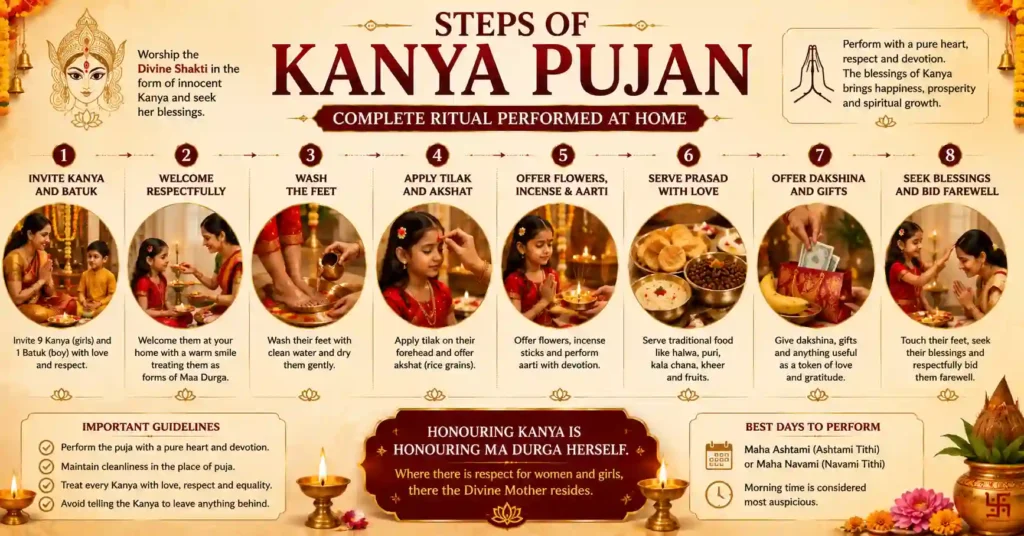
The ritual begins by welcoming the children with warmth and respect. Their feet are gently washed as a mark of reverence, symbolising the honour offered to Divine Shakti. A tilak is applied on the forehead, and in some traditions, a sacred red thread (Kalava) is tied around the wrist.
Flowers, akshat (uncooked rice), and incense are offered while chanting simple prayers or remembering Maa Durga with devotion.
While offering flowers and prayers, devotees may chant:
या देवी सर्वभूतेषु शक्तिरूपेण संस्थिता।
नमस्तस्यै नमस्तस्यै नमस्तस्यै नमो नमः॥
Transliteration:
Ya Devi Sarva Bhuteshu Shakti Rupena Samsthita,
Namastasyai Namastasyai Namastasyai Namo Namah.
Meaning:
“Salutations again and again to the Divine Mother who resides in all beings as Divine Shakti.”
This prayer beautifully reflects the essence of Kanya Pujan, where young girls are honoured as living manifestations of the Divine Mother. The children are then seated comfortably and served freshly prepared satvik prasad, traditionally consisting of halwa, puri, and kala chana.
After the meal, devotees offer dakshina, fruits, sweets, or small gifts as a token of love and gratitude. In many families, the ritual concludes by respectfully seeking the blessings of the Kanya before they depart.
Although regional customs may differ slightly, the essence of the ritual remains the same: serving the children with humility, devotion, and the heartfelt belief that they are living manifestations of the Divine Mother.
What food is offered during Kumari Puja?
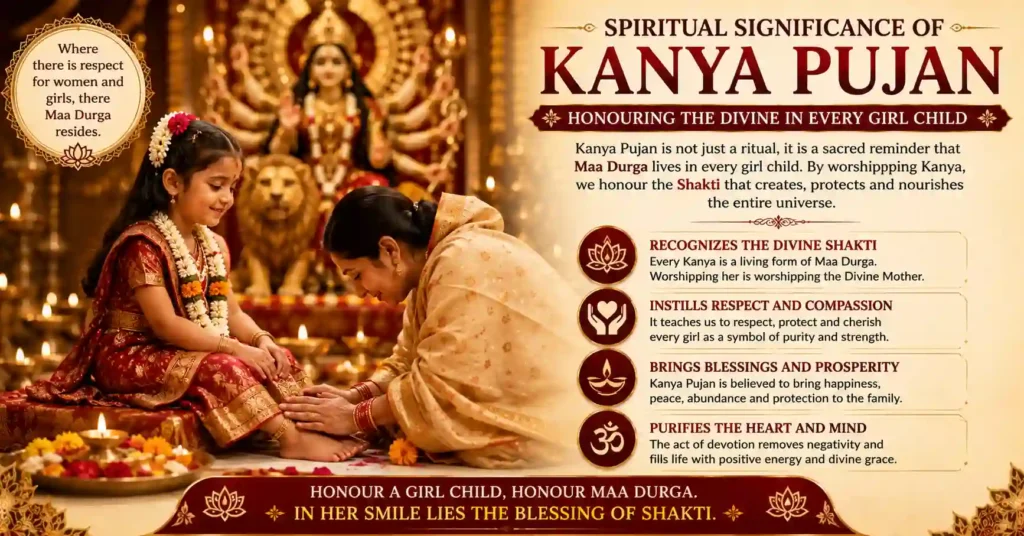
The food offered during Kumari Puja in Navratri is simple and pure. A traditional meal often includes puri, kale chane, halwa, and sweet kheer, along with fruits or homemade sweets.
After the meal, new clothes, small gifts, and dakshina are offered according to one’s capacity. The emphasis is always on love, not luxury.
Gentle rules to keep in mind
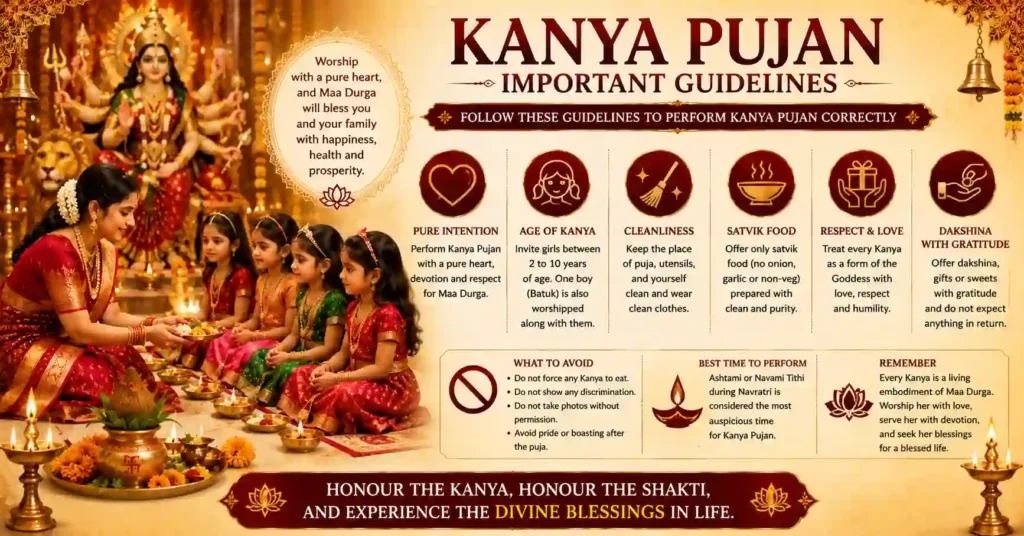
The sacred ritual is guided by devotion, humility, and respect rather than rigid rules. A clean worship space, fresh satvik food, and a peaceful atmosphere help preserve the sanctity of the occasion.
The children should always feel welcomed, comfortable, and respected. They should never be treated as part of a formal obligation or made to wait unnecessarily. Their happiness and dignity are an essential part of the worship.
Offer food with love, avoid wasting prasad, and never force a child to participate if they are uncomfortable. Small gifts or dakshina should be offered with gratitude, not as a display of wealth.
Above all, remember that Maa Durga accepts sincere devotion more than elaborate arrangements. Even a simple ritual performed with a pure heart carries immense spiritual value.
| Do’s | Don’ts |
|---|---|
| Keep the worship area clean and peaceful. | Do not treat the ritual as a social formality. |
| Serve fresh satvik food with love. | Avoid stale or non-vegetarian food. |
| Treat every child with kindness and respect. | Never rush, ignore, or make children uncomfortable. |
| Offer dakshina or a small gift with gratitude. | Do not perform the ritual merely for show or publicity. |
Spiritual Significance of Kanya Pujan
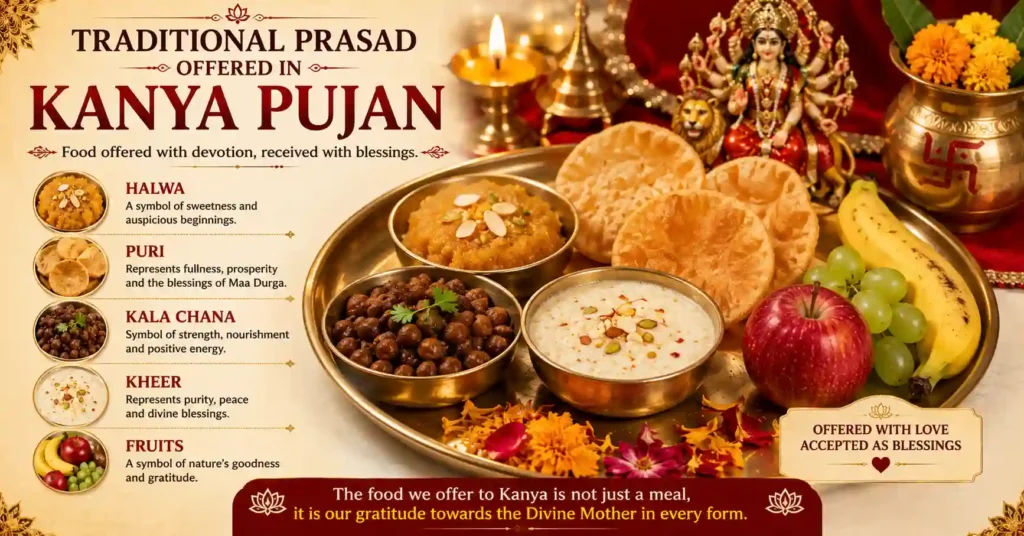
The ritual is a beautiful reminder that the Divine Mother resides in every girl child. By offering respect to Kanya, devotees honour the qualities of purity, innocence, compassion, and inner strength that are cherished in Sanatan Dharma.
Many devotees believe that worshipping the living embodiment of Divine Shakti invites peace, protection, prosperity, and spiritual blessings into the home. More importantly, the ritual nurtures humility, gratitude, and reverence for the sacred feminine in everyday life.
The true significance of this tradition extends beyond religious observance. It encourages families and society to honour, protect, educate, and respect every girl and woman, recognising them as reflections of the creative and nurturing power of the Goddess.
Swami Vivekananda also emphasised that genuine worship of the Divine Mother must be reflected in the respect and dignity shown to women. His message beautifully echoes the timeless spirit of this sacred tradition.
Did You Know?
Many people believe that Kanya Pujan is simply a Navratri ritual, but its deeper message extends far beyond the festival.
The tradition teaches that the true worship of Maa Durga is reflected in how we honour, protect, educate, and respect every girl and woman in daily life. The ritual is therefore not only an act of devotion but also a reminder of the timeless Sanatan values of compassion, dignity, and reverence for the Divine Feminine.
Blessings and Spiritual Benefits of Kanya Pujan
After the ritual, many devotees experience a quiet sense of peace and contentment. The home often feels calmer, and the heart is filled with gratitude and emotional balance. While the transformation may be subtle, its spiritual impact is deeply meaningful.
By washing tiny feet, offering simple satvik food, and serving Kanya with love, devotees experience the presence of the Divine Mother in a deeply personal way. The ritual reminds us that true devotion is expressed not through elaborate ceremonies but through humility, compassion, and heartfelt respect for Divine Shakti.
Conclusion
Kanya Pujan in Navratri is not about performing an elaborate ritual or following every tradition perfectly. At its heart, it is about recognising the presence of Divine Shakti in the innocence, purity, and compassion of every girl child.
This timeless Sanatan tradition reminds us that the true worship of Maa Durga begins with honouring, respecting, and protecting the feminine in everyday life. When performed with faith and humility, even the simplest offering becomes a heartfelt act of devotion.
May Maa Durga bless your home with peace, protection, prosperity, and the wisdom to recognise the Divine in every child and every living being.
Key Takeaways
- Kanya Pujan is a sacred Navratri ritual that honours young girls as living manifestations of Maa Durga and Divine Shakti.
- The ritual is most commonly performed on Maha Ashtami or Maha Navami, although traditions may vary across regions.
- Simple offerings such as halwa, puri, kala chana, fruits, and dakshina, when given with devotion, are considered spiritually meaningful.
- Worshipping even one Kanya with faith and respect is regarded as equally valuable when inviting nine girls is not possible.
- The deeper message of the tradition is to honour, protect, educate, and respect every girl and woman as an expression of the Divine Feminine.
- In Sanatan Dharma, devotion, humility, and sincerity are considered more important than elaborate rituals or expensive offerings.
Suggested Reading
If you found this guide on Kanya Pujan helpful, you may also enjoy these related articles on Navratri, Maa Durga worship, sacred rituals, devotional practices, and the timeless traditions of Sanatan Dharma.
Sharad Navratri 2026: Dates, Ghatasthapana Muhurat, Rituals and Significance
https://thesanatantales.com/sharad-navratri/
Ghatasthapana Guide: Meaning, Puja Vidhi, Samagri and Spiritual Significance
https://thesanatantales.com/ghatasthapana/
Maa Durga: Meaning, Story, Forms, Navadurga, Temples and Worship
https://thesanatantales.com/maa-durga-meaning-story-navadurga-worship/
Navadurga: Meaning, Nine Forms of Maa Durga, Navratri Significance and Spiritual Journey
https://thesanatantales.com/navadurga-nine-forms-of-maa-durga/
Kalash in Hinduism: Meaning, Symbolism, Kalash Sthapana and Spiritual Significance
https://thesanatantales.com/kalash-in-hinduism/
Durga Saptashati: Meaning, Story, 13 Chapters and Navratri Significance
https://thesanatantales.com/durga-saptashati-meaning-navratri/
Durga Chalisa: Lyrics, English Pronunciation, Hindi Meaning, Benefits & Significance
https://thesanatantales.com/durga-chalisa-lyrics-meaning/
Navarna Mantra: Meaning, Benefits, Chanting Rules and How to Chant
https://thesanatantales.com/navarna-mantra/
Argala Stotra: Lyrics, Meaning, Benefits and How to Chant
https://thesanatantales.com/argala-stotra/
Aarti of Maa Ambe: Lyrics, Meaning, Benefits and How to Perform
https://thesanatantales.com/aarti-of-maa-ambe/
Durga Mantras: Complete Guide to Powerful Mantras, Stotras, Chalisa and Aarti
https://thesanatantales.com/durga-mantras-stotras-chalisa-aarti/
Navratri Fasting Rules: What to Eat and What to Avoid During Vrat
https://thesanatantales.com/navratri-fasting-rules/
Kanya Puja (Wikipedia)
https://en.wikipedia.org/wiki/Kanya_Puja (en.wikipedia.org)
These articles will help you deepen your understanding of Kanya Pujan, Navratri, Maa Durga worship, sacred rituals, mantra chanting, fasting practices, and the spiritual values that form the heart of Sanatan Dharma.
FAQs
What is Kanya Pujan?
Kanya Pujan is a sacred Sanatan ritual in which young girls are worshipped as living manifestations of Maa Durga or Divine Shakti. It is commonly performed during Navratri, especially on Maha Ashtami and Maha Navami.
The ritual involves welcoming the girls with respect, washing their feet, applying a tilak, offering prayers, serving satvik prasad, and presenting gifts or dakshina. It symbolises reverence for the Divine Mother and the sacred feminine energy present in every girl child.
Why is Kanya Pujan performed during Navratri?
Navratri is dedicated to the worship of Maa Durga in her nine divine forms, known as Navadurga. During this festival, devotees honour young girls as living embodiments of the Goddess and seek her blessings.
The ritual reminds us that the Divine is present not only in temples and idols but also in every living being. It also encourages respect, compassion, and gratitude towards women and girls.
On which day is Kanya Pujan performed?
Most devotees perform the ritual on Maha Ashtami or Maha Navami, which are considered the most auspicious days of Navratri. These days mark the culmination of Devi worship and hold special spiritual significance.
However, some families and spiritual traditions perform Kanya worship every day during Navratri. The exact day may also vary according to regional customs and family traditions.
Why are nine girls and one Batuk worshipped?
Traditionally, nine girls represent the Navadurga, the nine divine forms of Maa Durga. Along with them, one young boy called Batuk or Langur is invited as a symbol of Bhairava, the divine guardian of the Goddess.
This tradition represents the harmony of divine feminine energy and divine protection. If inviting all ten children is not possible, worshipping even one Kanya with sincere devotion is considered spiritually meaningful.
Can I perform Kanya Pujan at home?
Yes. Kanya Pujan can be performed at home by anyone with faith and devotion. Families, elderly devotees, single worshippers, and even first-time observers of Navratri can perform this sacred ritual.
A priest is not essential. What matters most is a clean environment, satvik offerings, and a sincere heart filled with humility and respect for the Divine Mother.
Can parents worship their own daughter during Kanya Pujan?
Yes. If inviting children from outside is not possible, parents may worship their own daughter. This is widely accepted in Sanatan Dharma and is considered equally sacred.
The purpose of the ritual is to honour Divine Shakti, not simply to fulfil a ritualistic requirement. Genuine devotion and respect are always considered more important than external arrangements.
What food is offered during Kanya Pujan?
The traditional Kanya Pujan prasad consists of halwa, puri, and kala chana. In many families, fruits, sweets, kheer, and seasonal offerings are also served.
The food should always be fresh, satvik, and prepared with devotion. Offering food with love and gratitude is regarded as an important part of the worship.
What are the spiritual benefits of Kanya Pujan?
Devotees believe that this sacred ritual brings peace, protection, prosperity, and the blessings of Maa Durga. It also cultivates humility, gratitude, compassion, and reverence for the Divine Mother.
Beyond religious observance, the ritual teaches society to honour, protect, and respect every girl and woman as a manifestation of Divine Shakti. This timeless message is one of the greatest spiritual gifts of Kanya Pujan.
Glossary of Important Terms
| Term | Meaning |
|---|---|
| Kanya Pujan | A sacred Navratri ritual in which young girls are worshipped as living embodiments of Maa Durga or Divine Shakti. |
| Kanjak Puja | Another popular name for Kanya Pujan, especially used in North India during Navratri. |
| Kumari Puja | The traditional Sanskrit term for the worship of an unmarried girl as a manifestation of the Divine Mother. |
| Navratri | A nine-night Hindu festival dedicated to the worship of Maa Durga and her nine divine forms (Navadurga). |
| Maha Ashtami | The eighth day of Navratri, considered one of the most auspicious days for performing Kanya Pujan. |
| Maha Navami | The ninth day of Navratri, also widely observed for Kanya Pujan and Durga worship. |
| Navadurga | The nine forms of Goddess Durga worshipped over the nine days of Navratri. |
| Divine Shakti | The supreme feminine cosmic energy believed to create, sustain, and protect the universe. |
| Batuk (Langur) | A young boy worshipped along with the Kanyas as a symbol of Bhairava, the divine guardian of the Goddess. |
| Bhairava | A powerful form of Lord Shiva associated with protection and traditionally represented by Batuk during Kanya Pujan. |
| Dakshina | A respectful offering of money, gifts, or clothes given to the Kanyas after the worship as a token of gratitude. |
| Prasad | Sanctified food first offered to the deity and then distributed among devotees as a divine blessing. |
| Satvik Food | Pure vegetarian food prepared with cleanliness and devotion, believed to promote peace, purity, and spiritual well-being. |
| Tilak | A sacred mark applied on the forehead using kumkum, sandalwood, or other holy substances as part of Hindu worship. |
| Maa Durga | The Divine Mother in Hinduism, worshipped as the embodiment of strength, compassion, protection, and victory over evil. |
About the Author
Yateendra Chaturvedi is a spiritual writer, researcher, devotee, and the founder of The Sanatan Tales. With over 35 years of professional experience and a lifelong interest in Sanatan Dharma, he writes about Hindu deities, temples, scriptures, festivals, Mahavidyas, sacred stories, rituals, and living traditions that continue to guide and inspire devotees across India.
Drawing from traditional scriptures, regional beliefs, temple traditions, devotional literature, and historical sources, he aims to present authentic, well-researched, and easy-to-understand content for modern readers. His work focuses on preserving spiritual wisdom, explaining sacred traditions, and helping seekers develop a deeper understanding of India’s rich spiritual heritage.
Through The Sanatan Tales, Yateendra strives to make the timeless teachings of Sanatan Dharma simple, meaningful, and relevant for today’s generation while maintaining respect for traditional sources, regional practices, and diverse spiritual perspectives.
Learn More About Yateendra Chaturvedi →
https://thesanatantales.com/about-the-author/
References & Sources
This article is based on the teachings, beliefs, and traditions of Sanatan Dharma, with reference to Hindu scriptures, Puranas, traditional worship practices, temple customs, and the living spiritual traditions followed across different regions of India. It also draws upon insights from respected religious literature, scholarly resources, and traditional knowledge preserved through the guru-disciple (Guru-Shishya) tradition.
Note: Beliefs, rituals, and interpretations may vary across different sampradayas (traditions), regions, families, and spiritual lineages within Sanatan Dharma. The purpose of this article is not to present any single practice as the only correct one, but to explain widely accepted beliefs and traditions in a simple, respectful, and accessible manner for readers seeking spiritual understanding.
Read More Interesting Articles on Sanatan Dharma