Kalash in Hinduism is a sacred symbol of purity, prosperity, and divine presence. More than a simple vessel, it represents life, balance, and the eternal connection between nature and the Divine. From the beginning of a puja, the Kalash marks the creation of a sacred space where devotion and positive energy come together.
Whenever worship begins, a beautifully decorated Kalash is placed near the deity. Filled with clean water, adorned with fresh mango leaves, and crowned with a coconut, it reflects the harmony of the five elements and the fullness of creation.
Whether it is a daily puja, Kalash Sthapana during Navratri, a griha pravesh ceremony, a wedding, or a havan, the Kalash is regarded as an auspicious symbol that invites divine blessings. Our elders preserved this tradition not out of fear, but with the belief that purity, devotion, and sincere intention naturally attract positive spiritual energy.
In this article, let us understand the meaning of the Kalash, its symbolism, spiritual significance, and why it continues to hold a special place in Hindu rituals and Sanatan traditions.
Kalash at a Glance
| Quick Fact | Details |
|---|---|
| Sanskrit Name | Kalasha (कलश) or Purna Kalasha (पूर्ण कलश) |
| Meaning | A sacred vessel symbolizing life, abundance, purity, and divine presence |
| Represents | The Panchatatva (Earth, Water, Fire, Air, and Space) |
| Main Components | Kalash (vessel), sacred water, mango leaves, and a coconut |
| Common Materials | Copper, brass, silver, clay, or stainless steel |
| Used During | Daily Puja, Kalash Sthapana (Ghatasthapana), Navratri, Griha Pravesh, weddings, havans, yajnas, Satyanarayan Puja, and temple ceremonies |
| Associated Deities | Maa Lakshmi, Varuna Dev, Lord Vishnu, Lord Ganesha, and other Hindu deities |
| Symbolizes | Purity, prosperity, creation, auspiciousness, and divine blessings |
| Alternative Name | Purna Kalasha, Purna Kumbha, or Ghata (in some traditions) |
Table of Contents
ToggleWhat is Kalash in Hinduism?
A Kalash is a sacred vessel used in Hindu worship and auspicious ceremonies. Traditionally made of copper, brass, silver, or clay, it is filled with clean water and decorated with fresh mango leaves and a coconut before being placed near the deity.
However, the Kalash is much more than a ritual object. It is regarded as a symbol of life, prosperity, purity, and divine presence. During Kalash Sthapana, it represents the arrival of sacred energy and the beginning of a spiritually uplifting atmosphere.
In Hindu traditions, the water inside the Kalash symbolizes the source of life, while the vessel itself represents creation and abundance. Together, these elements remind devotees that divinity resides where purity, balance, and sincere devotion are nurtured.
For this reason, the Kalash is considered one of the most auspicious symbols in Hindu rituals, festivals, and sacred ceremonies.
Parts of a Kalash and Their Symbolism
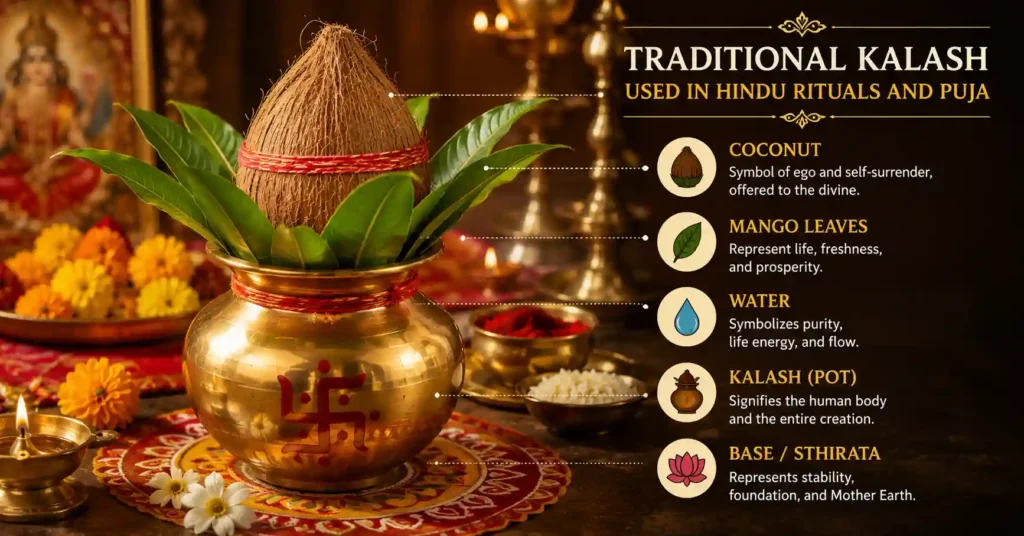
Every part of the Kalash carries a deeper spiritual meaning. Together, these elements symbolize creation, purity, prosperity, and the harmony between nature and the Divine.
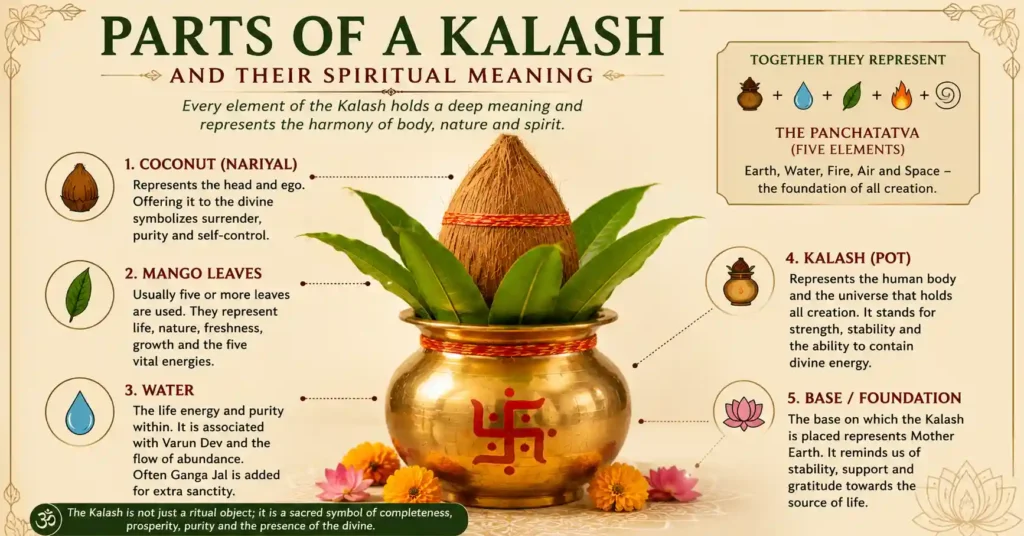
The Kalash (vessel) represents the human body that nurtures life and serves as the foundation of spiritual growth. Filled with sacred water, it reminds devotees that life itself is sustained by purity and divine grace.
The water inside symbolizes life, purity, and the source of creation. In many traditions, it is believed to invoke the presence of sacred rivers and divine energies during worship.
The mango leaves represent fertility, growth, vitality, and the continuous renewal of life. Their fresh green colour reflects prosperity and the balance of nature.
The coconut placed on top symbolizes the human head and the surrender of ego before the Divine. It also represents self-discipline, wisdom, and the offering of one’s highest self with humility.
Together, these sacred elements transform the Kalash into a powerful symbol of completeness, reminding devotees that true harmony is achieved when the body, mind, nature, and spirit remain in balance.
How the Kalash Represents the Panchatatva
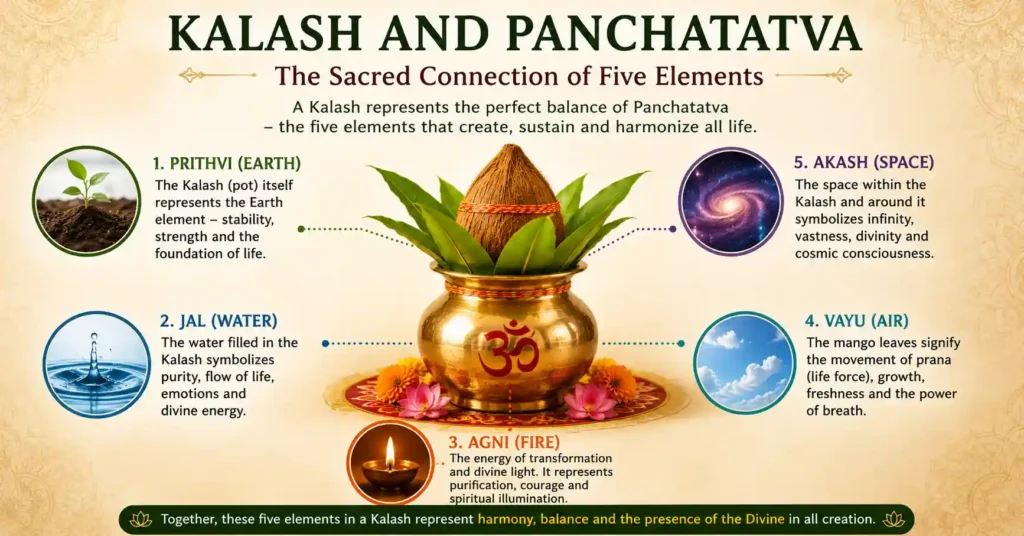
The Kalash beautifully represents the Panchatatva, the five fundamental elements that form the universe according to Hindu philosophy. It reminds devotees that all creation exists in perfect balance through these natural forces.
The Kalash vessel, whether made of clay or metal, symbolizes Prithvi (Earth), representing stability, nourishment, and the foundation of life. The water inside signifies Jal (Water), the source of purity, life, and spiritual renewal.
The diya lit beside the Kalash represents Agni (Fire), symbolizing knowledge, transformation, and the removal of ignorance. The air surrounding the Kalash reflects Vayu (Air), the life-giving force present in every living being.
Finally, the open space around and above the Kalash represents Akash (Space), the element associated with infinite consciousness and the presence of the Divine. Together, these five elements create a sacred balance that lies at the heart of Hindu rituals and spiritual practices.
For this reason, the Kalash is regarded as more than a ceremonial vessel. It serves as a reminder that human life, nature, and the Divine are deeply interconnected through the harmony of the Panchatatva.
Kalash ko Puja mein Kyun Rakha Jata Hai?
The Kalash is placed in worship as a symbol of purity, prosperity, and divine presence. It marks the beginning of a sacred ritual and creates an atmosphere of devotion before prayers or ceremonies begin.
During Kalash Sthapana, devotees invoke the blessings of the Divine and seek peace, harmony, and positive energy. It is believed that the Kalash becomes a sacred seat for divine consciousness throughout the ritual.
In many Hindu traditions, the water in the Kalash is revered as a symbol of life and abundance. It is often invoked with the presence of sacred rivers and deities, making it an integral part of pujas, yajnas, festivals, and other auspicious ceremonies.
Keeping a Kalash during worship also reminds devotees to cultivate purity in their thoughts, words, and actions. Its presence encourages mindfulness, gratitude, and a deeper connection with the Divine rather than merely following rituals mechanically.
For this reason, the Kalash is regarded as one of the most auspicious elements of Hindu worship, symbolizing that sincere devotion and pure intention invite divine grace into every sacred occasion.
Association of the Kalash with Hindu Deities
The Kalash is deeply associated with several Hindu deities and is regarded as a symbol of divine blessings, prosperity, and spiritual abundance. For this reason, it is placed at the beginning of many pujas, yajnas, and sacred ceremonies.
The Kalash is especially linked with Maa Lakshmi, the Goddess of wealth, prosperity, and good fortune. A beautifully decorated Kalash represents not only material abundance but also inner peace, wisdom, and a life filled with auspiciousness.
The sacred water inside the Kalash is traditionally associated with Varuna Dev, the deity of water. During many rituals, devotees add Ganga Jal or water from other holy rivers, symbolizing purity, spiritual cleansing, and the blessings of sacred waters.
Many Hindu traditions also invoke the presence of Lord Vishnu, Lord Ganesha, and other deities in the Kalash during Kalash Sthapana. This reflects the belief that the vessel becomes a sacred abode of divine energy throughout the worship.
Through these sacred associations, the Kalash serves as a bridge between the devotee and the Divine, reminding us that true prosperity is measured not only by wealth but also by purity, devotion, and spiritual growth.
What Do Hindu Scriptures Say About the Kalash?
The Kalash has been regarded as an auspicious symbol in Hindu traditions for centuries. References to sacred vessels filled with water appear in Vedic literature, Puranas, Agamas, and traditional temple rituals, where they are associated with purity, creation, prosperity, and the invocation of divine blessings.
During important ceremonies such as yajnas, temple consecrations (Kumbhabhishekam), and festival worship, the Kalash is used to symbolize the presence of divine energy. In many traditions, it is believed that sacred rivers, deities, and positive spiritual forces are invoked into the Kalash through prayers and mantras before the ritual begins.
Although different sampradayas and regional traditions may follow their own customs, the spiritual message remains the same: the Kalash represents life, abundance, purity, and the harmonious relationship between nature, humanity, and the Divine.
Did You Know?
In many Hindu temple consecration ceremonies (Kumbhabhishekam), dozens or even hundreds of sacred Kalash are filled with sanctified water and energized through Vedic mantras.
The water is then ceremonially poured over the temple’s main tower (Shikhara or Vimana), symbolizing the invocation of divine blessings and the spiritual renewal of the temple.
This ancient tradition continues to be followed in many temples across India today.
Kalash Kin Avsaron Par Rakha Jata Hai?
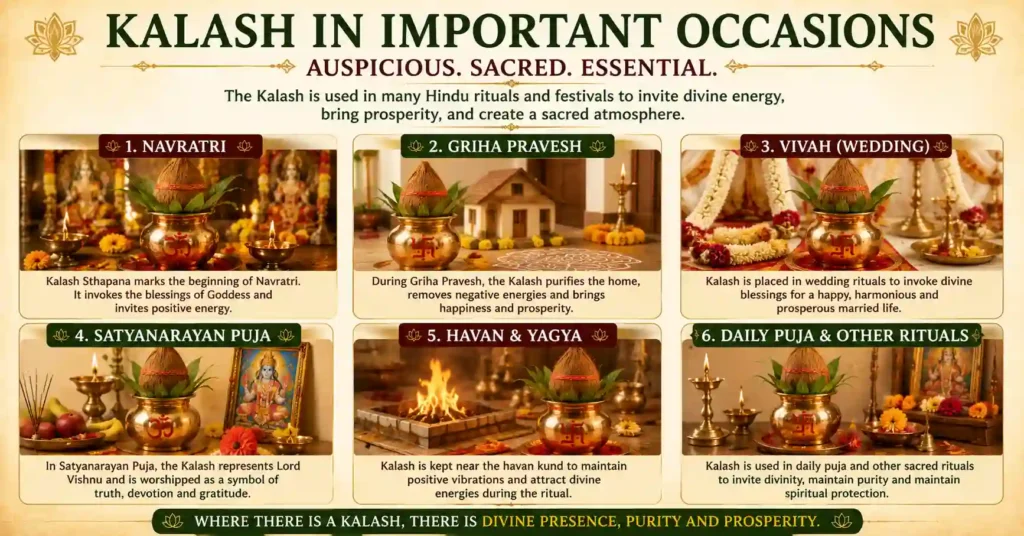
The Kalash is an essential part of many Hindu rituals and is placed at the beginning of auspicious ceremonies to invoke purity, prosperity, and divine blessings. Although customs vary across regions, its spiritual significance remains the same.
During daily puja, the Kalash represents the presence of the Divine and helps create a peaceful atmosphere for worship. Many families keep it during regular prayers as a symbol of purity and positive energy.
In Navratri, Kalash Sthapana (Ghatasthapana) marks the beginning of the nine-day festival dedicated to Goddess Durga. It is one of the most important rituals and symbolizes the invocation of divine power and auspiciousness.
The Kalash is also placed during vrats, Griha Pravesh, Hindu weddings, Satyanarayan Puja, havans, and yajnas. It signifies a sacred beginning and seeks blessings for health, harmony, prosperity, and spiritual well-being.
In many temples and traditional ceremonies, the Kalash is used during special rituals, festivals, and consecration ceremonies. Its presence reminds devotees that every sacred occasion should begin with purity, devotion, and gratitude.
Whether the ritual is performed at home or in a temple, the Kalash continues to symbolize balance, abundance, and the timeless spiritual values of Sanatan Dharma.
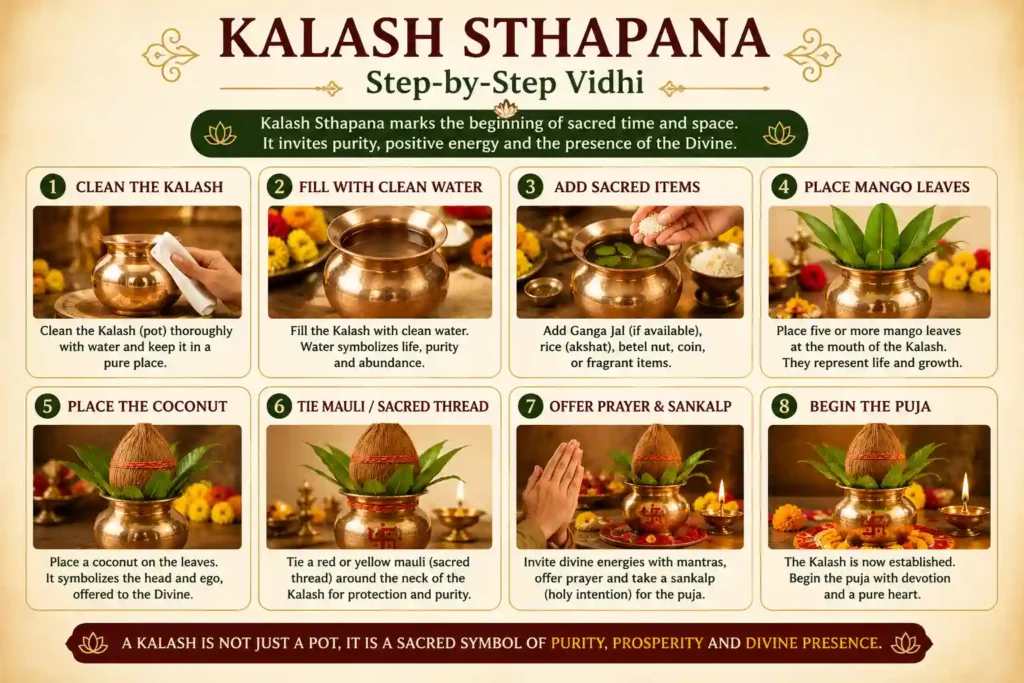
How to Perform Kalash Sthapana at Home
Performing Kalash Sthapana at home is a simple yet deeply meaningful ritual. While customs may vary among regions and families, the basic process remains largely the same across Hindu traditions.
Begin by cleaning the worship area and placing a clean cloth on the altar. Position the Kalash on a plate filled with a small quantity of rice, symbolizing stability and abundance.
Fill the Kalash with clean water or Ganga Jal. Some traditions also add turmeric, rice, betel nut, coins, or fragrant flowers as symbols of prosperity and auspiciousness.
Arrange five or more fresh mango leaves around the mouth of the Kalash. Place a whole coconut, preferably wrapped with a red or yellow cloth and sacred thread, on top of the leaves.
Light a diya and incense, then offer flowers, kumkum, turmeric, rice, and prayers while invoking the blessings of the Divine. During Navratri and other festivals, devotees may also recite specific mantras according to their family tradition.
The Kalash remains on the altar throughout the worship and is respectfully concluded after the ceremony by offering the sacred water to plants, a Tulsi plant, or another clean natural place.
Common Mistakes to Avoid While Keeping a Kalash
The purpose of keeping a Kalash is to cultivate devotion and purity. While different traditions may follow different customs, observing a few simple practices can help maintain the sanctity of the ritual.
- Always use a clean and undamaged Kalash before beginning worship.
- Fill it with clean water or Ganga Jal whenever possible.
- Use fresh mango leaves and a fresh coconut instead of dried or spoiled offerings.
- Place the Kalash on a clean altar or a plate filled with rice during the puja.
- Avoid moving or disturbing the Kalash unnecessarily once the worship has begun.
- After the ritual, do not discard the water carelessly. Offer it to plants, a Tulsi plant, or another clean natural place with respect.
- Most importantly, remember that sincere bhav (devotion) is more important than external perfection. Rituals are meant to deepen spiritual awareness, not create fear or anxiety.
Following these simple practices helps preserve the spiritual significance of the Kalash while keeping the worship meaningful and respectful.
Conclusion
The Kalash is much more than a ritual vessel. It symbolizes purity, prosperity, balance, and the presence of the Divine. Whether used in daily worship, festivals, or auspicious ceremonies, it reminds us that every sacred act begins with faith, humility, and sincere devotion.
At the same time, Sanatan Dharma teaches that rituals are meant to support devotion, not replace it. If circumstances do not allow keeping a Kalash, a puja performed with genuine bhav (devotion) is still complete. In Hindu tradition, sincere intention has always been valued above ritual perfection.
If you wish to explore Sanatan rituals further, you may also enjoy reading about Tilak in Hinduism, Why Hindus Wear the Sacred Janeu, and the Meaning of Panchatatva in Hinduism. Together, these traditions remind us that rituals are not rigid practices but timeless ways to cultivate purity, balance, and spiritual awareness in everyday life.
Suggested Reading
The Kalash is one of the most sacred symbols of purity, prosperity, and divine presence in Sanatan Dharma. If you would like to deepen your understanding of Hindu rituals, traditions, and spiritual practices, explore these related articles from Sanatan Tales.
Tilak in Hinduism: Meaning, Types, Benefits and Spiritual Significance
https://thesanatantales.com/tilak-in-hinduism/Janeu (Yajnopavita): Meaning, Rules, Upanayan Sanskar and Spiritual Significance
https://thesanatantales.com/janeu-yajnopavita-meaning-rules-significance/Panchopchar Pujan: Meaning, Vidhi and the Five Sacred Offerings
https://thesanatantales.com/panchopchar-pujan/What is Havan and Why It Is Important in Sanatan Dharma
https://thesanatantales.com/what-is-havan/How to Do Daily Puja at Home in Sanatan Dharma
https://thesanatantales.com/daily-puja-at-home/Why Abhishek is Done to Shivling: Meaning, Story and Spiritual Truth
https://thesanatantales.com/why-abhishek-is-done-to-shivling/Why Offerings Are Returned as Prasad in Hindu Rituals
https://thesanatantales.com/why-offerings-are-returned-as-prasad/Rudraksha: Meaning, Types and Spiritual Benefits
https://thesanatantales.com/rudraksha-meaning-types-benefits/What is Kul Devta and Kul Devi and Why It Matters in Every Family
https://thesanatantales.com/kul-devta-and-kul-devi-meaning/Kumari Puja in Navratri: Honouring Kanya as Divine Shakti
https://thesanatantales.com/kumari-puja-in-navratri-guide/Kalasha (Wikipedia)
https://en.wikipedia.org/wiki/Kalasha
FAQs
What is Kalash in Hinduism?
A Kalash in Hinduism is a sacred vessel filled with water and decorated with mango leaves and a coconut. It symbolizes purity, prosperity, creation, and the presence of divine energy. The Kalash is placed at the beginning of many pujas, festivals, weddings, havans, and other auspicious ceremonies to invoke blessings and create a sacred atmosphere for worship.
Why is a Kalash used in Hindu puja?
A Kalash is used in Hindu puja because it represents life, abundance, and the presence of the Divine. During Kalash Sthapana, devotees invoke divine blessings into the vessel, making it a symbol of purity and auspiciousness. It also reminds worshippers that devotion, balance, and inner purity are essential parts of every spiritual practice.
Why are mango leaves and a coconut placed on the Kalash?
Each part of the Kalash has symbolic meaning. The mango leaves represent growth, vitality, and prosperity, while the coconut symbolizes wisdom, self-control, and the surrender of ego before the Divine. Together with the sacred water inside the vessel, they represent harmony between nature, human life, and spiritual consciousness.
Is keeping a Kalash compulsory for every puja?
No. While the Kalash is considered highly auspicious, Sanatan Dharma places greater importance on bhav (sincere devotion) than on ritual objects. If circumstances do not permit keeping a Kalash, a puja performed with faith, respect, and a pure heart is still regarded as spiritually meaningful and complete.
On which occasions is a Kalash used?
The Kalash is used during many Hindu rituals and festivals, including Navratri (Kalash Sthapana or Ghatasthapana), Griha Pravesh, Hindu weddings, Satyanarayan Puja, havans, yajnas, temple ceremonies, and daily worship. Although customs may vary across regions, the Kalash is universally regarded as a symbol of an auspicious beginning and divine blessings.
What does the water inside the Kalash symbolize?
The water inside the Kalash symbolizes life, purity, and the source of creation. In many traditions, it is sanctified with Ganga Jal or invoked with the blessings of sacred rivers and Varuna Dev, the deity of water. This sacred water represents spiritual cleansing, nourishment, and the continuous flow of divine grace in Hindu worship.
Can a Kalash be reused after a puja?
Yes, a Kalash can be reused if it is cleaned respectfully after the puja. In Hindu tradition, the vessel itself is considered sacred, but it is not meant for single use. Copper, brass, silver, or clay Kalash are commonly used repeatedly for daily worship and religious ceremonies.
After the ritual, the water should be respectfully offered to plants, poured at the base of a sacred tree, or used to sprinkle around the home. The mango leaves and coconut are traditionally distributed as prasadam or disposed of respectfully according to local customs.
What should be kept inside a Kalash?
A Kalash is traditionally filled with clean water or Ganga Jal. In many Hindu traditions, devotees also add betel nut, coins, rice, turmeric, cardamom, cloves, or fragrant flowers depending on the type of ritual being performed.
Fresh mango leaves are placed at the mouth of the Kalash, and a coconut wrapped in a red or yellow cloth is placed on top. The exact items may vary according to regional customs, family traditions, or the specific puja, but the underlying purpose remains the same—to invoke purity, prosperity, and divine blessings.
What is the difference between Kalash and Kalash Sthapana?
A Kalash is the sacred vessel used during Hindu worship, while Kalash Sthapana refers to the ritual of preparing and installing that vessel before the puja begins.
During Kalash Sthapana, the Kalash is filled with sacred water, decorated with mango leaves, and crowned with a coconut while specific prayers are offered. The ritual signifies the invocation of divine presence and marks the beginning of an auspicious ceremony. Although the procedure may vary slightly across traditions, its spiritual purpose remains the same.
Glossary of Important Terms
| Term | Meaning |
|---|---|
| Kalash | A sacred vessel filled with water and decorated with mango leaves and a coconut, symbolizing purity, prosperity, and divine presence in Hindu worship. |
| Kalash Sthapana | The ritual of preparing and installing the Kalash before the beginning of a puja, festival, or auspicious ceremony. |
| Panchatatva | The five fundamental elements of creation—Earth (Prithvi), Water (Jal), Fire (Agni), Air (Vayu), and Space (Akash)—that form the universe according to Hindu philosophy. |
| Puja | A Hindu ritual of worship performed to honor and seek the blessings of a deity. |
| Havan (Yajna) | A sacred fire ritual in which offerings are made into the fire while chanting Vedic mantras to invoke divine blessings. |
| Griha Pravesh | The traditional Hindu housewarming ceremony performed before entering a new home. |
| Navratri | A nine-night Hindu festival dedicated to the worship of Goddess Durga and her divine forms. |
| Ghatasthapana | Another name for Kalash Sthapana, especially performed on the first day of Navratri. |
| Ganga Jal | Sacred water collected from the River Ganga, used in Hindu rituals for purification and spiritual sanctity. |
| Varuna Dev | The Vedic deity associated with water, oceans, and cosmic order. |
| Maa Lakshmi | The Hindu Goddess of wealth, prosperity, fortune, and abundance. |
| Bhav | Pure devotion, faith, and sincere intention offered during worship. |
| Prasadam | Blessed food or sacred offerings distributed to devotees after a puja or religious ceremony. |
| Auspicious | Considered spiritually favorable or beneficial for beginning an important task or ceremony. |
| Divine Presence | The spiritual belief that the blessings or energy of the Divine are invoked during worship. |
About the Author
Yateendra Chaturvedi is a spiritual writer, researcher, devotee, and the founder of The Sanatan Tales. With over 35 years of professional experience and a lifelong interest in Sanatan Dharma, he writes about Hindu deities, temples, scriptures, festivals, Mahavidyas, sacred stories, rituals, and living traditions that continue to guide and inspire devotees across India.
Drawing from traditional scriptures, regional beliefs, temple traditions, devotional literature, and historical sources, he aims to present authentic, well-researched, and easy-to-understand content for modern readers. His work focuses on preserving spiritual wisdom, explaining sacred traditions, and helping seekers develop a deeper understanding of India’s rich spiritual heritage.
Through The Sanatan Tales, Yateendra strives to make the timeless teachings of Sanatan Dharma simple, meaningful, and relevant for today’s generation while maintaining respect for traditional sources, regional practices, and diverse spiritual perspectives.
Learn More About Yateendra Chaturvedi →
https://thesanatantales.com/about-the-author/
References & Sources
This article is based on traditional beliefs, practices, and teachings followed within Sanatan Dharma. The content has been prepared using information from Hindu scriptures, Puranas, Itihasas, traditional religious literature, temple traditions, and other authentic spiritual and cultural references. It also draws upon knowledge preserved through the guru-shishya (guru-disciple) tradition and widely accepted Hindu customs.
Note: Beliefs, rituals, and interpretations may vary across different sampradayas (traditions), regions, communities, and spiritual lineages within Sanatan Dharma. The purpose of this article is not to establish any one interpretation as the absolute truth, but to present widely accepted religious and spiritual perspectives in a simple, respectful, and accessible manner.
Read More Interesting Articles on Sanatan Dharma