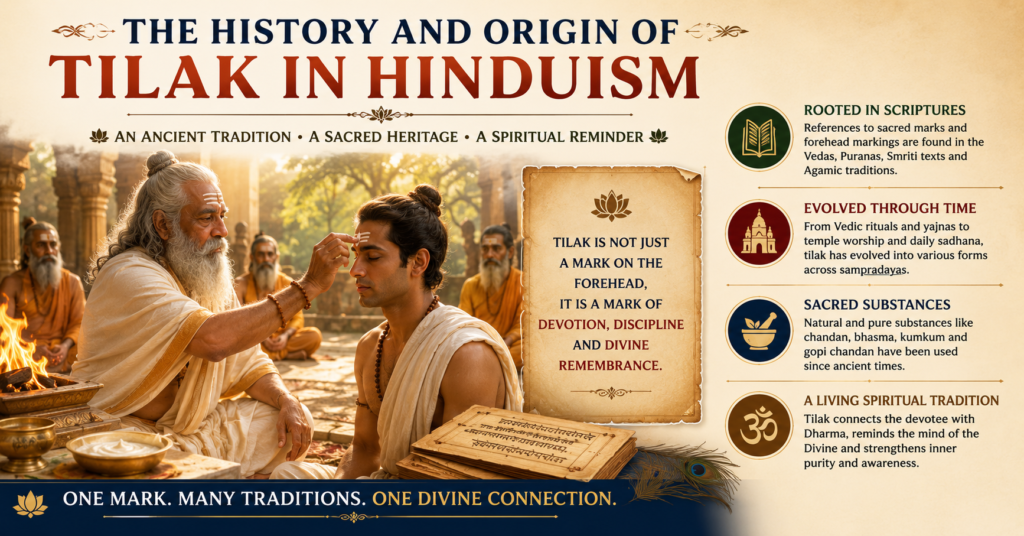
Tilak in Hinduism is one of the oldest and most sacred traditions of Sanatan Dharma. More than a mark on the forehead, it is a symbol of devotion, spiritual identity, and a constant reminder of our connection with the Divine. For centuries, devotees have applied tilak before worship, meditation, and other sacred rituals as an expression of faith and inner discipline.
The moment the tilak is applied between the eyebrows, it gently draws attention to the Ajna Chakra, often known as the centre of wisdom and awareness. Whether viewed from a spiritual or traditional perspective, this simple practice encourages mindfulness, inner peace, and a deeper connection with one’s Ishta Devta.
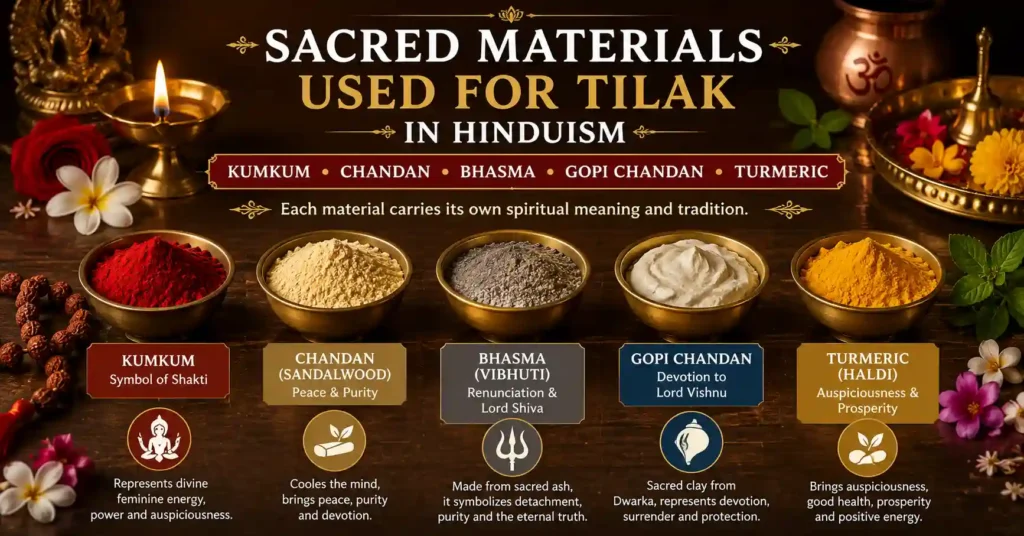
Although the types of tilak vary across different sampradayas and regions of India, their purpose remains the same: to inspire devotion, purity, and remembrance of Dharma. Whether made from chandan, kumkum, bhasma (vibhuti), or gopi chandan, each tilak carries its own spiritual meaning and reflects a unique path within Sanatan Dharma.
In this article, you will learn the meaning of Tilak in Hinduism, its history, different types, spiritual and scientific significance, the sacred materials used to prepare it, the correct way to apply it, and why this timeless tradition continues to inspire millions of devotees even today.
Tilak in Hinduism at a Glance
| Aspect | Details |
|---|---|
| Meaning | A sacred mark symbolizing devotion, purity, and spiritual identity |
| Common Materials | Chandan, Kumkum, Bhasma (Vibhuti), Gopi Chandan, Turmeric, Kesar |
| Applied On | Forehead (between the eyebrows), and in some traditions, other parts of the body |
| Major Traditions | Shaiva, Vaishnava, Shakta, Smarta |
| Common Occasions | Daily worship, temple visits, festivals, vrats, and religious ceremonies |
| Spiritual Significance | Remembrance of the Divine, Dharma, and inner discipline |
| Associated Chakra | Ajna Chakra (according to yogic tradition) |
Table of Contents
ToggleSpiritual Significance of Tilak in Hinduism
The spiritual significance of Tilak in Hinduism goes far beyond its appearance. It is a sacred symbol of devotion, faith, and self-discipline that reminds a devotee to keep the mind focused on Dharma and the Divine. Applying tilak is a daily expression of surrender to one’s Ishta Devta and a commitment to live with purity and righteousness.
According to Hindu traditions, the forehead is considered a sacred place because it is associated with the Ajna Chakra, the centre of wisdom, intuition, and inner awareness. Applying tilak at this point serves as a reminder to cultivate higher thoughts, self-control, and spiritual consciousness throughout the day.
Different scriptures and spiritual traditions also describe tilak as a mark of divine protection. Sacred materials such as bhasma (vibhuti), gopi chandan, kumkum, and chandan are believed to carry spiritual purity and are traditionally applied before worship, meditation, yajnas, and other religious ceremonies.
Beyond symbolism, the daily practice of applying tilak encourages mindfulness. It creates a brief moment of prayer before beginning important tasks and helps devotees remember that every action should be guided by faith, humility, and devotion rather than ego.
For millions of Hindus, tilak is therefore not merely a ritual or cultural identity. It is a timeless spiritual practice that strengthens one’s connection with the Divine while inspiring inner peace, positive thoughts, and a life rooted in Sanatan values.
Major Types of Tilak in Hinduism and Their Meanings
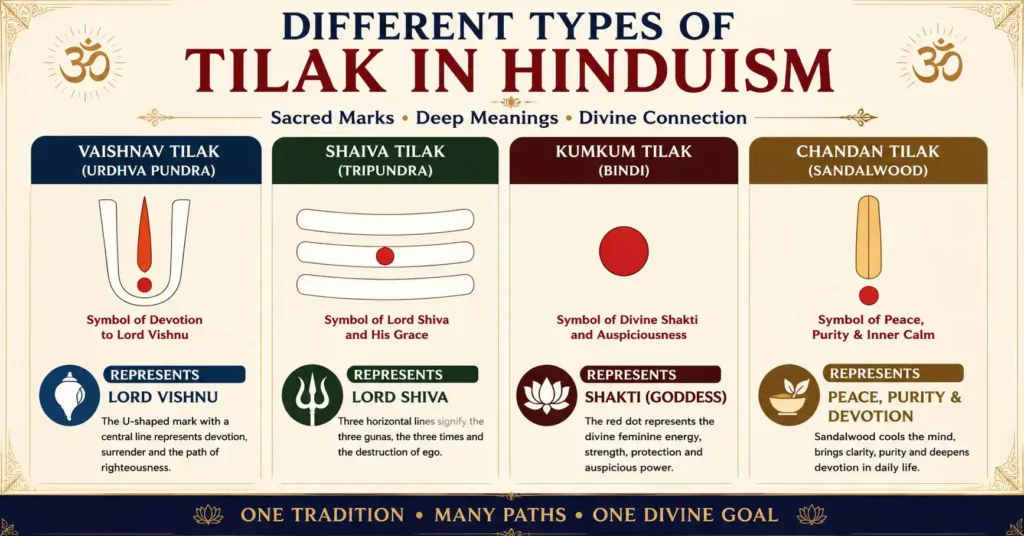
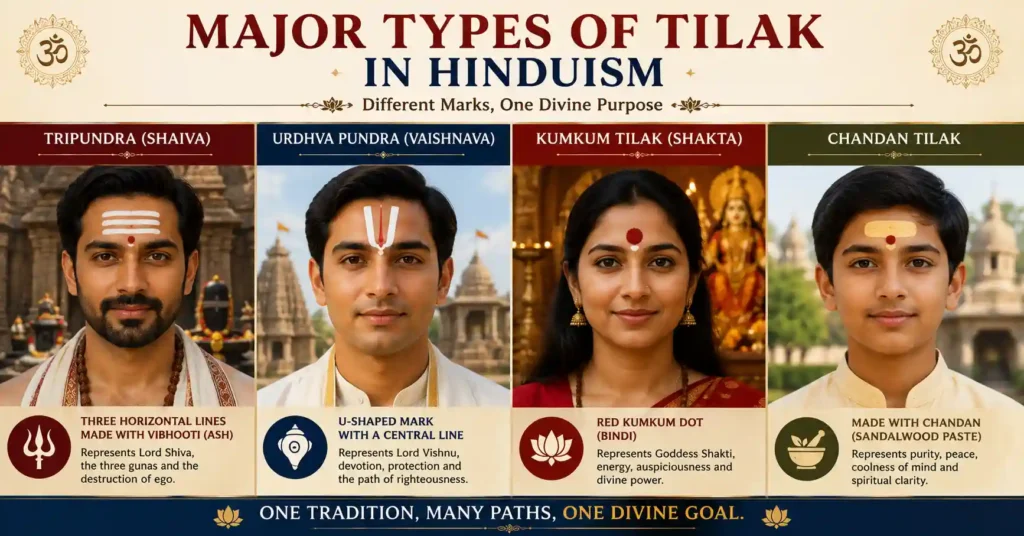
The types of Tilak in Hinduism reflect the rich diversity of Sanatan Dharma. Although the designs and materials vary across different sampradayas, every tilak represents devotion, spiritual identity, and a connection with a particular deity or tradition.
Tripundra (Shaiva Tilak)
The Tripundra consists of three horizontal lines made with bhasma (vibhuti). It is traditionally worn by devotees of Lord Shiva and symbolizes the destruction of ego, ignorance, and worldly attachments. It also reminds devotees that everything material is temporary, encouraging a life of detachment and spiritual wisdom.
Urdhva Pundra (Vaishnava Tilak)
The Urdhva Pundra is made with gopi chandan and appears as two or more vertical lines on the forehead. It is worn by devotees of Lord Vishnu and His incarnations such as Lord Krishna and Lord Rama. The design is believed to represent the lotus feet of Lord Vishnu and symbolizes humility, devotion, and surrender.
Kumkum Tilak (Shakta Tradition)
The kumkum tilak is closely associated with the worship of Goddess Shakti. It represents divine energy, auspiciousness, prosperity, and feminine power. Many devotees, especially women, wear kumkum during daily worship, festivals, and religious ceremonies as a symbol of blessings and devotion.
Chandan Tilak (Sandalwood Paste)
A chandan tilak is valued for its cooling and soothing nature. It is widely used by devotees of Lord Vishnu, Lord Krishna, and other deities during puja and temple worship. Beyond its calming effect, sandalwood symbolizes purity, peace, and spiritual clarity.
Other Sacred Tilak Materials
In some traditions, turmeric (haldi) and saffron (kesar) are also used to prepare tilak. Turmeric is associated with auspicious beginnings, health, and prosperity, while saffron represents purity, sacrifice, and spiritual dedication. The material chosen often depends on the deity being worshipped, regional customs, and family traditions.
Major Types of Tilak at a Glance
| Tilak Type | Material Used | Associated With | Symbolism |
|---|---|---|---|
| Tripundra | Bhasma (Vibhuti) | Lord Shiva | Detachment, destruction of ego, spiritual wisdom |
| Urdhva Pundra | Gopi Chandan | Lord Vishnu, Lord Krishna | Devotion, humility, surrender |
| Kumkum Tilak | Kumkum | Goddess Shakti | Divine energy, prosperity, auspiciousness |
| Chandan Tilak | Sandalwood Paste | Lord Vishnu, Lord Krishna | Peace, purity, spiritual clarity |
| Haldi Tilak | Turmeric | Various Hindu traditions | Auspiciousness, health, prosperity |
| Kesar Tilak | Saffron | Religious ceremonies | Purity, sacrifice, spiritual dedication |
Although their appearance differs, all these types of tilak share a common purpose: to remind devotees of the Divine, strengthen their spiritual identity, and inspire a life guided by Dharma, humility, and devotion.
Did You Know?
Many Hindu devotees apply tilak not only on the forehead but also on other parts of the body, such as the chest, neck, arms, and abdomen, depending on their sampradaya and religious practices.
In several Vaishnava traditions, sacred marks are traditionally applied to twelve parts of the body while chanting the names of Lord Vishnu. These practices symbolize dedicating the entire body, mind, and soul to the service of the Divine.
Tilak in Different Hindu Traditions
Although the practice of applying tilak in Hinduism is widely followed, its style and symbolism vary across different Hindu traditions. These variations reflect the rich diversity of Sanatan Dharma while sharing the common purpose of expressing devotion and spiritual identity.
In the Shaiva tradition, devotees of Lord Shiva usually apply Tripundra, which consists of three horizontal lines made with bhasma (vibhuti). This sacred mark symbolizes purity, detachment, and remembrance of the eternal nature of the soul.
Followers of the Vaishnava tradition wear Urdhva Pundra, a vertical tilak made from gopi chandan or other sacred clay. It represents devotion to Lord Vishnu and His incarnations, such as Lord Rama and Lord Krishna.
In the Shakta tradition, devotees of the Divine Mother commonly apply kumkum or sindoor, symbolizing divine energy (Shakti), auspiciousness, and devotion to the Goddess.
The Smarta tradition follows a more inclusive approach and may use chandan, kumkum, bhasma, or other sacred materials according to the deity being worshipped and family customs.
| Hindu Tradition | Common Tilak | Traditionally Made From | Represents |
|---|---|---|---|
| Shaiva | Tripundra | Bhasma (Vibhuti) | Purity, detachment, and devotion to Lord Shiva |
| Vaishnava | Urdhva Pundra | Gopi Chandan or sacred clay | Devotion to Lord Vishnu and His incarnations |
| Shakta | Red Tilak | Kumkum or Sindoor | Divine energy (Shakti) and auspiciousness |
| Smarta | Chandan or Kumkum | Sandalwood paste or Kumkum | Worship according to the chosen deity and family tradition |
Despite these differences, every form of tilak serves the same essential purpose: to remind devotees of the Divine and inspire them to live according to Dharma, humility, and spiritual discipline.
Scriptural References to Tilak in Hinduism
The tradition of Tilak in Hinduism is supported by several ancient Hindu scriptures and Puranas. Texts such as the Padma Purana, Skanda Purana, and Narada Purana describe the spiritual importance of applying sacred marks on the forehead as an act of devotion, purity, and reverence toward the Divine.
These scriptures explain that wearing tilak is more than an external custom. It serves as a reminder to live according to Dharma, perform one’s duties with sincerity, and keep the mind focused on noble thoughts. Applying tilak before worship, meditation, or religious ceremonies reflects a devotee’s dedication to spiritual discipline.
Different sampradayas also prescribe specific tilaks for the worship of their chosen deity. For example, Vaishnava traditions encourage the use of Urdhva Pundra, while Shaiva traditions recommend the Tripundra made with bhasma (vibhuti). These practices have been preserved for centuries through temples, gurus, and sacred traditions.
For devotees, these scriptural references reinforce that tilak is not merely a cultural symbol. It is a sacred practice that inspires humility, devotion, and a deeper awareness of one’s spiritual journey.
Tilak in Hindu Scriptures
The tradition of applying tilak in Hinduism is mentioned in several Hindu scriptures and has been preserved through centuries of religious practice. While different texts emphasize different forms of worship, they all regard the sacred mark as a symbol of devotion, purity, and reverence for the Divine.
In Vaishnava traditions, the Padma Purana and other devotional texts describe the importance of wearing Urdhva Pundra, the vertical tilak associated with Lord Vishnu. Devotees believe it represents complete surrender to the Lord and serves as a visible expression of their faith.
In Shaiva traditions, sacred ash or bhasma (vibhuti) is highly revered. Scriptures such as the Linga Purana and Shiva Purana describe the spiritual significance of applying bhasma as a reminder of purity, detachment, and the impermanent nature of worldly life.
Many Hindu scriptures also emphasize that external symbols become truly meaningful only when accompanied by sincere devotion, righteous conduct, and remembrance of the Divine. Thus, the tilak is not merely a religious mark but a daily expression of faith and Dharma.
Scientific and Spiritual Significance of Tilak
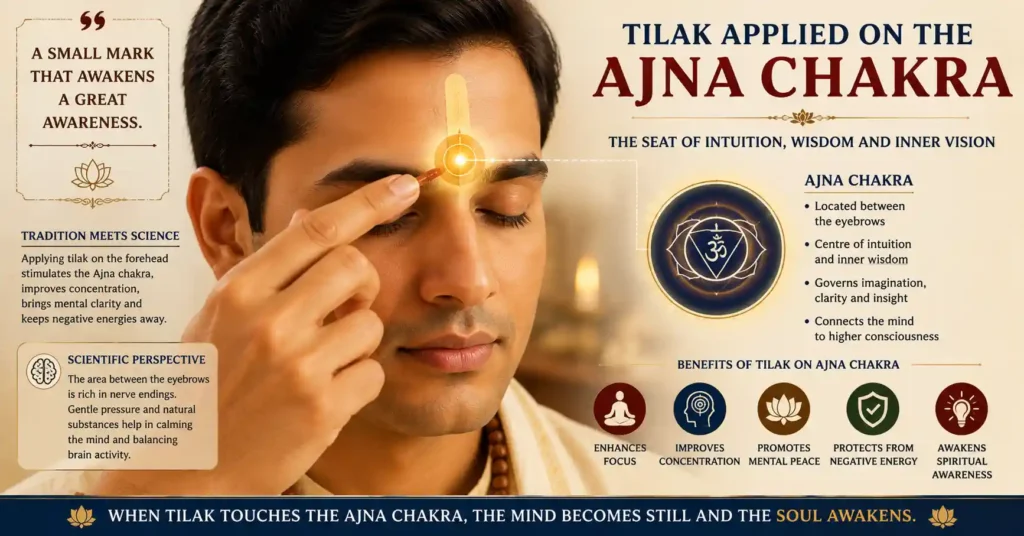
The scientific and spiritual significance of Tilak has been discussed for centuries in both traditional Hindu practices and modern wellness conversations. In Sanatan Dharma, the tilak is applied between the eyebrows, the location traditionally associated with the Ajna Chakra, which represents wisdom, intuition, and inner awareness.
From a traditional perspective, this point is believed to help improve concentration and encourage a calm, focused state of mind. The gentle act of applying tilak each day also creates a mindful pause before worship, meditation, or beginning important tasks.
Many tilak materials are valued for their natural properties. Chandan (sandalwood) is traditionally appreciated for its cooling effect on the skin, while bhasma (vibhuti), kumkum, and gopi chandan have long been used in Hindu rituals because of their sacred symbolism and cultural significance. Their use reflects centuries of religious practice and devotion.
Although some modern discussions suggest that applying gentle pressure between the eyebrows may support relaxation and mindfulness, scientific research on the specific spiritual effects of tilak remains limited. Its lasting importance therefore lies not only in possible physical benefits but also in the discipline, devotion, and inner awareness that the practice inspires.
When and How to Apply Tilak in Hinduism
Applying Tilak in Hinduism is a simple yet meaningful daily practice. Most devotees apply it in the morning after taking a bath and before performing puja, meditation, or chanting mantras. It is also commonly worn during temple visits, religious ceremonies, festivals, yajnas, and other auspicious occasions as a mark of devotion and reverence.
Traditionally, the tilak is applied to the centre of the forehead between the eyebrows, the place associated with the Ajna Chakra. The material used may vary depending on the deity being worshipped, family customs, or the sampradaya one follows. Common choices include chandan, kumkum, bhasma (vibhuti), and gopi chandan.
The beauty of this sacred tradition is that it is open to everyone. Men, women, children, and elderly devotees can wear tilak with faith and respect. Across different regions of India, the style, colour, and material may differ, but its purpose remains the same: to remember the Divine and begin the day with a pure and focused mind.
While there are different customs regarding the type of tilak worn, the most important aspect is the devotion and sincerity with which it is applied. A tilak placed with genuine faith becomes a daily reminder to live according to Dharma and uphold noble values.
Common Mistakes to Avoid While Applying Tilak
Applying tilak in Hinduism is a sacred act of devotion rather than a mere ritual. While there is no single rule followed by every sampradaya, observing a few simple practices helps preserve the sanctity and purpose of this tradition.
Avoid applying tilak without first cleaning the face or hands, especially before performing puja or visiting a temple. Traditionally, devotees prepare themselves with cleanliness and a calm state of mind before applying the sacred mark.
It is also important to use appropriate materials such as chandan, kumkum, bhasma (vibhuti), or gopi chandan, depending on one’s family tradition or the deity being worshipped. Using sacred materials with respect is considered more important than creating a perfectly shaped tilak.
Finally, remember that the true value of a tilak lies in devotion rather than appearance. Hindu scriptures and spiritual teachers consistently emphasize that faith, humility, righteous conduct, and sincere remembrance of the Divine are more important than the external mark itself.
Benefits of Wearing Tilak Daily
For countless devotees, wearing Tilak in Hinduism is more than a daily ritual. It is a simple spiritual practice that helps them begin the day with devotion, mindfulness, and a positive frame of mind. Applying tilak each morning serves as a gentle reminder to remember the Divine in every thought and action.
Many devotees believe that wearing tilak encourages inner peace, strengthens concentration during puja and meditation, and inspires a more sattvic way of living. It also becomes a visible symbol of their faith and deepens their connection with their Ishta Devta.
The daily practice of applying tilak also nurtures discipline and consistency. By taking a few moments each morning to offer a prayer and apply the sacred mark, devotees cultivate gratitude, humility, and a deeper awareness of Dharma in their everyday lives.
Over time, this small yet meaningful ritual becomes a quiet anchor of spiritual life. Whether at home, in a temple, or while carrying out daily responsibilities, the tilak serves as a constant reminder to walk the path of righteousness, compassion, and devotion.
Mantra While Applying Tilak
Many devotees recite a short prayer or silently remember their Ishta Devta while applying tilak. The exact mantra varies according to family traditions, sampradaya, and the deity being worshipped.
For example, devotees may chant simple mantras such as:
- Om Namah Shivaya (for Lord Shiva)
- Om Namo Narayanaya (for Lord Vishnu)
- Om Shri Krishnaya Namah (for Lord Krishna)
- Om Aim Hreem Kleem Chamundayai Viche (for Goddess Durga)
Some devotees also softly say “Tilakam Dharayami”, meaning “I apply this sacred tilak,” as an expression of devotion before beginning worship.
The most important aspect is not the specific words but the devotion, faith, and reverence with which the tilak is applied.
Can You Wear Tilak Every Day?
Yes. In Sanatan Dharma, wearing tilak every day is a long-standing practice followed by millions of devotees. Many people apply tilak after their morning bath and before performing puja, chanting mantras, or beginning their daily activities.
There is no universal rule that makes daily tilak compulsory for every Hindu. The practice varies according to one’s sampradaya, family traditions, personal devotion, and spiritual discipline. Some devotees wear tilak every day, while others apply it mainly during festivals, temple visits, fasts, or other auspicious occasions.
More important than wearing the tilak every day is the attitude with which it is applied. Hindu traditions emphasize that a sacred mark should reflect sincerity, humility, and devotion rather than become a mere external custom.
Whether worn daily or on special occasions, the tilak continues to remind devotees of their connection with the Divine and inspires them to lead a life guided by Dharma, compassion, and righteous conduct.
Conclusion
The meaning of Tilak in Hinduism goes far beyond a simple mark on the forehead. It is a timeless symbol of devotion, purity, spiritual identity, and remembrance of the Divine. Whether made with chandan, kumkum, bhasma, or gopi chandan, the tilak reflects centuries of faith and sacred tradition within Sanatan Dharma.
For millions of devotees, applying tilak is a small daily ritual with a profound spiritual purpose. It encourages mindfulness, strengthens the bond with one’s Ishta Devta, and serves as a constant reminder to live according to Dharma with humility, compassion, and righteousness.
In a fast-paced world, this ancient practice continues to inspire inner peace and spiritual awareness. The true significance of Tilak in Hinduism lies not only in the mark itself but in the devotion, sincerity, and positive values it represents.
If you wear a tilak every day or on special occasions, let it be more than a tradition. Let it be a daily reminder to keep your thoughts pure, your actions noble, and your heart connected to the Divine.
Suggested Reading
Tilak is one of the many sacred practices that form part of Sanatan Dharma’s daily spiritual life. If you would like to deepen your understanding of Hindu rituals, traditions, and spiritual practices, explore these related articles from Sanatan Tales.
Janeu (Yajnopavita): Meaning, Rules, Upanayan Sanskar and Spiritual Significance
https://thesanatantales.com/janeu-yajnopavita-meaning-rules-significance/Panchopchar Pujan: Meaning, Vidhi and the Five Sacred Offerings
https://thesanatantales.com/panchopchar-pujan/What is Havan and Why It Is Important in Sanatan Dharma
https://thesanatantales.com/what-is-havan/How to Do Daily Puja at Home in Sanatan Dharma
https://thesanatantales.com/daily-puja-at-home/Why Abhishek is Done to Shivling: Meaning, Story and Spiritual Truth
https://thesanatantales.com/why-abhishek-is-done-to-shivling/Why Offerings Are Returned as Prasad in Hindu Rituals
https://thesanatantales.com/why-offerings-are-returned-as-prasad/Rudraksha: Meaning, Types and Spiritual Benefits
https://thesanatantales.com/rudraksha-meaning-types-benefits/What is Kul Devta and Kul Devi and Why It Matters in Every Family
https://thesanatantales.com/kul-devta-and-kul-devi-meaning/Kumari Puja in Navratri: Honouring Kanya as Divine Shakti
https://thesanatantales.com/kumari-puja-in-navratri-guide/Tilaka (Wikipedia)
https://en.wikipedia.org/wiki/Tilaka
FAQs
What is the meaning of Tilak in Hinduism?
The meaning of Tilak in Hinduism goes beyond a decorative mark on the forehead. It is a sacred symbol of devotion, purity, and spiritual identity that has been part of Sanatan Dharma for thousands of years.
Different tilak styles represent different deities, sampradayas, and spiritual traditions. For devotees, applying tilak is a daily reminder to remember the Divine and live according to Dharma.
Why do Hindus apply tilak on the forehead?
Hindus traditionally apply tilak on the forehead because the space between the eyebrows is associated with the Ajna Chakra, often regarded in yogic traditions as the centre of wisdom, awareness, and spiritual focus.
Applying tilak before worship, meditation, or visiting a temple also symbolizes devotion, humility, and the intention to keep one’s thoughts and actions pure throughout the day.
What are the different types of tilak in Hinduism?
There are several types of tilak, each representing a particular tradition within Sanatan Dharma. The most common include Tripundra for Shaivas, Urdhva Pundra for Vaishnavas, kumkum for Goddess worship, and chandan tilak, which is widely used during daily worship and religious ceremonies.
The material, shape, and symbolism of the tilak may vary, but they all express devotion and reverence toward the Divine.
What materials are used to make a tilak?
Traditional tilak is prepared using sacred materials such as chandan (sandalwood paste), kumkum, bhasma (vibhuti), gopi chandan, turmeric, and kesar.
Each material has its own spiritual significance according to different sampradayas and rituals. The choice of material usually depends on the deity being worshipped, family customs, and regional traditions.
Can anyone wear a tilak?
Yes. In Hindu tradition, anyone may wear a tilak with faith and respect. Men, women, children, householders, saints, and devotees from different sampradayas all wear tilak according to their customs and spiritual practices.
The style and material may differ, but the purpose remains the same: expressing devotion and remembering the Divine.
Is there any scientific significance of wearing tilak?
From a traditional perspective, many devotees believe that applying tilak to the forehead promotes mindfulness, calmness, and spiritual awareness by drawing attention to the Ajna Chakra.
Some materials, such as sandalwood paste, are also known for their natural cooling properties. However, while these traditional beliefs are widely respected, modern scientific research on the broader spiritual effects of tilak remains limited.
When should tilak be applied?
Tilak is commonly applied after bathing and before performing puja, meditation, chanting, or visiting a temple. Many devotees also wear it during festivals, religious ceremonies, pilgrimages, and other auspicious occasions.
Some people choose to wear tilak every day as part of their morning spiritual routine, while others apply it on special occasions according to family or regional traditions.
Is tilak different from bindi?
Yes. Although both are worn on the forehead, tilak and bindi serve different purposes. A tilak is primarily a sacred religious mark applied during worship or as a symbol of devotion and spiritual identity.
A bindi, on the other hand, is traditionally worn by women and may carry cultural, religious, or decorative significance depending on the region, community, and personal preference.
Can women apply tilak in Hinduism?
Yes. Women can apply tilak in Hinduism, and the practice has been followed for centuries across different regions and traditions. The type of tilak may vary based on family customs, marital status, the deity being worshipped, and the occasion.
For example, many women apply kumkum or chandan during daily prayers, festivals, and temple visits. Married Hindu women often wear kumkum or sindoor according to their traditions, while unmarried women may apply chandan, kumkum, or turmeric-based tilak during worship.
There is no universal rule that restricts women from wearing tilak. The practice is guided by one’s sampradaya, family traditions, and personal devotion.
Is it necessary to wear tilak every day?
No. Wearing tilak every day is a respected spiritual practice, but it is not universally compulsory for all Hindus. Daily tilak is commonly observed by many devotees as part of their morning worship, while others wear it during festivals, fasts, temple visits, or special religious occasions.
Hindu traditions recognize that customs differ among families, regions, and sampradayas. What matters most is the devotion, discipline, and intention behind the practice rather than the frequency of wearing the tilak.
Can tilak be applied at night?
Yes, tilak can be applied at night, especially during evening prayers (Sandhya), temple visits, devotional gatherings, or special religious ceremonies. There is no universal prohibition against wearing tilak after sunset.
However, many devotees traditionally apply tilak after their morning bath as part of their daily spiritual routine. The exact practice varies among different Hindu traditions and families.
Whether applied in the morning or evening, the tilak should be worn with reverence and devotion rather than as a mere decorative mark.
Glossary of Important Terms
| Term | Meaning |
|---|---|
| Tilak | A sacred mark applied on the forehead or other parts of the body as a symbol of devotion, spiritual identity, and religious tradition in Hinduism. |
| Ajna Chakra | The sixth energy center in yogic philosophy, located between the eyebrows and traditionally associated with wisdom, intuition, and inner awareness. |
| Sanatan Dharma | The eternal spiritual tradition commonly known as Hinduism, based on timeless principles of Dharma, devotion, and righteous living. |
| Ishta Devta | A devotee’s chosen or personal deity whom they worship with love and devotion. |
| Dharma | The principle of righteousness, moral duty, and the proper way of living according to spiritual values. |
| Puja | A Hindu worship ritual involving prayers, offerings, mantras, and devotion to a deity. |
| Sampradaya | A spiritual lineage or religious tradition that follows specific teachings, practices, and forms of worship. |
| Tripundra | Three horizontal lines of sacred ash (bhasma) worn by devotees of Lord Shiva. |
| Urdhva Pundra | A U-shaped vertical tilak worn by followers of Lord Vishnu and Vaishnava traditions. |
| Chandan | Sandalwood paste traditionally used to prepare a cooling and fragrant tilak during worship. |
| Kumkum | A sacred red powder commonly used for tilak and worship, especially in Shakta traditions and by married Hindu women. |
| Bhasma (Vibhuti) | Sacred ash used mainly in Shaiva traditions, symbolizing purity, detachment, and the temporary nature of worldly life. |
| Gopi Chandan | A sacred yellowish clay traditionally used by Vaishnava devotees for applying the Urdhva Pundra tilak. |
| Sattvic | A state or quality associated with purity, harmony, peace, and spiritual clarity according to Hindu philosophy. |
| Mantra | A sacred word, phrase, or hymn chanted during worship, meditation, or spiritual practices. |
| Meditation (Dhyana) | A spiritual practice of focusing the mind to cultivate inner peace, awareness, and connection with the Divine. |
| Shaiva | A major tradition within Hinduism devoted to the worship of Lord Shiva as the Supreme Being. |
| Vaishnava | A major tradition within Hinduism centered on the worship of Lord Vishnu and His incarnations, such as Lord Rama and Lord Krishna. |
| Shakta | A Hindu tradition that worships the Divine Mother (Shakti) as the Supreme Power of the universe. |
| Smarta | A Hindu tradition that worships multiple deities, including Shiva, Vishnu, Devi, Ganesha, Surya, and Kartikeya, while recognizing one Supreme Reality. |
About the Author
Yateendra Chaturvedi is a spiritual writer, researcher, devotee, and the founder of The Sanatan Tales. With over 35 years of professional experience and a lifelong interest in Sanatan Dharma, he writes about Hindu deities, temples, scriptures, festivals, Mahavidyas, sacred stories, rituals, and living traditions that continue to guide and inspire devotees across India.
Drawing from traditional scriptures, regional beliefs, temple traditions, devotional literature, and historical sources, he aims to present authentic, well-researched, and easy-to-understand content for modern readers. His work focuses on preserving spiritual wisdom, explaining sacred traditions, and helping seekers develop a deeper understanding of India’s rich spiritual heritage.
Through The Sanatan Tales, Yateendra strives to make the timeless teachings of Sanatan Dharma simple, meaningful, and relevant for today’s generation while maintaining respect for traditional sources, regional practices, and diverse spiritual perspectives.
Learn More About Yateendra Chaturvedi →
https://thesanatantales.com/about-the-author/
References & Sources
This article is based on beliefs, customs, and traditions followed across various schools of Sanatan Dharma, along with information drawn from Hindu scriptures, traditional religious practices, and trusted spiritual study sources. It also reflects the cultural and devotional significance of tilak as preserved through temple traditions, family customs, and the guru-disciple lineage.
Note: The style, material, symbolism, and method of applying tilak may vary among different sampradayas, regions, and Hindu traditions. The purpose of this article is not to promote any single interpretation as the absolute truth, but to present widely accepted religious and spiritual perspectives in a simple, respectful, and accessible manner for readers.
Read More Interesting Articles on Sanatan Dharma
If you enjoyed learning about Tilak in Hinduism, explore more insightful articles on Sanatan Dharma. Discover the meaning behind sacred rituals, spiritual traditions, and timeless practices that continue to guide millions of devotees on their spiritual journey.
Then list your internal articles underneath with their titles and links. This heading is evergreen, SEO-friendly, and can be reused consistently across all your articles.