Maa Chhinnamasta is the sixth Mahavidya, one of the ten great wisdom goddesses of the Shakta and Tantric tradition. Among all the Mahavidyas, her form is perhaps the most striking and misunderstood.
At first sight, her image can appear shocking, even unsettling. Yet for seekers and devotees, it is not a symbol of fear or violence. It is a symbol of profound spiritual truth.
She stands at the point where life and death, creation and sacrifice, desire and liberation meet. Her form teaches that true awakening does not come through comfort, but through the surrender of ego and attachment.
In Tantric understanding, Maa Chhinnamasta represents the moment when the limited self is cut away and consciousness turns toward its divine source.
Table of Contents
ToggleThe Deeper Meaning Behind Maa Chhinnamasta's Fierce Form
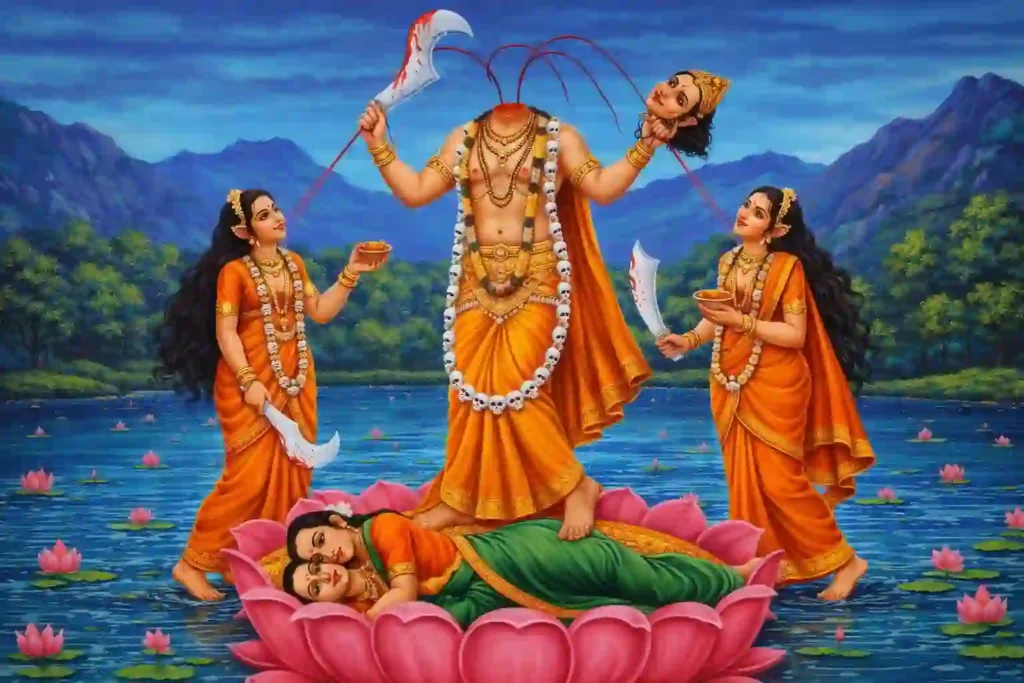
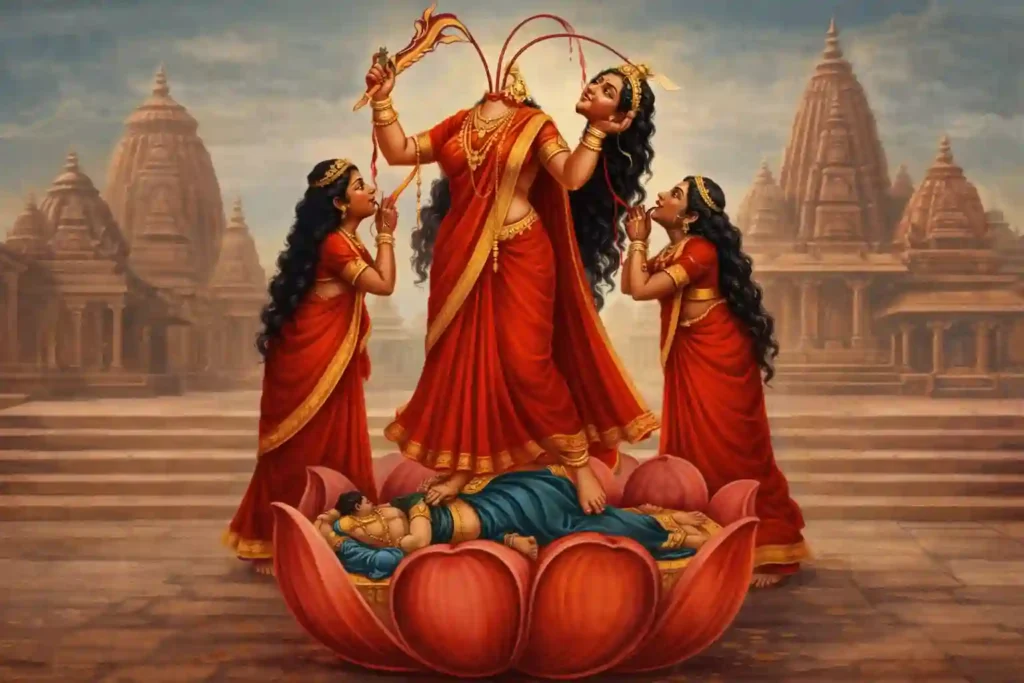
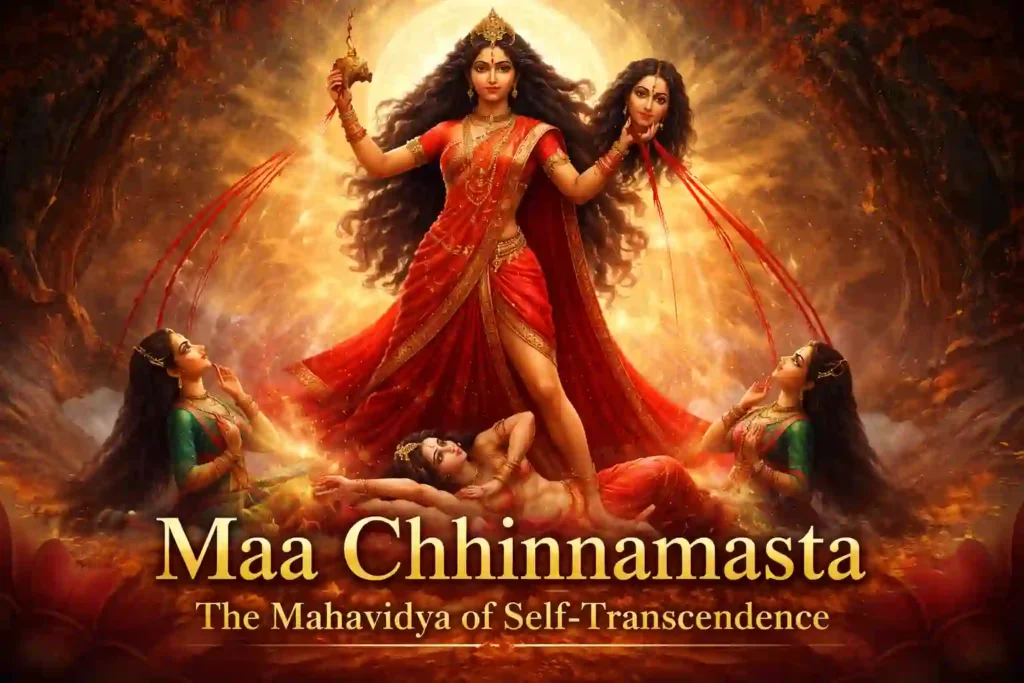
The name Chhinnamasta means “she whose head is severed.” She holds her own head in one hand and a sword in the other.
rom her neck flow three streams of blood. One feeds her own severed head, while the other two nourish her attendants, Dakini and Varnini.
At first glance, this image may seem frightening. Yet its meaning is deeply spiritual.
This is not an act of destruction. It is an act of self-sacrifice. The goddess does not harm another being. Instead, she offers herself so that life may continue.
In Tantric understanding, this represents the highest form of compassion and the continuous flow of energy that sustains creation.
Her calm expression reveals bliss rather than suffering. The message is simple but profound: when ego is surrendered, awareness becomes free, joyful, and expansive.
The Meaning of the Divine Couple Beneath Her Feet
Maa Chhinnamasta stands upon Kamadeva and Rati, the divine couple united in embrace. This image carries profound yogic and Tantric symbolism.
Desire is one of the most powerful forces shaping human life. Tantra does not reject this energy. Instead, it seeks to transform and elevate it. By standing above the divine couple, the goddess symbolizes mastery over desire rather than suppression of it.
The image suggests that the same force that drives creation can also become a path toward spiritual awakening when directed with awareness and discipline.
Here, creation and transcendence exist together. Desire gives rise to life, while detachment opens the door to higher consciousness. Both have their place in the spiritual journey.
The Yogic Meaning of the Three Blood Streams
The three streams flowing from Maa Chhinnamasta’s neck are among the most important symbols in her iconography. In Tantric and yogic traditions, they are often understood as representing the three primary nadis, or subtle energy channels, within the body.
The stream flowing toward Varnini is associated with Ida, the lunar channel linked to intuition and inner awareness. The stream flowing toward Dakini represents Pingala, the solar channel associated with action and vitality. The central stream, which the goddess herself drinks, symbolizes Sushumna, the channel through which higher spiritual awakening unfolds.
This imagery reflects an important principle of Kundalini Yoga. When Ida and Pingala come into balance, energy is said to enter Sushumna, allowing consciousness to move toward deeper states of awareness.
Through this powerful symbolism, Maa Chhinnamasta visually expresses the transformation of life energy into spiritual realization.
The Sacred Traditions Behind Maa Chhinnamasta's Origin
The origin of Maa Chhinnamasta is explained through several Shakta and Tantric traditions. Rather than presenting a single story, these traditions reveal different dimensions of the goddess and her spiritual symbolism.
One of the most widely known accounts describes Goddess Parvati bathing with her attendants Jaya and Vijaya, often identified with Dakini and Varnini. During the bath, the attendants became intensely hungry and begged the Divine Mother for nourishment.
When their hunger became unbearable, Parvati responded in an extraordinary way. She severed her own head and allowed her blood to nourish them. In this tradition, Maa Chhinnamasta becomes the ultimate symbol of self-sacrifice and unconditional compassion.
Another tradition speaks of Prachanda Chandika, a fierce form of the Divine Mother who emerged to destroy powerful demonic forces. After the battle, her immense energy continued to surge. To prevent that force from overwhelming creation, she severed her own head. Here, Chhinnamasta represents the power that restrains even divine power.
Some regional and oral traditions also connect her with the Samudra Manthan. According to these accounts, she consumed a portion of amrita intended for destructive forces and later severed her own head to prevent its misuse. This interpretation emphasizes responsibility, restraint, and conscious use of power.
Across these traditions, the central message remains remarkably consistent. Maa Chhinnamasta represents sacrifice, self-mastery, and the transformation of life force into spiritual awareness.
Why Maa Chhinnamasta Is the Sixth Mahavidya
Within the Das Mahavidya tradition, Maa Chhinnamasta is traditionally revered as the sixth Mahavidya. Her position is deeply symbolic rather than merely numerical.
The earlier Mahavidyas gradually lead the seeker through stages of spiritual awakening. Kali confronts time and mortality, Tara guides through wisdom and protection, Tripura Sundari reveals divine beauty, Bhuvaneshwari expands awareness, and Bhairavi burns impurities through discipline and tapas.
Maa Chhinnamasta represents a dramatic turning point in this journey. At this stage, spiritual growth demands more than devotion or knowledge. The seeker must confront the deepest attachment of all, the sense of individual identity itself.
Her self-decapitated form symbolizes the cutting away of ego, pride, and false selfhood. She teaches that higher realization becomes possible only when the limited self is surrendered to the infinite.
For this reason, many Tantric teachers view her as the Mahavidya of radical transformation, standing at the threshold between personal identity and universal consciousness.
Maa Chhinnamasta and Her Relationship with Other Mahavidyas
Although each Mahavidya possesses a unique form and function, they are ultimately expressions of the same Divine Mother.
Maa Chhinnamasta shares certain qualities with Maa Kali. Both confront death, transformation, and the destruction of illusion. Yet Kali primarily dissolves the limitations imposed by time, while Chhinnamasta cuts the very root of ego-consciousness.
Her connection with Maa Bhairavi is also significant. Bhairavi represents disciplined spiritual effort, austerity, and inner purification. Chhinnamasta reveals the breakthrough that follows when those disciplines mature into complete surrender.
Some traditions also compare her with Maa Dhumavati. Both challenge conventional ideas of beauty, comfort, and worldly success. However, Dhumavati reveals the wisdom hidden in emptiness and loss, whereas Chhinnamasta reveals the power hidden in self-sacrifice and conscious transformation.
Together, the Mahavidyas present different gateways into the same ultimate reality. Maa Chhinnamasta occupies the unique position where personal identity is offered back to the Divine Source.
Regional Traditions Associated with Maa Chhinnamasta
Although Maa Chhinnamasta is revered across the broader Shakta tradition, different regions understand and approach her in distinct ways.
In eastern India, particularly in Bengal, Jharkhand, Assam, and Odisha, she is often viewed through the lens of Tantra and Shakti worship. Here, her fierce form is not seen as frightening but as a profound symbol of transformation, sacrifice, and spiritual awakening.
In Nepal, especially around the Chhinnamasta Bhagawati tradition, her worship reflects a unique blend of Shakta and Vajrayana influences. Ritual symbolism, mantra practice, and goddess devotion developed through centuries of interaction between Hindu and Buddhist communities.
In North India, many devotees approach her through a more devotional and symbolic understanding. Rather than focusing on advanced Tantric practices, worship emphasizes courage, protection, surrender, and the removal of deep-seated fears.
These regional variations do not represent contradictions. They reveal how the same Divine Mother is understood through different cultural, historical, and spiritual lenses.
Maa Chhinnamasta's Place in the Chakra Journey
Different Tantric traditions associate Maa Chhinnamasta with different stages of the subtle body’s awakening, and both interpretations continue to be respected within living lineages.
Some traditions place her at the Manipura chakra, the center associated with power, transformation, and the regulation of vital energy. In this understanding, she represents the moment when inner forces begin to move toward higher awareness.
Other traditions connect her more closely with Sahasrara, the crown chakra, where the sense of separate identity dissolves into pure consciousness.
Many Tantric teachers view Maa Chhinnamasta as the transformative force that guides the upward movement of awareness from personal power toward spiritual realization. Her symbolism reflects the journey from ego-centered existence to awakened consciousness.
Maa Chhinnamasta's Connection with Kabandha Bhairava
In this form, Maa Chhinnamasta is traditionally associated with Kabandha Bhairava, a headless manifestation of Shiva. Together, they symbolize a state beyond ordinary identity, where pure consciousness exists free from ego and limitation.
Within Tantric traditions, the union of Chhinnamasta and Kabandha Bhairava represents the inseparable nature of Shakti and Shiva, energy and awareness, transformation and stillness.
Some traditions hold that devoted worship of Chhinnamasta and Kabandha Bhairava may lead to spiritual attainments and deeper inner realization. At the same time, Tantric scriptures repeatedly caution that spiritual power without wisdom, discipline, and humility can become an obstacle rather than a blessing.
For this reason, their path is traditionally associated with self-mastery, fearlessness, and ethical responsibility.
Scriptural References to Maa Chhinnamasta
Maa Chhinnamasta appears in several Shakta and Tantric traditions, though details vary across lineages and texts.
Her worship is associated with important Tantric sources such as the Shakta Pramoda, Tantrasara, Rudrayamala Tantra, and various Mahavidya compilations preserved within Shakta traditions. These texts describe her fierce iconography, mantra traditions, yogic symbolism, and role in spiritual transformation.
Different scriptures often emphasize different aspects of the goddess. Some focus on her as the embodiment of self-sacrifice, while others present her as the force that awakens Kundalini and destroys ignorance.
Traditional teachers generally caution that scriptural descriptions should not be interpreted only at the literal level. The imagery of self-decapitation, blood streams, and fierce power is understood as symbolic language expressing profound spiritual truths concerning consciousness, energy, and liberation.
The Two Traditional Paths of Maa Chhinnamasta Worship
Within living Shakta traditions, Maa Chhinnamasta is worshipped through two broadly recognized approaches: the Sattvic path and the Tantric or Vira path. While their methods differ, both emphasize discipline, devotion, and sincere spiritual practice.
In the Sattvic approach, devotees worship the goddess through mantra japa, meditation, fasting, prayer, and symbolic offerings. The focus is on self-transformation, mental clarity, and surrender to the Divine Mother. This is the path most commonly followed by householders and temple devotees.
The Tantric or Vira path is traditionally reserved for advanced practitioners working under the guidance of a qualified guru. Here, the worship of Maa Chhinnamasta becomes a means of confronting attachment, fear, and limited identity in pursuit of deeper spiritual awakening.
Her sadhana is traditionally associated with inner transformation, Kundalini awakening, the dissolution of karmic limitations, and the transcendence of ignorance. Across traditions, the emphasis remains not on worldly power, but on spiritual growth and self-realization.
Ritual Elements Found in Living Traditionss
In traditions where Maa Chhinnamasta worship is actively practiced, offerings may include red hibiscus flowers, red cloth, mustard oil lamps, and dedicated mantra japa. These offerings symbolize devotion, transformation, and the fiery energy associated with the goddess.
Some Tantric lineages also employ ritual elements such as meat, fish, or wine within specific ceremonial contexts. These are traditionally understood as symbolic ritual tools rather than acts of indulgence. Many other lineages reject physical offerings altogether and emphasize meditation, mantra, and internal visualization.
Certain occasions are regarded as especially significant for worship, including Tuesdays, Amavasya, and Chhinnamasta Jayanti. In some traditions, late-night spiritual practices are considered particularly conducive to contemplation and mantra sadhana.
Mantras Preserved in Living Shakta Traditions
Among the mantras associated with Maa Chhinnamasta, the following moola mantra is widely preserved across Shakta traditions:
Om Shreem Hreem Kleem Aim Vajra Vairochaniye Hum Hum Phat Swaha
In traditional practice, this mantra is revered as a powerful invocation of the goddess’s transformative energy. Different lineages may preserve slight variations in pronunciation, recitation methods, or ritual context, but the central purpose remains the same: devotion, inner awakening, and spiritual transformation.
Because Maa Chhinnamasta belongs to the Mahavidya and Tantric traditions, mantra practice is traditionally approached with reverence, discipline, and proper guidance. Many teachers advise seekers to learn advanced mantra sadhana through an authentic lineage rather than through self-initiation.
Understanding the Symbolism of Her Bija Mantra
The mantra of Maa Chhinnamasta contains several sacred seed syllables that carry layered spiritual meanings.
Shreem is associated with divine abundance, spiritual grace, and the nourishing aspect of Shakti.
Hreem is often called the Mahamaya bija. It represents the power through which the Divine manifests and withdraws the universe.
Kleem relates to attraction, devotion, and the magnetic force that draws the soul toward the Divine.
Aim symbolizes wisdom, knowledge, and awakened awareness.
Hum is especially important in Chhinnamasta worship. It represents protective fire, the union of Shiva and Shakti, and the force that cuts through ignorance and negative influences.
Phat signifies severance. In Tantric symbolism, it is the power that cuts attachment, illusion, and energetic obstacles.
The title Vajra Vairochaniye is interpreted in various ways by different traditions, but it is generally associated with radiant spiritual power, indestructible awareness, and awakened consciousness.
For this reason, practitioners view the mantra not merely as a prayer but as a symbolic map of inner transformation.
Chhinnamasta Dhyana and Contemplative Symbolism
Traditional meditation on Maa Chhinnamasta goes beyond visualizing her outer form. Every aspect of her iconography is treated as a symbol of inner awakening.
The severed head represents freedom from identification with the limited self. The sword symbolizes spiritual knowledge that cuts through ignorance. The three streams emerging from her neck are understood as the balanced flow of subtle energies within the seeker.
Meditating on Maa Chhinnamasta is not intended to cultivate fear. Rather, it invites contemplation of impermanence, surrender, courage, and the transformation of life force into spiritual awareness.
Many practitioners reflect upon her image as a reminder that true freedom begins when the ego ceases to dominate consciousness.
The Chhinnamasta Yantra and Its Symbolism
The Chhinnamasta Yantra is used in several Shakta and Tantric traditions as a visual representation of the goddess’s energy.
While designs vary among lineages, the yantra commonly incorporates triangles, lotus petals, and sacred geometric patterns associated with the union of Shakti and consciousness.
Practitioners regard the yantra as a symbolic map of inner transformation. Just as the goddess cuts through ego and limitation, the yantra serves as a meditative aid that helps direct awareness inward.
Traditional teachers emphasize that the yantra is not merely an artistic diagram. It functions as a sacred symbol intended to support conce
Major Temples and Their Living Practices
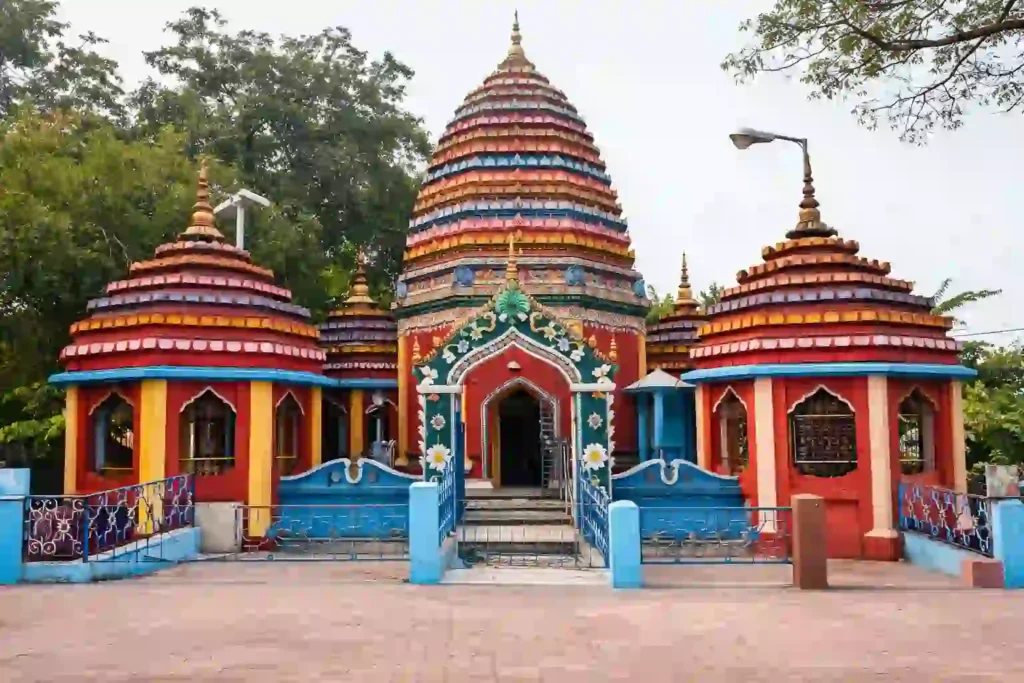
Rajrappa, Jharkhand
Situated at the sacred confluence of the Damodar and Bhairavi rivers, Rajrappa is the most renowned Maa Chhinnamasta shrine. The temple follows a strong Tantric architectural and ritual tradition.
Rajrappa is especially known for Rahu-related worship. Devotees facing Rahu dosha, sudden life disruptions, unexplained fears, or karmic obstacles often seek the goddess’s blessings here. Special night-time pujas, mantra sadhana, and Rahu-shanti rituals are performed, particularly during Amavasya and Makar Sankranti.
Many devotees also undertake personal vows before visiting the temple. Offerings of red hibiscus flowers, red cloth, and special prayers during Amavasya remain common aspects of living worship at the shrine.
The annual Makar Sankranti fair attracts thousands of devotees and reinforces the temple’s importance as one of the most active living centers of Chhinnamasta worship.
Chintpurni, Himachal Pradesh
At Chintpurni, the goddess is worshipped in her formless pindi aspect. While the temple is widely known as a place where devotees pray for relief from worries and mental burdens, some Shakta traditions also associate the site with the transcendence of mental limitations and ego-bound consciousness.
Worship here is predominantly sattvic, emphasizing faith, surrender, prayer, and mental clarity rather than elaborate Tantric rituals.
Saptari, Nepal
The Chhinnamasta Bhagawati Temple in Saptari preserves one of the oldest known images associated with the goddess and reflects a strong interaction between Shakta and Vajrayana traditions.
Ritual practices include mantra-based worship, traditional offerings, and disciplined observances that highlight the temple’s importance within both Hindu and Tantric devotional streams.
Major festivals attract both Hindu and Buddhist devotees, reflecting the unique cultural and spiritual overlap that has developed around the goddess in the Himalayan region.
The site remains one of the most significant centers for understanding Maa Chhinnamasta beyond India.
Varanasi
Within the Ramnagar Durga Temple complex near Kashi, Maa Chhinnamasta is worshipped within a balanced Shakta-Shaiva framework. Rituals here are generally sattvic, focusing on mantra japa, inner restraint, devotion, and the transcendence of fear.
The nearby presence of Kaal Bhairav worship further connects the goddess’s energy to the sacred protective traditions of Kashi.
Maa Chhinnamasta Beyond Hindu Tantra
The influence of Maa Chhinnamasta extends beyond Hindu Tantra. In Vajrayana Buddhism, a closely related deity known as Chinnamunda appears as a fierce manifestation associated with Vajrayogini.
Both traditions portray a self-decapitated goddess who transcends fear, attachment, and ordinary identity. The imagery of the severed head symbolizes the cutting away of ego and the realization of a higher state of awareness.
Despite these similarities, the philosophical language differs. Hindu Shakta traditions often explain the symbolism through Shakti, Kundalini, and the Divine Mother, while Vajrayana teachings emphasize emptiness, wisdom, and the direct realization of ultimate reality.
The shared symbolism reflects centuries of interaction between Hindu and Buddhist Tantric traditions across eastern India and the Himalayan region.
Some Tantric traditions also draw symbolic parallels between Maa Chhinnamasta and fierce divine forces such as Narasimha and Parashurama. In each case, overwhelming power is directed toward the restoration of cosmic balance and the removal of destructive tendencies.
Chhinnamasta Jayanti and Its Spiritual Significance
Chhinnamasta Jayanti is observed on Shukla Chaturdashi during the month of Vaishakha.
For devotees and practitioners, this day is regarded as especially sacred because it honors the transformative energy of Maa Chhinnamasta. Many observe the occasion through prayer, mantra japa, fasting, meditation, and reflection on the deeper meaning of sacrifice, self-mastery, and spiritual awakening.
Within some Tantric traditions, the day is also considered auspicious for advanced sadhana performed under proper guidance. For most devotees, however, it remains a time for devotion, inner contemplation, and seeking the blessings of the Divine Mother.
What Maa Chhinnamasta Ultimately Teaches
Maa Chhinnamasta is not meant to comfort the seeker. She is meant to awaken them.
Her symbolism teaches that spiritual freedom begins when ego, attachment, and false identity are surrendered to the Divine. Through her fierce form, she reminds us that transformation often requires sacrifice, courage, and the willingness to move beyond familiar limitations.
For those who approach her with humility, discipline, and reverence, Maa Chhinnamasta is not a goddess of fear. She is a powerful reminder that true awakening begins when the limited self gives way to a deeper and more expansive consciousness.
Suggested Reading
Maa Chhinnamasta occupies a unique place within the Das Mahavidya tradition, where each goddess represents a different aspect of Divine Wisdom and spiritual transformation.
If you would like to understand how her teachings connect with the broader Mahavidya journey, the following articles will help you explore the stories, symbolism, worship traditions, temples, and deeper spiritual significance of the ten wisdom goddesses.
Das Mahavidya: Meaning, Origin, 10 Goddesses, Temples and Spiritual Significance
https://thesanatantales.com/das-mahavidya/Maa Kali: Origin, Story, Meaning, Power and the Truth Behind Her Fierce Form
https://thesanatantales.com/maa-kali/Maa Tara: Meaning, Story, Mahavidya, Tarapith, Mantra and Worship
https://thesanatantales.com/maa-tara/Maa Lalita Tripura Sundari: Meaning, Story, Sri Vidya, Sri Chakra, Worship and Significance
https://thesanatantales.com/maa-lalita-tripura-sundari/Maa Bhuvaneshwari: Meaning, Worship, Mantra and Mahavidya Significance
https://thesanatantales.com/maa-bhuvaneshwari/Maa Bhairavi: The Mahavidya of Fire, Discipline, and Inner Awakening
https://thesanatantales.com/maa-bhairavi/Maa Dhumavati Mahavidya: Hidden Power, Meaning, Tantra & Worship
https://thesanatantales.com/maa-dhumavati/Maa Baglamukhi: Origin, Power, Rituals, Temples and the Brahmastra Shakti
https://thesanatantales.com/maa-baglamukhi/Maa Matangi: The Powerful Ninth Mahavidya and the Tantric Power of Speech
https://thesanatantales.com/maa-matangi/Maa Kamalatmika: The Final Mahavidya and the Goddess of Sacred Abundance
https://thesanatantales.com/maa-kamalatmika/
Chhinnamasta (Wikipedia)
https://en.wikipedia.org/wiki/Chhinnamasta
FAQs
Who is Maa Chhinnamasta?
Maa Chhinnamasta is the sixth Mahavidya in the Das Mahavidya tradition of Shakta Tantra. She is depicted holding her own severed head while three streams flow from her neck, symbolizing self-sacrifice, transformation, and the transcendence of ego.
Despite her fierce appearance, she is revered as a compassionate goddess who teaches spiritual awakening, fearlessness, and liberation from attachment.
Is Maa Chhinnamasta worship suitable for householders?
Yes. Many devotees worship Maa Chhinnamasta through sattvic practices such as mantra japa, prayer, fasting, and meditation. Advanced Tantric rituals are traditionally reserved for initiated practitioners under proper guidance.
Why does Maa Chhinnamasta hold her own severed head?
Her self-decapitated form symbolizes the cutting away of ego, attachment, and false identity. Rather than representing violence, it teaches self-sacrifice, inner transformation, and spiritual awakening.
What do the three blood streams symbolize?
In Tantric interpretation, the three streams represent the Ida, Pingala, and Sushumna nadis, the primary channels through which subtle energy flows within the body. Their balance is associated with higher states of consciousness.
Why does Maa Chhinnamasta stand on Kamadeva and Rati?
The divine couple beneath her feet symbolizes desire and life force. By standing above them, the goddess represents mastery over desire and the transformation of worldly energy into spiritual energy.
Why is Maa Chhinnamasta considered the sixth Mahavidya?
She is traditionally revered as the sixth Mahavidya because she represents a crucial stage in the seeker’s spiritual journey, where ego and individual identity are surrendered so that higher consciousness can emerge.
What is the spiritual meaning of Maa Chhinnamasta?
Maa Chhinnamasta teaches that true freedom comes when attachment to the limited self is transcended. Her symbolism points toward courage, self-sacrifice, inner awakening, and the realization of one’s deeper spiritual nature.
Which is the most famous temple of Maa Chhinnamasta?
The Rajrappa Temple in Jharkhand is widely regarded as the most important and well-known shrine dedicated to Maa Chhinnamasta. It remains an active center of Shakta and Tantric worship.
Is Maa Chhinnamasta associated with Tantra?
Yes. She occupies an important place within Shakta Tantra and is regarded as one of the ten Mahavidyas. However, her teachings can also be understood symbolically through devotion, meditation, and spiritual reflection.
What is the connection between Maa Chhinnamasta and Kundalini?
Many Tantric traditions associate Maa Chhinnamasta with the awakening and upward movement of Kundalini energy. Her imagery is often interpreted as a symbolic representation of transformation within the subtle body.
Is Maa Chhinnamasta worship connected to fearlessness?
Yes. Devotees believe that her worship helps cultivate courage, self-discipline, and freedom from fear. Her fierce appearance reminds seekers to confront ignorance, attachment, and inner limitations with strength and awareness.
Glossary of Important Terms
| Term | Meaning |
|---|---|
| Maa Chhinnamasta | The sixth Mahavidya, revered as the goddess of self-sacrifice, transformation, and ego transcendence. |
| Mahavidya | One of the Ten Great Wisdom Goddesses in the Shakta tradition, each representing a unique aspect of divine knowledge. |
| Shakta Tradition | A Hindu tradition centered on the worship of the Divine Mother or Shakti. |
| Tantra | A spiritual path that uses rituals, meditation, mantras, and symbolism to achieve spiritual realization. |
| Shakti | Divine feminine energy that powers creation, preservation, and transformation. |
| Ego | The limited sense of individual identity that spiritual traditions seek to transcend. |
| Dakini | One of Maa Chhinnamasta’s attendants who receives a stream of divine energy from the goddess. |
| Varnini | Another attendant of Maa Chhinnamasta who symbolizes a channel of spiritual energy. |
| Kamadeva | The Hindu god of love and desire, often depicted beneath Maa Chhinnamasta’s feet. |
| Rati | The goddess of love and consort of Kamadeva. |
| Kundalini | Dormant spiritual energy believed to reside at the base of the spine and awaken through spiritual practice. |
| Nadi | A subtle energy channel within the yogic body. |
| Ida Nadi | The lunar energy channel associated with intuition and inner awareness. |
| Pingala Nadi | The solar energy channel associated with vitality, action, and dynamic energy. |
| Sushumna Nadi | The central energy channel through which spiritual awakening is said to occur. |
| Parvati | A major form of the Divine Mother and consort of Lord Shiva. |
| Prachanda Chandika | A fierce manifestation of the Divine Mother associated with immense transformative power. |
| Samudra Manthan | The cosmic churning of the ocean described in Hindu scriptures. |
| Amrita | The divine nectar of immortality. |
| Bhairavi | The fifth Mahavidya associated with discipline, tapas, and spiritual purification. |
| Dhumavati | The seventh Mahavidya representing wisdom gained through emptiness, loss, and detachment. |
| Chakra | An energy center within the subtle body according to yogic traditions. |
| Manipura Chakra | The solar plexus chakra associated with power, will, and transformation. |
| Sahasrara | The crown chakra representing union with pure consciousness. |
| Kabandha Bhairava | A headless form of Shiva traditionally associated with Maa Chhinnamasta. |
| Shiva | The supreme deity representing pure consciousness and transcendence. |
| Shakta Pramoda | A traditional text associated with Shakta worship and Tantric practices. |
| Rudrayamala Tantra | An important Tantric scripture discussing various goddess traditions and practices. |
| Mantra Japa | Repetitive chanting of a sacred mantra as a spiritual discipline. |
| Sattvic Worship | A pure and devotional form of worship focused on prayer, meditation, and self-discipline. |
| Vira Path | An advanced Tantric path traditionally followed under a qualified guru. |
| Sadhana | A disciplined spiritual practice undertaken for inner transformation. |
| Moola Mantra | The principal mantra associated with a deity. |
| Bija Mantra | A sacred seed syllable believed to contain concentrated spiritual energy. |
| Hreem | A powerful bija associated with divine creative and transformative energy. |
| Shreem | A bija mantra associated with grace, prosperity, and divine abundance. |
| Kleem | A seed syllable connected with attraction, devotion, and divine love. |
| Aim | A bija mantra associated with wisdom, learning, and knowledge. |
| Hum | A protective mantra syllable symbolizing spiritual power and purification. |
| Phat | A mantra syllable representing severance of obstacles, ignorance, and attachment. |
| Vajra Vairochaniye | A sacred title interpreted as radiant, indestructible spiritual awareness. |
| Dhyana | Meditative contemplation on a deity or spiritual principle. |
| Yantra | A sacred geometric diagram used for meditation and worship. |
| Rajrappa Temple | The most famous temple dedicated to Maa Chhinnamasta, located in Jharkhand. |
| Chintpurni | A major Shakti shrine in Himachal Pradesh associated with the goddess in pindi form. |
| Chhinnamasta Bhagawati Temple | An important temple in Saptari, Nepal dedicated to the goddess. |
| Kashi (Varanasi) | One of Hinduism’s holiest cities and an important center of Shakta and Shaiva worship. |
| Vajrayana Buddhism | A Buddhist tradition that shares certain Tantric elements with Hindu Shakta practices. |
| Chinnamunda | A Buddhist goddess closely related to Maa Chhinnamasta in symbolism. |
| Vajrayogini | A prominent female deity in Vajrayana Buddhism associated with wisdom and transformation. |
| Chhinnamasta Jayanti | The sacred festival celebrating Maa Chhinnamasta, observed in the month of Vaishakha. |
| Amavasya | The new moon day, considered auspicious for many spiritual practices. |
| Rahu Dosha | An astrological condition associated with challenges and karmic obstacles. |
About the Author
Yateendra Chaturvedi is a spiritual writer, researcher, devotee, and the founder of The Sanatan Tales. With over 35 years of professional experience and a lifelong interest in Sanatan Dharma, he writes about Hindu deities, temples, scriptures, festivals, Mahavidyas, sacred stories, rituals, and living traditions that continue to guide and inspire devotees across India.
Drawing from traditional scriptures, regional beliefs, temple traditions, devotional literature, and historical sources, he aims to present authentic, well-researched, and easy-to-understand content for modern readers. His work focuses on preserving spiritual wisdom, explaining sacred traditions, and helping seekers develop a deeper understanding of India’s rich spiritual heritage.
Through The Sanatan Tales, Yateendra strives to make the timeless teachings of Sanatan Dharma simple, meaningful, and relevant for today’s generation while maintaining respect for traditional sources, regional practices, and diverse spiritual perspectives.
Learn More About Yateendra Chaturvedi →
https://thesanatantales.com/about-the-author/
References & Sources
This article is based on beliefs and traditions followed within the Shakta traditions of Sanatan Dharma, traditional knowledge associated with the Dashamahavidya tradition, Shakti worship, Devi sadhana, and insights drawn from various spiritual and religious study sources. Some concepts discussed in this article are also inspired by teachings and interpretations preserved through the guru-disciple tradition.
Note: Beliefs, interpretations, and spiritual practices may vary across different traditions, sects, and paths within Sanatan Dharma. The purpose of this article is not to present any single viewpoint as the absolute truth, but to explain widely accepted religious and spiritual perspectives in a simple and accessible manner.
Explore More Fascinating Topics from Sanatan Dharma