The Vishnu and Tulsi Story is one of the most revered narratives in Sanatan Dharma, explaining the sacred origin of Tulsi Mata and her eternal connection with Bhagwan Vishnu. Passed down through Puranic traditions and devotional teachings, this story is remembered for its powerful lessons on faith, devotion, purity, and divine destiny.
At the heart of the Vishnu and Tulsi Story is Vrinda, a devoted and virtuous woman whose unwavering faith became the foundation of one of Hinduism’s most sacred traditions. Her story not only explains why Tulsi is worshipped in Hindu homes but also reveals the spiritual significance behind Tulsi Vivah, Tulsi worship, and the offering of Tulsi leaves to Bhagwan Vishnu.
In this article, you will discover who Vrinda was, how her devotion influenced the fate of Jalandhar, why Bhagwan Vishnu became involved in the events that unfolded, and how Vrinda transformed into the sacred Tulsi Mata. You will also learn why the Vishnu and Tulsi Story continues to inspire devotees and why Tulsi remains one of the most beloved symbols of devotion in Sanatan Dharma.
The story of Vrinda and Tulsi Mata is more than a tale of divine intervention. It is a timeless reminder that sincere devotion, spiritual purity, and unwavering faith can leave a lasting legacy that continues to guide and inspire generations of devotees.
Table of Contents
ToggleVishnu and Tulsi Story Snapshot
| Aspect | Details |
|---|---|
| Story Name | Vishnu and Tulsi Story |
| Main Figures | Vrinda, Bhagwan Vishnu, Jalandhar |
| Scriptural Tradition | Puranic Traditions and Hindu Devotional Literature |
| Central Theme | Devotion, Purity, Dharma, and Divine Destiny |
| Sacred Symbol | Tulsi Mata |
| Related Tradition | Tulsi Puja and Tulsi Vivah |
| Spiritual Lesson | True devotion and purity leave an eternal spiritual legacy |
The Vishnu and Tulsi Story is one of the most meaningful narratives in Sanatan Dharma. It explains how Vrinda’s unwavering devotion became forever associated with Tulsi Mata, one of the most sacred plants in Hindu tradition.
The story is also closely connected to the worship of Bhagwan Vishnu, the significance of Tulsi leaves in religious practices, and the tradition of Tulsi Vivah, which is celebrated by devotees across India.
Beyond its historical and devotional importance, the Vishnu and Tulsi Story offers timeless lessons about faith, righteousness, spiritual strength, and the enduring power of devotion.
Vishnu and Tulsi Story: The Sacred Origin of Tulsi Mata
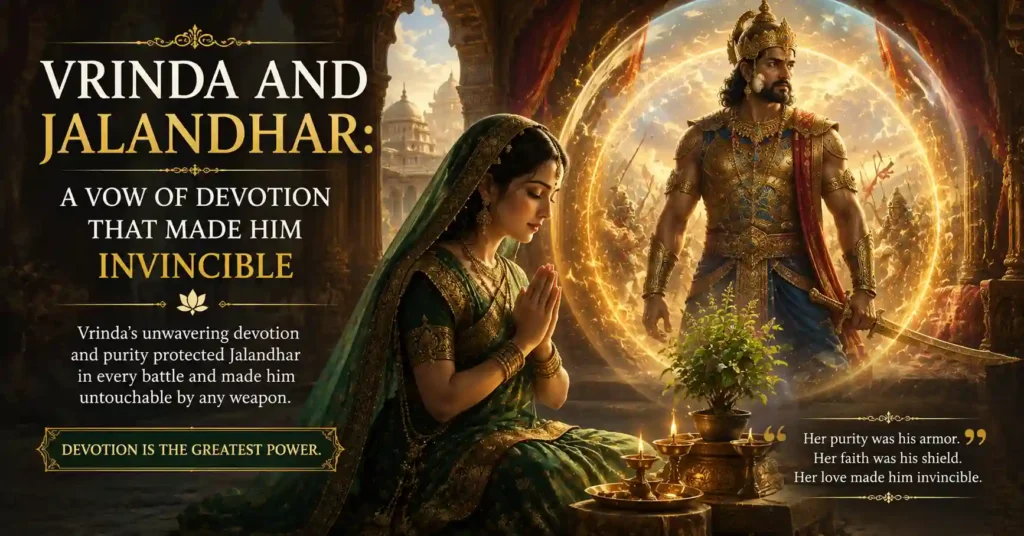
The Vishnu and Tulsi Story begins with Vrinda, a noble and devoted woman renowned for her purity, righteousness, and unwavering devotion to Bhagwan Vishnu.
Her faith was so powerful that it became a source of spiritual protection for her husband, Jalandhar, a mighty ruler whose strength was feared across the three worlds.
As long as Vrinda remained steadfast in her devotion and virtue, no enemy could defeat Jalandhar.
Protected by the spiritual power of his wife, Jalandhar won many battles and gradually became a challenge for the devas.
Despite their strength, the devas found it impossible to overcome him.
Concerned that the balance of the universe was being disturbed, they sought help from Bhagwan Vishnu and other divine beings.
They explained that Jalandhar’s growing power threatened harmony and that ordinary efforts had failed to stop him.
A solution was needed, but the source of Jalandhar’s protection was not his weapons or armies.
It was the unwavering devotion of Vrinda.
According to traditional narratives, Bhagwan Vishnu decided to intervene in order to restore cosmic balance.
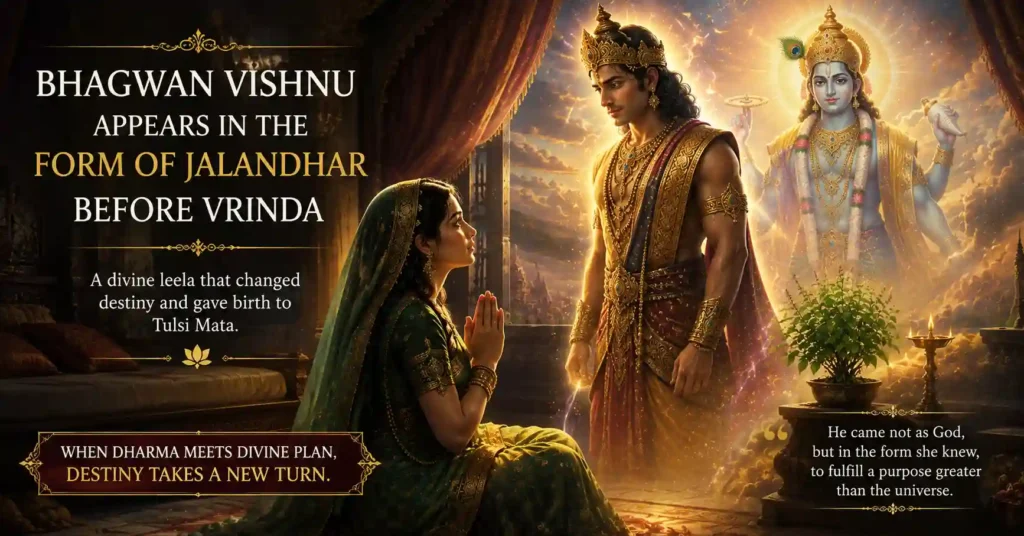
He appeared before Vrinda in a form that resembled her husband.
Believing the figure before her to be Jalandhar, Vrinda welcomed him without suspicion.
At that moment, the spiritual protection created by her devotion was broken.
Freed from the divine shield that had protected him, Jalandhar was finally defeated in battle.
When Vrinda realized what had happened, she was heartbroken.
She understood that Bhagwan Vishnu had played a role in the events that led to her husband’s downfall.
Filled with grief and sorrow, she expressed her pain and, according to tradition, pronounced a curse upon Bhagwan Vishnu.
Vrinda declared that he would one day experience separation and suffering similar to what she had endured.
Many devotional traditions connect this curse with later events in the divine pastimes of Bhagwan Vishnu.
Despite her anguish, Vrinda’s devotion and spiritual purity remained extraordinary.
The gods recognized the sincerity of her faith and the strength of her character.
As a result, she was granted an eternal place in Hindu worship and devotion.
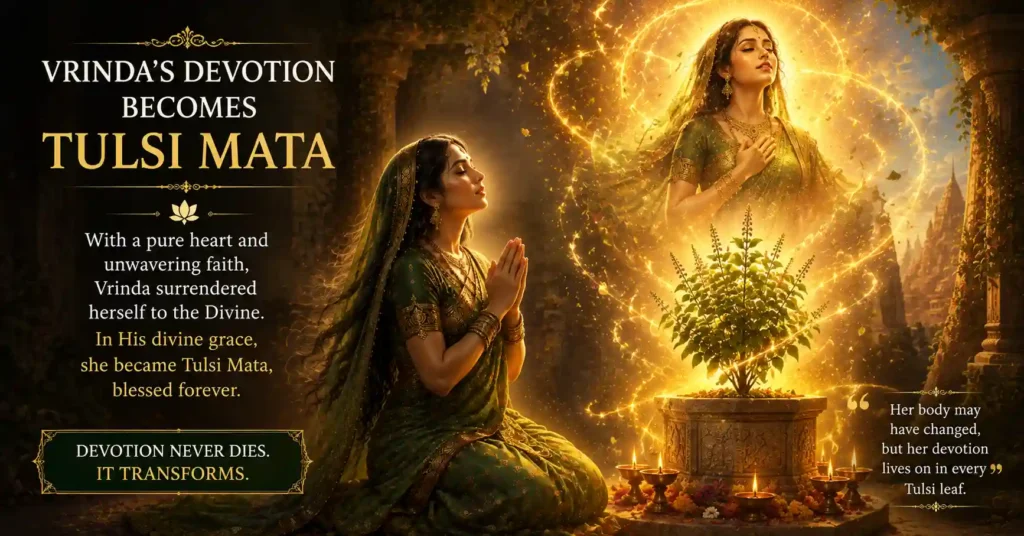
According to the Story of Vrinda and Tulsi Mata, Vrinda was transformed into the sacred Tulsi plant.
From that day forward, Tulsi became one of the most revered symbols of purity, devotion, and faith in Sanatan Dharma.
Bhagwan Vishnu also blessed Tulsi with a special place in his worship.
This is why Tulsi leaves are considered sacred and are traditionally offered to Bhagwan Vishnu during prayers and rituals.
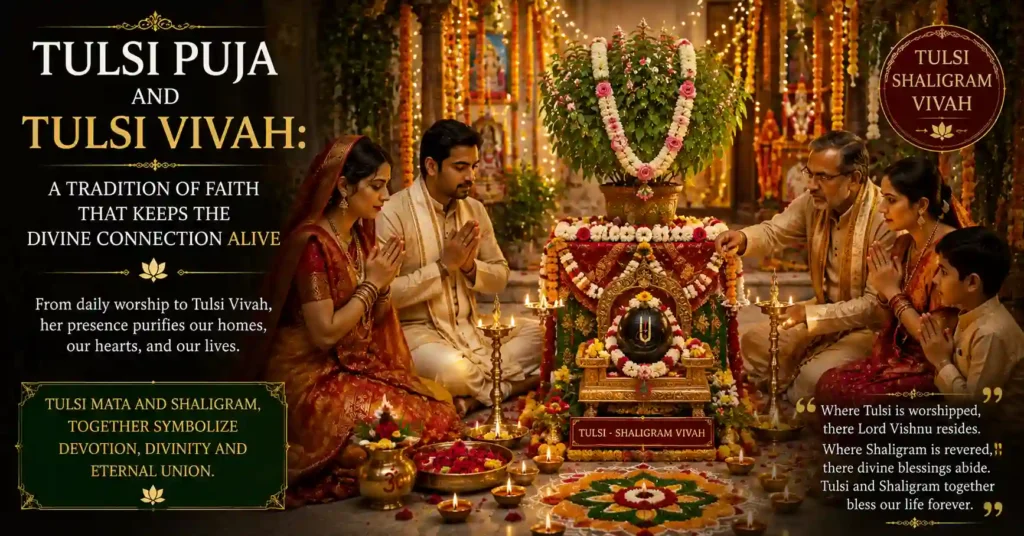
The Vishnu and Tulsi Story is also closely connected to the tradition of Tulsi Vivah, a sacred ceremony that symbolically celebrates the union of Tulsi Mata and Bhagwan Vishnu in his Shaligram form.
Even today, Tulsi is worshipped in millions of Hindu homes and temples.
For devotees, she represents unwavering faith, spiritual purity, and a devotion so powerful that it continues to inspire generations long after the events of the story itself.
What Does the Vishnu and Tulsi Story Teach Us?
The Vishnu and Tulsi Story is much more than an account of divine events and sacred traditions. It offers profound lessons about devotion, faith, purity, duty, and the lasting impact of sincere spiritual practice.
True Devotion Has Immense Spiritual Power
One of the central messages of the Vishnu and Tulsi Story is the extraordinary power of genuine devotion.
Vrinda’s unwavering faith and purity created a spiritual force so powerful that it protected Jalandhar from even the mightiest opponents.
Her life demonstrates that sincere devotion is not merely an emotion. It is a transformative spiritual strength that can influence both individuals and the world around them.
Faith Should Remain Steady During Difficult Times
Throughout the story, Vrinda remained committed to her beliefs and spiritual principles.
Even when faced with loss, grief, and circumstances beyond her control, her devotion never wavered.
The Story of Vrinda and Tulsi Mata reminds devotees that faith becomes most meaningful during life’s most challenging moments.
Purity Comes From Character and Conduct
Vrinda is remembered not only for her devotion but also for her integrity and righteous conduct.
Her spiritual strength arose from the values she practiced every day through honesty, discipline, and dedication to dharma.
The Tulsi Mata Story teaches that true purity is reflected in a person’s thoughts, actions, and intentions.
Dharma Often Involves Difficult Choices
The events of the Vishnu and Tulsi Story also highlight the complexity of dharma.
Different individuals acted according to what they believed was necessary to preserve cosmic balance and fulfill their responsibilities.
The story encourages readers to reflect on the challenges involved in making righteous decisions when situations are difficult and emotionally complex.
Devotion Leaves a Lasting Legacy
Although Vrinda’s earthly life came to an end, her devotion continued to inspire generations.
Her transformation into Tulsi Mata symbolizes how sincere faith can leave an enduring spiritual legacy that benefits countless people.
Even today, devotees honor her through daily worship and reverence for the sacred Tulsi plant.
Sacred Traditions Preserve Spiritual Wisdom
The connection between Tulsi Mata, Bhagwan Vishnu, and Tulsi Vivah continues to keep the story alive in Hindu tradition.
These practices are not merely rituals. They serve as reminders of the values represented by Vrinda’s life, including devotion, purity, humility, and faith.
Divine Grace Can Transform Sorrow Into Blessings
The Vishnu and Tulsi Story begins with conflict and sorrow but ultimately leads to spiritual transformation.
Vrinda’s devotion was honored through her eternal association with Tulsi Mata, one of the most sacred symbols in Sanatan Dharma.
For devotees, this serves as a reminder that even painful experiences can lead to higher spiritual purpose and lasting blessings.
The enduring message of the Vishnu and Tulsi Story is that devotion, purity, faith, and dedication to dharma never go unnoticed. These qualities continue to inspire spiritual growth and bring devotees closer to the Divine.
Why Is the Vishnu and Tulsi Story Important in Sanatan Dharma?
The Vishnu and Tulsi Story holds a special place in Sanatan Dharma because it explains the sacred origin of Tulsi Mata, one of the most revered symbols of devotion and purity in Hindu tradition.
More than a story from the past, it continues to influence daily worship, religious observances, and spiritual practices followed by millions of devotees.
It Explains the Sacredness of Tulsi Mata
One of the most important reasons the Vishnu and Tulsi Story is remembered is because it explains why Tulsi is considered sacred.
Tulsi is not viewed as an ordinary plant. She is revered as a divine manifestation associated with devotion, purity, and the blessings of Bhagwan Vishnu.
This spiritual significance has made Tulsi worship an important part of Hindu life for centuries.
It Strengthens Devotion to Bhagwan Vishnu
The Story of Vrinda and Tulsi Mata highlights the deep connection between Tulsi and Bhagwan Vishnu.
Because of this connection, Tulsi leaves are traditionally offered during Vishnu worship and are considered essential in many devotional practices.
For devotees, Tulsi serves as a constant reminder of faith, surrender, and devotion to Bhagwan.
It Forms the Foundation of Tulsi Vivah
The story is closely connected to the tradition of Tulsi Vivah, a sacred ceremony celebrated in many Hindu households and temples.
This festival symbolically commemorates the divine union of Tulsi Mata and Bhagwan Vishnu in his Shaligram form.
As a result, the Tulsi Vivah Story continues to be remembered and celebrated every year with devotion and joy.
It Preserves Important Spiritual Values
The Vishnu and Tulsi Story teaches values that remain relevant in every generation.
Devotion, faith, purity, humility, and dedication to dharma are themes that continue to guide spiritual seekers today.
Through the story of Vrinda, devotees learn that sincere spiritual practice can leave a lasting impact far beyond one’s lifetime.
It Connects Daily Worship With Sacred Tradition
Many Hindu families worship Tulsi every day by offering water, prayers, lamps, and reverence.
These practices are deeply connected to the Vishnu and Tulsi Story and help keep its spiritual message alive.
The story transforms ordinary daily worship into a meaningful connection with a sacred tradition that has been preserved for generations.
It Highlights the Spiritual Importance of Tulsi and Shaligram
The relationship between Tulsi Mata and Shaligram remains an important aspect of Vaishnava tradition.
Their worship together symbolizes devotion, divine union, and the inseparable connection between the devotee and Bhagwan.
This symbolism continues to inspire devotees and plays a central role in many religious observances.
It Continues to Inspire Devotees Today
Even today, the Vishnu and Tulsi Story is shared in homes, temples, satsangs, and spiritual gatherings.
Devotees continue to find inspiration in Vrinda’s faith, devotion, and spiritual strength.
Her story reminds people that true devotion can transcend time and continue to guide countless generations.
For these reasons, the Vishnu and Tulsi Story remains one of the most cherished narratives in Sanatan Dharma, preserving the spiritual legacy of Vrinda while deepening the devotion of millions who honor Tulsi Mata in their daily lives.
Did You Know?
The Vishnu and Tulsi Story contains many fascinating details that continue to inspire devotees and deepen the spiritual significance of Tulsi worship in Sanatan Dharma.
Tulsi Is Revered as a Divine Manifestation
In Hindu tradition, Tulsi is not regarded as an ordinary plant.
She is worshipped as Tulsi Mata, a sacred manifestation associated with devotion, purity, and the blessings of Bhagwan Vishnu.
This belief is one of the reasons Tulsi occupies a special place in Hindu homes and temples.
Tulsi Leaves Are Essential in Vishnu Worship
Many devotional traditions consider worship of Bhagwan Vishnu incomplete without the offering of Tulsi leaves.
Because of the events described in the Vishnu and Tulsi Story, Tulsi became eternally associated with Vishnu worship.
Even a simple offering of Tulsi leaves is believed to carry immense spiritual merit when made with sincere devotion.
Tulsi Vivah Is Celebrated Across India
The Tulsi Vivah Story forms the basis of a popular Hindu festival celebrated every year.
During this ceremony, Tulsi Mata is symbolically married to Bhagwan Vishnu in his Shaligram form.
The festival marks the beginning of the traditional Hindu wedding season in many regions of India.
Tulsi and Shaligram Are Worshipped Together
The connection between Tulsi Mata and Shaligram remains an important aspect of Vaishnava tradition.
Many devotees worship them together as a symbol of divine union, devotion, and spiritual harmony.
This practice continues to be observed in countless households and temples.
Vrinda Is Remembered for Her Unwavering Devotion
One of the most enduring aspects of the Story of Vrinda and Tulsi Mata is the devotion displayed by Vrinda.
Her faith, purity, and commitment to dharma became so powerful that they influenced events affecting both earthly and celestial realms.
Because of this, she is remembered as an ideal devotee in Hindu tradition.
Tulsi Worship Is Practiced Daily in Many Homes
Across India and beyond, millions of devotees offer water, lamps, prayers, and reverence to Tulsi Mata every day.
These daily practices help preserve the spiritual legacy of the Vishnu and Tulsi Story and strengthen the connection between devotees and Bhagwan Vishnu.
Tulsi Is Mentioned in Numerous Hindu Traditions
The sacred significance of Tulsi extends beyond a single story.
She is praised in devotional literature, religious observances, temple traditions, and spiritual teachings throughout Sanatan Dharma.
Her presence continues to symbolize purity, devotion, and divine grace.
The Story Continues to Inspire Devotees Today
Even centuries later, the Vishnu and Tulsi Story remains one of the most cherished narratives in Hindu tradition.
Its lessons on faith, devotion, sacrifice, and spiritual transformation continue to inspire devotees seeking a deeper relationship with the Divine.
Conclusion
The Vishnu and Tulsi Story is one of the most meaningful narratives in Sanatan Dharma, explaining the sacred origin of Tulsi Mata and her eternal connection with Bhagwan Vishnu. Through the life of Vrinda, the story highlights the power of devotion, purity, faith, and unwavering dedication to dharma.
The Vishnu and Tulsi Story teaches that true devotion is not measured by status, power, or recognition. It is reflected in sincerity, spiritual discipline, and a heart devoted to Bhagwan. Vrinda’s faith became so powerful that it left a lasting impact on both the earthly and divine realms.
The story also explains why Tulsi holds such a special place in Hindu worship. From daily Tulsi Puja to the celebration of Tulsi Vivah, devotees continue to honor the spiritual legacy of Vrinda and the sacred bond between Tulsi Mata and Bhagwan Vishnu.
For devotees today, the Vishnu and Tulsi Story remains a timeless reminder that faith, devotion, and righteousness never lose their value. The story continues to inspire millions to cultivate purity of heart, remain steadfast in their spiritual journey, and strengthen their connection with the Divine through devotion and sincere worship.
Suggested Reading
If the Vishnu and Tulsi Story inspired you, you may enjoy exploring other sacred stories that reveal the power of devotion, faith, purity, surrender, and divine grace. Like the Vishnu and Tulsi Story, these timeless narratives show how unwavering devotion to Bhagwan can transform lives and leave a lasting spiritual legacy.
Many devotees are drawn to the Vishnu and Tulsi Story because it explains the sacred origin of Tulsi Mata and highlights the importance of devotion, righteousness, and faith in Sanatan Dharma. The same values appear throughout Hindu tradition, where sincere devotion and trust in the Divine become pathways to spiritual growth and divine blessings.
Story of Sati Anasuya: The Divine Test of Devotion and Purity
https://thesanatantales.com/story-of-sati-anasuya/
Markandeya and Shiva Story: How Devotion Conquered Death
https://thesanatantales.com/markandeya-and-shiva-story/
Meera and Krishna Story: A Tale of Pure Devotion and Divine Love
https://thesanatantales.com/meera-and-krishna-story/
Ram and Shabari Story: A Lesson in Pure Devotion
https://thesanatantales.com/ram-and-shabari-story/
Gajendra Moksha Story: When Surrender Reached Bhagwan Vishnu Before Strength Failed
https://thesanatantales.com/gajendra-moksha-story/
Sudama and Krishna Story: A Tale of True Friendship
https://thesanatantales.com/sudama-and-krishna-story/
Tulsi (Wikipedia)
https://en.wikipedia.org/wiki/Tulasi_in_Hinduism
Each of these stories carries a unique spiritual lesson, yet all point toward the same truth found in the Vishnu and Tulsi Story: sincere devotion, unwavering faith, purity of heart, and dedication to dharma can transform life’s challenges into opportunities for divine grace, inner growth, and spiritual awakening.
FAQs
What is the Vishnu and Tulsi Story?
The Vishnu and Tulsi Story is a sacred narrative in Sanatan Dharma that explains the origin of Tulsi Mata and her eternal connection with Bhagwan Vishnu.
The story centers on Vrinda, a devoted woman whose unwavering faith, purity, and dedication to dharma became the foundation of one of Hinduism’s most cherished traditions.
It also explains why Tulsi is considered sacred, why Tulsi leaves are offered to Bhagwan Vishnu, and why Tulsi worship continues to play an important role in Hindu spiritual life.
Who was Vrinda in Hindu tradition?
Vrinda was a virtuous and devoted woman known for her deep faith, purity, and unwavering devotion to Bhagwan Vishnu.
According to traditional accounts, she was the wife of Jalandhar, a powerful ruler whose strength was protected by the spiritual power of her devotion.
Because of her sincerity and spiritual strength, Vrinda is remembered as an ideal devotee whose faith continues to inspire generations of Hindus.
How did Vrinda become Tulsi Mata?
According to the Story of Vrinda and Tulsi Mata, a series of divine events ultimately led to Vrinda’s transformation into the sacred Tulsi plant.
Although she experienced great sorrow, her devotion and purity were honored by the Divine.
As a result, she was granted an eternal place in Hindu worship and became revered as Tulsi Mata, one of the most sacred symbols of devotion and purity in Sanatan Dharma.
Why is Tulsi sacred in Hinduism?
Tulsi is considered sacred because she is associated with devotion, purity, spiritual protection, and the blessings of Bhagwan Vishnu.
The Vishnu and Tulsi Story explains how Tulsi Mata’s devotion earned her a unique place in Hindu tradition.
For centuries, devotees have worshipped Tulsi as a divine presence that helps create a spiritually uplifting atmosphere in homes and temples.
Why are Tulsi leaves offered to Bhagwan Vishnu?
Tulsi leaves are traditionally offered to Bhagwan Vishnu because of the sacred connection established through the Vishnu and Tulsi Story.
Many devotional traditions teach that Tulsi is especially dear to Bhagwan Vishnu.
As a result, offerings that include Tulsi leaves are considered an expression of love, devotion, and reverence toward Bhagwan.
What is the connection between Tulsi and Shaligram?
The connection between Tulsi and Shaligram is deeply rooted in Hindu devotional traditions.
Shaligram is regarded as a sacred form of Bhagwan Vishnu, while Tulsi Mata represents devotion, purity, and divine grace.
Their worship together symbolizes the sacred bond between the devotee and Bhagwan and forms the basis of several religious observances, including Tulsi Vivah.
Why is Tulsi Vivah celebrated?
Tulsi Vivah is a traditional Hindu ceremony that symbolically celebrates the divine union of Tulsi Mata and Bhagwan Vishnu in his Shaligram form.
The festival is observed with devotion in many households and temples across India.
For devotees, Tulsi Vivah represents faith, divine blessings, spiritual harmony, and the continuation of sacred traditions that have been practiced for generations.
What spiritual lessons does the Vishnu and Tulsi Story teach?
The Vishnu and Tulsi Story teaches important lessons about devotion, faith, purity, humility, and dedication to dharma.
Vrinda’s life demonstrates how sincere devotion can create lasting spiritual influence and inspire others long after one’s lifetime.
The story also reminds devotees that faith and righteousness remain meaningful even during difficult and challenging circumstances.
Can Tulsi worship be performed at home?
Yes, Tulsi worship is commonly performed at home by millions of Hindu families.
Devotees often offer water, light lamps, recite prayers, and show reverence to Tulsi Mata as part of their daily spiritual practice.
These simple acts of devotion help strengthen one’s connection with Bhagwan and keep the spiritual message of the Vishnu and Tulsi Story alive in everyday life.
Why is Tulsi Mata important in Sanatan Dharma?
Tulsi Mata holds a unique place in Sanatan Dharma because she represents devotion, purity, faith, and spiritual dedication.
Her story continues to inspire devotees to cultivate sincerity, humility, and devotion in their own lives.
Through daily worship, religious festivals, and sacred traditions such as Tulsi Vivah, Tulsi Mata remains one of the most beloved and respected figures in Hindu spirituality.
Is the Vishnu and Tulsi Story still relevant today?
Yes, the Vishnu and Tulsi Story remains highly relevant because its teachings are timeless.
The story encourages people to live with faith, integrity, compassion, and devotion while remaining committed to dharma even during difficult situations.
Its message continues to inspire devotees seeking spiritual growth, inner strength, and a deeper relationship with Bhagwan in the modern world.
References & Sources
This article is based on traditional narratives associated with Vrinda, Tulsi Mata, Bhagwan Vishnu, Jalandhar, and the devotional traditions that have been preserved in Hindu scriptures, Puranic literature, Vaishnava traditions, and sacred teachings within Sanatan Dharma.
The Vishnu and Tulsi Story has been passed down through generations as a powerful example of Bhakti (devotion), purity, faith, dharma, and spiritual transformation. The story also forms the foundation of important Hindu traditions such as Tulsi worship, Tulsi Vivah, and the offering of Tulsi leaves to Bhagwan Vishnu.
This article further draws upon traditional teachings and interpretations that explore the deeper spiritual lessons of unwavering devotion, righteousness, divine grace, the sacred relationship between Tulsi and Vishnu, and the enduring importance of Tulsi Mata in Sanatan Dharma.
Explore More Topics from The Sanatan Tales