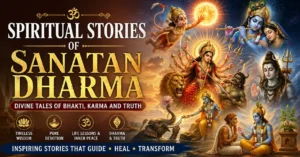
Spiritual Stories of Sanatan Dharma are much more than ancient tales. They are living teachings that preserve the wisdom, values, devotion, and spiritual insights of Hindu tradition across generations.
From the unwavering faith of Dhruv and Prahlada to the devotion of Meera Bai, the sacrifice of Jatayu, and the divine leelas of Lord Vishnu, Shiva, Durga, and Hanuman, these sacred narratives continue to inspire millions of devotees around the world.
In this guide to Spiritual Stories of Sanatan Dharma, you will discover some of the most inspiring Hindu spiritual stories, learn their deeper meanings, understand their importance in Sanatan Dharma, and explore the timeless lessons they offer for daily life and spiritual growth.
The beauty of Spiritual Stories of Sanatan Dharma lies in their ability to teach profound truths through simple narratives. Whether the story involves devotion, sacrifice, courage, Dharma, divine grace, or self-realization, each one carries wisdom that remains relevant even today.
These Spiritual Stories of Sanatan Dharma are not merely stories from the past. They continue to guide devotees on the path of faith, compassion, inner strength, and spiritual awakening.
Spiritual Stories of Sanatan Dharma at a Glance
| Aspect | Details |
|---|---|
| Topic | Spiritual Stories of Sanatan Dharma |
| Includes | Devotion, Dharma, Sacrifice, Shakti, Divine Wisdom, Divine Leela |
| Main Themes | Faith, Bhakti, Courage, Surrender, Inner Growth |
| Key Figures | Dhruv, Hanuman, Krishna, Shiva, Vishnu, Durga, Parvati, Ganesha, Jatayu, Shabari, Meera, Sudama |
| Primary Sources | Ramayana, Mahabharata, Puranas, Temple Traditions, Oral Traditions |
| Purpose | Preserve spiritual teachings and values through storytelling |
| Key Lesson | Spiritual wisdom becomes easier to understand through stories |
| Best For | Devotees, spiritual seekers, students, and anyone interested in Sanatan Dharma |
| What Readers Will Learn | Devotion, Dharma, surrender, courage, sacrifice, divine grace, and practical life lessons |
| Spiritual Significance | Helps connect ancient wisdom with everyday life and personal growth |
Table of Contents
ToggleWhy Spiritual Stories Still Matter in Our Life
Even today, when life feels fast, busy, and filled with distractions, the Spiritual Stories of Sanatan Dharma offer a sense of peace and clarity. They remind us that spirituality is not limited to rituals alone. It is also about faith, patience, surrender, compassion, and devotion.
A child like Dhruv can become an eternal guiding star. A humble friend like Sudama can receive divine grace. A simple offering like Shabari’s berries can touch the heart of Bhagwan Himself.
That is the timeless beauty of these Spiritual Stories of Sanatan Dharma. They make profound spiritual truths feel personal, relatable, and easy to understand.
In many ways, these sacred stories are reflections of our own journey through life. Their teachings continue to inspire us to live with faith, follow Dharma, cultivate devotion, and walk the path of inner peace and spiritual growth.
Exploring the Different Types of Spiritual Stories in Sanatan Dharma
If you notice closely, the Spiritual Stories of Sanatan Dharma are not all the same. Each story carries a unique message, a different spiritual lesson, and a distinct path toward understanding life and the Divine.
Some stories are centered on bhakti and devotion. Stories like Dhruv Story, Meera and Krishna Story, and Gajendra Moksha Story show how unwavering faith and surrender can bring a devotee closer to Bhagwan. These stories teach that sincere devotion has the power to transform even the most difficult circumstances.
Some stories focus on Dharma, courage, and sacrifice. Stories such as the Giddharaj Jatayu Story and the Ram and Shabari Story demonstrate that doing what is right often requires selflessness, faith, and inner strength. They remind us that true greatness lies in character rather than status or power.
Then there are stories of divine leela and cosmic events. Narratives like the Hanuman and the Sun Story and the Samudra Manthan Story may appear extraordinary on the surface, but they contain profound spiritual teachings about wisdom, perseverance, divine grace, and the deeper workings of the universe.
The Spiritual Stories of Sanatan Dharma also include powerful stories of Shakti, the Divine Feminine. Stories such as Durga and Mahishasura Story, Parvati Tapasya, and Ardhanarishvara reveal the strength, compassion, patience, and transformative power of divine energy. They remind devotees that spiritual strength comes from both inner wisdom and unwavering determination.
Other stories explore deeper spiritual truths through the lives of great devotees, sages, and divine beings. These narratives help us understand the relationship between the soul, Dharma, devotion, and the Divine.
When viewed together, these Spiritual Stories of Sanatan Dharma form a complete spiritual guide rather than a collection of isolated tales.
They are deeply connected teachings that illuminate different stages of life and spiritual growth. From innocence to wisdom, from struggle to surrender, and from devotion to self-realization, these sacred stories continue to guide seekers on the path of Dharma and inner transformation.

Stories of Pure Devotion That Touch the Heart
These are among the most loved Spiritual Stories of Sanatan Dharma, where devotion, faith, and surrender become stronger than any worldly limitation.
These inspiring stories show how sincere bhakti can transform lives and bring devotees closer to the Divine.
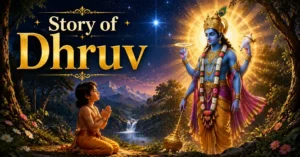
Dhruv Story: How a Young Prince Became Dhruv Tara, the Guiding Star
The Dhruv Story tells the inspiring journey of a young prince who transformed rejection and sorrow into unwavering devotion to Lord Vishnu.
Through intense tapasya, determination, and faith, Dhruv attained divine blessings and became Dhruv Tara, the eternal guiding star that symbolizes spiritual focus and steadfast devotion.
https://thesanatantales.com/dhruv-story/
Meera and Krishna Story: A Tale of Pure Devotion and Divine Love
The Meera and Krishna Story is one of the most beautiful examples of bhakti in Sanatan Dharma.
Meera’s unconditional love for Lord Krishna remained unchanged despite opposition, hardship, and worldly challenges, making her an eternal symbol of devotion and divine love.
https://thesanatantales.com/meera-and-krishna-story/
Ram and Shabari Story: A Lesson in Pure Devotion
The Ram and Shabari Story beautifully illustrates that devotion is measured by sincerity rather than wealth, status, or perfection.
Shabari’s simple offering of berries to Lord Rama became a timeless example of pure faith, humility, and unconditional love.
https://thesanatantales.com/ram-and-shabari-story/
Gajendra Moksha Story: When Surrender Reached Bhagwan Vishnu Before Strength Failed
The Gajendra Moksha Story teaches one of the deepest spiritual lessons in Sanatan Dharma.
When all physical strength failed, Gajendra surrendered completely to Lord Vishnu, demonstrating that divine grace often arrives when faith replaces ego and surrender replaces struggle.

Stories of Divine Leela and Cosmic Meaning
These Hindu spiritual stories may appear simple on the surface, but they contain profound teachings about life, the universe, devotion, wisdom, and spiritual growth.
Many of these stories use divine events and symbolic narratives to reveal deeper truths that continue to guide seekers even today.
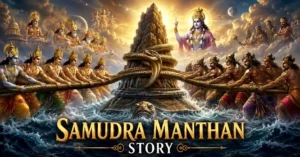
Samudra Manthan Story: Why Lord Shiva Drank Halahala and Became Neelkanth
The Samudra Manthan Story is one of the most important cosmic narratives in Sanatan Dharma. It describes the great churning of the Ocean of Milk, the emergence of divine treasures, and Lord Shiva’s sacrifice in consuming the deadly Halahala poison.
Beyond the historical narrative, the story symbolizes the inner journey of spiritual growth, where patience, effort, and Dharma eventually lead to wisdom and divine blessings.
https://thesanatantales.com/samudra-manthan-story/
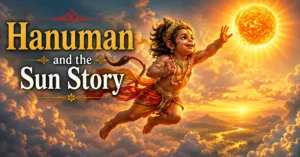
Hanuman and the Sun Story: How Young Hanuman Tried to Swallow the Sun
The Hanuman and the Sun Story tells the beloved childhood leela of young Hanuman, who mistook the rising Sun for a ripe fruit and leapt into the heavens to seize it.
While playful and inspiring, the story also highlights innocence, divine potential, courage, and the extraordinary blessings that prepared Hanuman for his future service to Lord Rama.
https://thesanatantales.com/hanuman-and-the-sun-story/
Birth of Lord Ganesha: The Story Behind His Elephant Head
The Birth of Lord Ganesha is one of the most cherished stories in Hindu tradition. It explains how Ganesha was created by Goddess Parvati and how he later received his elephant head through divine events.
The story carries timeless lessons about obedience, wisdom, transformation, and the removal of obstacles. It also helps devotees understand why Lord Ganesha is worshipped before beginning any auspicious undertaking.

Stories of Divine Feminine Power and Shakti
These powerful Spiritual Stories of Sanatan Dharma reveal the strength, wisdom, compassion, and transformative energy of the Divine Feminine.
They remind us that true power is not only found in physical strength but also in devotion, patience, courage, purity, and unwavering faith.
Durga and Mahishasura Story: How Maa Durga Defeated Mahishasura
The Durga and Mahishasura Story is one of the most celebrated stories of Shakti in Sanatan Dharma. It describes how Maa Durga emerged to defeat the powerful demon Mahishasura when the devas were unable to overcome him.
Beyond the battle itself, the story symbolizes the victory of Dharma over Adharma and the triumph of inner strength over negativity, ego, and ignorance.
https://thesanatantales.com/durga-and-mahishasura-story/
Parvati Tapasya: How Goddess Parvati Won Lord Shiva Through Devotion
The story of Parvati Tapasya beautifully illustrates the power of dedication, patience, and unwavering devotion.
Through years of intense spiritual practice and determination, Goddess Parvati attained Lord Shiva as her divine consort, demonstrating that sincere effort and faith can overcome even the greatest challenges.
https://thesanatantales.com/parvati-tapasya-for-shiva/
Story of Sati Anasuya: The Divine Test of Devotion and Purity
The Story of Sati Anasuya is a timeless example of purity, spiritual strength, and unwavering faith.
Her devotion was so powerful that even the Tridev tested her virtue. Through wisdom, humility, and divine grace, she emerged victorious and became one of the most revered women in Sanatan Dharma.
https://thesanatantales.com/story-of-sati-anasuya/
This collection of Spiritual Stories of Sanatan Dharma reminds us that the Divine Feminine is both compassionate and powerful. These sacred narratives continue to inspire devotees to cultivate inner strength, devotion, patience, and spiritual resilience in their own lives.

Stories of Dharma, Courage, and Sacrifice
These inspiring Spiritual Stories of Sanatan Dharma teach timeless lessons about courage, righteousness, sacrifice, and standing firm in Dharma even during the most difficult moments.
They remind us that true strength is not measured by power or status, but by the willingness to uphold truth and righteousness when it matters most.
Giddharaj Jatayu Story: How Jatayu Sacrificed His Life Protecting Sita
The Giddharaj Jatayu Story is one of the most moving examples of sacrifice in the Ramayana.
Despite his old age, Jatayu courageously confronted Ravana to protect Maa Sita. Although he knew the battle would be difficult, he chose Dharma over personal safety and became an eternal symbol of loyalty, courage, and selfless service.
https://thesanatantales.com/giddharaj-jatayu-story/
Markandeya and Shiva Story: The Child Who Conquered Death Through Devotion
The Markandeya and Shiva Story demonstrates the extraordinary power of devotion and faith.
Faced with a destined short lifespan, the young sage Markandeya dedicated himself completely to Lord Shiva. His unwavering bhakti ultimately earned divine protection and transformed him into a symbol of spiritual victory over fear and death.
https://thesanatantales.com/markandeya-and-shiva-story/
Sudama and Krishna Story: A Timeless Tale of Friendship, Devotion, and Divine Grace
The Sudama and Krishna Story is a beautiful reminder that true friendship transcends wealth, status, and worldly differences.
When Sudama visited Lord Krishna with a humble gift, Krishna responded with immense love and grace. The story highlights humility, devotion, gratitude, and the deep bond between Bhagwan and His devotees.
https://thesanatantales.com/sudama-and-krishna-story/
Together, these Spiritual Stories of Sanatan Dharma show that Dharma is often tested through sacrifice, challenges, and difficult choices. Their timeless teachings continue to inspire devotees to live with integrity, courage, compassion, and unwavering faith.

Stories of Shiva, Vishnu, and Divine Wisdom
Some of the most profound Spiritual Stories of Sanatan Dharma explore the deeper truths of creation, devotion, balance, and the relationship between the Divine and the devotee.
These stories may appear simple, but they contain timeless wisdom that continues to inspire spiritual seekers across generations.
Ardhanarishvara: The Sacred Union of Shiva and Shakti
The story of Ardhanarishvara reveals one of the deepest teachings in Sanatan Dharma. In this divine form, Lord Shiva and Goddess Parvati appear as one being, symbolizing the inseparable unity of consciousness and energy, Purusha and Prakriti.
The story teaches that true harmony comes through balance. Shiva and Shakti are not separate forces but complementary aspects of the same divine reality.
https://thesanatantales.com/ardhanarishvara/
Vishnu and Tulsi Story: The Sacred Origin of Tulsi Mata
The Vishnu and Tulsi Story is a sacred narrative of devotion, sacrifice, and divine transformation.
The story explains the spiritual significance of Tulsi Mata in Hindu worship and reveals why the Tulsi plant is regarded as one of the most sacred symbols of devotion to Lord Vishnu.
https://thesanatantales.com/vishnu-and-tulsi-story/
Shiv Parvati Vivah: The Sacred Marriage of Shiva and Parvati
The story of Shiv Parvati Vivah celebrates one of the most important divine unions in Sanatan Dharma.
From Lord Shiva’s unique baraat to the sacred marriage ceremony, the story symbolizes the union of ascetic wisdom and divine energy. It also highlights the power of devotion, destiny, and the eternal bond between Shiva and Shakti.
https://thesanatantales.com/shiv-parvati-vivah/
Together, these Spiritual Stories of Sanatan Dharma reveal that spiritual wisdom is not found only in grand miracles or cosmic battles. Often, the deepest truths emerge through harmony, devotion, balance, and the realization that the Divine works through many forms while remaining one eternal reality.
How to Read and Benefit from Spiritual Stories of Sanatan Dharma
You do not have to read Spiritual Stories of Sanatan Dharma as a task or a checklist. Instead, approach them with a calm mind and an open heart.
Read one story at a time and move through it slowly. There is no need to rush. Sometimes a single lesson, a single conversation, or even a single moment in a story can stay with you long after you finish reading.
After reading, take a few moments to reflect. Ask yourself what the story is trying to teach. Is it devotion like Dhruv, surrender like Gajendra, courage like Jatayu, or patience like Parvati?
The true value of these Spiritual Stories of Sanatan Dharma is not found only in reading them. It is found in applying their teachings to daily life.
Start with one small lesson. Practice a little more patience, show a little more compassion, strengthen your faith, or act with greater integrity. Over time, these simple changes can have a meaningful impact on your spiritual journey.
This is how Spiritual Stories of Sanatan Dharma become more than stories. They become living guides that help us navigate challenges, deepen our faith, and walk the path of Dharma with greater wisdom and inner peace.

What Do Spiritual Stories Teach Us?
If you spend time reflecting on the Spiritual Stories of Sanatan Dharma, you will begin to notice something remarkable.
These stories are not merely about miracles, divine powers, or extraordinary events. At their heart, they are guides for living a meaningful, balanced, and spiritually fulfilling life.
Some stories teach patience and perseverance, like the Dhruv Story, where a young prince’s unwavering faith led him to become Dhruv Tara, the eternal guiding star.
Some teach surrender and trust in the Divine, like the Gajendra Moksha Story, where a devotee found salvation when all worldly strength had failed.
Others teach the power of pure devotion, such as the Meera and Krishna Story, where unconditional love for Bhagwan became the devotee’s greatest strength.
Stories like the Giddharaj Jatayu Story teach courage and sacrifice, while narratives such as Parvati Tapasya reveal the value of patience, determination, and spiritual discipline.
The Spiritual Stories of Sanatan Dharma also remind us of the importance of Dharma, humility, compassion, gratitude, and selfless service. Their lessons remain relevant regardless of age, background, or stage of life.
As we reflect on these sacred narratives, they slowly begin to influence the way we think, respond, and make decisions. Their wisdom becomes part of our daily lives, guiding us through challenges and helping us grow spiritually.
That is the true beauty of the Spiritual Stories of Sanatan Dharma. Their greatest transformation does not happen within the story itself but within the reader.
This is why these timeless narratives continue to be regarded among the most meaningful and inspiring Hindu spiritual stories, helping devotees strengthen their faith, deepen their understanding of Dharma, and walk the path of inner peace and spiritual growth.
Did You Know?
The Spiritual Stories of Sanatan Dharma contain many fascinating details that are often overlooked during a first reading. Beyond inspiring devotion and faith, these sacred narratives preserve spiritual teachings, cultural traditions, and timeless wisdom that continue to guide devotees today.
Here are some interesting facts about the Spiritual Stories of Sanatan Dharma.
1. Many Spiritual Stories Have Multiple Layers of Meaning
A single story can often be understood in several ways.
It may be read as a historical narrative, a moral lesson, a symbolic teaching, and a spiritual truth at the same time.
This is one reason the Spiritual Stories of Sanatan Dharma continue to reveal new insights each time they are revisited.
2. Dhruv Tara Continues to Inspire Devotees Today
The Dhruv Story is connected to Dhruv Tara, the Pole Star.
For centuries, this star has served as a symbol of steadiness, determination, and unwavering devotion.
It reminds devotees to remain focused on their spiritual path despite life’s changing circumstances.
3. Hanuman Received Divine Blessings From Many Devas
The Hanuman and the Sun Story does more than describe a childhood adventure.
After the famous incident involving the Sun, several devas blessed Hanuman with extraordinary powers and divine protection.
These blessings later helped him play a vital role in the Ramayana.
4. Fourteen Divine Treasures Emerged During Samudra Manthan
The Samudra Manthan Story is famous for the appearance of Amrit, the nectar of immortality.
However, traditional accounts also describe the emergence of fourteen sacred treasures, including Goddess Lakshmi, Kamadhenu, Airavata, Kaustubha, and Lord Dhanvantari.
Each treasure carries symbolic and spiritual significance.
5. Many Spiritual Stories Come From the Puranas
Several Spiritual Stories of Sanatan Dharma originate from sacred texts such as the Bhagavata Purana, Vishnu Purana, Shiva Purana, and Devi Bhagavata Purana.
These scriptures preserve some of the most beloved stories of devotees, sages, and divine beings.
They continue to serve as important sources of spiritual knowledge.
6. These Stories Are Still Shared During Festivals and Satsangs
Many Hindu spiritual stories are regularly narrated during festivals, temple gatherings, kathas, and satsangs.
Stories of Lord Krishna, Lord Rama, Goddess Durga, Lord Shiva, and great devotees continue to be retold across generations.
This living tradition helps keep the teachings of Sanatan Dharma alive and accessible.
7. Many Stories Teach Through Ordinary People
Not every spiritual story focuses on kings, sages, or divine beings.
Stories such as Sudama and Krishna, Shabari, and Jatayu show that ordinary individuals can become extraordinary through devotion, faith, and righteous actions.
Their lives remind us that spiritual greatness is available to everyone.
8. The Same Story Can Teach Different Lessons to Different People
One of the unique qualities of the Spiritual Stories of Sanatan Dharma is their depth.
A child may enjoy the story itself, while an adult may discover lessons about Dharma, devotion, relationships, or spiritual growth.
This timeless relevance is one reason these stories remain meaningful across generations.
9. Many Stories Are Connected to Important Hindu Festivals
Several sacred stories are remembered during major Hindu festivals and observances.
For example, the Durga and Mahishasura Story is closely associated with Navratri, while stories of Lord Krishna, Lord Rama, and Lord Ganesha are celebrated during their respective festivals.
These connections help devotees remember and reflect on their teachings throughout the year.
10. The Spiritual Stories of Sanatan Dharma Continue to Inspire Millions
Despite being ancient, these stories remain deeply relevant in modern life.
Their teachings on faith, courage, surrender, compassion, sacrifice, and devotion continue to help people navigate challenges and strengthen their connection with the Divine.
That is why the Spiritual Stories of Sanatan Dharma remain among the most cherished treasures of Hindu tradition.
Conclusion
The Spiritual Stories of Sanatan Dharma are much more than ancient tales passed down through generations. They are timeless sources of wisdom that continue to inspire, guide, and transform people even today.
Each story carries a unique lesson. Some teach devotion, like the Dhruv Story and the Meera and Krishna Story. Others teach surrender, courage, sacrifice, patience, or the importance of following Dharma during difficult times.
Together, these Spiritual Stories of Sanatan Dharma create a beautiful spiritual journey. They show us that faith can overcome fear, devotion can transform lives, and divine grace often appears when we least expect it.
You do not have to read every story at once. Simply begin with the one that speaks to your heart. Reflect on its message, carry its lesson with you, and allow it to become part of your daily life.
As you continue exploring these Hindu spiritual stories, you may discover that they are not only stories about great devotees, sages, and deities. They are also reflections of our own struggles, hopes, choices, and spiritual journeys.
That is why these sacred narratives remain relevant across generations. They quietly guide us toward greater faith, deeper understanding, stronger character, and a closer connection with the Divine.
Over time, you may realize that the Spiritual Stories of Sanatan Dharma are not simply stories to read. They are companions on the path of Dharma, helping us grow in wisdom, devotion, inner peace, and spiritual awareness, one lesson at a time.
Where Do These Spiritual Stories Come From?
The Spiritual Stories of Sanatan Dharma come from a rich tradition of sacred texts, scriptures, devotional literature, and oral teachings that have been preserved for thousands of years. These stories were not created merely for entertainment. They were passed down to teach Dharma, devotion, wisdom, and the deeper truths of life in a way that people of all ages could understand.
Many of the most beloved stories originate from the Ramayana and the Mahabharata, two of the greatest epics in Hindu tradition. Stories such as the Ram and Shabari Story, Giddharaj Jatayu Story, and many leelas of Lord Krishna are connected to these sacred texts. Through memorable characters and powerful events, these epics teach duty, righteousness, devotion, sacrifice, and the importance of following Dharma.
A large number of Spiritual Stories of Sanatan Dharma also come from the Puranas, including the Bhagavata Purana, Vishnu Purana, Shiva Purana, Devi Bhagavata Purana, and other sacred texts. Stories such as the Dhruv Story, Gajendra Moksha Story, Samudra Manthan Story, Markandeya and Shiva Story, and Durga and Mahishasura Story have been preserved through these scriptures and continue to inspire devotees today.
Beyond written scriptures, these sacred narratives have also been preserved through oral traditions, temple discourses, kathas, satsangs, devotional songs, and family storytelling. For generations, spiritual teachers, saints, and devotees have shared these stories to help keep the wisdom of Sanatan Dharma alive and accessible.
This combination of scripture, tradition, and living practice is what makes the Spiritual Stories of Sanatan Dharma so special. They are not simply stories from the past. They remain living teachings that continue to guide people toward faith, devotion, inner growth, and a deeper connection with the Divine.
FAQs
1. What Are Spiritual Stories of Sanatan Dharma?
Spiritual Stories of Sanatan Dharma are sacred narratives that preserve the wisdom, values, teachings, and traditions of Hindu philosophy.
These stories feature devotees, sages, deities, and divine events that illustrate important principles such as Dharma, Bhakti, Karma, sacrifice, compassion, and spiritual growth.
Unlike ordinary stories, they are not meant only for entertainment. They are designed to inspire reflection, strengthen faith, and help individuals understand deeper spiritual truths.
For this reason, these stories have been passed down through scriptures, Puranas, epics, and oral traditions for thousands of years.
2. Why Are Spiritual Stories Important in Sanatan Dharma?
Stories have always been one of the most effective ways to transmit spiritual wisdom.
The Spiritual Stories of Sanatan Dharma take profound philosophical concepts and present them through relatable characters and meaningful events.
For example, the Dhruv Story teaches determination, the Gajendra Moksha Story teaches surrender, and the Ram and Shabari Story teaches pure devotion.
Because these lessons are presented through stories rather than abstract philosophy, they are easier to understand, remember, and apply in daily life.
3. Which Are the Most Popular Spiritual Stories of Sanatan Dharma?
Some of the most beloved Spiritual Stories of Sanatan Dharma include:
- Dhruv Story
- Gajendra Moksha Story
- Hanuman and the Sun Story
- Meera and Krishna Story
- Ram and Shabari Story
- Sudama and Krishna Story
- Markandeya and Shiva Story
- Samudra Manthan Story
- Durga and Mahishasura Story
- Birth of Lord Ganesha
- Shiv Parvati Vivah
- Story of Sati Anasuya
Each story highlights a unique spiritual teaching and continues to inspire devotees across generations.
Together, they offer a comprehensive understanding of devotion, Dharma, sacrifice, courage, divine grace, and spiritual wisdom.
4. What Lessons Can We Learn from Hindu Spiritual Stories?
The Hindu spiritual stories found in Sanatan Dharma teach timeless values that remain relevant in modern life.
Some stories teach patience and perseverance. Others emphasize devotion, humility, selfless service, courage, gratitude, or surrender to the Divine.
These stories remind us that spiritual growth often comes through challenges, faith, and right action rather than worldly success alone.
Their lessons can help individuals develop stronger character, inner peace, and a deeper understanding of life.
5. Are Spiritual Stories of Sanatan Dharma Based on Scriptures?
Yes. Many Spiritual Stories of Sanatan Dharma originate from sacred Hindu scriptures and traditional teachings.
Sources include the Ramayana, Mahabharata, Bhagavata Purana, Shiva Purana, Vishnu Purana, Devi Bhagavata Purana, Skanda Purana, and other revered texts.
Over time, these stories have also been preserved through devotional literature, temple traditions, spiritual discourses, and oral storytelling.
While versions may vary slightly, their core teachings and spiritual significance remain consistent.
6. How Should We Read Spiritual Stories for Maximum Benefit?
The best way to approach Spiritual Stories of Sanatan Dharma is with patience and reflection.
Rather than reading many stories quickly, focus on one story at a time. Try to understand its deeper message and how it relates to your own life.
After reading, spend a few moments reflecting on the lessons presented through the characters and events.
Even a single insight from a story can become a valuable guide in daily life and spiritual practice.
7. Are These Stories Relevant in Modern Times?
Absolutely.
Although many of these stories are ancient, the challenges they address are timeless. People still struggle with fear, attachment, ego, uncertainty, relationships, and difficult decisions.
The Spiritual Stories of Sanatan Dharma provide guidance for navigating these challenges with wisdom, patience, faith, and compassion.
This is one reason they continue to resonate with readers across cultures and generations.
8. Which Spiritual Stories Are Best for Children?
Many Spiritual Stories of Sanatan Dharma are especially suitable for children because they teach important values through engaging narratives.
Popular examples include the Dhruv Story, Hanuman and the Sun Story, Birth of Lord Ganesha, Gajendra Moksha Story, and Markandeya and Shiva Story.
These stories encourage qualities such as honesty, courage, devotion, respect, determination, and kindness.
They also help children develop an early appreciation for the spiritual and cultural heritage of Sanatan Dharma.
9. What Is the Difference Between Mythology and Spiritual Stories of Sanatan Dharma?
The Spiritual Stories of Sanatan Dharma are traditionally viewed as sacred narratives that convey spiritual truths, ethical values, and philosophical teachings.
Their primary purpose is not merely to describe events but to help individuals understand Dharma, devotion, self-realization, and the nature of the Divine.
For devotees, these stories are living teachings that continue to offer wisdom and guidance.
Whether read from a historical, cultural, symbolic, or spiritual perspective, their lessons remain meaningful and relevant.
10. How Can Spiritual Stories Help in Daily Life?
The teachings found in the Spiritual Stories of Sanatan Dharma can be applied in everyday situations.
They encourage patience during difficulties, humility during success, courage during challenges, and faith during uncertainty.
Stories like Sudama and Krishna teach gratitude, Jatayu teaches selfless sacrifice, and Parvati Tapasya teaches perseverance and commitment.
By reflecting on these lessons regularly, readers can develop greater emotional balance, stronger values, and a deeper connection with the spiritual principles of Sanatan Dharma.
11. Which Spiritual Story Should I Read First?
If you are new to Spiritual Stories of Sanatan Dharma, start with the story that naturally interests you the most.
Readers seeking devotion often begin with the Dhruv Story, Meera and Krishna Story, or Ram and Shabari Story.
Those interested in courage and sacrifice may enjoy the Giddharaj Jatayu Story or Markandeya and Shiva Story.
For deeper symbolism and spiritual meaning, the Samudra Manthan Story and Ardhanarishvara are excellent choices.
The most important thing is simply to begin, because every story offers a unique doorway into the wisdom of Sanatan Dharma.
12. What Makes Spiritual Stories of Sanatan Dharma Unique?
What makes the Spiritual Stories of Sanatan Dharma unique is their ability to combine storytelling, philosophy, devotion, ethics, and spiritual wisdom into a single narrative.
They speak to people of all ages and backgrounds while offering lessons that remain relevant throughout life.
A child may enjoy the story itself, while an adult may discover deeper symbolic and philosophical meanings.
This layered nature allows these stories to remain meaningful across generations, making them one of the most valuable treasures of Sanatan Dharma.
References & Sources
This article is based on spiritual stories, teachings, and traditional narratives preserved within Sanatan Dharma. The stories referenced throughout this guide originate from sacred texts, Puranas, epics, devotional literature, and oral traditions that have been passed down through generations.
Traditional Sources
- Ramayana
- Mahabharata
- Bhagavata Purana
- Vishnu Purana
- Shiva Purana
- Devi Bhagavata Purana
- Skanda Purana
- Traditional Hindu Commentaries
- Devotional Literature and Oral Traditions
Additional Reading
What Are Some Best Spiritual Stories?
https://www.quora.com/What-are-some-best-spiritual-stories
Explore More Topics from The Sanatan Tales