Mahakal Mandir Ujjain, officially known as Mahakaleshwar Jyotirlinga, is one of the twelve sacred Jyotirlingas of Lord Shiva and among the most revered pilgrimage sites in India. Located on the banks of the holy Shipra River in the ancient city of Ujjain, this timeless temple has been a centre of faith, devotion, and spiritual awakening for centuries.
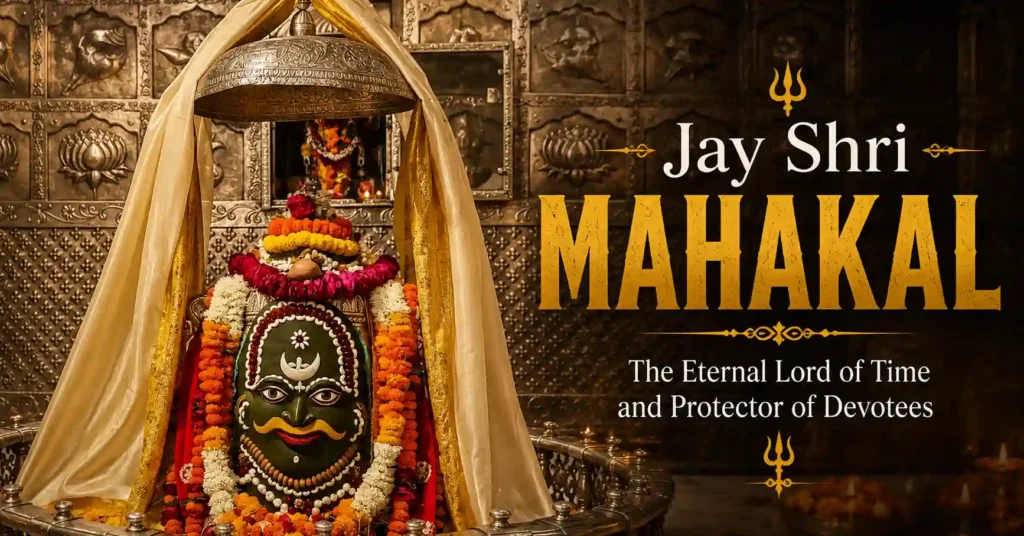
Here, Lord Shiva is worshipped as Mahakaal, the eternal Lord of Time, who is believed to protect his devotees from fear, negativity, and the cycle of birth and death. Mahakaleshwar is the only Dakshinamukhi (south-facing) Jyotirlinga, making it unique among the twelve Jyotirlingas.
According to temple tradition, this sacred form of Lord Shiva represents his power over time and death, offering devotees courage, inner peace, and spiritual strength.
Many pilgrims describe an overwhelming sense of calm and devotion as they stand before the self-manifested (Swayambhu) Jyotirlinga. Every day, thousands of devotees visit Mahakal Mandir Ujjain to seek darshan, witness the world-famous Bhasma Aarti, and walk through the magnificent Mahakaal Lok.
Whether you are planning your first pilgrimage or returning with deep faith, this complete guide covers the temple’s history, spiritual significance, darshan, Bhasma Aarti, Mahakaal Lok, travel information, and essential tips to help you experience one of India’s holiest Shiva temples.
Mahakal Mandir Ujjain at a Glance
| Particular | Details |
|---|---|
| Official Name | Mahakaleshwar Jyotirlinga |
| Popular Name | Mahakal Mandir Ujjain |
| Deity | Lord Shiva (Mahakaal) |
| Location | Ujjain, Madhya Pradesh |
| Significance | One of the 12 Jyotirlingas |
| Unique Feature | India’s only Dakshinamukhi (south-facing) Jyotirlinga |
| Temple Type | Swayambhu (Self-manifested) Jyotirlinga |
| Famous Ritual | Bhasma Aarti |
| Major Attraction | Mahakaal Lok |
| Sacred River | Shipra River |
| Best Time to Visit | October to February, Shravan & Mahashivratri |
| Nearest Airport | Devi Ahilyabai Holkar Airport, Indore (55 km) |
| Nearest Railway Station | Ujjain Junction (2 km) |
Table of Contents
ToggleThe Legend and Spiritual Significance of Mahakal Mandir Ujjain
According to temple tradition and the Shiva Purana, Mahakal Mandir Ujjain is the sacred place where Lord Shiva manifested as Mahakaal, the eternal Lord of Time, to protect his devotees.
In ancient times, a powerful demon named Dushan troubled the sages and innocent people of Ujjain, preventing them from performing their prayers and spiritual practices. Moved by their sincere devotion, Lord Shiva appeared in his fierce Mahakaal form, destroyed the demon, and restored peace to the holy city.
After the victory, the sages and devotees prayed that Lord Shiva remain in Ujjain forever to protect all who sought his refuge. Accepting their prayers, Shiva manifested here as a Swayambhu (self-manifested) Jyotirlinga, making this one of the twelve sacred Jyotirlingas of India.
Unlike the other Jyotirlingas, Mahakaleshwar is the only Dakshinamukhi (south-facing) Jyotirlinga, a form that symbolizes Lord Shiva’s power over time, death, and negative forces.
For centuries, devotees have believed that worship at Mahakal Mandir Ujjain brings courage, inner peace, and spiritual strength. While these blessings are part of long-standing temple tradition and personal faith, countless pilgrims continue to visit the shrine seeking Lord Mahakaal’s grace, protection, and guidance.
Even today, many visitors describe a profound sense of calm and devotion as they stand before the sacred Jyotirlinga, where the noise of the outside world seems to fade into silence.
Historical Background of Mahakal Mandir Ujjain
The history of Mahakal Mandir Ujjain is closely linked with the ancient city of Ujjain (Avanti), one of the oldest continuously inhabited cities in India and one of the Sapta Puri, the seven sacred cities believed to grant liberation.
References to Ujjain and Lord Mahakaal are found in ancient Hindu scriptures, including the Shiva Purana and Skanda Purana, highlighting the city’s importance as a centre of Shaivism, learning, astronomy, and spirituality.
Over the centuries, the temple witnessed several phases of destruction and reconstruction due to invasions and political changes. The present structure was largely rebuilt in the 18th century under the patronage of the Maratha rulers, particularly Ranoji Shinde (Scindia), who played a significant role in restoring the temple to its former glory.
Since then, Mahakal Mandir has continued to be one of the most revered pilgrimage destinations in India, attracting millions of devotees every year.
Today, the temple stands as a symbol of unwavering faith, preserving centuries of spiritual tradition while welcoming pilgrims from across the world.
Why is Mahakal the Only Dakshinamukhi Jyotirlinga?
Among the twelve sacred Jyotirlingas, Mahakaleshwar Jyotirlinga at Mahakal Mandir Ujjain is the only one that faces south, which is why it is known as the Dakshinamukhi Jyotirlinga. In Hindu tradition, the south direction is associated with Yama, the deity of death.
Lord Shiva, in his form as Mahakaal, is believed to be the conqueror of time and death. His south-facing form symbolizes his supreme power to protect devotees from fear, negativity, and the cycle of birth and death.
According to temple tradition, worshipping the Dakshinamukhi Jyotirlinga is believed to bestow courage, spiritual strength, and divine protection. This unique feature makes Mahakal Mandir Ujjain unlike any other Jyotirlinga in India and is one of the main reasons millions of devotees undertake this sacred pilgrimage every year.
Did You Know?
Mahakaleshwar Jyotirlinga is the only Dakshinamukhi (south-facing) Jyotirlinga among the twelve sacred Jyotirlingas of Lord Shiva. According to Hindu tradition, the south direction is associated with Yama, the deity of death.
Lord Mahakaal’s south-facing form symbolises his supreme authority over time, death, and fear, making this one of the most distinctive Shiva temples in India.

Temple Timings, Darshan & Aarti Schedule
One of the most common questions among devotees is about the darshan timings at Mahakal Mandir Ujjain. The temple opens early every morning and remains open until late evening, with brief closures between rituals and special sevas.
Since timings may change on festivals and special occasions, devotees should always check the latest schedule on the official temple website before planning their visit.
| Activity | Approximate Time* |
|---|---|
| Temple Opens | Early Morning |
| Bhasma Aarti | Before Sunrise |
| Morning Darshan | After Bhasma Aarti |
| Afternoon Break | As per temple schedule |
| Evening Aarti | Evening |
| Temple Closes | Late Evening |
*Temple timings and rituals may change during festivals, Shravan, Mahashivratri, and special religious occasions.
Mahakaal Lok: The Divine Corridor of Mahakal Mandir Ujjain
Mahakaal Lok is one of the most remarkable additions to Mahakal Mandir Ujjain, creating a grand spiritual pathway that welcomes devotees before they enter the sacred temple. Developed as part of the Mahakal Maharaj Mandir Parisar Vistar Yojana, this beautifully designed complex blends spirituality, art, and architecture, making the pilgrimage even more memorable.
As you walk through Mahakaal Lok, you are surrounded by towering sculptures, intricate murals, and sacred symbols inspired by the life and glory of Lord Shiva. The pathway features 108 beautifully carved sandstone pillars, magnificent sculptures depicting scenes such as Shiva Tandava and Tripurasura Vadh, along with murals inspired by stories from the Puranas. Landscaped gardens, fountains, and artistic lighting create a peaceful atmosphere, especially during the evening.
More than an architectural attraction, Mahakaal Lok offers devotees an opportunity to reflect on Lord Shiva’s teachings before entering the sanctum of Mahakaleshwar Jyotirlinga. Many pilgrims feel that walking through this sacred corridor deepens their devotion and prepares the mind for a more meaningful darshan at Mahakal Mandir Ujjain.
Architecture of Mahakal Mandir Ujjain
The architecture of Mahakal Mandir Ujjain reflects centuries of devotion, reconstruction, and artistic excellence. The present temple combines Maratha, Bhumija, and traditional North Indian architectural styles.
The sacred Garbhagriha, located below ground level, houses the self-manifested Mahakaleshwar Jyotirlinga, while the upper floors contain shrines dedicated to Omkareshwar and Nagchandreshwar, the latter opening only once a year on Nag Panchami.
The temple complex also includes spacious mandapas, beautifully carved gateways, and the recently developed Mahakaal Lok, which enhances the spiritual and architectural grandeur of this ancient pilgrimage site.
Spiritual Significance of Mahakal Mandir Ujjain
For devotees, Mahakal Mandir Ujjain is much more than one of the twelve Jyotirlingas. Lord Shiva is worshipped here as Mahakaal, the eternal Lord of Time who reminds us that everything in the universe is temporary except the Divine. His form teaches devotees to rise above fear, ego, attachment, and the uncertainties of life.
According to temple tradition, sincere worship of Mahakaleshwar Jyotirlinga inspires inner peace, courage, and spiritual discipline. While devotees seek blessings for health, prosperity, and protection, the deeper message of Mahakaal is to encourage self-realisation and devotion.
This timeless spiritual significance continues to draw millions of pilgrims to Mahakal Mandir Ujjain every year.
Darshan Experience at Mahakal Mandir Ujjain
A visit to Mahakal Mandir Ujjain is a deeply spiritual experience that begins long before reaching the sanctum. As devotees move through the temple, the chants of “Har Har Mahadev”, the sound of temple bells, and the fragrance of incense create an atmosphere filled with devotion and reverence.
The sacred Mahakaleshwar Jyotirlinga is enshrined in the underground Garbhagriha (sanctum sanctorum), making it one of the unique features of this ancient temple. Devotees descend a few steps to have darshan of the self-manifested (Swayambhu) Jyotirlinga, where Lord Shiva is worshipped as Mahakaal, the eternal Lord of Time.
After offering prayers at the main shrine, devotees can visit several other sacred temples within the complex, including the shrines of Lord Omkareshwar, Lord Ganesha, Kartikeya, and Goddess Parvati.
One of the most revered shrines is the Nagchandreshwar Temple, located on the upper floor. It remains closed throughout the year and opens only once on Nag Panchami, when thousands of devotees gather for its rare darshan.
Many pilgrims prefer to complete their visit by spending a few quiet moments in prayer before leaving the temple. Devotees often describe their darshan at Mahakal Mandir Ujjain as a deeply peaceful experience that strengthens faith and leaves them with a sense of inner calm and spiritual fulfilment.
Pujas and Sevas at Mahakal Mandir Ujjain
Besides regular darshan, devotees can participate in various pujas and sevas offered at Mahakal Mandir Ujjain. These rituals are performed according to traditional Shaiva customs and provide devotees with an opportunity to worship Lord Mahakaal with greater devotion.
| Puja / Seva | Purpose | Booking* |
|---|---|---|
| Bhasma Aarti | Sacred pre-dawn worship of Lord Mahakaal with bhasma (holy ash) | Advance booking required |
| Jal Abhishek | Offering holy water to the Mahakaleshwar Jyotirlinga | Available |
| Rudrabhishek | Special Vedic worship for peace, prosperity, and spiritual well-being | Available |
| Laghu Rudra Puja | Ritual seeking divine blessings, protection, and overall welfare | Available |
| Mahamrityunjaya Jaap | Chanting for health, longevity, protection, and inner strength | Available |
*Booking availability, timings, and charges may change. Devotees should verify the latest information on the official Shri Mahakaleshwar Temple website before planning a special puja.
Devotees should check the latest availability, booking process, and charges on the official temple website before planning any special puja.
Bhasma Aarti at Mahakal Mandir Ujjain
The Bhasma Aarti at Mahakal Mandir Ujjain is one of the most sacred and unique Shiva rituals in India. Performed every morning before sunrise, this centuries-old tradition honours Lord Shiva as Mahakaal, the eternal Lord of Time.
During the ritual, the Jyotirlinga is worshipped with bhasma (sacred ash), symbolising the temporary nature of worldly life and the ultimate truth that everything returns to the Divine.
Witnessing the Bhasma Aarti is a cherished spiritual experience for Shiva devotees from across the world. The atmosphere is filled with Vedic chants, the sound of traditional instruments, and deep devotion, creating a powerful beginning to the day at Mahakal Mandir Ujjain.
Since the number of devotees is limited, advance online booking is generally required to attend the Bhasma Aarti. Visitors should also follow the temple’s dress code.
Men are required to wear a traditional dhoti for entry into the Garbhagriha during the ritual, while women are expected to wear a saree or other modest traditional attire as per the temple’s guidelines.
Mobile phones, cameras, and electronic devices are not permitted inside the temple during the ceremony. As timings and entry rules may change, it is always advisable to check the latest guidelines on the official temple website before planning your visit.
According to temple tradition, witnessing the Bhasma Aarti with faith is believed to bring inner peace, spiritual strength, and a deeper connection with Lord Mahakaal. For many devotees, it is the most unforgettable part of their pilgrimage to Mahakal Mandir Ujjain.
Festivals Celebrated at Mahakal Mandir Ujjain
Throughout the year, Mahakal Mandir Ujjain celebrates several festivals with great devotion and grandeur. These occasions attract lakhs of devotees from across India, transforming the temple into a vibrant centre of worship and spiritual celebration.
| Festival | Significance |
|---|---|
| Mahashivratri | The grandest festival of the temple, marked by special pujas, processions, night-long worship, and a large gathering of devotees. |
| Shravan Month | The holiest month dedicated to Lord Shiva, featuring daily abhisheks, special decorations, and extended darshan hours. |
| Nag Panchami | The only day when devotees can have darshan of the sacred Nagchandreshwar Temple, which remains closed for the rest of the year. |
| Kartik Month | A spiritually significant period with special prayers, दीपदान (lamp offerings), and devotional activities. |
| Harihar Milan | A unique local tradition celebrating the divine meeting of Lord Shiva and Lord Vishnu, observed with religious ceremonies and processions. |
Visiting Mahakal Mandir Ujjain during these festivals offers a unique opportunity to witness centuries-old temple traditions, Vedic rituals, and the vibrant devotional spirit that has made this sacred shrine one of the most important centres of Shaiva worship in India.
How to Reach Mahakal Mandir Ujjain
Reaching Mahakal Mandir Ujjain is convenient as the city is well connected by air, rail, and road. The nearest airport is in Indore, while Ujjain Junction is one of the major railway stations in Madhya Pradesh.
Local transport is easily available from the airport, railway station, and bus stand to the temple.
Distance from Major Cities
| City | Approximate Distance to Ujjain | Travel Time |
|---|---|---|
| Indore | 55 km | 1–1.5 hours |
| Bhopal | 190 km | 4–5 hours |
| Ahmedabad | 400 km | 7–8 hours |
| Vadodara | 330 km | 6–7 hours |
| Jaipur | 490 km | 8–9 hours |
| Kota | 325 km | 6–7 hours |
| Delhi | 780 km | 12–14 hours |
| Mumbai | 655 km | 11–12 hours |
Travel Options
Mode | Details |
|---|---|
| By Air | The nearest airport is Devi Ahilyabai Holkar Airport, Indore, about 55 km from Mahakal Mandir Ujjain. Taxis, app-based cabs, and buses are available for the journey to Ujjain. |
| By Train | Ujjain Junction (UJN) is well connected to major cities such as Delhi, Mumbai, Jaipur, Ahmedabad, Bhopal, and Indore. The railway station is around 2 km from the temple. |
| By Road | Ujjain has excellent road connectivity through national and state highways. Regular government and private buses operate from Indore, Bhopal, Ahmedabad, Kota, Jaipur, and several other cities. |
Local Transport
| From | Distance to Temple | Available Transport |
|---|---|---|
| Ujjain Junction Railway Station | About 2 km | Auto-rickshaws, e-rickshaws, taxis, app-based cabs |
| Nanakheda Bus Stand | About 5 km | Auto-rickshaws, city buses, taxis |
| Indore Airport | About 55 km | Taxis, app-based cabs, buses to Ujjain |
For devotees planning to attend the Bhasma Aarti, it is advisable to stay near Mahakal Mandir Ujjain and reach the temple well before the reporting time, especially during Shravan, Mahashivratri, weekends, and other major festivals when crowds are significantly larger.

Mahakal Mandir Ujjain Location
Finding Mahakal Mandir Ujjain is easy with Google Maps. The temple is located in the heart of Ujjain city and is well connected by road, rail, and air.
You can use the map below to navigate directly to the temple entrance.Lorem ipsum dolor sit amet, consectetur adipiscing elit. Ut elit tellus, luctus nec ullamcorper mattis, pulvinar dapibus leo.
Best Time to Visit Mahakal Mandir Ujjain
Mahakal Mandir Ujjain welcomes devotees throughout the year. However, each season offers a different spiritual experience. If you wish to attend the Bhasma Aarti or visit during major festivals, it is advisable to plan your trip and accommodation well in advance.
| Time / Season | What to Expect | Recommendation |
|---|---|---|
| Mahashivratri (Feb–Mar) | The temple celebrates its biggest annual festival with special rituals, grand decorations, processions, and a huge gathering of devotees. | ⭐ Best time for devotees, but expect very large crowds. |
| Shravan Month (Jul–Aug) | The holiest month dedicated to Lord Shiva, with special pujas, daily celebrations, and heavy pilgrim footfall, especially on Mondays. | ⭐ Ideal for Shiva devotees. Advance planning is essential. |
| Kartik Month (Oct–Nov) | Pleasant weather and a spiritually vibrant atmosphere with religious activities and festivals. | Excellent for a peaceful pilgrimage. |
| Winter (Oct–Feb) | Comfortable temperatures make sightseeing, temple visits, and exploring Mahakaal Lok enjoyable. | Best season for families and senior citizens. |
| Summer (Mar–Jun) | Hot afternoons, but mornings and evenings remain suitable for darshan. | Visit early in the morning or after sunset. |
| Weekends & Public Holidays | Higher number of visitors leading to longer queues for darshan. | Arrive early and allow extra time. |
Tip: If you wish to experience Bhasma Aarti or enjoy a peaceful darshan at Mahakal Mandir Ujjain, try visiting on a weekday during the winter months or outside major festival periods.
Stay, Food & Facilities at Mahakal Mandir Ujjain
Whether you are visiting Mahakal Mandir Ujjain for a few hours or planning a longer pilgrimage, the temple city offers comfortable accommodation, pure vegetarian food, and essential facilities to ensure a smooth and peaceful visit.
Stay & Accommodation
| Stay Option | Highlights | Approx. Cost |
|---|---|---|
| Mahakaleshwar Bhakt Niwas (Temple Trust) | Official accommodation managed by the Shri Mahakaleshwar Temple Management Committee with clean AC and non-AC rooms. | Budget |
| Atithi Niwas (Temple Trust) | Temple Trust guest house offering comfortable rooms at affordable rates. | Budget |
| Dharamshalas | Economical rooms and dormitories near the temple, ideal for pilgrims and groups. | ₹500–₹1,200 |
| Budget Hotels | Comfortable hotels within walking distance of the temple. | ₹800–₹2,000 |
| Mid-range Hotels | Modern hotels with family-friendly amenities and parking. | ₹2,000–₹5,000 |
Food & Dining
| Food Option | Details |
|---|---|
| Temple Prasad | Fresh prasad is available near the temple after darshan. |
| Pure Vegetarian Restaurants | Numerous restaurants and bhojanalayas serve North Indian, Gujarati, and traditional Malwa cuisine. |
| Local Specialities | Don’t miss Ujjain’s famous poha, kachori, jalebi, sabudana khichdi, and other vegetarian delicacies. |
| Drinking Water | Safe drinking water is available at several points inside and around the temple complex. |
Facilities at the Temple
| Facility | Availability |
|---|---|
| Shoe Stand |  Available near the entrance Available near the entrance |
| Mobile & Locker Facility | Available for mobile phones and personal belongings |
| Drinking Water | Available inside the temple premises |
| Washrooms | Clean public toilets available |
| Wheelchair Access | Available for senior citizens and differently abled devotees |
| Prasad & Puja Shops | Available outside the temple complex |
| Parking | Paid parking available nearby |
| Help Desk | Information and assistance counters available |
Tip: If you plan to attend the Bhasma Aarti, stay as close to Mahakal Mandir Ujjain as possible and book your accommodation well in advance, especially during Shravan, Mahashivratri, weekends, and public holidays when pilgrim numbers are at their highest.

Temple Rules & Visitor Guidelines
To ensure a peaceful darshan experience, devotees should follow the temple’s rules and traditions while visiting Mahakal Mandir Ujjain.
- Dress modestly while entering the temple.
- Follow the special dress code for Bhasma Aarti.
- Mobile phones, cameras, and electronic devices are not permitted in certain areas of the temple.
- Deposit shoes only at the designated counters.
- Follow security checks and instructions issued by temple authorities.
- Maintain silence and respect the sanctity of the Garbhagriha.
- During festivals and Shravan, arrive well before your preferred darshan time.
Nearby Sacred Places to Visit
A visit to Mahakal Mandir Ujjain is often combined with darshan at several other sacred temples and spiritual landmarks across the holy city. These places are closely associated with Lord Shiva, Goddess Shakti, Lord Krishna, and the ancient religious heritage of Ujjain.
| Sacred Place | Approx. Distance | Why Visit |
|---|---|---|
| Harsiddhi Shakti Peeth | 500 m | One of the 51 Shakti Peethas, dedicated to Goddess Harsiddhi. |
| Ram Ghat (Shipra River) | 700 m | Famous for the evening Shipra Aarti and holy bathing rituals. |
| Kaal Bhairav Temple | 6 km | Dedicated to Lord Kaal Bhairav, the guardian deity of Ujjain. |
| Mangalnath Temple | 7 km | Believed to be the birthplace of Planet Mars (Mangal) and renowned for Mangal Dosha pujas. |
| Chintaman Ganesh Temple | 7 km | An ancient temple where devotees seek Lord Ganesha’s blessings to remove obstacles. |
| Sandipani Ashram | 3 km | The sacred ashram where Lord Krishna, Balarama, and Sudama received their education under Sage Sandipani. |
Among these sacred places, Kaal Bhairav Temple holds special importance in Ujjain’s spiritual tradition. According to local belief, Lord Kaal Bhairav is the guardian of the holy city, and many devotees consider their pilgrimage complete only after seeking his blessings.
If you would like to learn more about the spiritual significance of Lord Bhairav, you can also read our detailed guide: Kaal Bhairav: 7 Divine Ways He Clears Your Path.

Suggested One-Day Pilgrimage Itinerary
If you have just one day in Ujjain, you can comfortably visit the city’s most important spiritual landmarks in the following order:
| Time | Suggested Visit |
|---|---|
| Early Morning | Attend Bhasma Aarti (with prior booking) or have darshan at Mahakal Mandir Ujjain. |
| Morning | Walk through Mahakaal Lok and explore the temple complex. |
| Late Morning | Visit Harsiddhi Shakti Peeth, located within walking distance of the temple. |
| Afternoon | Seek blessings at Chintaman Ganesh Temple and visit Sandipani Ashram. |
| Evening | Visit Kaal Bhairav Temple, followed by Mangalnath Temple if time permits. |
| Sunset | End your pilgrimage with the serene Shipra Aarti at Ram Ghat. |
This itinerary allows devotees to experience the spiritual essence of Ujjain while covering its most revered temples and sacred sites in a single day. If you have additional time, you can explore other historic temples and ghats that make Ujjain one of India’s holiest pilgrimage destinations.
Key Takeaways
- Mahakal Mandir Ujjain is home to the sacred Mahakaleshwar Jyotirlinga, one of the twelve revered Jyotirlingas of Lord Shiva.
- It is the only Dakshinamukhi (south-facing) Jyotirlinga, making it unique among all Shiva Jyotirlingas in India.
- Witnessing the Bhasma Aarti is one of the most unforgettable spiritual experiences for Shiva devotees.
- Mahakaal Lok enriches the pilgrimage with its magnificent sculptures, sacred themes, and peaceful atmosphere.
- Plan your visit in advance, especially during Shravan, Mahashivratri, and weekends, to enjoy a smooth darshan.
- Complete your Ujjain pilgrimage by visiting nearby sacred places such as Harsiddhi Shakti Peeth, Kaal Bhairav Temple, Mangalnath Temple, and Ram Ghat.
- Whether you seek blessings, inner peace, or a deeper connection with Lord Shiva, Mahakal Mandir Ujjain offers a spiritually enriching journey that stays with devotees long after their visit.
Conclusion
A visit to Mahakal Mandir Ujjain is much more than a temple tour. It is a sacred pilgrimage that brings devotees closer to Lord Shiva in his eternal form as Mahakaal, the Lord of Time. From the divine darshan of the Mahakaleshwar Jyotirlinga and the spiritually uplifting Bhasma Aarti to the grandeur of Mahakaal Lok, every moment spent here inspires faith, devotion, and inner peace.
Whether you come seeking blessings, spiritual guidance, or simply to experience the rich heritage of one of India’s twelve Jyotirlingas, Mahakal Mandir Ujjain offers an unforgettable journey of devotion. As countless pilgrims have experienced over the centuries, the temple reminds us that with Lord Mahakaal’s grace, fear gives way to courage, and every new beginning starts with faith.
“कालाय तस्मै नमः। Salutations to Lord Mahakaal, the eternal ruler of time.”
Har Har Mahadev!

Share Your Experience
Have you visited Mahakal Mandir Ujjain? Share your darshan experience, spiritual memories, or travel tips in the comments below. Your insights may help and inspire fellow devotees planning their pilgrimage.
Suggested Reading
If you enjoyed learning about Mahakal Mandir Ujjain, you may also like exploring these sacred temples and pilgrimage destinations that hold immense spiritual significance in Sanatan Dharma:
Kaal Bhairav Temple Ujjain: The Guardian Deity of Mahakaal
https://thesanatantales.com/kaal-bhairav/Kedarnath Temple: Complete Yatra, History & Travel Guide
https://thesanatantales.com/kedarnath-dham-yatra/Vrindavan Pilgrimage: A Complete Guide to the Land Where Devotion Feels Alive
https://thesanatantales.com/vrindavan-pilgrimage/Sanwariya Seth Temple: The Living Krishna of Mewar and Divine Business Partner
https://thesanatantales.com/sanwariya-seth-temple/Vindhyavasini Devi: Story, Temple History, Darshan & Complete Vindhyachal Guide
https://thesanatantales.com/vindhyavasini-devi/Ambaji Temple Gujarat: History, Darshan, Shakti Peeth & Travel Guide
https://thesanatantales.com/ambaji-temple-gujarat/Maa Saptashrungi Temple: Story, Shakti Peeth Significance, Darshan & Travel Guide
https://thesanatantales.com/maa-saptashrungi-temple/Mahakaleshwar Jyotirlinga (Wikipedia)
https://en.wikipedia.org/wiki/Mahakaleshwar_Jyotirlinga
These articles will help you discover the history, spiritual significance, rituals, and travel guidance for some of India’s most revered pilgrimage destinations while deepening your understanding of Sanatan Dharma.
FAQs
Why is Mahakal Mandir Ujjain so famous?
Mahakal Mandir Ujjain is famous because it houses the Mahakaleshwar Jyotirlinga, one of the twelve sacred Jyotirlingas of Lord Shiva. It is the only Dakshinamukhi (south-facing) Jyotirlinga, making it unique in Hindu tradition. The temple is also renowned for its daily Bhasma Aarti, the magnificent Mahakaal Lok, and its deep association with the ancient holy city of Ujjain, one of the seven sacred cities (Sapta Puri) of India.
What is special about the Mahakaleshwar Jyotirlinga?
The Mahakaleshwar Jyotirlinga is believed to be Swayambhu (self-manifested), meaning it was not installed by human hands. According to temple tradition, Lord Shiva appeared here as Mahakaal to protect sages and devotees from the demon Dushan. It is the only Jyotirlinga that faces south, symbolising Lord Shiva’s mastery over time, death, and negative forces.
How can I attend the Bhasma Aarti at Mahakal Mandir Ujjain?
Devotees wishing to attend the Bhasma Aarti should make an advance booking through the official temple website, as entry is limited. Visitors must follow the temple’s dress code and reporting time. Since the rules and timings may change, it is advisable to check the latest guidelines on the official temple website before planning your visit.
What is the best time to visit Mahakal Mandir Ujjain?
The temple is open throughout the year, but the best time to visit is during the winter months (October to February) when the weather is pleasant. Mahashivratri and the holy month of Shravan are the most significant periods for Lord Shiva devotees, although these festivals also attract very large crowds. Weekdays generally offer a more peaceful darshan experience.
Is Mahakaal Lok part of Mahakal Mandir Ujjain?
Yes. Mahakaal Lok is a grand spiritual corridor developed as part of the Mahakal Temple expansion project. It features beautifully carved pillars, sculptures depicting stories of Lord Shiva, landscaped gardens, and artistic lighting. Many devotees visit Mahakaal Lok before entering the temple to prepare themselves spiritually for darshan.
How much time is required for darshan at Mahakal Mandir Ujjain?
On normal weekdays, darshan usually takes 30 minutes to 2 hours, depending on the crowd. During Shravan, Mahashivratri, weekends, and public holidays, waiting times can be several hours. Visitors planning to attend the Bhasma Aarti or special pujas should arrive well before the reporting time.
Are mobile phones and cameras allowed inside Mahakal Mandir Ujjain?
No. Mobile phones, cameras, and other electronic devices are generally not permitted inside the temple premises. Locker facilities are available near the entrance where devotees can safely store their belongings before entering for darshan.
Which temples should I visit along with Mahakal Mandir Ujjain?
A pilgrimage to Ujjain is often combined with visits to Harsiddhi Shakti Peeth, Kaal Bhairav Temple, Chintaman Ganesh Temple, Mangalnath Temple, Sandipani Ashram, and Ram Ghat on the banks of the Shipra River. Visiting these sacred places provides a deeper understanding of Ujjain’s rich spiritual and cultural heritage.
Is there accommodation available near Mahakal Mandir Ujjain?
Yes. Pilgrims can stay at Mahakaleshwar Bhakt Niwas and Atithi Niwas, which are managed by the Shri Mahakaleshwar Temple Management Committee. In addition, Ujjain offers numerous dharamshalas, budget hotels, and mid-range hotels within walking distance of the temple. It is advisable to book accommodation in advance during major festivals.
Why do devotees consider Mahakal Mandir Ujjain spiritually important?
For centuries, devotees have regarded Mahakal Mandir Ujjain as a place of profound spiritual power. According to temple tradition, Lord Shiva resides here as Mahakaal, the eternal Lord of Time who protects his devotees and guides them towards inner peace and spiritual awakening. Many pilgrims visit the temple to seek blessings, offer prayers, participate in the Bhasma Aarti, and strengthen their connection with Lord Shiva.
Glossary of Important Terms
| Term | Meaning |
|---|---|
| Mahakaal | A powerful form of Lord Shiva worshipped as the eternal Lord of Time and the destroyer of fear and death. |
| Mahakaleshwar Jyotirlinga | One of the twelve sacred Jyotirlingas of Lord Shiva, located at Mahakal Mandir in Ujjain. |
| Jyotirlinga | A sacred shrine where Lord Shiva is believed to have appeared as an infinite pillar of divine light (Jyoti). |
| Dakshinamukhi Jyotirlinga | A south-facing Jyotirlinga. Mahakaleshwar is the only Dakshinamukhi Jyotirlinga among the twelve Jyotirlingas. |
| Swayambhu | A self-manifested deity or sacred form that is believed to have appeared naturally without human installation. |
| Bhasma Aarti | The unique pre-dawn ritual at Mahakal Mandir in which Lord Shiva is worshipped with sacred ash (bhasma). |
| Mahakaal Lok | The grand spiritual corridor surrounding Mahakal Mandir, featuring sculptures, murals, gardens, and depictions of Lord Shiva’s legends. |
| Garbhagriha | The innermost sanctum of a Hindu temple where the main deity is enshrined. |
| Rudrabhishek | A special Vedic ritual in which Lord Shiva is worshipped with sacred offerings while chanting Vedic hymns. |
| Abhishek | The ceremonial bathing of a deity with sacred substances such as water, milk, curd, honey, or ghee as an act of worship. |
| Shringar | The ceremonial decoration and adornment of a deity with flowers, ornaments, clothes, and sacred items. |
| Nagchandreshwar Temple | A shrine located on the upper floor of Mahakal Mandir that opens for devotees only once a year on Nag Panchami. |
| Shipra River | The sacred river flowing through Ujjain, where devotees take holy baths and attend the evening Shipra Aarti. |
| Sapta Puri | The seven holiest cities in Hinduism believed to bestow liberation (moksha). Ujjain is one of these sacred cities. |
| Darshan | The sacred act of seeing and receiving the blessings of a deity in a temple. |
About the Author
Yateendra Chaturvedi is a spiritual writer, researcher, devotee, and the founder of The Sanatan Tales. With over 35 years of professional experience and a lifelong interest in Sanatan Dharma, he writes about Hindu deities, temples, scriptures, festivals, Mahavidyas, sacred stories, rituals, and living traditions that continue to guide and inspire devotees across India.
Drawing from traditional scriptures, regional beliefs, temple traditions, devotional literature, and historical sources, he aims to present authentic, well-researched, and easy-to-understand content for modern readers. His work focuses on preserving spiritual wisdom, explaining sacred traditions, and helping seekers develop a deeper understanding of India’s rich spiritual heritage.
Through The Sanatan Tales, Yateendra strives to make the timeless teachings of Sanatan Dharma simple, meaningful, and relevant for today’s generation while maintaining respect for traditional sources, regional practices, and diverse spiritual perspectives.
Learn More About Yateendra Chaturvedi →
https://thesanatantales.com/about-the-author/
References & Sources
This article is based on the Shaiva tradition of Sanatan Dharma, references from the Shiva Purana, Skanda Purana, traditional beliefs associated with Mahakaleshwar Jyotirlinga, temple traditions, and information shared by the Shri Mahakaleshwar Temple Management Committee and other authentic religious sources.
It also incorporates historical, cultural, and pilgrimage-related information to help devotees and visitors better understand the spiritual significance of Mahakal Mandir Ujjain.
Note: Rituals, temple traditions, darshan procedures, puja timings, accommodation, and travel information may change over time or vary during festivals and special occasions. The purpose of this article is to present commonly accepted religious beliefs and practical pilgrimage guidance in a simple, respectful, and accessible manner. Devotees are advised to verify the latest information from the official temple authorities before planning their visit.
Explore More Fascinating Topics from Sanatan Dharma