
The Sanwariya Seth Temple in the quiet village of Mandfiya, Rajasthan, is a place where devotion feels personal and deeply rooted in daily life. Here, Krishna is not remembered only through stories or rituals.
He is experienced as Sanwariya Seth, a living presence who listens, guides, and walks alongside his devotees. The Sanwariya Seth Temple stands as a rare spiritual space where bhakti and responsibility move together.
People come here not only with prayers, but with trust, discipline, and a sense of shared duty.
Over generations, this temple has become a pillar of faith for those who believe that Krishna supports honest effort, ethical living, and gratitude expressed through action.
Table of Contents
ToggleSanwariya Seth Temple in the heart of Mewar
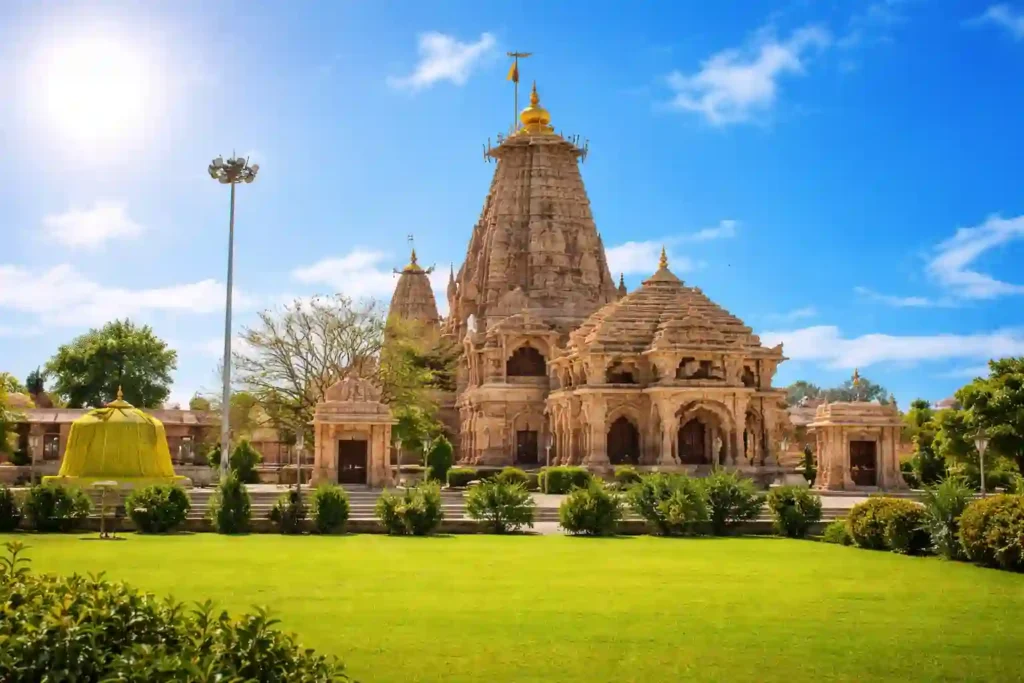
The Sanwariya Seth Temple is located in Mandfiya village of Chittorgarh district, Rajasthan. This land belongs to historic Mewar, known for courage, restraint, and deep-rooted devotion.
Unlike temple towns shaped by royal courts, Sanwariya Seth grew through the faith of ordinary people. Traders, farmers, artisans, and families built its reputation through lived experience rather than legend alone.
Pilgrims arrive from Rajasthan, Gujarat, Madhya Pradesh, Maharashtra, and distant regions. Many return repeatedly, sometimes for decades.
The black stone swaroop of Sanwariya Seth creates a quiet pull. Devotees often say that here Krishna does not demand words. He listens.
Historical origins and sacred discovery
The history of Sanwariya Seth Temple is closely linked to protection of sacred faith during turbulent times. According to local tradition, the idols belonged to the spiritual lineage associated with Saint Dayaram.
During the 17th century invasions under Aurangzeb, many temples across North India were desecrated. To save sacred images, devotees hid them underground.
In the year 1840, a cowherd named Bholaram Gurjar had a powerful dream. In this vision, Krishna revealed the exact location where the idols were buried beneath a babul tree.
When villagers later attempted to cut that tree during road construction, three black stone idols were discovered exactly as described. One of these idols came to be worshipped as Sanwariya Seth.
Local belief also connects this swaroop with Meerabai’s Girdhar Gopal. While historians may debate this link, devotees see no contradiction. For them, uninterrupted bhakti is a living truth that does not require proof.
The swaroop of Sanwariya Seth
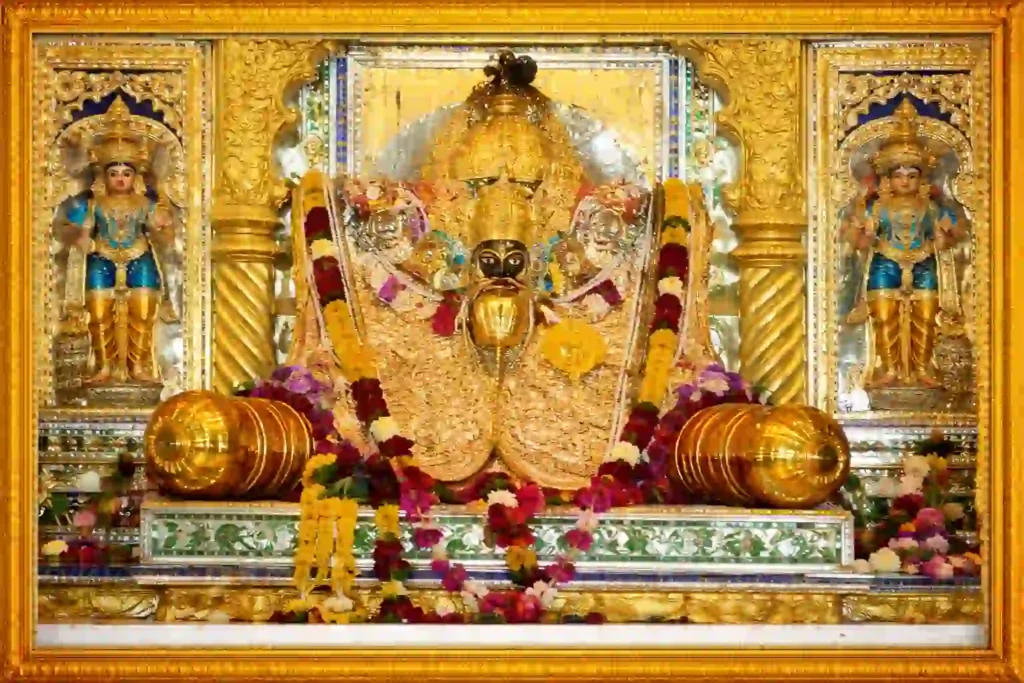
Sanwariya Seth appears as Krishna in his dark, Sanwara form. In Vaishnava philosophy, this dark swaroop form represents the infinite, vast like the night sky.
In Mewar’s devotional culture, Krishna is not approached primarily through playful ras-leela as in Braj, nor through the royal seva traditions of Nathdwara’s Pushti Marg. Here, devotion centers on Krishna as a guardian who understands household life.
Sanwariya Seth is especially revered by grihastha devotees. He is addressed as Seth ji, a title that combines respect with closeness.
Devotees relate to him as a protector of effort, ethics, and responsibility. This doctrinal tone shapes the entire worship culture of the temple.
The divine business partner belief of Sanwariya Seth Temple
The Sanwariya Seth Temple is world-famous for a unique belief where Krishna is treated as a divine business partner. Thousands of traders and entrepreneurs consider Sanwariya Seth a silent participant in their ventures.
The belief is disciplined and non-dramatic. Devotees pledge to offer a fixed share of their profits, usually between 2 percent and 10 percent, only after their goals are fulfilled. There is no advance donation. No pressure. Success comes first, gratitude follows.
This faith-based discipline has led to extraordinary temple collections. In July 2025 alone, the temple treasury recorded ₹28.32 crore in a single month, including more than 1.4 kg of gold and nearly 200 kg of silver.
Monthly collections often exceed ₹10 to ₹20 crore. Devotees see this not as bargaining, but as accountability and shared responsibility.
Temple structure and daily puja rituals
The temple complex is simple, dignified, and well organized. The sanctum houses the main swaroop of Sanwariya Seth. Worship follows Vaishnava tradition with emphasis on restraint and inner focus rather than spectacle.
Daily rituals include early morning seva, shringar, bhog offerings, and evening aarti. Bhajans are sung softly. The atmosphere encourages silent prayer. Unlike many Krishna temples, loud chanting or ecstatic expression is limited. The mood here is one of steady devotion.
Darshan timing and daily flow
Darshan at Sanwariya Seth Temple begins early in the morning. Midday Rajbhog darshan features elaborate offerings prepared with care. Evening darshan draws the largest crowds, especially local devotees who visit after work.
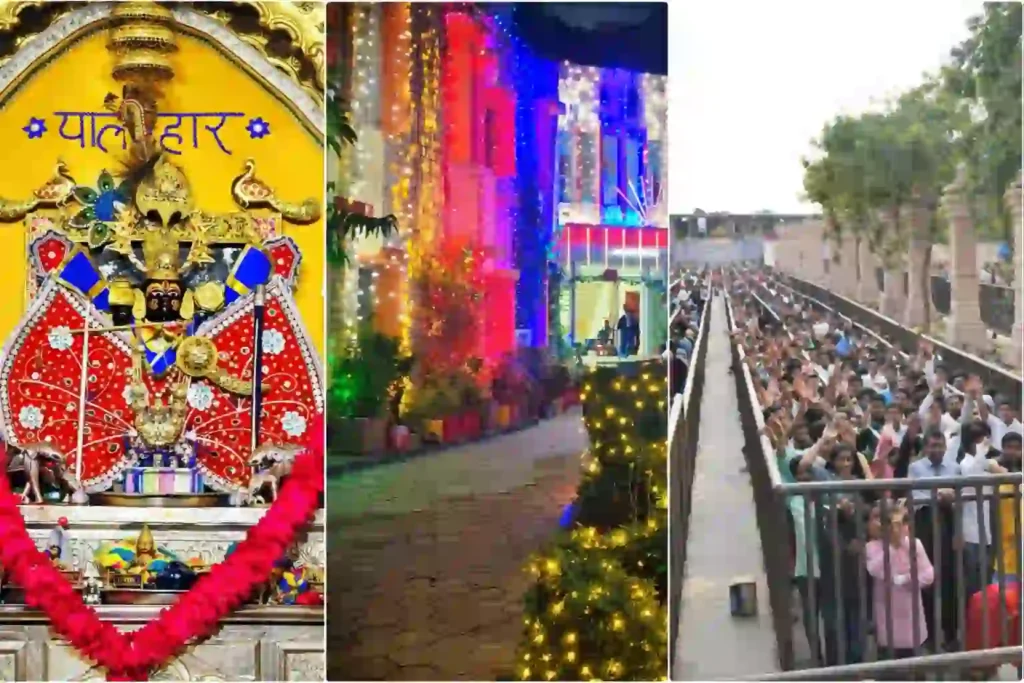
Darshan timings vary slightly with seasons. On Ekadashi, Janmashtami, and weekends, waiting times increase. Devotees accept long queues with patience, considering it part of surrender rather than inconvenience.
Festivals, melas, and sacred observances
Janmashtami is the most important festival at Sanwariya Seth Temple. The temple is decorated with devotion rather than excess display. Midnight celebrations are marked by disciplined worship and controlled crowds.
Ekadashi days hold special importance, especially for fulfilling vows. Annakut, celebrated after Diwali, symbolizes gratitude and abundance through food offerings.
During Phalgun and Kartik months, annual melas attract continuous streams of pilgrims. Temporary stalls, lodging, and services support the local economy during these periods.
Mannat, hundi, and offering traditions
Making a mannat at Sanwariya Seth Temple is a silent, personal act. Devotees promise offerings once their prayers are fulfilled. There is no formal announcement or ritual declaration.
Offerings may include cash, gold, silver, or symbolic items. The hundi system is transparent and strictly governed.
Counting is conducted under supervision, ensuring public trust. The temple discourages fear-based beliefs. Faith here is built on honesty, not obligation.
Temple governance and transparency
The temple is managed by the Shree Sanwaliya Ji Mandir Board. This body oversees rituals, donation management, security, and charitable distribution. Given the scale of offerings, governance and transparency are essential.
Hundi collections are carefully recorded. Funds are allocated for temple maintenance, rituals, and social welfare. This administrative clarity strengthens devotee trust and reinforces the belief that offerings are respected as sacred responsibility.
Social welfare and humanitarian service
Devotion at Sanwariya Seth Temple extends beyond worship. Large-scale bhandara programs provide free meals to pilgrims, hospital patients, and the needy. Through the Sanwariya Karuna initiative, cows, dogs, and birds are fed daily.
The Shree Sanwariya Seth Diagnostic Charitable Trust offers free health diagnostics and essential medical support. These activities reflect the belief that true bhakti must naturally express itself as seva.
Folk beliefs and spiritual culture
Sanwariya Seth worship is primarily Vaishnava. There are no esoteric rituals or occult practices formally associated with the temple.
However, folk belief plays a subtle role. Silent vows, non-verbal sankalp, and faith linked to livelihood reflect a grassroots spirituality shaped by lived experience rather than scripture alone.
This balance keeps the temple accessible while preserving doctrinal clarity.
The pilgrim experience and living faith
First-time visitors often notice the silence. Even in crowds, there is restraint. Devotees stand patiently, eyes fixed on the swaroop. Many say Sanwariya Seth listens more than he speaks.
Returning pilgrims describe gradual change rather than sudden miracles. Stability, clarity, and ethical strength are seen as Krishna’s response. This slow faith is why devotees return year after year.
Visiting Sanwariya Seth Temple
The best time to visit is between October and March, when the weather is pleasant. Summers can be intense. Early morning darshan offers the calmest experience.
Visitors are advised to dress modestly, respect temple decorum, and avoid haste. Patience is considered part of the pilgrimage itself.
Why Sanwariya Seth Temple remains deeply relevant
In a fast-changing world, the Sanwariya Seth Temple offers balance. Devotion here does not reject work or wealth. It guides them.
Krishna is present not as a shortcut, but as a companion who supports honest effort and gratitude.
Conclusion
The Sanwariya Seth Temple is not only a place of worship. It is a living relationship shaped by trust, discipline, and surrender.
In Mandfiya, Krishna walks quietly beside his devotees, reminding them that faith and responsibility are not separate paths, but one.
Suggested Reading
If you feel drawn to the loving form of Sanwariya Seth Ji, you may also enjoy reading about Khatu Shyam Ji, where devotees worship Shyam Baba as the giver of hope and strength in difficult times.
For those interested in regional forms of devotion, the story of Khandoba Temple shows how faith connects deeply with land, people, and everyday life.
You may also explore Mahalakshmi Temple, Kolhapur, where Lakshmi Maa is worshipped as a powerful mother who protects, nourishes, and guides her devotees.
Together, these sacred places show how devotion takes many forms, yet leads the heart toward the same divine presence.
Please visit our website: thesanatantales.com to know more about Deities, Pilgrimage, Festivals & Vrats, Regoional & Folk Myths and Spiritual stories etc.
FAQs
Is Khatu Shyam Ji and Sanwariya Seth Ji the same?
Yes, both are forms of Lord Krishna and are deeply loved by devotees. Khatu Shyam Ji is worshipped mainly in Rajasthan, while Sanwariya Seth Ji is worshipped in Mandfiya, but the devotion behind both is the same.
Which God is Sanwariya Seth?
Sanwariya Seth is believed to be a form of Lord Krishna, especially connected with his dark, Shyam form. Devotees see him as a giver of blessings, prosperity, and protection.
What is the story behind Sawariya Seth Mandir?
The idol of Sanwariya Seth was discovered centuries ago in Mandfiya, Rajasthan. It is believed that the murti appeared by divine will, and since then, the place has become a powerful center of Krishna bhakti.
Why is Sanwariya Seth known as the god of business and wealth?
Many devotees believe that Sanwariya Seth blesses them with success in business and financial stability. Traders often offer a part of their earnings to him with faith and gratitude.
Where is Sanwariya Seth Mandir located?
Sanwariya Seth Mandir is located in Mandfiya village near Chittorgarh, Rajasthan. It is one of the most visited Krishna temples in the region.