
In a world filled with distractions, stress, and constant demands, it is easy to feel disconnected from our inner self and from the Divine. Yet spiritual growth does not always require elaborate rituals, long hours of worship, or special occasions. Often, the most meaningful transformation begins with small and consistent steps taken every day.
Daily devotional practices help bring spirituality into ordinary life. Lighting a diya, offering a simple prayer, chanting a mantra, reading a sacred verse, or expressing gratitude can gradually strengthen faith and cultivate inner discipline. These simple acts may seem small, but when practiced regularly, they shape our thoughts, actions, and character.
The beauty of daily devotional practices lies in their simplicity. They remind us to pause, connect with the Divine, and live with greater awareness, humility, and purpose. Over time, these moments of devotion create a strong spiritual foundation that supports us through both challenges and successes.
In this article, you will discover how daily devotional practices build faith, nurture self-discipline, develop patience, cultivate gratitude, and deepen your relationship with the Divine. You will also learn why even the smallest acts of devotion can become powerful tools for lasting spiritual growth.
Daily Devotional Practices At a Glance
| Aspect | Details |
|---|---|
| Meaning | Simple spiritual activities performed regularly to strengthen faith, devotion, and connection with the Divine. |
| Purpose | To cultivate inner discipline, spiritual awareness, gratitude, and a deeper relationship with God. |
| Best Time to Practice | Early morning (Brahma Muhurta), sunrise, evening, or any quiet time that can be followed consistently. |
| Suitable For | Beginners, householders, students, working professionals, seniors, and anyone seeking spiritual growth. |
| Common Practices | Lighting a diya, prayer, mantra chanting, meditation, reading sacred texts, gratitude, and offering food before meals. |
| Time Required | From a few minutes to a longer spiritual routine, depending on individual preference and lifestyle. |
| Main Benefits | Builds faith, inner discipline, patience, gratitude, humility, mental calmness, and spiritual resilience. |
| Key Spiritual Value | Consistency matters more than complexity or duration. |
| Role in Daily Life | Brings moments of reflection, mindfulness, and divine remembrance into everyday activities. |
| Connection with Bhakti | Helps nurture bhakti through regular prayer, worship, remembrance, and devotion. |
| Impact on the Mind | Reduces restlessness, improves focus, and creates a sense of inner balance and peace. |
| Impact on Character | Encourages self-control, compassion, patience, humility, and emotional maturity. |
| Family Significance | Helps pass spiritual values, traditions, and devotional habits from one generation to the next. |
| Long-Term Effect | Gradually transforms devotion from a practice into a natural way of living. |
| Core Message | Small acts performed with sincerity and regularity can lead to lasting spiritual growth and inner transformation. |
Table of Contents
ToggleDaily Devotional Practices Begin with Action, Not Emotion
Most people do not begin their spiritual journey with deep faith or powerful experiences.
More often, it starts with a simple action. A prayer learned in childhood, a diya lit each morning, a mantra repeated during a difficult period, or a small act of worship practiced as part of a family tradition.
In the beginning, the mind wanders. The heart may feel distant. There may be no sudden peace, profound realization, or feeling that something extraordinary is happening.
This is completely natural. Daily devotional practices are not built on emotion alone. They are built on consistency, sincerity, and the willingness to return each day, regardless of how we feel.
Over time, repetition creates familiarity. Familiarity creates comfort. Gradually, these devotional habits begin to shape spiritual discipline without pressure or force.
The body learns stillness. The mind learns to pause. A few moments of prayer, remembrance, or gratitude become a steady anchor in daily life.
Many people assume faith must come first and practice later. Yet in reality, faith often grows through practice. As daily devotion becomes part of a regular routine, trust in the Divine develops naturally through personal experience.
What once felt like a small ritual eventually becomes a quiet part of who you are. This is how lasting spiritual transformation often begins, not through dramatic moments, but through simple actions repeated with devotion.
What Daily Devotional Practices Can Look Like
Daily devotional practices do not need to be elaborate or time-consuming. Their true value lies in consistency and sincerity rather than complexity.
For one person, devotion may mean lighting a diya before sunrise. For another, it may involve offering the first portion of a meal to the Divine, chanting a short mantra, reading a sacred verse, touching the feet of elders, or spending a few quiet moments in prayer before sleep.
Some people express bhakti in daily life through simple acts of gratitude. Others may practice remembrance while performing household duties, traveling to work, or beginning important tasks.
These devotional habits may appear ordinary from the outside, yet they gently bring spiritual awareness into everyday living. They create opportunities to pause, reflect, and reconnect with something greater than ourselves.
The beauty of daily devotion is that it can be practiced by anyone, regardless of age, lifestyle, or spiritual experience. What matters most is not the size of the act, but the sincerity behind it.
Over time, these small moments become a steady source of inner peace, gratitude, and spiritual growth. Even the simplest practice, when performed regularly, can strengthen our relationship with the Divine and become an important part of our spiritual journey.
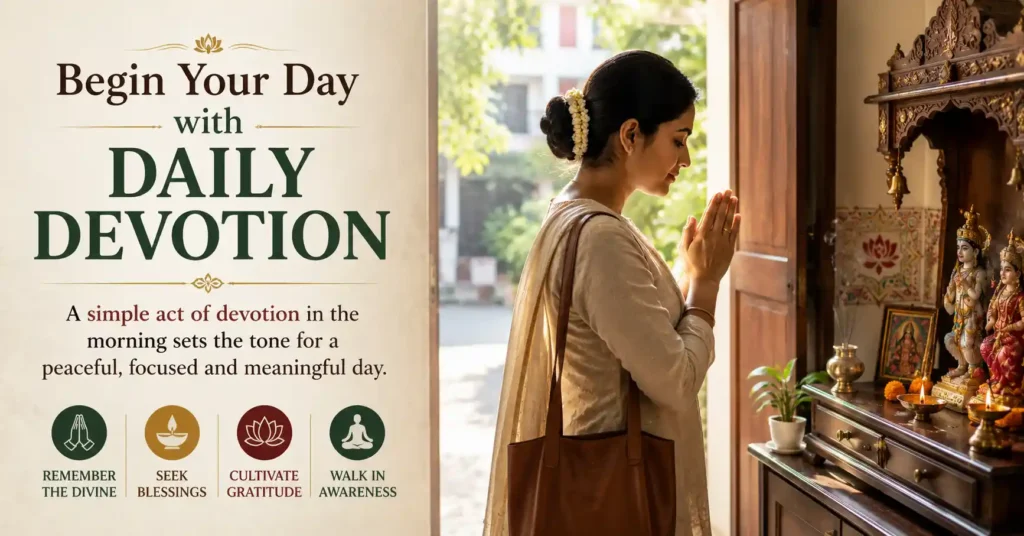
Simple Daily Devotional Practices for Beginners
Beginning a devotional routine does not have to be complicated.
Many people start with a single practice and gradually build consistency over time. The goal is not to do everything at once but to create a simple routine that feels meaningful and sustainable.
Some beginner-friendly daily devotional practices include:
- Lighting a diya in the morning or evening
- Offering water or flowers before a deity
- Chanting a simple mantra
- Reading one verse from a sacred text
- Spending a few moments in silent prayer
- Expressing gratitude before meals or before sleep
Even a few minutes of sincere devotion can be valuable when practiced regularly.
The most important step is consistency. Small acts performed daily often create deeper spiritual growth than occasional elaborate practices that are difficult to maintain.

📌 Did You Know?
Many spiritual teachers believe that lasting faith is often built through small daily actions rather than occasional intense experiences.
A simple habit such as lighting a diya, chanting a mantra, or offering a moment of gratitude each day can quietly shape character, strengthen inner discipline, and deepen one’s connection with the Divine over time.
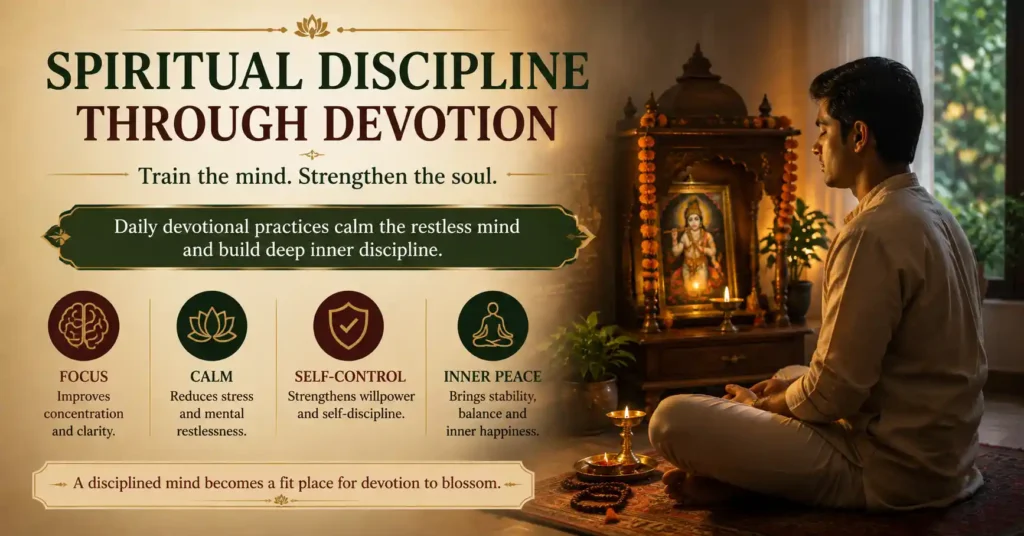
How Daily Devotional Practices Calm and Train the Mind
The mind rarely stays still for long. It moves between memories of the past, worries about the future, and an endless stream of thoughts. This is why even a few moments of silence can sometimes feel difficult.
One of the greatest benefits of daily devotional practices is that they introduce a gentle rhythm into everyday life. They create small pauses that help us step away from mental noise and return to the present moment.
Sitting at the same time each day, lighting a diya, chanting a mantra, reading a sacred verse, or remembering the Divine before meals may seem simple. Yet these practices quietly create moments of stillness in an otherwise busy day.
There is no need to force the mind into silence. There is also no reason to feel guilty when distractions arise. The purpose of devotion is not perfection. The practice is simply to return, again and again, with patience and sincerity.
Over time, attention becomes steadier. The mind learns to pause before reacting. Thoughts may still come and go, but they no longer feel as overwhelming as before.
This is one of the quiet gifts of daily devotion. It is not about controlling the mind through force. It is about creating inner alignment through regular remembrance, prayer, and spiritual awareness.
As these devotional habits become part of a daily routine, spiritual discipline develops naturally. The mind feels supported rather than restricted, allowing calmness, focus, and faith to grow together.
Faith Grows Through Daily Devotional Practices
Many people believe faith must come first and practice later. Yet in real spiritual life, the journey often unfolds in the opposite direction. Practice prepares the heart, and experience gradually strengthens faith.
When a person continues daily devotional practices, even during periods of doubt, distraction, or fatigue, something begins to change quietly within. The transformation is often subtle and difficult to notice at first.
There may be no dramatic revelation or extraordinary spiritual experience. Yet a gentle sense of support begins to grow. Not because every prayer is answered exactly as expected, but because the heart feels less alone and more connected to the Divine.
This is how faith often develops. It becomes something lived rather than something merely believed. Through regular worship, prayer, chanting, and remembrance, trust gradually deepens through personal experience.
Many saints and spiritual teachers have emphasized that faith is strengthened through practice. The more we engage in daily devotion, the more we begin to recognize the presence of divine guidance in ordinary moments of life.
Over time, these devotional habits become a source of comfort during challenges and a reminder that spiritual growth is a gradual journey. What begins as a simple routine eventually becomes a foundation of lasting faith and inner strength.

How Daily Devotional Practices Teach Patience and Humility
Life rarely moves according to our plans. Delays, disappointments, and unexpected challenges are a natural part of the human experience.
During such times, daily devotional practices quietly teach qualities that become invaluable. They help us remain grounded when circumstances are uncertain and remind us that not everything is within our control.
Lighting a diya each day teaches consistency. Offering food before meals encourages gratitude. Bowing before the Divine cultivates humility. Even a few moments of prayer or remembrance help create a habit of pausing before reacting.
These lessons are rarely taught through words alone. They develop naturally through repetition and experience. Over time, devotion begins to influence how we respond to both success and difficulty.
As daily devotion becomes part of life, waiting often becomes easier. Expectations loosen their grip, and the need to control every outcome gradually fades. We learn to trust the process while continuing to do our best.
This is one reason faith and patience often grow together. Through regular worship and spiritual reflection, the inner world slowly changes, often without us noticing.
What begins as a small devotional habit eventually becomes a different way of meeting life, with greater calmness, humility, and acceptance.
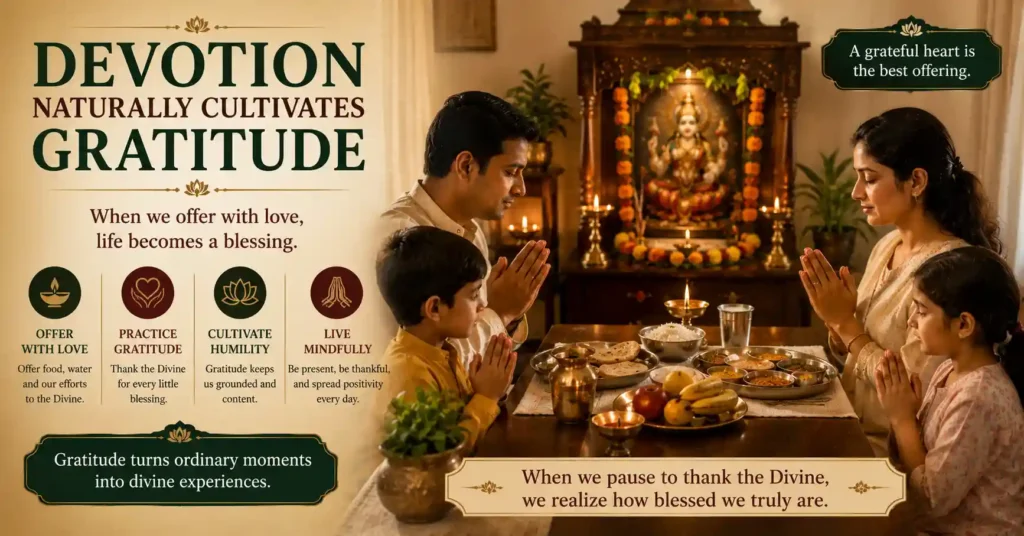
How Daily Devotional Practices Cultivate Gratitude
Many daily devotional practices encourage us to pause and acknowledge what we have received rather than focusing only on what is still missing.
Offering food before a meal, expressing thanks after prayer, reading a sacred verse, or simply remembering the Divine during ordinary moments helps bring awareness to life’s blessings.
These small acts may seem simple, yet they gradually change how we view the world. Instead of constantly chasing what we lack, we begin to appreciate what is already present.
Through daily devotion, gratitude becomes more than an occasional feeling. It becomes a habit of seeing the Divine’s presence in everyday experiences, relationships, opportunities, and even challenges.
Over time, this quiet gratitude naturally becomes part of daily life. It softens dissatisfaction, reduces unnecessary comparison, and helps create a deeper sense of contentment.
Many spiritual traditions teach that gratitude opens the heart. When we regularly acknowledge what we have received, faith often grows alongside appreciation.
This is one of the subtle gifts of devotional practices. They remind us that peace does not always come from acquiring more. Often, it comes from recognizing the blessings that already exist within our lives.
Why Daily Devotional Practices Matter Even When Inspiration Fades
An important truth about spiritual life is often left unspoken. Daily devotional practices do not always feel peaceful, inspiring, or deeply spiritual.
There are phases when prayer feels routine, the mind feels distracted, and devotion seems mechanical or empty. Even sincere seekers experience periods when enthusiasm fades and spiritual progress feels difficult to recognize.
These moments are not signs of failure. They are a natural part of every spiritual journey. Just as the seasons change in nature, our inner experiences also go through cycles of energy, doubt, clarity, and renewal.
The value of devotion is not measured only by how we feel on a particular day. Its deeper purpose is to help us remain connected to the Divine through both uplifting and challenging phases of life.
Continuing daily devotion during such periods builds a deeper kind of faith. Not a faith that depends on emotions, but a faith rooted in steadiness, trust, and commitment.
Anyone can practice when devotion feels inspiring. The real transformation often happens when we continue showing up even when nothing special seems to be happening. These are the moments that strengthen character and deepen spiritual maturity.
Over time, this quiet consistency becomes inner strength. It teaches perseverance, patience, and resilience that extend beyond prayer into everyday life.
This is one of the hidden blessings of bhakti in daily life. Feelings may come and go, but the foundation built through sincere practice remains. And that foundation continues to support us through every stage of our spiritual journey.
How Daily Devotional Practices Build Inner Discipline
Over time, devotion stops being limited to the prayer space. The calm, awareness, and focus cultivated during worship gradually begin to influence everyday life.
The effects often appear in small ways. They can be seen in conversations, decisions, relationships, and even in how we respond to unexpected challenges.
People who maintain daily devotional practices often become a little less reactive and a little more observant. Not because life becomes easier, but because their relationship with life begins to change.
This is how spiritual discipline develops. It is not created through force, rigid control, or constant self-pressure. Instead, it grows through regular moments of reflection, prayer, and self-awareness.
The outer ritual gradually shapes the inner response. A few minutes spent in remembrance of the Divine can influence how we think, speak, and act throughout the day.
As daily devotion becomes a natural part of life, qualities such as patience, self-control, humility, and resilience begin to strengthen. These changes often happen quietly and may only become noticeable after months or years of consistent practice.
Life still brings uncertainty, disappointments, and difficulties. Devotion does not remove every challenge. However, it helps create an inner steadiness that makes those challenges easier to face.
The circumstances may remain the same, but the way we meet them slowly begins to change. This quiet transformation is one of the most valuable gifts of a sincere spiritual practice.
What Sanatan Dharma Teaches About Daily Devotional Practices
Sanatan Dharma teaches that devotion is not measured by the size of an offering but by the sincerity behind it.
A beautiful example appears in the Bhagavad Gita (9.26), where Lord Krishna says:
“Patram Pushpam Phalam Toyam”
“Whoever offers Me a leaf, a flower, a fruit, or water with devotion, I accept that loving offering.”
This verse reminds us that the Divine does not seek wealth, grandeur, or elaborate rituals. Even the simplest offering becomes meaningful when made with a sincere heart.
The Bhagavad Gita’s twelfth chapter, known as Bhakti Yoga, also emphasizes loving devotion as a direct path to spiritual growth. It teaches that regular remembrance, faith, and dedication gradually bring the devotee closer to the Divine.
These teachings help explain why daily devotional practices hold such importance in Sanatan Dharma. A small prayer, a diya lit with reverence, a few moments of gratitude, or the chanting of a mantra can become powerful spiritual practices when performed consistently.
The focus is not on perfection. It is on cultivating a genuine relationship with the Divine through simple acts performed with faith and sincerity.

Why Bhakti Begins with Small Daily Acts
hakti is often described as the path of love and devotion toward the Divine.
While people sometimes associate bhakti with grand festivals, temple visits, or elaborate rituals, it usually begins with much smaller actions practiced regularly.
A simple prayer before sleep, chanting a divine name, offering water, lighting a diya, or expressing gratitude can all become expressions of bhakti.
These actions may appear ordinary, yet they help strengthen a personal relationship with the Divine. Just as any meaningful relationship grows through regular attention and care, devotion deepens through repeated acts of remembrance.
Over time, these small practices become more than habits. They become opportunities to cultivate trust, humility, gratitude, and spiritual awareness.
This is why many spiritual traditions within Sanatan Dharma encourage regular devotional routines. Small daily acts performed with sincerity often have a greater long-term impact than occasional acts performed only during special occasions.

How Daily Devotional Practices Connect Generations
Many devotional habits are passed naturally through families. Long before spiritual teachings are understood through books or study, they are often learned through observation and participation.
A child may watch a grandparent light a diya each evening. A family may gather together for aarti. A simple prayer learned from a parent may be repeated for years without much thought.
At the time, these moments can seem ordinary. Yet they often become some of the deepest memories of faith, belonging, and connection.
Through such experiences, children learn that spirituality is not limited to special occasions. They see bhakti in daily life through simple actions, shared rituals, and everyday expressions of reverence.
These traditions quietly shape values such as respect, gratitude, humility, and devotion. They also create a sense of continuity, helping each generation stay connected to its spiritual roots.
In this way, daily devotional practices do more than strengthen individual faith. They preserve sacred traditions, family customs, and cherished memories that might otherwise be forgotten over time.
What begins as a family habit often becomes a lifelong source of comfort and strength. Years later, many people find themselves continuing the same prayers, rituals, and devotional routines that once brought meaning to earlier generations.
This quiet passing of faith from one generation to the next is one of the most enduring gifts of devotion. It keeps spiritual wisdom alive not only through teachings, but through lived experience.
From Effort to Surrender Through Daily Devotional Practices
In the beginning, devotion often feels like effort. We remind ourselves to pray, sit quietly, light a diya, chant a mantra, or make time for remembrance amidst the demands of daily life.
At first, these actions require conscious attention. We create space for them in our schedule and make a deliberate effort to stay consistent.
Over time, however, something begins to change. Daily devotional practices start feeling less like a task and more like a source of comfort. They become a quiet refuge where the mind can rest and reconnect with the Divine.
Gradually, devotion shifts from being something we do to something we experience. Prayer becomes less about asking and more about connecting. Worship becomes less about obligation and more about presence.
This is where surrender begins to take shape.
Surrender does not mean giving up responsibility or becoming passive. In Sanatan Dharma, surrender means performing our duties with sincerity while placing our trust in the Divine rather than being consumed by fear, anxiety, or attachment to outcomes.
Through daily devotion, we learn that not every situation can be controlled and not every question can be answered immediately. Yet we can still move forward with faith, patience, and effort.
Such trust rarely appears overnight. It grows slowly through prayer, remembrance, gratitude, and regular spiritual practice. It is built not only on belief but also on lived experience.
Over time, the heart becomes a little lighter. The need to control every outcome begins to soften. What remains is a deeper sense of trust, acceptance, and inner peace.
For many devotees, this quiet trust becomes one of the most meaningful fruits of a lifelong spiritual journey.

The Lasting Power of Daily Devotional Practices
Intense spiritual phases often come and go.
There are times when devotion feels powerful, inspiring, and deeply emotional. There are also periods when that intensity fades and the responsibilities of daily life take center stage.
Yet daily devotional practices often remain.
They grow with the devotee and adapt to changing circumstances. A person may not always have time for lengthy rituals, but a short prayer, a moment of gratitude, or a simple act of remembrance can continue even during life’s busiest seasons.
This is their quiet strength.
Unlike dramatic spiritual experiences, these devotional habits do not depend on mood, inspiration, or ideal conditions. They become a steady presence that supports spiritual growth over the long term.
Through daily devotion, people often discover that consistency matters more than intensity. Small acts performed regularly can have a deeper impact than occasional bursts of enthusiasm that are difficult to sustain.
These practices also evolve with time. What begins as a family tradition, a personal routine, or a simple expression of faith often develops into a lifelong source of comfort, guidance, and inner stability.
They do not seek attention or impress others. They simply continue, day after day, quietly strengthening our connection with the Divine.
And over time, these small acts often become the practices we return to most. Not because they are dramatic, but because they continue to sustain us when we need them most.
Conclusion
Simple acts of devotion may appear small, yet their influence can be profound. Through regular practice, they quietly shape the mind, strengthen the heart, and deepen our relationship with the Divine.
The true value of daily devotional practices lies not in their complexity but in their consistency. A few moments of prayer, gratitude, remembrance, or worship each day can gradually cultivate spiritual discipline, patience, humility, and faith.
This path is rarely dramatic. Spiritual growth often unfolds slowly, in ways we do not immediately notice. Yet over time, these simple practices begin to influence how we think, how we respond to challenges, and how we move through everyday life.
Through daily devotion, ordinary moments become opportunities for reflection, gratitude, and inner growth. What begins as a small spiritual habit can eventually become a steady source of strength, comfort, and guidance.
In a restless world that constantly pulls our attention outward, daily devotional practices offer a gentle way of returning inward and reconnecting with what truly matters.
And perhaps that is their greatest gift. Not that they change life overnight, but that they quietly help us become calmer, steadier, and more connected with the Divine through everyday living.
Key Takeaways
- Daily devotional practices do not need to be elaborate. Small, sincere acts performed regularly can have a profound spiritual impact over time.
- Faith often grows through practice. Consistent prayer, worship, gratitude, and remembrance gradually deepen trust in the Divine.
- Simple devotional habits help cultivate spiritual discipline by creating moments of stillness, reflection, and self-awareness in daily life.
- Regular devotion teaches important qualities such as patience, humility, gratitude, and emotional resilience.
- Devotion is not about perfection. Even when the mind feels distracted or prayer feels routine, continuing the practice strengthens inner steadiness.
- Through daily devotion, ordinary activities can become opportunities for spiritual growth and divine remembrance.
- Many devotional traditions are passed through families, helping preserve faith, values, and sacred memories across generations.
- Over time, devotion often moves beyond rituals and begins to influence how we think, speak, respond to challenges, and relate to others.
- Consistent spiritual practice gradually transforms effort into trust, helping cultivate surrender without giving up personal responsibility.
- The lasting power of daily devotional practices comes from consistency rather than intensity. Small acts repeated with sincerity can lead to deep inner transformation and a stronger connection with the Divine.
Suggested Reading
Building a meaningful spiritual life does not require extraordinary effort. As this article has shown, daily devotional practices can gradually strengthen faith, inner discipline, gratitude, and peace of mind.
When practiced consistently, daily devotional practices become a natural part of everyday living and help create a deeper connection with the Divine.
Daily Spiritual Habits: 7 Simple Sanatan Practices for Inner Peace
https://thesanatantales.com/daily-spiritual-habits/
Daily Sattvik Routine for Working Professionals: Simple Habits for a Peaceful Life
https://thesanatantales.com/daily-sattvik-routine-for-working-professional/
Mudras: A Simple Practice for Balance, Awareness and Well-Being
https://thesanatantales.com/mudras-benefits-meaning/
Sanatan Living: Finding Balance in a Fast-Paced World
https://thesanatantales.com/sanatan-living-finding-balance/
Daily Meditation: Benefits, Meaning and Simple Ways to Start
https://thesanatantales.com/daily-meditation-benefits/
Ambition and Peace: How to Balance Both Without Losing Inner Peace in Daily Life
https://thesanatantales.com/ambition-and-peace/
Home Mandir: Simple Setup Ideas, Vastu Tips and Daily Rituals
https://thesanatantales.com/home-mandir/
Daily Devotional
https://en.wikipedia.org/wiki/Daily_devotional
FAQs
1. What are daily devotional practices?
Daily devotional practices are simple spiritual activities performed regularly to strengthen one’s connection with the Divine. These may include prayer, mantra chanting, lighting a diya, reading sacred texts, meditation, offering food before meals, or expressing gratitude.
The purpose is not to perform elaborate rituals every day. Instead, these practices help bring spiritual awareness into ordinary life through consistency and sincerity.
Over time, even a few minutes of daily devotion can nurture faith, inner peace, and spiritual discipline. Similar daily devotional traditions exist in many faiths and are centered on regular spiritual reflection and connection.
2. How do daily devotional practices build inner discipline?
Inner discipline develops through regular action rather than occasional inspiration.
When you set aside time each day for prayer, worship, or remembrance, you create a habit of showing up consistently. This teaches the mind patience, focus, and commitment.
Over time, these small acts begin to influence how you respond to challenges, distractions, and emotions. The discipline cultivated during devotion gradually extends into other areas of life as well.
3. Do daily devotional practices have to be lengthy?
No. The effectiveness of devotion does not depend on the length of time spent.
A few sincere minutes of prayer, chanting, gratitude, or meditation can be more meaningful than a long practice performed without attention or devotion.
Many people begin with just five or ten minutes each day and gradually develop a deeper spiritual routine. What matters most is consistency rather than duration.
4. Can I practice devotion even if my faith feels weak?
Yes. In fact, many people begin their spiritual journey before strong faith develops.
Faith often grows through experience rather than appearing instantly. Continuing devotional habits during periods of doubt, distraction, or uncertainty can gradually strengthen trust and confidence in the Divine.
Many devotees discover that practice comes first, while faith deepens naturally over time through lived experience.
5. What are some simple daily devotional practices for beginners?
Beginners can start with small and manageable practices such as:
- Lighting a diya each morning or evening
- Chanting a simple mantra
- Offering gratitude before meals
- Reading a verse from a sacred text
- Spending a few minutes in silent prayer
- Remembering the Divine before sleep
The goal is not to do everything at once. Choose one or two practices and perform them regularly until they become a natural part of your daily routine.
6. What should I do when devotion feels mechanical or uninspiring?
This is a normal part of spiritual life.
There will be periods when prayer feels uplifting and meaningful. There will also be times when devotion feels routine, distracted, or emotionally dry.
Such phases are not signs of failure. Continuing your practice during these periods often builds a deeper and steadier form of faith. The greatest spiritual growth frequently occurs when we remain committed even without strong emotions or visible results.
7. How do daily devotional practices help reduce stress and mental restlessness?
The mind is naturally pulled in many directions by worries, responsibilities, and constant stimulation.
Daily prayer, chanting, meditation, and remembrance create moments of pause throughout the day. These practices help shift attention away from mental noise and toward inner stillness.
While devotion may not remove life’s challenges, it often changes how we experience them by bringing greater calmness, perspective, and emotional balance.
8. Can daily devotional practices strengthen family bonds?
Yes. Many devotional traditions are learned and preserved within families.
Children often develop their earliest understanding of faith by watching parents and grandparents pray, perform aarti, light a diya, or observe simple household rituals.
These shared experiences create lasting memories and help pass spiritual values from one generation to the next. Over time, family devotional practices can become a source of unity, belonging, and cultural continuity.
9. Is devotion only about rituals?
No. Rituals are only one aspect of devotion.
True devotion is reflected not only in worship but also in how we live, speak, think, and interact with others. Compassion, gratitude, humility, service, and sincerity are also expressions of devotion.
The outer practice is important, but its deeper purpose is to cultivate inner transformation and a closer relationship with the Divine.
10. What is the greatest benefit of daily devotional practices?
The greatest benefit is often a gradual inner transformation.
Through consistent devotion, people frequently develop greater faith, patience, gratitude, humility, and emotional resilience. They learn to face life’s uncertainties with a steadier mind and a calmer heart.
The changes may not happen overnight. Yet over time, these simple practices can create a deep sense of spiritual grounding and help maintain a lasting connection with the Divine in everyday life.
Glossary of Important Terms
| Term | Meaning |
|---|---|
| Daily Devotional Practices | Simple spiritual activities performed regularly to strengthen faith, devotion, and connection with the Divine. Examples include prayer, mantra chanting, meditation, and offering gratitude. |
| Devotion | A sincere expression of love, reverence, and dedication toward God or the Divine. In Sanatan Dharma, devotion is often seen as a path to spiritual growth and inner transformation. |
| Bhakti | The path of loving devotion to the Divine. Bhakti emphasizes faith, surrender, remembrance, prayer, and a personal relationship with God. |
| Daily Devotion | A consistent spiritual routine that helps maintain a connection with the Divine through prayer, worship, reflection, or sacred practices. |
| Spiritual Discipline | The ability to maintain regular spiritual practices with commitment, patience, and consistency, even when motivation fluctuates. |
| Mantra | A sacred word, phrase, or sound repeated during prayer, meditation, or worship to focus the mind and deepen spiritual awareness. |
| Diya | A traditional oil lamp commonly lit during worship in Hindu homes and temples as a symbol of light, purity, and divine presence. |
| Aarti | A devotional ritual in which a lamp is offered before a deity while prayers or hymns are sung in praise of the Divine. |
| Prayer | A heartfelt communication with the Divine that may include gratitude, worship, reflection, guidance, or surrender. |
| Remembrance (Smaran) | The practice of keeping the Divine in one’s thoughts through chanting, prayer, meditation, or mindful awareness throughout the day. |
| Gratitude | A spiritual attitude of thankfulness for life’s blessings, often cultivated through prayer, offerings, and daily reflection. |
| Inner Discipline | The ability to guide thoughts, emotions, and actions with awareness, patience, and self-control rather than impulsive reactions. |
| Surrender (Samarpan) | Trusting the Divine while continuing to perform one’s responsibilities sincerely, without excessive attachment to outcomes. |
| Faith (Shraddha) | A deep sense of trust and confidence in the Divine, often strengthened through personal experience, devotion, and spiritual practice. |
| Meditation (Dhyana) | A practice of focused awareness and inner stillness that helps calm the mind and deepen spiritual understanding. |
| Seva | Selfless service performed without expecting personal reward. Seva is considered an important expression of devotion in Sanatan Dharma. |
| Sacred Texts | Spiritual scriptures such as the Bhagavad Gita, Ramayana, Upanishads, and Puranas that provide guidance for spiritual and ethical living. |
| Spiritual Growth | The gradual development of qualities such as faith, wisdom, compassion, humility, patience, and inner peace through spiritual practice. |
| Home Mandir | A dedicated sacred space within a home used for prayer, worship, meditation, and daily devotional activities. |
| Inner Peace | A state of mental and emotional calmness that arises from spiritual balance, faith, acceptance, and connection with the Divine. |
About the Author
Yateendra Chaturvedi is a spiritual writer, researcher, devotee, and the founder of The Sanatan Tales. With over 35 years of professional experience and a lifelong interest in Sanatan Dharma, he writes about Hindu deities, temples, scriptures, festivals, Mahavidyas, sacred stories, rituals, and living traditions that continue to guide and inspire devotees across India.
Drawing from traditional scriptures, regional beliefs, temple traditions, devotional literature, and historical sources, he aims to present authentic, well-researched, and easy-to-understand content for modern readers. His work focuses on preserving spiritual wisdom, explaining sacred traditions, and helping seekers develop a deeper understanding of India’s rich spiritual heritage.
Through The Sanatan Tales, Yateendra strives to make the timeless teachings of Sanatan Dharma simple, meaningful, and relevant for today’s generation while maintaining respect for traditional sources, regional practices, and diverse spiritual perspectives.
Learn More About Yateendra Chaturvedi →
https://thesanatantales.com/about-the-author/
References & Sources
This article is based on widely accepted spiritual teachings, devotional traditions, and philosophical principles associated with Sanatan Dharma. It draws upon traditional practices, cultural wisdom, devotional observances, and spiritual values that have been preserved and passed down through generations.
The content also reflects insights commonly found in sacred literature, spiritual discussions, traditional customs, and everyday practices followed by devotees across different regions and communities.
Note: Spiritual beliefs, interpretations, and practices may vary among individuals, traditions, lineages, and communities. The purpose of this article is to present commonly understood perspectives in a simple, practical, and reader-friendly manner. It is not intended to promote any single interpretation as the only valid viewpoint. Readers are encouraged to explore, reflect, and follow the spiritual path that best resonates with their faith, understanding, and personal journey.
Explore More Fascinating Topics from Sanatan Dharma