
Table of Contents
ToggleThe Divine Grace of Khatu Shyam Baba
A deep sense of longing awakens within you when you hear or read about Khatu Shyam Baba. Many devotees say that simply taking Khatu Shyam Baba’s name fills your heart with courage and a feeling that all suffering will be relieved.
Every year, thousands begin their journey to Khatu with a quiet prayer in their heart, hoping for blessings, strength, and answers.
Khatu Shyam Ji is worshipped in the small town of Khatu in Sikar district, Rajasthan. People lovingly call Him Haare Ka Sahara, the one who supports those who feel defeated or hopeless.
Many also know Him as Shyam Baba or Sheesh Ke Daata, a name that reminds us of the unimaginable sacrifice He once made. His temple has become a place where devotees line up not only for darshan but also for a sense of emotional peace.
This Khatu Shyam Baba darshan guide for 2026 covers tithi, temple timings, Falgun Mela dates, and travel tips for devotees.
The Story of Barbarika and His Divine Sacrifice
Before Baba became the beloved deity of Kaliyuga, He was known as Barbarika, the grandson of Bhima and the mighty warrior son of Ghatotkacha. From a young age, Barbarika possessed extraordinary power.
His three divine arrows and celestial bow made him almost unbeatable, yet his heart remained full of compassion. He had once taken a vow that he would always stand with the weaker side in any battle.
Just before the Mahabharata war, Sri Krishna met Barbarika in disguise. Their conversation slowly revealed a deeper truth. If Barbarika joined the war and followed his vow, the weaker side would keep shifting again and again. No side would ever win, and the war would never end.
Krishna then asked him for a sacrifice, not to test him but to protect dharma. Barbarika understood the divine purpose behind the request and offered his head with full surrender. That is why devotees call him Sheesh Ke Daata, the one who gifted his own head for the sake of righteousness.
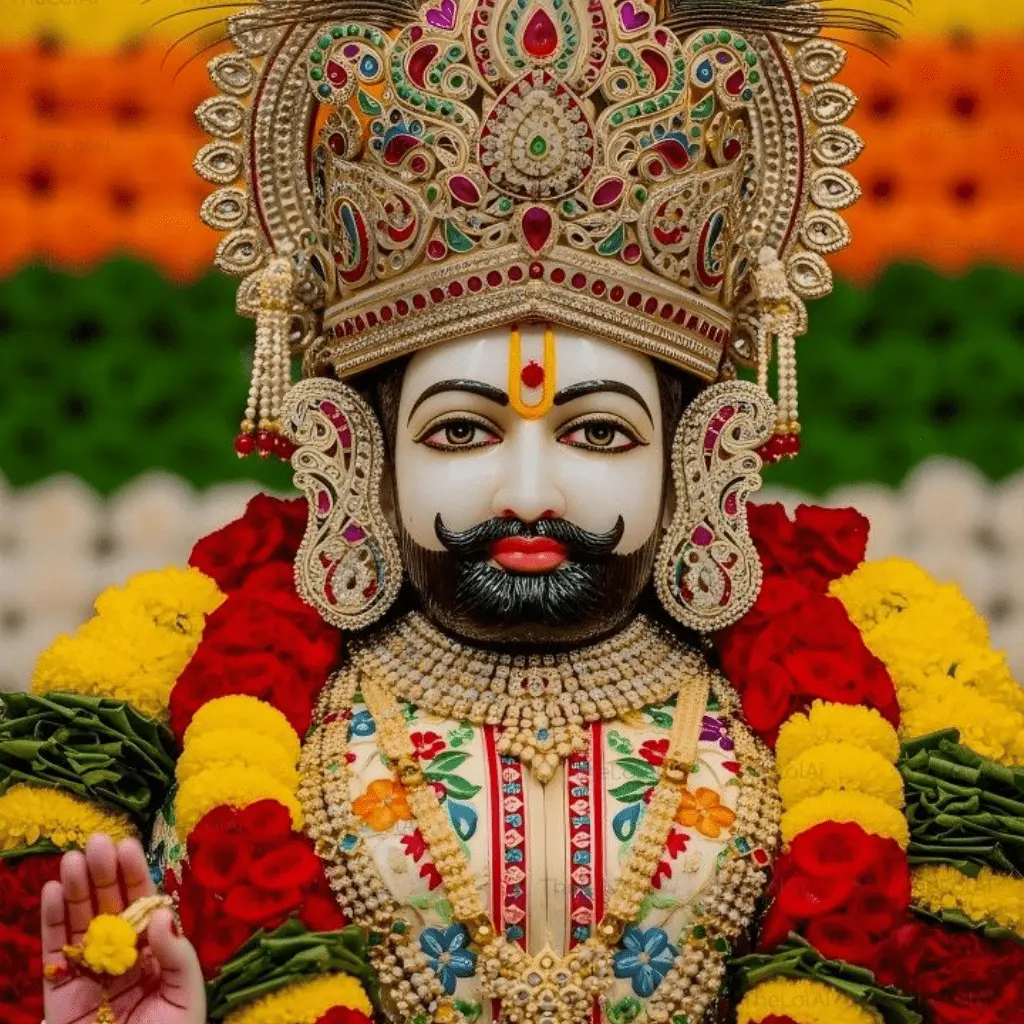
The Blessing That Made Him Khatu Shyam Baba
Pleased by his devotion, Krishna gave him a blessing that would shine across ages. “In Kaliyuga, you will be worshipped as Shyam, my own name. Whoever remembers you with love will receive blessings quickly.” This moment became the foundation of the faith millions carry in their hearts today.
Even now, people speak of Khatu Shyam Baba’s miracles, moments when unexpected courage, relief, or clarity touches their life just when they need it.
How His Sacred Head Reached Khatu
According to the local tradition of Khatu, Barbarika’s head was discovered when a cow would release milk on a particular spot every day. When villagers dug there, they found a glowing head buried beneath the earth.
The local king received a divine message in a dream and later built a temple at that very place. This sacred shrine is what we now know as the world-famous Khatu Shyam Baba Ji Mandir.
Khatu Shyam Baba temple timings 2026
If you are planning your khatu shyam baba darshan, it helps to know the temple timings. The temple usually opens around 4:30 in the morning and closes near 10 at night. These timings often shift a little based on seasons, weekends, Ekadashi, or special events, so checking once before leaving is always wise.
Aartis are offered throughout the day, beginning with Mangala Aarti at dawn, followed by Shringar, Bhog, Sandhya, and Shayan Aarti at night.
During normal days, devotees can usually take darshan from early morning till about 12:30, and again from late afternoon till closing time.
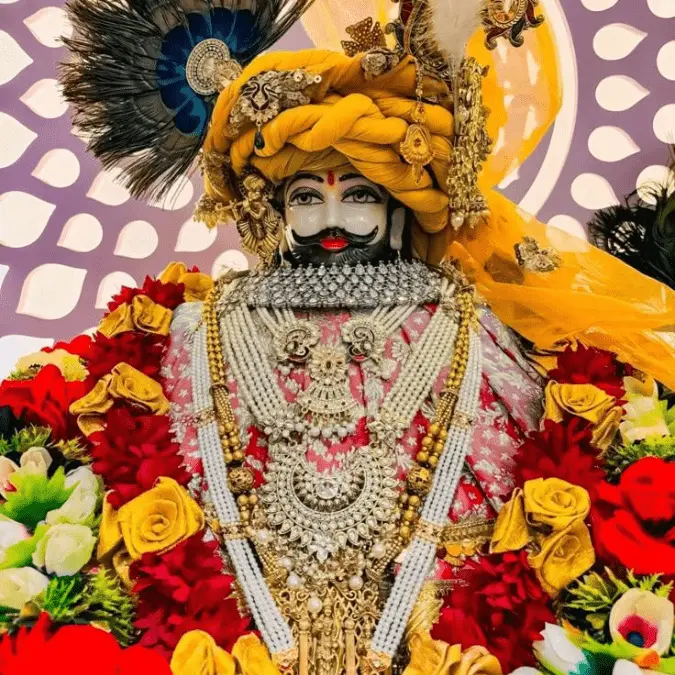
Weekends and Ekadashi Days
Weekends and Ekadashi days feel very different. The temple often opens even earlier, and long queues continue late into the night. Many devotees wait for hours with complete faith, holding flowers and chanting Baba’s name softly.
Khatu Shyam Baba temple timings 2026
If you are planning to visit during Falgun Mela, be ready for a truly vibrant experience. Falgun Mela is the grandest celebration in Khatu Shyam Ji’s calendar. Khatu Shyam Falgun Mela 2026 festival is expected around February 27th to March 11th, 2026, though final dates are usually announced much closer.
During this period, the temple remains open for extended hours, and the number of devotees increases many times over. The whole town glows with devotional energy, and people from across India and even abroad arrive just for Shyam Baba’s darshan.
How to reach Khatu Shyam temple
Reaching Khatu is simple from most major cities. Jaipur is around 80 to 90 km away, and many devotees begin their journey from there. Ringas Junction is the closest railway station, just about 17 km from the temple, and from there you can find jeeps, autos, or taxis.
If you are taking a flight, Jaipur Airport is the nearest, and the road trip from the airport to Khatu usually takes less than two hours. Many buses and taxis also come directly from Delhi, Sikar, Hisar, Ajmer, and other nearby regions.

Khatu Shyam Baba darshan rules and tips
For a peaceful khatu shyam baba darshan, weekday visits are the best. If you are traveling with elderly family members or children, try avoiding weekends because the queues become very long.
Hotels fill up quickly during Falgun Mela, so early booking saves a lot of trouble. Carry water, light snacks, and basic medicines because waiting times can be unpredictable. Most devotees prefer using official parking areas to avoid confusion, and it is always good to keep footwear in the temple’s cloakrooms.
The Message of Khatu Shyam Baba
When you finally stand in front of Shyam Baba, many people say something inside becomes quiet. It is difficult to explain, but devotees feel as if He listens without judgment.
The message of Khatu Shyam Baba is simple and powerful, true strength comes from humility, surrender melts obstacles, and faith gives courage that logic often cannot. That is why millions remember Him every single day, trusting that hope will return just by taking His name.
If you wish to explore more about regional deities deeply rooted in faith and tradition, you may also enjoy reading about Khandoba God, the revered warrior deity of Maharashtra worshipped at Jejuri, whose stories reflect courage, protection, and village life.
Many devotees also connect their spiritual journeys with festivals like Makar Sankranti, which marks seasonal change, gratitude, and renewal across India, reminding us how devotion, nature, and daily life are beautifully woven together in Sanatan Dharma.
FAQs
Why is Khatu Shyam Baba called “Sheesh Ke Daata”?
Khatu Shyam Baba is called Sheesh Ke Daata because, in the Mahabharata era, Barbarika (His previous form) lovingly offered his own head to Krishna for the sake of dharma. This sacrifice made him a symbol of surrender and courage in Kaliyuga.
What is the significance of Khatu Shyam Baba in Kaliyuga?
Krishna blessed Barbarika saying that in Kaliyuga he would be worshipped as Shyam, and devotees who remember him with faith would receive quick blessings. That is why people believe Baba listens instantly and supports those who feel helpless.
When is the best time to visit Khatu Shyam Baba Temple?
Weekdays are peaceful for darshan, especially early mornings. Weekends, Ekadashi, and Falgun Mela days see very large crowds, so devotees planning a calm visit usually prefer non-peak days.
What happens during the Falgun Mela at Khatu Shyam Ji?
Falgun Mela is the grand annual celebration when lakhs of devotees come to seek Baba’s blessings. The temple remains open for extended hours, devotional singing fills the streets, and the entire town becomes a festive pilgrimage space.
How did Khatu Shyam Baba’s head reach Khatu village?
According to tradition, a cow kept releasing milk on a particular spot. When villagers dug the place, they found a radiant head buried beneath the earth. The king received a divine message in a dream, and a temple was later built at that sacred site.