
Maa Tara is one of the most mysterious yet deeply compassionate forms of the Divine Mother. To many people, her name feels intense or unfamiliar at first.
But for those who slowly come to know her, she begins to feel deeply protective, guiding, and truly motherly. She is not a goddess of fear.
She is the mother who helps us cross fear, ignorance, suffering, and inner darkness.
In Sanatan Dharma, she appears when the soul feels stuck, when pain feels heavy, and when ordinary strength no longer feels enough.
Many devotees feel her presence most strongly during difficult transitions in life. She is the mother who holds her child firmly and helps them pass through moments that feel overwhelming.
Her presence may feel intense, but her purpose is always liberation.
Table of Contents
ToggleWho is Tara in Sanatan Dharma?
She is one of the Das Mahavidyas, the great wisdom forms of the Divine Mother. Among them, Tara represents guidance, protection, and the gentle power to deliver the soul safely forward.
The word Tara means “the one who helps cross.” Through her grace, devotees are guided across fear, confusion, attachment, and sorrow.
She is closely associated with sacred sound, wisdom, and compassion. Many seekers connect her with the power of mantra and inner speech.
While her outer form may appear fierce, her inner nature is deeply nurturing and protective.
Her place among the Mahavidyas
Among the Das Mahavidya, this form stands right after Kali. Where Kali destroys illusion completely, Tara guides the seeker through the space left behind. Kali breaks the chains. Tara shows the path forward.
This is why she is often seen as the teacher-mother. After deep transformation, when the ego has been shaken, she helps the seeker regain balance and clarity.
In this way, Tara Mahavidya becomes the bridge between inner destruction and awakening wisdom.
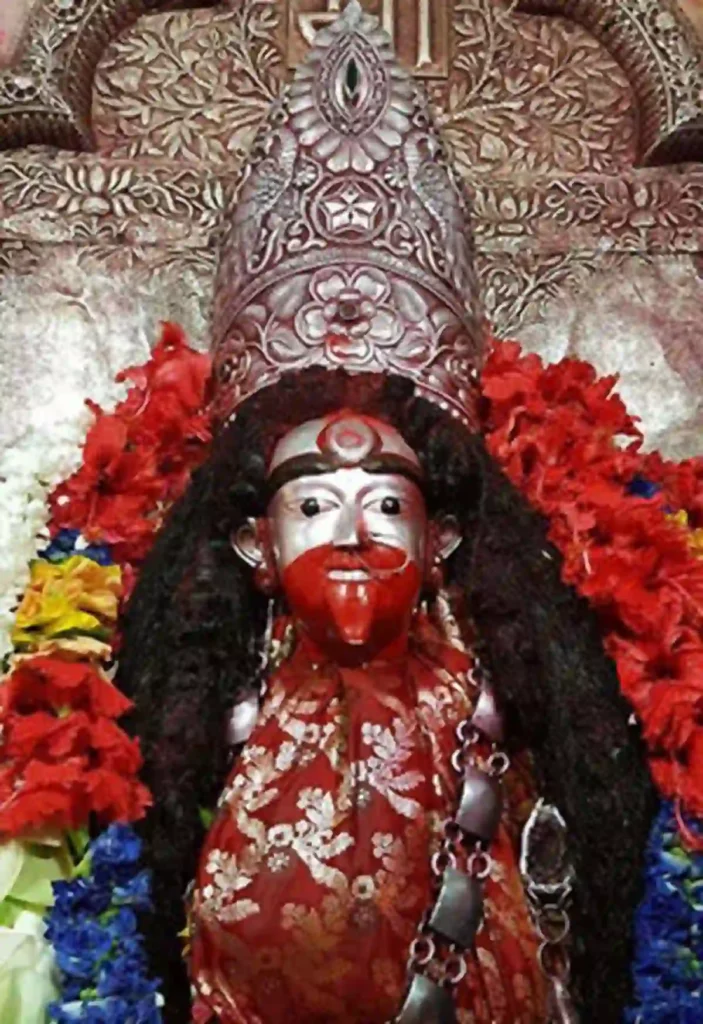
The sacred story of her divine appearance
One of the most well-known stories connected with Tara comes from the churning of the cosmic ocean.
When deadly poison emerged and Shiva consumed it to save creation, its intensity overwhelmed even him. At that moment, the Divine Mother appeared in the form of Tara.
She took Shiva onto her lap, fed him divine milk, and calmed the poison within him. This story reveals her true essence. Even the strongest beings need compassion and care. Even destruction must be balanced by nurturing wisdom.
On a deeper level, the story teaches that when spiritual transformation becomes too intense, divine compassion steps in to protect consciousness itself.
Her form as Neel Saraswati
In many traditions, she is also worshipped as Neel Saraswati, the blue form of Saraswati.
While Saraswati represents calm learning and clarity, Neel Saraswati represents deep, transformative knowledge that arises after facing darkness.
This form guides seekers who question deeply, struggle inwardly, and seek truth beyond comfort and ease.
It is knowledge born from lived experience, not theory. Many spiritual aspirants feel drawn to this form when ordinary understanding no longer satisfies the heart.
Ekjata Devi, the one-plaited form
Ekjata Devi is one of the most powerful and lesser-known forms associated with this Mahavidya.
She is depicted with a single braid of hair, symbolizing one-pointed awareness and unwavering focus.
Ekjata represents determination, protection of sacred knowledge, and inner discipline. She is worshipped by seekers walking intense spiritual paths who need strength to remain steady.
This form removes distractions and shields the seeker from both inner and outer disturbances
Tarapith, the sacred seat of the Mother
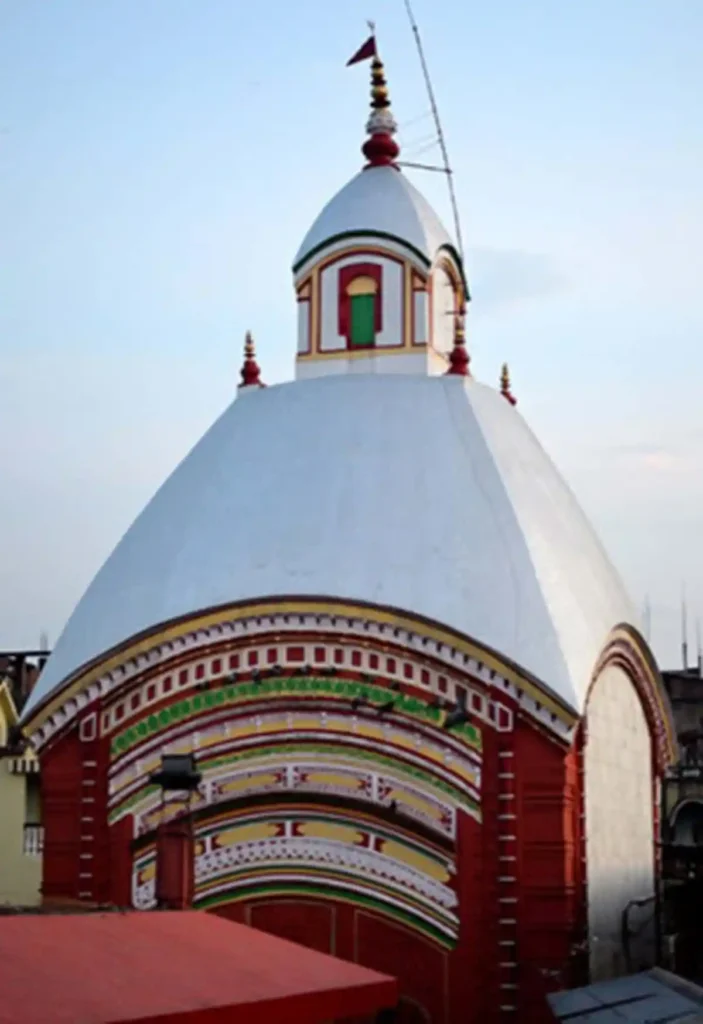
The most important place associated with this form of Shakti is Tarapith, located in West Bengal. Tarapith temple is one of the most powerful Shakti worship centers in Sanatan Dharma.
The temple is not meant to impress with grandeur. Its true power lies in its living presence.
Many devotees say the Mother here feels watchful, compassionate, and deeply personal. People often feel that sincere prayer receives a direct response in this sacred space.
.
Tarapith shamshan and the truth of impermanence
Near Tarapith lies the shamshan, or cremation ground, which holds immense spiritual significance.
In Sanatan Dharma, certain cremation grounds are considered sacred because they reveal the truth of impermanence.
Tarapith shamshan is regarded as one of the four sacred shamshan associated with intense Shakti worship.
It is not a place of fear, but a place where ego naturally dissolves. Life, death, attachment, and illusion lose their grip here.
For advanced seekers, this space teaches surrender without words.
Vamakhepa, the devoted child of the Mother
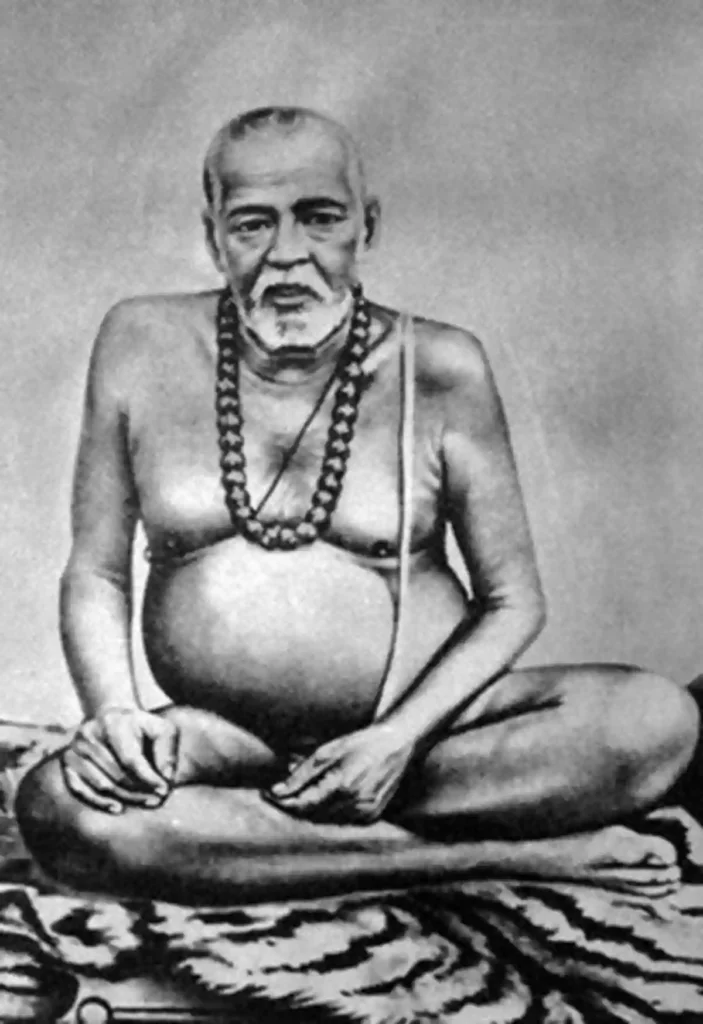
One cannot speak of this sacred tradition without remembering Vamakhepa, the great mystic of Tarapith. He lived like a child of the Mother, free, fearless, and completely surrendered.
He did not see the deity as an idol, but as a living, breathing mother. He laughed with her, cried before her, argued with her, and rested in her presence.
Through Vamakhepa, the Mother revealed her most tender and playful side. His life shows that true bhakti is built on trust and innocence, not ritual alone.
What her form really tells us
Her fierce appearance carries deep meaning. The dark or blue complexion represents vastness and depth.
The open eyes symbolize constant awareness. The posture reflects readiness to protect.
Every element of this form teaches that truth is not always gentle, but it is always compassionate.
Fear is removed not by hiding reality, but by giving strength to face it fully.
A simple mantra for devotees
For household devotees, simple remembrance is enough. The Mother responds to sincerity, not complexity.
A commonly used gentle mantra is:
Om Tare Tuttare Ture Svaha
Chanted slowly, this mantra brings calm, courage, and clarity. Even repeating her name with devotion is considered powerful by many seekers.
Prasad and simple offerings
She does not demand elaborate offerings. Simple prasad offered with purity is enough.
At Tarapith, devotees believe that the prasad is first offered to Vamakhepa, the beloved child of the Mother, and only then offered to the deity as a sign of complete surrender.
Common offerings include fruits, sweets, rice, flowers, and water. More than items, she accepts honesty, humility, and surrender.
For many devotees, a quiet moment of remembrance becomes the most powerful offering.
Spiritual benefits of her worship
Devotees believe that her worship offers guidance during fearful life transitions, emotional pain, spiritual confusion, and loss of direction.
The blessings often come as inner strength, clarity, and protection. Challenges may not disappear instantly, but the courage to cross them grows steadily.
Her relevance in modern life
In today’s restless and uncertain world, her presence feels especially relevant. She supports those who feel lost, overwhelmed, or spiritually exhausted.
Many people feel drawn to her during phases when life feels heavy and direction unclear.
She teaches that strength and compassion can exist together. For seekers walking difficult inner paths, she becomes a steady presence, reminding them that they are never alone.
Conclusion
Maa Tara is the Divine Mother who guides when the path feels unclear. Fierce in form yet deeply compassionate in essence, she stands beside seekers during their most difficult inner journeys.
Whether worshipped at the powerful Tarapith temple, remembered through mantra, or felt quietly within the heart, she continues to guide souls across fear into wisdom, darkness into clarity, and struggle into inner strength.
As devotees reflect on her guidance, it becomes easier to see this form as part of the wider journey of Shakti.
Exploring the nurturing strength of Maa Durga and the fierce transformation of Maa Kali helps us understand how the Divine Mother protects, transforms, and finally guides the seeker through every stage of spiritual growth.
FAQs
What is Maa Tara the goddess of?
Maa Tara is the goddess of guidance and protection. She helps devotees cross fear, confusion, and difficult life phases.
Can Maa Tara be worshipped at home?
Yes, Maa Tara can be worshipped at home with simple devotion, a clean space, and sincere remembrance.
Does Maa Tara fulfill wishes?
Devotees believe Maa Tara fulfills wishes by giving clarity and inner strength, especially when desires are aligned with truth.
How can I connect with Tara?
You can connect with Maa Tara through quiet prayer, repeating her name, or chanting her mantra with trust and surrender.
Why is Maa Tara’s mouth red?
Her red mouth symbolizes powerful speech, protection, and the energy that destroys fear and ignorance.
Is Tara the same as Kali?
Maa Tara and Maa Kali are closely related forms of Shakti. Kali transforms, while Tara guides and protects after transformation.
Can we keep a Maa Tara photo at home?
Yes, a Maa Tara photo can be kept at home if it is respected and approached with devotion, not fear.
How to see Tara in astrology?
In astrology, Tara’s influence is often linked with Moon, Jupiter, and spiritual mantras, showing guidance during difficult karmic phases.