
Mantra japa is one of the simplest and oldest spiritual practices followed in Hindu tradition. It does not need wealth, learning, or complex rituals. All it asks for is time, sincerity, and steady repetition.
For centuries, people have practiced mantra japa in homes, temples, forests, and quiet corners of daily life. Some do it loudly, some softly, and many only within the mind. Though the outer form looks simple, mantra japa slowly shapes inner discipline, focus, and faith.
In Sanatan tradition, mantra japa is not limited to monks or advanced seekers. Household devotees, elders, students, and even children practice it in their own way.
Over time, this steady repetition becomes a companion in daily life rather than a separate religious act.
Table of Contents
ToggleMeaning of mantra japa
The word mantra comes from Sanskrit roots that suggest reflection and protection. Japa means repetition. Together, mantra japa means repeating a sacred sound, word, or phrase again and again with attention.
This repetition is not mechanical. The goal is not counting alone, but allowing the sound to settle into awareness. As the mantra repeats, scattered thoughts slowly calm down.
The mind learns to return again and again to one point. This is why mantra japa is often called a bridge between worship and meditation.
Method of mantra japa
There is no single rigid method, but traditional practice follows a gentle structure. A mantra is chosen, often given by a teacher, family tradition, or personal faith.
Some people use a mala with 108 beads to keep count, while others count silently or by time.
The repetition can be done aloud, in a soft whisper, or silently within the mind. Beginners often start with audible or whispered japa, as it helps maintain focus.
With practice, many move naturally toward mental japa, which is quieter and more inward. The key is steadiness, not speed. Each repetition is done clearly, without rushing.
Practice of mantra japa in daily life
Mantra japa fits easily into daily routine. Some people do it early in the morning before sunrise. Others prefer evening or night when the day settles. Many repeat mantras while walking, cooking, or sitting quietly after temple visits.
In traditional homes, elders often practice mantra japa during dawn or dusk. In villages and pilgrimage places, you can still hear the gentle rhythm of mantra sounds blending with everyday life. This shows that mantra japa is not removed from life but woven into it.
Consistency matters more than duration. Even a few minutes daily builds depth over time.
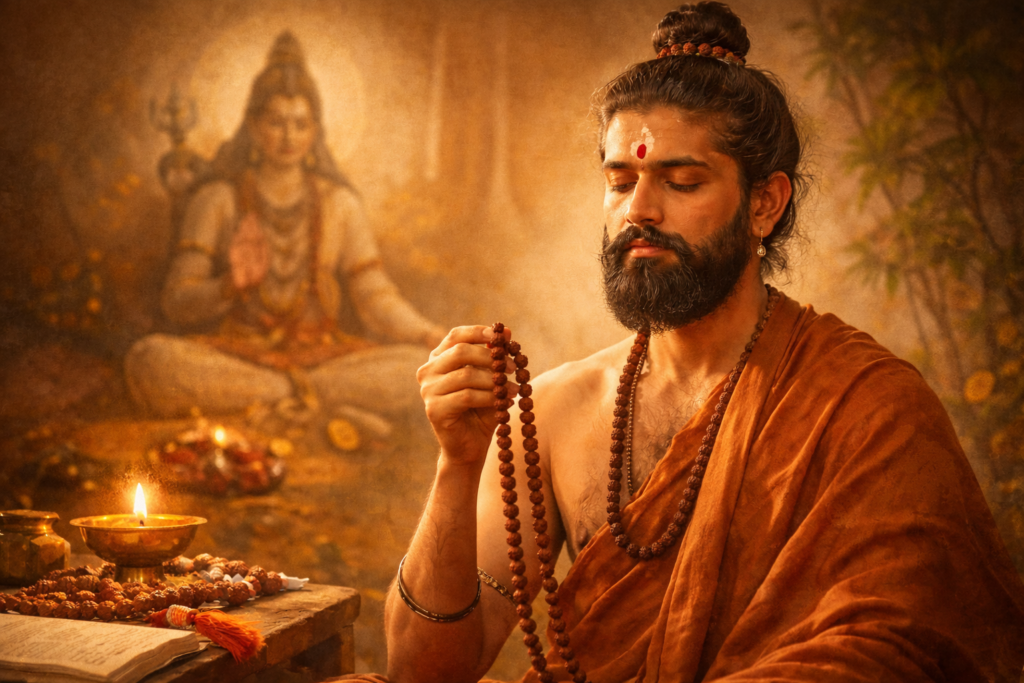
Rules followed in mantra japa
Mantra japa is simple, yet tradition suggests certain basic rules to protect the practice. Cleanliness of body and space is encouraged. The place should be calm and respectful.
The practitioner should sit comfortably with a straight spine, though extreme postures are not required.
Regular timing helps build habit. Faith and patience are essential. One should avoid anger, pride, or impatience during practice. The mantra is not changed frequently, as continuity strengthens its effect.
These rules are not meant to create fear but to support inner discipline.
Benefits of mantra japa
The benefits of mantra japa appear slowly and naturally. Many people experience improved concentration and mental calm. Regular practice reduces restlessness and emotional imbalance. It brings a sense of order to inner life.
On a deeper level, mantra japa strengthens devotion and trust. It becomes a support during stress, sorrow, or uncertainty. Over time, the mantra feels less like repetition and more like silent companionship.
Traditional texts also describe mantra japa as a purifier of thought and intention, preparing the mind for deeper spiritual understanding.
Mantra japa as a living tradition
Mantra japa has survived thousands of years because it adapts to every age. From Vedic chants to temple rituals, from saints to householders, the practice continues unchanged at its core.
Even today, mantra japa is passed from elders to children, from teachers to students, and from inner calling to personal experience. It does not demand withdrawal from life. Instead, it quietly shapes how life is lived.
Even today, many households continue mantra japa quietly at dawn or dusk, following a rhythm passed down through generations.
This living tradition continues not through force, but through personal experience and inner connection.
Common doubts about mantra japa
Many beginners worry about pronunciation, mistakes, or lack of concentration. Tradition reminds us that sincerity matters more than perfection. The mantra responds to faith and consistency, not anxiety.
Another common doubt is whether one mantra is better than another. In truth, the mantra that stays with you and builds steadiness is the right one.
Conclusion
Mantra japa is not about doing something perfect. It is about showing up every day, even for a few minutes, and gently turning your mind toward the divine. When the mantra flows with love and patience, it slowly becomes part of your breath, your thoughts, and your way of living.
Over time, mantra japa calms the mind, softens the heart, and brings a quiet strength from within. It does not change the world outside immediately, but it surely changes how you face it. Worries feel lighter, faith feels deeper, and life starts moving with more awareness and balance.
Whether you chant aloud, whisper softly, or repeat the mantra silently, what truly matters is sincerity. Even a simple mantra, repeated with devotion, carries great power. Mantra japa reminds us that the divine is not far away. It lives within us, waiting to be remembered, one sacred sound at a time.
Related Spiritual Reads on Sanatan Practices
Mantra japa is deeply connected with other Hindu rituals and spiritual paths. Readers interested in this practice may also explore topics like daily Puja at Home, Use of mala in worship, Meditation practices, Temple traditions, and Guru disciple relationships, on thesanatantales.com.
These topics together help form a complete understanding of how inner practices and outer traditions support each other.
FAQs
Is mantra japa necessary to practice every day?
Mantra japa works best when practiced regularly, even if for a short time. Daily repetition builds rhythm and steadiness. However, missing a day does not break the practice. What matters more is returning with patience, not guilt.
Can mantra japa be done without a guru?
Yes, many people begin mantra japa through family tradition, temple influence, or personal faith. While guidance helps deepen understanding, sincerity and consistency are more important at the beginning.
How long does mantra japa take to show effect?
The effects of mantra japa are usually subtle and gradual. Some people notice calm and focus within weeks, while deeper changes unfold over months or years. The practice grows quietly, without dramatic signs.
Is pronunciation very important in mantra japa?
Clear pronunciation is helpful, especially in the beginning, but perfection is not required. Tradition values faith, attention, and regular practice more than technical accuracy.