
Nanda Devi folk goddess worship in Uttarakhand is rooted in living village faith, emotional devotion, and folk tradition passed down for generations.
In the hills of Uttarakhand, faith does not always live inside grand temples or sacred texts. It lives quietly in mountain homes, in lullabies sung to children, in oil lamps glowing at dusk, and in stories passed from grandmother to grandchild. Among these living beliefs, Nanda Devi folk goddess holds a place that feels deeply personal.
She is not worshipped as a distant cosmic power. People love her as their own. A daughter of the mountains, a sister who understands sorrow, a mother who protects without fear. Villagers do not only worship Nanda Devi. They speak to her, wait for her arrival, welcome her with joy, and bid her farewell with tears.
This article shares the story of Nanda Devi purely from the lens of living folk belief and devotion in Uttarakhand, not from mountaineering, geography, or environmental history.
Table of Contents
ToggleNanda Devi as the living folk goddess of Uttarakhand
In many hill villages of Kumaon and Garhwal, Nanda Devi is believed to be alive in the land itself. Elders say her presence can be felt in changing seasons, in village silence, and in moments of prayer.
Children grow up hearing her name in daily conversation. Women remember her while lighting lamps in the evening. She is not seen as distant or unreachable. She feels close, listening, and emotionally connected.
This sense of closeness is the heart of Nanda Devi folk goddess worship.
Origins of Nanda Devi folk goddess worship in the hills
Nanda Devi worship did not arise from royal courts or written scriptures. It grew slowly through oral traditions and lived experience. Local stories were shared by elders, sung during rituals, and remembered during festivals.
Many hill families believe that faith came first. People trusted her because they felt protected and understood. Over generations, this trust shaped rituals, fasts, and sacred journeys. This is how folk deities naturally find their place within Sanatan Dharma.
Nanda Devi as daughter, bride, and mother in folk belief
At the emotional center of Nanda Devi folk goddess worship lies her life story as imagined by the people. She is believed to be born in the mountains, raised by the land, and later married to Shiva. After marriage, she leaves her maternal home, yet returns again and again to visit.
Villages welcome her like a daughter returning home. Homes are cleaned, lamps are lit, and women sing ancient songs of welcome. When the time comes for her departure, hearts grow heavy. Tears flow freely, not from fear, but from love.
This cycle of arrival and farewell shapes every ritual connected to her worship.
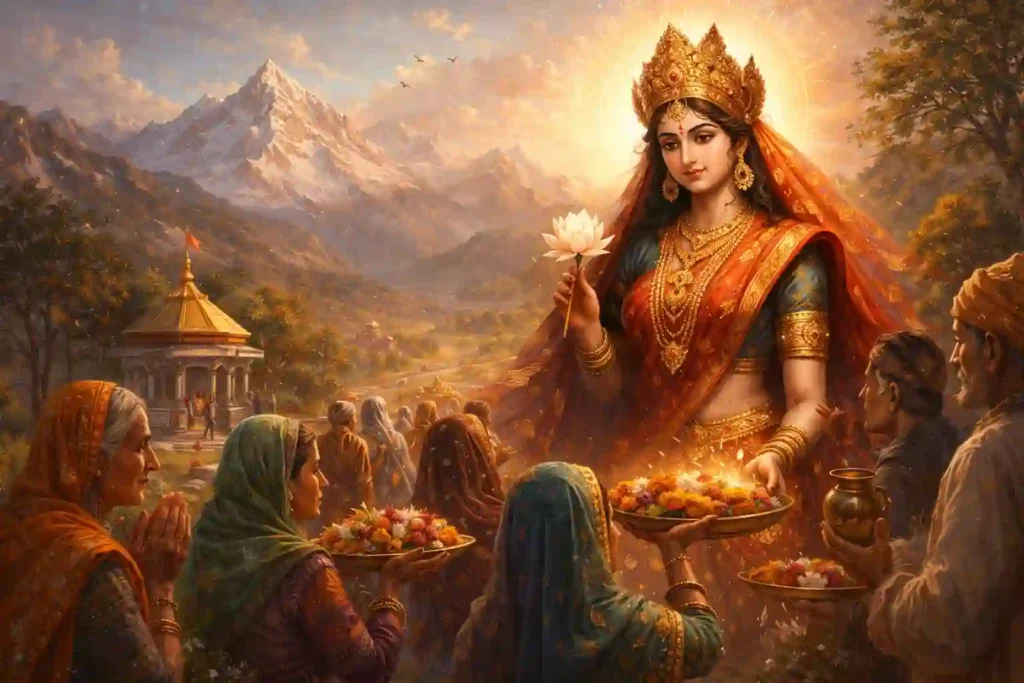
Sacred temples of Nanda Devi and their devotional meaning
Although much of her worship happens inside homes, certain temples hold deep emotional value.
The Nanda Devi Temple, Almora is among the most revered shrines. Here, people come not seeking miracles, but comfort and reassurance.
Another deeply sacred place is the Nanda Devi Temple, Nauti. Local belief holds Nauti village as Nanda Devi’s maternal home. During major rituals and the Raj Jat Yatra, this place carries special emotional weight.
Across Uttarakhand, many villages also have small, simple shrines dedicated to her. These humble spaces show that devotion does not need grandeur.
Simple puja rituals and everyday worship of Nanda Devi
Nanda Devi worship is gentle and uncomplicated. Devotees light oil lamps, offer flowers and rice, and speak prayers softly, often in their local language. There are no rigid rules or fear of doing something wrong.
What matters most is sincerity. This simplicity allows her worship to remain part of everyday life, even as times change.
Role of women in Nanda Devi worship
Women are the true keepers of Nanda Devi’s faith. Mothers, daughters, and sisters preserve her memory through fasting, prayers, and storytelling. In many households, women lead rituals and explain the goddess’s story to children.
Many women see their own lives reflected in Nanda Devi’s journey as a daughter who leaves home yet remains emotionally connected. Without women’s devotion, this tradition would not have survived for centuries.
Jagar tradition linked to Nanda Devi
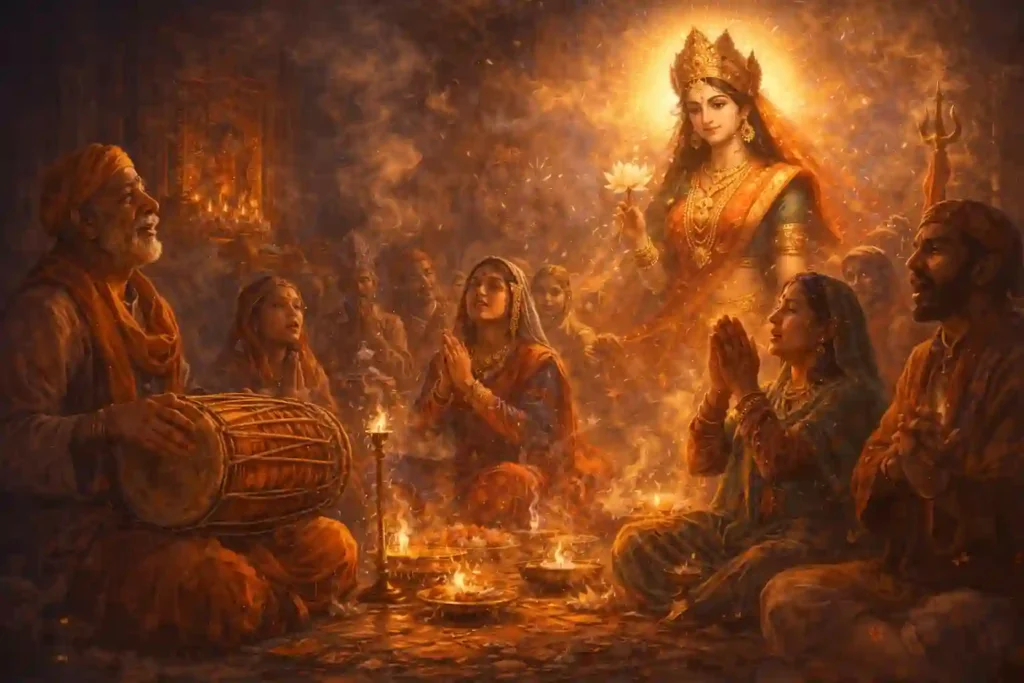
In Uttarakhand, jagar is a sacred night ritual, not entertainment. Through rhythmic singing and devotion, the presence of the deity is invoked. Jagar songs narrate Nanda Devi’s birth, her journeys, her return, and her sorrow of separation.
On jagar nights, oil lamps flicker softly and the slow rhythm of the drum fills the silence. Voices rise and fall like mountain winds, telling Nanda Devi’s story as if she is listening nearby. Many devotees say the air feels calmer and heavier, as though the goddess has come closer to hear her people.
Nanda Ashtami (Nandashtami Vrat) and its importance
Nanda Ashtami, also known as Nandashtami Vrat, is one of the most important religious observances dedicated to Nanda Devi. It usually falls in the month of Bhadrapada.
On this day, women observe fasts and pray for the well-being of their families. Homes are cleaned, lamps are lit, and the goddess is remembered with love. This vrat ensures her worship continues every year, even when large festivals are not held.
Nanda Devi Raj Jat Yatra as a sacred farewell
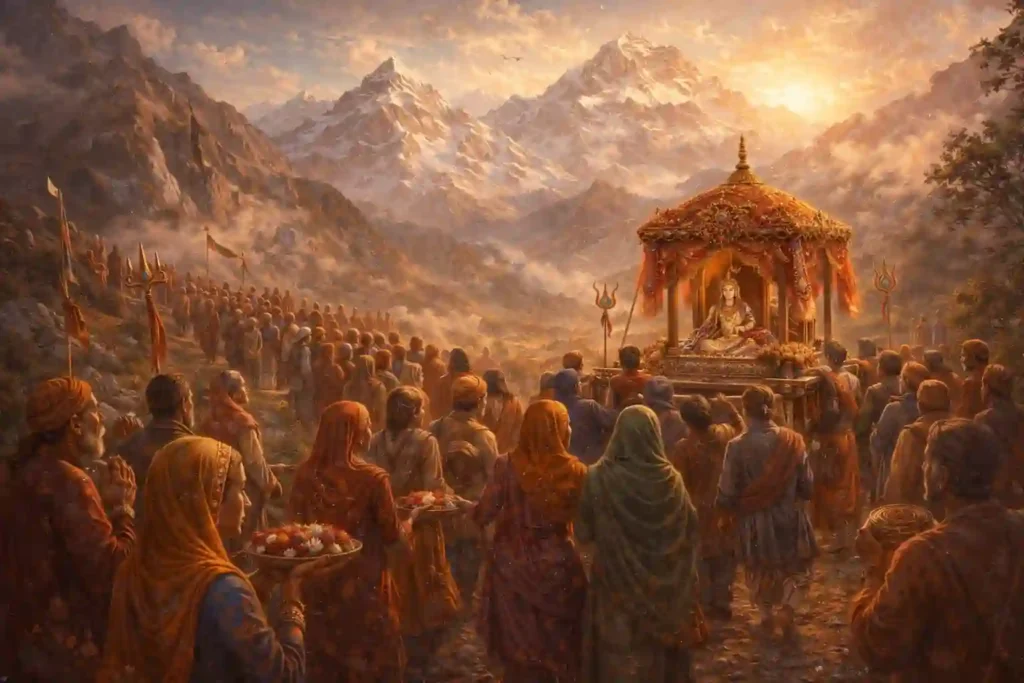
The Nanda Devi Raj Jat Yatra is not seen as a test of endurance. It is understood as a sacred farewell. Devotees believe they are accompanying the goddess as she returns to her divine home after visiting her maternal land.
Along the path, moments of complete silence appear, broken only by footsteps and quiet prayers. Faces show exhaustion, eyes often glisten with tears, yet no one complains. Many walk with folded hands, feeling they are escorting a beloved daughter on her final journey home.
Symbolism of departure and separation in folk belief
A powerful aspect of Nanda Devi worship is its acceptance of separation. Folk belief teaches that love includes letting go. Arrival brings joy, but departure is sacred too.
This mirrors human life. Children grow up and leave. Loved ones part ways. Yet bonds remain. This understanding makes Nanda Devi worship deeply human and comforting.
Nanda Devi Mela and community remembrance
Every year, communities gather during Nanda Devi Melas, especially in Almora. These gatherings are moments of collective remembrance. Songs, prayers, and quiet celebration bring people together and renew shared faith.
Nanda Devi as Kul Devi for hill families
For many hill families, Nanda Devi is their Kul Devi, the family goddess. Her worship is inherited and passed down across generations. Families make vows to her and remember her during important life moments.
This personal, inherited bond is one of the strongest reasons why Nanda Devi folk goddess worship continues even beyond the hills.
Nanda Devi and her connection with Parvati and Shiva
In broader Sanatan belief, Nanda Devi folk goddess is seen as a local form of Parvati, the consort of Lord Shiva. Yet in folk devotion, she remains closer and gentler as Nanda.
People first know her as their daughter. The cosmic identity comes later, without replacing her local form.
Difference between Shakti worship and folk motherhood worship
Shakti worship often focuses on cosmic power and protection. Nanda Devi folk goddess worship focuses on care, belonging, and motherhood. There is no fear in approaching her. Only trust, closeness, and emotional warmth.
Why Nanda Devi folk goddess worship is still alive today
Even in modern times, migration and social change have not erased her memory. Women still sing her songs. Families continue observing her vrat. Villages remember her stories.
This is why Nanda Devi folk goddess worship continues quietly but strongly.
What Nanda Devi teaches through folk faith
Nanda Devi folk goddess worship teaches that devotion does not need complexity. That faith can be gentle. That separation can be sacred. And that motherhood itself is divine.
Through her, Sanatan Dharma lives not only in temples, but in everyday moments of love and remembrance.
Suggested Reading
To understand Uttarakhand’s living folk faith further, readers may also explore the story of Golu Devta, the revered folk deity of justice.
Readers interested in folk goddesses may also explore Folk deities of North India which reflect similar themes of protection, motherhood, and community belief on thesanatantales.com.
FAQs
Who is Nanda Devi in Uttarakhand folk belief?
She is worshipped as a living folk goddess, believed to be the daughter of the mountains.
What is Nanda Ashtami Vrat?
It is a fasting day observed mainly by women to honor Nanda Devi and pray for family well-being.
Why is Nanda Devi Raj Jat Yatra emotional?
It is believed to be the goddess’s farewell journey back to her divine home.
Is Nanda Devi a form of Parvati?
Yes, she is seen as a local form of Parvati, with her own folk identity.
Why is Nanda Devi worship different from Shakti worship?
Her worship focuses on motherhood and emotional closeness rather than fear or power.