In the hills of Kumaon and Garhwal, Goludevta is not remembered as a distant god. He is lovingly known as Goljyu, a living presence who listens, understands, and delivers justice. For countless devotees across Uttarakhand, he is not just a deity but a trusted guardian who stands by those seeking truth and fairness.
For generations, people have approached Golu Devta not only with prayers but also with handwritten letters, heartfelt appeals, and unwavering faith. Across the region, he is revered as the God of Justice, and thousands of devotees continue the unique tradition of offering bells and petitions at his temples, believing that sincere prayers never go unheard.
This revered folk deity of Uttarakhand belongs to the rich Kumaoni tradition, where local gods remain deeply woven into everyday life. Unlike deities known mainly through scriptures, Goljyu continues to live through oral traditions, village customs, temple worship, and the collective faith of the people.
In this article, you will discover the fascinating story of Golu Devta, his historical and cultural roots, the famous Chitai Golu Devta Temple, the tradition of letters and bells, his connection with Gaur Bhairav, worship practices, and why he continues to be one of the most beloved folk deities of the Himalayas.
Quick Facts About Golu Devta
| Aspect | Details |
|---|---|
| Also Known As | Goljyu, Golu Devta, Goreel Devta |
| Revered As | God of Justice (Nyay Devta) |
| Region of Worship | Kumaon and Garhwal, Uttarakhand |
| Associated With | Gaur Bhairav (according to regional traditions) |
| Famous Temple | Chitai Golu Devta Temple, Almora |
| Other Major Temple | Ghorakhal Golu Devta Temple, Nainital |
| Sacred Symbol | White Horse |
| Unique Tradition | Offering handwritten petitions and brass bells |
| Primary Devotees | Families seeking justice, protection, and blessings |
| Important Ritual | Jagar (traditional devotional ritual of Uttarakhand) |
| Main Teachings | Truth, justice, honesty, righteousness, and compassion |
| Best Known For | Delivering divine justice and protecting sincere devotees |
Table of Contents
ToggleFamous Golu Devta Temples in Uttarakhand
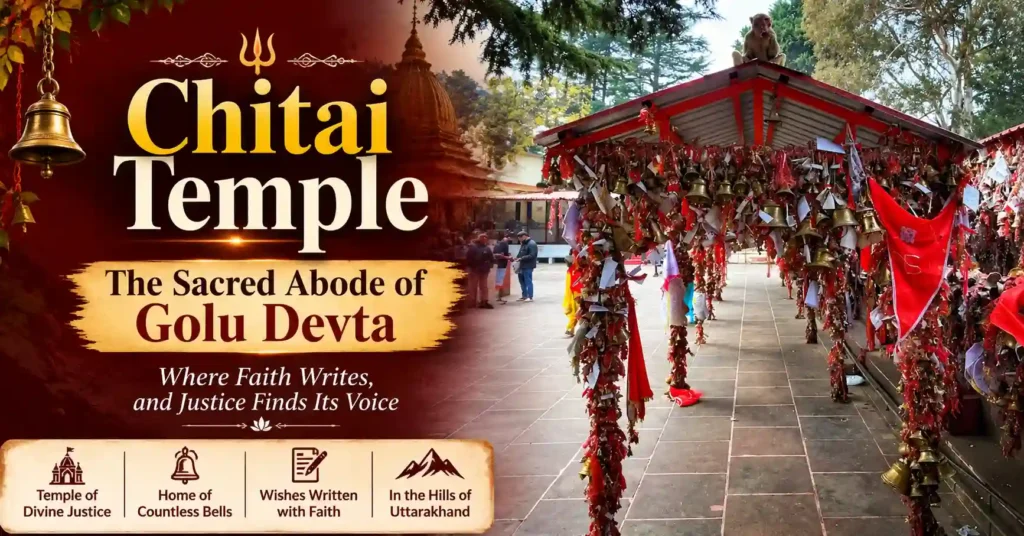
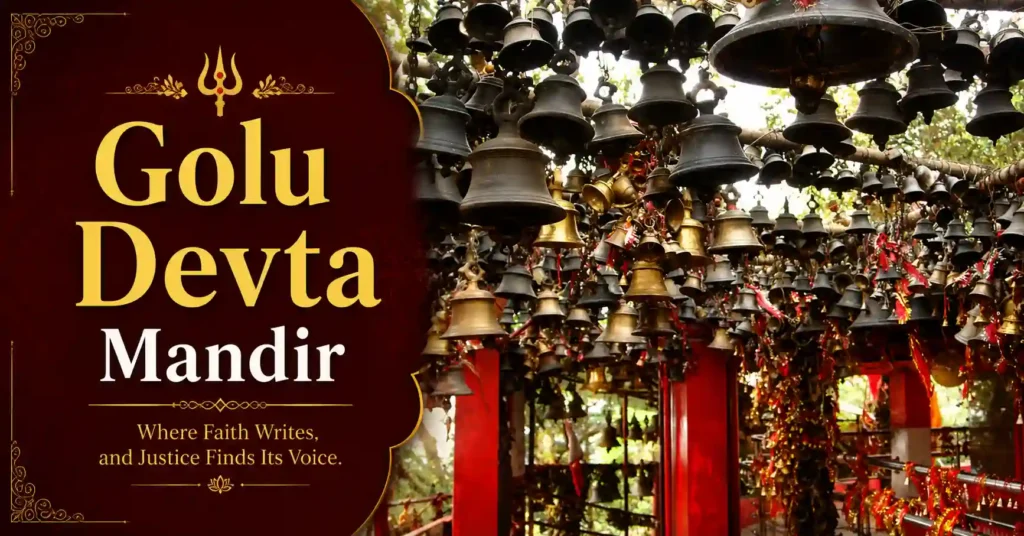
The most famous shrine dedicated to Golu Devta is the Chitai Golu Devta Temple, located about 8 km from Almora in Uttarakhand on the road leading to the Binsar Wildlife Sanctuary. This sacred temple is renowned for the thousands of brass bells and handwritten petitions offered by devotees seeking justice, protection, or the fulfilment of their heartfelt prayers.
People from across India visit this revered temple with deep faith. Many write detailed petitions describing their personal struggles and place them before the deity, believing that sincere prayers offered to Goljyu never go unheard.
When their wishes are fulfilled, devotees return to offer brass bells as a symbol of gratitude. Over the years, these countless bells have transformed the temple into one of Kumaon’s most recognizable symbols of faith, justice, and unwavering devotion.
Another important shrine is the Ghorakhal Golu Devta Temple, located near Bhowali in Nainital district, close to the historic Sainik School. Surrounded by the serene hills of Kumaon, the temple offers a peaceful atmosphere for prayer and reflection.
Many local families visit this sacred shrine before important occasions such as marriages, housewarming ceremonies, new business ventures, or other significant milestones, seeking Goljyu’s blessings for truth, protection, and success.
Apart from these well-known temples, Golu Devta is worshipped in numerous villages across Kumaon and Garhwal, especially in Almora, Champawat, Chamoli, Pithoragarh, and nearby regions. In some places, he is affectionately known as Goreel Devta, reflecting regional traditions and the rich diversity of Uttarakhand’s folk heritage.
Whether in a grand temple or a small village shrine, devotees share one unwavering belief: Goljyu listens with compassion, upholds truth, and delivers justice to those who approach him with honesty and faith.
Did You Know?
The Chitai Golu Devta Temple near Almora is famous for its thousands of brass bells and handwritten petitions offered by devotees. People from across India write letters seeking justice, believing that sincere prayers made to Goljyu are heard with compassion.
When their wishes are fulfilled, many return to offer a bell as a symbol of gratitude. This unique tradition has made the temple one of Uttarakhand’s most recognizable places of faith.
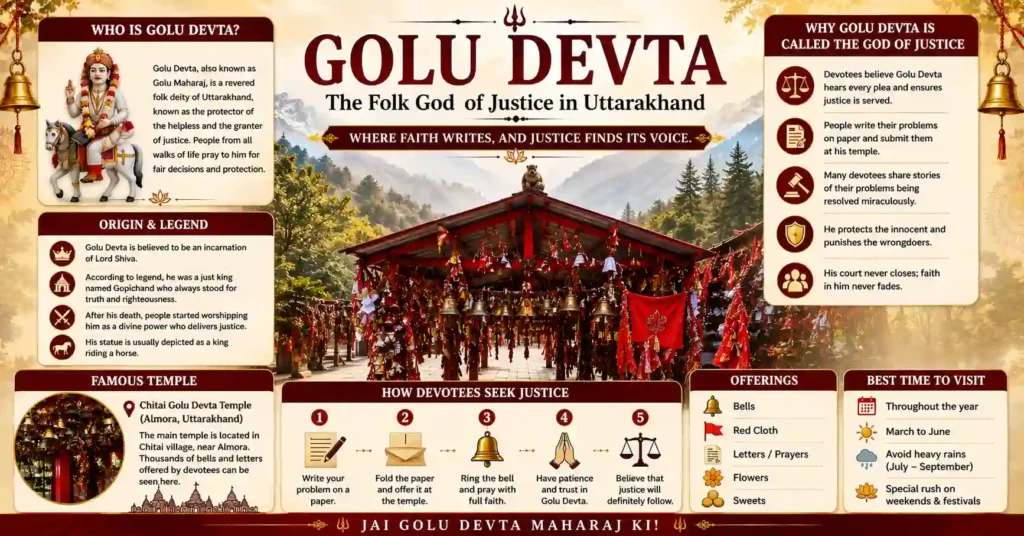
Why Is Golu Devta Known as the God of Justice?
Across Uttarakhand, Golu Devta is revered as Nyay Devta, the divine giver of justice. Devotees firmly believe that when human systems fail to deliver fairness, Goljyu listens with compassion and ensures that truth ultimately prevails.
People from different walks of life write heartfelt letters describing their problems, including family disputes, false accusations, property conflicts, legal matters, illness, or other personal hardships. These petitions are offered at his temples with unwavering faith, trusting that sincere prayers will receive the deity’s blessings.
Writing a petition is regarded as an expression of complete faith and truthfulness. By putting their grievances into words, devotees symbolically place their case before Goljyu, believing that nothing remains hidden from the divine giver of justice.
A traditional Kumaoni chant often recited during worship says:
“Jai Nyay Devta Goljyu Tumar Jai Ho. Sabuk Lije Dain Haije.”
This devotional prayer seeks the blessings of Goljyu, asking him to protect everyone and uphold justice, fairness, and harmony in society.
Unlike worship rooted in fear, devotion to Golu Devta is based on trust, honesty, and hope. His justice is believed to be swift yet compassionate, rewarding truth, protecting the innocent, and inspiring people to follow the path of righteousness.
Scriptural References and Traditional Beliefs About Golu Devta
Unlike many major Hindu deities whose stories are described in the Vedas, Puranas, or Itihasas, Golu Devta is primarily revered through the rich folk traditions of Uttarakhand. His worship has been preserved for centuries through local legends, temple customs, oral narratives, and the living faith of the Kumaoni people.
According to regional traditions, Golu Devta is believed to have been a righteous prince who later became a divine protector of truth and justice. Over time, devotees came to regard him as Goljyu, the compassionate Nyay Devta who listens to sincere prayers and delivers impartial justice.
Many devotees also identify Golu Devta as an incarnation or manifestation of Gaur Bhairav, a protective form of Lord Shiva. This belief is deeply respected in the Kumaon region and forms an important part of local religious practice. However, it is based on regional tradition and temple belief rather than a universally accepted scriptural account.
Today, the worship of Golu Devta continues through temples, annual fairs, Jagar rituals, family traditions, and the unique practice of offering handwritten petitions and brass bells. These living customs demonstrate how local devotional traditions have preserved his legacy across generations.
Important Note: Different regions and communities may narrate the life and origin of Golu Devta in slightly different ways. This diversity is a natural feature of India’s rich folk traditions and reflects the living heritage of Sanatan Dharma.
Golu Darbar and the Living Tradition of Jagar
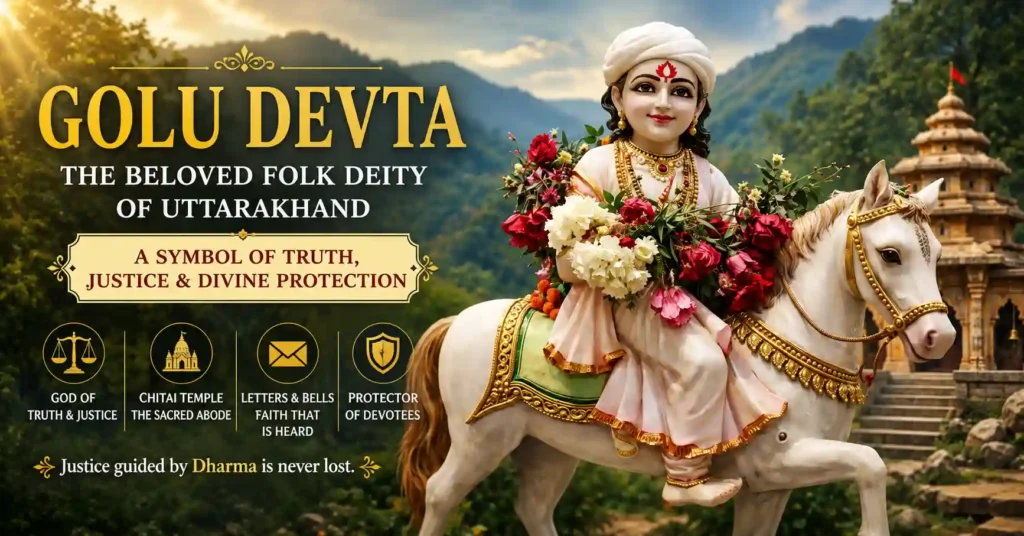
According to Kumaoni folk tradition, Golu Devta personally listened to the concerns of his people through a practice known as Golu Darbar. Devotees believe that he travelled across his kingdom on a majestic white horse, meeting ordinary people, hearing their grievances, and delivering fair judgments with compassion and wisdom.
Although this royal court belongs to folklore, its spirit continues to inspire devotees even today. Across many villages in Uttarakhand, people believe the deity remains spiritually present through Jagar, an ancient ritual in which local deities are invoked through devotional songs, rhythmic drumming, chanting, and collective prayer.
During a Jagar ceremony, devotees believe Goljyu listens to their prayers and offers guidance through the chosen medium or oracle. This sacred tradition strengthens the bond between the community and its beloved folk deity, keeping centuries-old beliefs alive across the Himalayan region.
Beyond its religious significance, Jagar also serves as a living cultural tradition that preserves Uttarakhand’s oral history, folk music, devotional singing, and collective memory across generations. By keeping these traditions alive, local communities continue to pass on the stories, values, and spiritual heritage associated with Golu Devta and other revered folk deities.
The white horse remains one of the most recognizable symbols associated with Golu Devta. It represents vigilance, swift justice, protection, and the deity’s constant presence among the people, reminding devotees that truth and righteousness are never far away.
Connection with Gaur Bhairav and Family Worship
According to local traditions, Golu Devta is widely regarded as an incarnation of Gaur Bhairav, a protective and powerful manifestation of Lord Shiva. This belief explains why devotees see Goljyu as both compassionate and unwavering in upholding truth. Like Bhairav, he is believed to protect the innocent, uphold righteousness, and ensure that justice ultimately prevails.
This spiritual connection also reflects the harmonious blend of Shaivism and the folk traditions of Uttarakhand. While Lord Shiva is worshipped through ancient scriptures and temples, Goljyu is revered through local customs, oral traditions, and centuries-old community practices.
In many villages across Kumaon and Garhwal, Golu Devta is worshipped as the family’s Kul Devta (ancestral deity) or Ishta Devta (chosen personal deity). Families seek his blessings before important occasions such as marriages, housewarming ceremonies, new ventures, and other significant milestones, reflecting the deep trust placed in him across generations.
This enduring tradition shows that his presence extends far beyond temple worship. For countless devotees, Goljyu remains a guardian of the family, a protector of dharma, and a trusted guide in everyday life.
The Story and Origins of Golu Devta
According to the popular traditions of Uttarakhand, Golu Devta is remembered as the brave son of King Jhal Rai and Queen Kalinka, who ruled parts of the ancient Katyuri kingdom. Many local traditions identify Champawat as his birthplace, making it one of the most significant places associated with his life and legacy.
His lineage is also linked to other revered folk deities, including Harishchand Devjyun and Sem Devjyun, who are believed to be his maternal uncles. These connections highlight the rich network of regional deities that continues to shape the spiritual heritage of Kumaon.
The stories surrounding his birth and early life vary from one region to another, as they have been preserved through oral traditions for centuries. While the details differ, every version carries the same timeless message: truth ultimately triumphs over deceit, and justice prevails over injustice.
One of the most widely narrated legends tells of a young prince who was wrongfully cast away because of jealousy and deceit. Despite the hardships he faced, he grew into a wise and fearless protector of the people. In time, he exposed falsehood, restored justice, and earned the love and devotion of the kingdom.
This enduring legend continues to inspire devotees, who see Goljyu as the eternal guardian of truth and righteousness. Although the historical details differ across traditions, every version celebrates courage, truth, and justice as the enduring values that define Goljyu’s legacy.
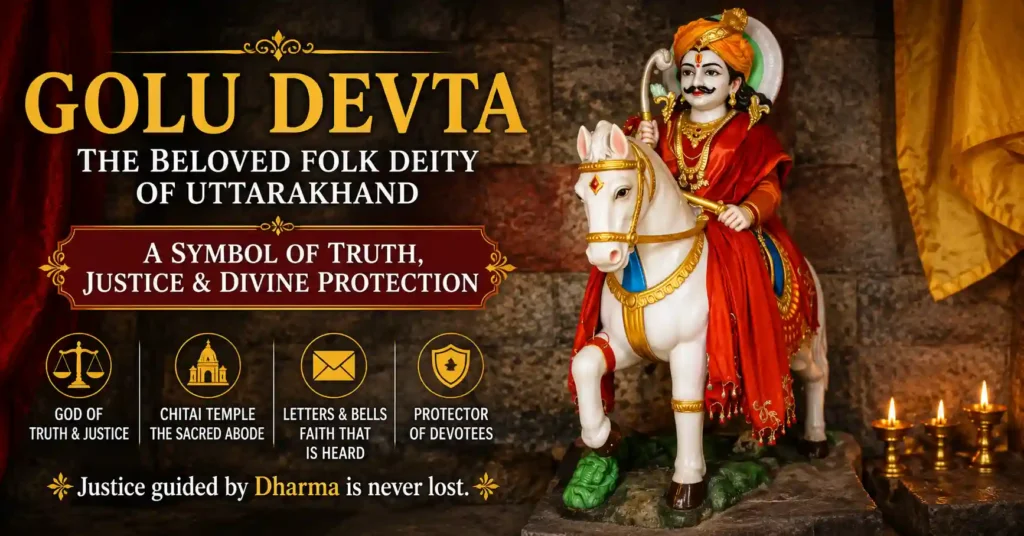
Timeline of Golu Devta
| Stage | Significance |
|---|---|
| Birth as a Prince | Born into the Katyuri royal lineage according to Kumaoni traditions. |
| Trials and Hardships | Faced injustice and adversity due to deceit and jealousy. |
| Victory of Truth | Restored justice and earned the trust of the people. |
| Revered as Nyay Devta | Came to be worshipped as the divine protector of truth and fairness. |
| Living Folk Tradition | His legacy continues through temples, Jagar rituals, petitions, and brass bells across Uttarakhand. |
How to Worship Golu Devta
The worship of Golu Devta is rooted in simplicity, sincerity, and unwavering faith. Unlike elaborate rituals, devotees believe that heartfelt devotion, truthfulness, and a pure intention are more important than grand ceremonies or expensive offerings.
Depending on family traditions and local customs, devotees commonly perform a three-day or nine-day pooja. Many begin their prayers by lighting a diya, offering flowers, incense, and remembering the deity with devotion. Some devotees also write their prayers or wishes before seeking his blessings.
Traditional offerings include ghee, milk, curd, halwa, poori, and pakauri, along with white cloth, a white pagari (turban), and a white shawl. The colour white symbolizes purity, truth, honesty, and the impartial justice for which Goljyu is revered.
Many devotees conclude their worship by praying for wisdom, righteousness, and fairness rather than material gains alone. This simple yet meaningful form of devotion reflects the enduring belief that Golu Devta blesses those who approach him with honesty, humility, and faith.
Famous Rituals and Unique Offerings to Golu Devta
The worship of Golu Devta is distinguished by several traditions that reflect the deep faith of devotees across Uttarakhand. Unlike elaborate rituals, these customs emphasize sincerity, honesty, and complete trust in divine justice.
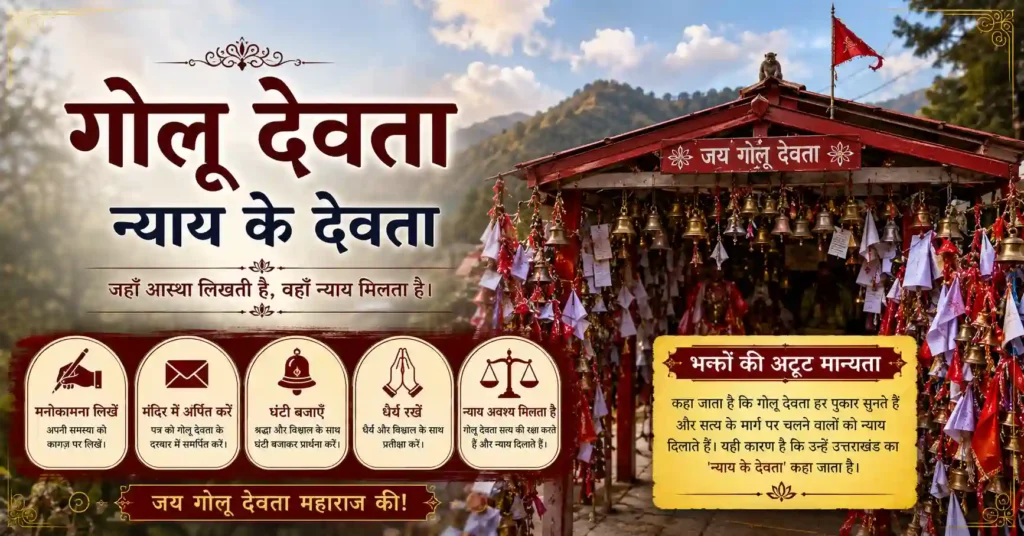
The most well-known practice is offering a handwritten letter describing one’s prayers or grievances. Devotees believe that Goljyu listens to every sincere appeal and blesses those who seek justice with a truthful heart.
Another unique tradition is offering brass bells after a wish has been fulfilled. Thousands of bells hanging around temples, especially at the Chitai Golu Devta Temple, symbolize the gratitude of devotees whose prayers they believe have been answered.
Many devotees also offer flowers, incense, ghee, milk, curd, sweets, white cloth, and a white turban during worship. These offerings represent purity, humility, and devotion rather than material wealth.
In several villages, Jagar ceremonies continue to be performed, where devotional songs, rhythmic drumming, and collective prayers invoke the blessings of local deities. These rituals preserve the living spiritual heritage of Kumaon and strengthen the bond between the community and its beloved guardian deity.
Living Traditions and Festivals Associated with Golu Devta
The devotion to Golu Devta is not limited to temples alone. Across the Kumaon region of Uttarakhand, his worship continues as a living tradition that connects families, villages, and communities through faith, festivals, and shared cultural practices.
During important religious occasions, devotees gather at Golu Devta temples to offer prayers, seek blessings, and participate in community worship. Many families visit the deity before beginning significant milestones such as marriages, housewarming ceremonies, new businesses, or long journeys, believing that his blessings bring justice, protection, and success.
Annual temple fairs (melas) held at shrines such as the Chitai Golu Devta Temple and Ghorakhal Temple attract thousands of devotees from Uttarakhand and neighboring states. These gatherings combine devotional rituals with local music, folk traditions, and community celebrations, helping preserve the region’s cultural heritage.
One of the most distinctive traditions is the offering of handwritten petitions requesting divine justice. When devotees believe their prayers have been answered, they return to the temple to offer brass bells as a symbol of gratitude. The thousands of bells hanging around the temples have become one of the most recognizable symbols of Golu Devta’s enduring faith.
Traditional Jagar ceremonies also continue to be performed in many villages, where devotional songs, rhythmic drumming, and collective prayers invoke local deities. These practices keep alive the centuries-old spiritual traditions that have been passed down from one generation to the next.
Importance of Golu Devta in Everyday Life
In many parts of Uttarakhand, Golu Devta is remembered before beginning an important task, religious ceremony, or family celebration. Just as devotees in many parts of India invoke Lord Ganesha for an auspicious beginning, people across Kumaon and Garhwal first seek Goljyu’s blessings, believing that truth and justice remove obstacles from life’s path.
This tradition reflects the deep trust that local communities place in their beloved folk deity. Whether starting a new venture, taking an important decision, or performing a family ritual, devotees pray for wisdom, fairness, and divine guidance before moving forward.
Even today, thousands of devotees visit his temples every year, offering prayers, writing letters, and tying bells as symbols of faith and gratitude. Their unwavering belief is that Goljyu hears every sincere prayer and grants justice at the right time.
Spiritual Significance and Life Lessons from Golu Devta
Beyond being revered as the God of Justice, Golu Devta represents timeless values that continue to inspire devotees across generations. His worship reminds people that truth, honesty, compassion, and righteousness remain the foundation of a meaningful life.
The tradition of submitting written petitions is more than a request for divine intervention. It symbolizes complete faith that sincere prayers and righteous actions will ultimately receive justice, even when human systems appear inadequate. This belief encourages devotees to remain patient, truthful, and hopeful during difficult times.
Golu Devta also reflects the close relationship between Sanatan Dharma and India’s regional traditions. His worship demonstrates that spiritual wisdom is preserved not only through scriptures but also through living customs, local temples, oral traditions, and community practices that have endured for centuries.
For modern devotees, the teachings associated with Golu Devta remain deeply relevant. His life and legacy inspire people to:
- Speak the truth with courage.
- Stand against injustice without hatred.
- Perform their duties with honesty and integrity.
- Trust in divine justice while continuing to act righteously.
- Preserve faith, compassion, and humility in everyday life.
Whether one approaches him through devotion, cultural heritage, or spiritual curiosity, Golu Devta continues to remind us that truth may be challenged, but it is never defeated.
The Enduring Legacy of Golu Devta
Golu Devta represents a form of faith where the divine is never distant. Devotees believe he listens with compassion, responds with justice, and remains close to those who seek truth with a sincere heart. In a world where injustice often feels overwhelming, Goljyu continues to inspire hope, courage, and unwavering trust.
More than a revered folk deity of Uttarakhand, he is a living symbol of the region’s rich spiritual heritage and centuries-old traditions. From the sacred Chitai Golu Devta Temple and the unique custom of offering letters and bells to the enduring practices of Jagar and family worship, his legacy continues to unite communities across Kumaon and Garhwal.
The story of Golu Devta reminds us that Sanatan Dharma is not sustained by rituals alone but by truth, righteousness, compassion, and faith lived in everyday life. His timeless message continues to inspire generations, encouraging every devotee to uphold honesty, seek justice, and walk the path of dharma with unwavering devotion.
For the people of Uttarakhand, Goljyu is not merely remembered through stories of the past but continues to live in the prayers, traditions, and unwavering faith of countless devotees today.
Visiting Golu Devta Temples
Many devotees visit Golu Devta temples throughout the year to seek blessings, offer prayers, and experience the living traditions of Uttarakhand. While the temples remain open in every season, the overall pilgrimage experience varies depending on the weather.
| Season | What to Expect |
|---|---|
| March to June | Pleasant weather, clear skies, and comfortable conditions for darshan and sightseeing. |
| July to September | Lush green hills during the monsoon, though heavy rainfall may occasionally affect travel. |
| October to November | Cool weather and festive celebrations make this one of the most popular times to visit. |
| December to February | Peaceful surroundings with cold mornings and evenings, especially in the higher Himalayan regions. |
Helpful Tips for Pilgrims
- Visit early in the morning for a quieter darshan.
- Respect local customs and temple traditions.
- Wear comfortable footwear suitable for hilly terrain.
- Carry warm clothing during winter and rain protection during the monsoon.
- If visiting Chitai Golu Devta Temple, take time to observe the thousands of bells and handwritten petitions offered by devotees.
Suggested Reading
If you enjoyed learning about Golu Devta, you may also like exploring these revered regional deities and sacred traditions from different parts of India. Each article highlights the unique folklore, history, temples, and living faith that enrich the diverse spiritual heritage of Sanatan Dharma.
Folk Deities of Uttarakhand and Himachal: Gods of Hills and Forests
https://thesanatantales.com/folk-deities-of-uttarakhand-and-himachal/
Nanda Devi: The Beloved Folk Goddess of Uttarakhand
https://thesanatantales.com/nanda-devi-folk-goddess/
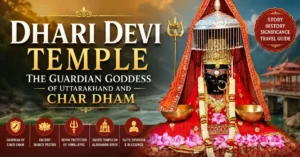
Dhari Devi: The Guardian Goddess of Uttarakhand and Char Dham
https://thesanatantales.com/dhari-devi-temple/
Khandoba: Story, Jejuri Temple, Jatra and Worship Traditions
https://thesanatantales.com/khandoba-god-jejuri-temple-story/
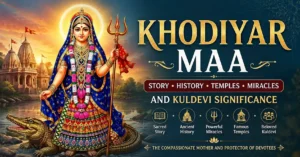
Khodiyar Maa: Story, History, Temples, Miracles and the Beloved Kuldevi of Gujarat
https://thesanatantales.com/khodiyar-maa/
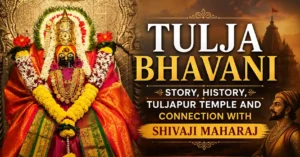
Tulja Bhavani: The Mother Who Blessed Shivaji Maharaj
https://thesanatantales.com/tulja-bhavani-shivaji-maharaj-story/
Gugga Pir: The Folk Snake Deity of North India Who Protects Life Beyond Religion
https://thesanatantales.com/gugga-pir-folk-snake-deity/
Khatu Shyam Baba: Story, History, Temple and Divine Blessings
https://thesanatantales.com/khatu-shyam-baba/
Golu Devata (Wikipedia)
https://en.wikipedia.org/wiki/Golu_Devata
FAQs
Who is Golu Devta?
Golu Devta, also known as Goljyu or Goreel Devta, is one of the most revered folk deities of Uttarakhand. He is worshipped as the God of Justice (Nyay Devta) and is believed to protect truth, uphold righteousness, and listen to the sincere prayers of devotees. According to regional traditions, he is associated with the ancient Katyuri kingdom and is widely regarded as an incarnation of Gaur Bhairav, a protective form of Lord Shiva.
Why is Golu Devta known as the God of Justice?
Golu Devta is known as the God of Justice because devotees believe he delivers fair and impartial justice when human efforts fail. People visit his temples to seek relief from disputes, false accusations, legal issues, family conflicts, and other hardships. His worship symbolizes the triumph of truth, honesty, and righteousness, making him one of the most respected folk deities in Uttarakhand.
Why do devotees offer letters and bells to Golu Devta?
One of the most unique traditions associated with Golu Devta is offering handwritten letters describing personal problems, prayers, or appeals for justice. Devotees believe that the deity carefully listens to every sincere request. When their prayers are fulfilled, they return to the temple to offer brass bells as an expression of gratitude. This centuries-old tradition is especially famous at the Chitai Golu Devta Temple near Almora.
Where is the famous Golu Devta Temple located?
The most famous temple dedicated to Golu Devta is the Chitai Golu Devta Temple, located about 8 km from Almora in Uttarakhand on the road to the Binsar Wildlife Sanctuary. Another important shrine is the Ghorakhal Golu Devta Temple near Bhowali in Nainital district. Besides these, many villages across Kumaon and Garhwal have temples dedicated to the deity.
Is Golu Devta considered an incarnation of Lord Shiva?
According to local traditions, Golu Devta is widely regarded as an incarnation of Gaur Bhairav, a powerful and protective manifestation of Lord Shiva. This belief explains why he is revered as a guardian of truth, justice, and righteousness. While this association comes from regional folk traditions rather than mainstream scriptures, it is deeply respected by devotees across Uttarakhand.
How is Golu Devta worshipped?
The worship of Golu Devta is simple and centered on devotion rather than elaborate rituals. Devotees commonly perform three-day or nine-day pooja, offer flowers, incense, ghee, milk, curd, halwa, poori, and pakauri, and present white cloth or a white shawl as symbols of purity and truth. Many also write prayers or petitions, believing that sincere faith is the most important offering.
What is Jagar, and how is it connected to Golu Devta?
Jagar is a traditional ritual practiced in Uttarakhand in which local deities are invoked through devotional singing, rhythmic drumming, chanting, and collective prayer. Devotees believe that during a Jagar, Goljyu listens to their prayers and offers guidance through the chosen medium or oracle. This centuries-old tradition continues to preserve the living connection between the deity and the local community.
What does Golu Devta teach us?
The story and worship of Golu Devta remind us that truth, justice, compassion, and righteousness are timeless values of Sanatan Dharma. His enduring popularity reflects the belief that sincere faith, honest conduct, and unwavering devotion ultimately lead to divine guidance and justice. For millions of devotees, he remains a symbol of hope, fairness, and moral courage.
Glossary of Important Terms
The following glossary explains the key terms related to Golu Devta, Uttarakhand’s folk traditions, and Sanatan Dharma. It will help readers better understand the cultural and spiritual concepts mentioned throughout this article.
| Term | Meaning |
|---|---|
| Bhairav | A fierce and protective manifestation of Lord Shiva, revered as the guardian of sacred places and the destroyer of evil. |
| Chitai Golu Devta Temple | The most famous temple dedicated to Golu Devta, located near Almora, Uttarakhand. It is renowned for the unique tradition of offering handwritten letters and brass bells. |
| Dharma | The eternal principle of righteousness, moral duty, justice, and ethical living in Sanatan Dharma. |
| Gaur Bhairav | A revered local form of Bhairav. According to regional traditions, Golu Devta is widely regarded as an incarnation of Gaur Bhairav. |
| Goljyu | An affectionate local name for Golu Devta, commonly used by devotees across the Kumaon region. |
| Golu Darbar | A traditional belief that Golu Devta personally heard the grievances of his people and delivered fair justice. |
| Ishta Devta | A personally chosen deity whom an individual worships with devotion throughout life. |
| Jagar | A traditional ritual of Uttarakhand in which local deities are invoked through devotional singing, rhythmic drumming, chanting, and collective prayer. |
| Kul Devta | The ancestral or family deity worshipped by generations of a family for protection, prosperity, and blessings. |
| Katyuri Kingdom | A medieval Himalayan kingdom that ruled much of present-day Uttarakhand. According to local traditions, Golu Devta is associated with this royal lineage. |
| Kumaon | One of the two major cultural regions of Uttarakhand, known for its rich folk traditions and the widespread worship of Golu Devta. |
| Nyay Devta | Literally meaning “God of Justice,” this title reflects the belief that Golu Devta delivers fair and impartial justice. |
| Pooja | A Hindu ritual of worship involving prayers, offerings, and devotional practices to seek divine blessings. |
| Sanatan Dharma | The eternal spiritual tradition of Hinduism, emphasizing truth, righteousness, compassion, devotion, and dharma. |
| White Horse | The sacred mount of Golu Devta, symbolizing purity, vigilance, swift justice, protection, and divine presence. |
About the Author
Yateendra Chaturvedi is a spiritual writer, researcher, devotee, and the founder of The Sanatan Tales. With over 35 years of professional experience and a lifelong interest in Sanatan Dharma, he writes about Hindu deities, temples, scriptures, festivals, Mahavidyas, sacred stories, rituals, and living traditions that continue to guide and inspire devotees across India.
Drawing from traditional scriptures, regional beliefs, temple traditions, devotional literature, and historical sources, he aims to present authentic, well-researched, and easy-to-understand content for modern readers. His work focuses on preserving spiritual wisdom, explaining sacred traditions, and helping seekers develop a deeper understanding of India’s rich spiritual heritage.
Through The Sanatan Tales, Yateendra strives to make the timeless teachings of Sanatan Dharma simple, meaningful, and relevant for today’s generation while maintaining respect for traditional sources, regional practices, and diverse spiritual perspectives.
Learn More About Yateendra Chaturvedi →
https://thesanatantales.com/about-the-author/
Sources and Traditional Beliefs
This article is based on the folk traditions of Uttarakhand, regional beliefs associated with Golu Devta, oral traditions preserved across generations, local temple customs, and information drawn from religious literature, historical references, and various spiritual and cultural study sources.
Some aspects discussed in this article are also inspired by long-standing traditions that continue to be preserved through local communities and the guru-disciple tradition.
Note: Beliefs, legends, and worship practices related to Golu Devta may vary across different regions, villages, families, and traditions within Uttarakhand. The purpose of this article is not to present any single version as the absolute truth but to explain widely accepted religious, cultural, and folk perspectives in a simple, respectful, and accessible manner.
Explore More Fascinating Topics from Sanatan Dharma