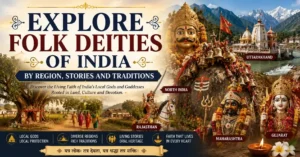
Himalayan Folk Deities are not distant gods remembered only through ancient legends. Across the villages of Uttarakhand and Himachal, they are revered as living guardians who remain deeply involved in the lives of their devotees.
These deities travel in decorated palanquins, speak through oracles, protect forests and villages, and guide community decisions through rituals that have been preserved for generations. Their presence is experienced as part of everyday life rather than a distant belief.
The Himalayan Devta Tradition has evolved alongside the region’s mountains, rivers, forests, and isolated settlements. Here, faith is woven into nature, where every sacred peak, ancient tree, and flowing river carries spiritual significance.
Unlike many temple-centered traditions, Folk Deities of Uttarakhand and the Devta Culture of Himachal are rooted in local customs, oral traditions, and community participation. Every village has its own guardian deity whose blessings are sought for protection, justice, prosperity, and harmony.
To understand the culture and spiritual heritage of the Central Himalayas, one must first understand its Himalayan Folk Deities, whose living traditions continue to shape village life even today.
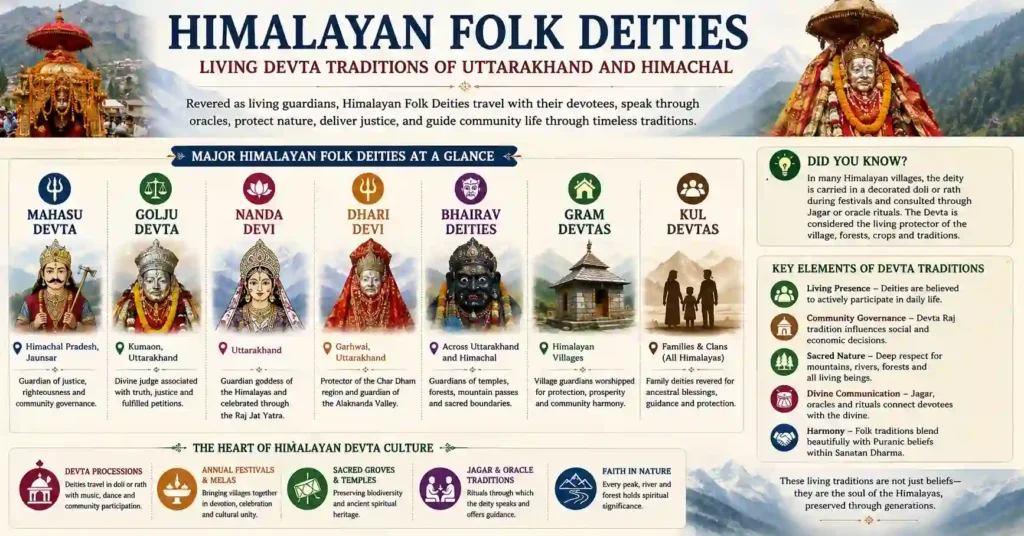
Major Himalayan Folk Deities at a Glance
| Deity | Primary Region | Known For |
|---|---|---|
| Mahasu Devta | Himachal Pradesh and the Jaunsar region of Uttarakhand | Guardian of justice, righteousness, and community welfare |
| Golju Devta | Kumaon, Uttarakhand | Divine judge associated with truth, justice, and fulfilled prayers |
| Nanda Devi | Uttarakhand | Revered as the guardian goddess of the Himalayas and celebrated through the Raj Jat Yatra |
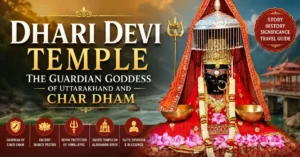
| Dhari Devi | Garhwal, Uttarakhand | Protector of the Char Dham region and guardian of the Alaknanda Valley |
| Bhairav | Across Uttarakhand and Himachal Pradesh | Guardian of temples, forests, mountain passes, and sacred boundaries |
| Gram Devta | Himalayan villages | Village guardian worshipped for protection, prosperity, and community harmony |
| Kul Devta | Families and clans throughout the Himalayas | Family deity revered for ancestral blessings, guidance, and protection |
Together, these Himalayan Folk Deities represent the rich diversity of the Himalayan Devta Tradition. While each deity has distinct legends, temples, and rituals, all share a common role as protectors of communities, custodians of local traditions, and symbols of the deep spiritual connection between the people and the sacred Himalayan landscape.
Did You Know?
Although many Himalayan Folk Deities are worshipped in small village temples rather than grand pilgrimage sites, they continue to influence everyday life in the Himalayas.
In several regions of Uttarakhand and Himachal Pradesh, devotees still carry their local deity in a decorated doli or rath during festivals, seek guidance through traditional Jagar or oracle rituals, and regard the Devta as the guardian of their village, forests, crops, and community traditions.
These living customs have been preserved through oral traditions for centuries and remain an integral part of the cultural heritage of the Indian Himalayas.
Table of Contents
ToggleWhere Are Himalayan Folk Deities Worshipped?
The tradition of Himalayan Folk Deities is most strongly preserved in the Indian states of Uttarakhand and Himachal Pradesh, where nearly every village has its own guardian deity, sacred shrine, or ancestral place of worship. These traditions are deeply woven into local culture and continue to influence religious life, festivals, and community customs.
In Uttarakhand, folk worship is especially prominent in the Kumaon and Garhwal regions. Devotees honour deities such as Golju Devta, Nanda Devi, Dhari Devi, and numerous Gram Devtas through village festivals, Jagar ceremonies, and seasonal rituals.
In Himachal Pradesh, the Devta Culture is particularly vibrant in districts such as Kullu, Kinnaur, Shimla, Mandi, Chamba, and Sirmaur. Village deities, including Mahasu Devta and many regional guardian gods, continue to play an important role in temple festivals, Devta processions, and community decision-making through the centuries-old Devta Raj tradition.
Although local customs vary from one valley to another, these traditions share a common belief that the deity remains the living protector of the village, its people, and the surrounding natural landscape.
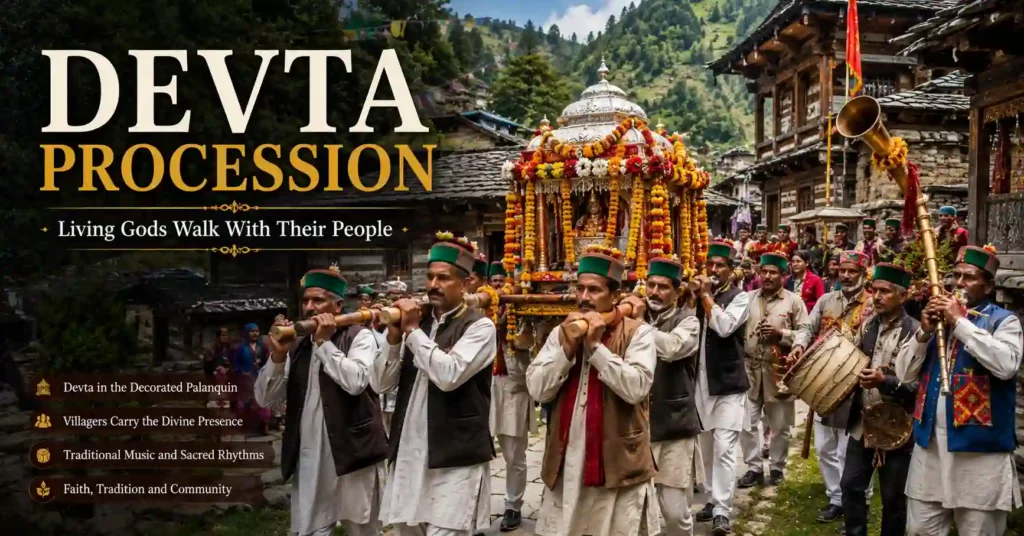
Living Devta Culture in the Himalayan Villages
Unlike distant or symbolic forms of worship, Himalayan Folk Deities are believed to be living guardians who actively participate in the daily life of their communities. Devotees believe their village deities listen to prayers, protect their people, and offer guidance through traditional rituals and oracles.
Important decisions related to farming, grazing, seasonal migration, village festivals, resolving disputes, and community welfare are often taken only after seeking the Devta’s blessings. This reflects a centuries-old tradition where faith and everyday life remain closely connected.
The village deity also serves as a symbol of collective identity. Weddings, housewarming ceremonies, the opening of irrigation channels, construction of temples, and other important community events often begin with prayers seeking the Devta’s blessings. In many Himalayan villages, the deity is regarded as the first witness to significant social occasions, reinforcing the bond between faith, family, and community life.
For local communities, this is not merely a religious belief but a living heritage passed down through generations. The Himalayan Devta Tradition continues to shape social customs, strengthen community bonds, and preserve ancestral values across the hill regions.
The Devta Culture of Himachal and the Folk Deities of Uttarakhand evolved in harmony with the Himalayan landscape. Dense forests, high mountain passes, fast-flowing rivers, and changing seasons made people deeply dependent on nature for survival.
As a result, every village came to honour its own guardian deity, who was believed to protect the land, maintain harmony between people and nature, and safeguard the community during natural calamities, epidemics, or other difficult times.
Even today, these living traditions remain an integral part of Himalayan society. Annual festivals, Devta processions, sacred groves, and community rituals continue to reinforce the belief that the deity is not a distant observer but an active protector of the village and its people.
Devta Raj: The Unique Tradition of Himachal Pradesh
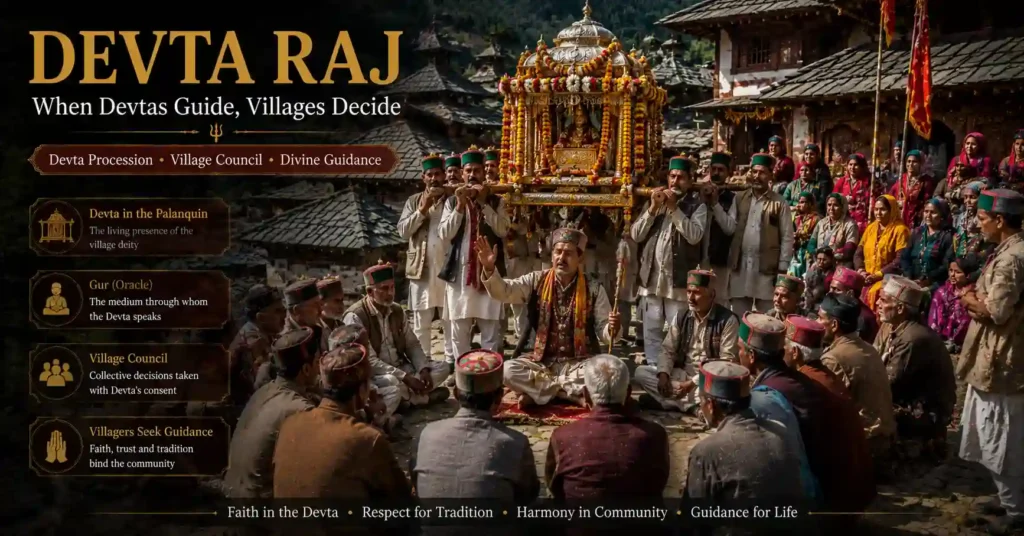
One of the most distinctive features of the Devta Culture of Himachal is the Devta Raj tradition, where village deities are regarded as the spiritual guardians and guiding authorities of their communities. Their role extends beyond worship, influencing social customs, cultural identity, and community life.
Each village deity has a defined territory, a lineage of hereditary caretakers, and specific ritual responsibilities that have been preserved for generations. These traditions help maintain continuity and strengthen the bond between the deity and the local community.
Important matters such as land disputes, village welfare, religious festivals, and community decisions are often discussed only after seeking the deity’s guidance. This guidance is traditionally conveyed through a Gur or Chela, an oracle believed to communicate the will of the deity during sacred ceremonies.
When the deity is consulted, the entire village gathers with deep reverence. The guidance received is respected as a collective decision that promotes justice, harmony, and the well-being of the community.
During major festivals and religious occasions, village deities travel in beautifully decorated raths or dolis carried by devotees. For the local people, these are not merely ceremonial processions but sacred journeys in which the deity is believed to be physically present among the devotees.
Even today, the Himalayan Devta Tradition continues to preserve this remarkable system of faith and community governance. The enduring Devta Raj tradition reflects how spirituality, local administration, and cultural heritage remain closely connected in the Himalayan villages of Himachal Pradesh.
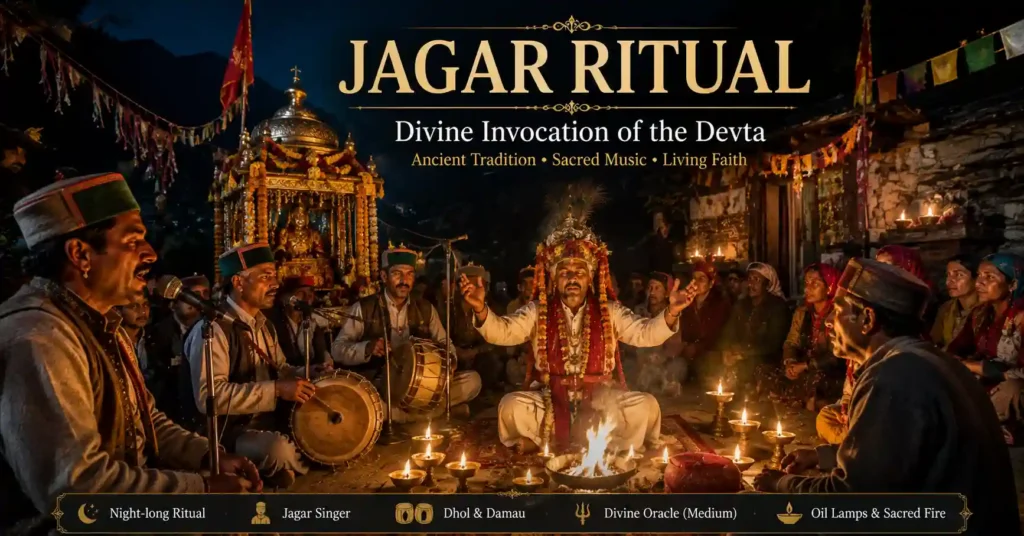
Prominent Himalayan Folk Deities and Their Role in Village Life
Among the most revered Himalayan Folk Deities, Mahasu Devta holds a special place in the hill regions of Himachal Pradesh and parts of Uttarakhand. Worshipped along with the four Mahasu brothers, he is regarded as a guardian of justice, discipline, and righteousness. Devotees believe that Mahasu Devta protects communities, settles disputes, and upholds moral order across his sacred domain.
Alongside Mahasu Devta, many villages continue to worship other guardian deities who play distinct roles in local traditions:
Bhairav Deities guard forests, mountain passes, village boundaries, and sacred spaces from negative influences.
Gram Devtas serve as the protectors of individual villages, safeguarding the well-being, prosperity, and harmony of the local community.
Kul Devtas are family or clan deities worshipped across generations for guidance, blessings, and ancestral protection.
These deities are traditionally invoked during natural disasters such as landslides and floods, outbreaks of disease, forest-related dangers, loss of livestock, poor harvests, and other unforeseen hardships. Their worship reflects the close relationship between Himalayan communities and the natural environment on which their lives depend.
For the people of the Himalayas, these deities are not merely symbolic figures of faith. They are living guardians whose blessings are believed to provide protection, justice, stability, and a sense of collective security, making them an enduring part of the region’s spiritual and cultural heritage.
Justice Traditions of Kumaon: The Legacy of Golju Devta
The Kumaon region of Uttarakhand is renowned for its unique tradition of justice-centred worship, where Golju Devta is revered as the divine guardian of truth and fairness. Among the Himalayan Folk Deities, he is widely worshipped as a righteous judge who listens to the prayers of devotees and helps restore justice.
At temples dedicated to Golju Devta, devotees often submit written petitions, take sacred oaths, and offer brass bells as symbols of gratitude when their prayers are fulfilled. This centuries-old tradition reflects the deep faith that sincere appeals made before the deity will ultimately receive a just outcome.
Beyond individual justice, Golju Devta represents honesty, accountability, and ethical conduct within society. His worship has helped nurture a strong moral culture where truthfulness and respect for community values are considered sacred duties.
Alongside Golju Devta, many villages across Kumaon continue to worship their Gram Devtas and Kul Devtas, who are believed to protect families, preserve social harmony, and guide important community decisions. Together, these guardian deities strengthen the region’s rich Himalayan Devta Tradition.
For the people of Kumaon, justice is not viewed merely as a legal process but as a sacred responsibility upheld by their living village deities. This enduring belief continues to shape the spiritual, cultural, and social life of the region even today.
Sacred Nature and the Himalayan Devta Tradition
Nature lies at the heart of the Himalayan Devta Tradition, where forests, mountains, rivers, and wildlife are revered as sacred manifestations of the divine. This deep spiritual connection has shaped the beliefs and daily lives of Himalayan communities for centuries.
Many villages worship forest guardian deities, believing they protect sacred groves, wildlife, water sources, and grazing lands. Traditionally, cutting trees, hunting animals, or entering certain forests without performing the prescribed rituals is considered disrespectful to the deity and harmful to the community.
The towering Himalayan peaks are also regarded as living abodes of local deities. Likewise, rivers are honoured as life-giving mothers and protectors whose waters sustain both people and the natural world. This reverence encourages devotees to treat nature with gratitude and responsibility rather than merely as a resource.
The close relationship between Himalayan Folk Deities, forests, and mountains has long served as an informal system of environmental conservation. By linking the protection of nature with religious faith, these traditions fostered respect, restraint, and ecological balance long before the concept of modern conservation emerged.
Today, this sacred worldview continues to remind Himalayan communities that protecting nature is not only an environmental responsibility but also a spiritual duty passed down through generations.
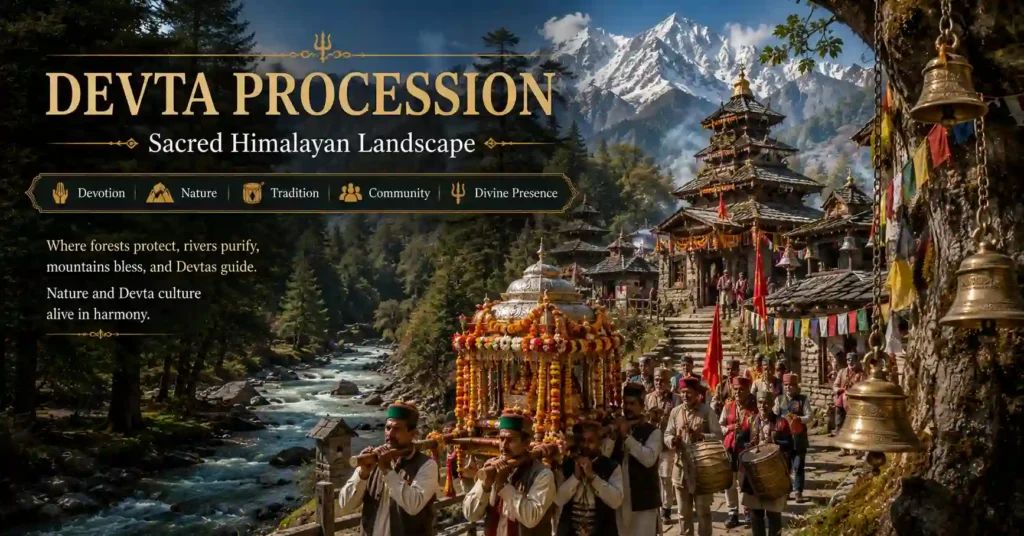
Jagar and Oracle Traditions: Divine Communication in the Himalayas
One of the most distinctive aspects of the Himalayan Devta Tradition is the practice of Jagar, a sacred ritual performed mainly in Uttarakhand to invoke the presence of a deity or revered ancestral spirit. Through devotional singing, rhythmic music, and traditional instruments such as the Dhol and Damau, the ceremony creates a deeply spiritual atmosphere rooted in centuries-old oral traditions.
During a Jagar, the deity is believed to communicate through a chosen medium, often known as a Dangariya or oracle. Devotees seek guidance on matters such as health, family well-being, community disputes, religious observances, and important life decisions. These rituals are conducted according to well-established customs under the guidance of experienced practitioners.
Contrary to common misconceptions, these traditions are not associated with fear or disorder. Within local belief systems, divine possession is understood as a sacred form of communication between the deity and the community, carried out with discipline, reverence, and clearly defined ritual practices.
The Jagar Tradition of Uttarakhand continues to be an important part of the region’s living spiritual heritage. It preserves ancient folk music, oral history, and community wisdom while strengthening the enduring bond between Himalayan Folk Deities and the people who worship them.
When Are Himalayan Folk Deities Worshipped?
Unlike many pan-Indian festivals celebrated on fixed dates, the worship of Himalayan Folk Deities follows local traditions, agricultural cycles, and community customs. Every village has its own sacred calendar, with important ceremonies held according to seasonal needs, regional festivals, and traditional lunar dates.
Many villages organise annual Devta Melas, temple fairs, and ceremonial processions in which the deity is carried through the village in a doli or rath. These occasions bring together entire communities for worship, music, dance, and the renewal of ancestral traditions.
Special rituals are also performed before sowing and harvesting crops, during periods of drought or excessive rainfall, after natural disasters, or when seeking blessings for family welfare and village prosperity. In Uttarakhand, Jagar ceremonies may be organised whenever devotees seek divine guidance, while in Himachal Pradesh, village deities are consulted during major religious festivals and important community decisions.
Although the dates and customs differ from one region to another, these observances reflect the same enduring belief that the village deity remains an active guardian whose blessings continue to guide and protect the community throughout the year.
Diversity of Worship Among Himalayan Folk Deities
The worship of Himalayan Folk Deities is remarkably diverse, with each village preserving its own customs, rituals, and sacred traditions. Rather than following a single form of worship, these practices have been passed down through generations, reflecting the unique history and cultural identity of each community.
Places of worship also vary across the Himalayan region. Some deities are worshipped at simple shrines beneath ancient trees or near sacred springs, while others reside in beautifully crafted wooden temples that serve as important centres of village life and religious gatherings.
Offerings differ from one region to another and may include flowers, grains, fruits, clarified butter (ghee), lamps, and seasonal produce. In some Himalayan communities, animal sacrifice continues as part of long-established ancestral traditions. Where these practices exist, they are performed only during specific festivals or rituals under strict customary rules and should be understood within their local cultural and religious context.
This rich diversity reflects the inclusive and adaptable nature of Sanatan Dharma, where devotion is expressed through local traditions without losing its spiritual essence. Across the Himalayan Devta Tradition, sincerity of faith, respect for ancestral customs, and continuity of community practices are valued far more than uniformity in ritual.
Folk Beliefs and the Inclusive Spirit of Sanatan Dharma
The worship of Himalayan Folk Deities is shaped primarily by lived experience rather than strict theological interpretation. Across the hill regions, faith has evolved through generations of community life, where personal experiences and inherited traditions play a central role in strengthening devotion.
A village deity is revered because devotees believe they have experienced the deity’s protection, guidance, and blessings in their daily lives. For local communities, this living relationship with the divine is often considered more meaningful than seeking scriptural validation for every tradition.
As a result, beliefs and rituals naturally vary from one village to another. Different communities may follow different customs, celebrate distinct festivals, or honour their guardian deities in unique ways. This diversity is viewed as a natural expression of the region’s rich spiritual heritage rather than a contradiction.
This inclusive approach reflects the broader philosophy of Sanatan Dharma, which has long embraced multiple paths of worship and respected regional traditions. The Himalayan Devta Tradition beautifully illustrates how unity in faith can coexist with diversity in practice, preserving both local identity and the timeless spiritual values of the Indian Himalayas.
Tantric and Shamanic Traditions in Himalayan Folk Worship
Some Himalayan Folk Deities are worshipped through traditions that incorporate tantric and shamanic elements, particularly in remote forests, sacred boundaries, and ancient village shrines. These practices form part of long-established local traditions and are preserved within specific family lineages or spiritual communities.
Such rituals are performed only by trained practitioners who have received proper initiation and follow strict rules of discipline, purity, and spiritual responsibility. The knowledge is passed down through generations and is not intended for casual practice or public demonstration.
It is important to understand that these traditions are not performed for spectacle or entertainment. They are regarded as sacred acts of worship undertaken for the well-being, protection, and spiritual balance of the community.
Approaching these practices with respect and humility is essential. Like many ancient traditions within Sanatan Dharma, they are best understood within their cultural and spiritual context rather than through sensationalism or misunderstanding.
Harmony Between Folk Deities and Puranic Traditions
One of the defining features of the Himalayan Devta Tradition is the harmonious coexistence of local village deities with the well-known gods and goddesses of Sanatan Dharma.
For the people of the Himalayas, there is no distinction between folk worship and mainstream Hindu traditions. Both are seen as complementary expressions of the same divine reality.
It is common for a village to worship Shiva, Devi, or Bhairav in temples while also revering its own Gram Devta or Kul Devta as the guardian of the community. These forms of worship naturally exist side by side, each serving a unique spiritual and cultural role in the lives of devotees.
Over time, many Himalayan Folk Deities have become associated with Puranic deities through local traditions and devotional beliefs. Some village deities are regarded as manifestations, attendants, or regional forms of Shiva, Shakti, Bhairava, or other Hindu deities, reflecting the dynamic and evolving nature of Hindu worship.
This harmony also explains why devotees rarely see a distinction between visiting a famous pilgrimage temple and worshipping their own village deity. During festivals and family ceremonies, many households first seek the blessings of their Gram Devta or Kul Devta before undertaking pilgrimages to major shrines such as Kedarnath, Badrinath, or other sacred temples.
Rather than competing traditions, local Devta worship and Puranic worship complement each other as different expressions of the same spiritual heritage.
This seamless integration has helped preserve local traditions for centuries. As temple worship expanded across the Himalayas, village Devta traditions continued to flourish, demonstrating the inclusive spirit of Sanatan Dharma, where regional customs and ancient folk beliefs are embraced rather than replaced.
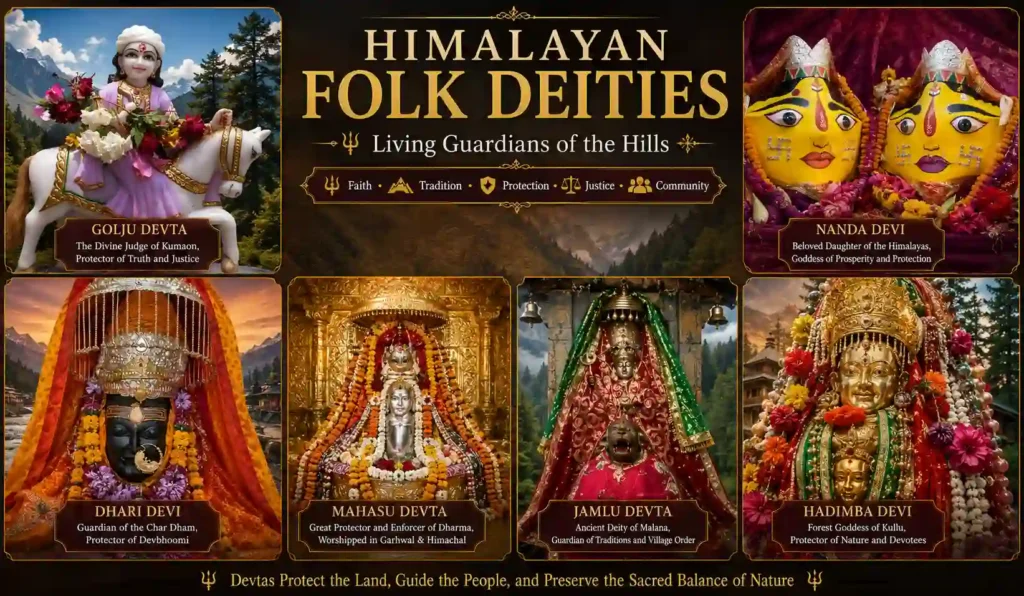
Relevance of Himalayan Folk Deities in the Modern World
Despite rapid modernisation, the traditions of Himalayan Folk Deities continue to remain deeply rooted in the lives of many communities across Uttarakhand and Himachal Pradesh. While lifestyles have changed, the spiritual connection between villagers and their guardian deities remains strong.
Agriculture, dependence on forests, seasonal migration, natural disasters, and the desire to preserve cultural identity continue to reinforce the importance of the Himalayan Devta Tradition. Festivals, annual fairs, and community rituals still bring people together, strengthening their shared heritage and collective faith.
For many devotees, village deities are more than objects of worship. They represent protection, moral guidance, social harmony, and a lasting sense of belonging. Even younger generations who have moved to towns and cities often return to their ancestral villages to participate in important Devta festivals and family rituals.
The enduring relevance of these traditions demonstrates their remarkable ability to adapt to changing times without losing their spiritual essence. As living expressions of faith and community, Himalayan Folk Deities continue to preserve the rich cultural heritage of the Indian Himalayas while inspiring future generations.
Why Himalayan Folk Deities Are an Important Cultural Heritage
The traditions associated with Himalayan Folk Deities are more than systems of religious worship. They also preserve the cultural identity, oral history, folk music, traditional architecture, and collective memory of Himalayan communities.
Festivals, Devta processions, Jagar performances, wooden temples, sacred groves, and village rituals have been passed down from one generation to the next for centuries. These living traditions help preserve regional languages, local legends, indigenous knowledge, and community values that might otherwise disappear with changing lifestyles.
As migration to cities increases and modern life transforms many villages, local communities continue to organise annual festivals and restore traditional temples to ensure that their spiritual and cultural heritage survives for future generations. In this way, Himalayan Folk Deities remain not only objects of devotion but also guardians of one of India’s richest living cultural traditions.
Conclusion
The Himalayas are more than majestic mountains. They are sacred landscapes where Himalayan Folk Deities continue to shape the spiritual and cultural life of villages across Uttarakhand and Himachal Pradesh. These living guardian deities are believed to protect forests, uphold justice, preserve traditions, and strengthen the bond between people and nature.
Understanding the Himalayan Devta Tradition offers a deeper appreciation of how Sanatan Dharma is lived in everyday life. Rooted in community, oral traditions, and reverence for the natural world, these practices reflect a spiritual heritage that is both timeless and deeply connected to local identity.
Even today, village deities travel in sacred processions, guide important community decisions, and remain an integral part of festivals, rituals, and family traditions. As enduring symbols of faith, protection, and cultural continuity, Himalayan Folk Deities continue to inspire devotion while preserving one of the richest living traditions of the Indian Himalayas.
Key Takeaways
- Himalayan Folk Deities are living guardian deities worshipped across Uttarakhand and Himachal Pradesh as protectors of villages, families, forests, and local traditions.
- Unlike many Puranic deities, these Devtas remain closely connected to the daily lives of local communities through festivals, Jagar ceremonies, and seasonal rituals.
- The Devta Raj tradition demonstrates how spiritual guidance and community governance have coexisted in many Himalayan regions for centuries.
- Worship of Gram Devtas and Kul Devtas complements mainstream Sanatan Dharma, reflecting the harmony between local traditions and Puranic beliefs.
- These traditions preserve India’s rich cultural heritage through oral traditions, sacred landscapes, folk music, temple festivals, and community participation.
- Understanding Himalayan Folk Deities offers valuable insight into the spiritual diversity and living traditions of the Indian Himalayas.
Suggested Reading
If you enjoyed learning about Himalayan Folk Deities, explore these related articles to discover the rich spiritual traditions, guardian deities, and living folk beliefs of the Indian Himalayas.
Together, they offer a deeper understanding of the unique Devta culture that continues to shape village life across Uttarakhand and Himachal Pradesh.
Folk Deities of North India: Living Traditions, Beliefs and Regional Guardians
https://thesanatantales.com/folk-deities-of-north-india/
Mahasu Devta: Story, Temple, Folk Beliefs and Worship in Himachal
https://thesanatantales.com/mahasu-devta/
Golju Devta: The Folk God of Justice in Uttarakhand
https://thesanatantales.com/goludevta-folk-god-of-justice/
Nanda Devi: Story, Folk Beliefs, Raj Jat Yatra and Worship in Uttarakhand
https://thesanatantales.com/nanda-devi-story-raj-jat-yatra-worship/
Dhari Devi Temple: Story, History, Char Dham Significance and Travel Guide
https://thesanatantales.com/dhari-devi-temple/
Gram Devta, Kshetrapal and Bhairav: India’s Living Tradition of Guardian Deities
https://thesanatantales.com/gram-devta-india/
FAQs
What are Himalayan Folk Deities?
Himalayan Folk Deities are local guardian deities worshipped across the villages of Uttarakhand and Himachal Pradesh. Unlike deities worshipped primarily through temples and scriptures, these village deities are closely connected with the everyday lives of local communities.
Devotees believe these deities protect forests, farmlands, livestock, families, and entire villages. They are also consulted during festivals, agricultural seasons, community decisions, and times of crisis. Their worship has been preserved through oral traditions, local customs, and ancestral practices, making them one of the oldest living spiritual traditions of the Indian Himalayas.
How are Himalayan Folk Deities different from Puranic Hindu gods?
Himalayan Folk Deities are not separate from Hinduism but represent its regional and community-based traditions. While Puranic deities such as Shiva, Devi, Vishnu, and Bhairava are worshipped throughout India, Himalayan villages also honour their own Gram Devtas, Kul Devtas, and regional guardian deities.
In many places, these local deities are believed to be manifestations, attendants, or protectors associated with major Hindu deities. As a result, temple worship and folk traditions coexist naturally, reflecting the inclusive and diverse nature of Sanatan Dharma.
Why are village deities so important in Uttarakhand and Himachal Pradesh?
Village deities have traditionally served as spiritual guardians of Himalayan communities. People seek their blessings for good harvests, protection from natural disasters, family well-being, livestock, and social harmony.
For generations, these deities have also guided important community decisions through traditional rituals and oracles. Even today, annual festivals, Devta processions, and village gatherings continue to strengthen cultural identity and preserve local traditions across the Himalayan region.
What is the Devta Raj tradition of Himachal Pradesh?
Devta Raj is a unique tradition found in many parts of Himachal Pradesh where village deities are regarded as the spiritual guardians and guiding authorities of the community. Their guidance is traditionally sought before major religious festivals, social decisions, or matters affecting the village.
During special ceremonies, a Gur or Chela (oracle) is believed to convey the deity’s guidance. While modern civil administration governs legal affairs, the Devta Raj tradition continues to play an important cultural and religious role in preserving community unity and ancestral customs.
What is the Jagar tradition in Uttarakhand?
Jagar is a traditional ritual of Uttarakhand in which devotional songs, prayers, and the rhythmic beats of instruments such as the Dhol and Damau are used to invoke a deity or revered ancestral spirit. The ceremony is performed according to long-established customs and is led by experienced practitioners.
Devotees seek guidance on health, family matters, community welfare, and religious observances. Beyond its spiritual significance, Jagar also preserves Uttarakhand’s rich oral history, folk music, and cultural heritage, making it an important part of the Himalayan Devta tradition.
Are Himalayan Folk Deities still worshipped today?
Yes. The worship of Himalayan Folk Deities remains an active and vibrant tradition across many villages of Uttarakhand and Himachal Pradesh. Annual fairs, Devta processions, temple festivals, and seasonal rituals continue to attract thousands of devotees every year.
Although modern lifestyles have changed many aspects of village life, these traditions continue to provide communities with a strong sense of identity, continuity, and spiritual belonging. Many families who have migrated to cities still return to their ancestral villages to participate in important Devta festivals and rituals.
Why are forests and mountains considered sacred in the Himalayan Devta Tradition?
In the Himalayan worldview, nature is regarded as a sacred expression of the divine. Forests, rivers, springs, and mountain peaks are believed to be protected by local guardian deities, and many natural sites are associated with specific village gods or goddesses.
This deep respect for nature has traditionally encouraged communities to protect forests, conserve water sources, and use natural resources responsibly. Long before modern environmental conservation, these spiritual beliefs helped maintain ecological balance throughout the Himalayan region.
Can anyone visit temples dedicated to Himalayan Folk Deities?
Yes. Most temples dedicated to Himalayan Folk Deities welcome visitors and devotees, although local customs and temple traditions should always be respected. Some shrines may have specific rules regarding dress, photography, entry during rituals, or participation in religious ceremonies.
Visitors are encouraged to approach these sacred places with humility and respect, remembering that many of these temples continue to function as active centres of worship and community life rather than simply as tourist attractions.
Glossary of Important Terms
| Term | Meaning |
|---|---|
| Himalayan Folk Deities | Local guardian deities worshipped across Uttarakhand and Himachal Pradesh who are believed to protect villages, forests, families, and communities. |
| Devta | A deity or divine being revered in a specific village or region, often regarded as the living protector of the local community. |
| Devta Raj | A traditional system in Himachal Pradesh where village deities play an important spiritual and cultural role in guiding community decisions and preserving local customs. |
| Gram Devta | The guardian deity of a village, worshipped for the protection, prosperity, and well-being of the entire community. |
| Kul Devta | A family or clan deity worshipped across generations for blessings, guidance, and ancestral protection. |
| Jagar | A sacred ritual of Uttarakhand involving devotional singing and traditional music to invoke a deity or ancestral spirit for guidance and blessings. |
| Gur | A respected oracle or medium in Himachal Pradesh through whom devotees believe a deity communicates during religious ceremonies. |
| Chela | A traditional attendant or spiritual medium who assists in Devta rituals and, in some regions, serves as the deity’s oracle. |
| Dangariya | The ritual medium or oracle in Uttarakhand who is believed to become the channel through which a deity communicates during a Jagar ceremony. |
| Rath | A decorated palanquin or ceremonial vehicle used to carry a village deity during religious festivals and processions, especially in Himachal Pradesh. |
| Doli | A sacred palanquin used to carry the idol or symbolic presence of a deity during festivals, pilgrimages, and village processions. |
| Bhairav | A fierce and protective form of Lord Shiva, often worshipped in the Himalayas as the guardian of villages, forests, temples, and sacred boundaries. |
| Sacred Grove | A forest area protected due to its religious significance and association with a local deity, where cutting trees or harming wildlife is traditionally discouraged. |
| Oracle | A person believed to communicate the guidance or blessings of a deity during sacred rituals and community ceremonies. |
| Oral Tradition | The transmission of stories, rituals, songs, and cultural knowledge from one generation to another through spoken word rather than written texts. |
| Sanatan Dharma | The eternal spiritual tradition of Hinduism that embraces diverse paths of worship, philosophies, and regional customs while recognizing the unity of the Divine. |
About the Author
Yateendra Chaturvedi is a spiritual writer, researcher, devotee, and the founder of The Sanatan Tales. With over 35 years of professional experience and a lifelong interest in Sanatan Dharma, he writes about Hindu deities, temples, scriptures, festivals, Mahavidyas, sacred stories, rituals, and living traditions that continue to guide and inspire devotees across India.
Drawing from traditional scriptures, regional beliefs, temple traditions, devotional literature, and historical sources, he aims to present authentic, well-researched, and easy-to-understand content for modern readers. His work focuses on preserving spiritual wisdom, explaining sacred traditions, and helping seekers develop a deeper understanding of India’s rich spiritual heritage.
Through The Sanatan Tales, Yateendra strives to make the timeless teachings of Sanatan Dharma simple, meaningful, and relevant for today’s generation while maintaining respect for traditional sources, regional practices, and diverse spiritual perspectives.
Learn More About Yateendra Chaturvedi →
https://thesanatantales.com/about-the-author/
References & Sources
This article is based on beliefs and traditions associated with the Himalayan Folk Deities of Uttarakhand and Himachal Pradesh, including regional oral traditions, local customs, village worship practices, and cultural heritage preserved across generations. It also draws upon traditional knowledge, historical references, and widely accepted religious and cultural sources related to the living Devta traditions of the Indian Himalayas.
Note: Beliefs, rituals, and practices connected with Himalayan Folk Deities may vary from one village, region, community, or lineage to another. The purpose of this article is not to present any single tradition as the absolute truth, but to explain widely followed beliefs and customs in a simple, respectful, and accessible manner while honouring the diversity and inclusive spirit of Sanatan Dharma.
Explore More Fascinating Topics from Sanatan Dharma