
A deep sense of faith awakens when devotees hear the name Khatu Shyam Baba. Revered as Haare Ka Sahara, He is believed to bless those who seek His refuge with devotion, courage, and hope. Every year, millions of devotees visit Khatu Shyam Temple in Rajasthan to seek His blessings and experience the peace of His divine darshan.
Khatu Shyam Baba is worshipped as the Kaliyuga manifestation of Barbarika, the brave grandson of Bhima from the Mahabharata. His unmatched sacrifice, unwavering devotion, and selfless surrender earned him the blessings of Lord Krishna, who granted him the name “Shyam” and declared that he would be worshipped throughout Kaliyuga.
Situated in the town of Khatu in Rajasthan’s Sikar district, the sacred temple has become one of India’s most revered pilgrimage destinations. Devotees lovingly address Him as Shyam Baba and Sheesh Ke Daata, remembering the supreme sacrifice of offering His own head for the protection of dharma.
The story of Khatu Shyam Baba beautifully brings together the timeless wisdom of the Mahabharata, the living traditions of Rajasthan, and the unshakable faith of millions of devotees. Even today, people from across India and abroad visit His temple with the belief that sincere prayers offered with devotion never go unanswered.
In this complete guide, you will discover the inspiring story of Khatu Shyam Baba, learn about Khatu Shyam Darshan, temple timings, Falgun Mela, important rituals, travel information, and everything you need to know before visiting this sacred pilgrimage site.
Quick Facts Box
| Quick Facts | Details |
|---|---|
| 🛕 Presiding Deity | Khatu Shyam Baba (Barbarika, Grandson of Bhima) |
| 📍 Location | Khatu, Sikar District, Rajasthan, India |
| 🕉️ Religious Significance | Worshipped as the Kaliyuga manifestation of Barbarika, lovingly known as Haare Ka Sahara and Sheesh Ke Daata |
| 🎉 Famous Festival | Khatu Shyam Falgun Mela (Phalguna Shukla Paksha) |
| 🛐 Darshan Timings | Summer: 4:30 AM–12:30 PM & 4:00 PM–10:00 PMWinter: 5:30 AM–1:00 PM & 5:00 PM–9:00 PM |
| 🚆 Nearest Railway Station | Ringas Junction (Approx. 17 km) |
| ✈️ Nearest Airport | Jaipur International Airport (Approx. 95 km) |
| 🛣️ Distance from Jaipur | Approx. 80 km |
| 🌤️ Best Time to Visit | October to March and during the Khatu Shyam Falgun Mela |
| 🌸 Popular Offerings | Nishan, Flowers, Coconut, Pedas, Prasad |
| 📖 Associated Epic | Mahabharata (Story of Barbarika) |
| 🙏 Ideal For | Darshan, Family Pilgrimage, Spiritual Seekers, Religious Tourism |
Table of Contents
ToggleThe Story of Barbarika and His Divine Sacrifice
Before He became the beloved Khatu Shyam Baba of Kaliyuga, He was known as Barbarika, the valiant grandson of Bhima and the son of the mighty warrior Ghatotkacha. According to the Mahabharata tradition, Barbarika was blessed with exceptional courage, remarkable archery skills, and an unwavering commitment to righteousness.
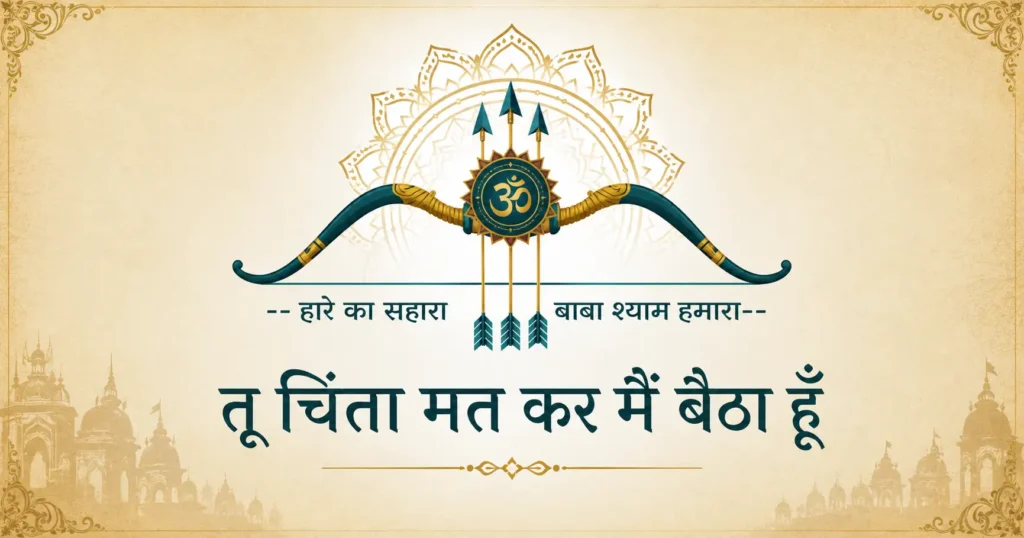
Barbarika possessed three divine arrows and a celestial bow that made him nearly invincible in battle. Legend says one arrow could mark every target, the second could protect those he wished to spare, and the third could destroy all marked targets before returning to his quiver.
Despite possessing immense power, Barbarika remained humble and compassionate. He made a solemn vow that he would always fight for the weaker side, believing it was his duty to protect those who appeared to be losing.
As the Kurukshetra War approached, Lord Krishna, disguised as a Brahmin, met Barbarika and questioned him about his vow. Their conversation revealed a serious dilemma that could change the outcome of the war.
Krishna realised that if Barbarika entered the battlefield, the weaker side would keep changing as the battle progressed. Barbarika would repeatedly switch sides, making it impossible for either the Pandavas or the Kauravas to achieve victory.
The war could continue endlessly, preventing the restoration of dharma, which was the very purpose of the Mahabharata. To preserve cosmic balance, Lord Krishna asked Barbarika for daan (a sacred offering) of his head before the war began.
Recognising Krishna’s divine purpose, Barbarika accepted the request without hesitation. He offered his head with complete devotion and surrender, placing dharma above his own life.
His extraordinary sacrifice earned him the revered title Sheesh Ke Daata, meaning “The Giver of His Head.” Millions of devotees continue to worship Khatu Shyam Baba as the eternal symbol of selfless sacrifice, unwavering faith, and divine grace.

Why Barbarika Became Khatu Shyam Baba
Pleased by Barbarika’s supreme sacrifice and unwavering devotion, Lord Krishna blessed him with a unique boon. Krishna declared that in Kaliyuga, Barbarika would be worshipped by His own name, “Shyam,” and would become a symbol of faith, hope, and compassion for millions of devotees.
According to tradition, Lord Krishna said that anyone who remembers Khatu Shyam Baba with a sincere heart and pure devotion would receive His divine grace. This blessing became the foundation of the deep faith that continues to inspire devotees across India and beyond.
Because of this divine blessing, Khatu Shyam Baba came to be lovingly known as Haare Ka Sahara, the protector of those who feel defeated, helpless, or burdened by life’s challenges. Devotees believe that sincere prayers offered at Khatu Shyam Temple bring strength, courage, and renewed hope during difficult times.
Even today, countless devotees share personal experiences of Khatu Shyam Baba’s blessings. While such accounts are matters of individual faith and devotion rather than historical fact, many believe Baba’s grace has helped them overcome hardships, find inner peace, and regain confidence when they needed it most.
Did You Know?
According to tradition, Khatu Shyam Baba is the only deity who received Lord Krishna’s own name, “Shyam,” as a divine blessing after offering his head in the Mahabharata.
This is why millions of devotees worship Him as the protector of those who seek refuge with faith.
How Barbarika's Sacred Head Reached Khatu
According to the local tradition of Khatu in Rajasthan, Barbarika’s sacred head remained at the battlefield after the Mahabharata War. Years later, a remarkable event led to its rediscovery and the beginning of Khatu Shyam Baba’s worship.
It is believed that a cow would mysteriously release milk every day at a particular spot in Khatu village. Curious villagers dug the place and discovered the radiant head of Barbarika buried beneath the earth. This event is revered as a sacred miracle in the local tradition.
The head was respectfully placed in the care of the local ruler. According to temple tradition, the king later received a divine vision in a dream, instructing him to build a temple at the very place where the sacred head had been found.
The king followed the divine instruction, and the Khatu Shyam Temple was established in the town of Khatu in Rajasthan’s Sikar district. Today, this sacred shrine is one of India’s most revered pilgrimage destinations, where millions of devotees visit every year to seek the blessings of Khatu Shyam Baba.
Khatu Shyam Baba Darshan & Aarti Timings
Planning your Khatu Shyam Darshan becomes easier when you know the temple schedule in advance. The Khatu Shyam Temple follows separate timings for summer and winter, while darshan hours may also change during Ekadashi, Falgun Mela, and other major festivals. (Rajasthan Tourism)
Darshan Timings
During the summer season (April to September), the temple is generally open from 4:30 AM to 12:30 PM and again from 4:00 PM to 10:00 PM.
During the winter season (October to March), darshan is usually available from 5:30 AM to 1:00 PM and 5:00 PM to 9:00 PM. (Rajasthan Tourism)
Daily Aarti Timings
Five daily Aartis are performed at Khatu Shyam Temple, each carrying its own spiritual significance.
Mangala Aarti – Early morning awakening of Baba Shyam
Shringar Aarti – After the deity is beautifully adorned
Bhog Aarti – Midday offering of sacred food
Sandhya Aarti – Evening worship at sunset
Shayan Aarti – Night Aarti before the temple closes
Many devotees consider Mangala Aarti and Sandhya Aarti especially auspicious and plan their visit around these sacred rituals. (Khatushyam Temple)
Note: Darshan and Aarti timings may change during Ekadashi, Falgun Mela, special festivals, or due to temple administration decisions. Always check the latest schedule before planning your visit. (Khatushyam Temple)

Darshan During Weekends and Ekadashi
Weekends and Ekadashi are among the busiest days at Khatu Shyam Temple, attracting thousands of devotees from across the country. On these occasions, the temple may open earlier than usual, and darshan hours are often extended to accommodate the large number of visitors.
Long queues are common, especially during Shukla Paksha Ekadashi, holidays, and festive periods. Despite the wait, devotees patiently chant “Shyam Baba Ki Jai”, sing devotional bhajans, and carry flowers, coconuts, and offerings while waiting for their turn to receive Khatu Shyam Baba’s divine darshan.
To enjoy a smoother Khatu Shyam Darshan, elderly devotees, families with children, and first-time visitors are advised to arrive early in the morning or visit on regular weekdays when the crowd is comparatively smaller.
Khatu Shyam Falgun Mela 2027: Date, Tithi & Panchang
The Khatu Shyam Falgun Mela is the grandest annual festival dedicated to Khatu Shyam Baba. Celebrated during the Shukla Paksha of the Hindu month of Phalguna, this sacred festival attracts lakhs of devotees from across India and abroad. Pilgrims gather in Khatu to seek Baba’s blessings, participate in devotional celebrations, and experience the vibrant spiritual atmosphere.
Khatu Shyam Falgun Mela 2027: Date & Panchang
| Event | Details |
|---|---|
| Festival | Khatu Shyam Falgun Mela 2027 |
| Expected Dates | 15 March – 21 March 2027* |
| Main Darshan Day | 18 March 2027 |
| Tithi | Phalguna Shukla Ekadashi (Amalaki Ekadashi) |
| Location | Khatu, Sikar District, Rajasthan |
During the Falgun Mela, thousands of devotees undertake the sacred Nishan Yatra, carrying colourful flags as an offering to Baba Shyam while chanting devotional bhajans. The entire town comes alive with spiritual fervour as temples, streets, and markets are beautifully decorated for the occasion.
Special Mangala Aarti, Shringar Aarti, Bhog Aarti, Sandhya Aarti, and Shayan Aarti are performed during the festival. Devotional music, bhajan sandhyas, and community service activities continue throughout the celebration, creating a deeply spiritual experience for pilgrims.
As lakhs of devotees visit Khatu during the mela, darshan queues can be very long. Visitors are advised to plan their journey and accommodation well in advance to enjoy a smooth and memorable pilgrimage.
How to Reach Khatu Shyam Temple
The Khatu Shyam Temple is located in the town of Khatu in the Sikar district of Rajasthan. Well connected by road, rail, and air, the temple is easily accessible from major cities across North India, making it a popular pilgrimage destination throughout the year.
By Road
Khatu is connected by a good network of national and state highways. Regular Rajasthan Roadways (RSRTC) buses, private buses, taxis, and self-drive vehicles operate from nearby cities.
Approximate Road Distances
| City | Distance to Khatu |
|---|---|
| Jaipur | 80 km |
| Sikar | 45 km |
| Ringas | 17 km |
| Delhi | 280 km |
| Ajmer | 175 km |
| Hisar | 210 km |
| Chandigarh | 430 km |
| Jodhpur | 290 km |
| Bikaner | 235 km |
| Udaipur | 395 km |
By Train
The nearest railway station is Ringas Junction (RGS), located about 17 km from Khatu Shyam Temple. Ringas is well connected to Jaipur, Delhi, Bikaner, Jodhpur, Ajmer, Rewari, and several other major cities.
From Ringas Junction, devotees can easily reach the temple by:
Auto-rickshaws
Shared jeeps
Private taxis
Local buses
The journey from Ringas to Khatu usually takes 20 to 30 minutes.
By Air
The nearest airport is Jaipur International Airport (JAI), approximately 95 km from Khatu. The drive from the airport to the temple generally takes about 2 hours, depending on traffic.
From Jaipur Airport, visitors can hire:
Private taxis
App-based cabs
Tourist vehicles
Rajasthan Roadways buses (via Jaipur city)
Local Transport
Once you arrive in Khatu, reaching the temple is convenient. Auto-rickshaws, e-rickshaws, cycle rickshaws, and local taxis are readily available near the bus stand and parking areas.
During the Khatu Shyam Falgun Mela, the local administration operates special shuttle services and traffic arrangements to help pilgrims reach the temple safely. As roads become extremely crowded during the festival, visitors may need to walk the final stretch from designated parking areas to the temple.
Temple Architecture and Sacred Places at Khatu Shyam Temple
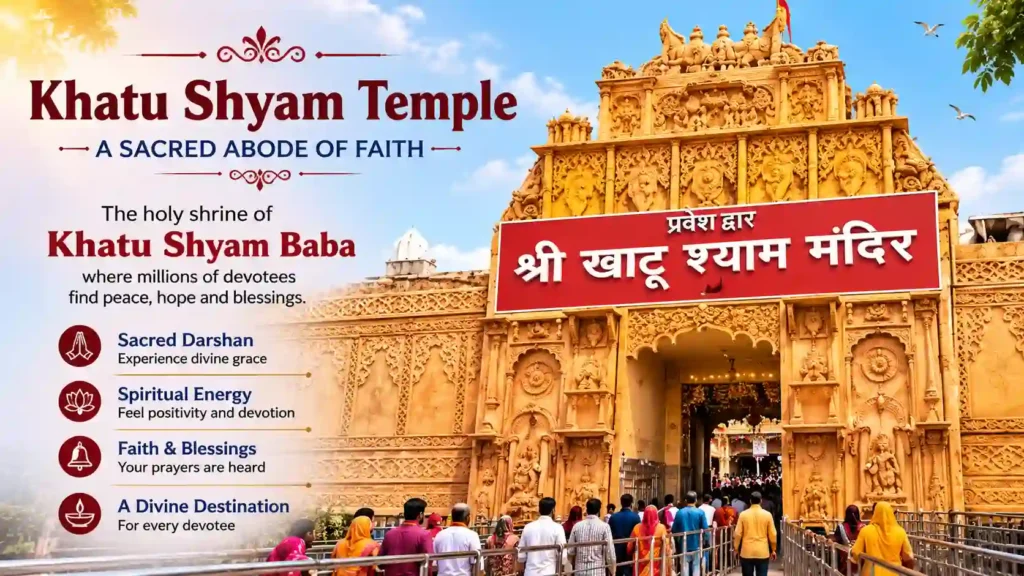
The Khatu Shyam Temple is admired for its beautiful Rajasthani architecture, elegant marble work, and spiritually uplifting atmosphere. The temple’s sanctum enshrines the sacred idol of Khatu Shyam Baba, which is beautifully decorated with flowers, colourful garments, and ornaments throughout the day.
Shyam Kund
Shyam Kund is one of the holiest places in Khatu. According to local temple tradition, this is the sacred spot where Barbarika’s divine head was discovered. Many devotees offer prayers here before proceeding for Khatu Shyam Darshan, believing it to be highly auspicious.
Shyam Bagichi
Located near the temple, Shyam Bagichi is a peaceful garden associated with the devotional history of Khatu Shyam Baba. It is regarded as a sacred place where devotees spend time in prayer and quiet reflection during their pilgrimage.
Temple Complex
The spacious temple complex is designed to accommodate thousands of devotees who visit throughout the year. During the Khatu Shyam Falgun Mela and other major festivals, the temple is beautifully decorated with flowers and lights, creating a truly divine atmosphere that leaves a lasting impression on every pilgrim.

Temple Rituals and Daily Worship at Khatu Shyam Temple
Daily worship at Khatu Shyam Temple follows traditional Hindu rituals that have been observed with great devotion for generations. From the early morning Mangala Aarti to the night Shayan Aarti, every ritual is performed with reverence, accompanied by Vedic chants, devotional bhajans, and prayers.
The idol of Khatu Shyam Baba is adorned with fresh flowers, colourful attire, and beautiful ornaments during the Shringar Aarti. Devotees gather in large numbers to witness these sacred rituals and seek Baba’s divine blessings.
Throughout the day, offerings of Bhog, flowers, coconuts, and sweets are presented to Baba with devotion. Many devotees also offer Nishan (sacred flags), symbolic of their faith, gratitude, and fulfilled wishes.
Devotional singing, chanting of “Shyam Baba Ki Jai”, and community prayers create a spiritually uplifting atmosphere within the temple. Participating in these rituals is considered a deeply fulfilling experience for pilgrims visiting Khatu Shyam Baba.
Many devotees believe that attending the Mangala Aarti in the morning or the Sandhya Aarti in the evening brings peace of mind and strengthens their spiritual connection with Khatu Shyam Baba.
Spiritual Significance of Khatu Shyam Baba
The worship of Khatu Shyam Baba is deeply rooted in the ideals of faith, sacrifice, humility, and surrender. His life as Barbarika teaches that true strength lies not in power or victory but in selfless devotion and unwavering commitment to dharma.
Lord Krishna honoured Barbarika’s supreme sacrifice by granting him the name “Shyam” and declaring that he would be worshipped throughout Kaliyuga. This divine blessing is why millions of devotees turn to Khatu Shyam Baba during times of hardship, believing that sincere devotion never goes unanswered.
Devotees lovingly call Him Haare Ka Sahara, meaning “the support of those who have lost hope.” This title reflects the faith that Baba stands beside those facing difficulties, offering them courage, inner strength, and the confidence to move forward.
The story of Khatu Shyam Baba also reminds us that humility is greater than pride, sacrifice is greater than personal gain, and true victory belongs to righteousness. His teachings continue to inspire devotees to live with compassion, honesty, and complete faith in the divine will.
Even today, pilgrims from across India and abroad visit Khatu Shyam Temple seeking not only blessings but also inner peace, believing that Baba’s grace helps transform despair into hope and devotion into spiritual strength.
Famous Beliefs and Devotee Traditions
For generations, devotees have shared countless experiences of Khatu Shyam Baba’s blessings and divine grace. Many believe that sincere prayers offered with faith help them overcome difficulties, fulfil heartfelt wishes, and find the strength to face life’s challenges.
Offering a Nishan (sacred flag) is one of the most cherished traditions associated with Khatu Shyam Baba. Devotees also offer flowers, coconuts, sweets, and prayers as a symbol of gratitude, devotion, and unwavering faith.
Many pilgrims visit Khatu Shyam Temple after the fulfilment of a mannat (vow) to express their gratitude. Devotional bhajans, Shyam Naam Sankirtan, and acts of selfless service (Seva) continue to keep Baba’s living traditions alive.
While these beliefs are rooted in the personal faith and experiences of devotees, they continue to strengthen the spiritual bond between Khatu Shyam Baba and the millions who seek His blessings with complete devotion.
Nearby Places to Visit Around Khatu Shyam Temple
A pilgrimage to Khatu Shyam Temple can be combined with visits to several nearby sacred destinations. These temples are closely associated with the spiritual heritage of Rajasthan and are visited by thousands of devotees every year.
Jeen Mata Temple
Located about 30 km from Khatu, Jeen Mata Temple is one of Rajasthan’s most revered Shakti temples. Dedicated to Goddess Jeen Mata, it attracts large numbers of devotees, especially during the Navratri festivals.
Harshnath Temple
Situated around 55 km from Khatu near Sikar, the ancient Harshnath Temple is dedicated to Lord Shiva. Built in the 10th century, the temple is known for its historical significance, beautiful stone carvings, and scenic hilltop location.
Salasar Balaji Temple
Approximately 110 km from Khatu, Salasar Balaji Temple is one of the most famous temples dedicated to Lord Hanuman. Many devotees include both Khatu Shyam Baba and Salasar Balaji in the same pilgrimage, considering the journey highly auspicious.
Rani Sati Temple
Located in Jhunjhunu, about 95 km from Khatu, Rani Sati Temple is a popular pilgrimage site admired for its magnificent marble architecture and peaceful surroundings.
Visiting these sacred places along with Khatu Shyam Darshan offers devotees a deeper experience of Rajasthan’s rich spiritual and cultural heritage.
Food, Dining and Stay Near Khatu Shyam Temple
Khatu offers a wide range of accommodation options to suit every budget. Devotees can choose from dharamshalas, guest houses, budget hotels, and comfortable private hotels, many of which are located within walking distance of Khatu Shyam Temple.
Several dharamshalas managed by religious trusts provide clean, affordable accommodation with basic facilities for pilgrims. Budget and mid-range hotels also offer modern amenities, making them a convenient choice for families and groups.
The town has numerous restaurants, local eateries, and sweet shops serving pure vegetarian food throughout the day. Visitors can enjoy traditional Rajasthani cuisine, North Indian meals, light snacks, tea, lassi, and a variety of sweets.
During the Khatu Shyam Falgun Mela, Ekadashi, and other major festivals, hotels and dharamshalas are booked well in advance due to the large number of devotees. Many religious organisations also organise Bhandaras (community meals), where free vegetarian food is served as an act of seva.
Whether you are visiting for a day or planning a longer pilgrimage, Khatu provides comfortable accommodation, wholesome vegetarian dining, and all the essential facilities needed for a peaceful and memorable Khatu Shyam Darshan.
Best Time to Visit Khatu Shyam Temple
The Khatu Shyam Temple welcomes devotees throughout the year, but the best time to visit depends on the experience you seek. While the temple remains spiritually vibrant every day, certain seasons and festivals attract significantly larger crowds.
The months from October to March offer pleasant weather, making them ideal for a comfortable pilgrimage. This period is especially suitable for families, senior citizens, and devotees travelling from distant places.
If you wish to experience the grandest celebration, plan your visit during the Khatu Shyam Falgun Mela. The temple and the entire town come alive with devotional processions, bhajans, Nishan Yatra, and special religious ceremonies, drawing lakhs of devotees from across India.
For a peaceful Khatu Shyam Darshan, weekdays are generally the best choice, as weekends, Ekadashi, and major festivals witness much longer queues. Arriving early in the morning also helps avoid peak crowds and allows devotees to participate in the morning Aarti.
Things to Buy Near Khatu Shyam Temple
The bustling market around Khatu Shyam Temple is a great place to purchase devotional items and traditional Rajasthani souvenirs. Many devotees buy these items as a remembrance of their pilgrimage or to offer them during worship at home.
Shops near the temple sell Shyam Baba idols, framed photographs, Nishan flags, chunaris, malas, coconuts, incense sticks, puja thalis, keychains, lockets, and devotional books. You will also find a variety of sweets and prasad, including the famous pedas offered to Baba.
Visitors interested in local handicrafts can explore traditional Rajasthani textiles, bandhani fabrics, lac bangles, wooden handicrafts, and decorative items, making them meaningful souvenirs to take home.
Purchasing prasad and devotional articles from the local market also supports the livelihoods of small shopkeepers and artisans who have served pilgrims around Khatu Shyam Temple for generations.
Facilities Available at Khatu Shyam Temple
The Khatu Shyam Temple provides several facilities to ensure a comfortable and convenient pilgrimage for devotees. Temple authorities and the local administration work together to manage the large number of visitors throughout the year, especially during Ekadashi and the Khatu Shyam Falgun Mela.
Dedicated cloakrooms are available for depositing footwear and luggage before entering the temple. Drinking water facilities, clean washrooms, seating areas, and medical assistance are also available at various points around the temple complex.
Large parking areas have been developed for private vehicles and buses, while auto-rickshaws and e-rickshaws provide easy transportation within the town. During major festivals, special traffic arrangements and volunteer assistance help pilgrims reach the temple safely.
The temple premises also include Prasad counters, donation counters, information centres, and security arrangements to ensure that devotees can complete their Khatu Shyam Darshan in a safe, organised, and peaceful environment.
Online Darshan, Live Streaming and Official Information
Devotees who are unable to visit Khatu Shyam Temple in person can stay connected through online services provided by the temple authorities. Live darshan, festival updates, and important announcements help devotees participate in Baba’s worship from anywhere in the world.
The official temple website and social media channels regularly publish updates on darshan timings, Aarti schedules, Falgun Mela arrangements, special festivals, and temple notices. Checking these updates before planning your journey helps avoid inconvenience.
Many devotees also watch the live darshan and participate in Aarti virtually, especially on Ekadashi, Falgun Mela, and other auspicious occasions. While virtual darshan cannot replace a physical pilgrimage, it allows devotees to remain spiritually connected with Khatu Shyam Baba wherever they are.
For the latest information regarding temple timings, special events, accommodation, and pilgrimage arrangements, always rely on the official sources before planning your visit.
Frequently Offered Prasad and Sacred Offerings
Offering Prasad at Khatu Shyam Temple is an important part of the pilgrimage. Devotees express their love and gratitude by offering flowers, coconuts, sweets, and Nishan (sacred flags) before seeking the blessings of Khatu Shyam Baba.
The most commonly offered Prasad includes pedas, boondi, mishri, dry fruits, and other traditional sweets. Many devotees purchase these offerings from shops near the temple before joining the darshan queue.
Offering a Nishan is one of the most cherished traditions associated with Khatu Shyam Baba. Devotees carry beautifully decorated flags to the temple as a symbol of devotion, gratitude, and the fulfilment of their prayers.
After the offering is made, devotees receive Prasad as Baba’s blessings and take it home to share with family and friends. It is considered a sacred reminder of their pilgrimage and a symbol of divine grace.
Khatu Shyam Temple Darshan Tips and Etiquette
A little planning can make your Khatu Shyam Darshan more comfortable and spiritually fulfilling. If possible, visit on weekdays, as weekends, Ekadashi, and the Falgun Mela attract very large crowds, resulting in longer waiting times.
If you are travelling with elderly family members or young children, try to arrive early in the morning when the queues are comparatively shorter. During the Falgun Mela, booking your hotel or dharamshala well in advance is highly recommended.
Wear modest and comfortable clothing suitable for a place of worship. Carry drinking water, light snacks, and any essential medicines, especially if you expect a long wait for darshan.
Keep your footwear only at the designated cloakrooms or shoe stands provided by the temple authorities. Using official parking areas and following the directions of temple volunteers and local administration helps ensure a smooth and orderly pilgrimage experience.
Maintain silence inside the temple premises, avoid pushing in queues, and respect fellow devotees. Photography may be restricted in certain areas, so always follow the instructions displayed by the temple administration.

Conclusion
A visit to Khatu Shyam Baba is more than a pilgrimage. For countless devotees, it is a journey of faith, surrender, and inner peace. Standing before Baba’s divine idol, many experience a deep sense of comfort, believing that their prayers are heard with compassion and grace.
The life of Barbarika, his supreme sacrifice, and Lord Krishna’s blessing continue to inspire millions even today. As Haare Ka Sahara and Sheesh Ke Daata, Khatu Shyam Baba reminds us that true strength lies in humility, selfless service, unwavering faith, and complete surrender to the divine.
Whether you are planning your first Khatu Shyam Darshan, seeking spiritual guidance, or simply wishing to learn about this beloved deity of Kaliyuga, may Baba’s blessings fill your life with courage, hope, and happiness. Jai Shri Shyam! 🙏
Find Khatu Shyam Temple on Google Maps
Planning your Khatu Shyam Darshan becomes much easier with the exact temple location. Use the Google Maps link below to get directions, check live traffic, estimate travel time, and navigate directly to Shri Khatu Shyam Ji Temple in Khatu, Rajasthan.
Google Maps Location:
Suggested Reading
If you enjoyed learning about Khatu Shyam Baba and the living traditions of regional devotion, you may also like exploring other articles in our Regional & Folk Myths series.
These articles introduce folk deities, sacred temples, regional beliefs, and devotional traditions that continue to inspire millions of devotees across India. Together, they offer a deeper understanding of the rich diversity of Sanatan Dharma.
Folk Deities of India: Living Faith of the People
https://thesanatantales.com/folk-deities-of-india/
Khandoba God: Story, Jejuri Temple, Jatra, Mela Dates and Spiritual Significance
https://thesanatantales.com/khandoba-god-jejuri-temple-story/
Sanwariya Seth Temple: History, Darshan & Visitor Guide
https://thesanatantales.com/sanwariya-seth-temple-mandfiya/
Salasar Balaji Temple: Story, Darshan & Travel Guide
https://thesanatantales.com/salasar-balaji-temple/
Hero Deities of Rajasthan: Tejaji, Pabuji & Folk Warriors
https://thesanatantales.com/hero-deities-of-rajasthan/
Goludevta: The Folk God of Justice in Uttarakhand
https://thesanatantales.com/goludevta-folk-god-of-justice/
Folk Deities of Uttarakhand and Himachal: Gods of Hills and Forests
https://thesanatantales.com/folk-deities-of-uttarakhand-and-himachal/
Dhari Devi: The Guardian Goddess of Uttarakhand and Char Dham
https://thesanatantales.com/dhari-devi-temple/
Khodiyar Maa: Story, History, Temples, Miracles and the Beloved Kuldevi of Gujarat
https://thesanatantales.com/khodiyar-maa/
Khatu Shyam Temple (Wikipedia)
FAQs
Who is Khatu Shyam Baba?
Khatu Shyam Baba is believed to be Barbarika, the brave grandson of Bhima and son of Ghatotkacha from the Mahabharata. According to tradition, he sacrificed his head at the request of Lord Krishna before the Kurukshetra War. Pleased by his devotion, Krishna blessed him to be worshipped as Shyam during Kaliyuga. Today, millions of devotees worship Him as Haare Ka Sahara and Sheesh Ke Daata.
Why is Khatu Shyam Baba called "Sheesh Ke Daata"?
Khatu Shyam Baba is called Sheesh Ke Daata, meaning “The Giver of His Head,” because Barbarika willingly offered his head to Lord Krishna before the Mahabharata War. His supreme sacrifice for the protection of dharma is remembered as one of the greatest acts of devotion in Hindu tradition.
Where is Khatu Shyam Temple located?
Khatu Shyam Temple is located in the town of Khatu in Sikar district, Rajasthan. It is approximately 80 km from Jaipur and 17 km from Ringas Junction, making it easily accessible by road, rail, and air.
What are the darshan timings of Khatu Shyam Temple?
The temple follows different timings during summer and winter.
Summer: 4:30 AM–12:30 PM and 4:00 PM–10:00 PM
Winter: 5:30 AM–1:00 PM and 5:00 PM–9:00 PM
Timings may change during Ekadashi, Falgun Mela, and other special festivals, so devotees should check the latest schedule before visiting.
When is the best time to visit Khatu Shyam Temple?
The best time to visit is between October and March, when the weather is pleasant. Devotees who wish to experience the temple’s grandest celebrations can visit during the Khatu Shyam Falgun Mela, while those seeking a peaceful darshan should prefer weekdays over weekends and festival days.
What is the significance of the Khatu Shyam Falgun Mela?
The Khatu Shyam Falgun Mela is the temple’s largest annual festival, celebrated during Phalguna Shukla Paksha. Lakhs of devotees participate in Nishan Yatra, devotional bhajans, Aartis, and other religious ceremonies, making it one of the most important spiritual gatherings dedicated to Khatu Shyam Baba.
What offerings can devotees make at Khatu Shyam Temple?
Devotees commonly offer Nishan (sacred flags), flowers, coconuts, pedas, sweets, and Prasad at the temple. Many pilgrims also visit after the fulfilment of a mannat (vow) to express their gratitude and seek Baba’s continued blessings.
Is there any dress code or etiquette for visiting Khatu Shyam Temple?
While there is no strict dress code, devotees are encouraged to wear modest and comfortable clothing suitable for a place of worship. Visitors should remove their footwear before entering the temple, follow the queue system, maintain cleanliness, and respect the instructions issued by the temple authorities.
Can devotees watch Khatu Shyam Baba Darshan online?
Yes. Devotees who are unable to visit the temple can watch live darshan, receive festival updates, and check important announcements through the official website and social media channels of Khatu Shyam Temple.
Why do millions of devotees worship Khatu Shyam Baba?
Millions of devotees worship Khatu Shyam Baba because they believe He blesses those who approach Him with sincere faith and humility. Revered as Haare Ka Sahara, He is regarded as the divine protector who gives hope, courage, and spiritual strength during life’s most difficult moments.
Glossary of Important Terms
| Term | Meaning |
|---|---|
| Khatu Shyam Baba | A revered deity worshipped as the Kaliyuga manifestation of Barbarika, the grandson of Bhima from the Mahabharata. |
| Barbarika | The brave son of Ghatotkacha and grandson of Bhima, known for sacrificing his head to Lord Krishna before the Kurukshetra War. |
| Haare Ka Sahara | A popular title of Khatu Shyam Baba meaning “The Support of the Defeated”, symbolising His compassion for those facing hardships. |
| Sheesh Ke Daata | Meaning “The Giver of His Head,” this title honours Barbarika’s supreme sacrifice for the protection of dharma. |
| Darshan | The sacred act of seeing and receiving the blessings of a deity at a temple. |
| Aarti | A devotional ritual in which lamps are offered before the deity while hymns and prayers are sung. |
| Falgun Mela | The annual religious fair held at Khatu Shyam Temple during the Hindu month of Phalguna, attracting lakhs of devotees. |
| Nishan Yatra | A sacred procession in which devotees carry decorated flags (Nishan) to offer at Khatu Shyam Temple as a symbol of faith and gratitude. |
| Nishan | A sacred flag offered to Khatu Shyam Baba by devotees in fulfilment of prayers or as an expression of devotion. |
| Ekadashi | The eleventh lunar day of each fortnight in the Hindu calendar, considered highly auspicious for fasting and worship. |
| Phalguna | The twelfth month of the Hindu lunar calendar, during which the famous Khatu Shyam Falgun Mela is celebrated. |
| Dharma | The eternal principle of righteousness, moral duty, and virtuous living upheld in Sanatan Dharma. |
| Bhog | Food offerings presented to the deity during worship before being distributed as Prasad. |
| Prasad | Blessed food or offerings received by devotees after being offered to the deity. |
| Mannat | A heartfelt vow or prayer made by devotees, often fulfilled by offering prayers or visiting the temple after their wish is granted. |
| Seva | Selfless service performed with devotion, such as helping pilgrims or participating in community activities at the temple. |
| Bhajan | A devotional song sung in praise of God or a deity, often performed during temple worship and festivals. |
| Mangala Aarti | The first Aarti of the day, performed early in the morning to awaken the deity. |
| Shringar Aarti | The Aarti performed after the deity is adorned with beautiful garments, flowers, and ornaments. |
| Shayan Aarti | The final Aarti of the day, performed before the temple closes for the night. |
About the Author
Yateendra Chaturvedi is a spiritual writer, researcher, devotee, and the founder of The Sanatan Tales. With over 35 years of professional experience and a lifelong interest in Sanatan Dharma, he writes about Hindu deities, temples, scriptures, festivals, Mahavidyas, sacred stories, rituals, and living traditions that continue to guide and inspire devotees across India.
Drawing from traditional scriptures, regional beliefs, temple traditions, devotional literature, and historical sources, he aims to present authentic, well-researched, and easy-to-understand content for modern readers. His work focuses on preserving spiritual wisdom, explaining sacred traditions, and helping seekers develop a deeper understanding of India’s rich spiritual heritage.
Through The Sanatan Tales, Yateendra strives to make the timeless teachings of Sanatan Dharma simple, meaningful, and relevant for today’s generation while maintaining respect for traditional sources, regional practices, and diverse spiritual perspectives.
Learn More About Yateendra Chaturvedi →
https://thesanatantales.com/about-the-author/
References & Sources
This article is based on the Mahabharata, traditional beliefs associated with Khatu Shyam Baba, local temple traditions of Khatu in Rajasthan, and devotional practices followed by millions of devotees within Sanatan Dharma. It also draws upon information from religious literature, temple traditions, pilgrimage resources, and other authentic spiritual reference materials.
Note: The story of Khatu Shyam Baba combines references from the Mahabharata with long-standing regional traditions and devotional beliefs. Certain accounts, such as the discovery of Barbarika’s sacred head and some temple traditions, are based on local faith and are revered by devotees. The purpose of this article is not to present any single tradition as the absolute truth, but to explain widely accepted religious beliefs, pilgrimage practices, and cultural traditions in a simple, respectful, and accessible manner.
Explore More Fascinating Topics from Sanatan Dharma