
Water in Sanatan Dharma is far more than a natural resource. It is regarded as sacred, life-giving, and spiritually purifying. From the holy waters of the Ganga to the use of Kalash, Achaman, Abhishek, and Tirtha in daily worship, water has held a special place in Hindu traditions for thousands of years. Yet in modern life, many of us drink water every day without pausing to reflect on its deeper significance.
My curiosity about this subject began when I came across discussions about how water may respond to its surroundings. While exploring different viewpoints, I found myself remembering the practices of our elders. They treated water with respect, offered prayers before rituals, and considered it a carrier of purity and positive energy. The more I reflected on these traditions, the more I began to appreciate the role of water in Sanatan Dharma.
What fascinated me most was how ancient wisdom and everyday experience seemed to point toward the same truth. Water supports life physically, but it also plays an important role in spiritual practices, gratitude, mindfulness, and inner purification. This is one reason the spiritual importance of water continues to be emphasized across Hindu traditions.
In this article, you will learn why water in Sanatan Dharma is considered sacred, how it is connected to the Panchamahabhutas, why rivers such as the Ganga are revered, the significance of traditional water rituals, and how simple daily practices can help us develop greater awareness and respect for this essential element of life.
Whether you are interested in spirituality, Hindu traditions, mindful living, or simply understanding the deeper meaning behind everyday practices, this journey into the sacred role of water may help you see something familiar with fresh eyes.
Water in Sanatan Dharma at a Glance
| Aspect | Description |
|---|---|
| Sanskrit Name | Jala (जल), Apah (आपः), Udaka |
| Place in Hindu Philosophy | One of the Panchamahabhutas (Five Great Elements) that form the foundation of creation. (Dharmawiki) |
| Spiritual Significance | Symbol of purity, nourishment, renewal, and divine grace. (Uveda) |
| Role in Daily Worship | Used in Achaman, Abhishek, Tirtha, Sankalpa, and various puja rituals. (Uveda) |
| Sacred Rivers | Ganga, Yamuna, Godavari, Saraswati, Narmada, Sindhu, and Kaveri are especially revered. (Sanatan) |
| Associated Qualities | Purity, adaptability, humility, flow, compassion, and life-sustaining energy |
| Symbolism in Sanatan Dharma | Cleansing of the body, mind, and spirit; renewal and spiritual awakening |
| Traditional Uses | Kalash Sthapana, temple worship, pilgrimages, ancestral rites, and sacred offerings |
| Connection with Ayurveda | Considered essential for balance, nourishment, and overall well-being. (ResearchGate) |
| Daily Practices | Drinking water mindfully, storing water in traditional vessels, offering gratitude, and avoiding wastage. (Sanatan) |
| Environmental Message | Respecting and protecting water sources is considered a sacred responsibility. (Sanatan) |
| Core Teaching | Water is not merely a resource but a sacred element that supports both physical life and spiritual growth. |
Table of Contents
ToggleWhy Water Is Considered Sacred in Sanatan Dharma
When we pick up a glass of water, most of us do not give it much thought. We drink it and move on with our day. Yet in Water in Sanatan Dharma, this simple element is viewed with deep respect and gratitude because it sustains all forms of life.
Many spiritual traditions believe that water is influenced by the environment around it. This idea has inspired discussions about how thoughts, emotions, prayers, and intentions may affect our relationship with water, even though scientific opinions on some of these claims remain divided.
What is beyond doubt is that water plays an essential role in our physical well-being. Since a large portion of the human body is made up of water, maintaining a healthy and mindful relationship with it has always been considered important.
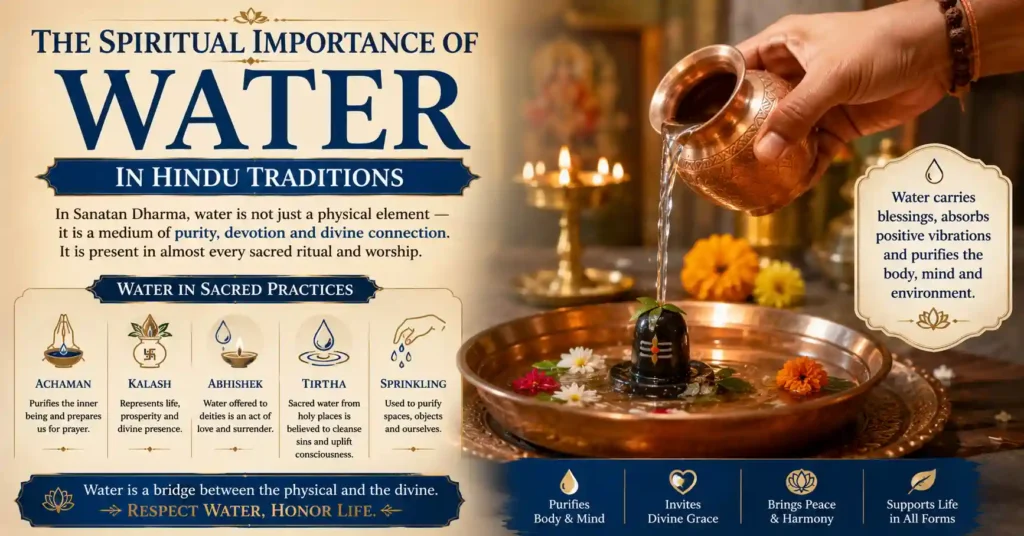
The spiritual importance of water is reflected throughout Hindu traditions. Water is used in daily worship, temple rituals, purification ceremonies, and sacred offerings. Whether it is offered to a deity, received as Tirtha, or used during Achaman, water symbolizes purity, renewal, and divine grace.
Ancient sages saw water as much more than a physical necessity. They viewed it as a sacred gift that connects human life with nature and the divine. This understanding forms an important foundation of Water in Sanatan Dharma and explains why water continues to be treated with reverence even today.
When we pause for a moment before drinking water and approach it with gratitude, we begin to see it differently. What once seemed ordinary starts to feel like an essential part of both physical well-being and spiritual awareness.
The Spiritual Importance of Water in Hindu Traditions
Water has often been compared to a gentle mirror. It adapts to every vessel, flows around obstacles, and quietly supports life without asking for anything in return. These qualities have made water a powerful symbol of humility, purity, and adaptability in many spiritual traditions.
In Hindu culture, water is not viewed merely as something we drink. It plays an important role in worship, prayer, purification rituals, and sacred ceremonies. This deep respect reflects the enduring significance of Water in Sanatan Dharma.
Many families traditionally kept drinking water in a clean and respected place within the home. Some lit a diya nearby, while others recited prayers or mantras before important rituals. These practices were not simply customs. They were expressions of gratitude and reverence for an element that sustains life.
The spiritual importance of water can also be seen in rituals such as Achaman, Abhishek, and the use of Tirtha. In each of these practices, water symbolizes purification, blessings, and a connection with the divine.
Whether offered to a deity, used in prayer, or shared with devotion, water reminds us of a simple truth. When we treat the gifts of nature with awareness and respect, we often develop greater mindfulness, gratitude, and inner balance in our daily lives.
Did You Know?
Water is revered as one of the Panchamahabhutas (Five Great Elements) in Sanatan Dharma and is known as Jala Tattva. It plays an important role in rituals such as Achaman, Abhishek, Kalash Sthapana, and Tirtha because it symbolizes purification, nourishment, and divine grace.
Ancient Hindu traditions also regard rivers such as the Ganga, Yamuna, Godavari, Narmada, Saraswati, Sindhu, and Kaveri as sacred and invoke them during worship rituals.
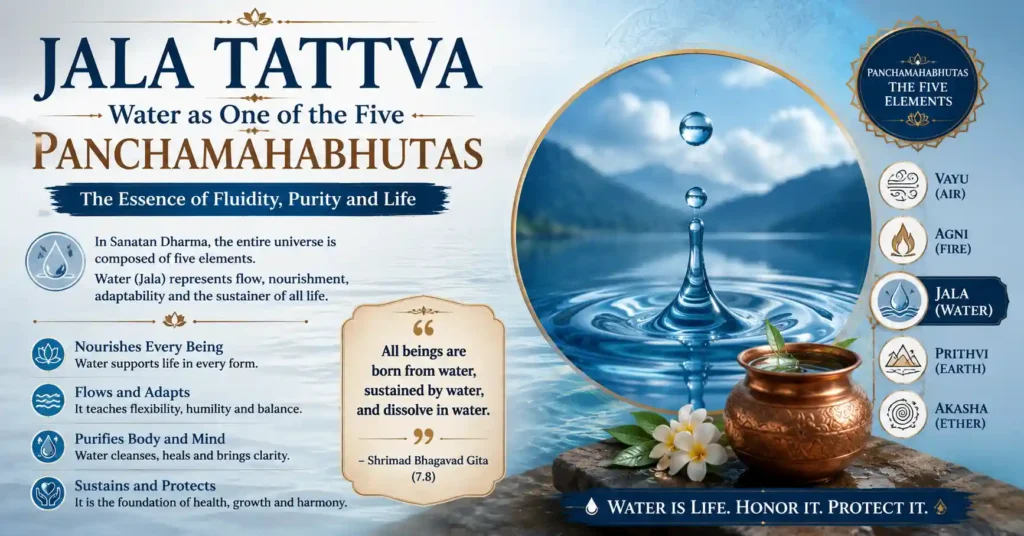
What Hindu Scriptures Say About Water
The reverence for water in Hindu traditions is not based only on custom. It is deeply rooted in the scriptures and philosophical teachings of Sanatan Dharma.
In Hindu philosophy, water is known as Jala Tattva and is one of the Panchamahabhutas, the five great elements that form the foundation of the physical world. These elements are Earth, Water, Fire, Air, and Space. Together, they are believed to sustain all life and creation.
Ancient Vedic prayers frequently praise water as a source of nourishment, purification, strength, and well-being. Water is seen as a life-giving force that supports both physical survival and spiritual growth.
The importance of Water in Sanatan Dharma can also be seen in daily rituals. Water is used during Achaman for purification, in Abhishek as an offering to deities, and in Kalash Sthapana, where a vessel filled with water symbolizes divine presence and abundance.
These practices remind us that water is not viewed merely as a natural resource. It is respected as a sacred element that sustains life and connects human beings with the natural and spiritual worlds.
The teachings associated with Water in Sanatan Dharma encourage gratitude, mindfulness, and responsible use of the resources that support our existence every day.
Sacred Rivers and the Spiritual Importance of Water
The importance of water in Hindu traditions is also reflected in the reverence shown to India’s sacred rivers. For thousands of years, rivers have been seen not only as sources of water but also as symbols of life, nourishment, and divine grace.
Among the most revered are the Ganga, Yamuna, Godavari, Narmada, Saraswati, Sindhu, and Kaveri. These rivers are often remembered in prayers and invoked during religious rituals across India.
In Sanatan Dharma, rivers are traditionally honoured as nurturing mothers because they sustain communities, support agriculture, and provide water for daily life. This reverence encourages gratitude toward nature and reminds us that human life depends on the natural world.
The spiritual significance of these rivers goes beyond geography. They symbolize purity, renewal, and the continuous flow of life. Just as a river keeps moving forward, it inspires us to let go of negativity and continue our own journey with faith and resilience.
This deeper understanding helps us appreciate Water in Sanatan Dharma not only as a physical necessity but also as a symbol of connection, transformation, and spiritual awareness.
The respect shown to sacred rivers also carries an important responsibility. Honouring water means caring for rivers, lakes, and natural water sources so that future generations can continue to benefit from them.

My Personal Experience With Mindful Water Practices
Over time, I began changing the way I treated water. Nothing complicated, just a few simple habits that encouraged greater awareness and gratitude in daily life.
I started storing drinking water in a copper vessel and cleaning it regularly before filling it with fresh water each night. Sometimes I would light a small diya nearby or pause for a moment of gratitude before drinking.
What changed most was not the water itself, but my attitude toward it. Instead of drinking water absent-mindedly, I began taking a brief pause before the first sip. That small habit helped me feel more present and mindful.
Gradually, these practices brought a sense of calmness to my mornings. They reminded me that even ordinary actions can become meaningful when approached with awareness and respect.
One of the lessons I learned through Water in Sanatan Dharma is that spiritual growth does not always come through complex rituals. Sometimes a simple daily practice can deepen our appreciation for the blessings that quietly support our lives.
The Changes I Gradually Noticed in Daily Life
The first changes I noticed were not dramatic or life-changing. They appeared quietly through everyday experiences and small moments that became easier to appreciate over time.
One of the first things I observed was that my daughter seemed to fall sick less often than before. As a parent, even small improvements in a child’s well-being naturally draw your attention and make you reflect on the routines followed at home.
I also felt that my own daily health became more balanced. Whether it was due to greater mindfulness, healthier habits, or simply becoming more aware of my lifestyle, I found myself feeling calmer and more settled than before.
Perhaps the biggest change was the atmosphere within the home. Mornings felt less rushed, and there seemed to be a greater sense of peace in our daily routine. Simple acts of gratitude often encouraged a calmer state of mind for everyone around us.
There were days when I skipped these practices, and I noticed that something felt different. It may not have been the water itself. It may simply have been the absence of that brief moment of awareness and appreciation that had become part of my day.
This experience taught me an important lesson. The value of Water in Sanatan Dharma is not limited to rituals or traditions alone. Sometimes its greatest gift is the opportunity to slow down, become mindful, and develop a deeper sense of gratitude for the simple things that quietly support our lives.
When approached with respect and awareness, even a daily glass of water can become a reminder of balance, mindfulness, and the spiritual importance of water in our everyday journey.

Can Science Explain the Benefits of Mindful Water Practices?
Many people wonder whether the effects associated with water are purely spiritual or whether science can explain some of them. The answer may be a combination of both.
Modern research shows that proper hydration plays an important role in physical health, mental clarity, energy levels, and overall well-being. Even mild dehydration can affect concentration, mood, and daily performance.
Science also recognizes the benefits of mindfulness and gratitude. When people slow down, become more aware of their actions, and practice gratitude, they often experience lower stress levels and greater emotional balance.
This may help explain why simple habits such as drinking water mindfully, pausing before a meal, or expressing gratitude can create a positive effect on daily life. The benefit may come not only from the water itself but also from the awareness we bring to the moment.
At the same time, some beliefs associated with Water in Sanatan Dharma, such as water absorbing intentions, prayers, or subtle energies, belong to the realm of spiritual experience and personal faith. Different people may understand these ideas in different ways.
Whether viewed through the lens of spirituality, mindfulness, or personal experience, water continues to play an important role in supporting both physical and emotional well-being.
Simple Ways to Honor Water Every Day
You do not need a complicated routine to develop a deeper connection with water. In many traditions associated with Water in Sanatan Dharma, small daily habits are often considered more valuable than occasional grand gestures.
You can begin by storing drinking water in a clean vessel, handling it with care, and avoiding unnecessary wastage. Many families also prefer using a copper vessel as part of their traditional daily routine.
Before drinking water, pause for a moment and bring your attention to the present. This simple act can transform an unconscious habit into a mindful practice filled with awareness and gratitude.
It is also helpful to support your body’s natural hydration through fresh fruits, a balanced diet, and regular water intake throughout the day. Caring for water also means caring for the health it supports.
Above all, cultivate gratitude. Whether through a silent prayer, a moment of reflection, or simply appreciating the gift of clean water, gratitude helps us develop a more respectful relationship with nature.
The spiritual importance of water is not found only in rituals and ceremonies. It is also reflected in how we treat this precious resource in our everyday lives. When approached with awareness, water becomes a gentle reminder of balance, humility, and our connection with the world around us.
Water in Ayurveda and Daily Well-Being
Ayurveda has long recognised the importance of water for maintaining balance and supporting overall well-being. While modern health advice often focuses on hydration, Ayurveda also pays attention to when, how, and in what form water is consumed.
One traditional practice is Ushapaan, which refers to drinking water early in the morning after waking up. Many Ayurvedic practitioners believe this supports hydration and helps prepare the digestive system for the day ahead.
Ayurveda often recommends drinking warm or room-temperature water instead of very cold water. Warm water is traditionally considered easier on digestion and is commonly included in daily wellness routines.
Proper hydration is essential for supporting digestion, circulation, and overall vitality. This is one reason water is given such importance in both Ayurveda and traditional Hindu households.
Another well-known practice is storing drinking water in a copper vessel. This tradition has been followed for generations and is often associated with mindful living, daily discipline, and respect for natural elements.
These Ayurvedic perspectives complement the broader teachings of Water in Sanatan Dharma, where water is valued not only for physical well-being but also for balance, awareness, and gratitude in daily life.
Water as a Source of Gratitude and Awareness
Over time, I came to see water differently. It was no longer just something I drank throughout the day. It became a simple reminder to slow down, be present, and appreciate the many blessings that quietly support life.
In Sanatan traditions, water is often associated with purity, balance, and renewal. This understanding encourages us to treat it with respect rather than taking it for granted. Such awareness lies at the heart of Water in Sanatan Dharma.
The more mindful I became, the more I noticed how small moments of gratitude could change my outlook. A simple glass of water became an opportunity to pause, reflect, and reconnect with the present moment.
When approached with care and awareness, ordinary actions begin to feel meaningful. This is one of the reasons the spiritual importance of water continues to be valued across generations.
Perhaps the greatest lesson water teaches is simplicity. It flows without resistance, adapts to every situation, and supports life quietly without seeking recognition. In many ways, these are qualities we can also bring into our own lives.
By developing respect for water and the natural world, we cultivate greater mindfulness, gratitude, and inner balance. This deeper appreciation is one of the timeless teachings reflected in Water in Sanatan Dharma.

Common Misconceptions About the Healing Power of Water
As interest in spiritual wellness grows, many ideas about the healing power of water are shared online and through personal experiences. While water holds an important place in Sanatan Dharma, it is helpful to approach the topic with balance and understanding.
1. Water Alone Cannot Cure Every Illness
Water is essential for life and supports overall well-being, but it should not be viewed as a cure for every health condition. Physical health depends on many factors, including proper nutrition, lifestyle, medical care, and individual circumstances.
2. Sacred Water Is Not a Replacement for Medical Treatment
In Hindu traditions, Tirtha and other forms of sanctified water are received with faith and reverence. However, spiritual practices are generally meant to complement a healthy and responsible approach to life, not replace appropriate medical advice or treatment.
3. Not Every Spiritual Belief Has Scientific Proof
Many teachings associated with the healing power of water come from spiritual traditions, personal experiences, and cultural practices. Some ideas have been explored by researchers, while others remain matters of faith and individual belief.
4. Rituals Are Most Meaningful When Practiced With Awareness
Simply performing a ritual without attention or sincerity may not create the same inner impact. In Sanatan Dharma, intention, gratitude, and awareness are considered just as important as the external action itself.
Ultimately, the healing power of water is not only about physical benefits. It is also about developing mindfulness, gratitude, respect for nature, and a deeper connection with the sacred elements that support life.
Key Takeaways
- Water in Sanatan Dharma is regarded as a sacred element that supports both physical life and spiritual growth.
- Water, or Jala Tattva, is one of the Panchamahabhutas (Five Great Elements) that form the foundation of creation.
- Hindu traditions use water in rituals such as Achaman, Abhishek, Tirtha, and Kalash Sthapana, where it symbolizes purification and divine grace.
- Sacred rivers such as Ganga, Yamuna, Godavari, Narmada, Saraswati, Sindhu, and Kaveri hold a special place in Sanatan traditions.
- The spiritual importance of water is reflected not only in rituals but also in daily habits of gratitude, mindfulness, and respect for nature.
- Simple practices such as mindful drinking, avoiding water wastage, and appreciating natural resources can help deepen awareness.
- Traditional practices like storing water in copper vessels continue to be followed in many households as part of cultural and spiritual routines.
- One of the deepest lessons of Water in Sanatan Dharma is that ordinary things often carry extraordinary wisdom when viewed with awareness and gratitude.
Conclusion
In the end, I realised that water is much more than something we drink every day. It supports life quietly, nourishes the body, and holds a special place in countless spiritual traditions. The deeper I explored Water in Sanatan Dharma, the more I understood why our ancestors treated it with such respect and gratitude.
Whether through a simple glass of water, a sacred river, a Kalash, or daily rituals, water reminds us of the values of purity, mindfulness, and appreciation. These traditions are not merely customs. They encourage us to develop a more conscious relationship with the natural world around us.
One of the most beautiful lessons I learned is that meaningful spiritual practices are often simple. A moment of gratitude before drinking water, a commitment to avoid wasting it, or a greater awareness of its role in our lives can gradually transform the way we think and live.
The spiritual importance of water lies not only in rituals but also in the attitude with which we approach it. When we treat water with care, respect, and gratitude, we become more mindful of the countless blessings that quietly sustain us every day.
Perhaps that is the timeless message behind Water in Sanatan Dharma. The things we often take for granted are sometimes the very things that support us the most. By honoring water, we also learn to honor life itself.
Suggested Reading
If learning about Water in Sanatan Dharma has inspired you to look more deeply at the connection between spirituality and daily life, these articles may help you continue that journey. The wisdom behind Water in Sanatan Dharma is closely linked with mindfulness, gratitude, inner discipline, and living in harmony with nature.
As you explore the deeper meaning of Water in Sanatan Dharma, these related topics can help you bring more balance, awareness, and spiritual understanding into your everyday routine.
Daily Devotional Practices: How Small Acts Build Inner Discipline and Faith
https://thesanatantales.com/daily-devotional-practices/
Ambition and Peace: How to Balance Both Without Losing Inner Peace in Daily Life
https://thesanatantales.com/ambition-and-peace/
Daily Meditation: Benefits, Meaning and Simple Ways to Start
https://thesanatantales.com/daily-meditation-benefits/
Daily Sattvik Routine for Working Professionals: Simple Habits for a Peaceful Life
https://thesanatantales.com/daily-sattvik-routine-for-working-professionals/
Mudras: A Simple Practice for Balance, Awareness and Well-Being
https://thesanatantales.com/mudras-benefits-daily-life/
Daily Spiritual Habits: 7 Simple Sanatan Practices for Inner Peace
https://thesanatantales.com/daily-spiritual-habits/
Karma and Life Lessons: What Your Experiences Are Teaching You
https://thesanatantales.com/karma-and-life-lessons/
Fear of Failure: Finding Your Path, Purpose and Success through Sanatan Dharma
https://thesanatantales.com/fear-of-failure/
FAQs
What is the significance of water in Sanatan Dharma?
Water in Sanatan Dharma is regarded as far more than a physical necessity. Known as Jala or Āpaḥ, it is one of the Panchamahabhutas (Five Great Elements) and is associated with purity, nourishment, and life itself.
Water is used in almost every major Hindu ritual, including Achaman, Abhishek, Tirtha, Sankalpa, and Kalash Sthapana. These practices reflect the belief that water helps create a sense of physical and spiritual purification.
The importance of Water in Sanatan Dharma also reminds us to respect nature and remain grateful for the resources that sustain life every day.
Why is water considered sacred in Hindu traditions?
Water is considered sacred because it sustains all living beings and plays a central role in spiritual practices. Ancient Hindu scriptures describe water as a source of purification, renewal, and divine blessings.
This is why sacred rivers such as the Ganga, Yamuna, Godavari, Narmada, Saraswati, Sindhu, and Kaveri are deeply revered. Their waters are invoked in rituals, festivals, and temple worship across India.
The reverence shown toward water reflects a broader Sanatan teaching that nature itself deserves respect and gratitude.
What is the role of water in Hindu rituals and worship?
Water is present at almost every stage of Hindu worship. It is used for purification, offerings, blessings, and sacred ceremonies. Rituals such as Achaman involve sipping water before worship, while Abhishek involves bathing a deity with water and other sacred substances.
Water is also placed in a Kalash, offered as Tirtha, and used during Sankalpa and temple ceremonies. These practices symbolize purity, devotion, and a connection with the divine.
The widespread use of water in rituals highlights its enduring spiritual importance in Sanatan Dharma.
Why do many people store water in copper vessels?
Storing water in copper vessels is a traditional practice followed in many Indian households. It is often associated with Ayurveda and daily wellness routines. Copper vessels have been used for generations as part of mindful living and traditional health practices.
For many people, this practice is not only about the vessel itself but also about developing greater awareness and respect for the water they consume.
In the context of Water in Sanatan Dharma, such habits encourage mindfulness, gratitude, and conscious living.
What is Achaman and why is it performed?
Achaman is a traditional purification ritual in which small amounts of water are sipped while reciting sacred names or mantras before worship. It is commonly performed before puja, yajna, prayer, and other religious ceremonies.
The ritual symbolizes inner and outer purification and helps prepare the mind for spiritual practices. For centuries, Achaman has been regarded as an important part of Hindu worship and daily discipline.
This practice illustrates how Water in Sanatan Dharma is linked not only to physical cleansing but also to spiritual preparation.
What can we learn from Water in Sanatan Dharma today?
One of the most important lessons is mindfulness. Water teaches us humility, adaptability, patience, and gratitude. It flows around obstacles, nourishes life quietly, and supports every living being without seeking recognition.
The teachings associated with Water in Sanatan Dharma encourage us to value natural resources, avoid wastefulness, and cultivate respect for the world around us.
In a fast-paced world, even a simple pause before drinking a glass of water can become a reminder to live with greater awareness, balance, and appreciation for life’s everyday blessings.
Is water worshipped in Sanatan Dharma?
Water itself is not worshipped as an ordinary physical substance. In Sanatan Dharma, water is respected as a sacred manifestation of nature that sustains all life. It is viewed as a divine gift and an important symbol of purity, nourishment, and spiritual cleansing.
This is why water is used in rituals such as Achaman, Abhishek, Kalash Sthapana, and Tirtha. These practices express gratitude and reverence for the life-giving role of water rather than worshipping water as an independent deity.
The respect shown toward water in Water in Sanatan Dharma reflects a broader teaching that all elements of nature deserve care, gratitude, and responsible use.
Why are rivers considered sacred in Hinduism?
Rivers are considered sacred because they have supported human life, agriculture, spiritual practices, and civilizations for thousands of years. Hindu traditions regard many rivers as divine mothers who nourish and protect all living beings.
Sacred rivers such as the Ganga, Yamuna, Godavari, Narmada, Saraswati, Sindhu, and Kaveri hold a special place in prayers, pilgrimages, and religious ceremonies. Their waters are often associated with purification, blessings, and spiritual renewal.
In the context of Water in Sanatan Dharma, sacred rivers remind us of the deep connection between nature, spirituality, and daily life. They also inspire a sense of responsibility to protect and preserve natural water sources for future generations.
What is Jala Tattva in Hindu philosophy?
Jala Tattva refers to the water element and is one of the Panchamahabhutas (Five Great Elements) described in Hindu philosophy. The five elements are Earth (Prithvi), Water (Jala), Fire (Agni), Air (Vayu), and Space (Akasha).
Jala Tattva represents qualities such as fluidity, adaptability, nourishment, cooling energy, and emotional balance. Just as water takes the shape of any vessel while maintaining its essential nature, it symbolizes flexibility and harmony in life.
Understanding Jala Tattva helps us appreciate the deeper meaning of Water in Sanatan Dharma. It teaches that water is not only essential for physical survival but also serves as a reminder of balance, humility, and the interconnectedness of all life.
Glossary of Important Terms
| Term | Meaning |
|---|---|
| Water (Jala) | The water element, known as Jala Tattva, one of the Panchamahabhutas (Five Great Elements) in Sanatan Dharma. |
| Jala Tattva | The principle of water in Hindu philosophy, representing fluidity, nourishment, purification, and adaptability. |
| Panchamahabhutas | The five fundamental elements of creation: Earth (Prithvi), Water (Jala), Fire (Agni), Air (Vayu), and Space (Akasha). |
| Sanatan Dharma | The eternal spiritual tradition commonly known as Hinduism, encompassing diverse paths of worship, philosophy, and practice. |
| Achaman | A purification ritual involving the sipping of water before prayer, worship, or sacred ceremonies. |
| Abhishek (Abhishekam) | The ritual bathing of a deity with water, milk, or other sacred substances as an act of devotion. |
| Tirtha | Sacred water received after worship or collected from holy rivers and pilgrimage sites. |
| Kalash | A sacred vessel filled with water and used during pujas, festivals, and religious ceremonies. |
| Kalash Sthapana | The ceremonial placement and worship of a Kalash to invoke divine presence during rituals. |
| Sankalpa | A sacred intention or prayer made before beginning a religious ceremony, often performed while holding water. |
| Ganga Jal | Water from the sacred River Ganga, considered especially pure and spiritually significant in Hindu traditions. |
| Sacred Rivers | Rivers such as Ganga, Yamuna, Godavari, Narmada, Saraswati, Sindhu, and Kaveri, revered as holy in Sanatan Dharma. |
| Purification | The process of cleansing the body, mind, or spirit through spiritual practices and sacred rituals. |
| Mindfulness | Being fully aware and present in the current moment, often cultivated through conscious daily habits. |
| Gratitude | A feeling of thankfulness and appreciation, considered an important spiritual value in Sanatan traditions. |
| Ayurveda | The traditional Indian system of holistic health and wellness that emphasizes balance between body, mind, and nature. |
| Prasad | Food, water, or other offerings that have been blessed and distributed after worship. |
| Dharma | One’s duty, righteous way of living, and alignment with universal order and ethical principles. |
| Spiritual Purification | The process of reducing negativity and cultivating inner clarity, devotion, and self-awareness. |
| Divine Grace | Blessings believed to come from the Divine, often symbolized through sacred rituals and offerings. |
About the Author
Yateendra Chaturvedi is a spiritual writer, researcher, devotee, and the founder of The Sanatan Tales. With over 35 years of professional experience and a lifelong interest in Sanatan Dharma, he writes about Hindu deities, temples, scriptures, festivals, Mahavidyas, sacred stories, rituals, and living traditions that continue to guide and inspire devotees across India.
Drawing from traditional scriptures, regional beliefs, temple traditions, devotional literature, and historical sources, he aims to present authentic, well-researched, and easy-to-understand content for modern readers. His work focuses on preserving spiritual wisdom, explaining sacred traditions, and helping seekers develop a deeper understanding of India’s rich spiritual heritage.
Through The Sanatan Tales, Yateendra strives to make the timeless teachings of Sanatan Dharma simple, meaningful, and relevant for today’s generation while maintaining respect for traditional sources, regional practices, and diverse spiritual perspectives.
Learn More About Yateendra Chaturvedi →
https://thesanatantales.com/about-the-author/
References & Sources
This article is based on commonly known beliefs, traditions, practices, and philosophical concepts associated with Sanatan Dharma. It draws upon traditional Hindu teachings, cultural practices, spiritual literature, devotional customs, and knowledge that has been preserved and shared through generations.
The article also reflects widely followed practices related to daily worship, sacred elements, mindfulness, gratitude, and the spiritual significance of nature within Hindu traditions.
Note: Beliefs, interpretations, and practices may vary across different traditions, sampradayas, regions, scriptures, teachers, and individual spiritual paths. The purpose of this article is to present commonly accepted perspectives in a simple, practical, and reader-friendly manner. It is intended for educational and informational purposes and does not seek to promote any single interpretation as the only valid view within the diverse tradition of Sanatan Dharma.
Explore More Fascinating Topics from Sanatan Dharma