Modern life often feels like a constant race between work responsibilities, family commitments, and personal well-being. Long hours, digital distractions, and daily stress can leave many professionals feeling mentally exhausted and disconnected from their inner peace. In such a fast-paced environment, maintaining balance can seem challenging.
A daily sattvik routine offers a practical way to bring more clarity, calmness, and mindfulness into everyday life. Rooted in the timeless wisdom of Sanatan Dharma, it encourages simple habits that support mental well-being, emotional balance, and spiritual growth without requiring drastic lifestyle changes.
The beauty of a sattvik lifestyle is that it can be practiced by anyone. You do not need to leave your job, follow a strict schedule, or spend hours in meditation. Small conscious actions, mindful food choices, balanced thinking, and moments of self-awareness can gradually transform the quality of your day.
In this article, you will learn how to create a daily sattvik routine that fits a busy professional schedule, incorporate spiritual habits into your workday, maintain inner peace during stressful situations, and cultivate a healthier, more balanced way of living. Whether you work in an office, run a business, or work remotely, these practical insights can help you build a daily sattvik routine that supports both professional success and personal well-being.
Daily Sattvik Routine at a Glance
| Topic | Details |
|---|---|
| Article Topic | Daily Sattvik Routine for Working Professionals |
| Best For | Working professionals, business owners, remote workers, and anyone seeking greater balance and inner peace |
| Core Principle | Small, consistent habits create lasting positive change |
| Morning Practice | Gratitude, silence, prayer, conscious breathing, or meditation |
| Spiritual Habits | Mantra chanting, self-reflection, mindful breathing, and gratitude |
| Food Guidance | Fresh, wholesome, and mindful eating that supports physical and mental well-being |
| Workplace Practice | Calm communication, conscious pauses, patience, and mindful responses to stress |
| Evening Practice | Prayer, reflection, bhajans, sacred reading, or quiet relaxation |
| Weekend Focus | Rest, renewal, family time, nature, temple visits, and self-reflection |
| Key Benefits | Mental clarity, emotional balance, reduced stress, better focus, improved relationships, and inner peace |
| Important Concepts | Sattva, Rajas, Tamas, mindfulness, and balanced living |
| Traditional Foundation | Bhagavad Gita, Sankhya Philosophy, and Sanatan Dharma teachings |
| Main Takeaway | Spiritual growth begins with small mindful actions practiced consistently over time |
Did You Know?
The concept of Sattva, along with Rajas and Tamas, is explained in the Bhagavad Gita as one of the three gunas that influence human thoughts, emotions, and actions.
According to Sanatan philosophy, cultivating more Sattva through mindful habits, balanced living, and self-awareness can help bring greater clarity, inner peace, and harmony into daily life.
Table of Contents
ToggleWhat Is a Daily Sattvik Routine?
Sattva is one of the three gunas described in Sanatan Dharma and represents purity, balance, wisdom, and clarity of mind. A sattvik lifestyle encourages calm emotions, thoughtful actions, healthy habits, and a deeper sense of inner harmony.
A daily sattvik routine is not about following strict rules or trying to achieve perfection. Instead, it is about making conscious choices that bring greater awareness and balance into everyday life. Small actions performed with mindfulness often have a greater impact than rigid practices followed without understanding.
Sattvik living can be reflected in many areas of life, including the food we eat, the thoughts we cultivate, the way we speak, and how we respond to situations. It encourages simplicity, moderation, self-discipline, and respect for both ourselves and others.
When awareness guides how you begin your morning, approach your work, interact with people, and end your day, the quality of your thoughts and actions gradually improves. Over time, these small but consistent habits help create mental clarity, emotional balance, and lasting inner peace.
Why Following a Sattvik Lifestyle Feels Challenging Today
Living a sattvik lifestyle may sound simple, but modern life often makes it difficult to maintain balance and inner calm. Long working hours, daily commutes, constant notifications, social media, and information overload keep the mind continuously occupied and overstimulated.
Many people sincerely want a more peaceful and meaningful life, yet struggle to find the time and energy for it. A common misconception is that spiritual growth requires hours of meditation, strict routines, or withdrawing from worldly responsibilities. As a result, many postpone positive changes because they feel unprepared to make a complete lifestyle transformation.
In reality, Sanatan Dharma encourages gradual progress rather than sudden perfection. Spiritual living begins with small conscious choices made consistently over time. A few minutes of silence, mindful eating, balanced thinking, or a moment of gratitude can become meaningful steps toward greater awareness.
The purpose of a daily sattvik routine is not to add another task to an already busy schedule. Its purpose is to bring mindfulness into the activities you already perform each day. When practiced consistently, even a single positive habit can help create greater mental clarity, emotional balance, and inner peace.
Start Your Morning with Stillness and Gratitude
The way you begin your morning often influences your mindset for the rest of the day. Starting the day with calmness and awareness can help you feel more focused, balanced, and prepared for daily responsibilities.
Before reaching for your phone or checking messages, take a few moments to pause. Sit quietly, take slow deep breaths, and offer gratitude to the Divine for a new day. This simple practice helps create a positive mental foundation before the demands of work begin.
Even a few minutes of silence can help reduce mental clutter and bring greater clarity. Instead of immediately reacting to notifications and tasks, allow yourself a brief period of stillness to settle the mind.
If your schedule permits, try waking up a little earlier to experience the peaceful atmosphere of Brahma Muhurta, the sacred period before sunrise that is traditionally considered ideal for prayer, reflection, and spiritual practices. Many people find that the mind feels naturally calm and receptive during these early hours.
The goal is not to wake up extremely early or follow a perfect routine. What matters most is consistency. A simple morning practice followed regularly can contribute more to inner peace than an elaborate routine followed only occasionally.
Simple Spiritual Practices for a Busy Workday
Many people avoid meditation, prayer, or mantra chanting because they assume these practices require long periods of uninterrupted time. In reality, even a few mindful minutes each day can help create a greater sense of balance and calmness.
You can begin with simple practices that fit naturally into your schedule. Some people prefer silent sitting and conscious breathing, while others find comfort in chanting the Gayatri Mantra for clarity or the Mahamrityunjaya Mantra for strength and resilience. Listening to devotional music or a calming mantra during a morning walk or commute can also help create a peaceful state of mind.
These small spiritual habits train the mind to respond with awareness rather than react impulsively to stress. Over time, they can improve emotional balance, concentration, and overall well-being, especially during demanding workdays.
Spiritual growth does not always require setting aside extra hours. Often, it begins by bringing mindfulness into the activities you already perform. A few moments of prayer before starting work, conscious breathing between tasks, or a brief period of reflection at the end of the day can gradually become meaningful parts of a balanced lifestyle.

Follow a Sattvik Diet with Awareness, Not Restrictions
A sattvik diet is not about strict food rules or giving up everything you enjoy. Its purpose is to support physical well-being, mental clarity, and emotional balance through mindful food choices.
Fresh, home-cooked meals are generally considered the foundation of sattvik eating. Fruits, vegetables, whole grains, nuts, seeds, milk, and ghee are traditionally valued because they are believed to nourish both the body and mind. Such foods help promote lightness, clarity, and steady energy throughout the day.
On the other hand, heavily processed, stale, excessively oily, or overly spicy foods may contribute to restlessness, lethargy, or mental agitation when consumed regularly. The goal is not complete avoidance but developing greater awareness of how different foods affect your body and state of mind.
For working professionals, maintaining a balanced diet does not always mean eating every meal at home. Even while dining out or ordering food, choosing simple, freshly prepared meals can support healthier habits and mindful living.
In Sanatan Dharma, food is viewed as more than physical nourishment. It is believed to influence thoughts, emotions, and overall well-being. When meals are consumed with gratitude and awareness, eating itself becomes a simple spiritual practice that supports a balanced and harmonious life.
Sattvik Living Is a Way of Life, Not Just a Diet
Many people associate sattvik living only with food, but the concept extends far beyond what is placed on the plate. In Sanatan Dharma, sattva influences thoughts, actions, relationships, habits, and the overall quality of daily life.
A sattvik lifestyle is reflected through:
- peaceful and truthful speech
- honest actions
- balanced emotions
- mindful media consumption
- healthy sleep habits
- respectful relationships
- a clean and uplifting environment
Food certainly plays an important role, but so do the thoughts we entertain, the conversations we participate in, and the choices we make throughout the day. When these areas become more balanced, mental clarity and emotional stability naturally grow.
Sattvik living also shapes how we interact with others. Speaking respectfully, listening with attention, practicing patience, and avoiding unnecessary conflict help create healthier and more harmonious relationships.
Inner peace often develops through the quality of our daily interactions. When communication becomes more thoughtful and compassionate, relationships tend to feel lighter, more supportive, and less stressful.
In Sanatan philosophy, human behavior is influenced by the three gunas: Sattva, Rajas, and Tamas. Sattva represents clarity, wisdom, harmony, and balance. Rajas is associated with activity, ambition, and restlessness, while Tamas is linked to inertia, confusion, and ignorance. Most people experience all three gunas in varying degrees throughout life.
Classical texts such as the Bhagavad Gita and the Sankhya tradition explain that cultivating sattva helps develop greater self-awareness, balanced thinking, and inner harmony. This does not mean withdrawing from the world or abandoning responsibilities. Rather, it means approaching daily life with greater mindfulness, moderation, and purpose.
Ultimately, sattvik living is not about becoming perfect. It is about creating a way of life that supports peace of mind, meaningful relationships, spiritual growth, and overall well-being.
How to Bring Sattvik Values into the Workplace
Work can become a space for personal growth when approached with awareness and balance. The principles of sattvik living are not limited to prayer or meditation. They can also be practiced during meetings, conversations, decision-making, and everyday professional responsibilities.
Simple habits such as speaking respectfully, listening patiently, and avoiding unnecessary negativity help maintain emotional balance throughout the workday. These small actions not only improve workplace relationships but also reduce mental stress and conflict.
When pressure begins to build, taking a few conscious breaths or silently repeating a mantra such as “Om Namah Shivaya” can help calm the mind. Such practices encourage thoughtful responses instead of impulsive reactions.
Modern workplaces often involve deadlines, digital distractions, office politics, and constant communication. Over time, these demands can drain mental energy and affect overall well-being.
This is where mindfulness becomes especially valuable. Taking a short break between meetings, stepping away from the screen for a few minutes, stretching the body, or eating lunch without checking your phone can help restore focus and mental clarity.
A sattvik approach to work does not require changing your profession or reducing your ambitions. It simply encourages performing your duties with greater awareness, patience, integrity, and self-control. When work is approached in this spirit, it becomes less stressful and more meaningful.
Even in a busy office environment, small moments of presence can help protect inner peace and support a healthier work-life balance.
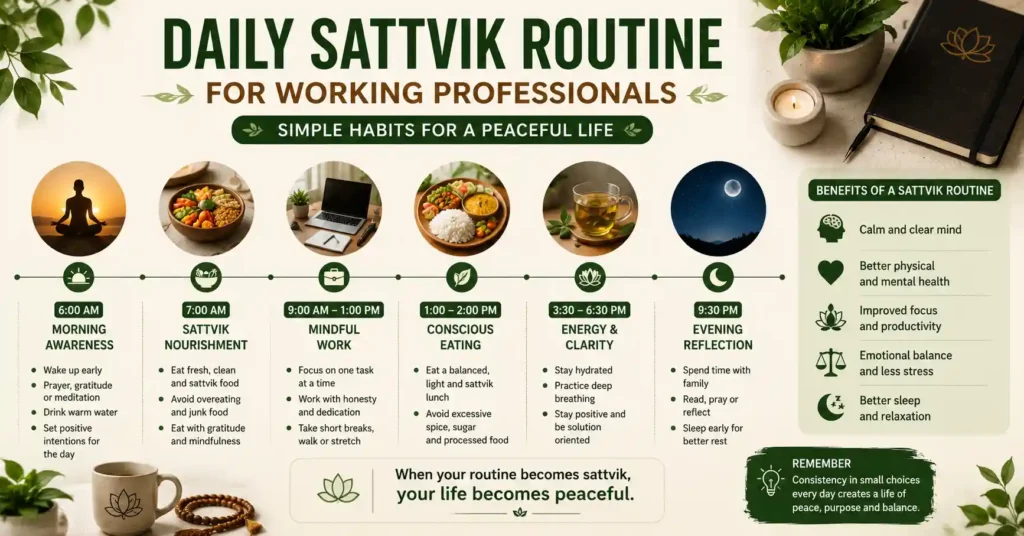
A Practical Daily Schedule for Working Professionals
Many people understand the principles of sattvik living but wonder how to apply them in a busy professional life. The good news is that a balanced and mindful lifestyle does not require major changes. Small practices woven into the day can make a meaningful difference.
| Time | Practice |
|---|---|
| Morning | Gratitude, prayer, or 5 minutes of silence |
| Breakfast | Fresh and mindful meal |
| Work Hours | Conscious breathing between tasks |
| Lunch | Eat without scrolling or multitasking |
| Evening | Short walk, prayer, or quiet reflection |
| Night | Gratitude and reduced screen time |
This example is meant to serve as a guide rather than a fixed schedule. Every person has different responsibilities, work hours, and family commitments. The goal is to adapt these habits in a way that feels natural and sustainable.
What matters most is consistency, not perfection. A few mindful moments during the day can gradually improve focus, emotional balance, and overall well-being. Over time, these small practices can help create a more peaceful and purposeful way of living.
Common Mistakes When Starting a Sattvik Lifestyle
- Trying to change everything at once
- Following a routine that is too strict or unrealistic
- Feeling guilty after missing a practice
- Comparing your spiritual journey with others
- Focusing only on food while ignoring thoughts, speech, and behavior
- Expecting immediate results
A sattvik lifestyle grows gradually through awareness and consistency. Progress does not come from perfection but from small, sustainable habits practiced regularly over time.
Habits That Can Disrupt a Sattvik Lifestyle
Just as certain habits support inner peace and mental clarity, others can gradually create restlessness, distraction, and emotional imbalance. Recognizing these patterns is an important step toward more mindful living.
Some common habits that may disturb balance include:
- excessive scrolling on social media
- constant consumption of negative news
- unnecessary gossip and criticism
- irregular sleep schedules
- emotional overreaction to situations
- excessive screen exposure
- multitasking continuously without breaks
These habits often increase mental noise and make it harder to remain calm, focused, and present throughout the day. Over time, they can affect both emotional well-being and the quality of daily interactions.
The purpose of identifying such habits is not to judge ourselves harshly or strive for perfection. Lasting change usually begins with awareness rather than force. When we become conscious of what drains our energy and peace of mind, healthier choices naturally become easier to make.
A balanced lifestyle is built through small improvements made consistently over time. Even reducing one unhelpful habit can create more space for clarity, mindfulness, and inner harmony.
Create a Peaceful Transition Between Work and Home
After a busy day, the mind benefits from a clear signal that work has ended and personal time has begun. Without this transition, work-related stress often follows us into the evening and affects our ability to relax.
Simple practices can help create this shift. Washing your hands and feet, lighting a diya, taking a few deep breaths, or sitting quietly for a few moments can help calm the mind and relax the nervous system.
Many people also find comfort in listening to soft bhajans, reading a few verses from sacred texts, or spending a few minutes in silent reflection. These practices encourage the mind to slow down and release the mental pressure accumulated during the day.
Such evening rituals are not obligations or complex spiritual practices. They are simple acts of self-care that help restore emotional balance and create a sense of inner calm.
Over time, these mindful transitions can make evenings feel more peaceful and refreshing. They also support a balanced lifestyle by creating healthy boundaries between professional responsibilities and personal well-being.
Use Weekends to Recharge and Restore Inner Balance
A sattvik lifestyle is not limited to weekdays or work routines. Weekends provide an opportunity to slow down, recharge, and reconnect with yourself amidst the demands of modern life.
Simple activities such as spending time in nature, visiting a temple, reading a few pages from a sacred text, enjoying meaningful conversations with family, or sitting quietly in reflection can help restore mental clarity and emotional balance.
The purpose is not to fill weekends with spiritual activities or create another checklist of tasks to complete. Instead, it is about creating space for renewal, mindfulness, and inner peace.
Rest is also an important part of balanced living. In a culture that often celebrates constant productivity, taking time to pause and recover can be deeply beneficial for both the body and mind.
Sometimes the most meaningful step toward a calmer and more balanced life is to slow down, breathe deeply, and simply allow yourself to rest without guilt.
End the Day with Gratitude and Mental Calm
The way you end the day often influences the quality of your sleep, mental well-being, and overall sense of inner peace. Creating a calming bedtime routine can help the mind gradually transition from activity to rest.
Before going to bed, try reducing screen time and avoiding negative or overstimulating content. Constant scrolling, work emails, or emotionally charged information can keep the mind active long after the day has ended.
Instead, spend a few quiet moments reflecting on the day. Express gratitude for what went well, learn from any mistakes without self-criticism, and gently let go of worries about unfinished tasks. This simple practice can help create emotional balance and a sense of closure.
A calm mind often leads to deeper and more restorative sleep. Good rest not only supports physical health but also improves focus, patience, and emotional resilience during the next day.
In a sattvik lifestyle, rest is not seen as laziness. It is an essential part of maintaining balance, renewing energy, and supporting overall well-being.
You Do Not Need a Perfect Routine
Many people delay positive change because they believe they must first create the perfect routine. In reality, lasting transformation rarely begins with perfection. It begins with small, consistent actions.
You do not need to meditate for an hour every day. You do not need a flawless diet or a completely structured schedule. What matters is taking simple steps that you can maintain over time.
A few moments of gratitude in the morning, a conscious breath during a stressful situation, mindful eating, or a short prayer before sleep can gradually become powerful habits. These small practices may seem insignificant at first, but their impact grows through consistency.
The journey toward a more balanced and peaceful life is not measured by dramatic changes. It is shaped by the choices we make each day. When practiced regularly, even the simplest habits can support greater self-awareness, emotional balance, and inner peace.
Final Thoughts
A daily sattvik routine is not about escaping modern life or withdrawing from responsibilities. It is about bringing greater awareness, balance, and inner calm into the life you are already living.
Whether you work in an office, run a business, study, or care for a family, spiritual growth can become part of ordinary daily moments. A conscious breath before a meeting, a simple prayer before a meal, a few minutes of quiet reflection, or gratitude before sleep can gradually transform the quality of daily life.
Rooted in the timeless wisdom of Sanatan Dharma, the concept of Sattva encourages clarity, balance, and mindful living. The teachings of the Bhagavad Gita and the philosophy of the three gunas continue to offer practical guidance for navigating the challenges of modern life with greater awareness and purpose.
You do not need a perfect schedule to begin. Start with one small habit and practice it consistently. Over time, these simple choices can help create a more balanced lifestyle, greater mental clarity, and lasting inner peace.
Key Takeaways
- A daily sattvik routine is about awareness, balance, and mindful living rather than strict rules or perfection.
- Small habits practiced consistently often create deeper and more lasting change than drastic lifestyle transformations.
- Simple practices such as gratitude, prayer, mindful breathing, and quiet reflection can support inner peace and emotional balance.
- A sattvik diet focuses on fresh, nourishing food that promotes mental clarity and overall well-being.
- Sattvik living extends beyond food and includes thoughts, speech, relationships, work habits, and daily choices.
- Working professionals can cultivate spiritual growth through mindful actions without leaving their jobs or changing their responsibilities.
- Creating healthy transitions between work, rest, and personal time helps reduce stress and improve balance.
- Weekends can be used for renewal, self-reflection, family connection, and activities that restore mental and emotional well-being.
- The teachings of Sattva, the three gunas, and the wisdom of Sanatan Dharma remain relevant for navigating modern life with greater awareness and purpose.
- Spiritual growth begins with small, conscious steps taken consistently over time.
Suggested Reading
If this article resonated with you, you may also enjoy these reflections from the Divine Life category:
Living in the Present Moment for Inner Peace
https://thesanatantales.com/living-in-the-present-moment/
The Power of Letting Go in Sanatan Dharma
https://thesanatantales.com/the-power-of-letting-go-in-sanatan-dharma/
Why Does the Mind Feel Restless Even after Prayer?
https://thesanatantales.com/why-silence-feels-uncomfortable/
How to Stay Calm in Difficult Situations Spiritually
https://thesanatantales.com/how-to-stay-calm-in-difficult-situations/
Spiritual Awakening and Loneliness: Why Inner Change Feels Isolating
https://thesanatantales.com/spiritual-awakening-and-loneliness/
Digital Noise and the Lost Peace Within
https://thesanatantales.com/digital-noise-and-inner-peace/
Why We Feel Empty Even When Everything Looks Fine
https://thesanatantales.com/inner-emptiness-in-modern-life/
Why Bad Things Happen to Good People: A Spiritual View from Sanatan Dharma
https://thesanatantales.com/why-bad-things-happen-to-good-people/
How to Balance Ambition and Peace in Daily Life
https://thesanatantales.com/balance-between-ambition-and-peace/
Meditation in Daily Life: A Simple Path to Inner Peace and Clarity
https://thesanatantales.com/meditation-in-daily-life/
Step-by-Step Morning Routine for Sattvic Living
https://www.yogavedainstitute.com/blog/sattvic-living/?utm_source=chatgpt.com
FAQs
What is a daily sattvik routine?
A daily sattvik routine is a way of living that promotes clarity, balance, and inner peace through conscious habits. It is inspired by the concept of Sattva, which represents purity, wisdom, and harmony in Sanatan Dharma.
A sattvik routine may include simple practices such as mindful eating, gratitude, prayer, meditation, positive thinking, healthy sleep habits, and respectful interactions with others.
The purpose is not to follow strict rules but to bring greater awareness into everyday life. Small, consistent actions often have a greater impact than complicated routines that are difficult to maintain.
Can working professionals follow a sattvik lifestyle?
Yes. A sattvik lifestyle is designed to support balance in everyday life and can be practiced by working professionals, business owners, students, and homemakers alike.
It does not require long hours of meditation or major lifestyle changes. Simple habits such as starting the day with gratitude, eating mindfully, taking short breaks for conscious breathing, and reducing unnecessary distractions can help bring more calmness and clarity into a busy schedule.
The goal is to integrate awareness into daily responsibilities rather than separate spirituality from work and family life.
What are the benefits of following a sattvik lifestyle?
A sattvik lifestyle can support mental clarity, emotional balance, and overall well-being. Many people find that mindful habits help them feel calmer, more focused, and less reactive to daily stress.
It may also encourage healthier food choices, improved relationships, better sleep quality, and a stronger sense of purpose.
While results vary from person to person, consistent practice often helps create a more balanced and peaceful approach to life.
How can beginners start living a sattvik life?
Beginners should start with small and practical changes rather than trying to transform everything at once.
You might begin by practicing gratitude each morning, eating one mindful meal a day, reducing screen time before sleep, or spending a few minutes in prayer, meditation, or quiet reflection.
As these habits become comfortable, additional practices can be added gradually. Sustainable progress usually comes through consistency rather than perfection.
What is the difference between Sattva, Rajas, and Tamas?
According to Sanatan philosophy, all human beings are influenced by three qualities known as the gunas: Sattva, Rajas, and Tamas.
Sattva represents clarity, wisdom, balance, and harmony. It supports calm thinking, self-awareness, and inner peace.
Rajas is associated with activity, ambition, desire, and restlessness. It can motivate action but may also create stress and mental agitation when excessive.
Tamas is linked to inertia, confusion, ignorance, and laziness. In excess, it can reduce motivation and clarity.
The purpose of sattvik living is not to eliminate the other gunas completely but to cultivate more Sattva so that life can be lived with greater balance, awareness, and wisdom.
Do I need to wake up during Brahma Muhurta to follow a sattvik lifestyle?
No. While Brahma Muhurta is traditionally considered an ideal time for prayer, meditation, and self-reflection, it is not a requirement for living a sattvik life.
The essence of sattvik living lies in awareness, balance, and mindful choices rather than following a fixed schedule. If waking up before sunrise is not practical because of work, health, or family responsibilities, you can still cultivate sattva through positive habits practiced at a time that suits your lifestyle.
Consistency and sincerity are often more important than the exact time at which a practice is performed.
How long does it take to experience the benefits of a sattvik lifestyle?
The experience varies from person to person. Some people notice greater calmness, improved focus, or better sleep within a few days of making conscious lifestyle changes.
Deeper benefits such as emotional balance, self-awareness, and a stronger sense of inner peace usually develop gradually through regular practice. Like any meaningful habit, the effects become more noticeable when healthy choices are repeated consistently over time.
Rather than focusing on quick results, it is better to view sattvik living as a long-term approach to creating a more balanced and fulfilling life.
Glossary of Important Terms
| Term | Meaning |
|---|---|
| Sattva | One of the three gunas in Sanatan philosophy. It represents purity, wisdom, balance, clarity, and inner harmony. |
| Sattvik Lifestyle | A way of living that promotes mindfulness, healthy habits, positive thinking, balanced emotions, and spiritual growth. |
| Sattvik Diet | A diet based on fresh, wholesome foods such as fruits, vegetables, grains, nuts, milk, and ghee that support physical and mental well-being. |
| Three Gunas | The three qualities of nature: Sattva (clarity), Rajas (activity), and Tamas (inertia), which influence human thoughts and behavior. |
| Rajas | The guna associated with action, ambition, desire, and restlessness. It drives activity but can also create stress when excessive. |
| Tamas | The guna associated with inertia, ignorance, confusion, and laziness. Excessive Tamas can reduce motivation and awareness. |
| Brahma Muhurta | The sacred period before sunrise traditionally considered ideal for meditation, prayer, study, and self-reflection. |
| Mindfulness | The practice of paying attention to the present moment with awareness and without judgment. |
| Mantra | A sacred sound, word, or phrase repeated during prayer, meditation, or spiritual practice to focus the mind. |
| Gayatri Mantra | A revered Vedic mantra chanted for wisdom, clarity, knowledge, and spiritual illumination. |
| Mahamrityunjaya Mantra | A sacred mantra dedicated to Lord Shiva, traditionally recited for strength, healing, protection, and inner resilience. |
| Om Namah Shivaya | A powerful mantra dedicated to Lord Shiva, commonly chanted to cultivate peace, devotion, and self-awareness. |
| Inner Peace | A state of mental and emotional calmness that remains stable despite external challenges. |
| Emotional Balance | The ability to respond thoughtfully to situations rather than reacting impulsively, helping maintain stability and well-being. |
| Spiritual Growth | The gradual development of self-awareness, wisdom, compassion, and a deeper understanding of life. |
| Sanatan Dharma | The eternal spiritual tradition commonly known as Hindu Dharma, which offers guidance for righteous and balanced living. |
| Bhagavad Gita | One of the most important scriptures of Sanatan Dharma, containing the teachings of Lord Krishna on duty, wisdom, and spiritual growth. |
| Sankhya Philosophy | A classical school of Indian philosophy that explains reality through concepts such as consciousness, matter, and the three gunas. |
| Gratitude | The practice of appreciating life’s blessings and experiences, helping cultivate positivity and contentment. |
About the Author
Yateendra Chaturvedi is a spiritual writer, researcher, devotee, and the founder of The Sanatan Tales. With over 35 years of professional experience and a lifelong interest in Sanatan Dharma, he writes about Hindu deities, temples, scriptures, festivals, Mahavidyas, sacred stories, rituals, and living traditions that continue to guide and inspire devotees across India.
Drawing from traditional scriptures, regional beliefs, temple traditions, devotional literature, and historical sources, he aims to present authentic, well-researched, and easy-to-understand content for modern readers. His work focuses on preserving spiritual wisdom, explaining sacred traditions, and helping seekers develop a deeper understanding of India’s rich spiritual heritage.
Through The Sanatan Tales, Yateendra strives to make the timeless teachings of Sanatan Dharma simple, meaningful, and relevant for today’s generation while maintaining respect for traditional sources, regional practices, and diverse spiritual perspectives.
Learn More About Yateendra Chaturvedi →
https://thesanatantales.com/about-the-author/
References & Sources
This article is based on the principles of Sanatan Dharma and draws inspiration from traditional teachings related to Sattva, mindful living, balanced habits, self-discipline, spiritual growth, and the three gunas (Sattva, Rajas, and Tamas). It reflects ideas found in classical Hindu scriptures, philosophical traditions, devotional practices, yogic teachings, and the practical wisdom passed down through generations.
The concepts discussed in this article are influenced by teachings found in texts such as the Bhagavad Gita, Sankhya philosophy, and broader Sanatan traditions that emphasize inner balance, self-awareness, moderation, and conscious living.
Note: Spiritual practices, interpretations, and lifestyle approaches may vary across different traditions, sampradayas, regions, and individual paths within Sanatan Dharma. The purpose of this article is not to prescribe a fixed routine, but to present practical and widely accepted perspectives that can help readers cultivate greater awareness, balance, and inner peace in daily life. Sanatan Dharma embraces diverse paths of knowledge, devotion, meditation, selfless action, and personal transformation.
Explore More Fascinating Topics from Sanatan Dharma