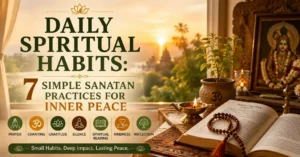
Modern life moves fast. Many of us begin the day by checking notifications, rushing through tasks, and immediately stepping into a cycle of activity. While this pace may feel normal, it often leaves little space for reflection, gratitude, or inner calm.
This is where daily spiritual habits can make a meaningful difference. Small practices such as prayer, gratitude, mantra chanting, silence, spiritual reading, and self-reflection help create moments of awareness throughout the day. They do not require hours of free time or complex rituals. Even a few mindful minutes can bring greater balance, clarity, and peace.
In Sanatan Dharma, spiritual growth is not limited to temples, festivals, or special occasions. It is nurtured through simple actions practiced consistently. These small yet powerful habits gradually strengthen our connection with the Divine, cultivate positive values, and help us live with greater purpose.
In this article, you will discover 7 simple Sanatan practices for inner peace, understand why they matter in modern life, learn how to build a sustainable daily spiritual routine, and explore practical ways to bring spirituality into everyday living.
True transformation often begins not with dramatic changes, but with small steps repeated every day.
Daily Spiritual Habits at a Glance
| Daily Spiritual Habit | Purpose | Benefit |
|---|---|---|
| Gratitude | Appreciate life’s blessings | Cultivates contentment and positivity |
| Prayer | Connect with the Divine | Strengthens faith and inner strength |
| Mantra Chanting | Focus the mind on a sacred sound | Improves spiritual awareness and calmness |
| Silence | Create space for reflection | Reduces mental clutter and stress |
| Spiritual Reading | Learn from sacred teachings | Provides guidance and wisdom |
| Kindness & Compassion | Express spiritual values through actions | Improves relationships and character |
| Self-Reflection | Review thoughts and actions | Encourages personal and spiritual growth |
Did You Know?
In Sanatan Dharma, spiritual growth is traditionally seen as the result of consistent daily practice (Sadhana) rather than occasional intense effort.
Even simple habits such as prayer, gratitude, mantra chanting, self-reflection, or reading a few verses from a sacred text can gradually shape one’s thoughts, character, and outlook on life. The emphasis is often on regularity and sincerity rather than the length or complexity of the practice.
Table of Contents
ToggleWhat Are Daily Spiritual Habits?
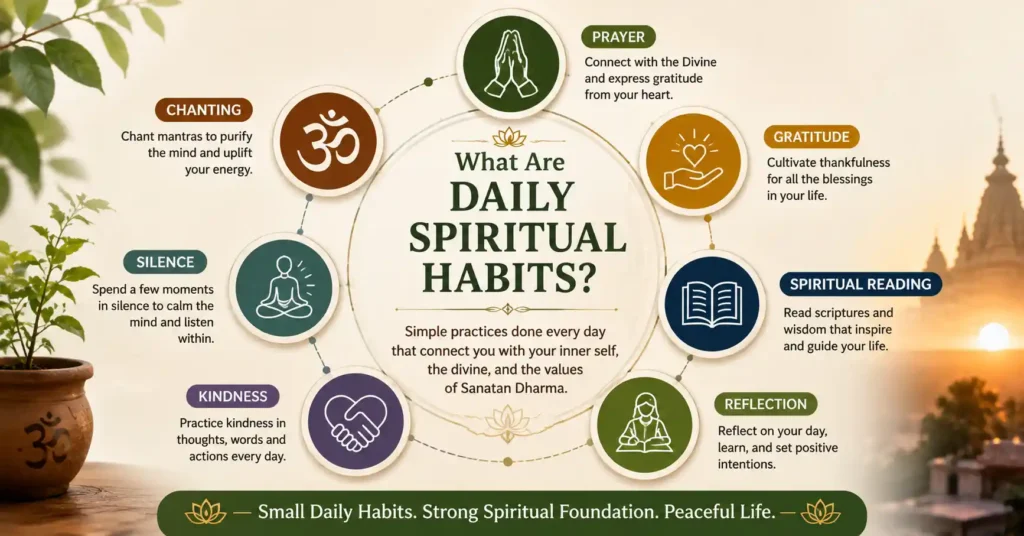
Daily spiritual habits are simple practices that help bring mindfulness, devotion, and inner awareness into everyday life. They may include:
- Prayer and devotion
- Gratitude
- Mantra chanting
- Spiritual reading
- Self-reflection
- Acts of kindness
- Spending time in silence
In Sanatan Dharma, spiritual growth is not seen as something separate from daily life. Rather, it is woven into our thoughts, actions, relationships, and responsibilities. Small practices performed with sincerity can gradually strengthen our connection with the Divine and bring greater meaning to everyday living.
Many people assume that spirituality requires long rituals, extensive knowledge, or hours of meditation. In reality, even a few mindful minutes each day can become a meaningful part of a daily spiritual routine.
These simple spiritual practices can be followed at home, near a home mandir, during a morning walk, while commuting, or in any quiet space where you can pause and reconnect with yourself.
The purpose is not perfection or strict discipline. The purpose is to cultivate awareness, gratitude, compassion, and inner balance through small actions that can be practiced consistently.
Over time, these daily practices for spiritual growth often lead to greater emotional stability, clearer thinking, stronger values, and a more peaceful relationship with life. What begins as a small daily effort can gradually become a source of lasting inner strength and spiritual fulfillment.
Why Mornings Are Ideal for Daily Spiritual Habits
Many spiritual traditions place special importance on the early morning hours. Before the demands of the day begin, the environment is naturally quieter and the mind is less occupied by responsibilities, conversations, and distractions.
In Sanatan Dharma, the period before sunrise is known as Brahma Muhurta. It is traditionally regarded as a favorable time for prayer, meditation, mantra chanting, self-reflection, and the study of sacred wisdom. Many seekers value this time because it supports calmness, focus, and spiritual awareness.
However, following a spiritual path does not require waking up before sunrise every day. Modern life often includes work commitments, family responsibilities, health concerns, and changing schedules that may make early rising difficult.
The deeper teaching is not about following a strict clock. It is about creating space for inner connection and beginning the day with awareness whenever possible.
Even a few minutes spent in prayer, gratitude, silence, or other daily spiritual habits can help create a positive mindset for the rest of the day. These small moments often influence how we respond to challenges, interact with others, and carry ourselves throughout daily life.
Starting the day with a simple spiritual routine inspired by Sanatan Dharma can transform ordinary mornings into an opportunity for reflection, balance, and personal growth.
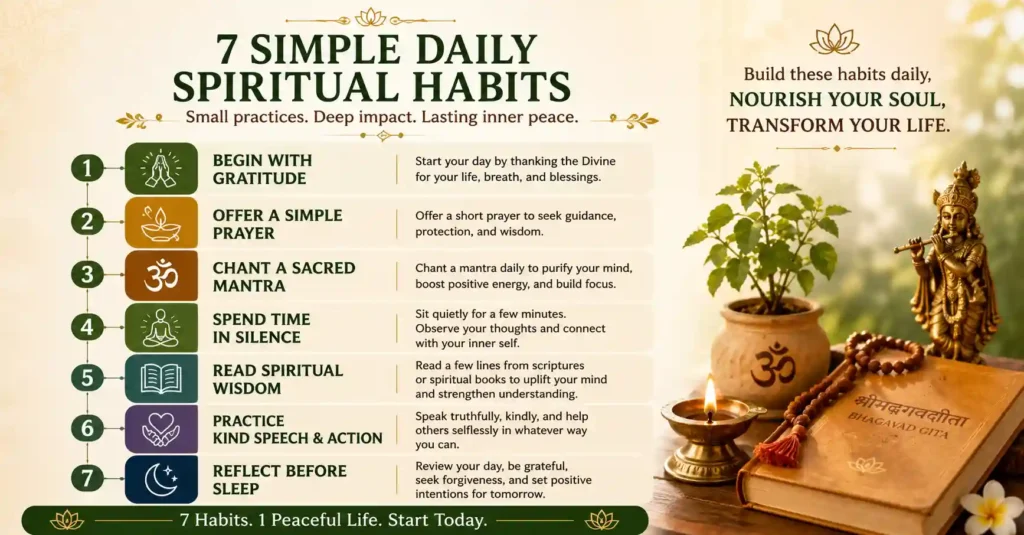
7 Simple Sanatan Practices for Inner Peace
Spiritual growth does not always require major life changes. In Sanatan Dharma, small actions performed with sincerity and consistency are often considered more valuable than occasional grand efforts. These simple practices can help bring greater awareness, balance, and purpose into daily life.
Begin the Day with Gratitude
The way we start the morning often influences the rest of the day. Taking a few moments to express gratitude for life, health, family, and opportunities helps create a positive mindset.
Gratitude shifts attention from what is lacking to what has already been received. Over time, this habit can nurture contentment, humility, and emotional resilience.
Offer a Simple Prayer
Prayer is one of the most accessible daily spiritual habits. It creates a moment of connection with the Divine and reminds us that we are part of something greater than ourselves.
A prayer does not need to be lengthy or formal. Even a few sincere words offered with faith can bring comfort, guidance, and inner strength.
Chant a Sacred Mantra
Mantra chanting has been an important part of Sanatan tradition for centuries. Repeating a sacred mantra helps direct the mind away from distractions and toward a higher purpose.
Whether it is the Gayatri Mantra, Mahamrityunjaya Mantra, or a personal mantra received through tradition, regular chanting can support focus, devotion, and spiritual awareness.
Spend Time in Silence
Modern life is filled with constant noise and stimulation. A few minutes of silence each day can provide an opportunity to slow down and observe your thoughts without judgment.
Silence creates space for self-awareness and allows the mind to settle naturally. It is often in these quiet moments that deeper clarity begins to emerge.
Read Spiritual Wisdom Daily
Reading a small passage from the Bhagavad Gita, Ramayana, Upanishads, or other sacred texts can offer valuable guidance for everyday life.
This practice helps keep spiritual teachings fresh in the mind and encourages reflection on how timeless wisdom can be applied to modern challenges.
Practice Kindness and Compassion
Spirituality is not limited to prayer or meditation. It is also expressed through our words, actions, and interactions with others.
Simple acts of kindness, patience, and compassion can strengthen relationships and reflect the values that Sanatan Dharma encourages us to cultivate in daily life.
End the Day with Self-Reflection
Before going to sleep, take a few moments to reflect on the day. Consider what went well, what could be improved, and what lessons were learned.
This habit encourages personal growth and self-awareness. Rather than focusing on mistakes with guilt, reflection allows us to learn, improve, and move forward with greater wisdom.
A Small Step Every Day Matters
These simple spiritual practices may seem small, but their impact often grows over time. When practiced consistently, they become part of a meaningful daily spiritual routine that supports inner peace, stronger values, and a deeper connection with the Divine.
How to Choose the Right Spiritual Habits for Yourself
There is no single spiritual routine that works for everyone.
Some people feel naturally drawn to prayer and devotion. Others may find peace through silence, spiritual reading, or self-reflection. What matters most is choosing practices that feel meaningful and sustainable in your daily life.
If you are a beginner, start with one or two habits that resonate with you. For example, a person who enjoys reading may begin with spiritual study, while someone seeking inner calm may prefer gratitude, silence, or mantra chanting.
As your practice develops, you can gradually explore other habits and create a routine that reflects your needs, circumstances, and spiritual interests.
Sanatan Dharma embraces many paths to spiritual growth. The goal is not to follow a perfect formula but to cultivate sincerity, awareness, and consistency in your daily life.
How to Build Daily Spiritual Habits Without Feeling Overwhelmed
Many people begin a spiritual practice with enthusiasm but struggle to maintain it after a few days or weeks. Often, the problem is not a lack of sincerity but trying to do too much at once.
A sustainable spiritual journey is built gradually. Rather than attempting to follow every practice immediately, start with one or two habits that feel realistic and meaningful.
For example, you might begin with a short morning prayer and a few moments of gratitude each day. Once these become part of your routine, you can slowly add other practices such as mantra chanting, spiritual reading, or self-reflection.
The goal is consistency, not intensity. Five minutes of sincere practice every day is often more beneficial than an hour of practice done occasionally.
The following simple guidelines can help:
✔ Start with one or two practices
✔ Set aside a fixed time each day
✔ Keep your expectations realistic
✔ Focus on sincerity rather than perfection
✔ Return to the practice even if you miss a day
It is also important to remember that spiritual growth is rarely immediate. Just as a seed takes time to grow into a tree, the benefits of a daily spiritual routine unfold gradually through patience and regular effort.
Small steps taken consistently often lead to lasting transformation. What matters most is not how much you do, but how regularly and mindfully you practice.
A Simple Daily Spiritual Routine for Beginners
You do not need to follow all seven practices at once. A simple routine can be enough to begin experiencing the benefits of daily spiritual habits.
Here is one example:
| Time | Practice |
|---|---|
| After Waking | Express gratitude for a new day |
| Morning | Offer a short prayer or chant a mantra |
| During the Day | Practice kindness and mindful actions |
| Evening | Read a few pages from a spiritual text |
| Before Sleep | Spend a few minutes in self-reflection |
This routine can take as little as 10–15 minutes in total.
As your comfort and interest grow, you can gradually add more practices or spend additional time on the ones that resonate most with you.
The goal is not to create a perfect schedule. The goal is to build a sustainable spiritual routine that fits naturally into your daily life.
Daily Spiritual Habits for Busy People
Many people believe they need a large block of free time to follow a spiritual routine. In reality, spirituality can be woven into everyday life.
A short prayer before starting work, a few moments of gratitude during a meal, a mantra chanted while walking, or a brief self-reflection before sleep can all become meaningful spiritual practices.
The goal is not to add pressure to an already busy schedule. The goal is to bring greater awareness and intention to activities that are already part of daily life.
Even a few mindful minutes each day can help keep spiritual values alive amidst modern responsibilities.
Common Challenges When Following a Daily Spiritual Routine
Building spiritual habits is often simple in theory but challenging in practice. Most people do not struggle because they lack interest in spirituality. They struggle because daily responsibilities, distractions, and old habits compete for their attention.
Recognizing these challenges can help you approach your spiritual journey with greater patience and realism.
Lack of Time
One of the most common reasons people give up spiritual practices is the belief that they do not have enough time.
In reality, many daily spiritual habits require only a few minutes. A short prayer, a moment of gratitude, or a brief period of self-reflection can easily fit into a busy schedule.
Inconsistency
It is natural to miss a day occasionally. However, some people become discouraged after a break and stop practicing altogether.
Spiritual growth is not about maintaining a perfect record. What matters is returning to the practice with sincerity whenever possible.
A Wandering Mind
Many beginners feel frustrated when their mind becomes distracted during prayer, chanting, or silent reflection.
This is a normal part of the process. The goal is not to eliminate every thought but to gently bring your attention back whenever it wanders.
Expecting Immediate Results
Modern life often encourages quick results, but spiritual growth follows a different path.
The benefits of simple spiritual practices usually develop gradually. Greater calmness, awareness, and emotional balance often emerge through consistent effort over weeks and months rather than days.
Comparing Your Journey with Others
Every person’s spiritual path is unique. Comparing your progress with someone else’s can create unnecessary pressure and disappointment.
Instead of focusing on how much others are doing, focus on your own growth and consistency.
Staying Motivated
Motivation naturally rises and falls. On some days, spiritual practices may feel inspiring, while on others they may feel routine.
During such times, remember your original intention. Even small acts of devotion performed regularly can contribute to long-term spiritual development.
Progress Matters More Than Perfection
The purpose of a daily spiritual routine is not to become perfect overnight. It is to gradually cultivate greater awareness, devotion, compassion, and inner peace.
A missed day does not erase your progress. What matters most is continuing the journey, one small step at a time.

The Long-Term Benefits of Simple Spiritual Practices
The effects of spiritual practice are not always visible immediately. Unlike many material goals, spiritual growth often unfolds gradually through consistent effort and self-awareness.
Over time, even small habits can create meaningful changes in how we think, respond to challenges, and experience daily life.
Greater Inner Peace
One of the most noticeable benefits is a growing sense of inner peace. Regular prayer, gratitude, reflection, and devotion can help reduce mental restlessness and create a greater sense of calm.
While challenges may still arise, they often feel easier to navigate with a balanced and steady mindset.
Improved Emotional Balance
Life naturally brings both joyful and difficult experiences. Spiritual practices encourage us to respond with greater patience, acceptance, and understanding.
This emotional balance can help reduce impulsive reactions and foster a more thoughtful approach to everyday situations.
Stronger Values and Character
Many Sanatan lifestyle practices encourage qualities such as honesty, compassion, humility, gratitude, and self-discipline.
When these values are practiced consistently, they gradually become part of our character and influence how we interact with others.
Better Relationships
Kindness, patience, forgiveness, and mindful communication are all important aspects of spiritual living.
As these qualities develop, relationships with family, friends, and colleagues often become healthier and more harmonious.
Greater Self-Awareness
Practices such as silence, prayer, and self-reflection encourage us to observe our thoughts, habits, and actions more carefully.
This awareness helps us recognize areas where we can grow and make better choices in daily life.
A Deeper Connection with the Divine
For many people, the most meaningful benefit is a stronger spiritual connection. Through regular devotion and reflection, spirituality gradually becomes a living experience rather than just an idea or belief.
This connection can provide comfort, guidance, and a sense of purpose during both ordinary and challenging times.
Spiritual Growth Is a Journey
The benefits of spiritual habits for inner peace rarely appear overnight. They develop gradually through patience, sincerity, and consistent practice.
Every small step matters. Over time, these simple habits can help create a life that feels more balanced, purposeful, and spiritually fulfilling.
Daily Spiritual Habits Are About Progress, Not Perfection
Many people delay spiritual practice because they believe they need the perfect routine, complete discipline, or uninterrupted time. In reality, spiritual growth rarely happens under perfect conditions.
Some days your prayer may feel deeply meaningful. On other days, your mind may feel distracted. There may be days when you miss a practice altogether. This is a normal part of any spiritual journey.
What matters is not perfection but consistency. A few sincere moments of gratitude, prayer, reflection, or devotion practiced regularly can have a greater impact than occasional bursts of effort followed by long gaps.
Sanatan Dharma encourages steady progress rather than harsh self-judgment. Every small step taken with awareness contributes to personal growth and spiritual development.
Instead of asking, “Am I doing enough?” a more helpful question may be, “Am I moving in the right direction?”
When approached with patience and sincerity, even the smallest daily spiritual habits can gradually become a source of inner strength, wisdom, and lasting peace.

How Many Daily Spiritual Habits Do You Already Practice?
Use this simple checklist:
☐ I begin my day with gratitude.
☐ I spend a few moments in prayer.
☐ I chant a mantra regularly.
☐ I make time for silence or reflection.
☐ I read spiritual teachings during the week.
☐ I consciously practice kindness and compassion.
☐ I reflect on my actions before sleeping.
Conclusion
In a world filled with constant activity and distractions, creating space for spirituality can help bring greater balance and meaning to everyday life.
The beauty of daily spiritual habits lies in their simplicity. They do not require special abilities, long hours of practice, or dramatic lifestyle changes. Small actions such as gratitude, prayer, mantra chanting, silence, spiritual reading, kindness, and self-reflection can gradually transform the way we think, feel, and respond to life’s challenges.
The journey does not begin with perfection. It begins with a single step taken consistently.
Choose one practice that resonates with you and make it a part of your day. Over time, these simple spiritual practices can help cultivate inner peace, stronger values, and a deeper connection with the Divine.
Remember, spiritual growth is not a destination to be reached overnight. It is a lifelong journey shaped by the choices we make each day.
Key Takeaways
- Daily spiritual habits are simple practices that help bring greater awareness, devotion, and inner peace into everyday life.
- Spiritual growth does not require long rituals or hours of meditation. Small actions practiced consistently can create meaningful change over time.
- Gratitude, prayer, mantra chanting, silence, spiritual reading, kindness, and self-reflection are seven simple practices rooted in Sanatan values.
- Morning is often considered an ideal time for spiritual practice, but any consistent time can be effective.
- Consistency is more important than perfection. Even a few mindful minutes each day can support spiritual growth.
- Common challenges such as lack of time, distractions, and inconsistency can be overcome by starting small and building habits gradually.
- Regular spiritual practice can lead to greater emotional balance, stronger values, improved self-awareness, and a deeper connection with the Divine.
- Spirituality is not limited to temples or special occasions. It can be expressed through everyday thoughts, actions, and relationships.
- Every person’s journey is unique. The goal is not to compare yourself with others but to make steady progress at your own pace.
- Lasting inner transformation often begins with simple daily habits practiced with sincerity, patience, and devotion.

Suggested Reading
If this morning chanting practice resonated with you, you may also enjoy these reflections from the Divine Life category. Together, they explore mindfulness, devotional living, inner peace, and practical spirituality for everyday life.
Living in the Present Moment for Inner Peace
https://thesanatantales.com/living-in-the-present-moment/
Daily Sattvik Routine for a Peaceful 9-to-5 Life
https://thesanatantales.com/daily-sattvik-routine-for-working-professionals/
Home Mandir Setup: A Simple Guide to Create a Peaceful Sacred Space
https://thesanatantales.com/home-mandir-setup-guide/
How to Stay Calm in Difficult Situations Spiritually
https://thesanatantales.com/how-to-stay-calm-in-difficult-situations/
Daily Mudras for Calm Mind, Energy and Better Digestion
https://thesanatantales.com/daily-mudras-for-calm-mind-energy-and-better-digestion/
The Power of Letting Go in Sanatan Dharma
https://thesanatantales.com/the-power-of-letting-go-in-sanatan-dharma/
Why Spiritual Awakening Feels Lonely and Quite Inside
https://thesanatantales.com/why-spiritual-awakening-feels-lonely/
Silence and Awareness: The Hidden Inner Connection
https://thesanatantales.com/silence-and-awareness-connection/
Karma and Life Lessons Meaning: The Deeper Truth behind Your Life Experiences
https://thesanatantales.com/karma-and-life-lessons-meaning/
Soul Contract, Pain and Past Life Purpose: Why your Life feels This Way
https://thesanatantales.com/soul-contract-pain-past-life-purpose/
7 Simple Sanatan Spiritual Habits for Inner Peace
Read on Quora: https://qr.ae/pFlR5L
FAQs
What are daily spiritual habits?
Daily spiritual habits are small, consistent practices that help bring greater awareness, devotion, and inner balance into everyday life.
These habits may include prayer, gratitude, mantra chanting, spiritual reading, self-reflection, spending time in silence, and acts of kindness. While each practice may seem simple on its own, their impact often grows through regular repetition.
In Sanatan Dharma, spirituality is not limited to temples or special occasions. It is nurtured through daily actions that gradually strengthen one’s connection with the Divine and encourage personal growth.
How can beginners start daily spiritual habits?
The best approach is to start small and remain consistent.
Instead of trying to follow several practices at once, choose one or two habits that feel natural. For example, you might begin with a short prayer in the morning and a few moments of gratitude before sleeping.
As these practices become part of your routine, you can gradually add other habits such as spiritual reading, mantra chanting, or self-reflection.
Many beginners give up because they try to do too much too soon. A few minutes practiced daily is often more effective than an ambitious routine that becomes difficult to maintain.
Do daily spiritual habits require a lot of time?
No. One of the greatest misconceptions about spirituality is that it requires long hours of practice.
Even five to ten minutes of sincere effort can be meaningful. A short prayer, a few moments of gratitude, reading a verse from the Bhagavad Gita, or quietly reflecting on the day can all become valuable spiritual practices.
What matters most is consistency rather than duration. Small habits performed regularly often create a greater impact than occasional intensive efforts.
Which spiritual habit should I start with first?
There is no single practice that is right for everyone.
Many people find gratitude or prayer to be a natural starting point because they are simple and require no special preparation. Others may feel drawn to mantra chanting, spiritual reading, or spending a few minutes in silence.
Choose a practice that resonates with you and feels easy to sustain. Once it becomes a regular part of your day, you can gradually explore other habits.
The goal is to build a foundation of consistency rather than follow a perfect routine from the beginning.
Can I follow these practices even if I have a busy schedule?
Yes. Daily spiritual habits can be adapted to almost any lifestyle.
A student may spend a few minutes reading a spiritual teaching before classes. A working professional may begin the day with gratitude or prayer. A homemaker may find moments for devotion during household activities.
Spirituality does not always require a dedicated hour of practice. Small moments of awareness, devotion, and reflection throughout the day can also contribute to spiritual growth
Is mantra chanting necessary for spiritual growth?
Mantra chanting is an important practice in many Sanatan traditions, but it is not the only path to spiritual growth.
Prayer, selfless service, gratitude, self-reflection, scriptural study, and mindful living are also valuable practices. Different people connect with spirituality in different ways.
If mantra chanting inspires you, it can become a meaningful part of your spiritual journey. If another practice resonates more strongly, you can begin there and gradually develop your own spiritual routine.
What should I do if I miss a day?
Missing a day is not a failure.
Many people become discouraged when they miss a practice and then abandon it completely. A healthier approach is to simply resume the next day without guilt or self-criticism.
Spiritual growth is a lifelong journey, not a short-term challenge. What matters is your willingness to return to the practice and continue moving forward.
How long does it take to experience the benefits of daily spiritual habits?
The experience varies from person to person.
Some people notice a greater sense of calm or clarity within a few days. For others, the changes may be more gradual. Benefits such as emotional balance, stronger values, deeper self-awareness, and inner peace often develop through steady practice over weeks and months.
Like any meaningful habit, spiritual growth unfolds over time. The key is to focus on the practice itself rather than constantly measuring results. Small, consistent actions often create the most lasting transformation.
Do I need a home mandir or special items to follow a daily spiritual routine?
No. While a home mandir, diya, mala, or sacred images can help create a devotional atmosphere, they are not mandatory.
A quiet corner of a room, a clean space, or even a few peaceful minutes during a walk can be enough. The sincerity of your intention is far more important than the size of the space or the number of spiritual items you own.
These FAQs should perform well for both readers and AdSense because they answer genuine beginner questions in depth, add practical value, and naturally include related search terms without keyword stuffing.
Glossary of Important Terms
| Term | Meaning |
|---|---|
| Brahma Muhurta | A sacred period approximately 1 hour and 36 minutes before sunrise, traditionally considered ideal for prayer, meditation, chanting, and spiritual reflection. |
| Daily Spiritual Habits | Small, consistent practices that nurture spiritual awareness and inner growth, such as prayer, gratitude, chanting, spiritual reading, silence, and self-reflection. |
| Devotion (Bhakti) | The path of expressing love, faith, and surrender to the Divine through prayer, worship, chanting, and remembrance. |
| Divine | A term used to describe God, the Supreme Reality, or the sacred presence that exists beyond the material world. |
| Gratitude | The practice of consciously appreciating life’s blessings, experiences, and opportunities. |
| Inner Peace | A state of mental and emotional calmness that remains steady despite life’s challenges and uncertainties. |
| Mantra | A sacred word, phrase, or sound repeated during prayer, meditation, or spiritual practice to help focus the mind and deepen spiritual awareness. |
| Mindfulness | The practice of being fully present and aware of one’s thoughts, emotions, actions, and surroundings. |
| Prayer | A sincere expression of devotion, gratitude, or communication with the Divine, offered through traditional or personal words. |
| Sadhana | A regular spiritual practice followed with discipline and sincerity to support spiritual growth and self-improvement. |
| Sanatan Dharma | The eternal spiritual tradition commonly known as Hinduism, encompassing diverse philosophies, scriptures, and paths to spiritual realization. |
| Sattvik | A quality associated with purity, harmony, balance, clarity, and goodness that supports physical, mental, and spiritual well-being. |
| Self-Reflection | The practice of examining one’s thoughts, actions, strengths, mistakes, and experiences for personal and spiritual growth. |
| Selfless Service (Seva) | Helping others without expecting personal gain, reward, or recognition. |
| Silence | A spiritual practice of intentionally creating quiet moments for contemplation, self-awareness, and inner stillness. |
| Spiritual Awareness | A deeper understanding of oneself, one’s actions, and one’s relationship with the Divine and the world. |
| Spiritual Growth | The gradual development of wisdom, compassion, self-awareness, devotion, and inner transformation. |
| Spiritual Reading | The study of sacred texts, spiritual teachings, or inspirational writings for guidance and personal growth. |
| Spiritual Routine | A set of regular spiritual practices followed consistently to cultivate inner peace and spiritual development. |
| Spiritual Wisdom | Insights and teachings from sacred texts, spiritual traditions, and life experiences that guide meaningful living. |
| The Divine Connection | A personal sense of closeness and relationship with God or one’s chosen deity through devotion and spiritual practice. |
About the Author
Yateendra Chaturvedi is a spiritual writer, researcher, devotee, and the founder of The Sanatan Tales. With over 35 years of professional experience and a lifelong interest in Sanatan Dharma, he writes about Hindu deities, temples, scriptures, festivals, Mahavidyas, sacred stories, rituals, and living traditions that continue to guide and inspire devotees across India.
Drawing from traditional scriptures, regional beliefs, temple traditions, devotional literature, and historical sources, he aims to present authentic, well-researched, and easy-to-understand content for modern readers. His work focuses on preserving spiritual wisdom, explaining sacred traditions, and helping seekers develop a deeper understanding of India’s rich spiritual heritage.
Through The Sanatan Tales, Yateendra strives to make the timeless teachings of Sanatan Dharma simple, meaningful, and relevant for today’s generation while maintaining respect for traditional sources, regional practices, and diverse spiritual perspectives.
Learn More About Yateendra Chaturvedi →
https://thesanatantales.com/about-the-author/
References & Sources
This article is based on the teachings, values, and daily practices associated with Sanatan Dharma. The content draws upon traditional spiritual wisdom, devotional practices, yogic traditions, and widely accepted principles that encourage inner peace, self-awareness, ethical living, and spiritual growth.
It also reflects guidance preserved through scriptures, family traditions, spiritual communities, saints, and the guru-disciple tradition that has helped pass down Sanatan knowledge across generations.
Note: Beliefs and practices may vary across different traditions, sampradayas, regions, and individual paths within Sanatan Dharma. The purpose of this article is to present commonly accepted spiritual perspectives in a simple, practical, and reader-friendly manner. Sanatan Dharma embraces diverse paths of devotion, knowledge, selfless service, meditation, and personal transformation.
Explore More Fascinating Topics from Sanatan Dharma