
Creating a home mandir is one of the simplest ways to bring devotion, peace, and spiritual awareness into everyday life. Whether you live in a large house, a small apartment, or a rented home, a dedicated prayer space can become a source of comfort and connection with the Divine.
In Sanatan Dharma, a mandir at home is not measured by its size, design, or decoration. What truly matters is the sincerity of worship and the devotion offered there. Even a small prayer corner can become a sacred space that inspires faith, gratitude, and inner calm.
For many families, daily darshan, lighting a diya, offering flowers, or chanting a short prayer helps create a positive and uplifting atmosphere. Over time, this simple practice becomes a meaningful part of family life and spiritual discipline.
In this guide, you will learn how to choose the right location for your prayer space, understand basic home mandir vastu principles, arrange deities respectfully, follow simple daily worship practices, and create a devotional environment that suits modern living.
Whether you are setting up a new mandir at home or improving an existing one, these practical ideas and traditional insights will help you create a space that supports both devotion and daily life.
Home Mandir at a Glance
| Aspect | Quick Guidance |
|---|---|
| Ideal Direction | Northeast is traditionally preferred |
| Suitable Locations | Dedicated puja room, living room corner, wall shelf, prayer alcove |
| Best Materials | Wood, marble, brass, or other easy-to-maintain materials |
| Essential Items | Diya, deity image or idol, flowers, bell, water vessel |
| Daily Practice | Diya, prayer, mantra, gratitude, simple aarti |
| Suitable for Apartments | Yes, even a small shelf or corner can work |
| Multiple Deities | Possible if arranged respectfully and without overcrowding |
| Most Important Principle | Cleanliness, devotion, and consistency |
Table of Contents
ToggleThe Significance of a Home Mandir in Sanatan Dharma
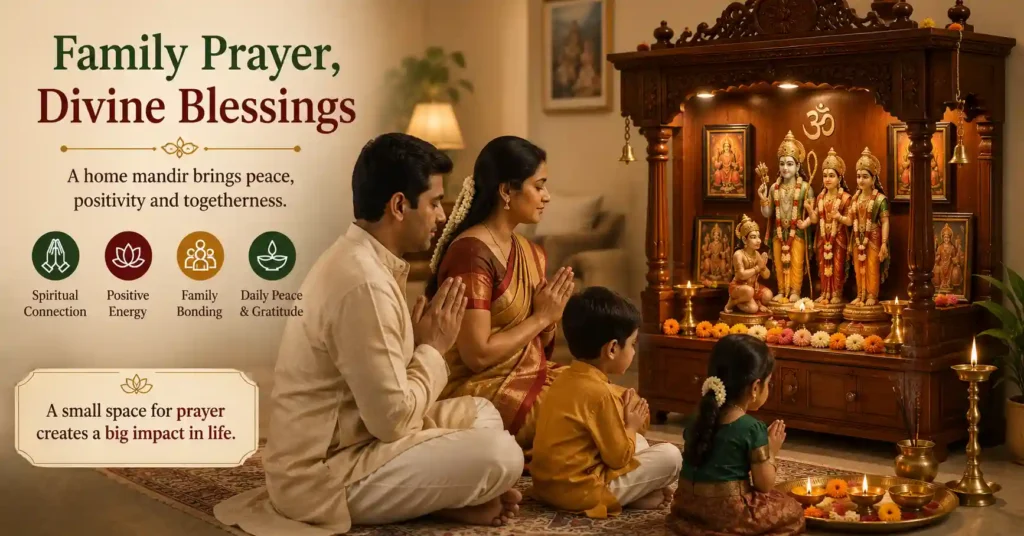
In Sanatan Dharma, a home is not viewed merely as a place to live. It is also a space where spiritual values, devotion, and family traditions are nurtured. A home mandir creates a sacred corner that reminds us of the Divine amidst the demands of daily life.
For generations, the mandir has been an integral part of Indian households. The simple acts of lighting a diya, offering prayers, chanting mantras, or singing bhajans help bring a sense of rhythm and spiritual connection to the day.
A prayer space also serves as a place for reflection. During moments of stress, uncertainty, or gratitude, many people naturally turn toward the mandir to seek strength, guidance, and inner balance.
For children, it becomes a place where they learn respect, devotion, and family traditions. For elders, it offers comfort and continuity. For working professionals and students, it can provide a few moments of quietness and spiritual grounding.
A well-maintained home mandir can help:
- Create a spiritually uplifting atmosphere
- Encourage daily worship and devotion
- Build habits of gratitude and mindfulness
- Bring a sense of calm during challenging times
- Strengthen family participation in prayer and festivals
- Provide a dedicated space for reflection and inner peace
Home Mandir vs Temple: What Is the Difference?
A home mandir and a Hindu temple both serve as places of worship, but their purpose and scale are different.
A temple is a public sacred space where devotees gather for darshan, festivals, community worship, and special religious ceremonies. Temples are traditionally built according to sacred architectural principles and are often served by priests.
A home mandir, on the other hand, is a personal prayer space created within the household. It allows individuals and families to worship regularly, offer daily prayers, chant mantras, and maintain a spiritual connection with the Divine.
Both are important in Sanatan Dharma. While visiting temples helps devotees participate in collective worship and traditions, a home mandir encourages daily devotion and spiritual discipline within everyday life.
Many families consider the home mandir the spiritual heart of the house, where prayer becomes a natural part of the daily routine.
Best Direction and Placement for a Home Mandir
Choosing the right location is an important part of creating a peaceful and comfortable prayer space. Many people look for home mandir vastu guidance to understand where a mandir can be placed within the house.
Traditionally, the northeast direction is considered highly auspicious because it is associated with spiritual practices, prayer, and contemplation. However, not every home has the ideal layout, especially modern apartments and compact living spaces.
In Sanatan Dharma, devotion and sincerity are ultimately more important than perfect placement. A clean and well-maintained prayer area filled with faith can become a sacred space regardless of its size.
If possible, choose a location that offers:
- A clean and peaceful environment
- Natural light and fresh air
- A quiet corner away from distractions
- Comfortable space for daily worship and meditation
Many families also appreciate having gentle morning sunlight near their prayer area, as it creates a fresh and uplifting atmosphere.
It is generally advisable to avoid placing the mandir:
- Beside bathrooms
- Inside cluttered storage areas
- Under staircases
- Near footwear storage
- In locations that feel noisy or neglected
These traditional guidelines are intended to maintain cleanliness, reverence, and a sense of sacredness around the worship space. At the same time, devotees should remember that faith, regular prayer, and a sincere heart remain the most important aspects of any mandir at home.
Common Home Mandir Mistakes to Avoid
Many beginners become anxious after reading long lists of rules and restrictions online. However, the purpose of traditional guidelines and Vastu principles is to create harmony, cleanliness, and reverence, not fear.
A mandir at home should inspire devotion, peace, and spiritual connection. While perfection is not necessary, avoiding a few common mistakes can help maintain the sanctity of the worship space.
1. Keeping the Prayer Area Cluttered
A crowded or untidy prayer space can make it difficult to focus during worship. Keeping the area clean and organized helps create a calm and welcoming atmosphere.
2. Placing the Mandir Directly on the Floor
Many families prefer placing deities on a raised wooden platform, cabinet, or dedicated shrine. This is generally considered a respectful way to maintain the sacredness of the space.
3. Positioning the Mandir Beside Bathroom Walls
Traditional Vastu practices usually discourage placing a prayer area next to bathrooms. If space is limited, try to create as much separation as possible while keeping the area clean and respectful.
4. Using the Mandir as a Storage Space
Items such as bills, keys, chargers, documents, or miscellaneous household objects should not be mixed with sacred items. A worship space should remain dedicated to prayer and devotion.
5. Keeping Broken Idols or Damaged Images
Cracked idols or torn deity pictures are generally removed respectfully according to family traditions and local customs. Maintaining the space with care reflects respect toward the Divine.
6. Excessive Decoration and Overcrowding
Too many decorative items can make the mandir feel visually busy. A simple arrangement with essential worship items often creates a more peaceful and devotional atmosphere.
Ultimately, the purpose of a home mandir is not to follow countless rules but to cultivate faith, gratitude, and daily remembrance of the Divine. Cleanliness, sincerity, and regular worship matter far more than achieving a perfect arrangement.
Simple Home Mandir Ideas for Apartments and Small Spaces
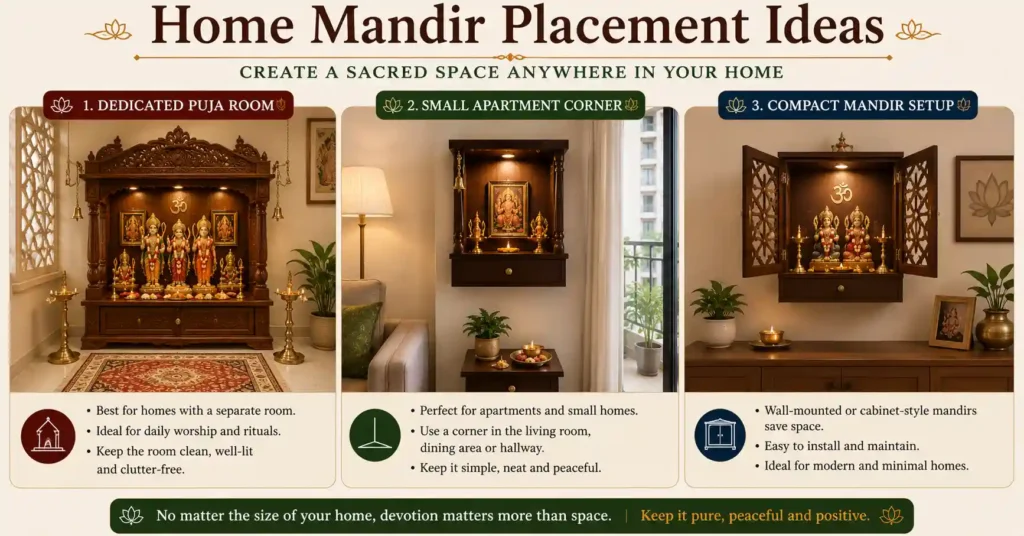
Many people believe they need a dedicated puja room to create a spiritual atmosphere at home. In reality, even a small apartment can have a beautiful and meaningful prayer space.
A mandir at home is not defined by its size. A simple corner maintained with devotion and regular worship can become a peaceful place for prayer, reflection, and connection with the Divine.
If space is limited, consider options such as:
- A floating wooden shelf
- A compact wall-mounted mandir
- A small cabinet with doors
- A corner table with simple décor
- A foldable puja unit
Modern families often prefer simple and uncluttered designs because they are easier to maintain and blend naturally with contemporary homes.
Popular ideas include:
- Wooden mandir panels
- Marble-inspired backdrops
- Soft warm lighting
- Traditional brass diyas
- Clean and neutral prayer corners
The goal is not to create an elaborate shrine but to establish a sacred space that encourages daily worship and spiritual reflection.
Many students, working professionals, and homemakers also keep a small sitting area near their prayer space. Spending a few quiet moments there for prayer, chanting, or gratitude can help bring balance to a busy day.
Creating a Home Mandir in Rented Homes and Small Living Spaces
Many people today live in rented apartments, PG accommodations, hostels, or homes where frequent relocation is part of life. In such situations, creating a large permanent prayer area may not always be practical.
Fortunately, a meaningful mandir at home does not require a separate room or elaborate arrangement. Even a small and well-maintained prayer corner can provide a sense of spiritual connection and emotional comfort.
Simple options include:
- A small wooden tray mandir
- Foldable puja boxes
- A clean wall-mounted shelf
- A cloth-covered corner table
- Compact deity photos or framed images
Students studying away from home often find comfort in having a dedicated space for prayer and reflection. Similarly, working professionals living alone may use a small worship space to begin or end the day with gratitude and devotion.
A portable prayer area can also be useful for families who frequently move because of work or other responsibilities. The arrangement may change, but the spirit of worship remains the same.
In Sanatan Dharma, the true purpose of a home mandir is not permanence or decoration. It is to create a sacred space where devotion, remembrance of the Divine, and daily prayer can continue regardless of where one lives.
Choosing Deities and Idols for Your Home Mandir
The deities placed in a home mandir should inspire devotion, faith, and a sense of spiritual connection. Different families worship different forms of the Divine based on family traditions, personal devotion, or guidance received from elders and gurus.
Many households commonly worship:
- Shiva
- Krishna
- Rama and Sita
- Durga
- Lakshmi
- Ganesha
- Hanuman
- Vishnu
Some devotees prefer to focus their worship on one primary deity, while others keep multiple deities together. Both approaches are commonly seen in Sanatan Dharma traditions.
Idols and deity images are available in materials such as brass, marble, clay, wood, and stone. The material is a matter of personal preference, tradition, and practicality. What matters most is the devotion with which worship is performed.
The size of an idol is not a measure of spiritual significance. A small deity image worshipped with sincerity and regular prayer can be just as meaningful as a larger shrine.
To maintain a respectful worship space, try to:
- Keep deity images clean
- Arrange idols in an organized manner
- Offer fresh flowers when possible
- Maintain a peaceful devotional atmosphere
- Handle sacred images with care and reverence
Over time, many devotees develop a deep emotional bond with their chosen form of the Divine. During moments of joy, uncertainty, gratitude, or difficulty, the home mandir often becomes a place where they seek comfort, strength, and spiritual reassurance.
Choosing the Right Material for Your Home Mandir
Many people wonder whether a wooden, marble, or metal mandir is the best choice for their home. There is no single material that is considered ideal for every household.
Wooden mandirs are among the most popular choices because they are traditional, versatile, and suitable for both apartments and larger homes. Their natural appearance often creates a warm and devotional atmosphere that blends easily with modern interiors.
Marble mandirs are appreciated for their elegant look and association with many temples, while brass or metal elements can add a more traditional and sacred feel to the worship space.
When selecting a mandir, consider:
- Available space
- Ease of maintenance
- Family traditions
- Budget
- Overall harmony with the room
The material itself does not determine the spiritual value of a prayer space. A simple shrine maintained with cleanliness, devotion, and regular worship can be far more meaningful than an elaborate arrangement that is rarely used.
In Sanatan Dharma, sincere prayer, faith, and daily remembrance of the Divine are considered more important than the cost or appearance of the mandir. The best choice is one that encourages regular worship and helps create a peaceful spiritual environment within the home.
Can You Keep Multiple Deities in a Home Mandir?
Many families worship multiple deities together in their home mandir. This is a common practice in Sanatan Dharma, where different forms of the Divine are revered according to family traditions and personal devotion.
For example, a family may worship Rama and Sita, Krishna, Shiva, Ganesha, Durga, Hanuman, or Lakshmi together. There is no single rule that applies to every household, and practices often vary across regions and traditions.
However, the prayer space should remain peaceful, organized, and easy to maintain. Placing too many large idols in a small area can make the mandir feel crowded and distract from the devotional atmosphere.
Many families prefer a simple arrangement such as:
- One primary deity or Ishta Devata
- A few supporting deities
- A small photograph of a respected guru or saint, if spiritually connected
The purpose of a home mandir is to encourage devotion and regular worship. A clean and thoughtfully arranged shrine often creates a deeper sense of peace than an overcrowded display of idols and decorative items.
When arranging deities, focus on maintaining cleanliness, reverence, and a harmonious atmosphere so that the space remains welcoming for daily prayer and reflection.
Which Direction Should Deities Face in a Home Mandir?
Many devotees wonder about the ideal direction for placing deity idols in a home mandir. Traditionally, deities are often placed so that worshippers can face east while praying, as east is associated with spiritual practices, sunrise, and new beginnings.
North is also considered an auspicious direction in many traditional beliefs. However, different families and traditions may follow slightly different practices based on local customs and the layout of the home.
When arranging deity idols, focus on:
- Clean and respectful placement
- Easy access for daily worship
- Good lighting and ventilation
- A peaceful devotional atmosphere
If the ideal direction is not possible because of space limitations, there is no need for anxiety. The purpose of these guidelines is to support worship, not create unnecessary stress.
In Sanatan Dharma, regular prayer, devotion, and sincere remembrance of the Divine are considered far more important than achieving perfect directional alignment.
Essential Items for a Home Mandir
A home mandir does not require expensive decorations or numerous ritual items. In Sanatan Dharma, devotion and sincerity are considered far more important than elaborate arrangements.
For beginners, a few basic items are usually enough to create a meaningful space for daily worship.
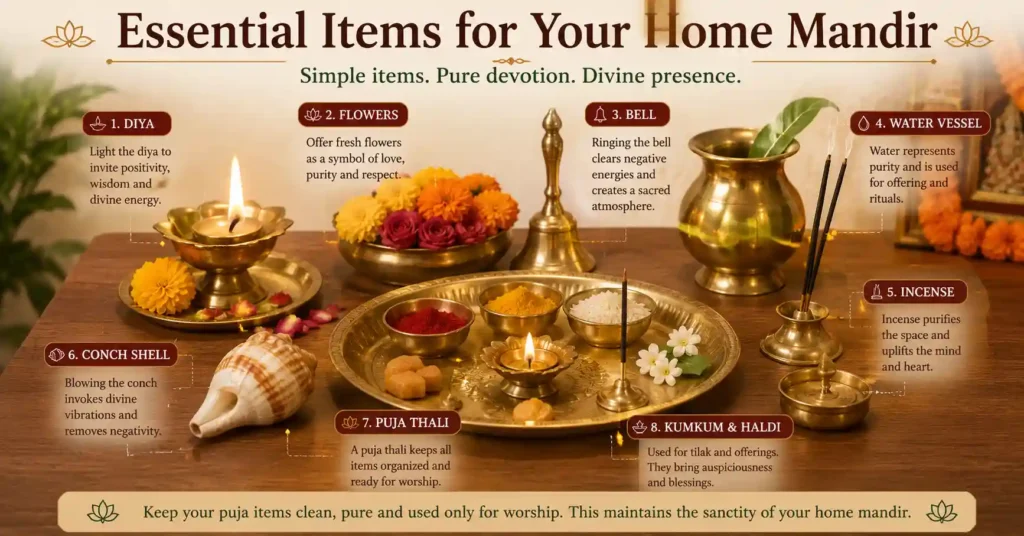
Commonly used items include:
- Diya or oil lamp
- Incense sticks (agarbatti)
- Bell
- Flowers
- Puja thali
- Camphor
- Small water vessel
- Matchbox or lighter
- Clean cloth for maintenance
Some devotees also choose to keep:
- Rudraksha mala
- Bhagavad Gita or other sacred texts
- Copper kalash
- Sandalwood paste
- Japa or chanting mala
You do not need every item from the beginning. Many families gradually add worship items based on their traditions, practices, and personal preferences.
What matters most is keeping the prayer space clean, organized, and suitable for regular worship. A simple mandir maintained with care often creates a more peaceful devotional atmosphere than one filled with unnecessary objects.
Spiritual Meaning of Common Home Mandir Items
Each item placed in a home mandir serves a purpose beyond ritual. Over time, these simple objects become reminders of devotion, mindfulness, gratitude, and spiritual discipline. While traditions may vary from family to family, the following items are commonly found in many Hindu households and carry deep symbolic meaning.
| Mandir Element | Spiritual Meaning |
|---|---|
| Diya | Light, hope, positivity |
| Bell | Awareness and focus during prayer |
| Flowers | Devotion, purity, gratitude |
| Incense | Calm devotional atmosphere |
| Water | Purity and sacredness |
| Mala | Meditation and mantra chanting |
These sacred items help create a prayer space that feels peaceful, welcoming, and spiritually uplifting. However, it is not necessary to have every item from the beginning. Even a simple arrangement with a diya, a deity image, and sincere devotion can become a meaningful place for daily worship and connection with the Divine.
Things to Avoid in a Home Mandir
Creating a peaceful and sacred prayer space is not only about what you include in the mandir but also about what you choose to keep away from it. Cleanliness, respect, and simplicity play an important role in maintaining a devotional atmosphere.
It is generally advisable to avoid keeping:
- Broken idols
- Torn or damaged deity images
- Dried flowers for long periods
- Unrelated storage items
- Wallets, bills, and household documents
- Footwear near the worship area
- Excessive decorative clutter
- Dust and neglected items
Many people unknowingly begin using the mandir shelf as an additional storage space. Over time, this can reduce the sense of reverence and peacefulness associated with daily worship.
Similarly, damaged idols or torn deity pictures are traditionally removed respectfully and replaced when needed. Keeping the prayer area clean and well-maintained reflects care and devotion toward the Divine.
A simple, organized, and uncluttered worship space often feels more spiritually uplifting than one filled with unnecessary objects. The goal is to create an environment that encourages prayer, reflection, and a deeper connection with faith.
Creating a Peaceful Atmosphere in Your Home Mandir
A home mandir requires regular care and attention, just like any other important space in the house. Keeping the prayer area clean and organized helps maintain a peaceful and devotional atmosphere.
Some simple maintenance practices include:
- Dusting the mandir regularly
- Replacing dried flowers promptly
- Cleaning diyas and puja utensils
- Washing altar cloths when needed
- Keeping sacred books protected and clean
- Removing unnecessary items from the prayer area
Many families also choose a specific day each week for a more thorough cleaning of the mandir and worship items.
If an idol becomes damaged or a deity image is torn, it is generally considered respectful to replace it and dispose of it according to local traditions and family customs.
Regular care not only maintains cleanliness but also helps strengthen the feeling of reverence and devotion associated with the prayer space.
A well-maintained mandir naturally feels more welcoming for daily prayer, meditation, and spiritual reflection.
Creating a Peaceful Atmosphere in Your Home Mandir
A home mandir should feel peaceful, welcoming, and conducive to prayer. While idols and sacred items are important, the overall atmosphere of the space also influences how people experience daily worship.
Lighting plays a significant role in creating a calm and devotional environment. Many families prefer soft and warm illumination because it helps the prayer area feel serene and inviting.
Popular choices include:
- Traditional diyas
- Warm yellow lights
- Soft LED lighting
- Gentle lamp illumination
Harsh or excessively bright lighting can sometimes make the space feel less comfortable for prayer and reflection. Soft lighting generally creates a more soothing atmosphere, especially during morning and evening worship.
The gentle glow of a diya holds special significance in Sanatan Dharma. For many devotees, lighting a diya before prayer symbolizes the removal of darkness and the awakening of wisdom, faith, and positivity.
Along with lighting, simple practices such as keeping the area clean, using fresh flowers, and maintaining a quiet environment can help create a space that naturally encourages devotion and inner peace.
Simple Daily Worship Practices for a Home Mandir
A home mandir becomes truly meaningful through regular worship and devotion. It is not the size of the shrine or the number of rituals that matter most, but the consistency of prayer and remembrance of the Divine.
Daily worship does not have to be elaborate. Even a few minutes spent in prayer can help create a sense of peace, gratitude, and spiritual connection.
A simple daily routine may include:
- Lighting a diya in the morning
- Offering flowers or water
- Chanting a short mantra
- Ringing the bell gently before prayer
- Reading a verse from a sacred text
- Sitting quietly for a few moments of reflection
- Performing a simple evening aarti
Many families find that these small practices bring a natural rhythm to the day. Morning prayers can create a positive beginning, while evening worship often provides an opportunity to pause, reflect, and express gratitude.
The gentle sound of bells, mantra chanting, and devotional bhajans can gradually create a spiritually uplifting atmosphere within the home. Over time, these simple acts become meaningful family traditions that strengthen faith and devotion.
Even those with busy schedules can maintain a connection with their prayer space. Lighting a diya, offering a brief prayer, or spending a quiet moment in gratitude each day can help cultivate spiritual discipline and inner calm.
5-Step Daily Home Mandir Routine for Beginners
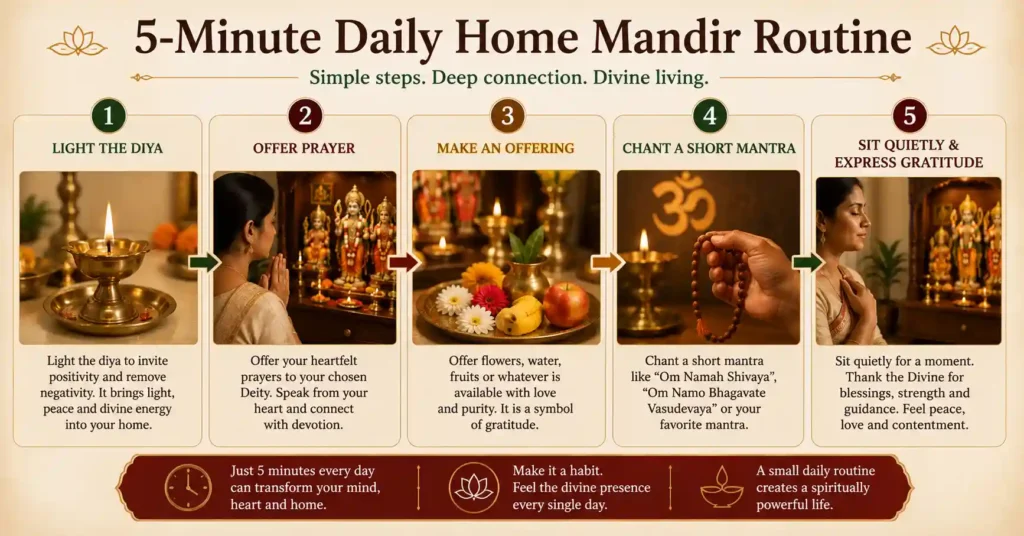
Starting a daily prayer routine does not need to be complicated. Even five to ten minutes of sincere worship can help create a sense of peace, gratitude, and spiritual connection.
A simple routine may look like this:
1. Light a Diya
Begin by lighting a diya or lamp. In Sanatan Dharma, the flame symbolizes the removal of darkness and the awakening of wisdom, positivity, and faith.
2. Offer a Simple Prayer
Fold your hands and offer a short prayer to your chosen deity. This can be a traditional prayer or a heartfelt expression of gratitude.
3. Chant a Mantra
Recite a short mantra, shloka, or divine name for a few minutes. Even simple chanting helps calm the mind and improve focus.
4. Sit Quietly for Reflection
Spend a minute or two in silence. Observe your thoughts, express gratitude, and seek inner guidance before beginning your day.
5. End with Gratitude
Before leaving the mandir, thank the Divine for the blessings, opportunities, and lessons received in life. A grateful heart often creates a more peaceful mindset throughout the day.
How to Create a Peaceful and Devotional Atmosphere
A peaceful home mandir is created not only through idols and sacred items but also through the atmosphere surrounding it. Cleanliness, devotion, and consistency often have a greater impact than decoration or size.
Simple practices that can help create a spiritually uplifting environment include:
- Keeping the prayer area clean and organized
- Playing soft bhajans or devotional music
- Lighting a diya during morning or evening prayer
- Offering fresh flowers when possible
- Spending a few quiet moments in reflection
- Avoiding arguments or disturbances near the worship space
- Maintaining a calm and respectful attitude during prayer
The gentle glow of a diya, the fragrance of sandalwood or incense, and the sound of devotional chanting can gradually make the space feel more welcoming and spiritually comforting.
Over time, the mandir often becomes more than a place of worship. Many people naturally turn to it during moments of gratitude, uncertainty, stress, or emotional difficulty. It becomes a space for reflection, prayer, and inner strength.
When maintained with care and regular devotion, a home mandir can help create a peaceful atmosphere that positively influences the entire household.
Celebrating Festivals Through the Home Mandir
Festivals bring a unique sense of devotion, joy, and togetherness to the home mandir. During special occasions, the prayer space often becomes the spiritual center of family celebrations.
Many families offer special prayers and decorate their mandir during festivals such as:
- Diwali
- Navratri
- Janmashtami
- Mahashivratri
- Ganesh Chaturthi
Common decorations and offerings include:
- Fresh flowers
- Rangoli
- Diyas
- Decorative cloth
- Garland lights
- Fruits and sweets
These simple additions help create a festive and devotional atmosphere while expressing gratitude and reverence toward the Divine.
Festival worship also provides an opportunity for families to pray together, sing bhajans, perform aarti, and share spiritual traditions with younger generations. Children often develop some of their strongest memories of Sanatan Dharma through these celebrations at home.
Beyond decoration and rituals, festivals remind us to renew our faith, strengthen family bonds, and bring more devotion into daily life. A well-loved home mandir often becomes the heart of these meaningful celebrations.
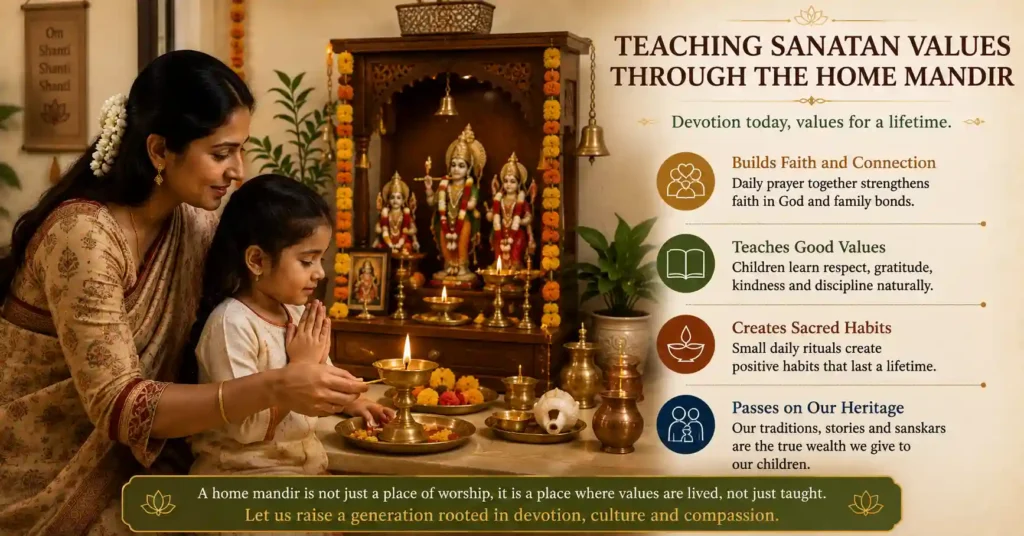
Teaching Children Through the Home Mandir
For many families, the home mandir is one of the first places where children learn about faith, gratitude, and spiritual values. Simple daily practices can help them develop a natural connection with Sanatan Dharma from an early age.
Children can participate in age-appropriate ways such as:
- Lighting a diya with adult supervision
- Offering flowers to the deity
- Joining family aarti
- Learning simple prayers and mantras
- Listening to bhajans and spiritual stories
- Practicing gratitude before meals or bedtime
These small activities often become cherished childhood memories. Many adults fondly remember sitting beside parents or grandparents during evening prayers and festival celebrations.
A home mandir also provides opportunities to teach important values such as respect, discipline, kindness, patience, and gratitude. Rather than presenting spirituality as a set of rules, families can help children experience it through daily habits and positive examples.
Over time, these simple experiences can nurture a lifelong appreciation for faith, culture, and spiritual living.
Can a Home Mandir Be Placed in a Bedroom or Kitchen?
Many people living in apartments and smaller homes wonder whether a home mandir can be placed in a bedroom or kitchen. While a separate prayer room is often preferred, modern living spaces do not always make this possible.
If space is limited, a mandir can still be maintained respectfully in a bedroom, provided the prayer area remains clean, organized, and dedicated to worship. Many families use a small wall-mounted shelf, cabinet, or corner shrine when a separate room is not available.
If the mandir is placed in a bedroom, try to:
- Keep the area clean and uncluttered
- Place the mandir on an elevated platform or shelf
- Maintain a respectful atmosphere around the prayer space
- Avoid using the area for unrelated storage
Similarly, some families keep a small prayer shelf in the kitchen. In many traditions, the kitchen is viewed as an important part of daily life because it is associated with nourishment, gratitude, and the preparation of food for the family.
The ideal location is one that allows regular prayer and devotion. A simple worship space maintained with sincerity is often more meaningful than having a perfect location that is rarely used.
In today’s homes, practicality and devotion should work together. The purpose of a home mandir is to support daily worship and spiritual connection, not create stress or anxiety about limited space.
How a Home Mandir Supports Emotional and Spiritual Well-Being
Modern life often moves at a relentless pace. Work pressures, constant notifications, social media, and daily responsibilities can leave the mind feeling restless and overwhelmed.
In such an environment, a home mandir can become more than a place of worship. It can serve as a quiet refuge where individuals pause, pray, reflect, and reconnect with themselves and the Divine.
Many devotees feel that spending a few peaceful moments near their prayer space helps cultivate:
- Emotional calmness
- Mental clarity
- A sense of grounding
- Better focus
- Inner comfort
- Hope and spiritual strength
For many elders, sitting near the mandir during the early morning hours becomes one of the most peaceful parts of the day. For students and working professionals, even a brief prayer can provide a moment of stillness amidst a busy schedule.
Over time, the mandir becomes closely connected with family memories, festivals, prayers, gratitude, healing, and important life moments. It quietly witnesses both joyful celebrations and difficult challenges.
Perhaps this is why a home mandir remains meaningful even in modern times. Sometimes the smallest prayer corner becomes the place where the heart finds the greatest sense of peace, comfort, and spiritual reassurance.
Bringing the Spirit of the Mandir into Daily Life
The purpose of a home mandir is not limited to the few minutes spent in prayer each day. Its deeper role is to inspire values and attitudes that can be carried into everyday life.
Many devotees try to bring the spirit of the mandir into their daily actions through simple practices such as:
- Beginning the day with gratitude
- Speaking respectfully with family members
- Performing work honestly and sincerely
- Helping others whenever possible
- Practicing patience during difficult situations
- Remembering the Divine during moments of success and failure
In Sanatan Dharma, spiritual life is not separated from daily life. The values learned during prayer are meant to guide our thoughts, words, and actions throughout the day.
A home mandir serves as a gentle reminder to live with greater awareness, compassion, humility, and gratitude. Over time, these small habits can influence not only individual well-being but also the overall atmosphere of the household.
When devotion extends beyond rituals and becomes part of daily conduct, the mandir begins to fulfill its deeper purpose as a source of spiritual growth and inner transformation.
A Simple Home Mandir Is Enough to Begin
If you are creating your first home mandir, there is no need to make it complicated. Spiritual life often begins with small and sincere steps rather than elaborate arrangements.
To get started, you only need:
- A clean and peaceful space
- One deity image or idol
- A diya or lamp
- A few moments of daily prayer
Many beginners worry about following every rule perfectly. However, Sanatan Dharma places greater importance on devotion, humility, faith, and sincere intention than on fear of making small mistakes.
As your connection with prayer deepens, your spiritual routine may naturally evolve. Some people gradually add simple rituals, sacred texts, mantra chanting, or regular aarti, while others continue with a simple daily practice.
What matters most is consistency. A few moments of heartfelt prayer offered every day can be far more meaningful than occasional elaborate rituals performed without devotion.
The purpose of a home mandir is to create a space where you can pause, pray, express gratitude, and remember the Divine. Even the simplest prayer corner can become a source of peace, strength, and spiritual comfort.
Conclusion
A home mandir is not defined by its size, decoration, or the number of rituals performed there. Its true value lies in the devotion, faith, and spiritual connection it brings into everyday life.
In today’s fast-paced world, a simple prayer space can become a place of calm amidst constant activity. Lighting a diya, offering a prayer, chanting a mantra, or sitting quietly for a few moments can help create a sense of balance and inner peace.
For many families, the mandir becomes a silent witness to life’s journey. It is present during moments of joy, gratitude, celebration, uncertainty, and prayer. Over time, it often becomes one of the most meaningful spaces in the home.
Whether your mandir is a dedicated room, a small shelf, or a simple corner, what matters most is the sincerity with which it is maintained. Even the humblest prayer space can become a source of strength, comfort, devotion, and spiritual warmth when nurtured with faith and consistency.
Suggested reading
If you wish to understand more about the spiritual meaning behind daily rituals, devotional traditions, and sacred practices in Sanatan Dharma, you may also enjoy reading these articles from thesanatantales.com.
Tilak in Hinduism: 7 Sacred Reasons behind This Positive Ritual
https://thesanatantales.com/tilak-in-hinduism-sacred-reasons/
What are the 16 sanskar in Sanatan Dharma?
https://thesanatantales.com/16-sanskar-in-sanatan-dharma/
Chanting Mantras without a Guru: Simple Guide for Beginners
https://thesanatantales.com/chanting-mantras-without-guru/
Brahma Muhurta: Meaning, Time & Spiritual Significance
https://thesanatantales.com/brahma-muhurta-meaning-time-significance/
What is Moksha and how is it attained?
https://thesanatantales.com/what-is-moksha/
What Is Dharma and Its Real Meaning in Sanatan Dharma
https://thesanatantales.com/what-is-dharma-in-sanatan-dharma/
FAQs
What is the best place for a home mandir?
Traditionally, the northeast direction is considered auspicious for a home mandir because it is associated with spiritual practices and positive energy. However, not every home has the ideal layout.
The best location is ultimately a clean, peaceful, and easily accessible space where daily prayer can be performed comfortably. Whether it is a dedicated puja room, a wall-mounted shelf, or a small corner in an apartment, regular worship and devotion are more important than achieving perfect placement.
Can I keep a home mandir in my bedroom?
Yes, many people living in apartments, rented homes, or limited spaces keep a mandir in their bedroom. If this is the only practical option, ensure that the prayer area remains clean, organized, and treated respectfully.
A small elevated shelf or cabinet is often preferred. The purpose of a home mandir is to support daily worship and spiritual connection. Limited space should not become a barrier to devotion.
Which deities can be kept in a home mandir?
Families commonly worship Shiva, Krishna, Rama, Sita, Durga, Lakshmi, Ganesha, Hanuman, and Vishnu in their home mandir. The choice usually depends on family traditions, personal devotion, or one’s Ishta Devata.
Some families focus on one primary deity, while others worship multiple deities together. What matters most is maintaining a clean and peaceful prayer space that encourages regular worship and devotion.
How many idols should be kept in a home mandir?
There is no universal rule that applies to every family. However, many devotees prefer keeping a manageable number of idols and deity images so that the mandir remains organized and easy to maintain.
A crowded shrine can make daily worship difficult. In most homes, a simple arrangement with a primary deity and a few supporting deities creates a more peaceful devotional atmosphere.
What are the essential items needed for a home mandir?
A basic home mandir does not require expensive decorations or numerous ritual items. Most families begin with a deity image or idol, a diya, incense sticks, flowers, and a small bell.
Other commonly used items include a puja thali, holy water, sacred texts, a mala for chanting, and a copper kalash. The most important elements are cleanliness, sincerity, and regular prayer rather than the number of items present.
Can I create a home mandir in a rented house or small apartment?
Absolutely. Many devotees today live in rented apartments, hostels, or compact homes where a separate puja room is not possible.
A simple shelf, small cabinet, or dedicated corner can serve as a meaningful prayer space. Even a modest mandir can become spiritually significant when used regularly for prayer, gratitude, and reflection.
How can I maintain positive energy in a home mandir?
Positive energy is often created through cleanliness, devotion, and consistency rather than decoration alone.
Keeping the prayer area tidy, lighting a diya regularly, offering fresh flowers, chanting mantras, and maintaining a calm atmosphere can help create a spiritually uplifting environment. Many families also avoid clutter, broken idols, and unrelated household items in the mandir area.
Is a separate puja room necessary for worship?
No. While a dedicated puja room can be helpful, it is not essential.
In Sanatan Dharma, devotion is not measured by the size of the worship space. A small prayer corner maintained with sincerity can be just as meaningful as a large mandir room. Many families perform daily worship in compact spaces and maintain a strong spiritual connection through regular prayer and faith.
What should be avoided in a home mandir?
Most traditions recommend avoiding broken idols, torn deity images, excessive clutter, footwear, and unrelated storage items in the prayer area.
The goal is to maintain cleanliness, reverence, and a peaceful atmosphere. A simple and organized mandir generally creates a more focused and devotional environment for worship.
How can beginners start worship at a home mandir?
Beginners should keep things simple. Start with a clean prayer space, one deity image or idol, a diya, and a few moments of daily prayer.
There is no need to memorize complex rituals immediately. Many devotees begin with a short prayer, a simple mantra, or a few minutes of gratitude each day. Over time, spiritual practices naturally deepen through consistency, faith, and personal experience.
Glossary of Important Terms
| Term | Meaning |
|---|---|
| Mandir | A sacred space or shrine used for worship and prayer. |
| Puja | A devotional ritual performed to honor the Divine. |
| Diya | A traditional oil lamp lit during worship. |
| Aarti | A devotional ritual performed with a lamp and prayers. |
| Bhajan | A devotional song sung in praise of God. |
| Prasad | Food or offerings blessed during worship. |
| Ishta Devata | A devotee’s chosen or personally worshipped deity. |
| Kalash | A sacred vessel used in Hindu rituals and worship. |
| Vastu | Traditional principles related to harmony and spatial arrangement. |
| Mantra | A sacred word, phrase, or chant used in spiritual practice. |
About the Author
Yateendra Chaturvedi is a spiritual writer, researcher, devotee, and the founder of The Sanatan Tales. With over 35 years of professional experience and a lifelong interest in Sanatan Dharma, he writes about Hindu deities, temples, scriptures, festivals, Mahavidyas, sacred stories, rituals, and living traditions that continue to guide and inspire devotees across India.
Drawing from traditional scriptures, regional beliefs, temple traditions, devotional literature, and historical sources, he aims to present authentic, well-researched, and easy-to-understand content for modern readers. His work focuses on preserving spiritual wisdom, explaining sacred traditions, and helping seekers develop a deeper understanding of India’s rich spiritual heritage.
Through The Sanatan Tales, Yateendra strives to make the timeless teachings of Sanatan Dharma simple, meaningful, and relevant for today’s generation while maintaining respect for traditional sources, regional practices, and diverse spiritual perspectives.
Learn More About Yateendra Chaturvedi →
https://thesanatantales.com/about-the-author/
References & Sources
This article is based on teachings, values, and practices associated with Sanatan Dharma, including insights drawn from Hindu scriptures, traditional spiritual knowledge, devotional practices, yogic traditions, and widely accepted philosophical teachings. It also reflects guidance preserved through family traditions, spiritual communities, and the guru-disciple lineage that has transmitted Sanatan wisdom across generations.
Note: Beliefs, interpretations, and spiritual practices may vary across different traditions, sampradayas, regions, and individual paths within Sanatan Dharma. The purpose of this article is not to promote any single viewpoint as the absolute truth, but to present commonly accepted spiritual perspectives in a simple, practical, and reader-friendly manner. Sanatan Dharma embraces multiple paths of worship, knowledge, devotion, meditation, and self-transformation
Explore More Fascinating Topics from Sanatan Dharma