
There are few pilgrimages in Sanatan Dharma that inspire as much devotion and determination as Kedarnath Dham. Hidden amidst the snow-clad Himalayas of Uttarakhand at an altitude of about 3,583 metres, this sacred abode of Lord Shiva has drawn saints, sages and devotees for centuries.
Kedarnath Dham is one of the four sacred Char Dham pilgrimage sites of the Himalayas and one of the twelve revered Jyotirlingas of Lord Shiva. For millions of devotees, it is not just a destination but a divine journey where faith is tested, prayers find meaning and every step towards the temple brings them closer to Mahadev.
The pilgrimage to Kedarnath Dham is far more than a mountain trek. The serene flow of the Mandakini River, the breathtaking Himalayan landscape and the peaceful atmosphere create an experience that touches both the heart and soul.
Despite the challenging terrain, unpredictable weather and high altitude, millions of devotees undertake this sacred journey every year with unwavering faith, believing that the blessings of Lord Shiva make every hardship worthwhile.
Whether you are planning your first visit or returning once again to seek the grace of Mahadev, this complete Kedarnath Dham guide will help you prepare for a safe and spiritually fulfilling pilgrimage.
You will learn about the temple’s history and spiritual significance, opening and closing dates, registration process, darshan timings, how to reach Kedarnath, the Gaurikund trek, helicopter booking, accommodation and stay options, food facilities, weather, travel tips, nearby places to visit, and answers to frequently asked questions.
By the end of this guide, you will have everything you need to plan your Kedarnath Dham Yatra with confidence and devotion.
Kedarnath Dham at a Glance
| Particular | Details |
|---|---|
| Temple Name | Kedarnath Dham |
| Presiding Deity | Lord Shiva |
| Religious Significance | One of the 12 Jyotirlingas and part of the Chota Char Dham pilgrimage |
| Location | Rudraprayag District, Uttarakhand |
| Elevation | About 3,583 metres (11,755 feet) above sea level |
| Trek Distance | Approximately 16–17 km from Gaurikund |
| Best Time to Visit | May to June and September to October |
| Temple Opening Period | Generally late April/early May to October/November |
| Nearest Airport | Jolly Grant Airport, Dehradun |
| Nearest Railway Station | Rishikesh Railway Station |
| Nearest Road Access | Gaurikund (via Sonprayag) |
| Winter Worship | Omkareshwar Temple, Ukhimath |
Did You Know?
Kedarnath Dham stands at an elevation of about 3,583 metres (11,755 feet) above sea level, making it one of the highest and most revered Jyotirlingas of Lord Shiva. Despite the devastating floods of 2013 that caused widespread destruction in the surrounding region, the main temple remained largely unharmed.
Many devotees regard this as a symbol of Lord Shiva’s divine protection, while experts also admire the temple’s remarkable ancient stone construction that has withstood centuries of harsh Himalayan weather.
Table of Contents
ToggleKedarnath Dham Opening Date, Closing Date and Annual Schedule
Kedarnath Dham remains open for devotees for about six months each year due to the extreme weather conditions in the Himalayas. During winter, heavy snowfall makes the temple inaccessible, so the annual pilgrimage takes place only between late April or early May and October or early November.
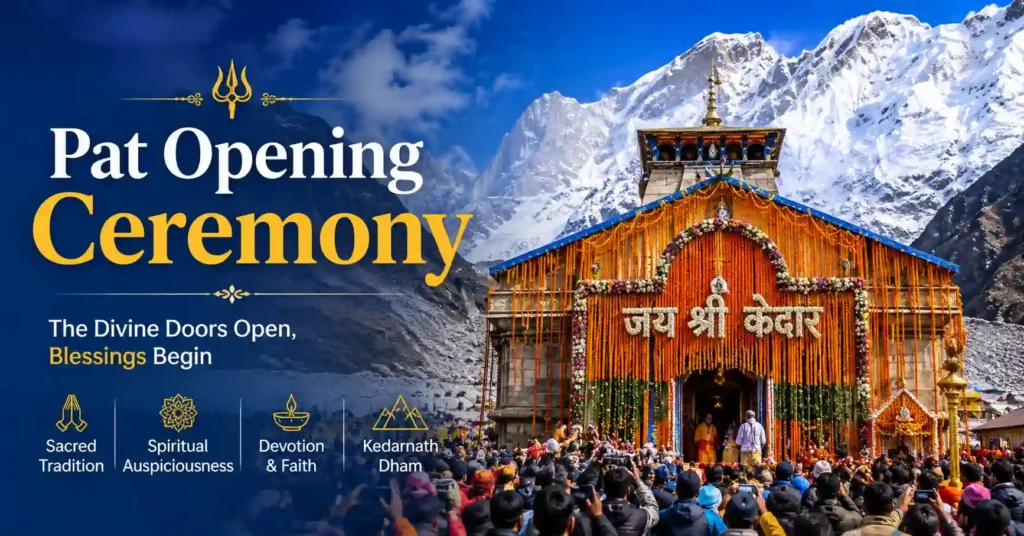
The opening date of Kedarnath Temple is announced every year on Mahashivratri by the Badrinath-Kedarnath Temple Committee (BKTC). Traditionally, the temple doors open around Akshaya Tritiya, an auspicious day in the Hindu calendar that marks new beginnings. The temple generally closes on Bhai Dooj, shortly after Diwali, before the harsh winter season begins.
Kedarnath Dham Opening and Closing Dates (2027)
| Event | Tentative Date* |
|---|---|
| Temple Opening | Around 30 April 2027 (Akshaya Tritiya) |
| Temple Closing | Around 10 November 2027 (Bhai Dooj) |
Note: These are tentative dates based on the traditional annual schedule and may change. The official opening and closing dates are announced each year on Mahashivratri by the Badrinath-Kedarnath Temple Committee (BKTC). We will update this guide as soon as the official announcement is made.
After the temple closes, the Utsav Vigraha (ceremonial idol) of Lord Kedarnath is taken in a traditional procession to Omkareshwar Temple in Ukhimath, where daily worship continues throughout the winter.
When the temple reopens in the next pilgrimage season, the deity is ceremonially brought back to Kedarnath Dham, marking the beginning of another sacred yatra.
Kedarnath Dham Registration
Registration is mandatory for all pilgrims visiting Kedarnath Dham. The Uttarakhand Government has made this process compulsory to ensure the safety of devotees, manage crowds efficiently, and provide timely assistance during emergencies.
Every registered pilgrim receives a Yatra e-pass, which is required at various checkpoints during the journey, including the trek route and helicopter boarding points.
You can complete your Kedarnath Dham registration online through the official Uttarakhand Tourism portal before starting your pilgrimage. Devotees who are unable to register online can also complete the process at designated registration counters in Haridwar, Rishikesh, Sonprayag, and Guptkashi.
Documents Required for Registration
| Document | Required |
|---|---|
| Aadhaar / Passport / Voter ID / Driving Licence | Yes |
| Mobile Number | Yes |
| Passport-size Photograph | If required |
| Emergency Contact Details | Yes |
It is advisable to complete your registration well in advance, especially during the peak pilgrimage season, as daily visitor limits may apply.
When Should You Register?
It is advisable to complete your Kedarnath Dham registration as soon as you finalise your travel plans. During the peak pilgrimage season, especially in May and June, the number of pilgrims increases significantly, and accommodation, helicopter tickets and other travel services are booked quickly. Registering early not only saves time but also helps ensure a smoother and better-planned pilgrimage experience.
After successful registration, keep a digital or printed copy of your Yatra e-pass with you throughout the journey, as it may be checked at multiple points before reaching Kedarnath Dham.

Kedarnath Temple Darshan Timings
Planning your visit according to the temple timings can help you enjoy a peaceful and hassle-free darshan. Kedarnath Temple follows a daily schedule for opening, darshan, aarti and closing, although timings may vary slightly depending on the season and temple administration.
It is always advisable to check the latest schedule before your visit, especially during the pilgrimage season.
Devotees wishing to attend the morning or evening aarti should arrive well in advance, as only a limited number of pilgrims may be permitted during these sacred rituals.
Darshan Timings
| Activity | Timings* |
|---|---|
| Temple Opens | Around 4:00 AM |
| Morning Darshan | 4:00 AM to 3:00 PM |
| Temple Closes (Afternoon Break) | Around 3:00 PM to 5:00 PM |
| Evening Darshan | 5:00 PM to 9:00 PM |
| Evening Aarti | Around 6:00 PM to 7:30 PM |
| Temple Closes | Around 9:00 PM |
Note: Temple timings may change during festivals, special occasions and due to weather conditions. Devotees are advised to verify the latest darshan and aarti schedule through the Badrinath-Kedarnath Temple Committee before planning their visit.
Temple Rules and Visitor Guidelines
A visit to Kedarnath Dham is not only a pilgrimage but also a deeply spiritual experience. Devotees are encouraged to maintain the sanctity of the temple by following local customs and the instructions of the temple administration. Respecting these traditions helps ensure a peaceful and meaningful darshan for everyone.
| Guideline | Recommendation |
|---|---|
| Dress Modestly | Wear simple and comfortable clothing suitable for a sacred place and the cold Himalayan weather. |
| Follow Queue Rules | Cooperate with temple staff and wait patiently for your turn during darshan. |
| Maintain Cleanliness | Avoid littering and help keep the temple premises and trekking route clean. |
| Photography | Follow the temple administration’s guidelines regarding photography inside or around the temple. |
| Mobile Phones | Keep your phone on silent mode and avoid disturbing other devotees during worship. |
| Respect Local Traditions | Follow the customs, rituals and instructions issued by the temple authorities. |
By observing these simple guidelines, devotees can contribute to preserving the spiritual atmosphere and sacred traditions of Kedarnath Dham while ensuring a pleasant experience for all pilgrims.
How to Reach Kedarnath Dham
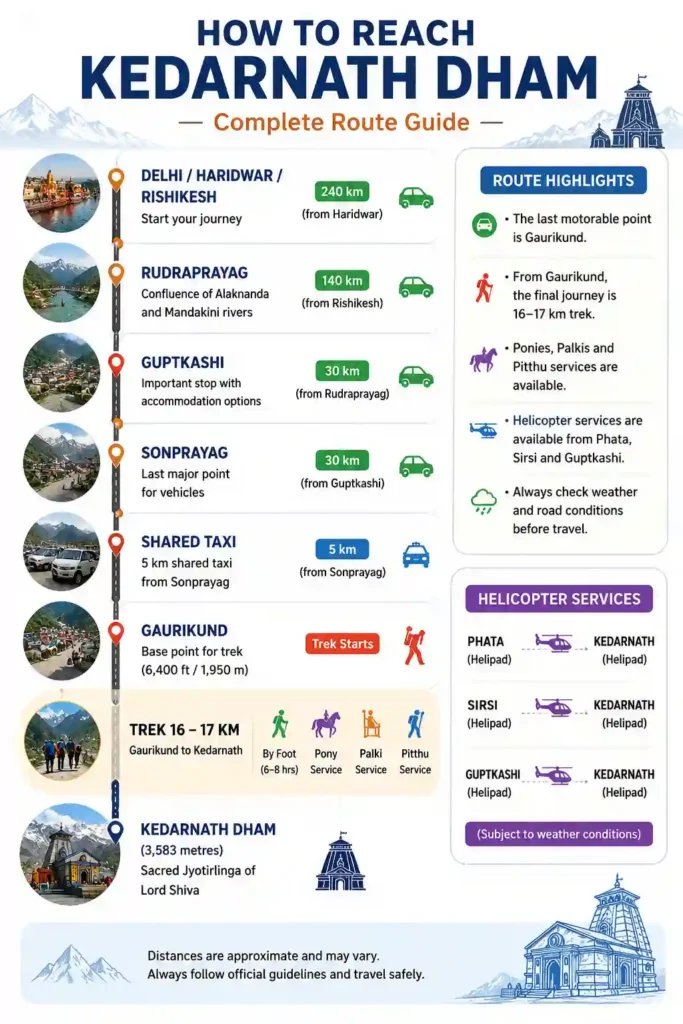
Kedarnath Dham is located in the Rudraprayag district of Uttarakhand and is not directly connected by road. The last motorable point is Gaurikund, from where pilgrims complete the final 16–17 km journey on foot or by using local transport services such as ponies, palkis or helicopters.
Distance From Major Cities
| City | Approximate Distance to Kedarnath Dham |
|---|---|
| Haridwar | 240 km |
| Rishikesh | 220 km |
| Dehradun | 255 km |
| Delhi | 450 km |
| Guptkashi | 47 km |
| Sonprayag | 19 km |
| Gaurikund | 16–17 km (trek to the temple) |
Approximate Travel Time
The actual travel time to Kedarnath Dham depends on road conditions, weather and traffic during the pilgrimage season. The table below provides an approximate estimate to help you plan your journey.
| Starting Point | Approximate Travel Time* |
|---|---|
| Haridwar to Sonprayag | 8–9 hours |
| Rishikesh to Sonprayag | 7–8 hours |
| Dehradun to Sonprayag | 8–9 hours |
| Delhi to Sonprayag | 12–14 hours |
| Sonprayag to Gaurikund | 20–30 minutes (shared taxi) |
| Gaurikund to Kedarnath Temple | 6–8 hours trek |
Note: The above travel times are approximate and may vary depending on weather conditions, road maintenance, traffic and the number of pilgrims during the yatra season.
By Air
The nearest airport is Jolly Grant Airport, Dehradun, about 238 km from Gaurikund. From the airport, taxis and buses are available to reach Sonprayag or Gaurikund. Pilgrims can also opt for helicopter services from selected helipads during the pilgrimage season.
By Train
The nearest major railway station is Rishikesh, located about 215 km from Gaurikund. Other convenient railway stations include Haridwar and Dehradun, which are well connected to major cities across India.
By Road
Regular buses and taxis operate from Haridwar, Rishikesh, and Dehradun to Sonprayag. Private vehicles are generally allowed only up to Sonprayag, where parking facilities are available. From Sonprayag, government-operated shared taxis take pilgrims to Gaurikund, the starting point of the Kedarnath trek.
Local Transport to Kedarnath Temple
From Gaurikund, pilgrims can choose one of the following options to reach Kedarnath Dham:
Trek: A scenic 16–17 km trek suitable for physically fit pilgrims.
Pony: Available for devotees who prefer not to walk.
Palki (Palanquin): Ideal for elderly pilgrims and those with mobility difficulties.
Pitthu Service: Helpers who carry children or light luggage.
Helicopter: Seasonal helicopter services operate from Phata, Sirsi, and Guptkashi, providing a faster and more convenient way to reach Kedarnath.
It is advisable to begin the journey early in the morning, especially during the peak pilgrimage season, to avoid traffic congestion and changing weather conditions in the Himalayas.
Kedarnath Dham Helicopter Booking
Helicopter services offer a convenient option for pilgrims who are unable to undertake the 16–17 km trek to Kedarnath Dham. During the annual pilgrimage season, helicopter flights operate from the helipads at Phata, Sirsi, and Guptkashi, subject to weather conditions and government approvals.
Bookings should be made only through the official IRCTC Heli Yatra portal. Avoid booking through unauthorised websites, agents or social media advertisements, as fraudulent booking scams are common during the pilgrimage season.
Important Information for Helicopter Pilgrims
| Details | Information |
|---|---|
| Boarding Points | Phata, Sirsi and Guptkashi |
| Flight Duration | Approximately 8–10 minutes (one way) |
| Booking Mode | Official IRCTC Heli Yatra Portal |
| Reporting Time | Reach the helipad at least 1 hour before departure |
| ID Proof | Valid photo ID required during check-in |
| Luggage Allowance | Usually 2–5 kg per passenger (subject to operator guidelines) |
Since helicopter services are highly dependent on weather conditions in the Himalayas, delays or cancellations may occur due to rain, snowfall or poor visibility. It is advisable to book your tickets well in advance, keep some flexibility in your travel itinerary, and regularly check official updates before your journey.
The Sacred Gaurikund to Kedarnath Trek
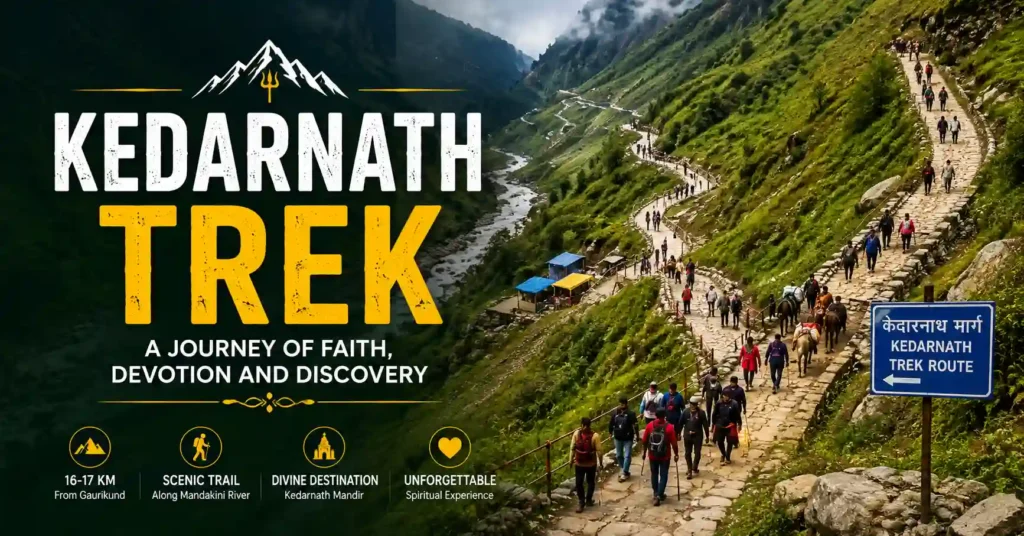
The Gaurikund to Kedarnath trek is one of the most sacred and memorable parts of the Kedarnath Dham pilgrimage. Covering approximately 16–17 km, the trek takes devotees through the breathtaking Himalayan landscape, alongside the Mandakini River, and offers a unique opportunity to experience both the beauty of nature and the spirit of devotion.
While the journey can be physically demanding, many pilgrims consider every step towards Kedarnath Temple an act of faith and devotion to Lord Shiva.
Most pilgrims complete the trek in 6 to 8 hours, depending on their fitness level, weather conditions and the number of rest breaks. The well-maintained route passes through Jungle Chatti, Bheembali, and Linchauli, where resting shelters, drinking water, refreshment stalls, toilets and medical aid centres are available.
Trek Options
| Option | Suitable For |
|---|---|
| Walking | Healthy pilgrims comfortable with mountain trekking |
| Pony | Pilgrims who prefer not to walk long distances |
| Palki (Palanquin) | Senior citizens and devotees with mobility challenges |
| Pitthu Service | Carrying children or light luggage |
| Helicopter | Elderly pilgrims, people with medical conditions or those with limited time |
To make the journey more comfortable, begin your trek early in the morning, wear sturdy trekking shoes, carry warm clothing and rain protection, stay hydrated, and take regular breaks to adjust to the high altitude. If you have heart, respiratory or other serious medical conditions, consult your doctor before undertaking the trek or consider using the helicopter service.

Accommodation and Stay Options Near Kedarnath Dham
Pilgrims visiting Kedarnath Dham can choose from a variety of accommodation options, ranging from simple dharamshalas to budget hotels and government guest houses.
Since the temple remains open only for a limited period each year, it is advisable to book your stay well in advance, especially during the peak pilgrimage season from May to June.
The Garhwal Mandal Vikas Nigam (GMVN) operates reliable guest houses at several locations along the pilgrimage route. In addition, many registered private hotels, lodges and homestays provide comfortable accommodation for devotees.
| Location | Accommodation Available |
|---|---|
| Guptkashi | Hotels, GMVN guest houses, homestays |
| Sonprayag | Budget hotels, lodges, guest houses |
| Gaurikund | Hotels, dharamshalas, guest houses |
| Kedarnath | Dharamshalas, GMVN camps, guest houses (limited availability) |
Many pilgrims prefer to stay overnight in Guptkashi or Sonprayag before beginning the trek early the next morning, as these towns offer a wider range of hotels, guest houses and essential facilities.
Pilgrims who wish to stay near the temple can choose accommodation in Kedarnath, but rooms are limited and are usually booked well in advance during the pilgrimage season. Planning your stay according to your travel schedule can make the journey more comfortable and less tiring.
Food Facilities at Kedarnath Dham
Pure satvik vegetarian food is available throughout the Kedarnath pilgrimage route. Small restaurants, food stalls, langars and tea shops serve simple and nourishing meals suitable for high-altitude travel.
Common food items include:
Khichdi
Roti and sabzi
Rice and dal
Tea and coffee
Packaged snacks and bottled drinking water
Availability of Food and Drinking Water
Food stalls, small restaurants, tea shops and community langars are available at several points along the Kedarnath pilgrimage route, particularly in Sonprayag, Gaurikund and near Kedarnath Temple during the pilgrimage season.
Packaged drinking water and simple refreshments are also available at many rest stops along the trek. However, pilgrims are advised to carry a reusable water bottle and a few light snacks, especially while trekking, as facilities may be limited during bad weather or periods of heavy pilgrim traffic.
To maintain the sanctity of the holy shrine, non-vegetarian food and alcohol are strictly prohibited in the Kedarnath Temple area. Pilgrims are also encouraged to avoid littering and help preserve the cleanliness and natural beauty of this sacred Himalayan pilgrimage.
Best Time to Visit Kedarnath Dham
The best time to visit Kedarnath Dham is during the temple’s open season, generally from May to June and September to October.
During these months, the weather is comparatively pleasant, the trekking route remains accessible, and pilgrims can enjoy a comfortable darshan experience. The temple remains closed during winter because of heavy snowfall in the Himalayas.
| Season | Weather | Travel Recommendation |
|---|---|---|
| Summer (May–June) | Cool and pleasant | Ideal for trekking and darshan |
| Monsoon (July–August) | Heavy rainfall and landslides | Avoid travel unless necessary |
| Autumn (September–October) | Clear skies and comfortable temperatures | Excellent time for pilgrimage |
| Winter (November–April) | Heavy snowfall; temple remains closed | Winter worship takes place at Omkareshwar Temple, Ukhimath |
Choosing the Best Season for Your Pilgrimage
While Kedarnath Dham welcomes devotees throughout the temple’s open season, the ideal time to visit depends on your travel preferences. If you wish to experience the festive atmosphere with maximum pilgrim activity, plan your journey during May and June. However, this is also the busiest period, so accommodation and helicopter tickets should be booked well in advance.
For devotees seeking a quieter and more peaceful darshan, September and October are often considered the best months. After the monsoon, the skies are usually clearer, the Himalayan views become more spectacular, and the trekking route is less crowded. These months are also ideal for photography and devotees who prefer a calm spiritual experience.
| Travel Preference | Recommended Time |
|---|---|
| Pleasant weather | May to June |
| Less crowded pilgrimage | September to October |
| Best Himalayan views | September to October |
| Photography | September to October |
| Family pilgrimage | May to June or September |
| Senior citizens (weather permitting) | September to October |
| Avoid | July and August (Monsoon season) |
Travel Tips for Kedarnath Dham
Before beginning your pilgrimage, keep the following tips in mind:
Carry warm clothes, gloves, a raincoat and sturdy waterproof trekking shoes.
Keep your identity proof, registration documents and Yatra e-pass readily available.
Carry personal medicines and consult your doctor before travelling if you have heart or respiratory conditions.
Stay hydrated and take regular breaks during the trek to adjust to the high altitude.
Start your trek early in the morning to avoid afternoon weather changes and complete the journey safely.
Check the official Uttarakhand Government or Badrinath-Kedarnath Temple Committee updates for the latest weather, road conditions and pilgrimage advisories before starting your journey.
Packing Checklist for Kedarnath Dham Yatra
The weather in the Himalayas can change rapidly, so carrying the right essentials will make your Kedarnath Dham Yatra safer and more comfortable. Before starting your pilgrimage, ensure you have packed the following items.
| Category | Essentials |
|---|---|
| Documents | Aadhaar Card or other valid ID, Yatra registration, helicopter ticket (if applicable), hotel booking confirmation |
| Clothing | Warm jacket, thermal wear, woollen cap, gloves, socks and raincoat or poncho |
| Footwear | Comfortable waterproof trekking shoes with good grip |
| Medicines | Personal medicines, basic first-aid kit, pain relief spray, bandages and any prescribed medication |
| Food & Water | Reusable water bottle, dry fruits, energy bars, biscuits and glucose |
| Electronics | Mobile phone, power bank, charger and flashlight |
| Other Essentials | Sunglasses, sunscreen, lip balm, walking stick (optional) and small backpack |
Pack light but carry all essential items needed for a high-altitude pilgrimage. Avoid carrying unnecessary luggage, especially if you plan to trek from Gaurikund or travel by helicopter, as luggage allowances are limited.
Important Things to Know Before Visiting Kedarnath Dham
A little preparation can make your Kedarnath Dham Yatra safer and more comfortable. Before beginning your pilgrimage, keep these important points in mind to ensure a smooth and spiritually fulfilling experience.
| Recommendation | Why It Matters |
|---|---|
| Complete your registration in advance | Registration is mandatory for all pilgrims. |
| Start your trek early in the morning | Helps avoid afternoon weather changes and allows enough time to reach the temple safely. |
| Monitor weather updates | Heavy rain or snowfall may affect road conditions and helicopter services. |
| Stay hydrated | High altitude can lead to dehydration and fatigue. |
| Avoid plastic waste | Help preserve the cleanliness and sanctity of the Himalayan environment. |
| Respect temple traditions | Dress modestly, follow queue guidelines and maintain the spiritual atmosphere. |
| Keep emergency contacts handy | Useful in case of medical or travel emergencies. |
| Travel only through authorised operators | Prevents fraud while booking accommodation, ponies or helicopter services. |
Kedarnath Dham is not only a sacred place of worship but also a fragile Himalayan ecosystem. By following local guidelines and travelling responsibly, devotees can help preserve its natural beauty and spiritual heritage for future generations.
History of Kedarnath Dham
Kedarnath Dham is one of the oldest and most revered Shiva temples in India. Situated amidst the majestic Garhwal Himalayas of Uttarakhand, the temple has been a sacred place of worship for centuries and continues to attract millions of devotees seeking the blessings of Lord Shiva.
Although the exact date of its construction remains uncertain, Hindu traditions associate Kedarnath with the Mahabharata era, making it one of the most ancient pilgrimage sites in Sanatan Dharma.
According to the Mahabharata and the Kedar Khand of the Skanda Purana, the Pandavas visited the Himalayas after the Kurukshetra war to seek forgiveness from Lord Shiva for the destruction caused during the battle.
Their search eventually led them to Kedarnath, where Lord Shiva blessed them after testing their devotion. This sacred legend continues to form the spiritual foundation of the Kedarnath pilgrimage.
The present stone temple is believed to have been revived and established by the great philosopher and saint Adi Shankaracharya during the 8th century CE. Built from massive interlocking stone blocks without the use of modern cement, the temple showcases remarkable engineering that has withstood the harsh Himalayan climate for centuries.
Behind the temple lies the Samadhi of Adi Shankaracharya, making the site even more sacred for devotees.
Kedarnath Dham also became a symbol of faith and resilience after the devastating floods of 2013. While the surrounding area suffered extensive damage, the main temple remained largely unharmed, a survival that many devotees regard as a divine blessing of Lord Shiva.
Today, improved infrastructure, better pilgrimage facilities and ongoing conservation efforts continue to welcome devotees from across India and around the world while preserving the temple’s timeless spiritual heritage.
Spiritual Significance of Kedarnath Dham
Kedarnath Dham is one of the holiest pilgrimage destinations in Sanatan Dharma and one of the twelve sacred Jyotirlingas of Lord Shiva. It is also one of the four revered temples of the Chota Char Dham pilgrimage in Uttarakhand, making it a place of immense spiritual importance for Shiva devotees across the world.
For devotees, visiting Kedarnath Dham is much more than completing a pilgrimage. It is a sacred opportunity to seek Lord Shiva’s blessings, surrender one’s ego, pray for forgiveness, and strengthen the path towards spiritual growth and inner peace.
The challenging journey through the Himalayas reminds pilgrims that faith, patience and perseverance are essential qualities on the path of devotion.
Surrounded by snow-covered peaks and the sacred Mandakini River, Kedarnath Dham symbolises purity, detachment and the eternal presence of Mahadev. The peaceful atmosphere encourages devotees to leave behind worldly distractions and immerse themselves in prayer, meditation and self-reflection.
Many pilgrims believe that sincere worship at Kedarnath helps cleanse past karmas, deepen devotion to Lord Shiva, and inspire a life guided by humility, righteousness and compassion.
The sacred traditions associated with Kedarnath Dham also form the foundation of the revered Panch Kedar pilgrimage, further highlighting the temple’s unique place in the Shaiva tradition of Sanatan Dharma.

Panch Kedar: The Five Sacred Temples of Lord Shiva
Kedarnath Dham is the most prominent of the Panch Kedar, a group of five sacred temples dedicated to Lord Shiva in the Garhwal Himalayas of Uttarakhand. According to the Mahabharata and the traditions of the Kedar Khand in the Skanda Purana, the Pandavas sought Lord Shiva’s forgiveness after the Kurukshetra war.
Lord Shiva took the form of a bull to avoid them, but when Bhima recognised Him, the bull disappeared into the earth. Different parts of His divine form are believed to have appeared at five different locations, which are now worshipped as the Panch Kedar temples.
| Temple | Manifestation of Lord Shiva |
|---|---|
| Kedarnath | Hump |
| Tungnath | Arms |
| Rudranath | Face |
| Madhyamaheshwar | Navel and stomach |
| Kalpeshwar | Hair (Jata) |
Among these, Kedarnath Dham holds the highest significance as one of the twelve Jyotirlingas and the most visited temple of the Panch Kedar circuit. Many devotees undertake the complete Panch Kedar pilgrimage to deepen their devotion to Lord Shiva and experience the spiritual heritage of the Himalayas.
It is believed that completing the Panch Kedar Yatra with sincerity brings divine blessings, inner peace and spiritual fulfilment.
Nearby Places to Visit Near Kedarnath Dham
While visiting Kedarnath Dham, many devotees also explore several nearby sacred sites that hold great religious and historical significance. These places are closely associated with Lord Shiva, Adi Shankaracharya and the rich spiritual heritage of the Himalayas.
If your schedule allows, consider including some of these destinations in your pilgrimage to make your spiritual journey even more meaningful.
| Place | Approximate Distance | Why Visit |
|---|---|---|
| Bhairavnath Temple | About 500 metres from Kedarnath Temple | Dedicated to Bhairavnath, believed to be the guardian deity of Kedarnath during winter. |
| Adi Shankaracharya Samadhi | Adjacent to Kedarnath Temple | Memorial dedicated to Adi Shankaracharya, who is believed to have revived Kedarnath Dham. |
| Vasuki Tal | Around 8 km trek | A beautiful high-altitude glacial lake surrounded by Himalayan peaks. |
| Triyuginarayan Temple | About 27 km from Sonprayag | Believed to be the sacred place where Lord Shiva and Goddess Parvati were married. |
| Gaurikund | About 16–17 km from Kedarnath | Starting point of the Kedarnath trek and home to the temple dedicated to Goddess Parvati. |
Each of these places adds a unique spiritual dimension to the Kedarnath pilgrimage. Whether you wish to seek the blessings of Bhairavnath, pay tribute to Adi Shankaracharya or explore the sacred landscapes of the Himalayas, these destinations help deepen your connection with the timeless traditions of Sanatan Dharma.
Key Takeaways
- Kedarnath Dham is one of the twelve sacred Jyotirlingas of Lord Shiva and an important part of the Chota Char Dham pilgrimage in Uttarakhand.
- The temple remains open for about six months each year, generally from late April or early May until October or early November.
- Registration is mandatory for all pilgrims and should be completed before starting the journey.
- The final 16–17 km journey from Gaurikund can be completed on foot or by using pony, palki, pitthu or seasonal helicopter services.
- The best time to visit Kedarnath Dham is from May to June and September to October, when weather conditions are generally favourable.
- A well-planned pilgrimage with proper preparation allows devotees to experience the spiritual beauty, rich history and timeless traditions of Kedarnath Dham in a safe and meaningful way.

Conclusion
Kedarnath Dham is much more than a Himalayan pilgrimage destination. It is one of the holiest abodes of Lord Shiva, where faith, devotion and the beauty of nature come together to create a truly unforgettable spiritual experience. Every step towards the sacred temple reminds devotees of the values of patience, humility and unwavering faith in Mahadev.
Whether you choose to trek from Gaurikund or travel by helicopter, careful planning and proper preparation will make your pilgrimage safer and more comfortable. Complete your registration in advance, stay informed about weather conditions, and respect the traditions and natural environment of this sacred region.
May Lord Kedarnath bless you with strength, peace, good health and spiritual wisdom. May your Kedarnath Dham Yatra be filled with devotion, divine grace and cherished memories that remain with you for a lifetime.
Har Har Mahadev!
Suggested Reading
If you found this Kedarnath Dham guide helpful, you may also enjoy exploring these related articles on sacred temples, pilgrimage destinations and Sanatan Dharma.
Saptapuri: The Seven Holy Cities in Sanatan Dharma
https://thesanatantales.com/saptapuri-the-seven-holy-cities-in-sanatan-dharma/Mahakal Mandir Ujjain: Complete Darshan, Bhasma Aarti & Mahakaal Lok Guide
https://thesanatantales.com/mahakal-mandir-ujjain/Salasar Balaji Temple: Story, Miracles, Darshan and Travel Guide
https://thesanatantales.com/salasar-balaji-temple/Maa Saptashrungi Temple: Story, Shakti Peeth Significance, Darshan & Travel Guide
https://thesanatantales.com/maa-saptashrungi-temple/Ambaji Temple Gujarat: History, Darshan, Shakti Peeth & Travel Guide
https://thesanatantales.com/ambaji-temple-gujarat/Pavagadh Temple Gujarat: Shakti Peeth, Maa Mahakali Darshan, History, Steps & Ropeway Guide
https://thesanatantales.com/pavagadh-temple-gujarat/Sanwariya Seth Temple: History, Darshan, Divine Business Partner and Visitor Guide
https://thesanatantales.com/sanwariya-seth-temple-mandfiya/Shri Kedarnath Dham
https://badrinath-kedarnath.gov.in/AboutUs/shri-kedarnath.aspx
FAQs
Why is Kedarnath Dham so famous?
Kedarnath Dham is one of the most sacred pilgrimage sites in Sanatan Dharma. It is one of the twelve Jyotirlingas of Lord Shiva and an important part of the Chota Char Dham pilgrimage in Uttarakhand. According to Hindu tradition, devotees believe that visiting Kedarnath with sincere faith helps them seek Lord Shiva’s blessings, purify past karmas and progress on the path towards spiritual growth and inner peace.
Is Kedarnath Dham part of the Char Dham Yatra?
Yes. Kedarnath Dham is one of the four sacred pilgrimage sites of the Chota Char Dham Yatra in Uttarakhand, along with Yamunotri, Gangotri and Badrinath. The pilgrimage is regarded as one of the most sacred journeys in Sanatan Dharma and is undertaken by millions of devotees every year.
It is important to note that the Chota Char Dham Yatra of Uttarakhand is different from the Char Dham Yatra established by Adi Shankaracharya, which includes Badrinath (North), Dwarka (West), Jagannath Puri (East) and Rameswaram (South). Kedarnath is part of the Himalayan Chota Char Dham pilgrimage and also holds the unique distinction of being one of the twelve sacred Jyotirlingas of Lord Shiva.
When does Kedarnath Dham open every year?
Kedarnath Dham usually opens between late April and early May, around the auspicious festival of Akshaya Tritiya. The official opening date is announced every year on Mahashivratri by the Badrinath-Kedarnath Temple Committee. The temple generally closes on Bhai Dooj, shortly after Diwali, before the onset of heavy winter snowfall.
Is registration mandatory for Kedarnath Dham Yatra?
Yes. Registration is mandatory for all pilgrims visiting Kedarnath Dham. The Uttarakhand Government requires registration to manage crowds, improve pilgrim safety and provide emergency assistance when needed. Pilgrims can complete the registration online through the official Uttarakhand Tourism portal or at authorised registration centres before starting the journey.
How difficult is the Kedarnath trek?
The trek from Gaurikund to Kedarnath Temple is approximately 16–17 kilometres and is considered moderately challenging because of the steep uphill climb and high altitude. Most pilgrims complete the trek in about 6 to 8 hours, depending on their fitness level and weather conditions. Pony, palki, pitthu and helicopter services are also available for those who cannot complete the trek on foot.
What is the best time to visit Kedarnath Dham?
The best time to visit Kedarnath Dham is during May to June and September to October, when the weather is relatively pleasant and the trekking route is generally safe. It is advisable to avoid travelling during the monsoon season because heavy rainfall may lead to landslides and road closures.
Can senior citizens visit Kedarnath Dham?
Yes. Many senior citizens undertake the Kedarnath pilgrimage every year. Those who may find the trek difficult can use helicopter services from Phata, Sirsi or Guptkashi, or choose pony and palki services from Gaurikund. However, pilgrims with heart, respiratory or other serious medical conditions should consult their doctor before travelling because of the high altitude.
Is helicopter service available for Kedarnath Dham?
Yes. Seasonal helicopter services are available from Phata, Sirsi and Guptkashi during the pilgrimage season, subject to weather conditions. Tickets should always be booked through the official IRCTC Heli Yatra portal or other government-authorised booking channels. Pilgrims should avoid unauthorised agents and websites to protect themselves from fraud.
Where can pilgrims stay during the Kedarnath pilgrimage?
Accommodation is available at Guptkashi, Sonprayag, Gaurikund and Kedarnath. Pilgrims can choose from GMVN guest houses, dharamshalas, budget hotels, camps and registered private lodges. Since rooms fill up quickly during the pilgrimage season, advance booking is strongly recommended.
What should I carry for the Kedarnath Dham Yatra?
Pilgrims should carry warm clothing, waterproof trekking shoes, a raincoat, identity proof, registration documents, regular medicines, drinking water and essential personal items. Since weather conditions in the Himalayas can change rapidly, carrying adequate winter clothing and rain protection is important even during summer.
Where is Lord Kedarnath worshipped during winter?
After Kedarnath Temple closes for winter, the ceremonial idol (Utsav Vigraha) of Lord Kedarnath is taken to Omkareshwar Temple in Ukhimath. Daily पूजा (worship) continues there until the temple reopens the following pilgrimage season, allowing devotees to continue offering their prayers even when Kedarnath Dham remains inaccessible due to snowfall.
Is the Kedarnath trek difficult for first-time pilgrims?
The Kedarnath trek from Gaurikund to the temple is approximately 16–17 km long and is generally considered moderately difficult due to the steep uphill climb, high altitude and changing weather conditions. A reasonably fit person can usually complete the trek in 6 to 8 hours, while others may take longer depending on their pace and rest breaks.
Pilgrims who are unable to walk can choose pony, palki, pitthu or seasonal helicopter services. To make the journey safer and more comfortable, start early in the morning, wear good trekking shoes, stay hydrated and carry warm clothing and rain protection.
Glossary of Important Terms
The following glossary explains some of the important spiritual, religious and travel-related terms associated with Kedarnath Dham. Understanding these terms will help you appreciate the significance of the pilgrimage and prepare better for your journey.
| Term | Meaning |
|---|---|
| Jyotirlinga | A sacred manifestation of Lord Shiva worshipped as an eternal pillar of divine light. Kedarnath is one of the twelve Jyotirlingas in India. |
| Kedarnath Dham | One of the holiest Shiva temples in India, located in the Garhwal Himalayas of Uttarakhand and part of the Chota Char Dham pilgrimage. |
| Chota Char Dham | The four sacred Himalayan pilgrimage sites of Yamunotri, Gangotri, Kedarnath and Badrinath in Uttarakhand. |
| Panch Kedar | A group of five sacred Shiva temples in Uttarakhand comprising Kedarnath, Tungnath, Rudranath, Madhyamaheshwar and Kalpeshwar. |
| Darshan | The sacred act of seeing and receiving blessings from a deity at a temple. |
| Yatra | A religious pilgrimage undertaken with faith and devotion. |
| Mahadev | A revered name of Lord Shiva, meaning “The Great God.” |
| Mandakini River | The sacred Himalayan river that flows beside Kedarnath Temple and is closely associated with the pilgrimage. |
| Gaurikund | The base camp and starting point of the 16–17 km trek to Kedarnath Dham. It is also associated with Goddess Parvati. |
| Palki | A palanquin carried by porters to transport elderly or physically challenged pilgrims during the trek. |
| Pitthu | A porter who carries children, luggage or assists pilgrims on the trekking route. |
| BKTC | The Badrinath-Kedarnath Temple Committee, the statutory body responsible for managing the Kedarnath and Badrinath temples. |
| Utsav Vigraha | The ceremonial idol of Lord Kedarnath that is worshipped at Omkareshwar Temple in Ukhimath during the winter months when Kedarnath Temple remains closed. |
| Akshaya Tritiya | An auspicious Hindu festival on which the doors of Kedarnath Temple generally open each year. |
| Bhai Dooj | A Hindu festival after Diwali when Kedarnath Temple traditionally closes for the winter season. |
About the Author
Yateendra Chaturvedi is a spiritual writer, researcher, devotee, and the founder of The Sanatan Tales. With over 35 years of professional experience and a lifelong interest in Sanatan Dharma, he writes about Hindu deities, temples, scriptures, festivals, Mahavidyas, sacred stories, rituals, and living traditions that continue to guide and inspire devotees across India.
Drawing from traditional scriptures, regional beliefs, temple traditions, devotional literature, and historical sources, he aims to present authentic, well-researched, and easy-to-understand content for modern readers. His work focuses on preserving spiritual wisdom, explaining sacred traditions, and helping seekers develop a deeper understanding of India’s rich spiritual heritage.
Through The Sanatan Tales, Yateendra strives to make the timeless teachings of Sanatan Dharma simple, meaningful, and relevant for today’s generation while maintaining respect for traditional sources, regional practices, and diverse spiritual perspectives.
Learn More About Yateendra Chaturvedi →
https://thesanatantales.com/about-the-author/
References & Sources
This article is based on Shaiva traditions followed within Sanatan Dharma, traditional beliefs associated with Lord Shiva, references from Hindu scriptures such as the Mahabharata, Shiva Purana, and Skanda Purana (Kedar Khand), temple traditions, historical accounts, and information published by official authorities related to Kedarnath Dham and the annual pilgrimage.
Practical travel information has also been compiled from official government resources and publicly available pilgrimage guidelines wherever applicable.
Note: Religious beliefs, temple traditions, pilgrimage practices, rituals and travel arrangements related to Kedarnath Dham may vary over time or according to local customs, temple administration and regional traditions.
The purpose of this article is not to present any single belief or practice as the absolute truth, but to provide a simple, respectful and well-researched guide based on widely accepted spiritual traditions and official information available at the time of writing.
Devotees are encouraged to verify the latest pilgrimage updates, temple timings and registration details through the official authorities before planning their visit.
Explore More Fascinating Topics from Sanatan Dharma