Gayatri Jayanti is a sacred festival in Sanatan Dharma that celebrates the divine appearance of Veda Mata Gayatri, who is traditionally revered as the Mother of the Vedas and the embodiment of divine wisdom.
According to tradition, this auspicious day reminds devotees of the timeless power of the Gayatri Mantra, one of the most revered Vedic prayers that inspires wisdom, clarity, and spiritual awakening. More than a religious observance, Gayatri Jayanti encourages us to pause, reflect, and reconnect with our inner self through prayer and devotion.
There is a quiet beauty in the way this auspicious day is observed. Unlike festivals that involve elaborate celebrations, this day emphasizes inner purity, sincere devotion, and the chanting of the Gayatri Mantra.
Devotees believe that chanting the mantra with faith helps purify the mind, strengthen concentration, and bring inner peace. Whether you are a lifelong devotee, a student seeking knowledge, or someone beginning a spiritual journey, Gayatri Jayanti offers an opportunity to seek divine guidance and cultivate wisdom in everyday life.
In this article, you will discover the story of Gayatri Jayanti, who Veda Mata Gayatri is, the spiritual significance of this sacred festival, the meaning of the Gayatri Mantra, its benefits, simple ways to celebrate the day, traditional puja practices, and answers to some of the most frequently asked questions.
Whether you are learning about Gayatri Jayanti for the first time or deepening your understanding, this guide aims to provide reliable and easy-to-understand information rooted in the traditions of Sanatan Dharma.
Gayatri Jayanti at a Glance
| Aspect | Details |
|---|---|
| Festival Name | Gayatri Jayanti |
| Also Known As | Gayatri Mata Jayanti |
| Honours | Veda Mata Gayatri, the Mother of the Vedas |
| Associated Deity | Veda Mata Gayatri |
| Significance | Commemorates the divine appearance of Gayatri Mata and celebrates the wisdom, knowledge, and spiritual light represented by the Gayatri Mantra. |
| Sacred Mantra | Gayatri Mantra (ॐ भूर्भुवः स्वः…) |
| Observed By | Hindus, spiritual seekers, devotees of Gayatri Mata, and followers of the Vedic tradition |
| Main Rituals | Gayatri Mantra chanting, meditation, puja, havan, scriptural reading, charity, and satsang |
| Preferred Time for Worship | Brahma Muhurta, sunrise, or other peaceful hours of the day |
| Common Offerings | Fresh flowers, fruits, incense, diya, sandalwood, and sattvic prasad |
| Spiritual Benefits | Seeks divine wisdom, purity of mind, inner peace, clarity, and spiritual upliftment |
| Festival Date | Celebrated annually according to the Hindu lunar calendar. The current year’s date, tithi, and Panchang details are provided below. |
Did You Know?
The Gayatri Mantra is one of the oldest and most revered prayers in the Vedas. It is found in the Rigveda (Mandala 3, Sukta 62, Mantra 10) and has been chanted by spiritual seekers for thousands of years as a prayer for wisdom and divine guidance.
Table of Contents
ToggleGayatri Jayanti Date, Tithi and Panchang
In 2027, Gayatri Jayanti will be observed on Monday, 14 June 2027. According to the Hindu Panchang, the festival falls on Jyeshtha Shukla Ekadashi and is traditionally celebrated in many parts of India following Ganga Dussehra. Since Hindu festivals are based on the lunar calendar, the Gregorian date of Gayatri Jayanti changes every year.
The festival is observed on Jyeshtha Shukla Ekadashi, although the exact date and timings may vary slightly depending on regional traditions and the Panchang followed. Therefore, devotees should refer to their local Panchang for the most accurate tithi and muhurat.
The festival 2027 Panchang
| Panchang Details | 2027 |
|---|---|
| Festival Date | Monday, 14 June 2027 |
| Hindu Month | Jyeshtha |
| Paksha | Shukla Paksha |
| Tithi | Ekadashi |
| Associated Festival | Ganga Dussehra (previous day) |
| Muhurat | Refer to your local Panchang, as timings vary by location. |
Who Is Veda Mata Gayatri?
Veda Mata Gayatri is traditionally revered as the Mother of the Vedas and the embodiment of divine wisdom, knowledge, and spiritual illumination in Sanatan Dharma. She is closely associated with the Gayatri Mantra, one of the most sacred Vedic mantras, which invokes the divine light of Savita, the life-giving solar deity.
Through this mantra, devotees seek purity of mind, right understanding, and guidance on the path of righteousness.
Different Hindu traditions describe Gayatri Mata in different ways. She is revered as the divine power behind the Vedas, while some traditions identify her with Goddess Saraswati, the deity of knowledge and learning.
Others regard her as the spiritual energy of Lord Brahma, reflecting the wisdom through which creation is sustained. Despite these varied interpretations, all traditions honour Gayatri Mata as the source of spiritual knowledge and inner awakening.
Devotees worship Veda Mata Gayatri to seek wisdom, clarity, patience, and inner strength. It is believed that sincere prayer and the regular chanting of the Gayatri Mantra help purify the mind, deepen spiritual awareness, and inspire a life guided by truth, compassion, and righteousness.
The Story of Gayatri Jayanti
According to Hindu tradition, Gayatri Jayanti commemorates the divine appearance of Veda Mata Gayatri, the embodiment of wisdom and the sacred knowledge of the Vedas.
It is believed that on this auspicious day, her divine presence became known to humanity, inspiring seekers to follow the path of truth, knowledge, and spiritual awakening.
The Gayatri Mantra, one of the most revered Vedic mantras, is closely associated with Sage Vishwamitra, who is traditionally regarded as its seer (Rishi).
Through deep meditation and spiritual austerities, Sage Vishwamitra is believed to have realized this sacred mantra and revealed it for the welfare of humanity.
Since then, generations of devotees have chanted the Gayatri Mantra as a prayer for wisdom, right understanding, and divine guidance.
Different Hindu traditions describe Veda Mata Gayatri in different ways. Some revere her as the divine personification of the Gayatri Mantra and the Mother of the Vedas, while others associate her with the divine energy of knowledge that illuminates the mind.
Despite these variations, all traditions honour her as a symbol of wisdom, purity, and spiritual enlightenment.
The story of this festival reminds devotees that true knowledge is not merely acquired through study but is awakened through devotion, self-discipline, and righteous living.
This timeless message continues to inspire millions of devotees to seek inner transformation through prayer, meditation, and the chanting of the Gayatri Mantra.
Scriptural References to Gayatri Mata
The reverence for Veda Mata Gayatri is deeply rooted in the sacred literature of Sanatan Dharma. The Gayatri Mantra appears in the Rigveda (Mandala 3, Sukta 62, Mantra 10) and is traditionally attributed to Sage Vishwamitra, who is revered as its seer (Rishi).
This mantra has been recited for centuries as a prayer for wisdom, divine guidance, and the illumination of the intellect.
Over time, various Hindu scriptures and traditions have further glorified Gayatri Mata as the embodiment of Vedic knowledge and spiritual enlightenment.
Texts such as the Devi Bhagavata Purana and several Smriti and devotional traditions honour her as Veda Mata, the divine source of wisdom that guides seekers on the path of righteousness.
While different traditions may describe Gayatri Mata in different ways, they all share a common understanding that she represents divine knowledge, purity, and the light that dispels ignorance.
This enduring reverence is one of the reasons this festival continues to hold a special place in the spiritual life of millions of devotees.
Why Is Gayatri Jayanti Celebrated?
According to traditional belief, Gayatri Jayanti commemorates the divine appearance of Veda Mata Gayatri, who is revered as the embodiment of divine wisdom and the Mother of the Vedas.
The festival also celebrates the timeless message of the Gayatri Mantra, one of the most sacred Vedic prayers, which has guided spiritual seekers for centuries toward wisdom, purity, and self-realization.
For devotees, Gayatri Jayanti is much more than a festival. It is a sacred occasion to renew one’s faith, seek divine guidance, and reflect on the importance of righteous thoughts and actions.
Many devotees honour Veda Mata Gayatri by chanting the Gayatri Mantra, performing simple puja or havan, reading sacred scriptures, practising meditation, and spending time in quiet contemplation.
These acts of devotion are believed to inspire inner peace, strengthen spiritual awareness, and deepen one’s connection with the divine.
The festival also reminds us that true knowledge is not limited to learning alone. In the Vedic tradition, wisdom is meaningful only when it guides our thoughts, words, and actions.
This timeless message is what makes this festival spiritually relevant for devotees and seekers even today.
The Spiritual Significance of Gayatri Jayanti
The true significance of Gayatri Jayanti extends far beyond the celebration of a sacred festival. It reminds devotees that the greatest wealth in life is wisdom guided by righteousness.
In Sanatan Dharma, knowledge is not valued merely for intellectual growth but for its ability to transform one’s thoughts, character, and actions.
Veda Mata Gayatri symbolizes the divine light that removes ignorance and inspires higher understanding. The Gayatri Mantra is therefore regarded as a prayer for inner awakening rather than worldly gain.
By chanting the mantra with devotion, devotees seek clarity of mind, purity of heart, and the wisdom to make righteous choices.
The festival also teaches the importance of self-discipline, compassion, gratitude, and continuous learning.
These timeless values make this festival relevant not only as a religious observance but also as a guide for leading a balanced and meaningful life.
The Gayatri Mantra and Its Meaning
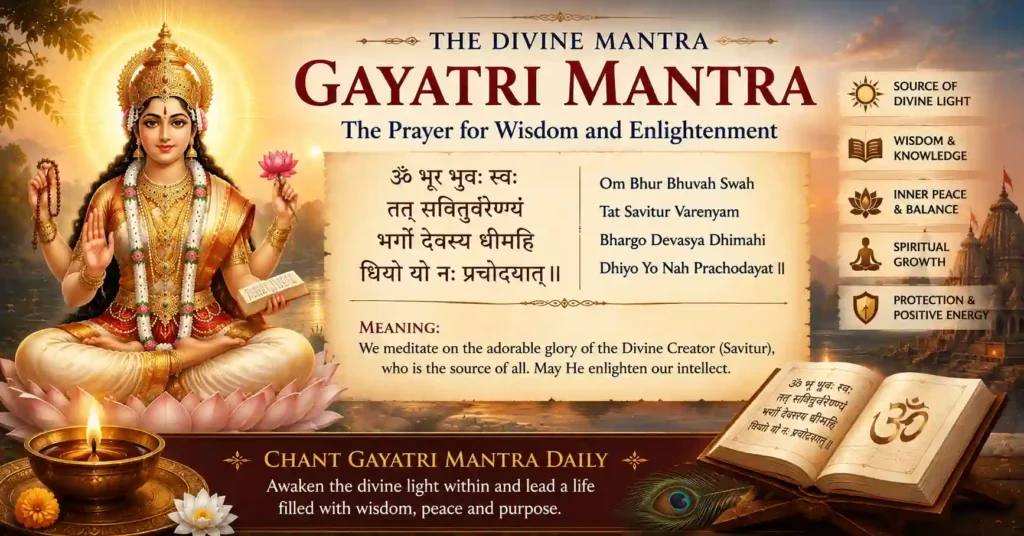
The Gayatri Mantra is one of the most sacred and widely recited mantras in Sanatan Dharma. Found in the Rigveda (Mandala 3, Sukta 62, Mantra 10), it is dedicated to Savita (Savitr), the divine solar deity who symbolizes light, wisdom, and the source of all life.
For centuries, sages and devotees have chanted this timeless Vedic prayer to seek spiritual wisdom, inner clarity, and divine guidance.
Gayatri Mantra (Sanskrit)
ॐ भूर्भुवः स्वः
तत्सवितुर्वरेण्यं
भर्गo देवस्य धीमहि
धियो यो नः प्रचोदयात् ॥
Gayatri Mantra (English Transliteration)
Om Bhur Bhuvah Swah
Tat Savitur Varenyam
Bhargo Devasya Dheemahi
Dhiyo Yo Nah Prachodayat ॥
Meaning of the Gayatri Mantra
“We meditate upon the divine radiance of the Supreme Creator, who has created the earth, the heavens, and all realms of existence. May that divine light illuminate our intellect and guide us on the path of righteousness.”
The essence of the Gayatri Mantra is a prayer for wisdom rather than worldly desires. Instead of asking for wealth or success, it seeks a pure mind, right understanding, and the strength to make righteous choices. This universal message has made the mantra a source of inspiration for spiritual seekers across generations.
Devotees chant the Gayatri Mantra to cultivate peace, concentration, knowledge, and spiritual awareness. It is traditionally taught to children as a sacred prayer that nurtures discipline, positive thinking, and reverence for learning, while devotees of all ages recite it as part of their daily spiritual practice.
Benefits of Chanting the Gayatri Mantra
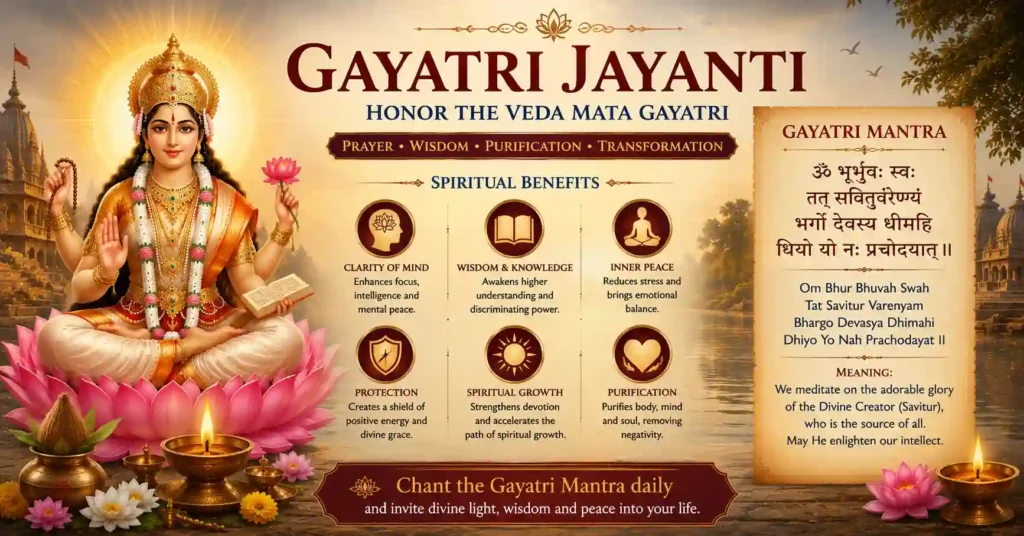
The Gayatri Mantra has been chanted by sages and devotees for centuries as a prayer for wisdom, purity, and divine guidance.
While each person’s spiritual experience is unique, many devotees believe that regular chanting brings a sense of inner calm and helps cultivate a more balanced and mindful life.
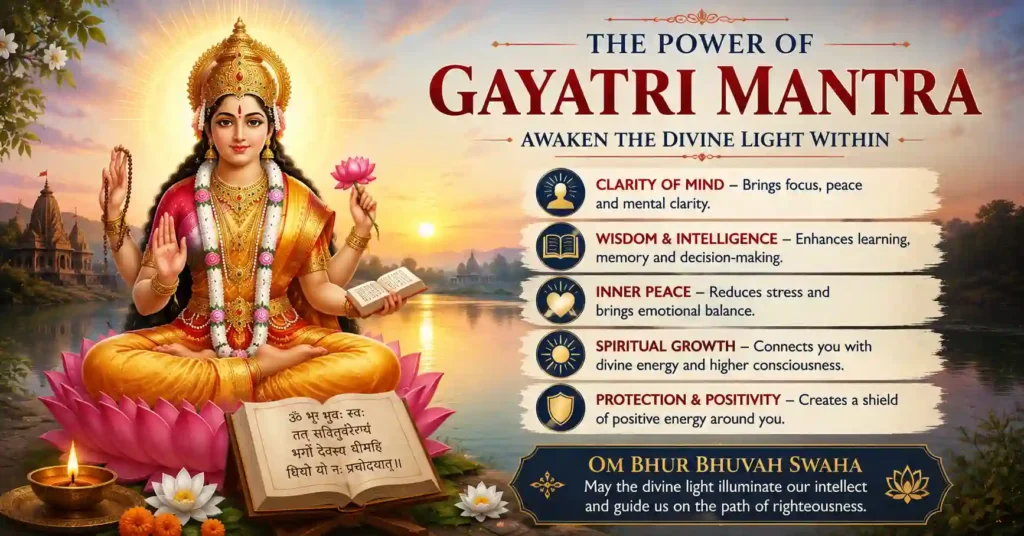
Traditionally, the benefits of chanting the Gayatri Mantra are believed to include:
Inner peace: Helps calm the mind and reduce mental restlessness.
Better concentration: Encourages focus during study, work, and meditation.
Spiritual growth: Inspires self-reflection and a deeper connection with the divine.
Positive thinking: Promotes optimism, patience, and emotional balance.
Clarity and wisdom: Prays for the ability to make righteous decisions with a clear mind.
Daily discipline: Regular chanting helps establish a peaceful spiritual routine.
Beyond these traditional benefits, many devotees simply find comfort in the gentle rhythm of the mantra. Taking a few quiet moments each day to chant with faith can become a meaningful practice that brings peace, gratitude, and spiritual awareness into everyday life.
How Devotees Celebrate Gayatri Jayanti
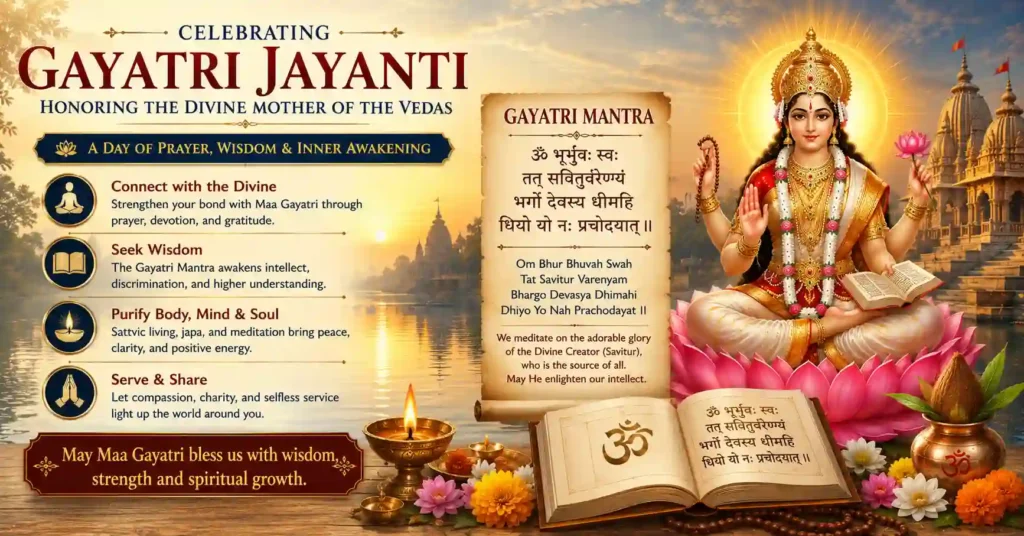
Gayatri Jayanti is observed with devotion, simplicity, and a focus on inner purification. While customs may vary across regions and families, the spirit of the festival remains the same, seeking the blessings of Veda Mata Gayatri through prayer, self-discipline, and the chanting of the Gayatri Mantra.
Many devotees observe the day by:
Waking up early and taking a holy bath before sunrise.
Cleaning the home altar and lighting a diya.
Worshipping Veda Mata Gayatri with flowers, incense, fruits, and other simple offerings.
Chanting the Gayatri Mantra individually or with family members.
Performing a Gayatri Havan where this tradition is followed.
Reading passages from the Vedas, Bhagavad Gita, or other sacred scriptures.
Spending time in meditation, prayer, or quiet reflection.
Offering charity, food, or donations as an act of selfless service.
Eating simple sattvic meals and avoiding negative thoughts or unnecessary conflicts.
Many temples and spiritual organisations also organise Gayatri Mantra chanting, satsangs, yajnas, and devotional gatherings on this day. Whether celebrated at home or in a temple, the true essence of this festival lies in cultivating wisdom, purity, and devotion rather than performing elaborate rituals.
Gayatri Jayanti Puja Vidhi
There is no single compulsory way to worship Veda Mata Gayatri on this sacred day. Rituals may vary according to family traditions, local customs, or spiritual lineages. However, many devotees follow a simple and heartfelt puja at home to seek the blessings of the Divine Mother.
A simple Gayatri Jayanti Puja Vidhi may include the following steps:
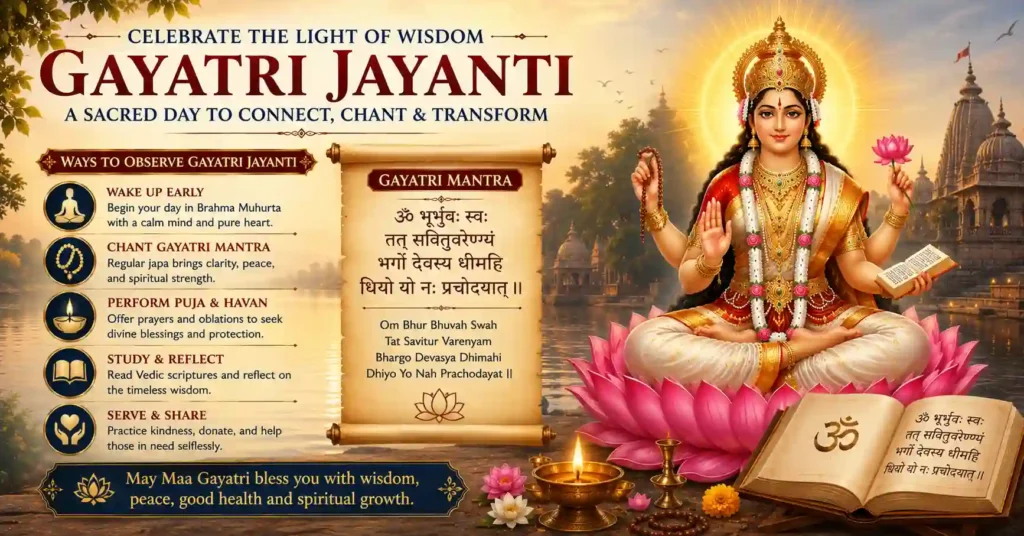
Wake up early, take a bath, and wear clean clothes.
Clean the place of worship and light a diya and incense before the image or idol of Veda Mata Gayatri.
Offer fresh flowers, fruits, sandalwood, and other simple offerings with devotion.
Invoke Gayatri Mata through a sincere prayer and meditate for a few moments.
Chant the Gayatri Mantra according to your capacity, such as 11, 21, or 108 times, while maintaining concentration and devotion.
If your family tradition permits, perform a simple Gayatri Havan by offering oblations with the chanting of the Gayatri Mantra.
Read a few verses from the Vedas, Bhagavad Gita, or other sacred scriptures, and spend some time in quiet meditation.
Conclude the worship by offering prasad and praying for wisdom, inner peace, and the well-being of all living beings.
The true essence of this sacred day is not the complexity of rituals but the sincerity of devotion. Even a simple prayer offered with a pure heart and faith is considered meaningful in the worship of Veda Mata Gayatri.
Charity and Seva on Gayatri Jayanti
Along with prayer and mantra chanting, charity (daan) and selfless service (seva) are considered meaningful ways to observe this festival.
Sharing food, helping those in need, supporting education, feeding animals, or contributing to charitable causes reflects the values of compassion and generosity that are deeply respected in Sanatan Dharma.
The spirit of charity is not measured by the size of the donation but by the sincerity of the intention. Even a small act of kindness performed with humility is regarded as a beautiful offering on this sacred day.
How to Chant the Gayatri Mantra
The Gayatri Mantra can be chanted every day with devotion and sincerity. Traditionally, the most auspicious times for chanting are Brahma Muhurta, sunrise, noon, and sunset, when the mind is naturally calm and receptive. However, devotees may chant the mantra at any peaceful time if these hours are not practical.
Before chanting, take a bath if possible, wear clean clothes, and sit comfortably facing the east during sunrise or the west during sunset. Keep your back straight, close your eyes gently, and focus your mind on Veda Mata Gayatri or the divine light represented by the mantra.
Chant slowly and clearly, paying attention to both the pronunciation and the meaning of the words.
There is no compulsory number of repetitions. Many devotees chant the mantra 11, 21, 51, or 108 times, while others include it in their daily prayers. More important than the number of repetitions is chanting with faith, concentration, and a pure heart.
Whether you chant for a few minutes or as part of a regular spiritual practice, the Gayatri Mantra is traditionally believed to inspire wisdom, inner peace, and a deeper connection with the divine.
Common Mistakes to Avoid While Chanting the Gayatri Mantra
The Gayatri Mantra is traditionally chanted with devotion, concentration, and respect. While perfection is not expected from beginners, a few simple practices can make the experience more meaningful.
Avoid chanting in haste without paying attention to the words.
Learn the correct pronunciation gradually rather than rushing through the mantra.
Chant with a calm and focused mind instead of treating it as a routine task.
Understand the meaning of the mantra, as reflection deepens devotion.
Respect your family tradition or Guru’s guidance if your lineage follows specific practices.
The purpose of chanting is not merely to complete a fixed number of repetitions but to cultivate wisdom, devotion, and inner awareness.
Do's and Don'ts for Gayatri Jayanti
Gayatri Jayanti is a day of devotion, self-discipline, and inner purification. While customs may vary among families and traditions, devotees generally observe the day with simplicity, sincerity, and reverence.
Do’s
Wake up early and begin the day with a bath and prayer.
Chant the Gayatri Mantra with faith and concentration.
Worship Veda Mata Gayatri with simple offerings such as flowers, fruits, and a lit diya.
Read sacred scriptures or spend time in meditation and self-reflection.
Eat simple sattvic food and practise kindness, humility, and gratitude.
Perform acts of charity or selfless service according to your ability.
Don’ts
Avoid unnecessary anger, arguments, and negative speech.
Refrain from harmful habits and activities that disturb mental peace.
Avoid tamasic food and intoxicants if you are observing the festival traditionally.
Do not treat rituals as more important than sincere devotion and a pure heart.
The true spirit of this festival lies not in elaborate ceremonies but in cultivating wisdom, purity of thought, and a deeper connection with the divine.
Gayatri Jayanti in Different Parts of India
Although the spiritual essence of Gayatri Jayanti remains the same, the way it is observed varies across different regions and traditions of India.
These regional customs reflect the rich diversity of Sanatan Dharma while sharing the common goal of seeking the blessings of Veda Mata Gayatri.
In North India, many devotees visit temples, chant the Gayatri Mantra, perform havan, and participate in satsangs or spiritual discourses. Homes are decorated with flowers, and families gather for simple worship and prayer.
In Western and Central India, particularly where the Gayatri Pariwar is active, the day is often marked by collective mantra chanting, yajnas, meditation sessions, and programmes that promote moral values, education, and selfless service.
In South India, devotees may observe the festival with Vedic chanting, special pujas, and the recitation of sacred scriptures. Some temples organise homas and community prayers dedicated to divine wisdom and spiritual growth.
In Eastern India, observances may include devotional singing, scripture reading, meditation, and charitable activities. Local customs and temple traditions often shape the way the festival is celebrated.
While the rituals may differ from one region to another, the message of this festival remains universal. The festival encourages devotees to seek wisdom, cultivate purity of thought, and live a life guided by knowledge, compassion, and righteousness.
Why Gayatri Jayanti Matters Today
In today’s fast-paced world, it is easy to become distracted by constant information, responsibilities, and daily pressures.
Gayatri Jayanti reminds us to pause, reflect, and reconnect with the values of wisdom, self-discipline, and inner peace. Its message is as meaningful today as it was centuries ago.
At the heart of this sacred festival is the Gayatri Mantra, a timeless prayer that encourages us to seek clarity of thought, purity of intention, and the wisdom to make righteous decisions.
Even spending a few quiet minutes in prayer, meditation, or self-reflection can help cultivate greater mindfulness and spiritual awareness.
Beyond its religious significance, this festival inspires a way of life rooted in compassion, gratitude, and lifelong learning. It reminds us that true progress is not measured only by material success but also by the growth of our character, knowledge, and inner strength.
That is why this ancient festival continues to inspire devotees and spiritual seekers across generations.
Related Festivals and Sacred Observances
Devotees interested in Gayatri Jayanti may also wish to learn about other festivals and observances that celebrate wisdom, devotion, and spiritual growth in Sanatan Dharma.
Ganga Dussehra – Celebrated around the same period and associated with the descent of the sacred River Ganga.
Guru Purnima – A festival dedicated to honouring Gurus and the tradition of spiritual learning.
Vasant Panchami – A day devoted to Goddess Saraswati, the deity of knowledge, learning, and the arts.
Nirjala Ekadashi – One of the most significant Ekadashi vrats observed during the month of Jyeshtha.
Exploring these festivals offers a deeper understanding of the rich spiritual traditions and timeless wisdom of Sanatan Dharma.
Key Takeaways
- Gayatri Jayanti honours Veda Mata Gayatri, the Mother of the Vedas.
- The festival celebrates the timeless wisdom of the Gayatri Mantra.
- Devotees observe the day through prayer, mantra chanting, meditation, puja, and charity.
- The festival reminds us to cultivate wisdom, purity, and righteous living.
- Its teachings remain relevant for modern life and spiritual growth.
Conclusion
Gayatri Jayanti is more than a festival. It is a sacred reminder of the timeless wisdom, knowledge, and spiritual light represented by Veda Mata Gayatri and the Gayatri Mantra.
Whether you observe the day with a simple prayer, mantra chanting, meditation, or acts of kindness, the true essence of the festival lies in cultivating purity of thought, devotion, and righteous living.
May Veda Mata Gayatri bless you with wisdom, inner peace, and the strength to walk the path of truth. May the this festival continue to inspire your thoughts, guide your actions, and bring clarity to your spiritual journey.
As you celebrate this sacred day, take a few quiet moments to reflect, pray, and reconnect with the divine light within. Even a sincere chant offered with faith can become a meaningful step towards greater peace, wisdom, and spiritual growth.
Suggested Reading
If you would like to deepen your understanding of Hindu festivals, Lord Vishnu’s avatars, and the timeless traditions of Sanatan Dharma, explore these related articles from The Sanatan Tales. They provide simple, authentic, and insightful guidance on major festivals, rituals, and their spiritual significance.
Hindu Festivals Explained: Meaning, Types, Calendar & Spiritual Importance
https://thesanatantales.com/hindu-festivals/Makar Sankranti: Meaning, Date, Rituals, Puja, Traditions and Spiritual Significance
https://thesanatantales.com/makar-sankranti/Gupta Navratri: Meaning, 2026 Dates, Rituals and Spiritual Significance
https://thesanatantales.com/gupta-navratri/Mahashivratri: Meaning, Date, Rituals, Vrat Rules & Puja Vidhi
https://thesanatantales.com/mahashivratri/Holi: Festival of Colors, Date, Holika Dahan, Rituals, Story and Significance
https://thesanatantales.com/holi-festival/Chaitra Navratri: Meaning, Dates, Rituals, Vrat & Significance
https://thesanatantales.com/chaitra-navratri/Ram Navami: Date, Puja Vidhi, Vrat, Significance and Lord Ram’s Birth Story
https://thesanatantales.com/ram-navami/Hanuman Jayanti: Date, Puja Vidhi, Story, Rituals and Significance
https://thesanatantales.com/hanuman-jayanti/Narasimha Jayanti: Date, Story, Significance, Puja Vidhi and Celebrations
https://thesanatantales.com/narasimha-jayantiGayatri Mantra (Wikipedia)
https://en.wikipedia.org/wiki/Gayatri_Mantra
FAQs
What is Gayatri Jayanti?
Gayatri Jayanti is a sacred Hindu festival that commemorates the divine appearance of Veda Mata Gayatri, who is revered as the Mother of the Vedas and the embodiment of divine wisdom. The festival reminds devotees of the spiritual significance of the Gayatri Mantra and encourages prayer, meditation, and self-reflection.
Why is Gayatri Jayanti celebrated?
According to Hindu tradition, Gayatri Jayanti is celebrated to honour Veda Mata Gayatri and the timeless wisdom represented by the Gayatri Mantra. Devotees observe the day by chanting the mantra, performing puja, meditating, and seeking divine guidance for a life rooted in knowledge, righteousness, and inner peace.
Who is Veda Mata Gayatri?
Veda Mata Gayatri is revered as the divine personification of wisdom and the Mother of the Vedas. She is closely associated with the Gayatri Mantra and is worshipped as the source of spiritual knowledge, purity, and enlightenment.
What is the meaning of the Gayatri Mantra?
The Gayatri Mantra is a sacred Vedic prayer that seeks divine illumination and right understanding. Rather than asking for material prosperity, it prays for wisdom, clarity of thought, and guidance on the path of righteousness.
How should I celebrate Gayatri Jayanti?
Gayatri Jayanti may be observed by taking a holy bath, offering simple prayers to Veda Mata Gayatri, chanting the Gayatri Mantra, performing puja or havan according to family tradition, reading sacred scriptures, meditating, and practising charity or selfless service.
Can anyone chant the Gayatri Mantra?
According to many Hindu traditions, the Gayatri Mantra may be chanted with devotion, sincerity, and proper respect. Since practices vary among different sampradayas and spiritual lineages, devotees may also seek guidance from their family tradition or Guru if they have questions about its recitation.
What is the best time to chant the Gayatri Mantra?
Traditionally, the Gayatri Mantra is chanted during Brahma Muhurta, sunrise, noon, and sunset. However, it may also be chanted at any quiet time when the mind is calm and focused.
Is fasting compulsory on Gayatri Jayanti?
No. Fasting is a matter of personal faith and family tradition. Many devotees observe a simple fast or eat sattvic food, while others focus on mantra chanting, meditation, and worship. The spirit of the festival lies in sincere devotion rather than compulsory rituals.
Glossary of Important Terms
| Term | Meaning |
|---|---|
| Gayatri Jayanti | A sacred Hindu festival that commemorates the divine appearance of Veda Mata Gayatri and celebrates the wisdom and spiritual significance of the Gayatri Mantra. |
| Veda Mata Gayatri | Revered as the Mother of the Vedas, she represents divine wisdom, knowledge, and spiritual enlightenment. |
| Gayatri Mantra | One of the most sacred Vedic mantras, dedicated to Savita, the divine solar deity, seeking wisdom and guidance. |
| Rigveda | The oldest of the four Vedas, where the Gayatri Mantra appears in Mandala 3, Sukta 62, Mantra 10. |
| Sage Vishwamitra | The revered Vedic sage traditionally regarded as the seer (Rishi) of the Gayatri Mantra. |
| Savita (Savitr) | The divine solar deity invoked in the Gayatri Mantra, symbolizing light, life, and spiritual illumination. |
| Jyeshtha | A month in the Hindu lunar calendar during which Gayatri Jayanti is observed. |
| Ekadashi | The eleventh lunar day (tithi) of each fortnight in the Hindu calendar. Gayatri Jayanti is traditionally observed on Jyeshtha Shukla Ekadashi. |
| Panchang | The traditional Hindu calendar that provides festival dates, tithis, muhurats, and other astrological details. |
| Brahma Muhurta | The auspicious period before sunrise, considered ideal for prayer, meditation, and chanting the Gayatri Mantra. |
| Puja | A devotional worship ritual that includes prayers, offerings, and mantra chanting. |
| Havan (Homa) | A sacred fire ritual in which offerings are made while chanting Vedic mantras. |
| Satsang | A spiritual gathering for prayer, devotional singing, scriptural discussions, and meditation. |
| Sankalpa | A sacred intention or resolve made before beginning a religious ritual or spiritual practice. |
| Sattvic | Pure and wholesome in nature. A sattvic lifestyle promotes mental clarity, peace, and spiritual growth. |
| Daan | Selfless charity or charitable giving performed with compassion and without expecting a reward. |
| Seva | Selfless service offered to others as an act of devotion and spiritual practice. |
| Mantra Japa | The repeated chanting of a sacred mantra, often using a japa mala, to deepen concentration and devotion. |
| Spiritual Awakening | The gradual realization of one’s higher self through wisdom, devotion, meditation, and righteous living. |
About the Author
Yateendra Chaturvedi is a spiritual writer, researcher, devotee, and the founder of The Sanatan Tales. With over 35 years of professional experience and a lifelong interest in Sanatan Dharma, he writes about Hindu deities, temples, scriptures, festivals, Mahavidyas, sacred stories, rituals, and living traditions that continue to guide and inspire devotees across India.
Drawing from traditional scriptures, regional beliefs, temple traditions, devotional literature, and historical sources, he aims to present authentic, well-researched, and easy-to-understand content for modern readers. His work focuses on preserving spiritual wisdom, explaining sacred traditions, and helping seekers develop a deeper understanding of India’s rich spiritual heritage.
Through The Sanatan Tales, Yateendra strives to make the timeless teachings of Sanatan Dharma simple, meaningful, and relevant for today’s generation while maintaining respect for traditional sources, regional practices, and diverse spiritual perspectives.
Learn More About Yateendra Chaturvedi →
https://thesanatantales.com/about-the-author/
References & Sources
This article is based on the beliefs and traditions of Sanatan Dharma, with references to the Vedic tradition, the Gayatri Mantra as found in the Rigveda, traditional teachings associated with Veda Mata Gayatri, and insights drawn from respected Hindu scriptures, devotional literature, and established spiritual practices.
It also reflects traditional interpretations preserved through the guru-disciple (Guru-Shishya) tradition and widely followed devotional customs.
Note: Beliefs, interpretations, and methods of worship may vary across different traditions, sampradayas, and regions within Sanatan Dharma.
The purpose of this article is not to present any single interpretation as the absolute truth, but to explain widely accepted religious and spiritual perspectives on Gayatri Jayanti in a simple, respectful, and accessible manner.
Explore More Fascinating Topics from Sanatan Dharma