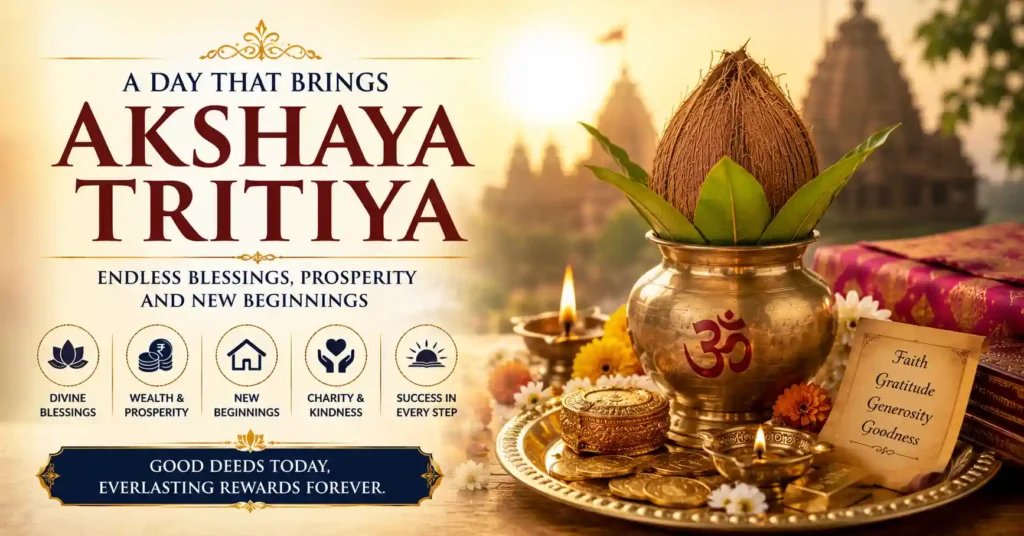
Akshaya Tritiya is one of the most sacred and auspicious festivals in Sanatan Dharma, celebrated as a day of eternal prosperity, new beginnings, and divine blessings. The word “Akshaya” means that which never diminishes, symbolising growth, abundance, and the lasting rewards of righteous actions.
Observed during the month of Vaishakha, Akshaya Tritiya is regarded as an Abujh Muhurat, making it one of the few days when devotees can begin new ventures, perform Akshaya Tritiya puja, make charitable donations, or invest in meaningful purchases without searching for a separate auspicious time.
Although many people associate the festival with buying gold, its true significance goes far beyond material prosperity. It is a day to strengthen faith, perform selfless acts, seek the blessings of Lord Vishnu and Goddess Lakshmi, and begin life’s important journeys with sincerity and gratitude.
In this guide, you’ll learn about the Akshaya Tritiya date, muhurat, spiritual significance, rituals, puja vidhi, what to buy, sacred stories, and the timeless wisdom that makes this festival so special.
Table of Contents
ToggleWhat Is Akshaya Tritiya?
Akshaya Tritiya is one of the most sacred and auspicious festivals in Sanatan Dharma, observed on the Tritiya Tithi (third lunar day) of the Shukla Paksha in the Hindu month of Vaishakha. The word “Akshaya” means that which never diminishes or perishes, symbolising everlasting prosperity, spiritual merit, and continuous growth.
The festival is dedicated primarily to Lord Vishnu and Goddess Lakshmi, who represent protection, prosperity, and righteous living.
According to Hindu tradition, Akshaya Tritiya is regarded as an Abujh Muhurat, making it one of the few days when devotees can begin new ventures, perform puja, make charitable donations, or purchase valuable items without searching for a separate auspicious time.
While many people associate Akshaya Tritiya with buying gold, its true significance extends far beyond material wealth. It is a day that encourages generosity, gratitude, devotion, and positive new beginnings.
Whether through prayer, charity, fasting, or simple acts of kindness, the festival reminds us that actions performed with faith and sincerity create blessings that continue to grow throughout life.
Quick Facts About Akshaya Tritiya
| Aspect | Details |
|---|---|
| Festival Name | Akshaya Tritiya |
| Meaning of Akshaya | That which never diminishes or perishes |
| Dedicated To | Lord Vishnu and Goddess Lakshmi |
| Hindu Month | Vaishakha |
| Tithi | Tritiya (Third day of Shukla Paksha) |
| Calendar | Hindu Lunar Calendar |
| Special Feature | Regarded as an Abujh Muhurat (naturally auspicious day) |
| Main Rituals | Vishnu-Lakshmi Puja, mantra chanting, charity (daan), fasting, temple visits, and new beginnings |
| Popular Traditions | Buying gold or silver, donating food and clothes, starting new ventures, and offering prayers |
| Spiritual Message | Prosperity, gratitude, generosity, righteous living, and lasting spiritual growth |
Akshaya Tritiya Date, Tithi & Muhurat
Akshaya Tritiya is observed every year on the Tritiya Tithi (third lunar day) of the Shukla Paksha in the Hindu month of Vaishakha.
According to Hindu tradition, this sacred day is regarded as an Abujh Muhurat, making it highly auspicious for performing Akshaya Tritiya puja, beginning new ventures, making charitable donations, and purchasing valuable items without searching for a separate auspicious time.
For 2027, Akshaya Tritiya will be celebrated on Sunday, 9 May 2027.
| Occasion | Date & Time (2027) |
|---|---|
| Akshaya Tritiya Date | Sunday, 9 May 2027 |
| Tritiya Tithi Begins | Update with exact Panchang timing |
| Tritiya Tithi Ends | Update with exact Panchang timing |
| Punya Kaal | Update with exact Panchang timing |
| Muhurat | Traditionally regarded as an Abujh Muhurat, making the entire day highly auspicious |
Did You Know?
Akshaya Tritiya is one of the few Hindu festivals traditionally regarded as an Abujh Muhurat. This means the entire day is considered naturally auspicious for beginning new ventures, performing charity, offering prayers, and making important life decisions without searching for a separate muhurat.
Why Is Akshaya Tritiya Celebrated?
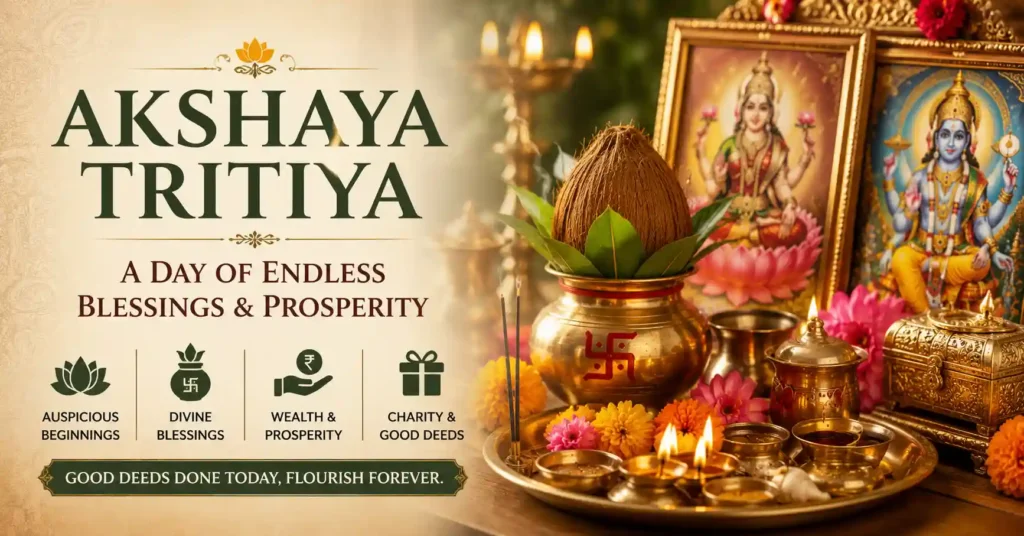
Akshaya Tritiya is celebrated to honour the timeless values of faith, generosity, prosperity, and righteous living. In Sanatan Dharma, this sacred day is believed to be especially auspicious for beginning new ventures, performing charity, worshipping Lord Vishnu and Goddess Lakshmi, and seeking lasting spiritual and material well-being.
The festival derives its name from the Sanskrit word “Akshaya,” meaning that which never diminishes or perishes. According to Hindu tradition, any good deed performed on this day, such as offering prayers, helping those in need, making donations, or starting an important journey, is believed to bring lasting blessings and positive results.
Akshaya Tritiya is also associated with several sacred events, including the birth of Lord Parashurama, the blessings of the Akshaya Patra received by the Pandavas, and the inspiring story of Sudama and Lord Krishna. These traditions reinforce the festival’s message that sincere devotion, humility, and selfless actions lead to enduring prosperity.
More than a festival of wealth, Akshaya Tritiya reminds us that true abundance comes from living with honesty, compassion, gratitude, and faith. It encourages devotees to cultivate values that continue to enrich life long after the festival has passed.
Who Celebrates Akshaya Tritiya?
Akshaya Tritiya is celebrated by millions of Hindus across India and in many parts of the world. Although the customs may vary from region to region, the festival’s message of prosperity, gratitude, charity, and new beginnings remains the same.
The festival is observed by:
Families seeking peace, happiness, and prosperity.
Business owners and entrepreneurs starting new ventures or investments.
Farmers expressing gratitude for nature’s blessings.
Students praying for wisdom and success.
Devotees of Lord Vishnu and Goddess Lakshmi performing puja and offering prayers.
Spiritual seekers observing charity, meditation, and self-reflection.
Whether celebrated with elaborate rituals or simple prayers at home, Akshaya Tritiya reminds every devotee that faith, generosity, and righteous actions are the foundation of lasting abundance.
Why Is Akshaya Tritiya So Special?
The word “Akshaya” means that which never diminishes or perishes. In Sanatan Dharma, it symbolises everlasting prosperity, spiritual merit, and blessings that continue to grow over time. This is why Akshaya Tritiya is regarded as one of the most sacred and auspicious days of the year.
According to Hindu tradition, every righteous action performed on this day is believed to bring lasting benefits. Whether it is offering prayers, performing Akshaya Tritiya puja, giving daan (charity), beginning a new venture, or making a meaningful purchase, each act is believed to carry the blessing of continuous growth and abundance.
One of the unique features of Akshaya Tritiya is that it is traditionally observed as an Abujh Muhurat. Unlike many other occasions that require a specific auspicious time, this entire day is considered favourable for starting important activities, making investments, or taking positive steps in life.
Beyond material prosperity, the true Akshaya Tritiya significance lies in cultivating generosity, gratitude, and faith. Devotees worship Lord Vishnu and Goddess Lakshmi, seeking not only wealth but also wisdom, harmony, and spiritual well-being. The festival reminds us that the greatest blessings come from selfless actions, pure intentions, and a life guided by dharma.
Why Are Lord Vishnu and Goddess Lakshmi Worshipped on Akshaya Tritiya?
On Akshaya Tritiya, devotees worship Lord Vishnu and Goddess Lakshmi together, seeking their blessings for prosperity, harmony, and spiritual well-being.
According to Sanatan Dharma, Lord Vishnu is the preserver of the universe who protects dharma, maintains balance, and guides devotees on the path of righteousness. Goddess Lakshmi is the Divine Goddess of wealth, abundance, good fortune, and well-being.
Their combined worship carries a deeper spiritual message. While Goddess Lakshmi blesses devotees with prosperity and success, Lord Vishnu teaches that wealth should be earned through honesty, used with wisdom, and shared with compassion.
Together, they represent the ideal balance between material abundance and spiritual values.
This is one of the reasons why Akshaya Tritiya is regarded as an ideal day for performing Akshaya Tritiya puja, offering prayers, making charitable donations, and beginning new ventures.
Devotees believe that seeking the blessings of Lord Vishnu and Goddess Lakshmi on this auspicious day helps cultivate not only financial stability but also peace, gratitude, and righteous living.
The true Akshaya Tritiya significance is not measured by how much wealth we acquire, but by how wisely and selflessly we use the blessings we receive. The festival reminds us that lasting prosperity is built on faith, humility, generosity, and dharma.
Spiritual Meaning of Akshaya Tritiya
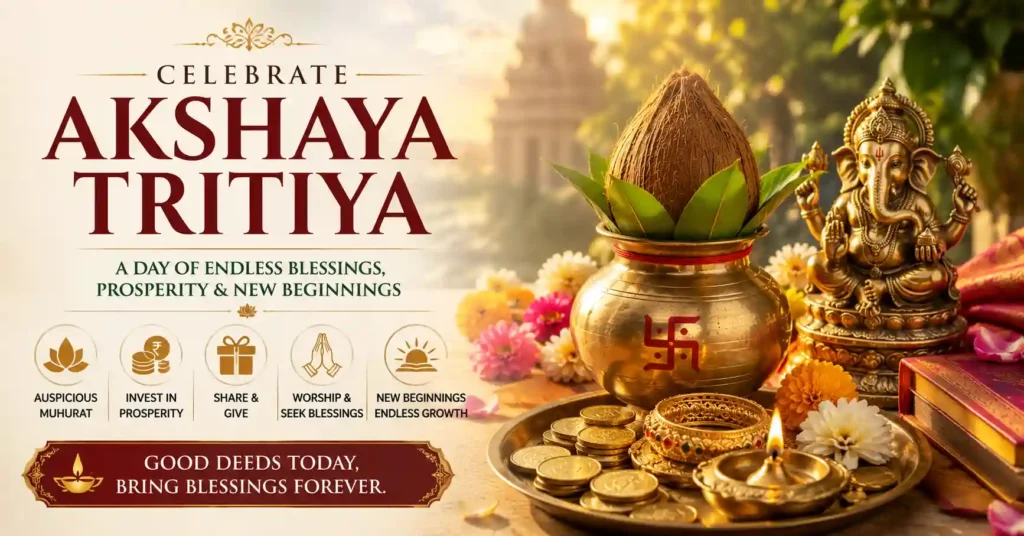
The true Akshaya Tritiya significance goes far beyond wealth, success, or material prosperity. At its heart, this sacred festival reminds us that the greatest blessings are those that never diminish, such as faith, compassion, wisdom, and good karma.
In Sanatan Dharma, every action performed with a pure heart is believed to leave a lasting spiritual impression. Acts of devotion, charity, gratitude, and selfless service performed on Akshaya Tritiya are traditionally regarded as especially auspicious because they encourage inner growth as well as outer well-being.
The festival also teaches that lasting abundance is not created through greed or shortcuts. It grows steadily through honesty, righteous living (dharma), sincere effort, and kindness towards others. Whether you perform Akshaya Tritiya puja, donate to those in need, begin a meaningful journey, or simply spend time in prayer, the intention behind the action is considered more important than its size.
In today’s fast-paced world, Akshaya Tritiya gently reminds us that real success is built one sincere step at a time. Just as a small seed grows into a strong tree with patience and care, virtues such as humility, generosity, and devotion gradually shape a peaceful and fulfilling life.
Akshaya Tritiya Puja Vidhi at Home
You can perform Akshaya Tritiya puja at home with devotion and simplicity. The purpose of the puja is to seek the blessings of Lord Vishnu and Goddess Lakshmi for prosperity, peace, and spiritual well-being. More important than elaborate rituals is a pure heart and sincere faith.
Follow these simple steps:
Clean your home and puja area to create a peaceful and sacred atmosphere.
Place the idols or images of Lord Vishnu and Goddess Lakshmi on a clean altar. If available, place a Tulsi leaf near Lord Vishnu.
Light a diya and incense sticks, then offer fresh flowers, fruits, sweets, and water with devotion.
Offer prayers and chant simple mantras, such as “Om Namo Bhagavate Vasudevaya” and “Om Shreem Mahalakshmyai Namah.”
Perform aarti and spend a few moments in silent prayer, expressing gratitude for the blessings in your life.
Offer naivedya (food offering) to the deities and later distribute it as prasad among family members.
Perform daan (charity) by donating food, clothes, grains, or other essentials to those in need, as charity is considered one of the most auspicious acts on Akshaya Tritiya.
Mantras to Chant on Akshaya Tritiya
Chanting sacred mantras during Akshaya Tritiya puja helps create a peaceful mind and a devotional atmosphere. While there is no fixed rule about the number of repetitions, chanting with sincerity and concentration is considered more important than the count. Since Lord Vishnu and Goddess Lakshmi are the principal deities worshipped on this auspicious day, the following mantras are widely recited by devotees.
1. Lord Vishnu Mantra
Sanskrit
ॐ नमो भगवते वासुदेवाय ॥
Om Namo Bhagavate Vasudevaya
Meaning
“I bow to Lord Vasudeva (Lord Vishnu), the Supreme Protector and Sustainer of the Universe.”
Benefits
This sacred mantra is believed to bring inner peace, devotion, spiritual strength, and the blessings of Lord Vishnu for a balanced and righteous life.
2. Goddess Lakshmi Mantra
Sanskrit
ॐ श्रीं महालक्ष्म्यै नमः ॥
Om Shreem Mahalakshmyai Namah
Meaning
“I offer my respectful salutations to Goddess Mahalakshmi, the Divine Goddess of wealth, prosperity, and well-being.”
Benefits
Devotees chant this mantra to seek the blessings of Goddess Lakshmi for prosperity, harmony, abundance, and overall well-being.
What to Buy on Akshaya Tritiya and Why It Matters
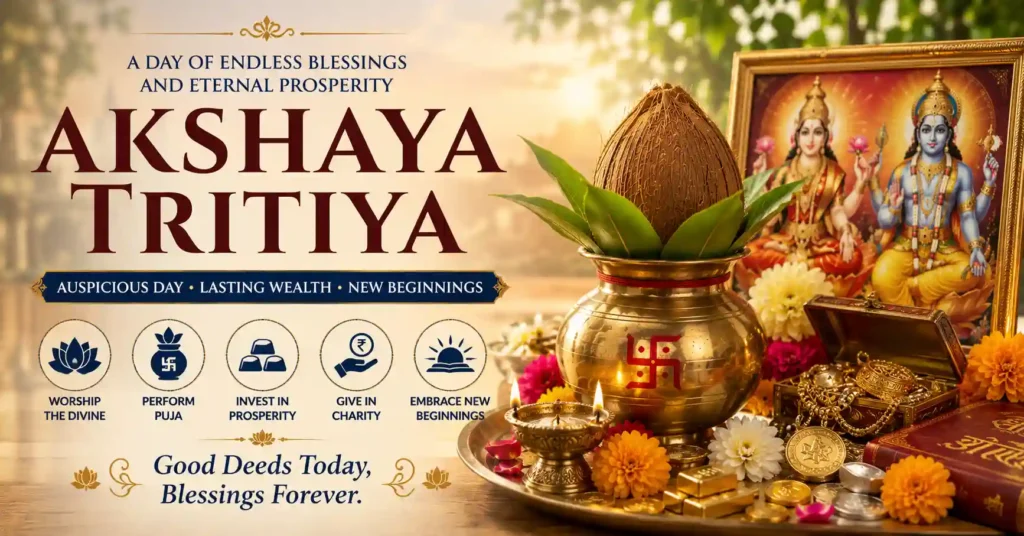
One of the most common questions devotees ask every year is, “What should I buy on Akshaya Tritiya?” According to Hindu tradition, purchasing something valuable or useful on this auspicious day symbolises welcoming prosperity, stability, and positive new beginnings into one’s life.
Although gold is the most popular choice, Akshaya Tritiya is not only about buying precious metals. The true purpose is to begin something meaningful with gratitude and faith. Even a simple purchase made with honest intentions is considered auspicious.
| What to Buy | Traditional Significance |
|---|---|
| Gold | Symbolises lasting prosperity, purity, and abundance. |
| Silver | Represents peace, purity, and financial stability. |
| Copper Utensils | Associated with health, positive energy, and traditional worship. |
| Brass or Steel Utensils | Considered auspicious for the home and daily use. |
| Property or Land | Symbolises long-term growth and a new beginning. |
| Sacred Books | Represents the pursuit of knowledge and wisdom. |
| Tulsi Plant | Symbolises devotion, purity, and the blessings of Lord Vishnu. |
| Business Tools or Work Equipment | Marks an auspicious beginning for a new venture or career. |
Remember, the value of your purchase is not measured by its price but by the intention behind it. Whether you buy a small silver coin, a useful household item, or simply begin a new journey with faith, the spirit of Akshaya Tritiya lies in gratitude, righteous action, and hope for lasting growth..
Why Is Gold Bought on Akshaya Tritiya?
Buying gold on Akshaya Tritiya is one of the most well-known traditions associated with this sacred festival. In Hindu culture, gold has long been regarded as a symbol of purity, prosperity, abundance, and lasting value. Purchasing gold on this auspicious day is traditionally believed to invite continuous growth, good fortune, and financial stability.
The deeper Akshaya Tritiya significance, however, goes beyond acquiring precious metal. The word “Akshaya” means that which never diminishes, reminding devotees that true prosperity includes wisdom, good character, faith, and righteous actions. Gold serves as a symbolic reminder to build both material security and inner richness.
Many families choose to buy gold coins, jewellery, or small ornaments as a way of marking new beginnings. Others may purchase silver, useful household items, or simply perform daan (charity) and Akshaya Tritiya puja. According to Sanatan Dharma, sincere devotion and good deeds are considered just as valuable as any material purchase.
Importance of Charity on Akshaya Tritiya
Charity, known as daan, is one of the most sacred practices associated with Akshaya Tritiya. According to Sanatan Dharma, helping those in need on this auspicious day is believed to generate lasting spiritual merit (punya) and cultivate compassion, gratitude, and selflessness.
The true spirit of Akshaya Tritiya is not measured by what we acquire but by what we are willing to share. Even a small act of kindness performed with a sincere heart is considered meaningful.
Common forms of daan on Akshaya Tritiya include:
Anna Daan – Donating food or grains to those in need.
Vastra Daan – Offering clothes to the poor and underprivileged.
Jal Daan – Providing drinking water, especially during the summer season.
Dakshina – Supporting temples, priests, or genuine charitable causes.
Cow Feeding and Animal Care – Feeding cows, birds, and other animals as an act of compassion.
Charity performed with humility and without expecting anything in return reflects the true message of Akshaya Tritiya. It reminds us that lasting prosperity comes not only from receiving blessings but also from sharing them with others.
Sacred Stories and Beliefs Connected to Akshaya Tritiya
Several sacred stories and traditional beliefs are associated with Akshaya Tritiya, each highlighting the festival’s message of faith, generosity, and divine grace. While these stories come from different scriptures and traditions, they all emphasise that sincere devotion and righteous actions bring lasting blessings.
Sudama and Lord Krishna
One of the most loved stories connected with Akshaya Tritiya is that of Sudama and Lord Krishna. Sudama, a poor Brahmin and Krishna’s childhood friend, visited Him carrying only a small handful of poha (flattened rice) as an offering. Although the gift was simple, it was offered with pure love and humility.
Lord Krishna welcomed Sudama with great affection and accepted his offering with joy. Without Sudama asking for anything in return, Krishna blessed him with prosperity and removed his hardships. The story teaches that selfless devotion and sincere faith are more valuable than expensive offerings.
The Akshaya Patra of the Pandavas
According to the Mahabharata, during their exile, the Pandavas received the Akshaya Patra from Surya Dev. This miraculous vessel provided an endless supply of food until Draupadi had eaten for the day, ensuring that no guest or sage left hungry.
The Akshaya Patra symbolises abundance, compassion, and the importance of sharing with others. It reminds devotees that generosity and service are among the highest virtues in Sanatan Dharma.
Parashurama Jayanti
Many Hindu traditions also observe Parashurama Jayanti, the birth anniversary of Lord Parashurama, on Akshaya Tritiya. Regarded as the sixth avatar of Lord Vishnu, Parashurama is remembered for his unwavering commitment to dharma, courage, and justice. His birth on this auspicious day adds to the spiritual significance of the festival.
Scriptural References to Akshaya Tritiya
The spiritual importance of Akshaya Tritiya is reflected in several Hindu scriptures and traditional beliefs. While different texts highlight different events, they all emphasise the values of dharma, charity, devotion, and righteous living.
| Scripture / Tradition | Association with Akshaya Tritiya |
|---|---|
| Mahabharata | The Pandavas are believed to have received the Akshaya Patra, the divine vessel that provided an endless supply of food. |
| Bhagavata Purana | The story of Sudama and Lord Krishna is often remembered on this day as a symbol of devotion, humility, and divine grace. |
| Vishnu Purana | Highlights the glory of Lord Vishnu, whose worship is considered especially auspicious on Akshaya Tritiya. |
| Traditional Hindu Beliefs | Many devotees observe Parashurama Jayanti, celebrating the birth of Lord Parashurama, the sixth avatar of Lord Vishnu, on Akshaya Tritiya. |
These sacred traditions remind devotees that the true blessings of Akshaya Tritiya come through faith, generosity, gratitude, and a life guided by righteousness.
Who Should Observe Akshaya Tritiya?
Akshaya Tritiya is a festival for everyone. It is not limited by age, profession, or financial status. Whether you are beginning a new chapter in life, seeking spiritual growth, or simply wishing to express gratitude, this sacred day offers an opportunity to pray, reflect, and start with a positive intention.
Observing Akshaya Tritiya can be especially meaningful for:
- Students seeking knowledge, wisdom, and success in their studies.
- Business owners and professionals beginning a new venture or important project.
- Families praying for peace, harmony, health, and prosperity.
- Farmers and workers expressing gratitude for nature’s blessings and honest livelihood.
- Spiritual seekers wishing to deepen their devotion through prayer, meditation, and charity.
- Anyone starting a new journey, such as a new home, career, investment, or personal goal.
You do not need to perform elaborate rituals to observe the festival. Offering sincere prayers, performing Akshaya Tritiya puja, helping someone in need, or beginning a meaningful task with faith and gratitude is enough to honour the spirit of this auspicious day.
Akshaya Tritiya Vrat and Sattvic Food
Many devotees observe an Akshaya Tritiya vrat as an expression of devotion, gratitude, and self-discipline. However, fasting on this sacred day is not compulsory. In Sanatan Dharma, the sincerity of your prayers, good deeds, and pure intentions are considered more important than strict fasting.
Those who choose to observe the vrat usually keep their meals simple and sattvic, avoiding onion, garlic, alcohol, and tamasic foods. The emphasis is on maintaining physical purity, mental calmness, and spiritual focus throughout the day.
Common foods consumed during the vrat include:
Fresh fruits
Milk and curd
Dry fruits and nuts
Coconut water
Simple home-cooked sattvic meals
Kheer or other milk-based offerings prepared as prasad
Many devotees also perform Akshaya Tritiya puja, chant the names of Lord Vishnu and Goddess Lakshmi, read sacred scriptures, and perform daan (charity) along with the vrat. These practices help cultivate gratitude, compassion, and devotion.
Remember: The true purpose of an Akshaya Tritiya vrat is not to remain hungry but to purify the mind, strengthen faith, and develop self-control. A simple meal taken with devotion is more meaningful than a difficult fast observed without sincerity.
Benefits of Observing Akshaya Tritiya
Observing Akshaya Tritiya is believed to bring both spiritual and personal benefits. While every devotee’s experience is unique, this sacred day encourages positive actions, gratitude, and faith that can inspire lasting growth in everyday life.
Many devotees believe that observing Akshaya Tritiya helps:
Strengthen faith and devotion towards Lord Vishnu and Goddess Lakshmi.
Encourage charity (daan) and selfless service.
Inspire positive new beginnings in personal, professional, or spiritual life.
Cultivate gratitude, contentment, and inner peace.
Build confidence to begin important goals with sincerity and hope.
Promote righteous living (dharma) through honest actions and good intentions.
Bring families together through prayer, worship, and shared traditions.
More than material prosperity, the greatest benefit of Akshaya Tritiya is the opportunity to reflect, serve others, and begin life’s important journeys with a positive mindset and a pure heart.
Simple Ways to Celebrate Akshaya Tritiya
You do not need elaborate rituals or expensive purchases to celebrate Akshaya Tritiya. The true spirit of the festival lies in devotion, gratitude, charity, and beginning positive actions with a sincere heart.
Here are some simple ways to observe this auspicious day:
Perform a simple Akshaya Tritiya puja at home.
Offer prayers to Lord Vishnu and Goddess Lakshmi.
Light a diya and chant a few sacred mantras.
Donate food, clothes, or other essentials to those in need.
Spend a few quiet moments in prayer or meditation.
Begin a new goal, project, or positive habit with faith.
Share sweets and celebrate the festival with family and loved ones.
Express gratitude for the blessings you already have.
Whether your celebration is simple or elaborate, what truly matters is the purity of your intentions. Every good deed performed with faith and compassion reflects the timeless message of Akshaya Tritiya.

Regional Celebrations of Akshaya Tritiya
Although the spiritual essence of Akshaya Tritiya remains the same, its celebrations vary across different parts of India. In every region, devotees observe the day with faith, gratitude, worship, charity, and auspicious new beginnings.
| Region | How Akshaya Tritiya Is Celebrated |
|---|---|
| North India | Worship of Lord Vishnu and Goddess Lakshmi, charity, temple visits, and buying gold or silver. |
| Gujarat & Rajasthan | Considered an auspicious day for starting new businesses, investments, and purchasing jewellery. |
| Odisha | Farmers begin Akhi Muthi Anukula, a traditional ritual marking the start of the agricultural season. |
| West Bengal | Many families worship Goddess Lakshmi and Lord Ganesha and begin new business accounts (Haal Khata). |
| Maharashtra | Devotees perform Vishnu-Lakshmi puja, donate food and clothes, and buy precious metals. |
| South India | Temples hold special pujas, while devotees observe charity, prayers, and spiritual practices dedicated to Lord Vishnu and Goddess Lakshmi. |
Despite these regional traditions, the festival continues to inspire the same timeless values of prosperity, generosity, devotion, and righteous living throughout India.
Common Mistakes to Avoid on Akshaya Tritiya
While Akshaya Tritiya is regarded as one of the most auspicious days in Sanatan Dharma, a few common misconceptions can distract from its true spiritual purpose.
Believing that buying gold is compulsory. Gold is a cherished tradition, but devotion, charity, and good deeds are equally important.
Focusing only on material prosperity. The festival teaches spiritual growth, gratitude, and righteous living along with financial well-being.
Ignoring charity (daan). Helping those in need is one of the most meaningful observances of Akshaya Tritiya.
Treating the festival as only a shopping occasion. Prayer, self-reflection, and worship of Lord Vishnu and Goddess Lakshmi are central to the day’s significance.
Thinking elaborate rituals are necessary. Even a simple prayer offered with faith and a pure heart is considered spiritually meaningful.
Understanding these simple points helps devotees celebrate Akshaya Tritiya in a way that reflects its true message of faith, generosity, and lasting blessings.
Temple Celebrations on Akshaya Tritiya
On Akshaya Tritiya, temples dedicated to Lord Vishnu, Goddess Lakshmi, and other Hindu deities witness a large number of devotees seeking divine blessings. The day is marked by special pujas, abhishekams, aartis, devotional singing, and the distribution of prasadam.
Many temples decorate the deities with fresh flowers, traditional ornaments, and special offerings. Devotees gather to chant sacred mantras, participate in community prayers, and make charitable donations as an expression of gratitude and devotion.
In several temples, Anna Daan (food donation) and other charitable activities are organised, reflecting the festival’s message of compassion and selfless service. Some temples also hold spiritual discourses, bhajan programmes, and cultural events to inspire devotees to lead a life guided by dharma, generosity, and faith.
Whether celebrated in a grand temple or through a simple prayer at home, the essence of Akshaya Tritiya remains the same: seeking divine blessings, sharing with others, and beginning life’s important journeys with sincerity and hope.
Akshaya Tritiya in Modern Life
Even in today’s fast-paced world, Akshaya Tritiya continues to inspire people to pause, reflect, and begin again with hope. While many associate the festival with buying gold or making investments, its deeper message is about cultivating values that bring lasting happiness.
For some, Akshaya Tritiya marks the beginning of a new business or career. Others use the day to strengthen family bonds, support charitable causes, or renew their commitment to spiritual practices. Many devotees also choose this auspicious occasion to start healthy habits, pursue education, or dedicate time to prayer and self-improvement.
The timeless wisdom of Akshaya Tritiya reminds us that true prosperity is built through honesty, gratitude, compassion, and consistent effort. These values remain just as meaningful today as they have for generations.
Conclusion
Akshaya Tritiya is much more than a day for buying gold or following traditions. It is a sacred reminder that every good thought, sincere prayer, selfless act, and meaningful beginning has the potential to grow and create lasting blessings.
The festival teaches that true prosperity is not measured only by wealth, but also by faith, gratitude, compassion, and righteous living. Whether you perform Akshaya Tritiya puja, observe a vrat, make a charitable donation, or simply spend a few moments in prayer, every act done with a pure heart carries its own spiritual value.
As the meaning of “Akshaya” suggests, the greatest blessings are those that never diminish. By embracing devotion, generosity, and positive actions, we can carry the timeless wisdom of Akshaya Tritiya into our everyday lives.
May this auspicious festival inspire you and your family with peace, prosperity, and the strength to begin every new journey with faith and gratitude.
Suggested Reading
If you enjoyed learning about Akshaya Tritiya, you may also like exploring other sacred festivals, rituals, and spiritual traditions of Sanatan Dharma.
These related articles from The Sanatan Tales will help you deepen your understanding of Hindu festivals, vrats, and devotional practices.
Hindu Festivals Explained: Meaning, Types, Calendar & Spiritual Importance
https://thesanatantales.com/hindu-festivals/Jagannath Ratha Yatra: History, Significance, Traditions & Spiritual Meaning
https://thesanatantales.com/jagannath-ratha-yatra/Holi: Festival of Colors, Date, Holika Dahan, Rituals, Story & Significance
https://thesanatantales.com/holi-festival/Chaitra Navratri: Meaning, Dates, Rituals, Vrat & Spiritual Significance
https://thesanatantales.com/chaitra-navratri/Makar Sankranti: Meaning, Date, Rituals & Spiritual Significance
https://thesanatantales.com/makar-sankranti/Ram Navami: Meaning, Date, Puja, Story & Significance
https://thesanatantales.com/ram-navami/Hanuman Jayanti: Meaning, Date, Puja, Story & Significance
https://thesanatantales.com/hanuman-jayanti/Akshaya Tritiya (Wikipedia)
https://en.wikipedia.org/wiki/Akshaya_Tritiya
FAQs
What is Akshaya Tritiya?
Akshaya Tritiya is one of the most sacred and auspicious festivals in Sanatan Dharma, celebrated on the Tritiya Tithi of the Shukla Paksha in the month of Vaishakha. The word Akshaya means “that which never diminishes,” symbolising lasting prosperity, spiritual merit, and continuous growth.
Devotees worship Lord Vishnu and Goddess Lakshmi, perform charity, offer prayers, and begin new ventures, believing that good deeds performed on this day bring enduring blessings.
When is Akshaya Tritiya celebrated?
Akshaya Tritiya is observed every year on the third lunar day (Tritiya) of the bright fortnight (Shukla Paksha) in the Hindu month of Vaishakha. Since it follows the Hindu lunar calendar, the Gregorian date changes each year. The article’s Date, Tithi & Muhurat section is updated annually with the latest Panchang details.
Why is Akshaya Tritiya considered so auspicious?
Akshaya Tritiya is traditionally regarded as an Abujh Muhurat, meaning the entire day is considered naturally auspicious. Devotees believe it is an ideal time to perform puja, begin new ventures, donate to charity, invest in meaningful purchases, or undertake important life decisions. The festival also teaches that actions performed with faith, honesty, and compassion continue to bring positive results over time.
Which deities are worshipped on Akshaya Tritiya?
The festival is primarily dedicated to Lord Vishnu, the preserver of the universe, and Goddess Lakshmi, the goddess of wealth, prosperity, and well-being. Worshipping them together symbolises the balance between material success and spiritual wisdom. Many devotees also honour Lord Parashurama, whose birth anniversary is traditionally observed on Akshaya Tritiya in several Hindu traditions.
Is buying gold compulsory on Akshaya Tritiya?
No. Buying gold is a popular tradition, but it is not a religious requirement. Gold symbolises prosperity and lasting value, which is why many people choose to purchase it on this day. However, buying silver, useful household items, sacred books, or simply performing charity and sincere worship are considered equally meaningful. The intention behind the action is more important than the cost of the purchase.
What should I buy on Akshaya Tritiya?
Many devotees buy gold, silver, copper utensils, property, business equipment, or sacred books on Akshaya Tritiya. These purchases symbolise prosperity, stability, knowledge, and positive new beginnings. If buying expensive items is not possible, even a simple and meaningful purchase made with gratitude is considered auspicious.
How can I celebrate Akshaya Tritiya at home?
You can celebrate Akshaya Tritiya by cleaning your home, performing a simple Vishnu-Lakshmi puja, lighting a diya, chanting sacred mantras, reading devotional scriptures, and offering fruits or sweets as prasad. Many devotees also donate food, clothes, or other essentials to those in need. The festival emphasises devotion, gratitude, and charity rather than elaborate rituals.
Is fasting necessary on Akshaya Tritiya?
Fasting is optional and depends on personal faith and family tradition. Some devotees observe a full or partial vrat, while others simply eat sattvic food and spend the day in prayer and worship. According to Sanatan Dharma, sincerity, self-discipline, and good deeds are considered more important than strict fasting.
What is the spiritual significance of Akshaya Tritiya?
The spiritual significance of Akshaya Tritiya lies in its message of everlasting goodness. The festival reminds devotees that faith, charity, compassion, and righteous actions never go to waste. It encourages people to cultivate gratitude, serve others, and begin life’s important journeys with honesty and devotion. True prosperity, according to Sanatan Dharma, includes both material well-being and inner peace.
Why is charity important on Akshaya Tritiya?
Daan (charity) is one of the most important observances of Akshaya Tritiya. Donating food, clothes, water, or other essentials is believed to earn punya (spiritual merit) and cultivate compassion and humility. The festival teaches that lasting abundance comes not only from receiving blessings but also from sharing them with others. Even a small act of kindness performed with a sincere heart reflects the true spirit of Akshaya Tritiya.
Glossary of Important Terms
| Term | Meaning |
|---|---|
| Akshaya | A Sanskrit word meaning “that which never diminishes or perishes,” symbolising everlasting prosperity, merit, and blessings. |
| Tritiya | The third lunar day (Tithi) of each fortnight in the Hindu lunar calendar. Akshaya Tritiya falls on the Tritiya of Shukla Paksha in Vaishakha. |
| Vaishakha | The second month of the Hindu lunar calendar, considered highly auspicious for worship, charity, and spiritual practices. |
| Shukla Paksha | The bright fortnight of the lunar month, when the Moon gradually waxes from the new moon to the full moon. |
| Abujh Muhurat | A naturally auspicious day on which important activities can traditionally be started without searching for a separate muhurat. |
| Muhurat | An auspicious time chosen according to the Hindu Panchang for performing religious ceremonies or beginning important activities. |
| Puja | A Hindu ritual of worship involving prayers, offerings, and devotion to a deity. |
| Daan | Charity or selfless giving, regarded as one of the most virtuous acts in Sanatan Dharma. |
| Punya | Spiritual merit earned through righteous actions, devotion, charity, and good deeds. |
| Dharma | Righteous living, moral duty, and the principles that sustain harmony in life and society. |
| Sattvic | Pure, wholesome, and balanced in nature. Sattvic food and lifestyle are believed to promote physical, mental, and spiritual well-being. |
| Prasad | Food or offerings first presented to a deity during worship and then distributed among devotees as a divine blessing. |
| Tulsi | The sacred holy basil plant, revered as dear to Lord Vishnu and widely used in Hindu worship. |
| Akshaya Patra | The divine vessel from the Mahabharata that provided an endless supply of food to the Pandavas during their exile. |
| Parashurama Jayanti | The birth anniversary of Lord Parashurama, the sixth avatar of Lord Vishnu, traditionally observed on Akshaya Tritiya in many Hindu traditions. |
About the Author
Yateendra Chaturvedi is a spiritual writer, researcher, devotee, and the founder of The Sanatan Tales. With over 35 years of professional experience and a lifelong interest in Sanatan Dharma, he writes about Hindu deities, temples, scriptures, festivals, Mahavidyas, sacred stories, rituals, and living traditions that continue to guide and inspire devotees across India.
Drawing from traditional scriptures, regional beliefs, temple traditions, devotional literature, and historical sources, he aims to present authentic, well-researched, and easy-to-understand content for modern readers. His work focuses on preserving spiritual wisdom, explaining sacred traditions, and helping seekers develop a deeper understanding of India’s rich spiritual heritage.
Through The Sanatan Tales, Yateendra strives to make the timeless teachings of Sanatan Dharma simple, meaningful, and relevant for today’s generation while maintaining respect for traditional sources, regional practices, and diverse spiritual perspectives.
Learn More About Yateendra Chaturvedi →
https://thesanatantales.com/about-the-author/
References & Sources
This article is based on traditional Hindu beliefs, Sanatan Dharma scriptures, Vaishnava traditions, temple practices, Panchang principles, and widely accepted devotional customs associated with Akshaya Tritiya.
The content has been prepared using insights from the Mahabharata, Bhagavata Purana, Vishnu Purana, Skanda Purana, traditional Panchang literature, and respected Hindu religious references.
It also considers commonly followed practices related to Lord Vishnu, Goddess Lakshmi, charity (daan), fasting (vrat), and Akshaya Tritiya observances.
Note: Beliefs, rituals, stories, and methods of worship associated with Akshaya Tritiya may vary across regions, sampradayas (traditions), temples, and spiritual lineages.
The purpose of this article is to present commonly accepted religious and spiritual perspectives in a simple, respectful, and accessible manner, rather than to establish any single interpretation as the only authoritative view.
Explore More Fascinating Topics from Sanatan Dharma