There are some divine personalities in Sanatan Dharma who do not merely inspire us, but become a quiet source of strength throughout our lives. Lord Hanuman is one of them.
Hanuman Jayanti is not only a celebration of his divine birth but also a reminder of what true devotion looks like. It teaches us that unwavering faith, selfless service, humility, and complete surrender to Lord Rama become the foundation of real strength, courage, and fearlessness.
On this sacred occasion, devotees remember not only Lord Hanuman’s extraordinary power but also his humility, unwavering loyalty, and unbreakable devotion to Lord Rama. His life continues to inspire millions to face challenges with faith, determination, and compassion.
Somewhere within each of us lies the same divine potential. Hanuman Jayanti gently reminds us that through devotion, discipline, and selfless service, that inner strength can also awaken.
In this guide, you’ll learn about the significance of Hanuman Jayanti, its date and Panchang, the inspiring birth story of Lord Hanuman, puja vidhi, vrat rules, mantras, rituals, and the timeless spiritual message that continues to guide devotees across generations.
Table of Contents
ToggleWhat Is Hanuman Jayanti?
Hanuman Jayanti is a sacred Hindu festival that celebrates the birth of Lord Hanuman, one of the most revered deities in Sanatan Dharma.
Worshipped as the embodiment of unwavering devotion, courage, humility, wisdom, and selfless service, Lord Hanuman holds a special place in the hearts of millions of devotees.
The festival is traditionally observed on Chaitra Purnima, the full moon day of the Hindu lunar month of Chaitra, although the date may vary in different regions of India according to local Panchang traditions.
On this auspicious occasion, devotees observe vrat (fasting), perform special puja, chant the Hanuman Chalisa, recite the Sundarkand, and offer prayers seeking strength, protection, good health, and spiritual growth.
More than a celebration of Lord Hanuman’s divine birth, Hanuman Jayanti is an opportunity to reflect on the timeless values he represents.
His life teaches that true strength comes from faith, humility, discipline, and complete devotion to Lord Rama, inspiring devotees to follow the path of righteousness in their own lives.
Hanuman Jayanti at a Glance
| Aspect | Details |
|---|---|
| Festival | Hanuman Jayanti |
| Celebrated For | Birth of Lord Hanuman |
| Observed On | Chaitra Purnima (Full Moon Day of the Hindu month of Chaitra) |
| Main Deity | Lord Hanuman (Pawan Putra, Bajrang Bali, Sankat Mochan) |
| Main Rituals | Puja, Vrat, Hanuman Chalisa, Sundarkand recitation, Aarti |
| Common Offerings | Sindoor, Chameli Oil, Boondi Laddoo, Fruits, Coconut |
| Purpose | To seek strength, courage, wisdom, protection, and unwavering devotion |
| Major Celebrations | Sankat Mochan Temple (Varanasi), Salasar Balaji, Mehandipur Balaji, Namakkal Anjaneyar Temple, Yantrodharaka Hanuman Temple (Hampi) |
| Spiritual Message | True strength comes through devotion, humility, selfless service, and faith in Lord Rama. |
When Is Hanuman Jayanti Celebrated? Date, Tithi and Panchang
Hanuman Jayanti is celebrated on Chaitra Purnima, the full moon day (Purnima Tithi) of the Hindu lunar month of Chaitra. Since the Hindu calendar follows the lunar cycle, the festival falls on different dates each year in the Gregorian calendar, usually during March or April.
This sacred day is considered highly auspicious for the worship of Lord Hanuman. Devotees observe fasting (vrat), perform special puja, chant the Hanuman Chalisa, recite the Sundarkand, and offer prayers seeking strength, courage, wisdom, and protection.
The exact festival date and puja timings are determined according to the Hindu Panchang. As Panchang calculations and regional traditions vary, the observance may differ slightly across different parts of India.
In many parts of North India, Hanuman Jayanti is celebrated on Chaitra Purnima, while several states in South India observe the festival on different dates according to their local temple traditions and religious calendars. This diversity reflects the widespread devotion to Lord Hanuman across the country.
Why Does the Date of Hanuman Jayanti Change Every Year?
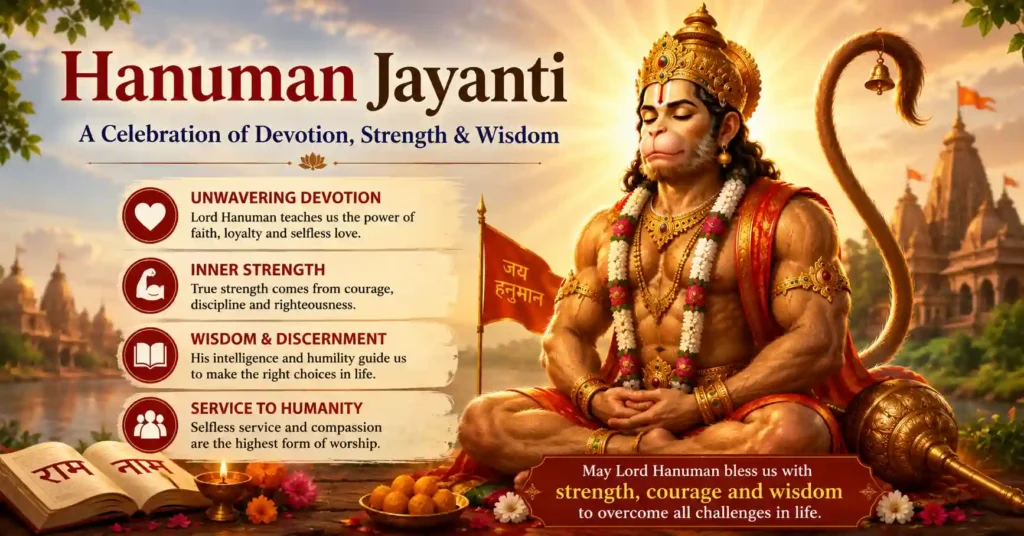
Unlike festivals that follow the Gregorian calendar, Hanuman Jayanti is celebrated according to the Hindu lunar calendar (Panchang). In most parts of India, the festival is observed on Chaitra Purnima, the full moon day of the Hindu month of Chaitra.
Since the Hindu lunar calendar is based on the phases of the Moon, it does not align exactly with the Gregorian calendar. As a result, the date of Hanuman Jayanti changes every year and usually falls during March or April.
The exact festival date is determined by the Purnima Tithi and the calculations of the local Panchang. In addition, different regions and temple traditions may observe Lord Hanuman’s birth on different dates. While many North Indian traditions celebrate Hanuman Jayanti on Chaitra Purnima, several South Indian traditions observe the festival at other times of the year according to their local religious calendars.
Although the calendar date changes from year to year, the spiritual message of Hanuman Jayanti remains unchanged. The festival continues to inspire devotees to cultivate unwavering faith, humility, courage, and selfless devotion in their daily lives.
Hanuman Jayanti Date and Puja Muhurat (2027)
For 2027, Hanuman Jayanti is expected to be observed as follows:
| Event | Date |
|---|---|
| Hanuman Jayanti | Tuesday, 20 April 2027 |
| Tithi | Chaitra Purnima |
Hanuman Jayanti is observed on Chaitra Purnima, the full moon day of the Hindu month of Chaitra. Devotees generally perform puja during the day according to their local Panchang and temple traditions.
The exact puja muhurat may vary depending on your city, as Panchang calculations differ slightly across regions. Therefore, devotees are advised to refer to their local Panchang or nearby temple for the most accurate puja timings.
While the annual date changes according to the Hindu lunar calendar, the spiritual significance of Hanuman Jayanti remains the same every year.
Why Is Hanuman Jayanti Celebrated?
Hanuman Jayanti marks the birth of Lord Hanuman, one of the most beloved deities in Sanatan Dharma. Revered as Pawan Putra, Bajrang Bali, Sankat Mochan, and the greatest devotee of Lord Rama, he is worshipped as the embodiment of strength, courage, wisdom, humility, and selfless service.
This sacred festival is celebrated not only to honor his divine birth but also to remember the timeless values he represents. Lord Hanuman never sought power, fame, or recognition. His greatest strength came from his unwavering devotion and complete surrender to Lord Rama.
That is the deeper message of Hanuman Jayanti. It reminds us that when devotion is sincere and the heart is free from ego, inner strength arises naturally. True power is not found in physical might alone, but in faith, discipline, humility, and the willingness to serve others without expectation.
For millions of devotees, this auspicious day is an opportunity to seek Lord Hanuman’s blessings, strengthen their spiritual practice, and draw inspiration from a life dedicated entirely to righteousness and devotion.
The Birth Story of Lord Hanuman (Hanuman Janm Katha)
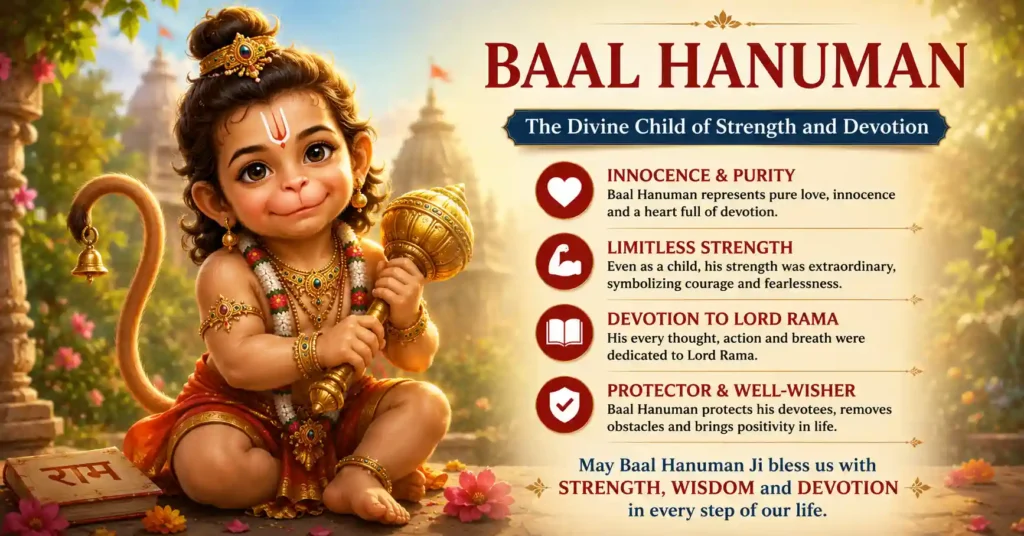
According to Hindu tradition, Lord Hanuman was born to Maa Anjana and Kesari through the divine blessings of Vayu Dev, the god of wind. Because of this sacred connection, he is lovingly known as Pawan Putra (the Son of the Wind God).
As a child, Hanuman displayed extraordinary strength and innocence. One morning, seeing the rising sun glowing brightly in the sky, he mistook it for a ripe fruit and leaped into the heavens to catch it. Amazed by his immense power, the gods watched as the young Hanuman soared through the sky.
According to the traditional story, Indra struck Hanuman with his Vajra (thunderbolt) to stop him. The blow injured his jaw, and from this event he came to be known as Bajrang Bali or Hanuman, names associated with his immense strength and courage.
Seeing this, Vayu Dev withdrew the life-giving air from the world in grief. To restore balance, the gods blessed Hanuman with extraordinary powers, courage, wisdom, protection, and near invincibility.
As Hanuman grew older, a group of sages placed a gentle curse upon him after his playful mischief repeatedly disturbed their meditation. As a result, he forgot his own divine powers and would remember them only when someone reminded him.
This beautiful episode carries a timeless spiritual lesson. Just as Hanuman temporarily forgot his strength until it was awakened, we too often forget the courage, wisdom, and potential that already exist within us.
Faith, self-discipline, and the right guidance help us rediscover that inner strength when life demands it.
Did You Know? Lord Hanuman Is One of the Sapta Chiranjeevis
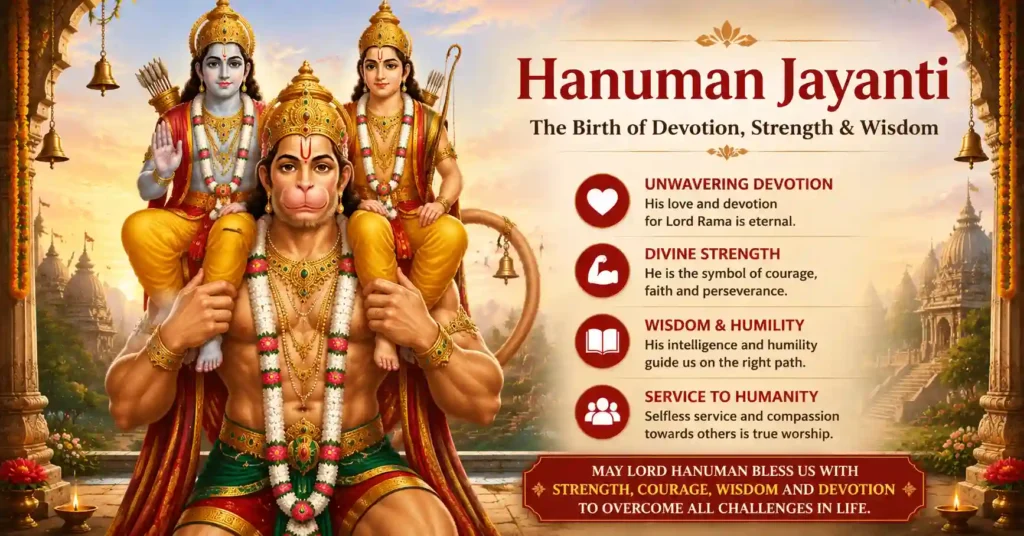
According to Hindu tradition, Lord Hanuman is one of the Sapta Chiranjeevis (the Seven Immortals), who are believed to remain on Earth until the end of the present age (Kali Yuga).
These immortal beings are revered for their unique roles in preserving dharma and guiding devotees on the path of righteousness. Lord Hanuman is believed to be ever present wherever the name of Lord Rama is sincerely remembered or the Ramayana is recited.
This enduring presence symbolizes his eternal devotion, unwavering service, and divine protection, inspiring millions of devotees to strengthen their faith and live with courage, humility, and selfless devotion.
Hanuman Jayanti in Hindu Scriptures
The celebration of Hanuman Jayanti is rooted in the sacred literature of Sanatan Dharma. While different regions observe the festival according to their own traditions, the life and virtues of Lord Hanuman are described in several revered Hindu scriptures.
Some of the principal scriptural references include:
| Scripture | Connection with Lord Hanuman |
|---|---|
| Valmiki Ramayana | Describes Lord Hanuman’s birth, his meeting with Lord Rama, his journey to Lanka, and his unwavering devotion throughout the Ramayana. |
| Ramcharitmanas | Goswami Tulsidas beautifully portrays Hanuman’s devotion, humility, wisdom, and selfless service to Lord Rama. |
| Hanuman Chalisa | One of the most widely recited devotional hymns dedicated to Lord Hanuman, praising his virtues and seeking his blessings. |
| Skanda Purana | Contains references to the glory of Lord Hanuman and the spiritual merit of remembering and worshipping him. |
“Wherever the glories of Lord Rama are sung, Lord Hanuman is believed to be present with folded hands and unwavering devotion.”
A cherished belief preserved in the Ramayana tradition
These sacred texts present Lord Hanuman not only as a symbol of extraordinary strength but also as the ideal devotee whose life exemplifies faith, humility, courage, and complete surrender to the Divine.
Hanuman Jayanti provides devotees with an opportunity to reflect on these timeless teachings and apply them in daily life.
Moments That Define Lord Hanuman's Greatness
The life of Lord Hanuman is filled with extraordinary moments that continue to inspire devotees with lessons of faith, courage, humility, and selfless service.
When he first met Lord Rama, his life found its true purpose. From that moment onward, every thought, action, and achievement became an expression of unwavering devotion.
His fearless leap across the vast ocean to reach Lanka was not driven by a desire to display his strength, but by his determination to find Mata Sita and serve Lord Rama’s mission.
Later, when circumstances demanded it, he burned Lanka, yet remained free from pride or anger, acting only in the service of dharma.
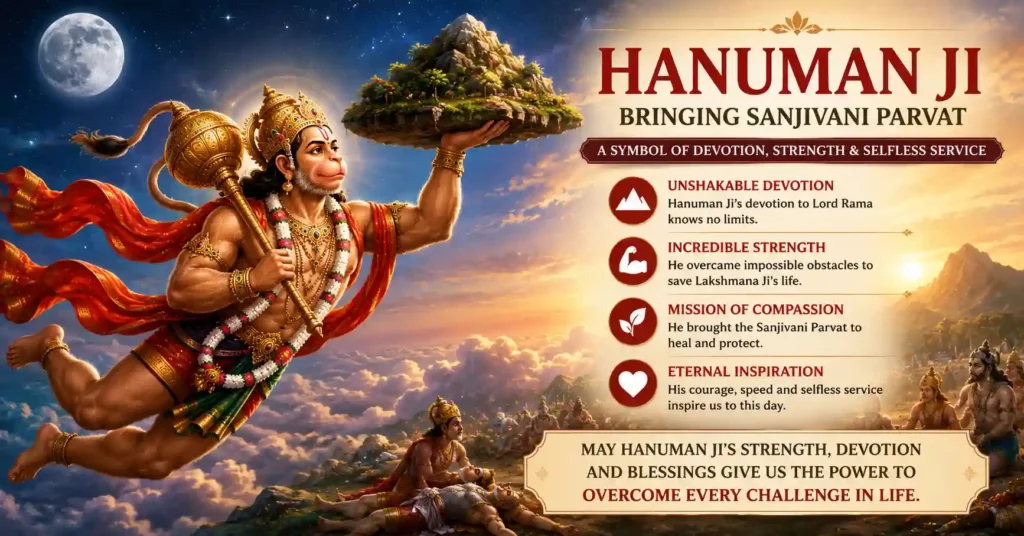
One of the most touching episodes from the Ramayana is when Lakshmana was gravely injured during the battle.
Unable to identify the life-saving Sanjeevani herb, Hanuman lifted the entire mountain and carried it to the battlefield without hesitation, placing duty above every obstacle.
These episodes are much more than inspiring stories. They remind us that true greatness is not measured by power alone, but by humility, devotion, courage, and the willingness to serve others with a pure heart.
| Event | Spiritual Lesson |
|---|---|
| Divine Birth | God’s grace and divine purpose |
| Childhood and Divine Blessings | Hidden potential and innocence |
| Meeting Lord Rama | Finding purpose through devotion |
| Journey to Lanka | Courage, determination, and unwavering faith |
| Bringing the Sanjeevani Mountain | Selfless service and dedication |
| Eternal Devotee | Humility, loyalty, and unwavering devotion |
Lord Hanuman’s life teaches us that when our actions are guided by selfless devotion, even the impossible becomes possible.
Hanuman Jayanti Puja Vidhi at Home
Hanuman Jayanti is traditionally observed with devotion, simplicity, and sincerity. While rituals may vary according to family traditions and regional customs, the following puja vidhi is widely followed by devotees.
Step 1: Prepare the Puja Space
Begin the day with a bath and wear clean clothes. Clean the place of worship and place an idol or picture of Lord Hanuman on a clean altar. Decorate it with fresh flowers and light a diya and incense sticks to create a peaceful devotional atmosphere.
Common Puja Samagri
| Item | Purpose |
|---|---|
| Idol or Picture | Worship |
| Sindoor | Sacred Offering |
| Chameli Oil | Traditional Offering |
| Flowers | Devotion |
| Diya | Divine Light |
| Incense | Purification |
| Boondi Laddoo | Bhog |
| Fruits | Satvik Offering |
Step 2: Offer Sindoor and Chameli Oil
Offer sindoor and chameli (jasmine) oil, which are considered especially dear to Lord Hanuman. According to tradition, Hanuman once applied sindoor for the long life and well-being of Lord Rama, making this offering a symbol of selfless love and devotion.
Step 3: Offer Prasad
Offer boondi laddoo, seasonal fruits, bananas, betel leaves, coconut, or other satvik prasad with a sincere heart. The devotion behind the offering is considered more important than its quantity.
Step 4: Chant Prayers
Recite the Hanuman Chalisa, Sundarkand, or your favorite Hanuman mantra. Many devotees also chant the name of Lord Rama, remembering the inseparable bond between Rama and Hanuman.
Step 5: Perform Aarti
Conclude the worship by performing Hanuman Aarti, praying for strength, wisdom, courage, good health, and protection from obstacles. After the aarti, distribute the prasad among family members and devotees.
Remember that the true essence of worship lies not only in the rituals but also in devotion, humility, and a sincere desire to follow Lord Hanuman’s ideals of faith and selfless service.
Mantras to Chant on Hanuman Jayanti
Chanting the holy names and mantras of Lord Hanuman is considered one of the most meaningful ways to celebrate Hanuman Jayanti.
Devotees believe that sincere chanting helps calm the mind, strengthen faith, remove fear, and deepen one’s devotion to Lord Hanuman and Lord Rama.
Some of the most commonly recited mantras include:
Om Hanumate Namah
A simple and powerful mantra that invokes Lord Hanuman’s blessings for strength, courage, wisdom, and protection.
Shri Ram Jai Ram Jai Jai Ram
Since Lord Hanuman’s life is completely dedicated to Lord Rama, chanting the divine name of Rama is also regarded as a form of Hanuman worship.
Many devotees also recite the Hanuman Chalisa, Sundarkand, or Bajrang Baan on this sacred day. Even a few minutes of sincere chanting with devotion and concentration can bring inner peace, confidence, and spiritual strength.
Hanuman Jayanti Vrat Rules and Food
Many devotees observe a Hanuman Jayanti vrat as an expression of devotion, self-discipline, and gratitude. The purpose of the fast is not merely to abstain from food, but to cultivate purity of thought, self-control, and a deeper connection with Lord Hanuman.
While fasting traditions vary across different regions and families, devotees commonly observe the following practices:
Begin the day with a bath and sincere prayer.
Maintain a calm and positive state of mind throughout the day.
Chant the Hanuman Chalisa, Sundarkand, or Hanuman mantras.
Avoid anger, harsh speech, and negative thoughts.
Offer prayers before breaking the fast.
Many devotees consume fruits, milk, dry fruits, and other satvik (falahar) foods during the fast. Some observe a complete fast until the puja is completed, while others choose a simple satvik meal according to their health, age, and family tradition.
Commonly Consumed During the Vrat | Generally Avoided |
Fruits and seasonal fruits | Non-vegetarian food |
Milk and dairy products | Alcohol and intoxicants |
Dry fruits and nuts | Onion and garlic (in many traditions) |
Sabudana preparations | Tamasic and heavily processed foods |
Singhara or Kuttu flour preparations | Excessively spicy or rich foods |
Coconut water and fresh fruit juices | Foods that distract from the spirit of fasting |
More important than the type of food is the spirit in which the vrat is observed. Hanuman Jayanti reminds devotees that true fasting is the practice of controlling the mind, cultivating humility, and strengthening one’s devotion through sincere prayer and righteous conduct.
Hanuman Jayanti Special Bhog and Offerings
Offering bhog to Lord Hanuman is a beautiful expression of devotion and gratitude. In Sanatan Dharma, it is believed that the sincerity and purity of the devotee’s heart are far more important than the richness of the offering.
Some of the most commonly offered items include:
| Offering | Traditional Significance |
|---|---|
| Boondi Laddoo | One of the most popular and beloved offerings made to Lord Hanuman. |
| Sindoor and Chameli Oil | Offered with devotion, inspired by the traditional belief that Hanuman applied sindoor for the well-being of Lord Rama. |
| Bananas and Seasonal Fruits | Simple satvik offerings symbolizing gratitude and purity. |
| Coconut | Represents surrender, humility, and devotion. |
| Betel Leaves (Paan) | Offered in many regional traditions as a mark of reverence. |
After offering the bhog, devotees usually perform aarti and distribute the prasad among family members and visitors as a symbol of sharing divine blessings.
Above all, Hanuman Jayanti reminds us that even the simplest offering, when made with faith, humility, and love, is accepted by the Lord with grace.
How Hanuman Jayanti Is Celebrated Across India
Hanuman Jayanti is celebrated with deep devotion across India, although the customs and festival dates may vary according to regional traditions.
Temples are beautifully decorated, devotees gather from early morning, and the day is filled with prayers, chanting, and acts of devotion.
Across the country, many devotees observe fasting, perform special puja, recite the Hanuman Chalisa and Sundarkand, participate in aarti, and organize bhandaras (community meals).
In many places, devotional processions and bhajan programs continue throughout the day.
Some of the most well-known celebrations take place at:
| Temple | Location | Special Celebration |
|---|---|---|
| Sankat Mochan Temple | Varanasi, Uttar Pradesh | Hanuman Chalisa recitation, devotional singing, and large gatherings of devotees. |
| Salasar Balaji Temple | Rajasthan | Thousands of devotees offer prayers, perform darshan, and participate in special pujas. |
| Mehandipur Balaji Temple | Rajasthan | Famous for its unique traditions associated with Lord Hanuman and protection from negative influences. |
| Namakkal Anjaneyar Temple | Tamil Nadu | Grand worship and special celebrations according to South Indian traditions. |
| Yantrodharaka Hanuman Temple | Hampi, Karnataka | Devotional programs and temple rituals honoring Lord Hanuman. |
Although regional customs may differ, the spirit of the celebration remains the same. Across India, devotees come together to honor Lord Hanuman’s devotion, courage, humility, and selfless service, making the day a joyful expression of faith and community.
Regional Celebrations of Hanuman Jayanti
Although the spiritual message of Hanuman Jayanti remains the same, its observance varies across different regions of India according to local traditions, temple customs, and religious calendars.
| Region | Unique Tradition |
|---|---|
| North India | Hanuman Jayanti is widely celebrated on Chaitra Purnima with temple visits, Hanuman Chalisa recitation, Sundarkand path, fasting, and community bhandaras. |
| Maharashtra | Devotees organize bhajan gatherings, special aartis, and distribute prasad in Hanuman temples. |
| Karnataka | Many temples conduct special pujas, devotional singing, and processions dedicated to Lord Hanuman. |
| Tamil Nadu | Several temples celebrate Hanuman Jayanti according to the local religious calendar with elaborate rituals and devotional programs. |
| Andhra Pradesh & Telangana | Devotees observe fasting, chant Hanuman mantras, and participate in temple celebrations based on regional traditions. |
Despite these regional variations, the essence of the festival remains unchanged. Across India, devotees come together to honor Lord Hanuman’s unwavering devotion to Lord Rama and seek his blessings for strength, courage, wisdom, and protection.
Why Is Lord Hanuman Worshipped for Protection?
Lord Hanuman is lovingly known as Sankat Mochan, meaning “the remover of difficulties.” Across generations, devotees have turned to him in times of fear, uncertainty, and hardship, believing that his blessings bring courage, strength, and protection.
According to Hindu tradition, Lord Hanuman’s unwavering devotion to Lord Rama, combined with his extraordinary strength, wisdom, and selfless service, made him a symbol of fearlessness and righteousness. For this reason, devotees remember him when seeking the strength to overcome obstacles, negative thoughts, and life’s challenges.
Many people recite the Hanuman Chalisa, chant his sacred names, or offer sincere prayers with the belief that these practices help strengthen faith, calm the mind, and inspire confidence during difficult times.
The deeper message is not only about seeking protection from external difficulties but also about overcoming the inner obstacles of fear, doubt, anger, and ego. Lord Hanuman reminds us that true courage arises from devotion, self-discipline, and complete faith in the Divine.
Importance of Tuesday and Saturday
Apart from Hanuman Jayanti, Tuesday and Saturday are widely regarded as especially auspicious for the worship of Lord Hanuman.
In many Hindu traditions, devotees visit Hanuman temples on these days, offer sindoor and chameli oil, light a diya, recite the Hanuman Chalisa, and seek blessings for courage, good health, wisdom, and protection.
Tuesday is traditionally associated with strength, energy, and determination, making it a popular day for Hanuman worship. Saturday is also considered significant because many devotees believe that sincere prayers to Lord Hanuman help them face life’s difficulties with courage and strengthen their faith.
In several traditions, worship of Lord Hanuman is also associated with relief from the adverse effects of Lord Shani (Saturn).
While customs may vary across different regions and spiritual traditions, the deeper purpose of worship remains the same: to cultivate devotion, overcome fear, and draw inspiration from Lord Hanuman’s unwavering faith, humility, and selfless service.
Spiritual Meaning of Hanuman Jayanti
The true significance of Hanuman Jayanti extends far beyond celebrating the birth of Lord Hanuman. It is a reminder that lasting strength comes from devotion, humility, and selfless service rather than from power or pride.
Although Lord Hanuman possessed extraordinary strength, wisdom, and courage, he never allowed ego to overshadow his devotion to Lord Rama. Every action of his life was guided by faith, compassion, discipline, and an unwavering commitment to righteousness.
In today’s fast-paced world, this timeless message is more relevant than ever. Hanuman Jayanti encourages us to overcome fear with faith, replace ego with humility, and face life’s challenges with courage and determination.
The festival reminds us that true spiritual growth begins when we dedicate our abilities to the service of others and remain steadfast in our values. Just as Lord Hanuman found strength through complete devotion, we too can discover inner peace, resilience, and purpose by living with sincerity, compassion, and unwavering faith.
Benefits of Worshipping Lord Hanuman
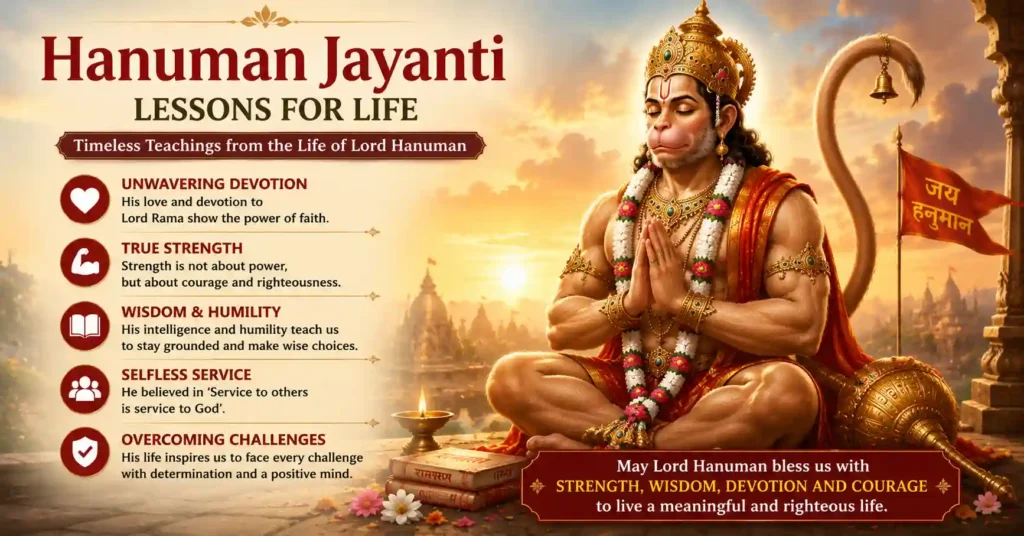
For centuries, devotees have worshipped Lord Hanuman as a symbol of unwavering devotion, courage, and selfless service. While spiritual experiences are personal, many devotees believe that sincere worship helps strengthen both the mind and the heart.
Traditional beliefs associate the worship of Lord Hanuman with several spiritual and personal benefits, including:
Greater courage and confidence during difficult times.
Improved mental strength and emotional resilience.
A deeper sense of faith, discipline, and devotion.
Freedom from fear, doubt, and negative thinking.
Inspiration to live with humility, honesty, and selfless service.
Inner peace through the recitation of the Hanuman Chalisa, prayer, and meditation.
Above all, the greatest blessing of Hanuman worship is the inspiration to cultivate the same qualities that Lord Hanuman embodied throughout his life: unwavering faith, humility, courage, wisdom, and complete devotion to Lord Rama.
Simple Ways to Celebrate Hanuman Jayanti at Home
Hanuman Jayanti does not require elaborate arrangements or expensive offerings. The true spirit of the festival lies in sincere devotion, humility, and selfless service.
You can celebrate this sacred day at home in many simple yet meaningful ways:
Light a diya before an idol or picture of Lord Hanuman and offer heartfelt prayers.
Recite the Hanuman Chalisa, Sundarkand, or a Hanuman mantra with devotion.
Read a few verses from the Ramayana and reflect on Lord Hanuman’s unwavering devotion to Lord Rama.
Offer simple satvik prasad such as fruits or boondi laddoo.
Help someone in need through charity, kindness, or selfless service.
Spend a few quiet moments in prayer, gratitude, and self-reflection.
These simple acts remind us that the essence of Hanuman Jayanti is not found in grand rituals but in cultivating faith, humility, compassion, and the spirit of selfless service in our daily lives.
Dos and Don'ts for Hanuman Jayanti
Hanuman Jayanti is a sacred occasion to deepen one’s devotion, practice self-discipline, and remember the noble qualities of Lord Hanuman. Observing the festival with sincerity and respect makes the celebration even more meaningful.
Dos
Begin the day with a bath and wear clean, modest clothes.
Offer sincere prayers to Lord Hanuman with faith and humility.
Recite the Hanuman Chalisa, Sundarkand, or Hanuman mantras with devotion.
Offer traditional bhog such as boondi laddoo, fruits, and other satvik offerings.
Help those in need through charity, kindness, or selfless service.
Spend time reflecting on Lord Hanuman’s virtues of courage, humility, and devotion to Lord Rama.
Don’ts
Avoid anger, harsh speech, and unnecessary arguments.
Do not consume alcohol or tamasic food if observing the vrat according to your tradition.
Avoid treating the festival as merely a social event without remembering its spiritual purpose.
Do not waste food or disrespect prasad offered during the worship.
Avoid disturbing the peace of others while celebrating.
The true spirit of Hanuman Jayanti lies not only in rituals but in living the ideals of Lord Hanuman through devotion, humility, compassion, and selfless service.
Conclusion
Hanuman Jayanti is much more than a celebration of the birth of Lord Hanuman. It is a sacred reminder that true strength is born from devotion, humility, courage, and selfless service.
From the inspiring story of his birth to his unwavering devotion to Lord Rama, every aspect of this festival encourages us to live with faith, discipline, and compassion.
The rituals, prayers, fasting, and chanting observed on this auspicious day are not merely traditions but meaningful practices that help devotees strengthen their spiritual connection and inner resolve.
Lord Hanuman never sought power or recognition, yet he became one of the greatest symbols of courage and righteousness because of his complete surrender to dharma and selfless service.
His life continues to inspire millions to face challenges with confidence, remain humble in success, and stay devoted to what is right.
May Hanuman Jayanti inspire you to cultivate unwavering faith, overcome fear with courage, and fill your life with strength, wisdom, peace, and devotion.
Jai Hanuman!
Suggested Reading
To deepen your understanding of Lord Hanuman, Lord Rama, and the spiritual wisdom of Sanatan Dharma, you may also enjoy these related articles from The Sanatan Tales:
Ram Navami: Meaning, Date, Puja Vidhi, Story & Significance
https://thesanatantales.com/ram-navami-2026
Chaitra Navratri: Meaning, Dates, Rituals, Vrat & Significance
https://thesanatantales.com/chaitra-navratri/
Mahashivratri: Meaning, Date, Rituals, Vrat Rules & Puja Vidhi
https://thesanatantales.com/mahashivratri
Hindu Festivals Explained: Meaning, Types, Calendar & Spiritual Importance
https://thesanatantales.com/hindu-festivals
Ram and Shabari Story: A Lesson in Pure Devotion
https://thesanatantales.com/ram-and-shabari-story
Sudama and Krishna Story: A Tale of True Friendship
https://thesanatantales.com/sudama-and-krishna-story
Meera and Krishna: A Story of Pure Devotion and Love
https://thesanatantales.com/meera-and-krishna-story
Hanuman (Wikipedia)
https://en.wikipedia.org/wiki/Hanuman
Hanuman Jayanti (Wikipedia)
https://en.wikipedia.org/wiki/Hanuman_Jayanti
For more articles on Hindu Deities, Festivals & Vrats, Temple & Pilgrimage, Rituals & Traditions, Divine Lifestyle, Spiritual Stories, and Sanatan Wisdom & Philosophy, visit The Sanatan Tales: https://thesanatantales.com/
FAQs
What is the significance of Hanuman Jayanti?
Hanuman Jayanti commemorates the birth of Lord Hanuman, one of the most revered deities in Sanatan Dharma. The festival celebrates his unwavering devotion to Lord Rama, extraordinary courage, humility, wisdom, and selfless service. It also reminds devotees that true strength comes from faith, discipline, and righteousness rather than physical power or pride. Observing this sacred day inspires people to cultivate these timeless values in their own lives.
When is Hanuman Jayanti celebrated?
In most parts of North India, the festival is observed on Chaitra Purnima, the full moon day of the Hindu month of Chaitra. Since the Hindu calendar follows the lunar cycle, the date changes every year in the Gregorian calendar and usually falls during March or April. In several South Indian traditions, Lord Hanuman’s birth is celebrated on different dates according to local Panchang calculations and temple customs.
Why does the date of Hanuman Jayanti change every year?
The festival follows the Hindu lunar calendar (Panchang) rather than the Gregorian calendar. Its observance depends on the Purnima Tithi of the month of Chaitra, causing the date to vary each year. Regional traditions and temple calendars may also result in different observance dates in various parts of India.
How can I celebrate Hanuman Jayanti at home?
You can celebrate this sacred occasion by cleaning your home temple, offering prayers to Lord Hanuman, lighting a diya, reciting the Hanuman Chalisa or Sundarkand, offering satvik bhog such as fruits or boondi laddoo, and spending time in prayer and self-reflection. Even simple acts of devotion, charity, and kindness reflect the true spirit of the festival.
What is the importance of fasting on this sacred day?
Many devotees observe a vrat as an act of devotion, self-discipline, and gratitude. While fasting traditions vary, the deeper purpose is to purify the mind, control the senses, and strengthen one’s spiritual connection with Lord Hanuman. The emphasis is on sincerity, positive thoughts, and righteous conduct rather than strict dietary rules alone.
Which prayers are commonly recited during the celebration?
The Hanuman Chalisa is the most widely recited prayer. Many devotees also read the Sundarkand from the Ramayana, chant Hanuman mantras such as Om Hanumate Namah, or repeat the divine name of Lord Rama. These devotional practices are believed to deepen faith and bring inner peace.
Why is sindoor offered to Lord Hanuman?
According to a popular Hindu tradition, Lord Hanuman once applied sindoor over his entire body after learning that Mata Sita wore it for the well-being and long life of Lord Rama. His act symbolized complete love and devotion. Because of this belief, devotees traditionally offer sindoor and chameli oil while worshipping him.
Why is Lord Hanuman known as Sankat Mochan?
The title Sankat Mochan means “the remover of difficulties.” Devotees lovingly address Lord Hanuman by this name because his life symbolizes courage, protection, and unwavering faith. Through prayers and devotion, many believers seek his blessings to overcome fear, adversity, and inner weakness while gaining strength to face life’s challenges.
Why are Tuesday and Saturday considered special for Lord Hanuman's worship?
Tuesday and Saturday are regarded as especially auspicious in many Hindu traditions for offering prayers to Lord Hanuman. On these days, devotees often visit temples, recite the Hanuman Chalisa, offer sindoor and chameli oil, and seek blessings for courage, wisdom, protection, and spiritual growth. Customs may vary across different regions and communities.
What qualities of Lord Hanuman can we apply in our daily lives?
Lord Hanuman’s life teaches timeless values such as humility, unwavering devotion, honesty, discipline, fearlessness, selfless service, and complete dedication to righteousness. By practicing these virtues, devotees can face challenges with confidence, strengthen relationships, and lead a life guided by compassion and integrity.
Is Hanuman Jayanti celebrated only in India?
No. While India hosts the largest celebrations, devotees around the world also observe the festival with great devotion. Hindu temples and communities in countries such as Nepal, Mauritius, Fiji, Trinidad and Tobago, Suriname, the United States, Canada, the United Kingdom, Australia, and many other nations organize special prayers, devotional singing, and cultural programs to honor Lord Hanuman.
What is the spiritual message of Hanuman Jayanti?
The festival teaches that true strength is born from devotion, humility, and selfless service. Lord Hanuman never sought power or recognition, yet he became one of the greatest symbols of courage and righteousness because of his unwavering faith in Lord Rama. His life continues to inspire devotees to overcome fear, let go of ego, and dedicate their abilities to serving others with sincerity and compassion.
Glossary of Important Terms
| Term | Meaning |
|---|---|
| Hanuman Jayanti | The sacred Hindu festival celebrating the birth of Lord Hanuman. |
| Lord Hanuman | One of the most revered deities in Sanatan Dharma, known for his unwavering devotion to Lord Rama, immense strength, courage, and humility. |
| Chaitra Purnima | The full moon day of the Hindu month of Chaitra, when Hanuman Jayanti is celebrated in most parts of North India. |
| Panchang | The traditional Hindu calendar used to determine festival dates, tithis, and auspicious timings. |
| Purnima Tithi | The full moon lunar day in the Hindu calendar, considered highly auspicious for many religious observances. |
| Pawan Putra | A popular name of Lord Hanuman meaning “Son of Vayu (the Wind God).” |
| Bajrang Bali | A revered title of Lord Hanuman that symbolizes immense strength, courage, and divine power. |
| Sankat Mochan | A name of Lord Hanuman meaning “Remover of Difficulties,” reflecting his role as a protector of devotees. |
| Lord Rama | The seventh incarnation of Lord Vishnu and the central figure of the Ramayana, whom Lord Hanuman served with complete devotion. |
| Ramayana | One of the two great Sanskrit epics of India, narrating the life of Lord Rama and the devoted service of Lord Hanuman. |
| Hanuman Chalisa | A devotional hymn of forty verses composed by Goswami Tulsidas in praise of Lord Hanuman. |
| Sundarkand | A chapter of the Ramayana describing Lord Hanuman’s heroic journey to Lanka in search of Mata Sita. |
| Vrat | A religious fast observed with devotion, self-discipline, prayer, and spiritual reflection. |
| Puja | A Hindu ritual of worship performed to express devotion and seek divine blessings. |
| Aarti | A devotional ritual in which a lit lamp is offered before a deity while singing hymns or prayers. |
| Prasad | Food or other offerings first presented to the deity and then distributed to devotees as a sacred blessing. |
| Bhog | Food offerings lovingly prepared and presented to the deity during worship before being distributed as prasad. |
| Sindoor | A sacred red vermilion powder traditionally offered to Lord Hanuman as a symbol of devotion and reverence. |
| Chameli Oil | Jasmine oil commonly offered along with sindoor during the worship of Lord Hanuman. |
| Satvik Food | Pure and wholesome vegetarian food believed to promote clarity, peace, and spiritual well-being. |
| Boondi Laddoo | A traditional sweet widely offered as bhog to Lord Hanuman during worship and festivals. |
| Sapta Chiranjeevis | The seven immortal beings in Hindu tradition who are believed to remain on Earth until the end of Kali Yuga. Lord Hanuman is one of them. |
| Dharma | The eternal principle of righteousness, duty, moral conduct, and harmonious living according to Sanatan Dharma. |
| Seva | Selfless service performed without expecting personal reward, a virtue perfectly embodied by Lord Hanuman. |
| Bhakti | Loving devotion and complete surrender to the Divine, regarded as the highest spiritual path in many Hindu traditions. |
About the Author
Yateendra Chaturvedi is a spiritual writer, researcher, devotee, and the founder of The Sanatan Tales. With over 35 years of professional experience and a lifelong interest in Sanatan Dharma, he writes about Hindu deities, temples, scriptures, festivals, Mahavidyas, sacred stories, rituals, and living traditions that continue to guide and inspire devotees across India.
Drawing from traditional scriptures, regional beliefs, temple traditions, devotional literature, and historical sources, he aims to present authentic, well-researched, and easy-to-understand content for modern readers. His work focuses on preserving spiritual wisdom, explaining sacred traditions, and helping seekers develop a deeper understanding of India’s rich spiritual heritage.
Through The Sanatan Tales, Yateendra strives to make the timeless teachings of Sanatan Dharma simple, meaningful, and relevant for today’s generation while maintaining respect for traditional sources, regional practices, and diverse spiritual perspectives.
Learn More About Yateendra Chaturvedi →
https://thesanatantales.com/about-the-author/
References & Sources
This article is based on beliefs and traditions followed within the Vaishnava and broader Sanatan Dharma traditions, traditional knowledge associated with Lord Hanuman, the Ramayana, Hanuman worship, and insights drawn from various Hindu scriptures, spiritual commentaries, temple traditions, and religious study sources. Some concepts discussed in this article are also inspired by teachings and interpretations preserved through the guru-disciple tradition.
Note: Beliefs, interpretations, festival dates, rituals, and spiritual practices may vary across different traditions, sects, regions, temples, and paths within Sanatan Dharma. The purpose of this article is not to present any single viewpoint as the absolute truth, but to explain widely accepted religious and spiritual perspectives in a simple, respectful, and accessible manner.
Explore More Fascinating Topics from Sanatan Dharma