Hindu festivals are much more than days of celebration. In Sanatan Dharma, they are sacred moments woven into the rhythm of life, inviting people to pause, reflect, and reconnect with the Divine, nature, and their inner selves.
Long before modern calendars existed, ancient sages carefully observed the movements of the Sun, the Moon, the changing seasons, and the human mind. From these observations emerged a rich tradition of festivals that continues to guide millions of people today.
Some Hindu festivals celebrate the appearance of deities, while others mark seasonal transitions, harvests, or important spiritual events. Together, they remind us to live with gratitude, devotion, self-discipline, and harmony with the world around us.
In this guide, you’ll discover the meaning of Hindu festivals, the different types celebrated across Sanatan Dharma, and the spiritual wisdom they carry. Understanding these sacred observances reveals that they are far more than cultural celebrations. They are timeless opportunities for personal growth, family connection, and spiritual awakening.
Table of Contents
ToggleWhy Hindu Festivals Are Central to Sanatan Dharma
In Sanatan Dharma, spirituality is not separated from daily life. Hindu festivals bring spiritual wisdom into homes through worship, family traditions, acts of charity, fasting, and community celebrations. Rather than demanding renunciation or strict discipline, they gently encourage people to pause, reflect, and reconnect with the Divine in the midst of everyday life.
A festival creates a shared atmosphere where prayer feels more meaningful, kindness flows naturally, and the mind becomes more receptive to spiritual values. Even those who may not regularly visit temples often feel inspired to pray, help others, or spend time with family during these sacred occasions.
This is more than the joy of celebration. It is the power of shared faith and devotion that brings people together. Through stories, rituals, customs, and traditions, festivals pass timeless values from one generation to the next. Children learn devotion, elders preserve cultural memory, and families strengthen their spiritual and emotional bonds.
This understanding is deeply rooted in the Vedic tradition, where living in harmony with rita, the cosmic order, is regarded as a fundamental principle of life. Later scriptures, including the Puranas, further enriched many festival observances by connecting them with divine events, sacred stories, and devotional practices that continue to guide and inspire devotees today.
The Deep Connection Between Hindu Festivals and Nature
One of the most distinctive features of Hindu festivals is their deep connection with nature and the natural rhythm of time. Unlike fixed dates in the Gregorian calendar, many Hindu festivals are determined according to the traditional Hindu calendar (Panchang), which is based on the movements of the Sun, the Moon, and other astronomical calculations.
This reflects the ancient understanding that human life is closely connected with the rhythms of the natural world. Solar festivals are linked to the Sun’s movement through the zodiac and often mark important seasonal transitions.
Lunar festivals are observed according to specific tithis and moon phases, recognising the Moon’s influence on timekeeping and religious observances. Many festivals also coincide with sowing, harvest seasons, or changes in climate, encouraging people to express gratitude for nature’s abundance and live in harmony with the environment.
In Sanatan Dharma, nature is regarded as sacred because it is seen as a manifestation of the Divine. By aligning festivals with the cycles of the seasons and the heavens, these observances remind devotees that spiritual life is not separate from the natural world. Even today, they encourage people to slow down, appreciate the changing seasons, and maintain a balanced relationship with nature, time, and the Divine.
How the Hindu Calendar Determines Festivals
Unlike the Gregorian calendar, which follows fixed dates, most Hindu festivals are determined using the traditional Hindu calendar, also known as the Panchang. This sacred calendar is based on the movements of both the Sun and the Moon, making it a unique blend of solar and lunar calculations.
Many festivals are observed according to a specific tithi (lunar day), while others are linked to the Sun’s movement into a new zodiac sign or to important seasonal changes. This is why the dates of many Hindu festivals change every year in the Gregorian calendar, even though they occur at the same point in the Hindu calendar.
The Panchang considers several astronomical elements, including tithi, nakshatra (lunar constellation), yoga, karana, and vara (weekday), to determine the most appropriate time for religious observances. These calculations help ensure that festivals remain aligned with nature, cosmic rhythms, and traditional practices preserved through generations.
Rather than being random celebrations, Hindu festivals follow a carefully maintained calendar that reflects the close relationship between time, nature, and spiritual life in Sanatan Dharma.
Why Do Hindu Festival Dates Change Every Year?
One question many people ask is why Hindu festivals do not fall on the same date each year in the Gregorian calendar. The answer lies in the traditional Hindu calendar, which follows the movements of the Sun and the Moon rather than a fixed solar calendar alone.
Many Hindu festivals are observed on a particular tithi, or lunar day, instead of a fixed calendar date. Since the lunar month is shorter than the solar month, these dates shift slightly every year when compared with the Gregorian calendar. As a result, festivals such as Mahashivratri, Ram Navami, Janmashtami, and Diwali are celebrated on different dates each year.
Some festivals, however, are based on the Sun’s movement into a zodiac sign. Makar Sankranti is one such festival and is usually celebrated on 14 or 15 January because it follows the solar calendar rather than the lunar cycle.
The exact festival date is traditionally determined using the Panchang, which considers astronomical calculations such as tithi, nakshatra, and the position of the Sun and Moon. This ensures that each festival is observed at the most spiritually appropriate time according to Sanatan Dharma.
Rather than creating confusion, these changing dates reflect the deep connection between Hindu festivals, cosmic rhythms, and the natural cycles that have guided spiritual life for thousands of years.
Major Types of Hindu Festivals
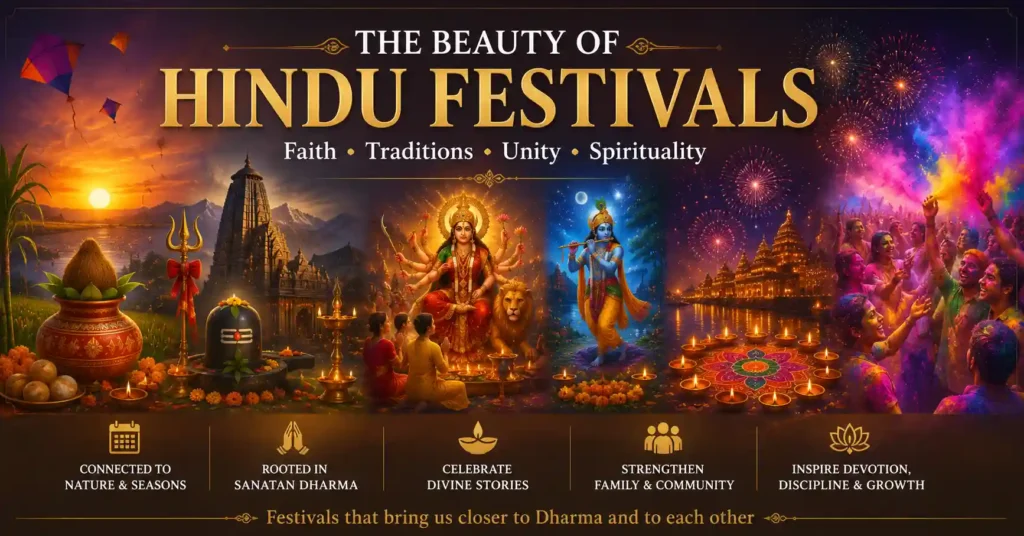
Hindu festivals can be grouped in several ways, depending on what they celebrate and how they are observed. While every festival has its own traditions, most belong to one or more of the following categories.
Seasonal Festivals celebrate changes in nature, harvests, and the rhythm of the seasons. Festivals such as Makar Sankranti, Pongal, Baisakhi, and Onam express gratitude for nature’s abundance and remind people of their close relationship with the earth.
Deity-Centred Festivals honour specific forms of the Divine. Mahashivratri is dedicated to Lord Shiva, Ram Navami celebrates the birth of Lord Rama, Janmashtami honours Lord Krishna, while Navratri is devoted to the Divine Mother in her many forms. These festivals inspire devotion and help devotees cultivate the virtues represented by each deity.
Vrats and Fasting Observances focus on self-discipline, devotion, and inner purification. Ekadashi, Karva Chauth, and Pradosh Vrat are examples of observances where fasting, prayer, and spiritual reflection play a central role.
Lunar and Solar Festivals are determined by the traditional Hindu calendar. Lunar festivals follow specific tithis, while solar festivals are based on the Sun’s movement through the zodiac. Together, they reflect the harmony between cosmic cycles and human life.
Regional Festivals celebrate local traditions, temple customs, and cultural heritage. Although their forms may differ from one region to another, they share the same underlying values of gratitude, devotion, and community.
Together, these festivals create a rich spiritual calendar that guides people through different seasons of life, helping them celebrate, reflect, serve others, and deepen their connection with Sanatan Dharma.
The Origins of Hindu Festivals
The origins of Hindu festivals can be traced to multiple sources within the long history of Sanatan Dharma. Some festivals are mentioned in ancient scriptures such as the Vedas, while many others are described in the Puranas, Itihasas like the Ramayana and Mahabharata, and long-standing temple and regional traditions.
Many festivals commemorate significant spiritual events. For example, Ram Navami celebrates the birth of Lord Rama, Janmashtami marks the appearance of Lord Krishna, and Mahashivratri is associated with Lord Shiva and his profound spiritual significance. Other festivals honour seasonal transitions, harvests, or important astronomical events, reflecting the close relationship between nature and human life.
Over time, local communities also developed their own ways of celebrating these occasions. As a result, the same festival may be observed differently across various parts of India while preserving its core spiritual message.
This beautiful blend of scriptural teachings, temple traditions, regional customs, and living practices has allowed Hindu festivals to remain vibrant for thousands of years. Rather than belonging only to the past, they continue to evolve while preserving the timeless values of devotion, gratitude, compassion, self-discipline, and harmony with nature.
Many festivals described in the Puranas are linked to the appearance of deities, sacred events, or the victory of dharma over adharma. At the same time, numerous regional celebrations have grown through centuries of temple traditions and community practices, reflecting the living and evolving nature of Sanatan Dharma.
Common Rituals Observed During Hindu Festivals
Although every Hindu festival has its own customs and traditions, many share certain rituals that express devotion, gratitude, and spiritual discipline. These practices have been followed for generations and help devotees connect with the deeper purpose of the celebration.
A festival often begins with cleaning the home and creating a sacred space for worship. Devotees may decorate entrances with rangoli, light oil lamps, and prepare an altar with flowers, incense, and offerings. These simple acts symbolise welcoming purity, positivity, and divine blessings into daily life.
Many festivals include puja, where prayers, mantras, and offerings are made to the presiding deity. Depending on the occasion, devotees may also observe a vrat (fast), visit temples, read sacred texts, perform charity, or share prasad with family, friends, and the community.
Acts of daan (charitable giving), serving others, and seeking the blessings of elders are also considered important parts of many Hindu festivals. These traditions remind devotees that true celebration is not only about rituals but also about compassion, gratitude, and selfless service.
While the specific customs vary across regions and communities, the underlying purpose remains the same: to cultivate devotion, strengthen family and community bonds, and inspire a more mindful and virtuous way of living.
Spiritual Importance of Hindu Festivals in Daily Life
Hindu festivals quietly shape daily life without imposing rigid rules. They create natural pauses in a fast-moving world, encouraging people to step away from routine and reconnect with their faith, families, and inner selves. Through prayer, worship, charity, fasting, and joyful celebrations, festivals remind devotees to reflect on what truly matters and restore balance in everyday life.
These sacred occasions also offer emotional and spiritual renewal. Shared prayers, familiar traditions, and community celebrations foster a sense of belonging, gratitude, and hope. They strengthen family bonds, preserve cultural values, and provide comfort during times of uncertainty. This enduring relevance is one of the reasons Hindu festivals continue to inspire people across generations.
This spirit is beautifully reflected in the Bhagavad Gita, where Lord Krishna teaches that actions performed with devotion, sincerity, and the right intention become a path towards spiritual growth. Hindu festivals provide natural opportunities to live these teachings through worship, gratitude, self-discipline, charity, and selfless service, making spirituality an integral part of everyday life.
The Timeless Values Taught by Hindu Festivals
Every Hindu festival carries a deeper lesson that extends beyond rituals and celebrations. While each festival has its own traditions and stories, together they encourage qualities that help individuals grow spiritually and live harmoniously with others.
Many festivals teach gratitude by reminding people to appreciate nature, family, and the blessings received in life. Others inspire devotion, encouraging devotees to strengthen their relationship with the Divine through prayer, worship, and self-reflection. Festivals that include fasting and disciplined observances cultivate patience, self-control, and inner resilience.
Hindu festivals also emphasise compassion, charity, and service. Sharing food, helping those in need, seeking the blessings of elders, and participating in community celebrations reinforce the understanding that spirituality is expressed through kindness and selfless action.
Many celebrations symbolise the victory of truth over falsehood, light over darkness, knowledge over ignorance, and hope over despair. These timeless teachings remain relevant regardless of age or background, reminding people that festivals are not only occasions to celebrate but also opportunities to reflect on the values they wish to bring into their daily lives.
In this way, Hindu festivals continue to inspire personal transformation while preserving the ethical and spiritual foundations of Sanatan Dharma.
Solar Festivals and the Journey of Light
Solar festivals are based on the movement of the Sun and hold a special place in Sanatan Dharma. The Sun is revered as the source of light, energy, and life, and its journey through the zodiac marks important seasonal transitions that have guided religious observances, agriculture, and daily life for centuries.
Among these festivals, Makar Sankranti is one of the most significant. It marks the Sun’s entry into Makara Rashi (Capricorn) and the beginning of Uttarayana, the Sun’s northward journey. Spiritually, this transition symbolises the movement from darkness to light, ignorance to wisdom, and inactivity to renewed purpose. It is also celebrated as a harvest festival, expressing gratitude for nature’s abundance and encouraging charity, devotion, and fresh beginnings.
You can explore its date, rituals, traditions, and deeper spiritual meaning in our detailed guide on Makar Sankranti Festival, which explains why this sacred transition is considered one of the most auspicious periods in Sanatan Dharma.
Lunar Festivals and Inner Awareness
Lunar festivals are determined according to the phases of the Moon and form an important part of the traditional Hindu calendar (Panchang). In Sanatan Dharma, the Moon has long been associated with the mind, emotions, and the natural rhythm of life. As a result, many lunar observances encourage self-reflection, inner discipline, and spiritual awareness.
Festivals and vrats observed on specific tithis, such as Ekadashi, Purnima, and Amavasya, each carry their own spiritual significance. Ekadashi encourages simplicity, self-discipline, and devotion through fasting and prayer. Purnima symbolises completeness, gratitude, and spiritual illumination, while Amavasya is traditionally associated with introspection, remembrance of ancestors, and quiet reflection.
Rather than creating fear or rigid obligations, these observances invite devotees to become more mindful of their thoughts, actions, and spiritual journey. By following the natural rhythm of the lunar cycle, they encourage a balanced mind, emotional stability, and a deeper connection with the timeless wisdom of Sanatan Dharma.
Festivals Dedicated to Deities and Divine Energies
Many Hindu festivals are dedicated to specific deities, with each celebration honouring a unique aspect of the Divine and the spiritual values it represents. Through these sacred occasions, devotees remember divine events, express their devotion, and seek to cultivate virtues such as wisdom, courage, compassion, strength, and self-discipline in their own lives.
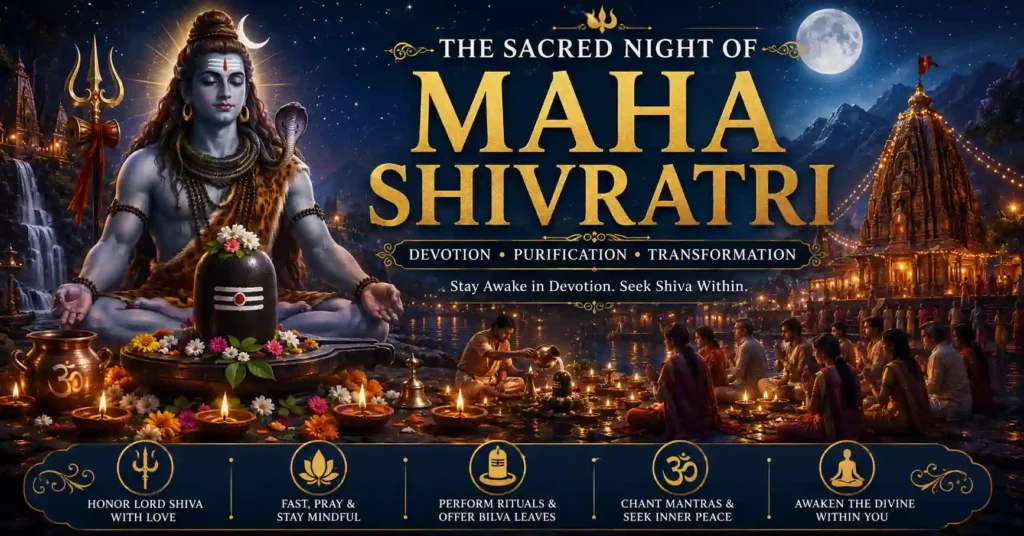
Festivals such as Ram Navami celebrate the birth of Lord Rama and the ideals of righteousness and duty. Janmashtami honours the appearance of Lord Krishna and his teachings of love, wisdom, and devotion. Navratri is dedicated to the Divine Mother in her many forms, inspiring courage, protection, and inner strength, while Mahashivratri celebrates Lord Shiva as the symbol of transformation, meditation, and spiritual awakening.
Other festivals honour deities such as Lord Ganesha, Lord Hanuman, Lord Narasimha, Surya Dev, and Lord Jagannath, each reflecting a different dimension of Sanatan Dharma. Together, these celebrations remind devotees that although the forms of worship may vary, they ultimately lead towards the same eternal truth and spiritual growth.
To explore these traditions further, you can read our detailed articles on Bhagwan Shiv, Kaal Bhairav, Ram Navami, Hanuman Jayanti, Narasimha Jayanti, and Jagannath Ratha Yatra.
Regional Festivals and Living Traditions
India’s cultural diversity is beautifully reflected in its regional festivals. While the spiritual essence of Sanatan Dharma remains the same, the way festivals are celebrated often varies according to local traditions, climate, agriculture, temple customs, and historical influences. This rich diversity allows each region to express devotion in its own unique way while preserving the same timeless spiritual values.
Festivals such as Jagannath Ratha Yatra in Odisha, Pongal in Tamil Nadu, Onam in Kerala, Bihu in Assam, and Ganesh Chaturthi in Maharashtra are deeply rooted in their respective regions. Each celebration reflects local customs and community life, yet all encourage devotion, gratitude, compassion, and respect for the Divine.
Regional festivals keep traditions alive by passing them from one generation to the next. They strengthen family and community bonds, preserve cultural heritage, and demonstrate that Sanatan Dharma is both timeless and adaptable. Although customs may differ across India, the underlying message of faith, righteousness, and spiritual growth remains beautifully united.
Hindu Festivals Through the Seasons
Hindu festivals are woven into the rhythm of the year, with each season bringing celebrations that reflect changes in nature, agriculture, and spiritual life. Rather than being isolated events, they form a continuous cycle that helps people remain connected with time, the environment, and the Divine.
The beginning of the year is marked by festivals such as Makar Sankranti, Pongal, and Vasant Panchami, which celebrate new beginnings, harvests, and the arrival of spring. As the seasons change, festivals like Mahashivratri, Holi, Chaitra Navratri, and Ram Navami encourage purification, renewal, and devotion.
During the monsoon and autumn months, celebrations such as Guru Purnima, Janmashtami, Ganesh Chaturthi, Navratri, Dussehra, and Diwali inspire spiritual reflection, the triumph of righteousness, and gratitude. Later in the year, festivals continue to mark important seasonal transitions, harvests, and opportunities for worship and charity.
This continuous cycle reminds devotees that spiritual growth is not limited to a single day or festival. Every season offers an opportunity to pause, reflect, celebrate, and strengthen one’s relationship with nature, family, community, and the timeless wisdom of Sanatan Dharma.
The Role of Rituals in Hindu Festivals
Rituals are symbolic acts that help devotees express devotion and cultivate mindfulness. During Hindu festivals, practices such as lighting a lamp, offering flowers or food, chanting mantras, and observing a fast are not performed merely as customs. Each ritual carries a deeper meaning, reminding devotees of gratitude, purity, self-discipline, and the presence of the Divine in everyday life.
When performed with understanding rather than as routine obligations, these practices become powerful tools for inner growth. They encourage devotees to slow down, reflect on their actions, and approach life with greater awareness, humility, and devotion. Even the simplest act of worship can have a lasting impact when performed with sincerity.
This understanding is reflected throughout Hindu scriptures, which emphasise that the true value of a ritual lies not only in the outward action but also in the devotion, faith, and intention behind it. Festivals therefore transform ordinary acts of worship into meaningful opportunities for spiritual growth and a deeper connection with the Divine.
The Relationship Between Hindu Festivals and Vrats
Although festivals and vrats are often mentioned together, they are not exactly the same. A festival is a sacred occasion celebrated by families, temples, and communities to honour a divine event, seasonal transition, or spiritual principle. A vrat, on the other hand, is a personal spiritual observance that usually involves fasting, prayer, self-discipline, and devotion.
Many Hindu festivals include the observance of a vrat. For example, devotees often fast during Mahashivratri, Ram Navami, Janmashtami, and Navratri as an expression of faith and inner discipline. At the same time, some vrats such as Ekadashi and Pradosh Vrat are observed regularly throughout the year even when they are not associated with a major public festival.
In Sanatan Dharma, fasting is not viewed merely as abstaining from food. Traditionally, it is understood as a way to cultivate self-control, reduce distractions, and focus the mind on prayer, contemplation, and spiritual growth. The practices may vary according to one’s health, age, family tradition, and sampradaya, but the underlying purpose remains the same: to strengthen one’s relationship with the Divine.
Together, festivals and vrats complement each other by combining joyful community celebrations with personal spiritual discipline. This balance between outer celebration and inner transformation is one of the distinctive features of the Hindu way of life.
Why Hindu Festivals Still Matter Today
In today’s fast-paced world, Hindu festivals continue to offer moments of reflection, gratitude, and human connection. While lifestyles have changed over the centuries, the values these festivals represent remain timeless. They encourage people to pause, reconnect with family, express gratitude, and remember that life is more than routine and material success.
Many festivals also inspire acts of charity, community service, forgiveness, and compassion. Families gather across generations, cultural traditions are preserved, and children learn values through stories, rituals, and shared celebrations. In this way, festivals help strengthen both personal relationships and cultural identity.
For many devotees, these occasions are also an opportunity to renew their spiritual practice. Whether through prayer, meditation, fasting, or simply spending time in quiet reflection, festivals create space for inner growth amid the demands of everyday life.
Beyond celebration, Hindu festivals remind us to live in harmony with nature, honour the changing seasons, and cultivate virtues such as patience, generosity, humility, and devotion. This enduring relevance is one of the reasons these sacred observances continue to inspire millions of people around the world.
How Hindu Festivals Strengthen Family and Community Life
Hindu festivals have always been more than personal spiritual observances. They bring families, neighbours, and entire communities together through shared traditions, prayers, and celebrations. Across generations, these occasions create opportunities to reconnect with loved ones, strengthen relationships, and celebrate the values that unite society.
Many families prepare for festivals together by cleaning their homes, decorating entrances, cooking traditional meals, performing puja, and sharing prasad. Elders pass on stories, customs, and rituals to younger generations, helping preserve cultural and spiritual heritage in a natural and meaningful way. In this way, festivals become living classrooms where values are learned through experience rather than instruction.
Festivals also encourage acts of compassion and service. Visiting temples, offering food, supporting those in need, and participating in community celebrations remind people that devotion is closely connected with kindness and generosity. These shared experiences foster a sense of belonging and reinforce the idea that spiritual growth is strengthened through harmony with others.
In today’s increasingly fast-paced and digital world, Hindu festivals continue to provide valuable moments for families and communities to come together, celebrate their shared heritage, and pass timeless traditions to future generations.
Common Misconceptions About Hindu Festivals
As Hindu festivals are often viewed from the outside through celebrations, decorations, and public events, certain misconceptions can arise about their purpose and significance. Understanding these traditions more deeply helps reveal the spiritual wisdom they are meant to convey.
One common misunderstanding is that Hindu festivals are only about rituals and external celebrations. In reality, rituals are symbolic practices designed to cultivate awareness, gratitude, devotion, and self-discipline. The deeper purpose of a festival is inner transformation rather than external observance alone.
Another misconception is that all Hindu festivals are identical in purpose. Some festivals celebrate divine manifestations, others honour seasonal transitions, harvests, spiritual victories, or opportunities for fasting and self-reflection. Each festival carries its own unique message and spiritual focus.
Some people also assume that festivals are relevant only in traditional societies. However, the values they promote, such as gratitude, compassion, family harmony, charity, and mindfulness, remain meaningful in modern life regardless of changing lifestyles.
It is also important to remember that traditions may vary across regions, communities, and sampradayas. Differences in rituals or customs do not necessarily mean one practice is correct and another is wrong. These variations often reflect the rich cultural diversity that exists within the broader framework of Sanatan Dharma.
When understood beyond their external forms, Hindu festivals reveal a timeless system designed to nurture both individual growth and collective well-being.
Conclusion
Hindu festivals are far more than annual celebrations. They form a living tradition that connects time, nature, devotion, and human life in a meaningful and harmonious way. Whether they mark the movement of the Sun and Moon, honour the appearance of a deity, celebrate the changing seasons, or preserve regional traditions, each festival carries a timeless spiritual message that continues to guide devotees across generations.
Across the scriptures and living traditions of Sanatan Dharma, festivals are viewed as opportunities to remember the Divine, strengthen dharma, and cultivate virtues such as gratitude, compassion, self-discipline, and selfless service. Their true purpose extends beyond celebration, inviting every individual to bring spiritual wisdom into daily life through thoughtful actions, sincere devotion, and mindful living.
If this guide has inspired you to learn more, explore our detailed articles on Hindu festivals, deities, temples, rituals, and spiritual practices on The Sanatan Tales. Each article is written to help you understand the deeper meaning of Sanatan Dharma in a simple, authentic, and heartfelt way.
Suggested Reading
If you enjoyed learning about Hindu festivals, you may also like these detailed guides from The Sanatan Tales. Each article explores the history, traditions, rituals, and spiritual significance of some of the most important festivals and sacred observances in Sanatan Dharma.
Jagannath Ratha Yatra: History, Significance, Traditions & Spiritual Meaning
https://thesanatantales.com/jagannath-ratha-yatra/
Shani Jayanti 2026: Date, Significance, Worship, Story and Spiritual Meaning
https://thesanatantales.com/shani-jayanti-2026/
Hanuman Jayanti 2026: Date, Puja Vidhi, Story and Significance
https://thesanatantales.com/hanuman-jayanti-2026/
Ram Navami 2026: Date, Puja Vidhi and The Sacred Birth Story of Lord Ram
https://thesanatantales.com/ram-navami-2026/
Chaitra Navratri 2026: Dates, Meaning, Rituals and Spiritual Significance
https://thesanatantales.com/chaitra-navratri-2026/
Holi Festival 2026: Date, Holika Dahan Muhurat and Spiritual Meaning
https://thesanatantales.com/holi-festival-2026/
Mahashivratri 2026: Meaning, Date, Rituals, Vrat Rules & Puja Vidhi
https://thesanatantales.com/mahashivratri-2026/
Gupta Navratri January 2026: Meaning, Dates, Rituals and Spiritual Significance
https://thesanatantales.com/gupta-navratri-january-2026/
Makar Sankranti Festival 2026: Date, Meaning, Rituals and Spiritual Significance
https://thesanatantales.com/makar-sankranti-festival-2026/
Hindu festivals (Wikipedia)
https://en.wikipedia.org/wiki/List_of_Hindu_festivals
FAQs
What are Hindu festivals?
Hindu festivals are sacred occasions observed in Sanatan Dharma to honour deities, celebrate important spiritual events, mark seasonal changes, and strengthen devotion. They are closely connected with the Hindu calendar and encourage values such as gratitude, self-discipline, compassion, and harmony with nature. Beyond celebration, they provide opportunities for spiritual reflection, family bonding, and community participation.
Why are Hindu festivals celebrated?
Hindu festivals are celebrated to remember divine events, express gratitude, preserve cultural traditions, and inspire spiritual growth. Many festivals are linked to the birth of deities, victories of dharma over adharma, harvest seasons, or important astronomical events. They remind devotees to cultivate virtues such as devotion, charity, humility, and self-discipline in everyday life.
Why do Hindu festival dates change every year?
Most Hindu festivals are determined according to the traditional Hindu calendar, or Panchang, which follows the movements of the Sun and the Moon. Since many festivals are observed on specific lunar days (tithis), their dates shift each year when compared with the Gregorian calendar. Solar festivals, such as Makar Sankranti, usually remain close to the same date each year.
What is the difference between a Hindu festival and a vrat?
A Hindu festival is a sacred celebration observed by families and communities to honour a deity, spiritual event, or seasonal change. A vrat is a personal religious observance that often includes fasting, prayer, and self-discipline. Many festivals include the observance of a vrat, but not every vrat is associated with a public festival.
How are Hindu festivals connected with nature?
Many Hindu festivals are closely linked to natural cycles, including the changing seasons, harvest periods, and the movements of the Sun and Moon. This connection reflects the Sanatan Dharma principle of living in harmony with nature and recognising the relationship between cosmic rhythms and human life.
Which are the major Hindu festivals?
Some of the most widely celebrated Hindu festivals include Makar Sankranti, Mahashivratri, Holi, Chaitra Navratri, Ram Navami, Hanuman Jayanti, Janmashtami, Ganesh Chaturthi, Navratri, Dussehra, Diwali, and Kartik Purnima. Each festival has its own history, rituals, and spiritual significance.
Are Hindu festivals based on the lunar or solar calendar?
Hindu festivals follow both the lunar and solar calendars. Many important festivals are determined by lunar tithis, while others are based on the Sun’s movement through the zodiac. The traditional Panchang combines these astronomical calculations to determine the appropriate dates for religious observances.
Why are rituals and fasting important during Hindu festivals?
Rituals and fasting are meant to cultivate devotion, mindfulness, gratitude, and self-discipline. While customs vary across regions and traditions, these practices help devotees prepare both the body and mind for worship. Their deeper purpose is inner transformation rather than the performance of rituals alone.
Do all Hindus celebrate festivals in the same way?
No. The spiritual essence of Hindu festivals remains the same, but the methods of celebration often vary according to regional traditions, family customs, temple practices, and samprada
What is the spiritual significance of Hindu festivals?
The spiritual significance of Hindu festivals lies in their ability to connect daily life with timeless spiritual principles. They encourage devotees to remember the Divine, practise compassion and charity, strengthen family and community relationships, and develop qualities such as devotion, humility, patience, and gratitude. Through these observances, festivals become opportunities for both personal growth and collective harmony.
Glossary of Important Terms
| Term | Meaning |
|---|---|
| Amavasya | The new moon day in the Hindu lunar calendar, often associated with remembrance, reflection, and certain religious observances. |
| Charity (Daan) | The selfless act of giving food, clothing, money, or other assistance to those in need as an expression of compassion and dharma. |
| Dharma | The universal principle of righteous living, moral duty, and harmony that guides individuals according to Sanatan Dharma. |
| Ekadashi | The eleventh lunar day (tithi) of each fortnight, traditionally observed with fasting, prayer, and devotion by many Hindus. |
| Festival (Utsav) | A sacred occasion celebrated to honour divine events, seasonal changes, spiritual values, or important religious traditions. |
| Gregorian Calendar | The internationally used solar calendar. Many Hindu festivals appear on different Gregorian dates each year because they follow the Hindu calendar. |
| Makara Sankranti | A major Hindu festival marking the Sun’s entry into the zodiac sign of Makara (Capricorn) and the beginning of Uttarayana. |
| Muhurat | An auspicious period chosen according to the Panchang for performing religious ceremonies, festivals, or other important activities. |
| Nakshatra | One of the 27 lunar constellations used in the Hindu calendar to determine auspicious timings and religious observances. |
| Panchang | The traditional Hindu calendar that determines festival dates using astronomical elements such as tithi, nakshatra, yoga, karana, and weekday. |
| Prasad | Food or other offerings presented to a deity during worship and then distributed as a sacred blessing among devotees. |
| Puja | A devotional ritual performed to worship a deity through prayers, offerings, mantras, incense, lamps, flowers, and other sacred items. |
| Purnima | The full moon day in the Hindu lunar calendar, considered highly auspicious for worship, charity, and spiritual practices. |
| Sanatan Dharma | The eternal spiritual tradition commonly known as Hinduism, based on timeless principles, scriptures, and living traditions. |
| Tithi | A lunar day in the Hindu calendar that forms the basis for determining many Hindu festivals, vrats, and religious observances. |
| Uttarayana | The Sun’s northward journey, traditionally regarded as an auspicious period for spiritual growth and new beginnings in Sanatan Dharma. |
| Vrat (Vrata) | A sacred observance involving fasting, prayer, self-discipline, and devotion undertaken for spiritual growth or in honour of a deity. |
| Yoga and Karana | Two astronomical elements of the Panchang that, along with tithi, nakshatra, and weekday, help determine auspicious timings for religious activities. |
About the Author
Yateendra Chaturvedi is a spiritual writer, researcher, devotee, and the founder of The Sanatan Tales. With over 35 years of professional experience and a lifelong interest in Sanatan Dharma, he writes about Hindu deities, temples, scriptures, festivals, Mahavidyas, sacred stories, rituals, and living traditions that continue to guide and inspire devotees across India.
Drawing from traditional scriptures, regional beliefs, temple traditions, devotional literature, and historical sources, he aims to present authentic, well-researched, and easy-to-understand content for modern readers. His work focuses on preserving spiritual wisdom, explaining sacred traditions, and helping seekers develop a deeper understanding of India’s rich spiritual heritage.
Through The Sanatan Tales, Yateendra strives to make the timeless teachings of Sanatan Dharma simple, meaningful, and relevant for today’s generation while maintaining respect for traditional sources, regional practices, and diverse spiritual perspectives.
Learn More About Yateendra Chaturvedi →
https://thesanatantales.com/about-the-author/
References & Sources
This article is based on traditional beliefs, practices, and teachings followed within the diverse traditions of Sanatan Dharma.
It draws upon insights preserved in Hindu scriptures, including the Vedas, Upanishads, Puranas, Itihasas (such as the Ramayana and Mahabharata), Dharma Shastras, traditional Panchang calculations where applicable, and long-standing temple and community traditions.
It also reflects widely accepted religious interpretations and devotional practices followed across different regions of India.
This article has also been prepared using traditional knowledge, historical and cultural references, and reputable educational and religious study resources to present the subject in a simple, balanced, and easy-to-understand manner.
Note: Festivals, rituals, fasting practices, dates, muhurats, and methods of worship may vary according to regional traditions, sampradayas, family customs, temple traditions, and different Panchang calculations. The purpose of this article is not to establish any one tradition as the only authoritative practice, but to present widely accepted beliefs and practices of Sanatan Dharma with respect for its rich diversity.
Further Reading