The fragrance of spring slowly fills the air as the sacred month of Phalguna arrives. Soon, bonfires will glow across neighborhoods, and the sky will burst into vibrant colors as families and communities come together to celebrate the Festival of Colors.
One of the most joyful and spiritually meaningful festivals in Sanatan Dharma, Holi celebrates the victory of devotion over arrogance, good over evil, and hope over despair.
The celebration begins with Holika Dahan, the sacred bonfire that symbolizes the burning away of negativity, and continues the following day with the joyous celebration of colors.
Before the festivities begin, Holashtak encourages devotees to prepare themselves through prayer, reflection, and self-discipline. Understanding the festival’s date, rituals, traditions, and spiritual significance transforms this vibrant celebration into a meaningful journey of inner renewal.
In this guide, you’ll learn about the festival’s date and Panchang, Holika Dahan, its inspiring story, rituals, regional traditions, and the timeless spiritual message that continues to inspire millions every year.
Festival at a Glance
| Quick Facts | Details |
|---|---|
| Festival | Holi (Festival of Colors) |
| Observed In | India and Hindu communities worldwide |
| Hindu Month | Phalguna |
| Tithi | Phalguna Purnima (Full Moon Day) |
| Main Ritual | Holika Dahan (Sacred Bonfire) |
| Next Day | Rangwali Holi (Playing with Colors) |
| Associated Deities | Lord Vishnu (Prahlada & Narasimha), Lord Krishna and Radha |
| Spiritual Meaning | Victory of good over evil, devotion over arrogance, and renewal through inner purification |
| Celebration Highlights | Holika Dahan, Gulal, Gujiya, Temple Celebrations, Community Gatherings |
| Article Covers | Date, Tithi, Holika Dahan, Story, Rituals, Regional Traditions, Spiritual Meaning, FAQs |
Table of Contents
ToggleWhat Is Holi?
Holi is one of the most celebrated festivals in Sanatan Dharma, observed on Phalguna Purnima, the full moon day of the Hindu month of Phalguna.
Popularly known as the Festival of Colors, it marks the arrival of spring and symbolizes the triumph of good over evil, devotion over arrogance, and hope over despair.
The festival is celebrated over two days. The first day is Holika Dahan, when devotees light a sacred bonfire that commemorates the victory of Prahlada’s unwavering faith over the evil intentions of Holika.
The following day, known as Rangwali Holi or Dhulandi, is celebrated with colors, music, festive gatherings, and joyful community celebrations.
Beyond its vibrant festivities, the festival carries a profound spiritual message. It encourages devotees to let go of negativity, strengthen relationships through forgiveness, and embrace new beginnings with faith, compassion, and gratitude.
This timeless message has made it one of the most beloved and widely celebrated festivals across India and among Hindu communities around the world.
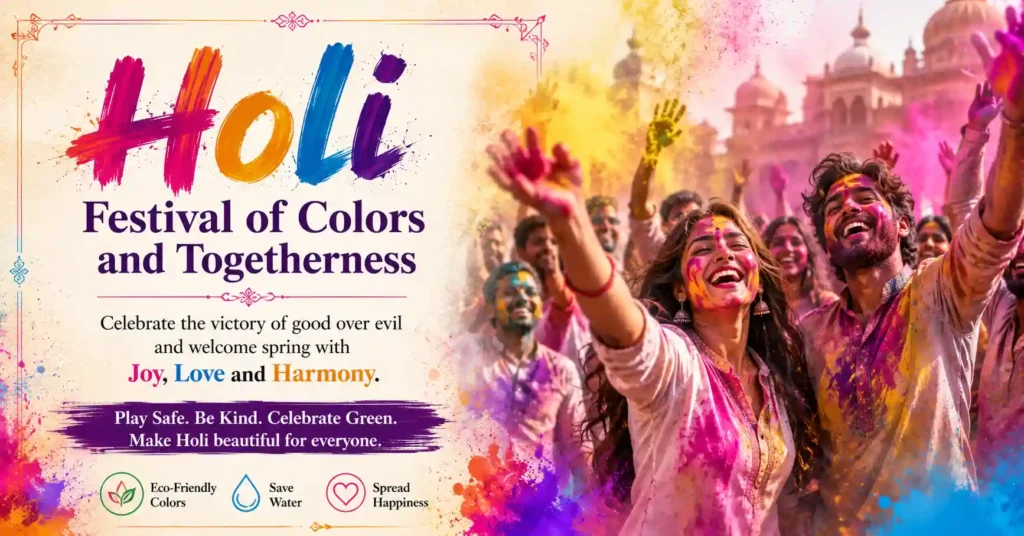
When Is the Festival Celebrated? Date, Tithi and Panchang
Holi is celebrated every year on Phalguna Purnima, the full moon day of the Hindu lunar month of Phalguna. Since the Hindu calendar follows the lunar cycle, the festival falls on different dates each year in the Gregorian calendar, usually during February or March.
The celebration takes place over two days:
| Event | Significance |
|---|---|
| Holika Dahan | The sacred bonfire observed after sunset on Phalguna Purnima, symbolizing the victory of good over evil. |
| Rangwali Holi (Dhulandi) | Celebrated the following day with colors, music, joy, and community gatherings. |
The festival date and the auspicious time for Holika Dahan are determined according to the Hindu Panchang. Factors such as Purnima Tithi, Bhadra, and local Panchang traditions may result in slight variations in observance across different regions of India.
Therefore, devotees are advised to consult their local Panchang or temple authorities for the most accurate date and muhurat.
2027 Date and Holika Dahan Muhurat
For 2027, the festival is expected to be observed as follows:
| Event | Most Regions | Braj Region (Mathura, Vrindavan & Barsana) |
|---|---|---|
| Holika Dahan | 21 March 2027 (Evening) | Follow the schedule announced by local temples and Panchang authorities. |
| Rangwali Holi | 22 March 2027 | Follow the schedule announced by local temples and Panchang authorities. |
The observance in the Braj region may differ slightly based on local Panchang calculations, temple traditions, and centuries-old devotional practices associated with Lord Krishna.
As temple calendars may vary, always verify the final date and muhurat with your local Panchang before performing Holika Dahan.
Why Does the Festival Date Change Every Year?
Unlike many festivals that follow the Gregorian calendar, Holi is observed according to the Hindu lunar calendar (Panchang). It falls on Phalguna Purnima, the full moon day of the Hindu month of Phalguna.
Since the lunar calendar does not align exactly with the Gregorian calendar, the festival is celebrated on different dates each year, usually in February or March.
The exact dates of Holika Dahan and Rangwali Holi are determined by factors such as Purnima Tithi, Bhadra, and local Panchang calculations. As a result, some regions may observe the festival on slightly different dates or follow different ritual timings.
Although the calendar date changes every year, its spiritual message remains timeless. It continues to inspire devotees with the victory of good over evil, devotion over arrogance, and the arrival of spring with joy, faith, and renewed hope.
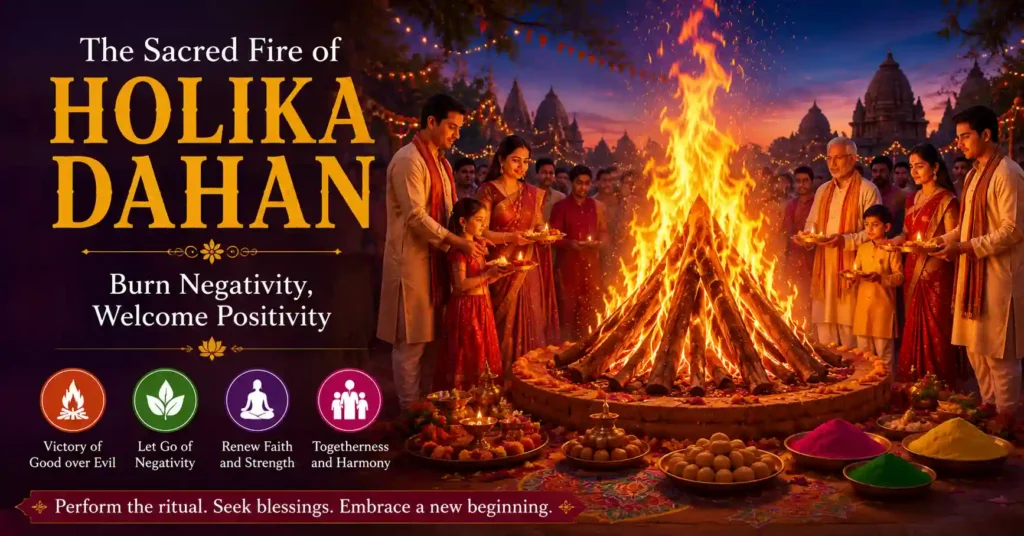
What Is Holashtak? Eight Days of Spiritual Preparation
Holashtak is the eight-day period that begins before Holika Dahan and concludes on the day of the sacred bonfire.
In many Hindu traditions, these days are considered spiritually significant and are dedicated to prayer, self-discipline, and inner reflection rather than new beginnings.
During Holashtak, many families traditionally avoid auspicious ceremonies such as:
Marriage ceremonies
Griha Pravesh (housewarming)
Mundan and other major samskaras
Starting important new ventures
Instead, devotees devote more time to spiritual practices such as mantra japa, reading sacred scriptures, satsang, charity, and daily worship.
While these observances are widely followed in North India, customs and traditions may vary across different regions and communities.
Holashtak should not be viewed as a period of fear or inauspiciousness. Instead, it is a time to calm the mind, let go of negative thoughts, and prepare for the symbolic purification represented by Holika Dahan.
Just as the sacred fire consumes Holika, these eight days encourage us to gradually let go of anger, ego, jealousy, and attachment before welcoming the joy, renewal, and vibrant colors of the festival.
Holika Dahan Muhurat and the Importance of Bhadra
The timing of Holika Dahan is one of the most important aspects of the festival. According to traditional Panchang principles, the sacred bonfire should be lit only during the proper muhurat, as it symbolizes the victory of righteousness over evil and the burning away of negativity.
Two important conditions are generally followed while determining the auspicious time:
| Factor | Traditional Guideline |
|---|---|
| Phalguna Purnima | The Purnima Tithi should prevail at the time of the ritual. |
| Bhadra | The sacred bonfire is traditionally not lit during Bhadra and is performed only after it ends. |
| Ritual Timing | The bonfire is usually lit after sunset during the prescribed muhurat. |
| Panchang | Always refer to your local Panchang or temple calendar for the exact timing. |
Why Is Bhadra Avoided?
In Hindu tradition, Bhadra is considered unsuitable for certain auspicious rituals, including Holika Dahan. If Bhadra extends into the evening on Phalguna Purnima, the ritual is generally postponed until the appropriate time after Bhadra concludes.
This is why the date or timing of the sacred bonfire may vary slightly between regions and different Panchang traditions.
For pilgrims visiting the Braj region, it is best to follow the festival schedule announced by local temples and Panchang authorities, as traditional observances in Mathura, Vrindavan, and Barsana may differ from those followed in other parts of India.
Note: The festival date and muhurat change every year according to the Hindu lunar calendar. Refer to the Festival Date and Holika Dahan Muhurat section above for the latest timings.
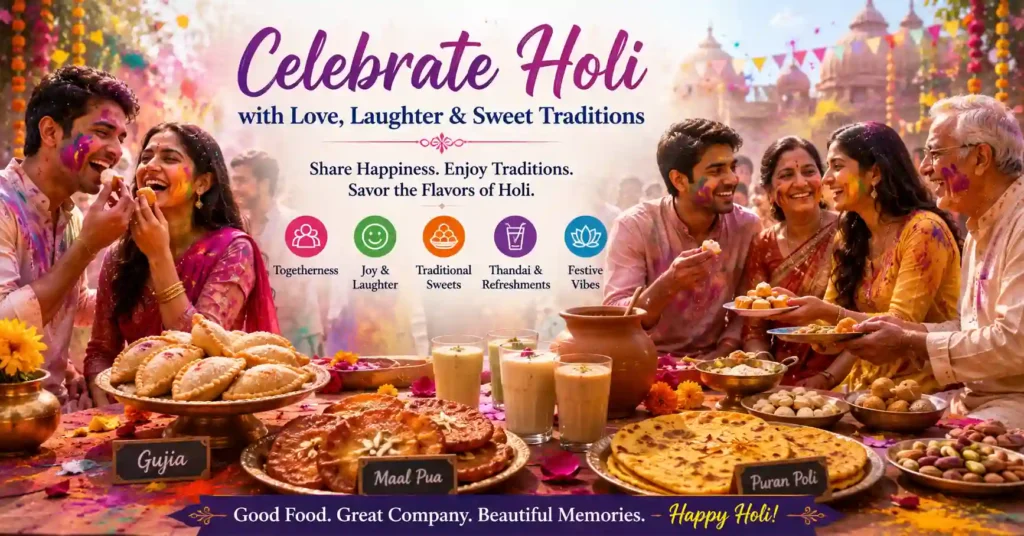
Why Is the Festival Celebrated? The Story of Prahlada and Holika
The origin of Holi is closely associated with the inspiring story of Prahlada, a devoted follower of Lord Vishnu. Narrated in the Bhagavata Purana and other traditional Hindu texts, this story symbolizes the triumph of unwavering faith over arrogance and evil.
According to the legend, the powerful asura king Hiranyakashipu wanted everyone to worship him instead of Lord Vishnu. However, his son Prahlada remained steadfast in his devotion despite repeated threats and punishments.
Unable to change Prahlada’s faith, Hiranyakashipu sought the help of his sister Holika, who was believed to possess a boon that protected her from fire. She sat with Prahlada in a blazing pyre, expecting him to perish.
Instead, by divine grace, Prahlada emerged unharmed, while Holika was consumed by the flames because her boon could not protect her when it was misused for an unrighteous purpose.
This event is commemorated through Holika Dahan, the sacred bonfire observed on the eve of the festival. It reminds devotees that pride, injustice, and evil ultimately destroy themselves, while sincere devotion, righteousness, and faith remain protected.
The story reaches its climax with the appearance of Lord Narasimha, the fourth incarnation of Lord Vishnu, who destroyed Hiranyakashipu and restored dharma.
Together, these events make the Festival of Colors much more than a joyful celebration. They remind us that faith, courage, and righteousness always triumph over arrogance and evil.
How Is the Festival Celebrated?
Holi is celebrated over two days, with each day carrying its own spiritual and cultural significance. The celebration begins with Holika Dahan, followed by Rangwali Holi, creating a beautiful balance between reflection and joyful celebration.
Holika Dahan
On the evening of Phalguna Purnima, families gather around the sacred bonfire to offer prayers and perform parikrama (circumambulation). Grains, coconuts, and other traditional offerings are placed in the fire as symbols of surrendering negativity and seeking divine blessings for the year ahead.
Rangwali Holi
The following morning is filled with colors, music, devotional singing, festive foods, and joyful gatherings with family and friends. People apply gulal to one another, exchange greetings, visit loved ones, and welcome the arrival of spring with happiness and harmony.
Traditional delicacies are an important part of the celebration and vary across different regions of India. Some of the most popular festive treats include:
Gujiya – A sweet dumpling filled with khoya and dry fruits, especially popular in North India.
Malpua – A rich, syrup-soaked pancake enjoyed in Rajasthan, Bihar, and parts of Uttar Pradesh.
Dahi Vada – Soft lentil dumplings served with yogurt and chutneys, loved across many regions.
Thandai – A refreshing milk-based drink flavored with nuts, saffron, fennel, cardamom, and aromatic spices.
Puran Poli – A sweet stuffed flatbread traditionally prepared in Maharashtra during festive occasions.
These traditional foods add warmth to the festivities and beautifully reflect the spirit of sharing, hospitality, gratitude, and togetherness.
Although customs vary across different regions of India, the spirit of the festival remains the same: celebrating the victory of good over evil, strengthening relationships, and welcoming new beginnings with joy, compassion, and unity.
Festival in Hindu Scriptures
The celebration of Holi is deeply rooted in Hindu tradition and is associated with stories and teachings found in several sacred texts.
Although customs have evolved over time, the festival’s central message of the triumph of righteousness over evil has remained unchanged.
Some of the most important scriptural references include:
| Scripture | Connection with the Festival |
|---|---|
| Bhagavata Purana | Narrates the story of Prahlada, Hiranyakashipu, and Lord Narasimha, forming the spiritual foundation of Holika Dahan. |
| Vishnu Purana | Describes the devotion of Prahlada and the destruction of Hiranyakashipu by Lord Narasimha, reinforcing the victory of dharma. |
| Narada Purana | Contains references to the observance of Holika Dahan and the spiritual merit associated with the festival in traditional practice. |
Over the centuries, temple traditions, regional customs, and devotional practices have enriched this celebration across India.
Although the ways of observing the festival may differ from one region to another, its timeless message continues to inspire devotees with the values of faith, devotion, righteousness, and spiritual renewal.
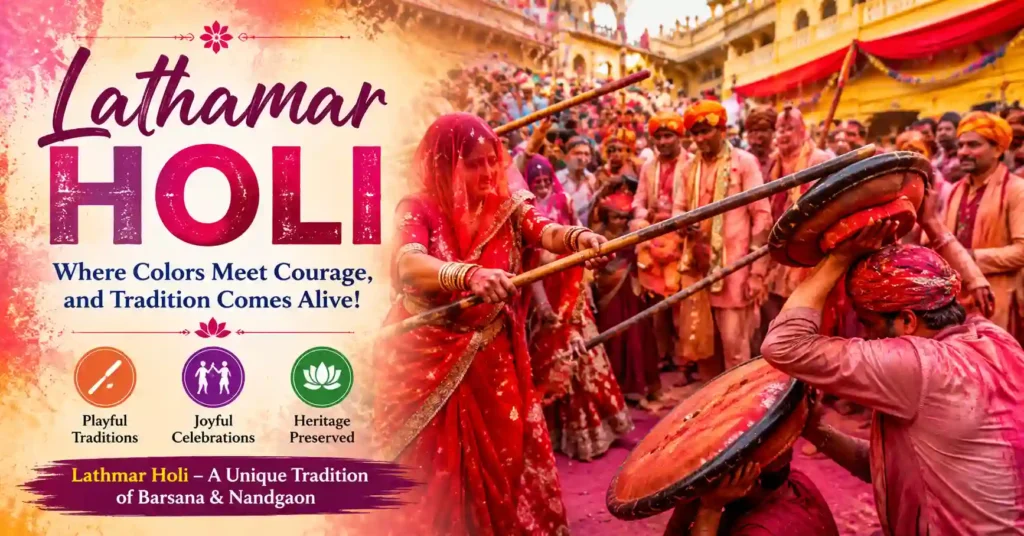
Spiritual Meaning of Holika Dahan
Holika Dahan is more than the lighting of a sacred bonfire. It is a reminder that true transformation begins within.
Just as Holika was consumed by the flames, the festival encourages us to let go of the negative qualities that distance us from peace and spiritual growth.
The sacred fire symbolizes the burning away of:
Ego and arrogance
Anger and resentment
Jealousy and hatred
Greed and attachment
Negative thoughts and harmful habits
The story of Prahlada teaches that unwavering faith, righteousness, and devotion ultimately triumph over fear and injustice. Holika Dahan invites each of us to pause and ask a simple yet profound question:
What do I need to let go of before I welcome new beginnings?
Only after this symbolic purification does Rangwali Holi arrive with its vibrant colors, reminding us to celebrate life with joy, forgiveness, compassion, and renewed relationships.
In this way, the Festival of Colors becomes much more than a joyful celebration. It becomes a timeless reminder of inner transformation, spiritual renewal, and the victory of light over darkness.
Best Time and Traditional Way to Celebrate Festival
Rangwali Holi is traditionally celebrated after sunrise on the day following Holika Dahan. The exact timing may vary according to the local Panchang, so it is always advisable to check the festival timings for your city.
To celebrate the festival in a respectful and meaningful way, many families follow these traditional guidelines:
Begin the celebrations after sunrise.
Offer prayers to the deities and seek the blessings of elders before playing with colors.
Use natural and eco-friendly colors whenever possible.
Celebrate with love, respect, and consent, ensuring everyone enjoys the occasion safely.
Avoid wasting water, harming animals, or using colors that may cause skin or eye irritation.
In the sacred Braj region, including Mathura, Vrindavan, and Barsana, the celebrations often begin in the morning and continue with temple processions, devotional singing, cultural performances, and the joyful chanting of Lord Krishna’s names.
These traditions beautifully reflect the region’s deep spiritual and cultural heritage while preserving the timeless values of devotion, community, and celebration.
Holika Dahan Rituals and Puja Traditions
Holika Dahan is one of the most sacred rituals in Sanatan Dharma, observed on the eve of the Festival of Colors. Families and communities gather around the sacred bonfire after sunset to offer prayers and seek blessings for peace, prosperity, and spiritual well-being.
Although customs vary across different regions of India, many devotees observe the following traditional practices:
Clean the place where the sacred bonfire will be lit.
Offer prayers before lighting the fire.
Perform parikrama (circumambulation) of the bonfire with devotion.
Offer grains, coconuts, cow dung cakes, or other traditional items according to local customs.
Pray for the removal of negativity and the well-being of the family.
Seek the blessings of elders and share the festive spirit with relatives, friends, and neighbors.
Many families also preserve a small portion of the sacred ash after Holika Dahan. In several traditions, it is considered auspicious and is respectfully applied to the forehead or kept at home as a symbol of divine protection and purification.
Since rituals and offerings may differ from one region to another, devotees are encouraged to follow their family traditions, local temple customs, or the guidance of knowledgeable priests.
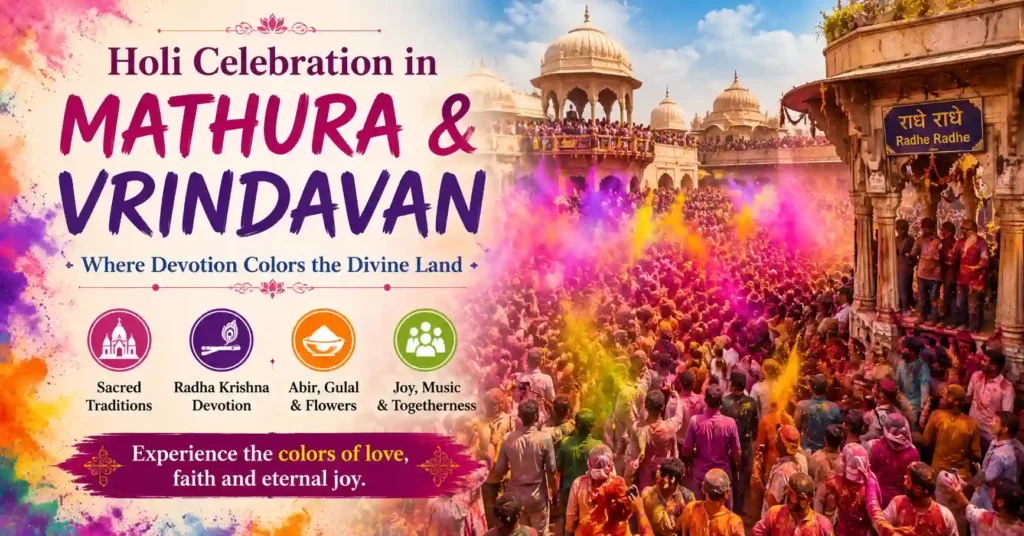
Celebrations in Mathura, Vrindavan and Barsana
The Braj region, associated with the childhood pastimes of Lord Krishna and Radha, is considered one of the most sacred places to experience Holi. Here, the celebration extends far beyond a single day.
It unfolds over several days through devotional celebrations, temple rituals, music, dance, and centuries-old traditions that attract pilgrims from across India and around the world.
Some of the most popular celebrations include:
| Place | Famous Celebration |
|---|---|
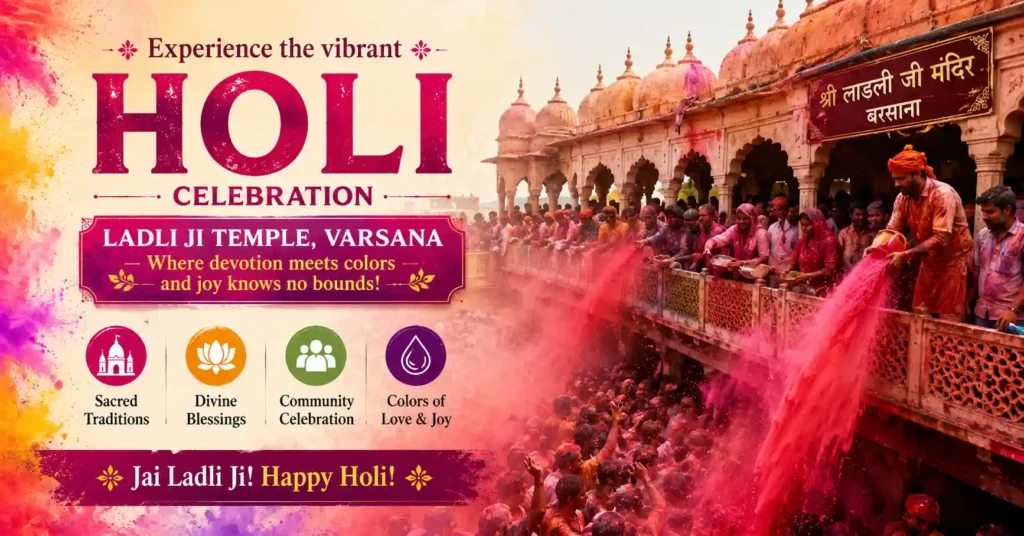
| Barsana | Lathmar Holi, where women playfully strike men with sticks as part of a centuries-old tradition inspired by the playful pastimes of Radha and Krishna. |
| Vrindavan | Phoolon Ki Holi (Flower Holi), celebrated in several temples where devotees shower one another with flower petals instead of colored powders while singing devotional bhajans. |
| Mathura | Grand temple processions, devotional singing, cultural performances, and vibrant color celebrations centered around the birthplace of Lord Krishna. |
These celebrations are deeply devotional rather than merely festive. The joyful use of colors symbolizes the divine love of Radha and Krishna while reflecting the values of equality, friendship, and togetherness.
Since temple calendars and local Panchang traditions may differ slightly from those followed in other parts of India, pilgrims planning to visit the Braj region should check the latest festival schedule announced by local temples before finalizing their travel plans.
Regional Celebrations Across India
While the spirit of Holi remains the same throughout India, each region celebrates the festival in its own unique way, reflecting local traditions, history, and devotional practices.
| Region | Unique Tradition |
|---|---|
| Braj (Uttar Pradesh) | Lathmar Holi in Barsana, Phoolon Ki Holi in Vrindavan, and grand celebrations in Mathura inspired by the divine pastimes of Lord Krishna. |
| West Bengal | Celebrated as Dol Jatra or Dol Purnima, where devotees honor Lord Krishna and Radha through devotional songs, processions, and colorful festivities. |
| Punjab | The Sikh community celebrates Hola Mohalla, a festival established by Guru Gobind Singh, featuring martial arts demonstrations, community service, and spiritual gatherings. |
| Maharashtra & Madhya Pradesh | Many communities celebrate Rang Panchami, observed a few days after the festival with joyful color celebrations and cultural events. |
| Gujarat & Rajasthan | Communities celebrate with folk music, traditional dances, festive gatherings, and the joyful exchange of colors. |
Although customs vary from one region to another, the underlying message remains unchanged: celebrating the victory of good over evil, strengthening relationships, and welcoming spring with faith, joy, and togetherness.
Dos and Don'ts for a Meaningful Celebration
The Festival of Colors is a celebration of joy, love, and togetherness. Observing it with respect for others, nature, and tradition makes the occasion even more meaningful.
Dos
Begin the day by offering prayers and seeking the blessings of elders.
Use natural and eco-friendly colors whenever possible.
Celebrate with love, kindness, and mutual respect.
Share festive sweets and meals with family, friends, and neighbors.
Conserve water and help keep your surroundings clean.
Welcome everyone with warmth while respecting their comfort and personal boundaries.
Don’ts
Do not force colors on anyone without their consent.
Avoid using chemical colors that may harm the skin, eyes, or the environment.
Do not waste excessive amounts of water.
Avoid consuming intoxicants or engaging in irresponsible behavior.
Do not disturb animals or damage public property during the celebrations.
The true spirit of the festival lies not in how brightly we color others, but in how deeply we spread happiness, compassion, and harmony. A respectful celebration reflects the timeless values of Sanatan Dharma and makes the occasion joyful for everyone.
Did You Know?
Holi is celebrated not only across India but also by Hindu communities in Nepal, Mauritius, Fiji, Trinidad and Tobago, Guyana, Suriname, South Africa, the United Kingdom, the United States, Canada, and many other countries.
In many of these places, the festival has become a vibrant cultural event that brings together people from diverse backgrounds while preserving the traditions of Sanatan Dharma.
Why This Festival Still Matters Today
Holi is much more than a festival of colors. Its timeless message remains just as relevant in today’s fast-paced world as it was centuries ago.
The festival reminds us that lasting happiness comes not only from celebration but also from letting go of the emotions that weigh us down. Just as Holika Dahan symbolizes the burning away of negativity, it encourages us to leave behind anger, ego, resentment, and old grudges.
Even today, this celebration inspires us to:
Rebuild strained relationships through forgiveness.
Replace hatred and misunderstanding with compassion.
Celebrate unity by bringing people together beyond social differences.
Begin a new chapter with hope, positivity, and gratitude.
Strengthen family and community bonds through shared celebrations.
In Sanatan Dharma, festivals are not merely annual events or cultural traditions. They are opportunities for self-reflection, personal growth, and spiritual renewal. The true celebration begins when the heart is free from negativity and open to love, kindness, and joy.
When we understand this deeper message, the colors become more than a joyful tradition. They become a symbol of inner transformation, renewed hope, and the eternal victory of light over darkness.
Conclusion
Holi is far more than a festival of colors. It is a celebration of faith, hope, forgiveness, and new beginnings. From the spiritual discipline of Holashtak to the sacred fire of Holika Dahan and the joyful colors of Rangwali Holi, every tradition carries a deeper message of inner transformation.
The story of Prahlada reminds us that unwavering devotion and righteousness ultimately triumph over arrogance and evil. It also encourages us to let go of anger, ego, and resentment so that we can welcome life with a renewed heart and a positive spirit.
Whether the festival is celebrated in the vibrant streets of Mathura and Vrindavan or in homes and communities around the world, its message remains timeless. May this sacred celebration inspire you to strengthen your faith, nurture your relationships, and fill your life with joy, compassion, and harmony.
Happy Holi! May your life be filled with divine blessings, vibrant colors, and lasting inner peace.
Suggested Reading
If you enjoyed learning about Holi, continue exploring the rich traditions, festivals, and spiritual wisdom of Sanatan Dharma through these related articles from The Sanatan Tales.
If you enjoyed learning about Holi, continue exploring the rich traditions, festivals, and spiritual wisdom of Sanatan Dharma through these related articles from The Sanatan Tales.
Hindu Festivals Explained: Meaning, Types, Calendar & Spiritual Importance
https://thesanatantales.com/hindu-festivals-explained/
Jagannath Ratha Yatra: History, Significance, Traditions & Spiritual Meaning
https://thesanatantales.com/jagannath-ratha-yatra/
Chaitra Navratri: Meaning, Dates, Rituals, Vrat & Significance
https://thesanatantales.com/chaitra-navratri/
Mahashivratri: Meaning, Date, Rituals, Vrat Rules & Puja Vidhi
https://thesanatantales.com/mahashivratri/
Gupta Navratri: Meaning, 2026 Dates, Rituals and Spiritual Significance
https://thesanatantales.com/gupta-navratri/
Holi (Wikipedia)
https://en.wikipedia.org/wiki/Holi
Sudama and Krishna Story: A Tale of True Friendship
https://thesanatantales.com/sudama-and-krishna-story-a-tale-of-true-friendship/
Ram and Shabari Story: A Lesson in Pure Devotion
https://thesanatantales.com/ram-and-shabari-story-a-lesson-in-pure-devotion/
Meera and Krishna: A Story of Pure Devotion and Love
https://thesanatantales.com/meera-and-krishna-a-story-of-pure-devotion-and-love/
For more articles on Hindu festivals, rituals, temples, deities, spiritual stories, and timeless wisdom, visit The Sanatan Tales and continue your journey into the eternal heritage of Sanatan Dharma.
FAQs
What is Holi and why is it celebrated?
It is one of the most important festivals in Sanatan Dharma, celebrated on Phalguna Purnima, the full moon day of the Hindu month of Phalguna. It commemorates the victory of devotion over arrogance through the story of Prahlada and Holika.
The festival also marks the arrival of spring and encourages people to let go of negativity, strengthen relationships, and celebrate life with joy, forgiveness, and togetherness.
Why does the date of Holi change every year?
Holi follows the Hindu lunar calendar (Panchang) rather than the Gregorian calendar. It is celebrated on Phalguna Purnima, so the festival falls on different dates each year, usually in February or March. The exact timing of Holika Dahan also depends on factors such as Purnima Tithi and Bhadra, which is why devotees should consult their local Panchang for the correct date and muhurat.
What is Holika Dahan?
Holika Dahan is the sacred bonfire lit on the evening before Rangwali Holi. It symbolizes the victory of good over evil and commemorates the story of Prahlada, whose unwavering devotion to Lord Vishnu protected him from the fire while Holika was destroyed. The ritual also represents burning away ego, anger, jealousy, and other negative qualities before welcoming the festival of colors.
What is Holashtak and why is it important?
Holashtak is the eight-day period preceding Holika Dahan. In many Hindu traditions, it is considered a time for prayer, self-discipline, and spiritual preparation. During these days, many families avoid major auspicious ceremonies such as marriages and housewarming rituals, choosing instead to focus on worship, mantra chanting, charity, and self-reflection.
Why is Holika Dahan performed after sunset?
According to traditional Panchang principles, Holika Dahan is performed after sunset on Phalguna Purnima when the prescribed muhurat is available and Bhadra is absent. Since the timing depends on the lunar calendar and local Panchang calculations, the exact muhurat may differ from one region to another.
How do different regions of India celebrate Holi?
The festiva is celebrated with unique regional traditions across India. In the Braj region, devotees enjoy Lathmar Holi, Phoolon Ki Holi, and grand temple celebrations connected with Lord Krishna.
West Bengal celebrates Dol Jatra, Punjab observes Hola Mohalla, and several parts of Maharashtra and Madhya Pradesh celebrate Rang Panchami after Holi. Despite these variations, the festival’s message of joy, devotion, and unity remains the same.
Which deity is associated with this festival?
The festival is associated with multiple divine traditions in Sanatan Dharma. Lord Vishnu, through the story of Prahlada and His Narasimha incarnation, represents the victory of righteousness over evil. In the Braj region, Holi is also closely associated with Lord Krishna and Radha, whose playful celebrations with colors inspire many of the festival’s customs.
What foods are traditionally prepared for the festival?
Festive foods are an important part of celebrations. Gujiya is the most popular Holi sweet in North India, while many families also prepare Malpua, Dahi Vada, Thandai, and Puran Poli in different regions. Sharing these traditional dishes symbolizes hospitality, gratitude, and the joy of celebrating together.
What is the festival's spiritual message?
The deeper meaning of the festival goes beyond colors and celebrations. The festival teaches that faith is stronger than fear, righteousness ultimately triumphs over evil, and true happiness comes from letting go of ego, anger, resentment, and negativity. The festival encourages inner transformation and reminds us to begin life with forgiveness, compassion, and renewed hope.
Can Holika Dahan be performed at home?
Yes. Many families perform a simple Holika Dahan within their community or in designated public spaces, following local traditions and Panchang timings. If a community bonfire is not available, devotees may participate in temple celebrations or observe the festival through prayer and worship. Local customs should always be respected, and safety guidelines should be followed.
Why is it called the Festival of Colors?
Holi is known as the Festival of Colors because the day after Holika Dahan, people celebrate by joyfully applying colored powders known as gulal to one another. Beyond the festive atmosphere, the colors symbolize happiness, friendship, equality, renewal, and the vibrant arrival of spring.
What is the difference between Holika Dahan and Rangwali Holi?
Although they are part of the same festival, Holika Dahan and Rangwali Holi have different meanings. Holika Dahan is the sacred bonfire observed on the evening of Phalguna Purnima, symbolizing the destruction of evil and inner purification.
Rangwali Holi, celebrated the following day, is the joyful festival of colors that brings people together through music, festivities, and the spirit of love, forgiveness, and community.
Glossary of Important Holi Terms
The following glossary explains some of the most important words and concepts related to Holi. Understanding these terms will help you better appreciate the festival’s rituals, traditions, spiritual symbolism, and cultural significance.
| Term | Meaning |
|---|---|
| Holi | One of the most important festivals in Sanatan Dharma, celebrated on Phalguna Purnima to mark the victory of good over evil, the arrival of spring, and the spirit of joy and renewal. |
| Holika Dahan | The sacred bonfire lit on the eve of Holi, symbolizing the burning away of evil, ego, and negativity while commemorating the story of Prahlada and Holika. |
| Rangwali Holi | The second day of Holi, celebrated with colors, music, festive foods, and joyful gatherings with family and friends. It is also known as Dhulandi or Dhulendi in many regions. |
| Phalguna | The twelfth month of the Hindu lunar calendar, usually falling during February and March, in which Holi is celebrated. |
| Purnima | The full moon day (Full Moon Tithi) in the Hindu lunar calendar. Holi is observed on Phalguna Purnima. |
| Panchang | The traditional Hindu calendar used to determine festival dates, auspicious timings (muhurat), tithis, nakshatras, and other important religious observances. |
| Muhurat | An auspicious time selected according to the Panchang for performing religious ceremonies and rituals, including Holika Dahan. |
| Bhadra | A period considered unsuitable for certain auspicious rituals. According to tradition, Holika Dahan is generally performed after the Bhadra period ends. |
| Holashtak | The eight-day period before Holika Dahan, traditionally observed as a time for prayer, self-discipline, and spiritual preparation. |
| Prahlada | The devoted son of Hiranyakashipu whose unwavering faith in Lord Vishnu became the central inspiration behind the celebration of Holi. |
| Holika | The sister of Hiranyakashipu who attempted to burn Prahlada in a fire but was herself consumed, symbolizing the defeat of evil and arrogance. |
| Hiranyakashipu | The powerful asura king who opposed Lord Vishnu and tried to force everyone to worship him instead of the Divine. |
| Lord Narasimha | The fourth incarnation of Lord Vishnu, who appeared to protect Prahlada and destroy Hiranyakashipu, reaffirming the triumph of dharma. |
| Gulal | Fine, colored powder traditionally used during Rangwali Holi as a symbol of joy, friendship, and celebration. |
| Parikrama | The sacred act of walking clockwise around a deity, temple, or the Holika Dahan fire as a mark of devotion and reverence. |
| Lathmar Holi | A famous Holi tradition of Barsana where women playfully strike men with sticks, commemorating the playful pastimes of Radha and Lord Krishna. |
| Phoolon Ki Holi | A unique Holi celebration, especially in Vrindavan, where devotees shower one another with flower petals instead of colored powders. |
| Dol Jatra | The traditional celebration of Holi in West Bengal, centered around Lord Krishna and Radha with devotional processions, music, and colors. |
| Hola Mohalla | A Sikh festival established by Guru Gobind Singh, celebrated around the time of Holi with martial arts demonstrations, spiritual gatherings, and community service. |
| Rang Panchami | A regional festival celebrated five days after Holi in parts of Maharashtra, Madhya Pradesh, and other regions, marked by joyful color celebrations. |
About the Author
Yateendra Chaturvedi is a spiritual writer, researcher, devotee, and the founder of The Sanatan Tales. With over 35 years of professional experience and a lifelong interest in Sanatan Dharma, he writes about Hindu deities, temples, scriptures, festivals, Mahavidyas, sacred stories, rituals, and living traditions that continue to guide and inspire devotees across India.
Drawing from traditional scriptures, regional beliefs, temple traditions, devotional literature, and historical sources, he aims to present authentic, well-researched, and easy-to-understand content for modern readers. His work focuses on preserving spiritual wisdom, explaining sacred traditions, and helping seekers develop a deeper understanding of India’s rich spiritual heritage.
Through The Sanatan Tales, Yateendra strives to make the timeless teachings of Sanatan Dharma simple, meaningful, and relevant for today’s generation while maintaining respect for traditional sources, regional practices, and diverse spiritual perspectives.
Learn More About Yateendra Chaturvedi →
https://thesanatantales.com/about-the-author/
References and Sources
This article is based on widely accepted beliefs and traditions associated with the celebration of Holi in Sanatan Dharma. The content draws upon teachings and narratives found in the Bhagavata Purana, Vishnu Purana, Narada Purana, traditional Hindu Panchang principles, temple traditions, regional customs, and insights from respected religious and spiritual study sources. It also reflects devotional practices preserved through the guru-disciple tradition and the living cultural heritage of Hindu communities across India.
Note: Holi is celebrated in diverse ways across different regions, sampradayas (traditions), and communities within Sanatan Dharma. Rituals, Panchang calculations, Holika Dahan timings, and local customs may vary. The purpose of this article is not to present any single tradition as the absolute authority, but to explain the festival’s widely accepted religious, cultural, and spiritual significance in a simple, respectful, and accessible manner.
Explore More Fascinating Topics from Sanatan Dharma