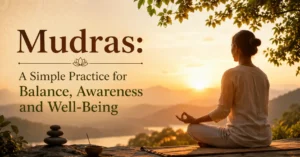
In today’s fast-paced world, many people are looking for simple ways to feel more balanced, focused, and connected with themselves. While wellness trends often come and go, some practices have been followed for centuries and continue to remain relevant in modern life. One such practice is Mudras.
Mudras are symbolic hand gestures used in yoga, meditation, and various spiritual traditions. Often referred to as yoga hand gestures, they are traditionally believed to support mindfulness, inner balance, and overall well-being. Although simple in appearance, these gestures have long been valued as a gentle way to cultivate awareness and bring greater intention to daily life.
Many people are introduced to Mudras through meditation or yoga, but they do not require advanced knowledge, special equipment, or long hours of practice. Even a few mindful minutes spent practicing these hand gestures can become a meaningful part of a daily wellness or spiritual routine.
In this article, you will learn what Mudras are, their traditional significance, why people practice them, the commonly associated mudra benefits, and how beginners can start exploring these simple yet powerful practices. You will also discover several popular hand mudras that are widely used for meditation, mindfulness, and personal well-being.
Whether you are curious about mudras for beginners, interested in yogic traditions, or simply looking for a practical way to bring more awareness into everyday life, this guide offers a simple introduction to the world of Mudras.
Mudras at a Glance
| Aspect | Details |
|---|---|
| Meaning | Symbolic hand gestures used in yoga, meditation, and spiritual practices |
| Sanskrit Term | Mudra (मुद्रा) |
| Common Purpose | To support mindfulness, awareness, and inner balance |
| Traditionally Used In | Yoga, meditation, pranayama, and spiritual disciplines |
| Based On | Yogic traditions and the concept of the Pancha Mahabhutas (Five Elements) |
| Suitable For | Beginners as well as experienced practitioners |
| Practice Duration | Often practiced for a few minutes daily |
| Equipment Required | None |
| Popular Examples | Gyan Mudra, Prana Mudra, Apana Mudra, Surya Mudra, Dhyana Mudra, Shuni Mudra |
| Commonly Associated Benefits | Focus, calmness, self-awareness, meditation support, and overall well-being |
| Biggest Misconception | That mudras are complicated or only meant for advanced yogis |
| One-Line Definition | Mudras are simple hand gestures that help bring greater awareness and intention to daily life. |
Table of Contents
ToggleWhat Are Mudras?
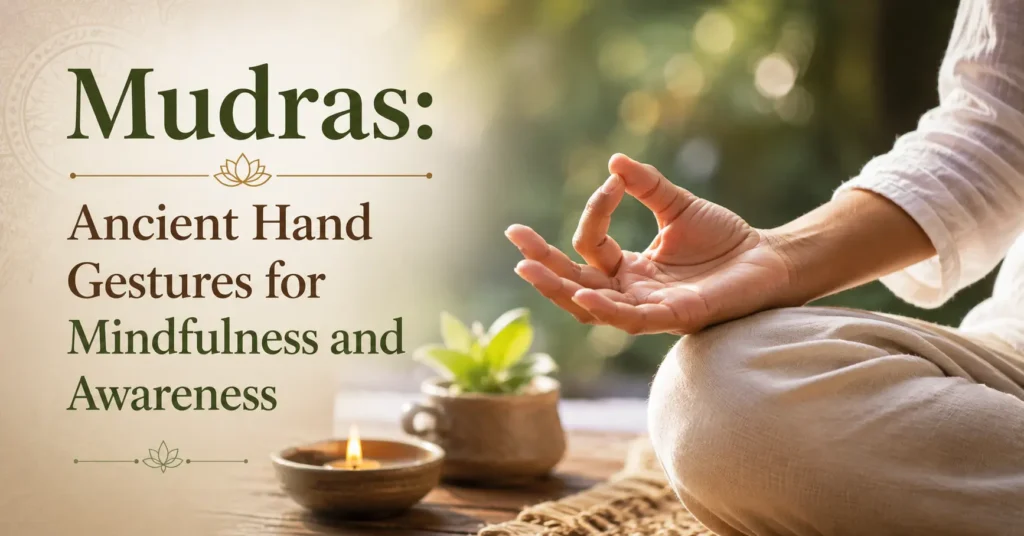
Mudras are symbolic hand gestures that have been practiced for centuries in yoga, meditation, and spiritual traditions. The Sanskrit word Mudra is often translated as a “seal,” “gesture,” or “symbolic expression.”
These hand positions are traditionally used to support mindfulness, concentration, and inner awareness. While they appear simple, each gesture carries a specific meaning and is associated with particular qualities or intentions.
Many people encounter yoga mudras during meditation or breathing practices. However, they are not limited to formal spiritual settings. These gestures can also be practiced during quiet moments of reflection, relaxation, or personal contemplation.
In traditional yogic teachings, the hands are viewed as powerful tools for directing attention and cultivating awareness. By placing the fingers in specific positions, practitioners create a physical reminder to stay present and focused.
Today, hand mudras continue to be practiced by people from different backgrounds. Some use them as part of meditation, while others incorporate them into their daily wellness routine to encourage mindfulness and a greater sense of balance.
The true value of Mudras lies not in the gesture alone, but in the awareness, intention, and consistency that accompany the practice.
The Traditional Significance of Mudras
Mudras have been an important part of yoga, meditation, and spiritual disciplines for centuries. They are mentioned in various yogic and tantric traditions, where they are used alongside breath awareness, concentration, and meditation practices.
In traditional teachings, Mudras are viewed as more than simple hand positions. They are often regarded as symbolic gestures that help cultivate awareness, focus, and a deeper connection between the mind and body.
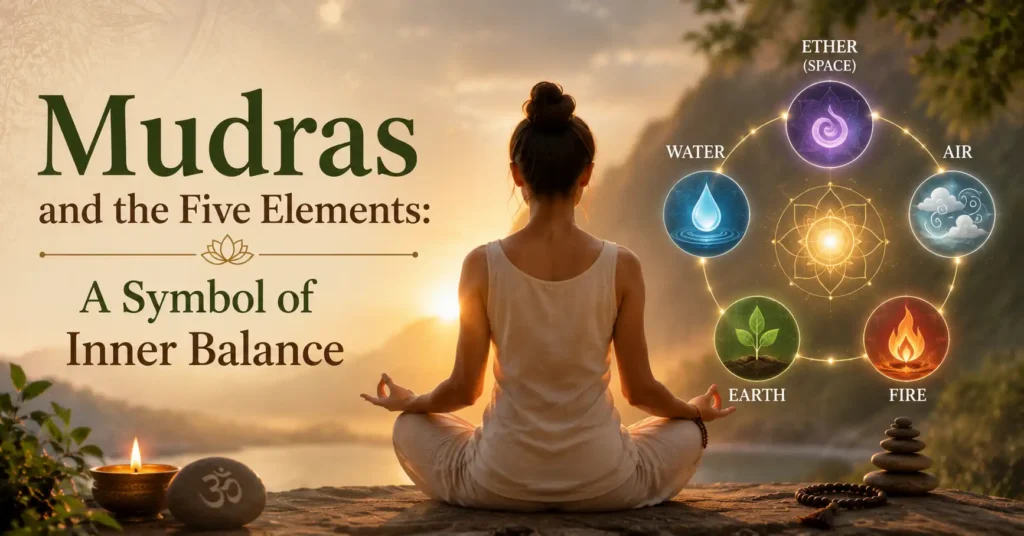
A common concept associated with hand mudras is the idea of the Pancha Mahabhutas, or the Five Elements. According to yogic philosophy, all of creation, including the human body, is composed of five fundamental elements: Earth, Water, Fire, Air, and Space.
Each finger is traditionally associated with one of these elements:
| Finger | Associated Element |
|---|---|
| Thumb | Fire (Agni) |
| Index Finger | Air (Vayu) |
| Middle Finger | Space (Akasha) |
| Ring Finger | Earth (Prithvi) |
| Little Finger | Water (Jala) |
Many yoga mudras involve bringing specific fingers together in different combinations. Traditional teachings suggest that these gestures may help encourage harmony among the elemental qualities represented by the fingers.
Whether viewed symbolically or spiritually, Mudras serve as a reminder to slow down, become more present, and bring greater awareness to the moment.
For many practitioners, the value of Mudras lies not only in the hand gesture itself but also in the mindfulness, intention, and consistency that accompany the practice.
Did You Know?
The word Mudra comes from Sanskrit and is often translated as a “gesture,” “seal,” or “symbolic expression.” For centuries, Mudras have been practiced in yoga, meditation, spiritual traditions, classical Indian dance, and even temple iconography.
Many ancient depictions of deities, sages, and enlightened beings show specific hand gestures that symbolize qualities such as wisdom, compassion, protection, blessing, and inner peace.
Why Do People Practice Mudras?
People practice Mudras for many different reasons. Some use them during meditation, while others incorporate these simple hand gestures into their daily wellness or spiritual routine.
One reason for their popularity is their simplicity. Unlike many wellness practices, Mudras do not require special equipment, extensive training, or a dedicated space. They can be practiced almost anywhere while sitting quietly and breathing naturally.
Many practitioners use hand mudras to support mindfulness and concentration. Holding a specific gesture can serve as a gentle reminder to stay present and bring attention back to the current moment.
Mudras are also commonly practiced alongside meditation and breathing exercises. The combination of posture, breath, and awareness can help create a sense of stillness and mental clarity.
Some people are drawn to yoga mudras because they encourage a stronger mind-body connection. Taking a few moments to sit quietly with intention can help create a welcome pause from the distractions of daily life.
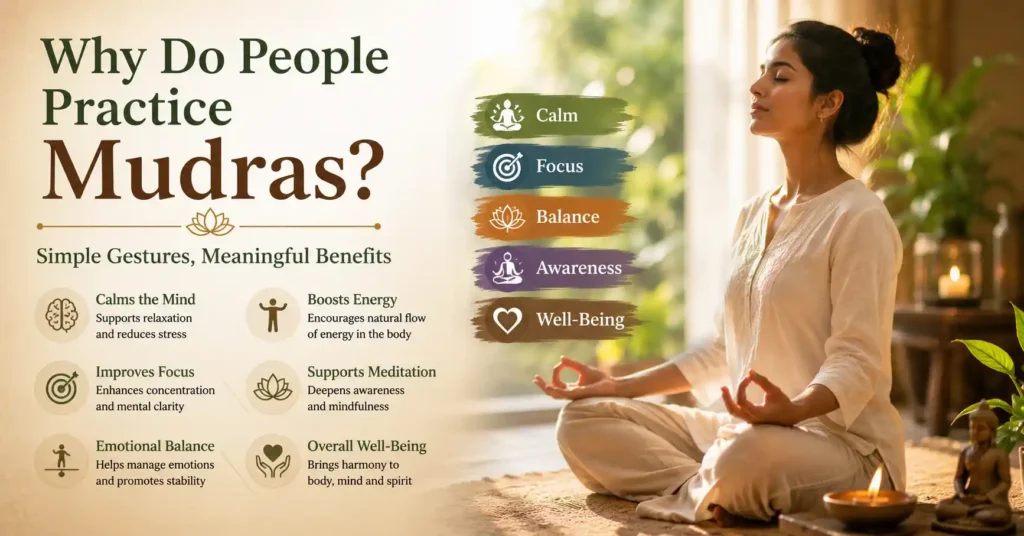
Traditional teachings also associate different Mudras with qualities such as calmness, vitality, focus, patience, and inner balance. While individual experiences vary, many practitioners find that regular practice supports a greater sense of awareness and well-being.
Commonly Associated Benefits of Mudras
| Traditionally Associated Benefit | How It May Support Daily Life |
|---|---|
| Mindfulness | Encourages present-moment awareness |
| Focus and Concentration | Helps reduce mental distractions |
| Meditation Support | Assists in creating a calm and centered state |
| Self-Awareness | Encourages observation of thoughts and emotions |
| Inner Balance | Promotes a sense of steadiness and harmony |
| Relaxation | Supports moments of calm and reflection |
| Well-Being | Can become part of a balanced lifestyle routine |
It is important to remember that Mudras are not considered a quick solution to life’s challenges. Their value is generally understood to come from regular practice, patience, and mindful attention over time.
Can Mudras Be Practiced by Anyone?
Mudras are practiced by people from many different backgrounds and for different reasons. Some approach them as part of yoga or meditation, while others see them as a simple mindfulness practice that encourages focus and self-awareness.
You do not need to follow a particular spiritual path to explore Mudras. Many people practice them simply as a way to create a few quiet moments during the day and become more present.
At the same time, Mudras have deep roots in yogic and spiritual traditions. Understanding their cultural and philosophical background can help provide greater appreciation for the practice, even if your primary interest is personal well-being.
Whether approached as a spiritual discipline, a meditation aid, or a mindfulness tool, the most important element remains the same: practicing with awareness, patience, and consistency.
6 Popular Mudras for Everyday Practice
There are many Mudras described in yogic and spiritual traditions, each associated with different qualities and intentions. While some are practiced during meditation, others are commonly used as part of a daily wellness or mindfulness routine.
For beginners, it is not necessary to learn dozens of hand gestures. Starting with a few simple and widely practiced Mudras can provide a practical introduction to this ancient tradition. The following examples are among the most popular hand mudras and are often associated with awareness, balance, focus, and overall well-being.
As with any spiritual or wellness practice, consistency is more important than perfection. Rather than trying every Mudra at once, choose one or two that resonate with your current needs and practice them regularly with patience and mindfulness.
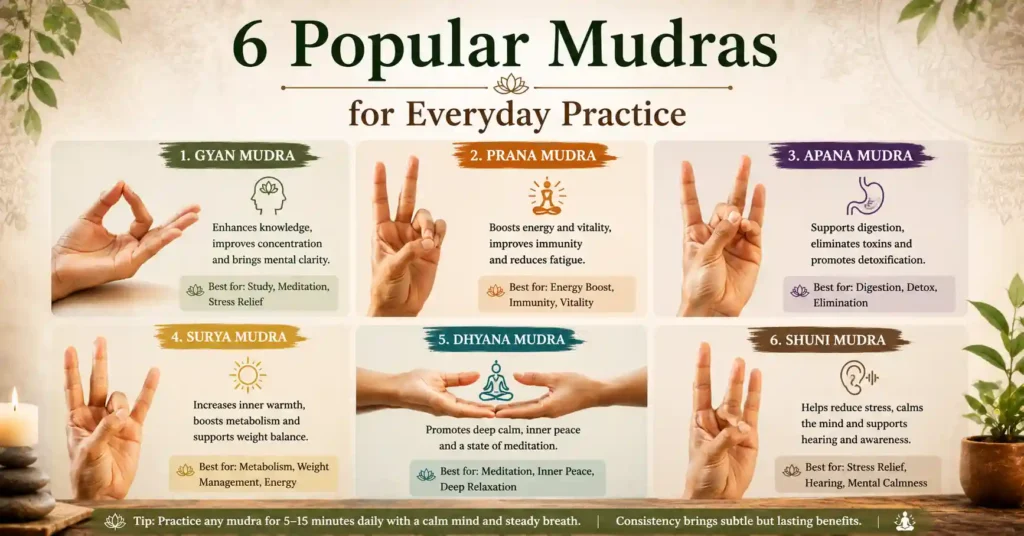
1. Gyan Mudra
Gyan Mudra is one of the most well-known and widely practiced Mudras in yogic traditions. It is often associated with wisdom, learning, awareness, and mental clarity.
To practice this gesture, gently touch the tip of the index finger to the tip of the thumb while keeping the remaining fingers comfortably extended. The hands can rest on the knees or lap while sitting in a relaxed position.
Many people practice Gyan Mudra during meditation, prayer, or quiet reflection. It is traditionally believed to support concentration and help create a more focused state of mind.
Because of its simplicity, this mudra is often recommended as a starting point for mudras for beginners. Even a few minutes of mindful practice can encourage a greater sense of presence and awareness.
2. Prana Mudra
Prana Mudra is traditionally associated with vitality, freshness, and the flow of life energy. The word Prana refers to the vital life force that is often discussed in yoga and spiritual traditions.
To form this mudra, gently touch the tips of the thumb, ring finger, and little finger together while keeping the index and middle fingers extended.
Many practitioners use Prana Mudra when they wish to feel more energized, motivated, or mentally refreshed. It is commonly practiced alongside mindful breathing or meditation.
Among the various hand mudras, this one is often associated with encouraging a sense of balance and vitality. While experiences differ from person to person, many practitioners find it to be a calming and uplifting addition to their daily routine.
3. Apana Mudra
Apana Mudra is traditionally linked with grounding, balance, and the body’s natural process of release and cleansing. It is one of the commonly practiced yoga mudras for those seeking a sense of stability and calmness.
To practice this gesture, bring the tips of the thumb, middle finger, and ring finger together while keeping the index finger and little finger extended.
Many practitioners use Apana Mudra during quiet moments of reflection, breathing exercises, or meditation. Traditional teachings associate it with supporting balance and helping cultivate a feeling of steadiness.
Like many Mudras, its value lies not only in the hand position itself but also in the mindful awareness developed while practicing it regularly.
4. Surya Mudra
Surya Mudra is associated with the element of fire and is traditionally connected with warmth, activity, and motivation. The Sanskrit word Surya means “sun.”
To form this mudra, gently bend the ring finger toward the base of the thumb and lightly press it with the thumb while keeping the remaining fingers extended.
Many people practice Surya Mudra during the morning as part of a meditation or mindfulness routine. It is often viewed as a gesture that symbolizes energy, enthusiasm, and purposeful action.
Within traditional teachings, this mudra is associated with cultivating an active and positive mindset. As with all Mudras, consistency and mindful attention are considered more important than duration.
5. Dhyana Mudra
Dhyana Mudra is closely associated with meditation and inner stillness. It is one of the most recognizable gestures seen in images of sages, yogis, and meditating practitioners.
To practice this mudra, place the hands in the lap with one hand resting gently on top of the other and the thumbs lightly touching.
Many practitioners use Dhyana Mudra during meditation sessions because it encourages a calm and centered posture. The gesture is traditionally linked with contemplation, awareness, and inner peace.
For those exploring Mudras as part of a mindfulness practice, this gesture offers a simple way to create a quiet and focused environment for reflection.
6. Shuni Mudra
Shuni Mudra is traditionally associated with patience, discipline, and self-awareness. It is often practiced by those seeking a greater sense of balance and emotional steadiness.
To form this mudra, gently touch the tip of the middle finger to the tip of the thumb while keeping the other fingers comfortably extended.
Many people incorporate Shuni Mudra into meditation, breathing exercises, or moments of quiet contemplation. Traditional teachings suggest that it can serve as a reminder to slow down and approach life with patience and mindfulness.
Among the various mudra benefits discussed in yogic traditions, the qualities of discipline and inner balance are commonly associated with this simple yet meaningful hand gesture.
Choosing Your First Mudra
If you are new to this practice, there is no need to learn every hand gesture at once. Start with one that feels most relevant to your current intention.
| If You Want To… | You May Explore |
|---|---|
| Improve focus and concentration | Gyan Mudra |
| Support meditation practice | Dhyana Mudra |
| Feel more energized | Prana Mudra |
| Cultivate patience and discipline | Shuni Mudra |
| Encourage a sense of grounding | Apana Mudra |
| Begin a mindful morning routine | Surya Mudra |
The best choice is often the one you can practice consistently and comfortably.
How to Start Practicing Mudras
One of the reasons Mudras have remained popular for centuries is their simplicity. Unlike many wellness or spiritual practices, they do not require special equipment, extensive training, or a dedicated space. All that is needed is a few quiet minutes, a comfortable posture, and a willingness to practice with awareness.
If you are new to Mudras, begin with a single gesture that feels meaningful or aligns with your current intention. Rather than focusing on perfection, approach the practice with patience and curiosity. Over time, regular practice can become a natural part of your meditation, mindfulness, or daily wellness routine.
The following guidelines can help beginners start practicing Mudras comfortably and consistently.
Best Time and Place to Practice Mudras
Mudras can be practiced at any time of the day, but many people prefer the early morning when the mind is naturally quieter and distractions are fewer. A consistent time often helps transform the practice into a lasting habit.
Choose a calm and comfortable place where you can sit without interruptions for a few minutes. This could be a meditation corner, a home mandir, a quiet room, a garden, or any peaceful space where you feel relaxed.
While a dedicated environment can be helpful, it is not essential. The true purpose of Mudras is to cultivate awareness, and this can be done wherever you are able to sit comfortably and focus your attention.
1. Sit in a Comfortable Position
You do not need to master advanced yoga postures to practice Mudras. The most important requirement is a posture that allows you to remain relaxed and alert.
You may sit cross-legged on the floor, on a meditation cushion, or comfortably on a chair with your feet resting flat on the ground. Keep the spine naturally upright without creating tension in the body.
A stable and comfortable posture allows you to focus on the practice rather than physical discomfort.
2. Breathe Naturally and Stay Relaxed
Mudras are often practiced alongside gentle, natural breathing. There is no need to force the breath or follow complicated techniques unless you have learned them from a qualified teacher.
As you hold the gesture, simply observe your breathing. Allow each inhalation and exhalation to flow comfortably and naturally.
This combination of breath, awareness, and hand gestures can help create a more mindful and focused experience.
3. Start Small and Build Consistency
Beginners often assume they need to practice for long periods to experience benefits. In reality, consistency is generally more important than duration.
Starting with five to ten minutes a day is often enough to establish a routine. As the practice becomes familiar, you can gradually extend the duration if you wish.
A short practice followed regularly is usually more valuable than occasional long sessions.
4. Practice with Awareness and Intention
Mudras are more than physical hand positions. Their value comes from the attention and intention that accompany them.
As you practice, try to remain present and aware of your breath, thoughts, and surroundings. Rather than focusing on immediate results, approach the practice as an opportunity to slow down and reconnect with yourself.
Over time, this simple habit can become a meaningful part of a balanced and mindful lifestyle.
How Are Mudras Different from Yoga Postures?
Many beginners assume that hand gestures and yoga postures are the same thing. While both are part of yogic traditions, they serve different purposes.
Yoga postures primarily involve the movement and positioning of the body. They are often practiced to develop flexibility, stability, strength, and body awareness.
Hand gestures, on the other hand, focus on the placement of the fingers and hands. They are commonly used during meditation, breathing exercises, prayer, and quiet reflection.
The two practices are often combined, but they can also be practiced independently. A person may use a symbolic hand gesture while sitting in meditation without performing any physical yoga postures.
Understanding this distinction helps beginners approach these practices with greater clarity and realistic expectations.
Common Misconceptions About Mudras
Despite their growing popularity, there are many misconceptions about Mudras. Understanding what these hand gestures can and cannot do helps create realistic expectations and a more meaningful practice.
1. Mudras Are Not Magic Solutions
Some people expect immediate or dramatic results after practicing a Mudra for a few days. However, traditional teachings generally emphasize patience, consistency, and self-awareness rather than quick outcomes.
Like meditation or mindfulness, Mudras are best viewed as a gradual practice that unfolds over time through regular effort.
2. You Do Not Need to Be a Yogi
A common misconception is that Mudras are only for advanced yoga practitioners or spiritual seekers. In reality, these simple hand gestures can be practiced by people of different ages, backgrounds, and experience levels.
Many mudras for beginners are easy to learn and can be incorporated into everyday life without prior knowledge of yoga or meditation.
3. More Time Does Not Always Mean Better Results
Some people believe they must practice for long periods to benefit from Mudras. While longer sessions may suit some practitioners, consistency is often more important than duration.
Even a few minutes of mindful practice each day can help establish a meaningful routine.
4. Mudras Are Not a Substitute for Medical Care
Mudras are traditionally associated with well-being, mindfulness, and inner balance. However, they should not be viewed as a replacement for professional medical advice, diagnosis, or treatment.
Individuals with health concerns should continue to seek guidance from qualified healthcare professionals when needed.
5. Every Person’s Experience Is Different
People often experience spiritual and wellness practices in different ways. Some may notice a greater sense of calm or focus, while others may simply appreciate the opportunity to pause and reflect.
Rather than comparing experiences, it is more helpful to approach Mudras with openness, patience, and realistic expectations.
By understanding these common misconceptions, practitioners can focus on what truly matters: cultivating awareness, mindfulness, and consistency in daily life.
Mudras Are About Consistency, Not Perfection
Many people begin a new practice with enthusiasm but become discouraged when they miss a day or struggle to maintain a routine. This is especially common when expectations are set too high from the beginning.
The true value of Mudras does not come from practicing perfectly. It comes from showing up regularly, even if only for a few minutes each day. Small and consistent efforts often create a greater impact than occasional bursts of motivation.
Some days you may have time for a longer meditation session. On other days, you may only be able to sit quietly and practice a single hand gesture for a few minutes. Both experiences can be meaningful when approached with awareness and sincerity.
Rather than focusing on immediate results, view Mudras as a gradual practice that supports mindfulness, self-awareness, and inner balance over time. The goal is not to master every gesture or follow a rigid routine. The goal is to cultivate a habit that feels natural, sustainable, and enriching.
Like many aspects of personal growth, progress often happens slowly and quietly. With patience and consistency, these simple hand gestures can become a valuable part of a balanced and mindful lifestyle.
Conclusion
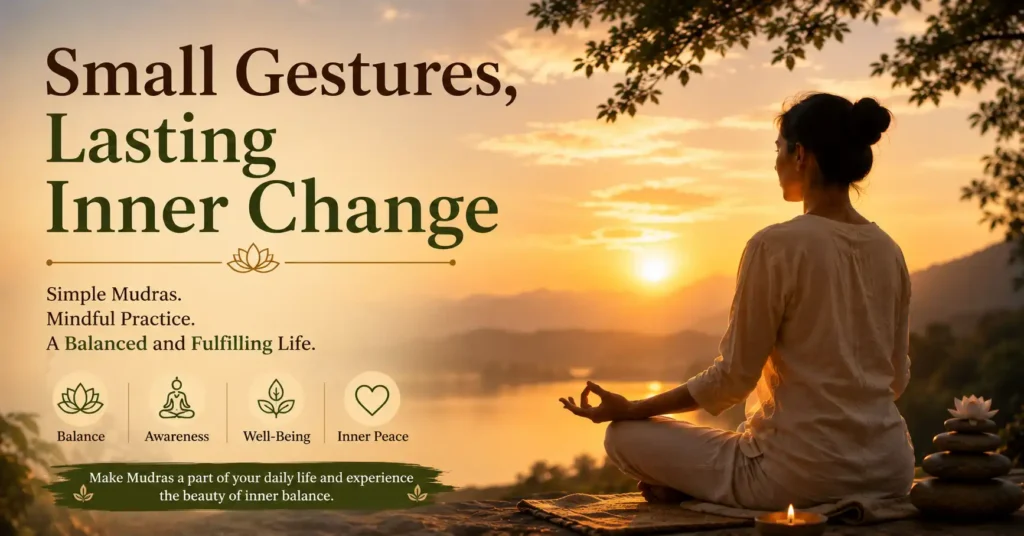
Mudras are simple yet meaningful hand gestures that have been practiced for centuries in yoga, meditation, and spiritual traditions. While they may appear uncomplicated, they are traditionally valued as tools for cultivating mindfulness, awareness, and inner balance.
In this article, we explored the meaning and significance of Mudras, their connection to yogic traditions, and the reasons many people continue to practice them today. We also looked at six popular hand gestures: Gyan Mudra, Prana Mudra, Apana Mudra, Surya Mudra, Dhyana Mudra, and Shuni Mudra, each traditionally associated with different qualities and intentions.
One of the greatest strengths of Mudras is their accessibility. They do not require special equipment, advanced training, or a significant time commitment. With a few quiet minutes and a mindful approach, these simple practices can become part of a balanced and intentional lifestyle.
Whether you are exploring mudras for beginners, looking to support your meditation practice, or seeking a simple way to bring greater awareness into daily life, the key is to start small and remain consistent.
Ultimately, the value of Mudras lies not in achieving perfection, but in creating regular moments of presence, reflection, and self-awareness. Practiced with patience and sincerity, these ancient hand gestures can become a gentle companion on the journey toward greater balance, well-being, and inner peace.
Key Takeaways
- Mudras are symbolic hand gestures traditionally used in yoga, meditation, and spiritual practices.
- These simple hand positions are often practiced to cultivate mindfulness, awareness, and inner balance.
- Mudras do not require special equipment, advanced training, or long practice sessions, making them accessible to beginners.
- Traditional yogic teachings associate Mudras with the Pancha Mahabhutas (Five Elements) and the mind-body connection.
- Popular hand gestures such as Gyan Mudra, Prana Mudra, Apana Mudra, Surya Mudra, Dhyana Mudra, and Shuni Mudra are commonly practiced for different purposes.
- Many people incorporate Mudras into meditation, breathing exercises, prayer, or daily wellness routines.
- Consistency is generally considered more important than duration. Even a few mindful minutes each day can become a meaningful practice.
- Mudras are not intended to replace medical care but can complement a balanced lifestyle focused on awareness and well-being.
- The true value of Mudras lies not in perfect technique but in practicing with patience, intention, and regularity.
- Over time, these simple hand gestures can become a gentle tool for supporting focus, self-awareness, and a more mindful way of living.
Suggested Reading
If you enjoyed learning about daily mudras and how simple hand gestures can support calmness, energy, focus, and inner balance, you may also enjoy these reflections from the Divine Life category. Together, these articles explore mindfulness, sattvik living, spiritual awareness, and practical ways to bring peace into everyday life.
Living in the Present Moment for Inner Peace
https://thesanatantales.com/living-in-the-present-moment/
Daily Sattvik Routine for a Peaceful 9-to-5 Life
https://thesanatantales.com/daily-sattvik-routine-for-working-professionals/
The Power of Letting Go in Sanatan Dharma
https://thesanatantales.com/the-power-of-letting-go-in-sanatan-dharma/
What to Do When You Feel Spiritually Lost
https://thesanatantales.com/what-to-do-when-spiritually-lost/
Inner Peace: How to Stay Calm in Every Situation
https://thesanatantales.com/morning-chanting-practice-for-a-positive-day/
Loneliness vs Solitude: What Sanatan Dharma Teaches Us
https://thesanatantales.com/loneliness-vs-solitude-sanatan-dharma/
Social Media Comparison: Why It Hurts More Today and How to Stop
https://thesanatantales.com/social-media-comparison/
Why Spiritual Awakening Feels Lonely and Quiet Inside
https://thesanatantales.com/spiritual-awakening-and-loneliness/
Maya and Bhakti: Why Devotion Frees the Mind from Illusion
https://thesanatantales.com/maya-and-bhakti
Mudra (Wikipedia)
https://en.wikipedia.org/wiki/Mudra
These articles complement the practice of daily mudras by exploring the deeper foundations of mindful living, emotional balance, spiritual growth, and inner peace in a simple and practical way.
FAQs
What are Mudras?
Mudras are symbolic hand gestures that have been practiced for centuries in yoga, meditation, and spiritual traditions. The Sanskrit word Mudra is often translated as a gesture, seal, or symbolic expression.
These hand positions are traditionally used to support mindfulness, concentration, and self-awareness. While simple in appearance, they are often practiced with intention and attention as part of a broader wellness or spiritual routine.
Many people incorporate Mudras into meditation, breathing exercises, prayer, or quiet moments of reflection.
Can beginners practice Mudras?
Yes. Mudras for beginners are generally easy to learn and do not require any prior experience with yoga or meditation.
Most hand gestures involve gently touching specific fingers together while maintaining a comfortable posture. They can be practiced at home, during meditation, or even while taking a few quiet moments during the day.
The most important aspect is consistency rather than perfection. Starting with one simple Mudra and practicing it regularly is often more beneficial than trying to learn many gestures at once.
How long should I practice Mudras each day?
There is no single rule regarding duration. Many people begin with five to ten minutes of daily practice and gradually increase the time as they become more comfortable.
A short session practiced consistently is often more effective than occasional long sessions. The goal is to create a sustainable habit that fits naturally into your daily routine.
Remember that Mudras are traditionally viewed as a practice of awareness and mindfulness rather than a task to be completed as quickly as possible.
When is the best time to practice Mudras?
Mudras can be practiced at any time of the day. Many people prefer the morning because the mind is often quieter and less distracted.
Others choose to practice during meditation, after yoga, during a break from work, or before sleep. The best time is ultimately the time that allows you to practice comfortably and consistently.
Creating a regular schedule can make it easier to maintain the habit over the long term.
Do I need to sit in a special yoga posture to practice Mudras?
No. A special posture is not required.
You may sit cross-legged on the floor, on a meditation cushion, or comfortably on a chair. The most important thing is to maintain a relaxed and stable position that allows you to focus without discomfort.
A naturally upright posture and calm breathing are usually sufficient for most beginners.
Can Mudras be practiced during meditation?
Yes. In fact, many yoga mudras are traditionally practiced during meditation.
Combining a hand gesture with mindful breathing and focused attention can help create a more centered and reflective experience. This is one reason Mudras are commonly associated with meditation and mindfulness practices.
Many practitioners find that the gesture serves as a gentle reminder to remain present and aware.
Do I need to practice all Mudras to receive benefits?
No. There is no requirement to learn or practice every Mudra.
Many people choose one or two hand gestures that align with their current goals or interests and focus on those consistently. As familiarity grows, additional Mudras can be explored if desired.
The quality of practice is generally considered more important than the number of gestures practiced.
Are Mudras connected to the Five Elements?
According to traditional yogic philosophy, each finger is associated with one of the Pancha Mahabhutas, or Five Elements: Earth, Water, Fire, Air, and Space.
Many Mudras involve bringing specific fingers together in different combinations. Traditional teachings suggest that these gestures symbolically encourage harmony among these elemental qualities.
Different traditions may interpret these relationships differently, but the concept remains an important part of the traditional understanding of Mudras.
Are Mudras a substitute for medical treatment?
No. Mudras should not be considered a substitute for professional medical advice, diagnosis, or treatment.
While many practitioners associate Mudras with mindfulness, relaxation, and overall well-being, individual experiences can vary. Anyone with health concerns should continue to consult qualified healthcare professionals.
Mudras are best viewed as a complementary practice that may support a balanced and mindful lifestyle.
What is the most important thing to remember when practicing Mudras?
The most important thing is to practice with patience, awareness, and consistency.
Rather than focusing on immediate results, approach Mudras as an opportunity to slow down, become more present, and cultivate greater self-awareness. Small and regular practice sessions often provide more value than striving for perfection.
Over time, these simple hand gestures can become a meaningful part of a balanced and mindful way of life.
Glossary of Important Terms
| Term | Meaning |
|---|---|
| Mudra | A symbolic hand gesture used in yoga, meditation, and spiritual practices to cultivate awareness and focus. |
| Yoga Mudras | Hand gestures traditionally practiced alongside yoga, meditation, or breathing exercises. |
| Hand Mudras | Simple finger and hand positions associated with mindfulness, concentration, and well-being. |
| Meditation | A practice of focused attention and awareness that helps calm the mind and develop inner clarity. |
| Mindfulness | The practice of being fully present and aware of the current moment without distraction or judgment. |
| Awareness | Conscious attention to thoughts, feelings, actions, and surroundings. |
| Inner Balance | A state of mental, emotional, and spiritual steadiness. |
| Well-Being | A sense of overall physical, mental, and emotional wellness. |
| Prana | In yogic traditions, the vital life force or energy believed to sustain all living beings. |
| Pancha Mahabhutas | The Five Elements of yogic philosophy: Earth, Water, Fire, Air, and Space. |
| Gyan Mudra | A popular mudra traditionally associated with wisdom, learning, and mental clarity. |
| Prana Mudra | A mudra traditionally linked with vitality, freshness, and life energy. |
| Apana Mudra | A mudra traditionally associated with grounding, balance, and natural cleansing processes. |
| Surya Mudra | A mudra associated with the fire element and traditionally linked with activity and motivation. |
| Dhyana Mudra | A meditation mudra commonly associated with contemplation, stillness, and inner peace. |
| Shuni Mudra | A mudra traditionally associated with patience, discipline, and self-awareness. |
| Breath Awareness | The practice of observing the natural flow of breathing as a way to remain present and focused. |
| Self-Awareness | Understanding one’s thoughts, emotions, habits, and actions with greater clarity. |
| Yogic Traditions | Spiritual and philosophical teachings connected with yoga, meditation, and self-development. |
| Spiritual Practice | A regular activity performed to support personal growth, inner peace, and connection with deeper values. |
| Mind-Body Connection | The relationship between mental awareness, emotions, and physical well-being. |
About the Author
Yateendra Chaturvedi is a spiritual writer, researcher, devotee, and the founder of The Sanatan Tales. With over 35 years of professional experience and a lifelong interest in Sanatan Dharma, he writes about Hindu deities, temples, scriptures, festivals, Mahavidyas, sacred stories, rituals, and living traditions that continue to guide and inspire devotees across India.
Drawing from traditional scriptures, regional beliefs, temple traditions, devotional literature, and historical sources, he aims to present authentic, well-researched, and easy-to-understand content for modern readers. His work focuses on preserving spiritual wisdom, explaining sacred traditions, and helping seekers develop a deeper understanding of India’s rich spiritual heritage.
Through The Sanatan Tales, Yateendra strives to make the timeless teachings of Sanatan Dharma simple, meaningful, and relevant for today’s generation while maintaining respect for traditional sources, regional practices, and diverse spiritual perspectives.
Learn More About Yateendra Chaturvedi →
https://thesanatantales.com/about-the-author/
References & Sources
This article is based on traditional knowledge associated with yoga, meditation, mindfulness, and spiritual practices that have been passed down through various teachings, texts, and cultural traditions. It also draws upon commonly accepted concepts found in yogic philosophy and wellness practices related to awareness, balance, and personal well-being.
Note: Interpretations, methods, and beliefs related to these practices may vary across different traditions, teachers, and schools of thought. The purpose of this article is to present general educational information in a simple, practical, and reader-friendly manner, and not to promote any single viewpoint as the only correct approach.
Explore More Fascinating Topics from Sanatan Dharma