
Modern mornings often begin with noise. Before even getting out of bed, many people reach for their phones, check messages, scroll through updates, and immediately step into a state of activity. The mind begins running before the day has truly started.
A simple morning chanting practice offers a different beginning. Instead of rushing into the world, it creates a few quiet moments to settle the mind, steady the breath, and reconnect with yourself. Even seven minutes can feel surprisingly meaningful when practiced with awareness.
This morning chanting practice is not about perfection, complicated rituals, or long hours of meditation. It is a gentle daily spiritual routine built around two revered mantras of Sanatan Dharma, the Gayatri Mantra and the Mahamrityunjaya Mantra. Together, they help bring calmness, clarity, inner strength, and emotional balance into everyday life.
In a world that constantly asks us to move faster, chanting invites us to begin from a place of stillness.
Table of Contents
ToggleWhat is a morning chanting practice?
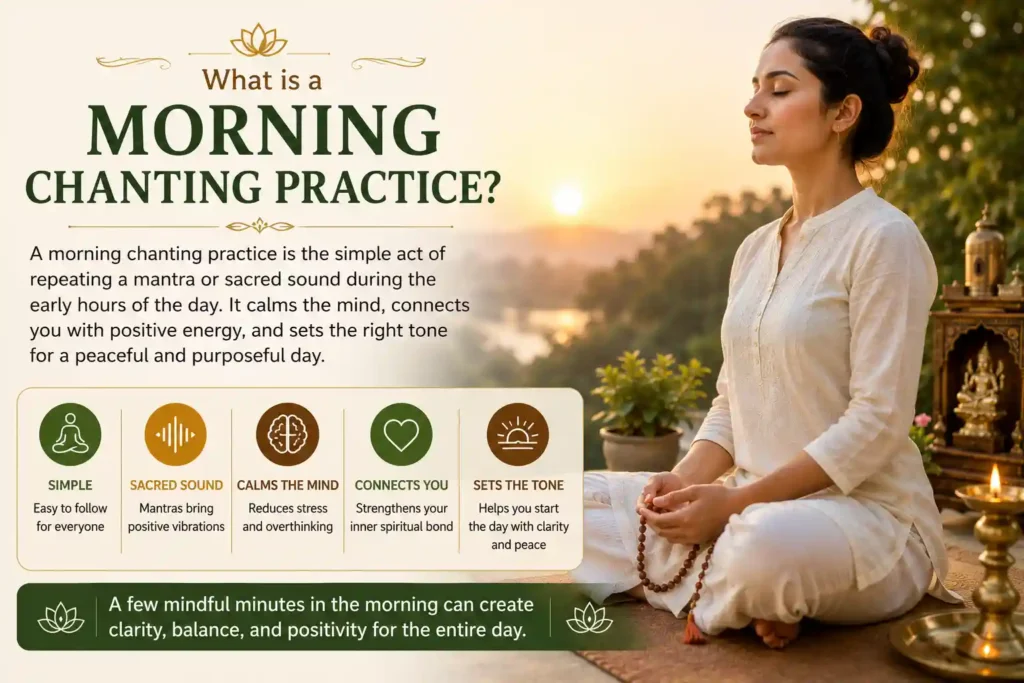
A morning chanting practice is the simple act of repeating a mantra, prayer, or sacred sound during the early hours of the day. It can be done aloud, softly, or mentally while sitting quietly and focusing on the breath.
For many people, chanting becomes a form of meditation. The repetition of sacred words gently guides attention away from mental clutter and toward a calmer inner state.
Unlike complicated spiritual routines, a morning chanting practice does not require special equipment or advanced knowledge. It can be practiced at home, near a home mandir, by a window, or even in a quiet corner of a room.
The purpose is not to perform perfectly. The purpose is to begin the day with awareness.
Over time, this simple habit often becomes a source of emotional stability, mental clarity, and spiritual connection.
Why morning is considered special for chanting
Many spiritual traditions place special importance on the early morning hours.
Before the demands of the day begin, the environment is naturally quieter. The mind has not yet become crowded with tasks, conversations, worries, and distractions. There is a freshness that is difficult to find later in the day.
In Sanatan Dharma, the period before sunrise is often referred to as Brahma Muhurta. It is traditionally regarded as a peaceful time for prayer, meditation, chanting, and self-reflection.
This does not mean chanting is only effective during Brahma Muhurta. Many people have work schedules, family responsibilities, or health conditions that make early rising difficult.
The deeper teaching is simple: begin the day with awareness whenever possible.
Even a short morning chanting practice after waking up can create a noticeably different emotional tone for the rest of the day.
Why chanting feels calming
Many people wonder why repeating a mantra can feel so soothing.
Part of the answer lies in the rhythm itself.
The mind is constantly moving from one thought to another. Chanting gently gives the mind a single point of focus. Instead of following endless worries, attention rests on the sound, meaning, and rhythm of the mantra.
As chanting continues, breathing often becomes slower and more relaxed. The body begins to settle. Mental noise gradually softens.
This is why many people describe mantra chanting as feeling like an inner reset.
The calming effect is not usually dramatic. It is often subtle. Yet these small moments of stillness, repeated daily, can create a meaningful shift in how we experience life.
The connection between breath and chanting
Breath and chanting naturally work together.
When a mantra is repeated slowly and mindfully, breathing tends to become deeper and more balanced. This creates a feeling of steadiness within the body and mind.
Many people do not realize that a large part of the benefit of a morning chanting practice comes from this relationship between sound and breath.
The breath becomes slower.
The body relaxes.
Attention becomes more present.
Thoughts begin to lose their urgency.
This is one reason why even a short chanting practice can feel restorative.
You do not need complicated breathing techniques. Simply allowing the breath to flow naturally while chanting is enough.
Benefits of a morning chanting practice
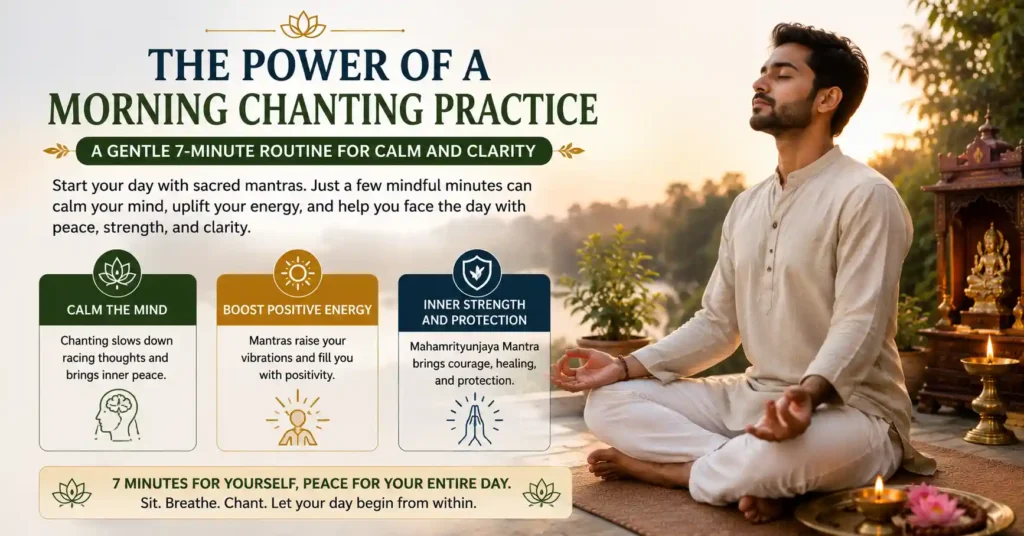
The benefits of a morning chanting practice are often gradual rather than dramatic. They develop through consistency and sincerity.
Mental clarity and focus
Many people find that chanting helps reduce mental clutter. Beginning the day with a focused mind often makes it easier to work, study, and make decisions throughout the day.
Emotional balance
Life naturally brings challenges, uncertainty, and stress. A daily chanting routine can help create emotional steadiness and reduce feelings of overwhelm.
A calmer start to the day
Instead of beginning the morning with urgency, chanting creates space for quiet reflection and inner balance.
Spiritual connection
For many devotees, chanting is not only a mental practice but also a devotional one. Repeating sacred mantras can deepen the feeling of connection with the Divine.
Greater awareness
A regular morning chanting practice encourages mindfulness and helps bring attention back to the present moment.
Positive daily rhythm
Small spiritual habits often influence the rest of the day. When mornings begin peacefully, daily life tends to feel more grounded and intentional.
Why Gayatri and Mahamrityunjaya feel supportive
The Gayatri Mantra and Mahamrityunjaya Mantra are among the most revered mantras in Sanatan Dharma. They have been chanted by seekers, devotees, and spiritual practitioners for generations.
Gayatri Mantra for clarity and inner light
The Gayatri Mantra is traditionally associated with wisdom, understanding, and spiritual illumination.
Many people experience this mantra as a gentle invitation toward clarity. When chanted with awareness, it often helps quiet scattered thoughts and bring attention back to what truly matters.
For this reason, the Gayatri Mantra is often included in a morning chanting practice focused on mental clarity and positive intention.
Mahamrityunjaya Mantra for strength and reassurance
The Mahamrityunjaya Mantra is often associated with healing, courage, protection, and inner resilience.
Its steady rhythm can feel grounding during periods of stress, uncertainty, or emotional difficulty.
Many devotees describe it as a mantra that brings comfort and strength during life’s challenges.
A beautiful balance
Together, these two mantras create a natural balance.
The Gayatri Mantra encourages clarity.
The Mahamrityunjaya Mantra encourages strength.
One illuminates the mind.
The other steadies the heart.
This is why many people find them especially suitable for a simple daily morning chanting practice.
Creating a peaceful space for morning chanting
One of the most common misconceptions about spiritual practice is that it requires a perfect environment.
It does not.
A peaceful space can be very simple.
You might choose:
- a quiet corner of your room
- a place near your home mandir
- a small meditation cushion
- a chair by a window
- a clean and comfortable space with minimal distractions
Some people like to light a diya or incense. Others prefer complete simplicity.
The purpose of the space is not decoration. It is creating an environment that gently supports stillness and focus.
Over time, even a small corner dedicated to prayer, meditation, or chanting begins to feel special.
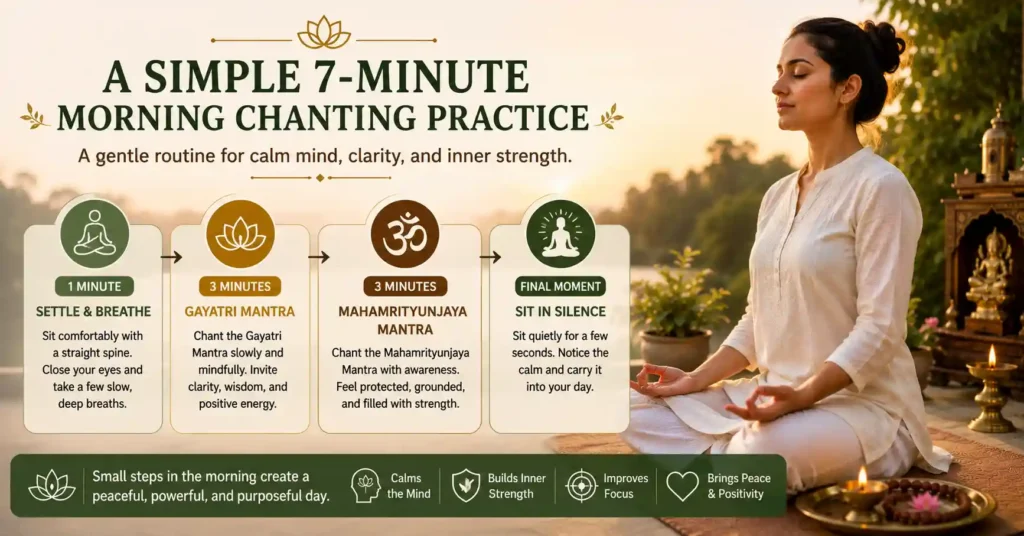
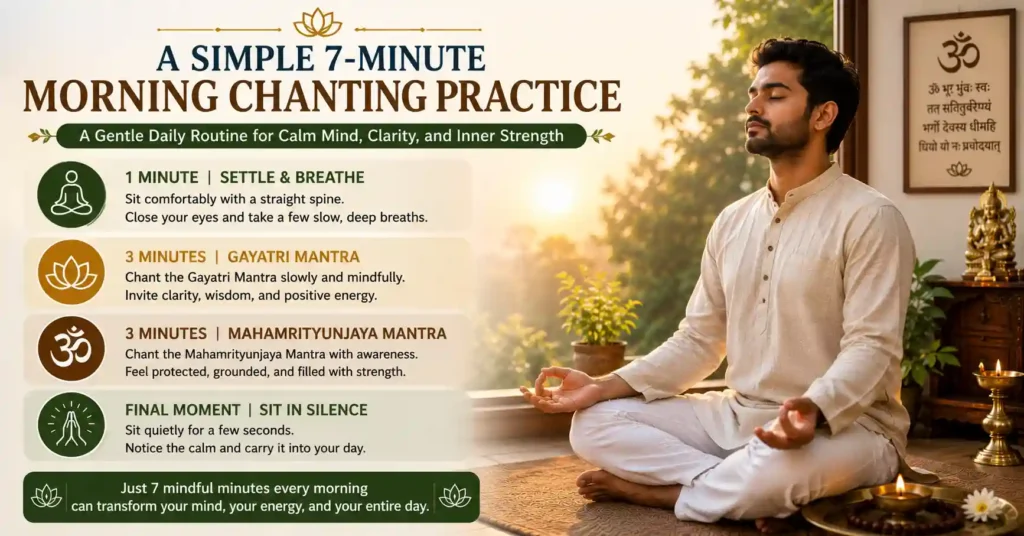
A simple 7-minute morning chanting practice
One reason many people avoid spiritual routines is the belief that they require a lot of time.
This simple morning chanting practice can be completed in around seven minutes.
Time | Practice |
1 Minute | Sit quietly and take slow breaths |
3 Minutes | Chant the Gayatri Mantra |
3 Minutes | Chant the Mahamrityunjaya Mantra |
Final Moments | Sit silently and observe the breath |
There is no need to count repetitions obsessively.
Allow the chanting to feel natural.
The goal is not to complete a task.
The goal is to begin the day with calmness, clarity, and awareness.
When is the best time for morning chanting?
Many people ask whether there is a perfect time for a morning chanting practice.
Traditionally, the early morning hours before sunrise are considered especially peaceful. This period, often called Brahma Muhurta, is valued because the environment is quieter and the mind is naturally less distracted.
However, spiritual practice should support your life, not create stress.
If waking before sunrise is not practical, simply choose a time after waking when you can sit quietly for a few minutes without interruption.
A morning chanting practice done consistently at 7:00 AM is often more beneficial than an ideal routine that is rarely followed.
The best time is the time you can maintain with sincerity.
Should you chant aloud or silently?
There is no single correct way to chant.
Chanting aloud
Many beginners enjoy chanting aloud because it helps maintain focus. Hearing the mantra creates a stronger connection with the sound and rhythm.
Soft whisper chanting
Some people prefer chanting softly. This approach feels quieter and more personal while still keeping attention on the mantra.
Mental chanting
Mental chanting involves repeating the mantra internally without speaking.
Many experienced practitioners enjoy this method because it encourages deep concentration.
All three methods can be part of a meaningful morning chanting practice. Choose the approach that feels natural and sustainable for you.
Consistency matters more than counting
One of the most common mistakes in spiritual practice is becoming overly focused on numbers.
Some people worry about completing a specific count every day. Others feel discouraged if they cannot chant for long periods.
A healthier approach is to focus on consistency.
Five sincere repetitions every morning often create a deeper habit than completing a large count only occasionally.
The purpose of a morning chanting practice is not to achieve perfection.
It is to build a gentle daily relationship with stillness, awareness, and devotion.
Consistency allows the benefits to grow naturally over time.
What if you miss a day?
Many people feel guilty when they miss a spiritual practice.
But spiritual growth is not measured by perfection.
If you miss a day, simply begin again the next morning.
There is no need for self-criticism.
There is no need for guilt.
Life changes. Schedules become busy. Unexpected situations arise.
What matters is returning with sincerity whenever you can.
A morning chanting practice should feel supportive, not burdensome.
The goal is progress, not perfection.
Common mistakes during morning chanting
A few simple adjustments can make a morning chanting practice more enjoyable and effective.
Rushing through the mantra
Chanting is not a task to complete quickly. Allow the words to flow naturally.
Focusing only on pronunciation
Correct pronunciation has value, but beginners should not become anxious about every syllable.
Sincerity and attention matter more than fear of mistakes.
Checking the phone immediately afterward
The mind becomes calmer during chanting. Jumping directly into notifications can quickly break that peaceful state.
Try giving yourself a minute or two of quiet before engaging with screens.
Being inconsistent
Regular practice, even for a few minutes, usually creates greater benefits than occasional long sessions.
Treating chanting like a performance
A morning chanting practice is a personal spiritual experience. There is no need to impress anyone or compare your practice with others.
You do not need perfect pronunciation
Many beginners avoid chanting because they worry about making mistakes.
This concern is understandable, but it should not stop you from beginning.
The Gayatri Mantra and Mahamrityunjaya Mantra have been chanted by people from different regions, languages, and traditions for generations.
Learning proper pronunciation gradually is a wonderful goal.
But waiting for perfection before starting often prevents practice altogether.
Begin where you are.
Chant with respect.
Learn gradually.
Allow the practice to grow naturally.
How this morning chanting practice slowly affects daily life
The benefits of a morning chanting practice often appear quietly.
You may notice:
- calmer mornings
- clearer thinking
- reduced mental clutter
- greater patience
- more emotional balance
- improved awareness throughout the day
These changes are usually subtle at first.
Over weeks and months, however, many people discover that chanting becomes an anchor during difficult moments.
This is one reason spiritual traditions have preserved these practices across generations.
They support everyday life, not by removing challenges, but by helping us meet them with greater steadiness.
A gentle reminder
Some mornings will feel peaceful.
Some mornings will feel distracted.
Some days chanting will feel effortless.
Other days the mind will wander constantly.
All of this is normal.
The value of a morning chanting practice does not depend on having a perfect experience every day.
What matters is showing up with honesty and continuing the journey with patience.
Even a few sincere minutes carry meaning.
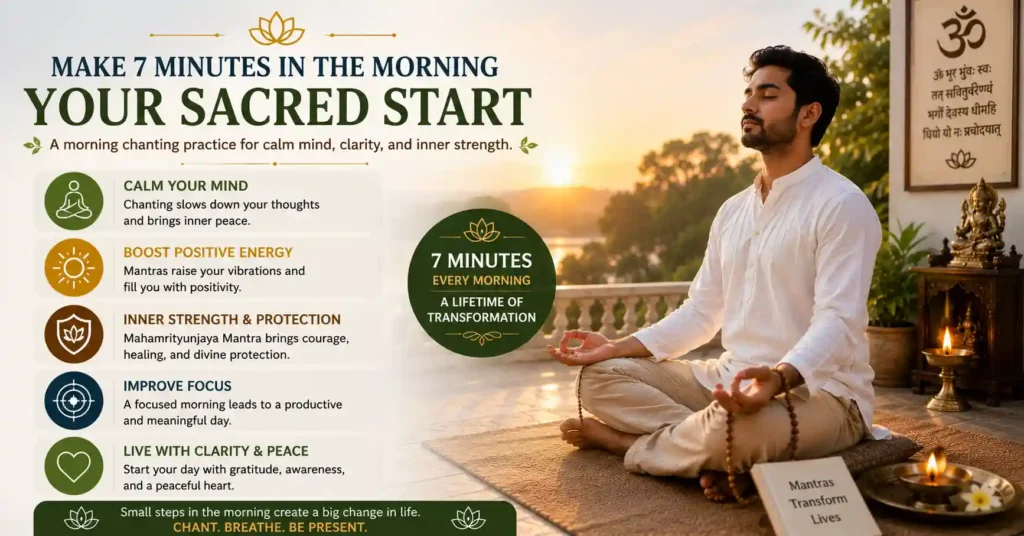
Conclusion
A meaningful life is often built through small daily habits.
A simple morning chanting practice can become one of those habits. In just a few minutes, it creates space for calmness, clarity, gratitude, and inner balance before the demands of the day begin.
The Gayatri Mantra helps illuminate the mind with awareness and wisdom. The Mahamrityunjaya Mantra offers strength, reassurance, and emotional steadiness. Together, they create a balanced spiritual routine that is both practical and deeply nourishing.
This morning chanting practice is not about perfection, strict rules, or long hours of discipline. It is about beginning each day with presence.
Tomorrow morning, before reaching for your phone or rushing into responsibilities, try sitting quietly for seven minutes.
Breathe.
Chant.
Listen.
Allow the day to begin from within.
About the Author
Yateendra Chaturvedi writes about Sanatan Dharma, spiritual living, mindfulness, devotional traditions, temples, and everyday spirituality.
Through thesanatantales.com, he aims to present timeless wisdom in a simple, practical, and approachable way for modern readers.
Suggested Reading
If this morning chanting practice resonated with you, you may also enjoy these reflections from the Divine Life category. Together, they explore mindfulness, devotional living, inner peace, and practical spirituality for everyday life.
Living in the Present Moment for Inner Peace
https://thesanatantales.com/living-in-the-present-moment/
Daily Sattvik Routine for a Peaceful 9-to-5 Life
https://thesanatantales.com/daily-sattvik-routine-for-working-professionals/
Home Mandir Setup: A Simple Guide to Create a Peaceful Sacred Space
https://thesanatantales.com/home-mandir-setup-guide/
How to Stay Calm in Difficult Situations Spiritually
https://thesanatantales.com/how-to-stay-calm-in-difficult-situations/
Daily Mudras for Calm Mind, Energy and Better Digestion
https://thesanatantales.com/daily-mudras-for-calm-mind-energy-and-better-digestion/
The Power of Letting Go in Sanatan Dharma
https://thesanatantales.com/the-power-of-letting-go-in-sanatan-dharma/
Why Spiritual Awakening Feels Lonely and Quite Inside
https://thesanatantales.com/why-spiritual-awakening-feels-lonely/
Silence and Awareness: The Hidden Inner Connection
https://thesanatantales.com/silence-and-awareness-connection/
Karma and Life Lessons Meaning: The Deeper Truth behind Your Life Experiences
https://thesanatantales.com/karma-and-life-lessons-meaning/
Soul Contract, Pain and Past Life Purpose: Why your Life feels This Way
https://thesanatantales.com/soul-contract-pain-past-life-purpose/
FAQs
Can beginners follow this morning chanting practice?
Yes. This morning chanting practice is suitable for beginners. No initiation, advanced knowledge, or previous experience is required. A sincere intention to begin is enough.
Is morning the only time suitable for chanting?
No. Morning is often preferred because it is quieter and less distracting, but chanting can be practiced at any time of day.
Do I need to chant aloud for it to work?
No. You may chant aloud, softly, or mentally. All three methods can be effective when practiced with attention and sincerity.
How soon can one feel the benefits?
Some people notice a sense of calm immediately, while deeper benefits often develop gradually through consistent practice over weeks and months.
Can women chant the Gayatri Mantra and Mahamrityunjaya Mantra?
Yes. Many women chant these mantras as part of their daily spiritual practice. Traditions may vary, but these mantras are widely recited by devotees regardless of gender.
Can I listen instead of chanting?
Yes. Listening attentively can also be meaningful, especially for beginners. Over time, many people naturally feel inspired to join in and chant themselves.
Do I need initiation to begin this simple practice?
Many people begin a simple morning chanting practice on their own. If you later wish to learn deeper aspects of mantra sadhana, guidance from a knowledgeable teacher can be valuable.
Is this chanting practice a replacement for medical care?
No. Chanting is a spiritual and mindfulness practice intended to support inner well-being. It should not replace professional medical, psychological, or healthcare advice.